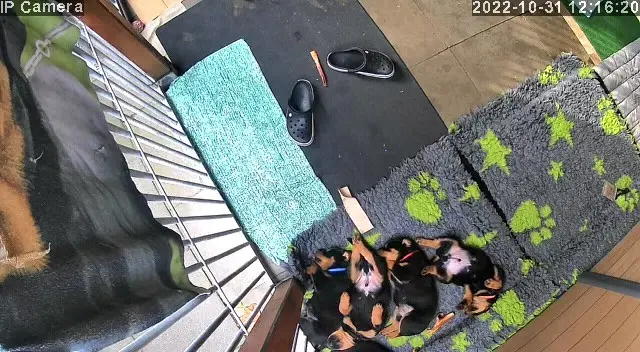
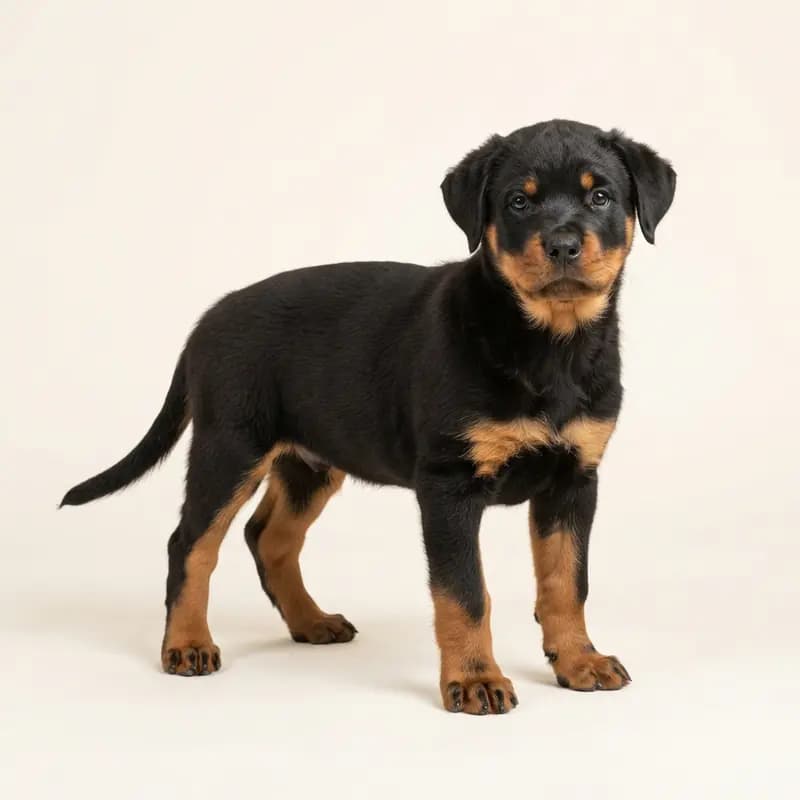
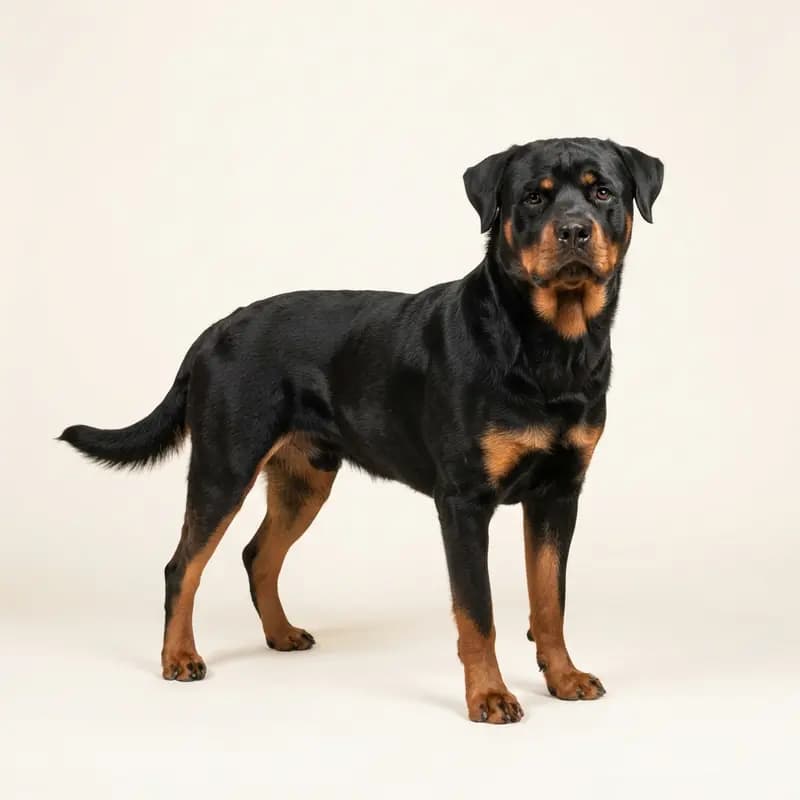
When you think of a Rottweiler, you might first imagine an imposing, muscular guard dog. People unfamiliar with the breed sometimes tend to view them as intimidating. However, beneath this powerful appearance lies an incredibly affectionate heart. For successful Rottweiler training, it is crucial to recognize and encourage this soft, loyal, and highly intelligent side of your dog. If you open your heart to a Rottweiler, you will gain a faithful companion who would go through fire for you and your family.
As an experienced dog trainer, I can assure you: working with a "Rottie" is one of the most rewarding tasks in the canine world. They are very people-oriented, love being integrated into the family, and enjoy extensive cuddle sessions just as much as active play hours. In this comprehensive guide, I will show you how to reach your dog's full potential — from the first steps in puppyhood to advanced training for the adult dog.
Rottweiler Training: The Muscular Family Dog as a Star Pupil
To approach Rottweiler training correctly, we must first understand who is standing at the other end of the lead. Originally bred in Germany and belonging to the "Working Group," the Rottweiler possesses a work ethic that is second to none. With an energy level of 5 out of 5 and an equally high trainability (5/5), this dog is eager to solve tasks and be mentally stimulated.
A fully grown male reaches a shoulder height of 61 to 68 cm and weighs a sturdy 42 to 50 kg. It's obvious: you cannot physically restrain or correct a dog of this weight class once they are an adult. Training must therefore be based on mutual respect, trust, and crystal-clear communication. Violence or unfair harshness has absolutely no place in modern dog training and destroys the vital bond of trust with this self-confident dog.
If you want to learn more about breed-specific traits, care (coat type: short, dense with undercoat), and history, I recommend taking a look at our detailed Rottweiler breed profile. It provides the perfect theoretical foundation for practical training.
Rottweiler Puppy Training: The Crucial First 16 Weeks
Rottweiler puppy training begins the very day the small, clumsy ball of fur moves into your home. The first 16 weeks of life form the so-called socialisation window. During this time, the puppy's brain processes new stimuli particularly quickly and sustainably. What your Rottie learns positively now will not faze them later in life.
Housebreaking: Consistency from Day One
Rottweilers are intelligent dogs and usually grasp the concept of housebreaking very quickly if you are consistent. Follow these basic rules:
- The Rhythm: Take your puppy outside after every nap, every meal, after playing, and otherwise every two hours.
- The Designated Spot: Always lead (or carry) them to the same quiet spot in the garden or on the grass. The familiar scent encourages them to go.
- Extravagant Praise: As soon as they do their business outside, praise them warmly and give them a high-quality treat. Clean up accidents inside without comment — punishment only confuses the puppy.
Training Bite Inhibition
A Rottweiler has enormous bite force. Therefore, learning bite inhibition during puppyhood is one of the most important building blocks of dog training. Puppies explore the world with their mouths, and in the heat of the moment, those sharp milk teeth can be quite painful on our hands.
If your puppy bites too hard during play, stop the game immediately. A short, high-pitched "Ouch!" signals that they have crossed a line. Turn away for a few seconds and ignore them. Once they have calmed down, offer an alternative they are allowed to chew on — for example, a robust tug rope or a chew toy. This way, they learn: human skin is taboo, toys are allowed.
Socialisation: Discovering the World
Since the Rottweiler's urban adaptability is relatively low at 2 out of 5 points, it is even more important to introduce them to environmental stimuli early if you live in a busier area. Show them at their own pace:
- Different surfaces (grass, asphalt, metal grates, forest floor).
- Everyday noises (vacuum cleaner, trams, sirens).
- Different types of people (children, people with umbrellas, people in wheelchairs or wearing hats).
- Other animal species (horses, cats, cows).
Always ensure the puppy is not overwhelmed. Short, positive sessions of 10 to 15 minutes are much more effective than hours-long excursions. Visiting a well-run puppy class is also highly recommended during this phase. You can find reputable offers and standards for dog schools on the website of the Bundestierärztekammer.
Rottweiler Commands: The Essentials for Daily Life
Once the foundation of socialisation is laid, Rottweiler training moves into the next phase. Obedience is not an optional extra for a dog of this size; it is an absolute necessity. The most important Rottweiler commands not only ensure relaxed walks but also protect your dog's life in case of doubt.
Sit and Down
Rotties usually learn these two basic exercises in no time due to their quick comprehension. Work with positive reinforcement (luring with food). Lead a treat slowly over the dog's nose towards the back. To follow the treat with their eyes, they will automatically sit down. The second their bottom touches the ground, say "Sit" and release the treat.
For "Down," lead the treat from the sitting position slowly vertically down between the front paws and then slightly forward. As soon as the dog lies down, give the command "Down" and the reward.
Stay and Impulse Control
Rottweilers are loyal and prefer to always be by their human's side. Nevertheless, they must learn to remain in an assigned place. Train the "Stay" command in tiny steps. Have the dog sit, say "Stay," take a single step back, and immediately return to them to reward. Slowly increase the distance and duration over several weeks. Impulse control is essential for this breed so that they do not react too quickly in stressful situations.
The Reliable Recall
A 50-kg dog that does not return immediately when called is a safety risk. The recall must be the best-trained command of all. Start training in a low-distraction environment (in the living room or garden). Call your dog's name followed by a joyful "Here!". When they come, throw a real party — play with them, give them the "jackpot" of treats.
Outside, secure the training initially with a long training lead (drag line). This prevents your Rottie from having success stories when ignoring the command. Only call them initially when you are 90 percent sure they will actually react.
Breed-Specific Challenges in Rottweiler Training
Every dog breed brings its own genetically anchored behaviours. The Rottweiler is no exception. A good trainer does not ignore these traits but directs them into controlled, desirable channels.
Directing Guarding Instincts into Controlled Channels
Rottweilers are exceptionally loyal and would protect their family with their lives. This natural guarding instinct is fascinating, but it holds potential for conflict in modern society. It is your job as a leader to make it clear to your dog: "I am taking responsibility; you don't have to protect us."
You achieve this through confident daily management. When visitors arrive, send your Rottie to their place. You open the door, and you greet the visitors first. Only when the situation is relaxed should the dog be allowed to sniff and greet the visitors. This way, they learn that you can assess and manage situations, allowing them to relax.
Dealing with Other Dogs
Compatibility with other dogs for Rottweilers averages about 3 out of 5 points. Same-sex dogs, in particular, can occasionally lead to friction in adult, intact dogs. Place great value on calm, guided dog encounters ("social walks"). Your dog must learn that other dogs on a lead are primarily to be ignored. Not every strange dog needs to be sniffed.
Further valuable information on breed-specific behaviour can also be found at the Verband für das Deutsche Hundewesen (VDH) or the ADRK (Allgemeiner Deutscher Rottweiler-Klub).
Advanced Training: Brain and Nose Work for Smart Dogs
Physical exercise through long walks is important but is by no means enough for an intelligent working dog. If a Rottweiler gets bored, they will find their own "tasks" — and these rarely align with the owner's ideas (e.g., destroying furniture or obsessive barking at the garden fence).
Dog Sports for Rottweilers
To challenge your dog's brain, you should integrate more demanding activities into your daily routine:
- Obedience: This is about maximum precision in executing commands. Rottweilers often truly blossom during this concentrated cooperation with their human.
- Tracking and Mantrailing: Dogs perceive the world primarily through their noses. Letting a Rottweiler search for a human scent (mantrailing) or a ground track is incredibly taxing for them. Just 20 minutes of intensive nose work will tire your dog more than a two-hour walk on a flexi-lead.
- Draught Dog Sports: Due to their physical stature and history (Rottweilers used to pull carts for butchers), healthy adult dogs are excellent for Canicross or pulling a small cart. However, talk to your vet beforehand to rule out joint problems.
The Most Common Mistakes in Rottweiler Training
Even dedicated dog owners can fall into certain traps. If you avoid the following mistakes, you are well on your way to a dream dog:
1. Too much harshness: The old myth that you have to engage in a "dominance battle" with your Rottweiler or physically submerge them has long been debunked. Rottie owners who shout, jerk the collar, or use so-called "alpha rolls" destroy trust. The dog often reacts with fear-aggression. Authority comes from sovereignty and clarity, not from volume.
2. Inconsistency: A Rottweiler likes to test whether yesterday's rules still apply today. If they aren't allowed on the sofa on Monday, you shouldn't allow it on Wednesday just because they look so cute. Exceptions confuse this structure-loving dog.
3. Early physical overexertion: Until the large dog's skeleton is fully developed (around 15 to 18 months of age), you should avoid climbing stairs, wild ball throwing (abrupt braking), or running alongside a bicycle. Rottweilers can be prone to joint problems like HD (Hip Dysplasia) if they are overworked during growth.
Frequently Asked Questions (FAQ)
Is a Rottweiler suitable for beginners?
Generally yes, but with caveats. A motivated beginner who is willing to invest a lot of time, research thoroughly beforehand, and work with a professional dog school from day one can train a Rottweiler excellently. However, anyone looking for a dog that just "runs alongside" should look for another breed.
When should I start training?
Training begins playfully on the very first day they move in, usually at 8 to 10 weeks of age. At this age, the focus is not on blind obedience but on building a bond, teaching household rules, and gentle habituation to the environment.
How do I best exercise my Rottweiler?
The ideal mix for a Rottie consists of moderate to extensive physical exercise (walks, hiking) and intensive mental stimulation (nose work, trick training, obedience). Since the breed's energy level is at 5/5, plan about 2 to 3 hours daily for active walks and targeted training.
Are Rottweilers dangerous dogs?
No dog is born evil. The Rottweiler is naturally a peaceful, loving, and loyal companion. Its reputation suffers because of people who have misused it for the wrong purposes or ruined it through neglect and harsh training methods. With loving consistency and good socialisation, it is an exemplary family dog that behaves very protectively and gently towards children (child-friendliness 3/5) when properly accustomed.
Conclusion: With Patience and Love to the Perfect Companion
Rottweiler training requires time, commitment, emotional stability, and a good dose of consistency. If you are willing to direct the work ethic of this wonderful breed into productive channels, you will be rewarded with a bond that is second to none. Your Rottie will not just be a dog to you, but a loyal partner in all walks of life.
The life expectancy of a Rottweiler is 8 to 10 years. Make these years the best for both of you by relying on modern, fair training and fulfilling your dog's needs for closeness and mental activity.
Are you looking for a reputable breeder or do you want to learn more about different dog breeds? On HonestDog, you will find exclusively verified and trustworthy listings as well as in-depth breed portraits. Visit our platform now and find your loyal companion for a happy life together!