The Dream of the Perfect Family Dog: A Guide for Aspiring Puppy Parents
The decision is made: a dog is joining the family. For many, the choice quickly falls on the Golden Retriever. Originally from the rugged Scottish Highlands, where they were bred as gundogs for retrieving waterfowl, this breed has long since established itself as the epitome of the perfect family dog. Their friendly, intelligent, and deeply devoted temperament makes them a companion that fits seamlessly into everyday life. However, the search for the perfect puppy has its pitfalls. When looking for the right Golden Retriever breeder, you are laying the crucial foundation for the next 10 to 12 years of your life. Based on my years of experience, I will show you what really matters when choosing a breeder.
The breed's popularity is, unfortunately, also its greatest curse. Where demand is high, unethical "backyard breeders" looking for a quick profit are often not far away. That is why it is essential to inform yourself thoroughly beforehand. Anyone considering buying Golden Retriever puppies must learn to distinguish between passionate breeding and profit-oriented multiplication.
Why Choosing the Right Golden Retriever Breeder is Crucial
A true Golden Retriever is characterized by its legendary "will to please" — an intense desire to make its owner happy. With a trainability score of 5 out of 5, they are among the dogs that learn incredibly fast. However, this wonderful temperament and stable physical health are not products of chance. They are the result of strictly selective and well-thought-out Golden Retriever breeding.
First, you need to be clear about what type of dog you are looking for. Within the breed, two distinct lines have formed over the decades. The so-called working lines (field-trial lines) are slimmer, more athletic, and possess a pronounced hunting drive. Their energy level is at the higher end of the breed standard (4 out of 5 points). They require mental and physical stimulation, such as dummy training or search and rescue work. Show lines, on the other hand, are often more heavily built, have thicker coats, and exhibit a calmer temperament in daily life. Both lines absolutely love water and are outstanding swimmers. You can learn more about these fascinating differences in our detailed Golden Retriever breed profile.
A responsible breeder knows exactly which pairing produces which traits. They will honestly advise you on whether a puppy from their kennel fits your lifestyle (for example, urban suitability 4/5). With uncontrolled breeding, you risk not only serious hereditary diseases but also character flaws such as anxiety or, in the worst case, aggression — traits that should be completely foreign to a well-bred Golden Retriever, as their family and child-friendliness is usually unsurpassed (5/5).
Signs of Reputable Golden Retriever Breeders: What to Look For
How do you recognize someone who truly cares about the breed? Reputable Golden Retriever breeders are characterized by absolute transparency, deep knowledge, and a boundless love for their dogs. Here are the most important criteria to check during your visit:
Affiliation with Recognized Clubs
In Germany, there are clear guidelines for pedigree dog breeding. A good breeder is usually a member of the VDH (Verband für das Deutsche Hundewesen) and breeds under the strict regulations of a breed-specific club such as the German Retriever Club (DRC) or the Golden Retriever Club (GRC). These clubs mandate strict health screenings, temperament tests, and kennel inspections before a single litter is ever born.
Family Integration and Rearing Conditions
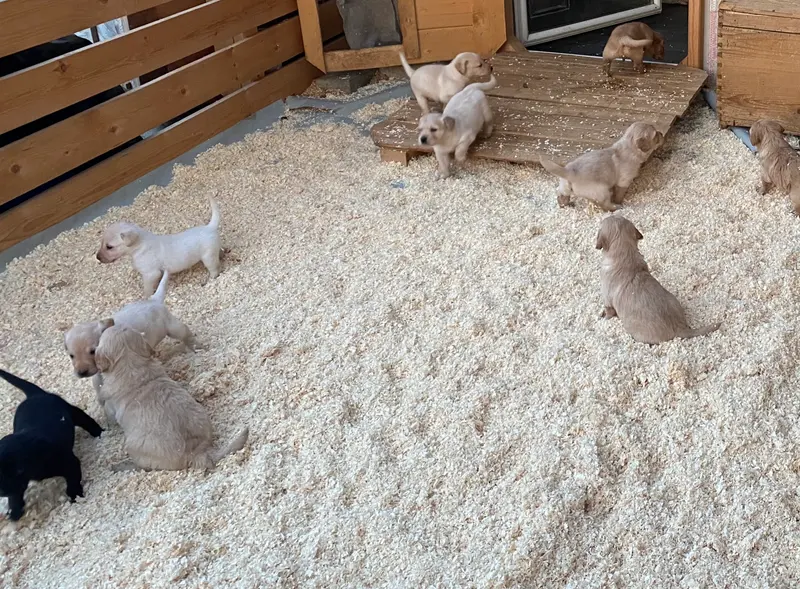
Goldies are dogs that need close contact with people. They do not belong in a kennel! With a good breeder, puppies grow up inside the home, surrounded by everyday noises like vacuum cleaners, clattering pots, and perhaps even children or other pets (dog friendliness 4/5). A well-designed puppy area also provides access to a safe garden with different surfaces and play equipment to train the little ones' motor skills early on.
The Dam is Present
An absolute must: the mother dog must be present during your visit. She should make a relaxed, friendly, and healthy impression. It is normal for a nursing dam to look a bit tired or be watchful at first, but she should never react with fear or aggression toward visitors. The mother's behavior enormously shapes the puppies in their first weeks of life.
Health First: Important Screenings in Golden Retriever Breeding
The life expectancy of a healthy Golden Retriever is between 10 and 12 years. To ensure they spend this time by your side pain-free and vital, good breeders invest heavily in health prevention. The Golden Retriever, a medium-to-large dog with a shoulder height of 56 to 61 cm and a weight of 30 to 34 kg (for males), has breed-specific health concerns. Do not hesitate to ask the breeder for the original health results of the parents. The following tests are essential:
- Hip Dysplasia (HD) and Elbow Dysplasia (ED): These painful joint conditions are hereditary. Both parents must be officially X-rayed and evaluated by an independent expert. Only dogs with excellent or good joints should be cleared for breeding.
- Eye Exams (PRA/HC): Progressive Retinal Atrophy (PRA) and Hereditary Cataracts (HC) can lead to blindness. The parents should have current eye certificates, ideally from a specialist veterinarian.
- Ichthyosis: A genetic defect common in Golden Retrievers that causes massive scaling of the skin. A simple DNA test of the parents ensures that no affected puppies are born.
- Epilepsy: Although there is no DNA test for this, an experienced breeder will study the pedigree of their dogs carefully for any occurrence of epilepsy and only breed lines that are completely clear.
The First Meeting: 6 Essential Questions for the Breeder
A reputable breeder will ask you many questions during your visit — after all, they want to know where their protégé will live for the next decade. However, you should also actively lead the conversation. When visiting Golden Retriever breeders in Germany, don't be afraid to ask these specific questions:
1. How many litters has the dam already had?
A dam should not be used as a "breeding machine." Reputable clubs usually allow a maximum of three to four litters per dam, always with sufficient recovery time (often a year) in between.
2. How do you socialize the puppies in the first few weeks?
A good breeder has a clear plan. They will tell you about habituating them to household noises, car rides, collar training, and the first steps toward housebreaking.
3. What is your breeding goal for this specific litter?
Is the breeder aiming for athletic dogs for dummy work or calm, steady family companions? The answer tells you if the breeder has a real plan and if the puppies fit your lifestyle.
4. May I see the parents' health certificates?
As mentioned, this is non-negotiable. Anyone who hesitates or makes excuses here has something to hide.
5. What do you feed, and what are the grooming requirements?
An expert will explain the dense, wavy, or flat coat with its undercoat. The grooming requirement of a Goldie is moderate (3/5), as is the shedding (3/5). Regular brushing is a must. The breeder should provide you with high-quality food and dietary advice.
6. Are you available for questions after the purchase?
A breeder who loves their dogs remains your contact person for the dog's entire life. Whether it's training questions, health concerns, or nutrition — they will help you.
Red Flags: Warning Signs During Your Search
Unfortunately, the puppy market is lucrative, attracting unscrupulous sellers. The emotional and financial damage caused by buying an ill dog is immense. You should immediately break off contact if you encounter any of these red flags:
- Meetings at neutral locations: Puppies sold in parking lots or out of the back of a van often come from illegal puppy mills. Never buy out of pity!
- Too many different breeds: If one facility produces Golden Retrievers, French Bulldogs, and Chihuahuas at the same time, you are dealing with a commercial high-volume breeder.
- No papers: Sentences like "you only need papers for shows" are classic excuses. The pedigree is the only document that proves the health screenings of the ancestors.
- Dirty environment and bad odors: The puppy area should smell clean. The dogs should not be matted with feces or appear lethargic.
- The breeder asks no questions: Someone who doesn't care how much time you have for the dog or if you live on the 5th floor without an elevator likely doesn't care about the puppy's welfare either.
How Much Do Golden Retriever Puppies from a Breeder Cost?
A healthy, well-raised pedigree dog has its price. The price range for a Golden Retriever from a reputable club breeder in Germany is currently between €1,500 and €2,800. For particularly successful working lines or highly awarded show lines, the price can reach the upper limit.
Why is it so expensive? You aren't just paying for a small dog. You are paying for the health evaluations of the parents (X-rays, genetic tests, eye exams), the stud fee for a suitable sire, high-quality food for the pregnant dam and the puppies, veterinary costs for vaccinations, microchips, and deworming, as well as the formal litter inspection by the breeding club. Most importantly, you are paying for the eight weeks of 24/7 care and dedication a good breeder invests in shaping your future companion.
Do not be lured by "bargains" on the internet. A puppy for €600 will often cost you many times more in veterinary bills over the coming years, not to mention the emotional distress if the dog becomes seriously ill.
Frequently Asked Questions (FAQ)
When is the right time to contact a Golden Retriever breeder?
Reputable breeders often have waiting lists that are full before the dam is even bred. It is highly advisable to make contact six to twelve months before your desired arrival date. This gives you time to get to know the breeder, the dam, and the breeding philosophy.
Are Golden Retrievers suitable for first-time owners?
Yes, absolutely. Due to their friendly nature, low tendency toward aggression, and extremely high trainability, the Golden Retriever is considered an ideal dog for beginners. However, they don't train themselves. Attending a good dog school and consistent, loving training are essential for this breed too.
What is the difference between Golden Retrievers and Labrador Retrievers?
While both are Retrievers bred for water hunting, there are differences. The most obvious is the coat: the Goldie has longer, silky fur (grooming 3/5), while the Labrador has a short, easier-to-maintain coat. Character-wise, Golden Retrievers are often seen as slightly more sensitive and "soft," while Labradors can be more boisterous and lacking in boundaries when young.
Do Golden Retrievers shed a lot?
The Golden Retriever has a dense coat with a water-repellent undercoat. They shed moderately year-round but lose considerable amounts of hair during the seasonal changes in spring and autumn. If you get a Goldie, you must be able to live with dog hair on your clothes and sofa and be prepared to brush them thoroughly several times a week.
Find Your Dream Dog Now on HonestDog
Finding the right family member takes time, patience, and background knowledge. You have to click through club lists, compare websites, and make countless phone calls. At HonestDog, we want to make this process as safe and transparent as possible for you.
We vet all listings on our platform according to strict animal welfare criteria. Unethical breeders and scammers have no place here. If you are ready to take responsibility for a wonderful, intelligent, and loyal friend, take a look at our verified Golden Retriever breeders in Germany. Take the first step toward a life full of wagging tails and unconditional love — safely and with peace of mind.