
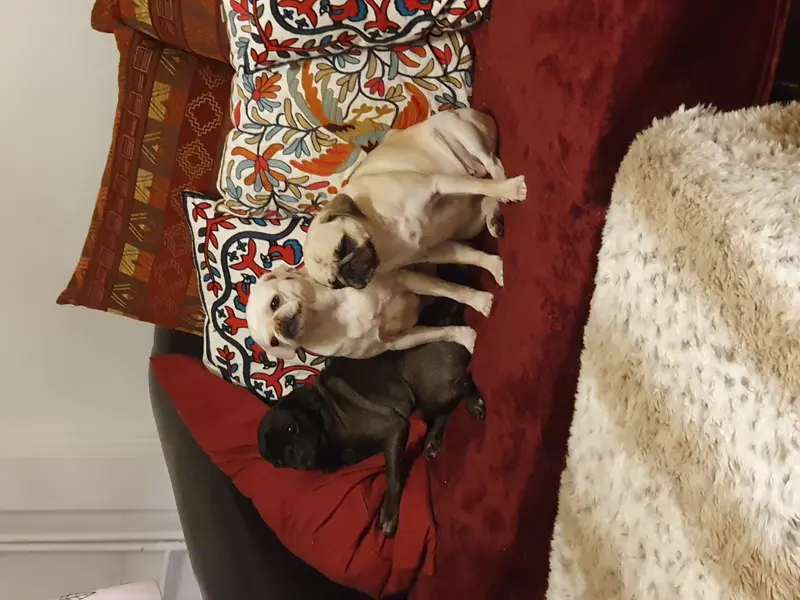
Pug Training: Tips for Beginners and Advanced Owners
Congratulations! You have chosen one of the most charming, funny, and loving companions the canine world has to offer. The Pug is known as a true clown who always makes his family laugh and shows incredible affection. But don't let his cute gaze and small size fool you: consistent and loving Pug training is the absolute key to a harmonious life together. In this comprehensive guide, you will learn everything you need to know to turn your little rascal into a relaxed, obedient, and well-adjusted companion for everyday life.
Whether you are just starting out or already have experience with dogs – raising this specific breed requires a bit of intuition, a lot of humor, and, above all, the right strategy. If you want to learn more about the fascinating history and all the characteristics of your favorite pet, be sure to take a look at our detailed Pug breed profile.
The Pug as a Student: The Foundation for Successful Pug Training
Before we dive deep into practice, we need to understand how a Pug ticks. On a scale of trainability, the Pug is often ranked in the lower midfield (about 2 out of 5 points). However, this by no means means that these dogs are stupid! Quite the opposite: they are often very clever, but they were not bred as working dogs, but as pure companion dogs.
Their primary goal in life is to be with their humans (Family Friendliness: 5/5). They have no innate drive to solve complex tasks for hours or to herd sheep. With every command, a Pug first asks himself: "And what's in it for me?"
To be successful in Pug training, you must use these traits to your advantage:
- Motivation through food: Pugs are usually extreme foodies. A small, high-quality treat works wonders and breaks through any supposed stubbornness.
- Short, snappy sessions: Since their attention span is often not the longest, it's better to practice three times a day for five minutes than for half an hour at a time.
- Positive reinforcement: Pugs are very sensitive to their humans' moods. Loud scolding or harshness will only lead to the dog becoming insecure and shutting down. Loving consistency is the magic word here.
The Verband für das Deutsche Hundewesen (VDH) describes the Pug as intelligent and balanced. If you gain his trust and make the training playful, he will learn with joy.
Pug Puppy Training: The Crucial First 16 Weeks
The first weeks and months at home lay the foundation for the dog's entire future life. Good Pug puppy training requires patience, strong nerves, and a structured daily routine.
Potty Training: How to Get Your Little Pug House-Trained
Small dogs have small bladders. Potty training is often the first major challenge. Take your puppy outside after every nap, after eating, after intensive play, and otherwise every two to three hours. As soon as he does his business in the right place, you must praise him enthusiastically. Give him a treat immediately afterwards. If an accident happens indoors: wipe it up without comment. Scolding afterwards is useless, as the puppy can no longer link the punishment with his action.
Training Bite Inhibition
Puppies explore the world with their sharp little teeth. Even if a Pug bite is not as dangerous as that of a large dog, bite inhibition must be trained early on. If your puppy bites too hard while playing, give a short, high-pitched yelp (like a littermate), stop the game immediately, and ignore him for a minute. Then offer him an alternative, such as a chew toy that he can bite into to his heart's content.
Socialization: Discovering the World
The Pug is known for his high compatibility with other dogs (4/5) and his suitability for city life (5/5). However, these positive traits must be encouraged. Gently acclimate your puppy to various environmental stimuli: traffic, vacuum cleaners, different surfaces, car rides, and people of all ages. Be careful not to overwhelm him. Accompany him confidently and show him that the world is a safe and exciting place.
Basic Pug Commands for Everyday Life
To ensure your Pug is a welcome guest in the city, at a café, or in the park, he must master basic Pug commands. Here are the most important signals and how to teach them.
Sit and Down: The Absolute Basics
The "Sit" command is usually learned in no time. Hold a good-smelling treat right in front of your Pug's nose and move it slowly in an arc over his head towards the back. His head will follow the food, and his bottom will automatically go down. As soon as his bottom touches the floor, say "Sit" and release the treat.
For "Down," start from the sitting position. Lead the treat from his nose vertically down between his front paws and then pull it slowly along the floor away from him. As soon as he lies down, praise and food follow.
The Reliable Recall
A Pug loves to sniff and is naturally curious. A functioning recall is therefore vital. Start training in a low-distraction environment (e.g., in the living room). Call his name and a cheerful "Come!". When he dashes to you, throw a huge party with his absolute favorite treats. Slowly increase the level of distraction. If you are outside and notice he is completely absorbed in a scent, don't call pointlessly. Wait for a moment of attention or use a long training leash initially to gently enforce the recall.
Leash Training: Walking Through the World Without Pulling
Due to his anatomy (short snout, compact neck), a Pug should always be walked on a well-fitting harness, never a collar. If he pulls on the leash, stop immediately like a tree. Only when the leash is loose again – for example, because he turns back to you – do you continue. This requires incredible patience at first, but your Pug will learn: Pulling doesn't get me to my goal, but a loose leash does.
Breed-Specific Challenges in Pug Training
Every dog breed brings its own little quirks that we must consider in training. With the Pug, there are three essential points you should pay special attention to.
1. Keeping Health in Mind
The Pug belongs to the brachycephalic (short-headed) breeds. This means that due to his short snout, he is more susceptible to breathing problems and heat exhaustion. His energy level is rather low at 2/5. Be sure to adapt your training to these physical conditions. On hot summer days, only train early in the morning or late in the evening. If you notice your dog panting heavily or wheezing, stop training immediately. For more information on handling short-headed breeds, it is recommended to look at the health prevention guidelines for brachycephalic dogs.
2. Separation Anxiety: Practicing Being Alone
Pugs are extremely people-oriented. They hate being alone and prefer to follow their owners every step of the way. To prevent staying alone from leading to hours of barking and destroyed furniture later on, you must practice it in small steps. Start by leaving the room without comment and closing the door behind you. Come back after a few seconds, even before your dog starts to whimper. Don't make a big greeting scene. Coming and going must become the most normal thing in the world. Slowly increase the time intervals over the weeks.
3. The Famous Pug Stubbornness
Sometimes the Pug just sits there, looks at you, and seems to say: "No, not today." Stay calm in such situations. Do not try to physically force him into a position. Instead, change the reward, make yourself more interesting (e.g., by walking a few steps backward and motivating him), or end the training with a very easy exercise that he is sure to succeed at to guarantee a sense of achievement.
Advanced Training: How to Mentally Stimulate Your Pug
Since the Pug is not a candidate for hours of jogging or high-level agility tournaments, he needs alternative ways to stay occupied. Mental stimulation often makes dogs more tired than pure physical exercise anyway.
- Scent Work: Hide small treats in a snuffle mat, in cardboard tubes, or in the garden. Using the nose is extremely taxing for dogs and promotes concentration.
- Trick Training: Giving paw, spinning, sitting up, or weaving through legs (slalom) – Pugs love learning little tricks because it earns them attention and food. This enormously strengthens the bond between you and your dog.
- Medical Training: Teach your Pug to stay relaxed while being touched everywhere. Practicing nail clipping, ear checks, or cleaning the typical facial folds (grooming effort 2/5) as a reward game prevents stress at the vet.
Common Training Mistakes
Even with the best intentions, mistakes can creep into everyday life. Pay special attention to these three traps:
Mistake 1: The Pug gaze defeats you. Your dog sits begging at the table. You give in because he looks so cute. By doing this, you teach him that persistence is rewarded. Stay consistent. A "No" must remain a "No."
Mistake 2: Too many calories during training. Pugs are highly prone to obesity (the ideal weight is usually between 6-9 kg). If you train a lot, subtract the treats from his daily food ration. Use tiny snacks or even his regular dry kibble as a reward.
Mistake 3: Anthropomorphizing behavior. If your Pug looks away during a command, he isn't doing it to annoy you or out of spite. He might not yet understand the command in this environment, or he might be distracted or stressed. Think like a dog trainer, not like an offended human.
Frequently Asked Questions (FAQ)
Is a Pug hard to train?
No, but he requires patience. He is not as effortlessly obedient as a Border Collie, as he possesses a bit of a mind of his own. However, with positive reinforcement, short learning sessions, and edible rewards, he is excellent to train.
When should I start training my Pug?
Training starts the day your puppy moves in with you (usually at 8 to 10 weeks of age). The first phase focuses on bonding, house-training, bite inhibition, and learning his name. Basic commands can be playfully integrated from the start.
How long can a Pug stay alone?
Pugs are highly people-oriented dogs who do not like being alone. Even a well-trained, adult Pug should ideally not be left alone for more than 4 to 5 hours at a time. Slow training to prevent separation anxiety is absolutely essential in puppyhood.
Can a Pug do dog sports?
Yes, but in moderation and adapted to his physics. Sports that require extreme physical endurance or jumping (like agility or flyball) are unsuitable. Calmer sports such as mantrailing, rally obedience, hoopers, or dog dancing, where mental work and cooperation with you are the focus, are better.
Conclusion: Together Towards the Dream Dog
Pug training is a wonderful journey that strengthens your bond and turns the little, cheeky clown into a reliable partner for all situations in life. Always remember: consistency doesn't mean harshness, but reliability. Work with the food-loving and affectionate nature of your Pug, respect his health limits, and don't forget to keep the fun of working together at the forefront. This way, you will become an unbeatable team.
Are you looking for more sound advice, health tips, or would you like to exchange ideas with other dedicated dog owners? On HonestDog.de, you will find everything a dog lover's heart desires. Discover our in-depth guides, connect in the community, and become the best friend your Pug could ever wish for. Visit us regularly so you don't miss any tips about your beloved four-legged friend!