
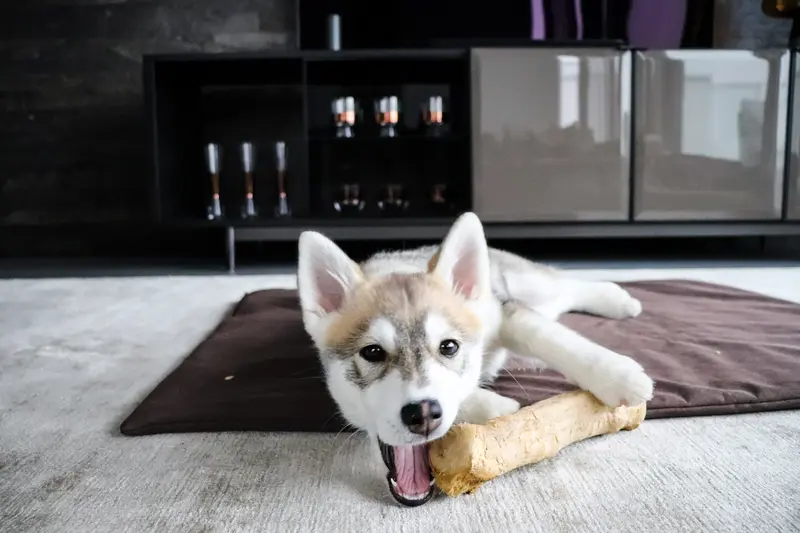
Pomsky Training: Shaping a Charming Bundle of Energy
Congratulations! You have chosen one of the most fascinating dogs in modern breeding. The Pomsky, an enchanting mix of Siberian Husky and Pomeranian, is capturing the hearts of dog lovers everywhere with its fox-like appearance and bright eyes. But don’t let the compact size and cute face fool you: there is a big personality inside that little body. Pomsky training is an exciting adventure that requires consistency, empathy, and a good sense of humor.
As an experienced dog trainer, I often meet owners who make the mistake of viewing their Pomsky purely as a lap dog. However, that doesn’t do justice to this breed. With a shoulder height of 25 to 38 cm and a weight of 9 to 14 kg, they bring a considerable amount of robustness to the table. In this comprehensive guide, you will learn how to guide the loyal, active, and self-confident nature of your four-legged friend in the right direction — from a playful puppy to a well-behaved companion.
The Pomsky as a Student: Understanding Breed Temperament
Before we dive into practical work, we need to understand who is at the other end of the leash. Genetics play a decisive role in Pomsky training. The Siberian Husky is an enduring working dog, bred to make independent decisions in the icy wilderness. The Pomeranian, on the other hand, is an alert, very people-oriented companion dog that loves to be the center of attention.
The result is a dog that is intelligent and highly capable of learning, but also has a mind of its own. A Pomsky will often ask "why" when you give a command. This so-called stubbornness is actually just an expression of their intelligence and independence. They aren't dogs that follow orders blindly; they are dogs that need to be motivated to cooperate.
You can find a deeper understanding of your dog's roots in our detailed Pomsky breed profile. There, you will see that the breed is very family and child-friendly (4/5), but has a medium energy level (3/5). This means: they need daily activity but don't need to run a marathon. Their suitability for city living is high, provided their training is on point.
Pomsky Puppy Training: The Crucial First Weeks
The time between the 8th and 16th week of life is the most important phase in your dog's life. During this sensitive period, the puppy's brain forms neural networks that will shape its behavior for the rest of its 12 to 15 years. Pomsky puppy training should begin the very first day the little whirlwind moves in with you.
Potty Training: Consistency and Routine
Pomskies are clean animals, and many learn potty training quite quickly if you are consistent. However, puppies have tiny bladders. Here are the basic rules for quick success:
- The 2-hour rhythm: Initially, take your puppy outside every two hours.
- Use key moments: Take them to their designated spot immediately after every nap, play session, or meal.
- Praise, praise, praise: When they do their business outside, throw a little party. Use a high-quality treat as an immediate reward.
- No punishment for accidents: If a mishap happens in the house, don't comment on it. Clean it up without a word. Harsh scolding only confuses the dog and can lead to them hiding when they need to go.
Bite Inhibition: Training Gentle Mouths
Puppies explore the world with their mouths. Especially during play, those sharp baby teeth can be painful. The Husky side of the Pomsky often brings a rough play style. If the puppy bites too hard during play, stop the game immediately. A high-pitched, short "Ouch!" mimics the yelp of a littermate. Turn away and ignore them for a few seconds. Afterward, offer a chew toy as an alternative. This teaches them that human skin is off-limits, but toys are allowed.
Socialization: Building Foundations of Trust
A Pomsky is naturally alert and can be initially reserved toward strangers. Socialization determines whether that alertness turns into confidence or fearfulness. Show them the world at their own pace:
- Other dogs of various breeds and sizes (well-socialized older dogs are the best teachers).
- Different surfaces (grass, asphalt, metal grates, forest floors).
- Everyday noises (vacuum cleaners, traffic, buses, sirens).
- People of all ages, wheelchair users, strollers.
Always make sure not to overwhelm the puppy. Positive associations are the goal. For information on health aspects and appropriate vaccinations before contact with strange dogs, visit the website of the Federal Association of Practicing Veterinarians (bpt).
Essential Pomsky Commands for Everyday Life
A well-trained dog enjoys more freedom. Learning Pomsky commands also strengthens the bond between you and your dog. Always train in short sessions (3 to 5 minutes), but several times a day. Always end training on a positive note.
Sit and Down: The Basic Exercises
The "Sit" command is usually the first one a Pomsky learns. Use the lure method:
- Hold a smelly treat directly in front of your dog's nose.
- Slowly move your hand over their head toward their ears.
- Their head will follow the hand, and their bottom will naturally lower.
- As soon as their bottom touches the ground, say "Sit!" happily and release the treat.
For "Down," proceed similarly, but lead the treat from the sitting position straight down between their front paws and then pull it flat along the ground toward you until they lie down.
Stay: Impulse Control for the Little Whirlwind
Pomskies are active, and waiting quietly is often difficult for them. However, "Stay" saves lives, especially in urban areas or near roads. Put your dog in a "Sit." Show them your flat palm, say "Stay" calmly, and take only one single step back. Wait one second, go back to the dog, and reward them. Never increase duration (how long they wait) and distance (how far you go) at the same time. Proceed in tiny steps.
Recall: Your Most Important Tool
Because of the potential prey drive inherited from the Husky, the recall is the absolute king of commands. Start training in a low-distraction environment, ideally in your living room. Call their name and your recall word (e.g., "Come!"). When they dash to you, reward them with the best treat you have (cheese, cooked chicken). They must learn: coming to you is the best thing in the world.
Outside, secure the training for months with a long line (training lead). This prevents them from learning that they can ignore you. More on the professional setup of recall and general dog training is also recommended by the Verband für das Deutsche Hundewesen (VDH).
Breed-Specific Challenges in Pomsky Training
No dog breed is without its quirks. Anyone committing to a Pomsky should know their specific character traits to avoid frustration during training.
The Nordic Stubborn Streak
As mentioned, the Pomsky tends toward independence. If they see no point in performing a command for the tenth time, they might just lie down or look away. Avoid repetitive, drill-style training. Be creative! Vary the rewards (play, sniffing time, food, affection). Make yourself interesting and unpredictable in a positive way. If your Pomsky thinks training is a fun game you've invented, they will participate with enthusiasm.
Prey Drive and Hunting Instinct
Many Pomskies show a pronounced prey drive. They love to chase birds, cats, or squirrels. This behavior is self-rewarding because chasing releases endorphins. This is where anti-predatory training comes in. Learn to read your dog's body language: are they fixated on something, is their body tensing, are their ears pricked forward? That is the moment to intervene, not after they've already started running. Redirect their attention to you before the arousal level gets too high. A well-established stop signal is worth its weight in gold here.
High Vocality
The Pomeranian likes to bark, while the Husky howls and "talks" in its own unique way. This combination often leads to a very vocal dog. Your Pomsky will loudly let you know when they are happy, frustrated, or when someone approaches the property. To prevent them from becoming a nuisance barker, never answer their barking with loud scolding—to the dog, it sounds like you are just barking along. Thank them calmly for alerting you (e.g., "Thanks, I see it") and take the lead. Send them to their spot to show them you have the situation under control.
Advanced Training: Exercise for Body and Mind
Pomsky training doesn't end with sit, down, and potty training. These dogs want to work, even if they don't necessarily have to pull a sled. Mental stimulation often makes dogs more tired and satisfied than hours of walking.
Scent Work (Mantrailing or Object Search): Scent work is high-performance sport for dogs. Hide their favorite dummy in the woods or let them identify tea bags by their smell. This strengthens concentration and provides an enormous mental workout.
Trick Dogging: Pomskies are practically predestined for learning tricks. "Give paw," "roll over," "beg," or weaving through legs (slalom)—all of this not only looks cute but promotes body coordination and strengthens your bond.
Agility (in Moderation): Due to their agility, many Pomskies have great fun with agility courses. However, because they often have a compact stature, you should avoid jumps that are too high to protect their joints. The tunnels and the slalom are the most fun anyway!
Common Mistakes in Pomsky Training (and How to Avoid Them)
Even the best dog parents make mistakes. Here are the classic pitfalls in Pomsky training:
- Inconsistency: Is the dog allowed on the sofa today, but suddenly not tomorrow? The highly intelligent Pomsky will immediately recognize and exploit this gap in your system. Establish rules and stick to them strictly with all family members.
- Underestimating the need for exercise: They look like lap dogs but are small Nordic athletes at heart. A bored Pomsky will find their own entertainment—and that usually means destroyed furniture or excessive barking.
- Bribing instead of rewarding: Do you only show your dog the treat so they will "sit"? Then you are bribing them. They will soon only listen if they see the food first. The treat should always stay in your pocket until the command has been executed.
- Intervening too late: Precisely because the Pomsky looks so cute, they are often allowed to get away with too much. Puppy behavior like jumping on guests is cute at 3 kilos, but extremely annoying at 14 kilos. Train your puppy as you would treat an adult dog.
Frequently Asked Questions (FAQ) about Pomsky Training
Is a Pomsky suitable for beginners?
Conditionally. A Pomsky can be a wonderful first dog if the owner is willing to invest time, patience, and energy into dog training. Since the breed is intelligent but can be quite headstrong and stubborn at times, visiting a professional dog school is highly recommended for beginners. You must be ready to provide clear leadership.
How long does it take for a Pomsky to be potty trained?
This depends heavily on training and the dog's development. With consistent training on a 2-hour rhythm and attentive observation, many Pomsky puppies are reliably potty trained between the 4th and 6th month of life. However, setbacks during puberty are completely normal. The important thing is: stay consistent and never punish accidents!
Can you let a Pomsky off the leash?
That is the ultimate goal, but it requires hard training. Due to the strong prey drive inherited from the Siberian Husky, off-leash freedom is not always possible from the start. The recall must work 100 percent of the time, even under high distraction. Until then, a long line serves as an excellent tool to allow the dog movement while keeping them safe.
How much exercise does an adult Pomsky need?
Despite the medium rating for energy level (3/5), Pomskies usually need about 1.5 to 2 hours of active exercise a day, spread over several walks. More important than just walking is the combination of physical movement (playing, light jogging) and mental stimulation (scent games, command training).
Conclusion: With Love and Consistency to Your Dream Dog
Pomsky training is not a sprint, but a marathon that begins when the puppy moves in and actually lasts a dog's lifetime. These hybrids demand a patient, clear, and fair pack leader. If you are ready to embrace the headstrong, humorous, and endlessly loyal character of this breed, you will be rewarded with a fantastic daily companion that is both city-ready and adventurous.
Whether you are still in the planning phase or already have a little ball of fluff at home: we at HonestDog are by your side with honest information, breed profiles, and a community of animal lovers. Would you like to learn more about this fascinating breed or are you looking for reputable breeders who value health and temperament? Then browse our platform now and find everything you need for a happy life with your four-legged friend!