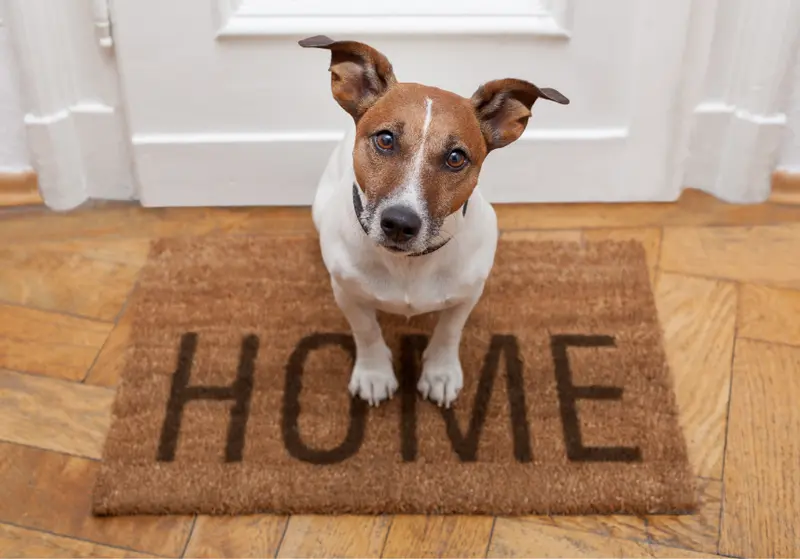
How Much Space Does a Dog Need? A Comprehensive Guide for Dog Owners
In recent years, awareness of the species-appropriate care of dogs has grown significantly in Germany. More and more people know: dogs are social pack animals and do not belong isolated in a kennel, a doghouse, or even on a chain. But how much space does a dog really need to lead a happy and healthy life? Is a garden of their own absolutely necessary? Which dog breeds are suitable for life in a big city? This article provides scientifically sound answers to these questions and supports you in creating the optimal living situation for your four-legged friend.
The Living Space: A Resting Place Instead of an Exercise Arena
Many prospective dog owners are unsure whether their apartment— especially in the city – offers enough space for a dog. The good news: For dogs, home is primarily a place of rest and relaxation, not exercise. According to experts from the German Animal Welfare Association, dogs need one thing above all else at home: a safe, comfortable place to retreat to.

- Resting places: Ideally, your dog should have a designated, quiet place in each living area (e.g., living room, bedroom).
- Feeding place: A separate, quiet feeding place promotes well-being and reduces stress during Eating.
- Basket size: Choose a dog bed that allows your dog to stretch out lengthwise. This is especially important for large breeds to prevent back and joint problems [1].
The apartment or house therefore primarily serves as a "base camp" for the dog. The actual exercise and activity should take place outside – regardless of whether there is a garden or not.
Does a dog need a garden?
Having your own garden is undoubtedly a plus. It offers additional opportunities for play, training, and short toilet breaks. However, according to current research, a garden is not absolutely necessary for a dog's well-being [2]. What is crucial is that you provide your dog with sufficient exercise and mental stimulation every day.
- Advantages of a garden: Spontaneous play sessions, short training sessions, and fresh air are quickly possible.
- Important note: Do not leave your dog alone in the garden for hours! This encourages unwanted territorial behavior and can lead to boredom, stress, or excessive barking [3].
Even without a garden, you can offer your dog a fulfilling life if you provide regular walks, play and training times, and social contact with other dogs.
Apartment size and dog size: Do they match?
The size of your apartment should primarily match the size of your dog— but it is not the most important criterion for a happy dog life. Even large dog breeds like the Great Dane can be happy in a smaller apartment, provided they are sufficiently physically and mentally stimulated [4].
- Large breeds: Keep in mind that large dogs not only need more space to lie down, but also larger rest areas and sufficient space to move around so they don't feel cramped.
- Small breeds: They are better suited to small apartments, but still need daily exercise and social contact.
It is important that the dog bed is large enough so that the dog can stretch out. This is essential for the spine and well-being and prevents diseases such as spondylosis or herniated discs [1].
Living with a Dog in the Big City
Active Breeds and Their Needs
Dogs from the hunting and herding dog groups (e.g., Border Collie, Australian Shepherd, Labrador Retriever) in particular have a strong need for exercise and activity, which is often difficult to fully satisfy in a typical city apartment [5].
- Opportunities for Exercise: If you live in the city, you should ensure that There are sufficient green spaces, parks, or dog parks nearby where your dog can run off-leash.
- Mental Stimulation: Intelligent and hard-working breeds need mental stimulation in addition to walks – e.g., in the form of search games, agility, or trick training.
For livestock guardian dogs or particularly territorial breeds, life surrounded by large numbers of people, noise, and constant stimuli is usually permanently stressful. Even dogs from animal shelters, who have previously only experienced quiet country life, can be overwhelmed in the city.
Suitable Breeds for City Life
Less sensitive and more balanced breeds, usually from FCI Group 9 ("Companion and Toy Dogs"), are, in our experience, better suited to urban life. Examples include the Pug, the French Bulldog, the Cavalier King Charles Spaniel, and the Havanese [6].
- High stimulus threshold: These dogs are less territorial and less prone to excessive hunting instincts.
- Socialization: Ideally, they are accustomed to the diverse impressions of a big city as puppies. Studies show that dogs that are socialized early and positively are significantly more stress-resistant later on [7].
- Practical advantages: Small dogs are easier to carry – An advantage if health restrictions make climbing stairs impossible.
Space isn't everything: A dog's everyday needs
The size of the apartment alone is no guarantee for a happy dog's life. Much more important are:
- Regular walks: At least two to three long walks a day, adapted to age, breed, and health.
- Mental stimulation: Education, play, and training promote bonding and prevent behavioral problems.
- Social contact: Dog contact and interaction with other people support the development of a balanced personality.
- Breed-specific needs: Before purchasing a dog, find out what requirements (e.g., activity, care) each breed has.
Scientific studies show that the quality of life of dogs is largely determined by meeting their social, cognitive, and physical needs – regardless of the square footage of the apartment [2].
Conclusion: How Much Space Does a Dog Really Need?
In summary, the size of your apartment or house is less important for your dog's well-being than many believe. Regular activities, exercise, and mental stimulation outside the home are much more important. Nevertheless, you should consider your dog's size and breed-specific needs when choosing your four-legged friend and your living situation. Offer your dog a quiet retreat, a sufficiently large basket, and ensure daily exercise, activity, and social interaction – then nothing will stand in the way of a happy dog life!
Sources & Scientific Studies
- Dog Beds and Health: Döring, D., et al. (2017). "Lying Areas for Dogs – Importance for Health and Well-being." Veterinary practice, 45(2), 87-95.
- Dog Housing Needs: McNicholas, J., & Collis, G.M. (2000). “Dogs as catalysts for social interactions: Robustness of the effect.” British Journal of Psychology, 91(1), 61-70.
- Territorial behavior and isolation: Beerda, B., et al. (1999). “Chronic stress in dogs subjected to social and spatial restriction.” Physiology & Behavior, 66(2), 233-242.
- Big Dogs in Small Apartments: Wells, D. L., & Hepper, P.G. (2000). “The influence of environmental change on the behavior of housed dogs.” Applied Animal Behavior Science, 68(2), 151-162.
- Exercise needs of active breeds: Rooney, N. J., & Bradshaw, J.W.S. (2002). “Breed and sex differences in the behavioral attributes of companion dogs.” Applied Animal Behavior Science, 79(3), 273-297.
- Suitable breeds for the city: Fédération Cynologique Internationale (FCI): FCI nomenclature
- Socialization and stress resistance: Appleby, D. L., et al. (2002). “Relationship between aggressive and avoidance behavior by dogs and their experience in the first six months of life.” The Veterinary Record, 150(14), 434-438.
Note: This article was written based on current scientific knowledge and the latest findings on dog ownership. However, it is not a substitute for individual advice from veterinarians, dog trainers, or behavior experts.