
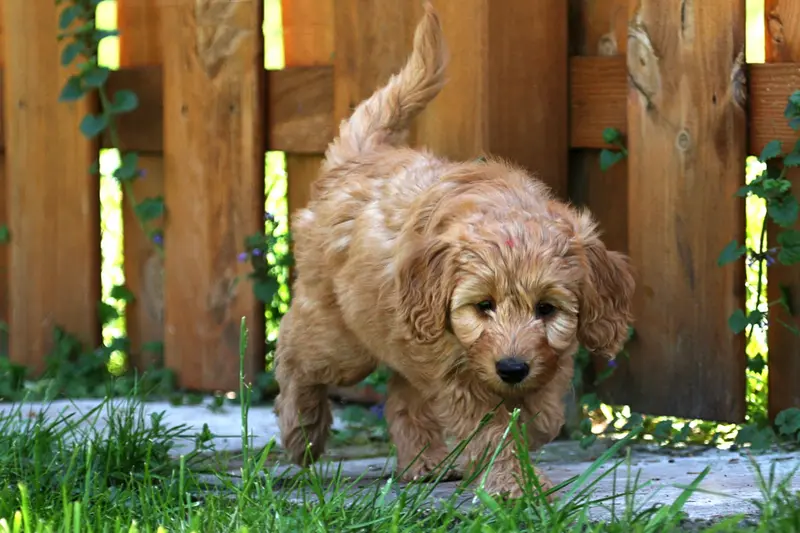
Welcome to the Wonderful World of Your Curly Friend
You have chosen one of the most charming, friendly, and intelligent dogs in existence. However, even the loveliest dog doesn't train itself. Goldendoodle training is the key to a harmonious life together and determines whether your dog will become the relaxed companion you envision. Precisely because these dogs are so incredibly people-oriented and intelligent, they learn quickly — unfortunately, that includes the things they aren't supposed to learn.
As an experienced dog trainer, I can assure you: working with this breed is a true privilege. In this comprehensive guide, I will show you how to unlock your four-legged friend's full potential. Together, we will walk the path from those first clumsy puppy steps to advanced exercises for the adult dog.
The Basis of Goldendoodle Training: A Star Pupil on Four Paws
To train your dog correctly, you must understand who is actually sitting at the other end of the leash. The Goldendoodle combines the heritage of two remarkable breeds: the boundless friendliness and the "will to please" of the Golden Retriever paired with the razor-sharp intelligence of the Poodle.
The result is a sensitive, polite, and very cooperative dog. With an energy level of 3 out of 5, they are active and ready for fun without being hyperactive. This mix makes them an excellent student. They want to work with you and are forgiving of minor beginner mistakes. If you want to learn more about their fascinating history and all their personality traits, be sure to check out our detailed Goldendoodle breed profile.
What does this mean for your training? Harshness, loud shouting, or physical punishment are absolute taboos for this sensitive dog. They respond best to positive reinforcement, clear body language, and loving but extremely consistent leadership. If you are authentic and fair, your Goldendoodle will trust you unconditionally.
Goldendoodle Puppy Training: The Crucial First 16 Weeks
The period up to the 16th week of life is the most important window in your dog's life. During this so-called imprinting and socialization phase, your puppy's brain learns at lightning speed. Goldendoodle puppy training should therefore begin on day one in their new home.
Potty Training: Patience and Good Timing
Goldendoodles are smart and usually understand quickly where they should do their business. Your job is to prevent accidents in the house from the start. You can achieve this through strict management:
- Take your puppy outside immediately after every nap, play session, and meal.
- Praise them enthusiastically with a calm voice and a treat when they relieve themselves outside.
- If an accident happens indoors: Clean it up without comment. Scolding only confuses the sensitive puppy and may lead to them hiding behind the sofa next time.
Bite Inhibition Training: When Sharp Teeth Nip
Golden Retrievers were bred for retrieving — they love carrying things in their mouths. Your Doodle puppy will also explore the world with their teeth at first. Bite inhibition is not innate; it must be learned.
If your puppy bites too hard during play, let out a short, high-pitched yelp (an "Ouch!") and stop the game immediately for a few seconds. Ignore them. Once they calm down, you can gently resume play. Additionally, always offer an alternative they are allowed to chew on, such as a robust chew toy or a rope.
Socialization: Discovering the World Positively
Your Goldendoodle is naturally extremely family-friendly (5/5) and gets along well with other dogs (4/5). To keep it that way, they need positive experiences in the first few weeks. Show them the world at their own pace:
- People of all ages (including children, people in wheelchairs, or wearing hats).
- Different surfaces (grass, asphalt, metal grates, forest floor).
- Everyday noises (vacuum cleaners, traffic, doorbells).
- Veterinary clinics. A pro tip: Practice vet visits just for fun. The Bundestierärztekammer (Federal Chamber of Veterinarians) recommends "Medical Training," where the dog learns to be touched everywhere while remaining relaxed, without a needle being involved every time.
Be careful not to overwhelm your puppy. After every little adventure, they need plenty of sleep to process what they’ve experienced.
Essential Goldendoodle Commands for Everyday Life
A well-trained dog enjoys more freedom. Learning basic signals is not just an exercise in obedience; it is an active insurance policy and a means of communication. Goldendoodle training should take place in short, crisp sessions of 3 to 5 minutes. Several times a day is much more effective than an hour at once.
Sit and Down: The Basic Signals
The "Sit" is the simplest of the Goldendoodle commands. Guide a treat slowly over the dog's nose back toward their ears. Their head goes up, and their rear automatically goes down. As soon as their bottom touches the ground, say "Sit" and give the reward.
For the "Down," guide the treat straight down from the "Sit" position between your dog's front paws and slowly pull it away from them in an L-shape. If they follow your hand and lie down, give the command "Down" (or "Platz") followed by the reward.
The Stay: Impulse Control for the Social Doodle
Goldendoodles love being right in the middle of everything. Therefore, the "Stay" is often a challenge at first. Put your dog in a sit or down. Give the command "Stay," show them your flat palm, and take only half a step back. Immediately return to them and reward them before they even think about standing up. Increase the distance and duration by millimeters over the following weeks.
The Reliable Recall: Your Most Important Connection
The recall must be solid. Start in a low-distraction environment (in the living room or garden). Call your dog's name and your recall signal (e.g., "Come!"). When they come running joyfully toward you, make yourself interesting! Squat down, clap softly, or walk a few steps backward. Once they reach you, give them the absolute best reward of the day (e.g., a piece of cheese or sausage). In the first few months outdoors, work consistently with a long training lead to secure the recall until it works 100% of the time.
Breed-Specific Challenges in Goldendoodle Training
Every breed brings its own little quirks. Even the seemingly perfect family dog has a few areas you should keep an eye on.
The "Everybody's Darling" Trap (Jumping Up)
Goldendoodles love people. They love them so much that they are often completely beside themselves with joy and want to jump on everyone to say "hello." While cute in a fluffy puppy, this quickly becomes a problem with a 30-kilogram, full-grown male, especially when small children or elderly people are involved.
The solution: Ignore the jumping completely. Turn away, cross your arms, and look up. The dog receives zero attention — neither verbal nor physical. Only when all four paws are on the ground do they get attention. Alternatively, teach them to sit when greeting people. A dog that is sitting cannot jump at the same time.
Medical Training and Grooming Acceptance
With a grooming requirement of 3/5 and a wavy to curly coat that has an undercoat, your Doodle needs regular brushing to prevent matting. Many owners forget that physical care is also part of training. Accustom your dog from a young age to combs, brushes, nail clippers, and having their paws, ears, and teeth touched. Build this playfully into your cuddle times and reward them for staying still. This will save you both a lot of stress later on.
Advanced Training and Mental Stimulation
Has your Goldendoodle survived puberty and mastered the basic commands? Perfect! Now the real fun begins. As highly intelligent dogs (thanks to the Poodle) and passionate retrievers (thanks to the Golden Retriever), they need more than just a daily walk around the block. They are excellently suited for city life (4/5), provided their minds are challenged.
Dummy Training and Scent Work
Nothing makes a Goldendoodle happier than fulfilling a task for you. Dummy training (retrieving weighted bags) is practically tailor-made for them. They learn not only to retrieve but also to communicate with you at a distance, exercise impulse control (staying put while the dummy flies), and use their fantastic nose.
Tracking or mantrailing are also great options. After 20 minutes of intense scent work, your dog will sleep more deeply and contentedly than after two hours of simple walking.
Dog Sports: Agility and Obedience
For fit, adult Doodles (at the earliest from 12 to 15 months of age, when the joints are fully developed), dog sports are a great way to provide stimulation. In Agility, they can let out their agility and energy; in Obedience (the "high school" of discipline), they can use their intelligence. The Verband für das Deutsche Hundewesen (VDH) offers great overviews on its website of various dog sports offered locally in clubs. Take a look and see if there’s something for you and your curly friend.
Avoiding Common Training Mistakes
Even the best dog parents make mistakes. If you avoid the following pitfalls from the start, your journey will be much smoother:
- Inconsistency in the family: Is the dog allowed on the sofa with you but not with your partner? This confuses the dog. Sit down as a family and define fixed rules. A Goldendoodle is smart enough to exploit gaps in the system immediately.
- Repeating signals ("Come! Come now! Get over here!"): If you say a command five times, the dog learns they only have to react on the fifth time. Give the command once, clearly. If they don't react, help them (e.g., by gently limiting their movement via the leash), but don't keep chattering at them.
- Too much activity: Precisely because Doodles are so eager to learn, owners tend to overwork them. Above all, a dog must learn to remain calm. Targeted "doing nothing" on a blanket in a café is exhausting training for a dog's brain and incredibly important.
Frequently Asked Questions about Goldendoodle Training (FAQ)
When should I start training my Goldendoodle?
Training starts the second the puppy enters your house. This doesn't mean you should immediately spend hours drilling commands. Rather, it’s about establishing house rules, building a bond, potty training, and the first playful steps of bite inhibition.
Are Goldendoodles stubborn or difficult to train?
No, quite the opposite. They are considered extremely cooperative and beginner-friendly. If a Goldendoodle seems "stubborn," they usually haven't understood the task correctly, are distracted, or simply lack the right motivation (the right treat or toy).
How long should daily training sessions last?
Quality beats quantity. For puppies, 2 to 3 sessions of 3 minutes a day are completely sufficient. For adult dogs, you can simply integrate commands into your daily walks. A 15-minute intensive trick or dummy training session provides excellent mental stimulation.
My Goldendoodle jumps on all visitors. What can I do?
This is a typical breed trait, as they are very people-oriented. The magic word is management: put the dog on a leash before the visitor enters. Instruct the visitor to ignore the dog completely (no looking, no talking, no petting) until the dog has calmed down and all four paws are on the floor. Only then can a gentle greeting take place.
Conclusion: Your Path to the Perfect Companion with HonestDog
Goldendoodle training is a wonderful journey. These dogs bring everything you could want in a family dog: heart, mind, and a large dose of humor. If you rely on positive reinforcement, loving consistency, and species-appropriate mental stimulation from the start, you will have a companion by your side that many will envy. Always remember: training is not a chore, but the best way to build a deep, trusting bond with your dog.
Are you still looking for the perfect curly friend for your family, or would you like to exchange ideas with like-minded people? On HonestDog.de, you will find not only verified, reputable breeders where animal welfare comes first, but also a large community and further valuable expert tips regarding your dog. Visit us, discover detailed breed profiles, and let us accompany you on the exciting journey to a happy dog life!