
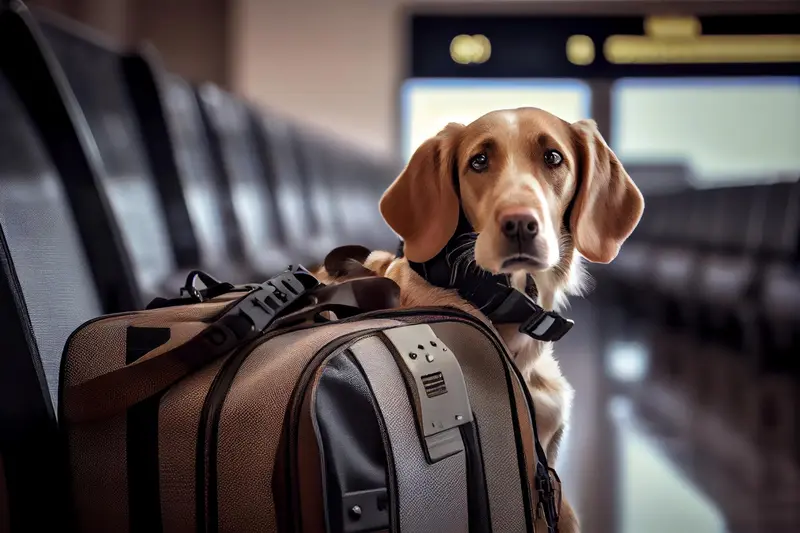
Air travel can be a challenge, especially if you want to take your four-legged friend with you. There are many reasons to transport a dog on an airplane. Flying with a dog, so you can take your dog everywhere with you, sounds like a dream to some, but for others it's a necessity. In this article, we'll explain when you should and shouldn't travel on an airplane with your dog, and how you can make the trip as relaxing as possible.
Dogs on airplanes – is that really necessary?
Since flying is usually very stressful for most dogs, you should carefully consider whether it even makes sense to take your dog on the plane. Every dog owner has to make this decision for themselves.
Reasons for air travel
- Relocation with long distances and few other options) from, for example, Europe to South America
- (One-time) transport of rescue dogs from the country of origin
- Trained therapy dogs as companions
You should refrain from air travel and look for alternatives in the following cases:
- Relocation, e.g., within Europe
- Vacation
Preparing for air travel
Your dog's suitability for air travel
Not every dog is suitable for air travel. Dogs that are very anxious or have health problems may be better off staying at home. If you are unsure whether your dog will survive a flight, you should speak to your veterinarian beforehand.
Vaccinations and Documents
Make sure your dog has all the necessary vaccinations and that you have all the necessary documents with you. This may include, but is not limited to, a valid pet passport, a current rabies vaccination, and in some cases, a veterinary certificate. Requirements vary depending on the destination country, so it is advisable to check ahead of time.
Airline Requirements
Each airline has its own rules and regulations regarding dogs. These relate to the size and weight of the dog, as well as how the dog is transported. Some airlines allow smaller dogs in the cabin, while larger dogs must travel in the cargo hold. It's important to inquire ahead of time and comply with the relevant regulations. Please note that the maximum stated kilograms often refer to the dog WITH the bag/crate.
The Right Carrier
If your dog must travel in the cargo hold, it needs a sturdy and secure carrier. The crate should be large enough for your dog to stand, lie down, and turn around comfortably. The crate must also be well-ventilated and should be approved by the airline. Dogs that are allowed to travel in the cabin require a special carrier.
It's important that your dog gets used to the carrier or carrier before the trip. Let them explore the crate, put their favorite blanket inside, and practice closing the crate so they feel safe. You can also take short car rides to get your dog used to traveling in the crate. Please note that a proper adjustment can take several weeks or even months.
The day of the flight
On the day of the flight, there are a few things to keep in mind to minimize stress for you and your dog.
Feeding before the flight
Feed your dog a few hours before the flight, but avoid a large meal immediately before takeoff. A full stomach can lead to discomfort during the flight. Make sure your dog drinks plenty of water, but not too much, to avoid unnecessary toilet breaks.
Exercise and relaxation
Make sure your dog gets enough exercise before the flight. A long walk helps to burn off excess energy and calm the dog. Shortly before the flight, you should give your dog the opportunity to relieve himself so that he is relaxed during the journey.
Check-in and security checks
Allow enough time for check-in and security checks. Dogs traveling in the cabin must remain in their carriers for the entire journey. For dogs in the cargo hold, it is important to ensure that the crate is properly secured and that your dog is comfortable.
During the flight
There isn't much you can do to calm your dog during the flight, but there are some measures you can take.
Stay calm
Your dog senses your emotions. If you are calm and relaxed, your dog will be calmer too.
Chews
If your dog is traveling in the cabin, you can give him a chew bone to entertain him. Make sure it's not too strong-smelling, so as not to bother other passengers. However, some people ignore chews when they're excited.
After Arrival
After landing, it's important to give your dog enough time to rest and relax.
First Steps After Arrival
As soon as you've landed, take your dog outside so he can relieve himself and stretch his legs. Some dogs can be a little confused or stressed after a flight, so it's important to give them time to adjust to their new surroundings.
Further steps at your destination
When you arrive at your destination, make sure your dog has the opportunity to eat and drink. Some dogs need some time to recover after the flight before returning to their normal behavior. Observe your dog closely and give them the time they need.
Medication when traveling by plane
Depending on the medication and the type of dog, medication can help. However, any medication should always be discussed with a veterinarian who knows the dog and tested at home beforehand. This should therefore be planned and discussed weeks before the flight. Be careful of medications that only relax the body, while the head can still hear everything. Such medications were widely used for a while, with the explanation that they would help the brain learn that everything is relaxed. Unfortunately, for many dogs, this amounts to helplessness and can do more harm than good.
Conclusion
Air travel with dogs requires thorough preparation and good planning. With the right measures, the trip can be less stressful for you and your dog. Always remember that your dog's well-being is your top priority, and plan accordingly.