HonestDog
Spotting extreme breeding – before you fall in love
What to look for in a dog – whether a puppy, a shelter dog or a second-hand dog. A HonestDog fact sheet for vet practices, shelters and dog schools.
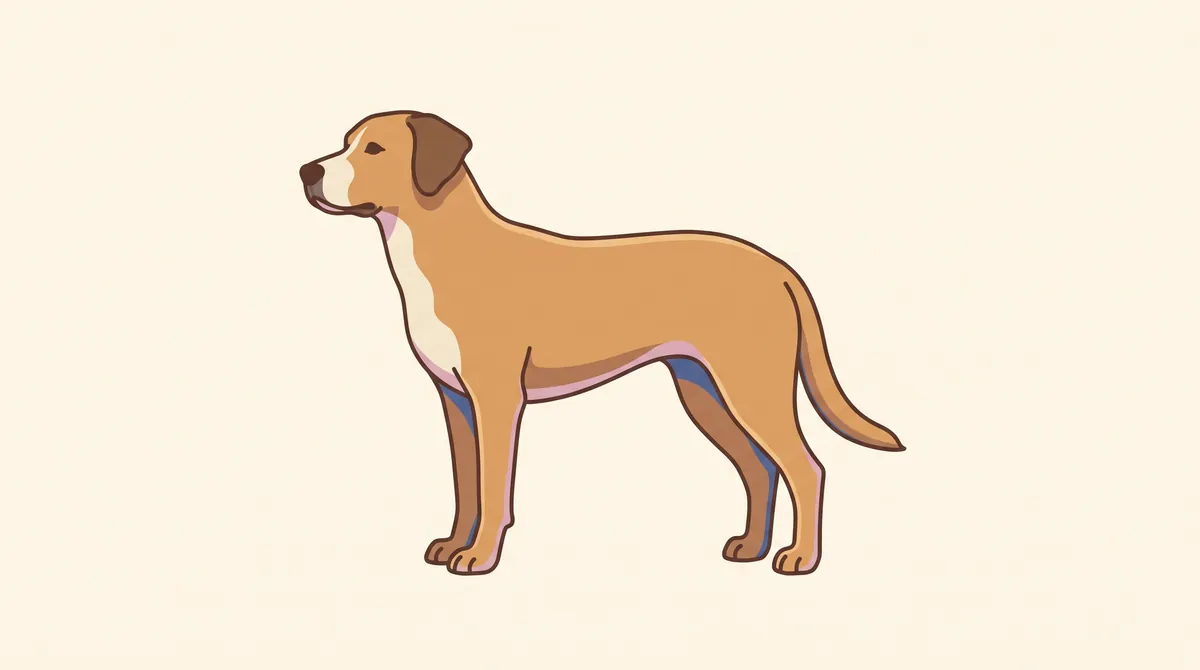
Seven inherited extreme-breeding traits
- 1Flat face – A short muzzle looks endearing – but when the skull shrinks and the soft tissue inside it doesn't, the dog is left with too little room to breathe.
- 2White & deafness – Not every white dog is at risk – but where pigment cells are missing from the head, they are often missing from the inner ear too, and a puppy can go deaf in its first weeks of life.
- 3Ridge & dermoid sinus – The ridge of backward-growing hair is what makes a Ridgeback a Ridgeback – and the same mutation raises the risk of a skin tunnel that can reach the spinal cord.
- 4Merle & double merle – One merle parent gives the marbled coat many people love; two merle parents can produce puppies born deaf or with malformed eyes.
- 5Colour dilution – Blue, grey and lilac dogs look striking – but the same gene variant that lightens their colour can, in some breeds, leave the coat permanently brittle.
- 6Screw tail – The short, twisted tail of bulldog breeds looks cute – but it is the visible end of a spinal malformation that often reaches into the back as well.
- 7Short legs – Dachshund, Corgi, Basset: the gene behind those short legs also makes the spinal discs age early – and yet not every Dachshund is the product of extreme breeding (called Qualzucht in German law).
Five warning signs
- The puppy breathes noisily, snores or wheezes even at rest.
- Both parents are merle (merle × merle) – this produces double-merle puppies, often with sight and hearing problems.
- Extremely short legs, an extremely short nose or a “rare” colour are used as a selling point.
- There is no health documentation for the parents.
- The puppies are shown without their mother.
In Germany, Section 11b of the Animal Welfare Act prohibits breeding dogs where the offspring can be expected to suffer inherited pain, suffering or harm. The ban applies to anyone who breeds dogs – owning such a dog is not illegal.
Every trait explained – with breeds, pictures and the law:
www.honestdog.de/en/extreme-breeding
This fact sheet does not replace a veterinary examination. Illustration: AI-generated, editorially reviewed. · As of September 2026