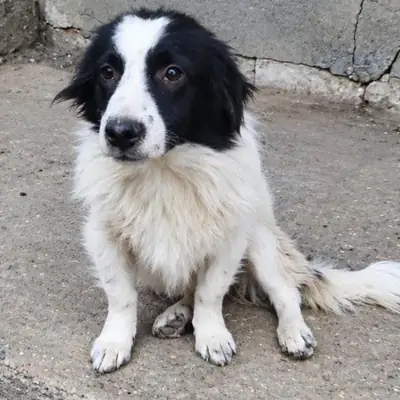
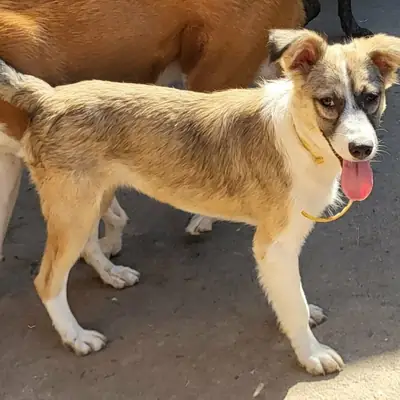
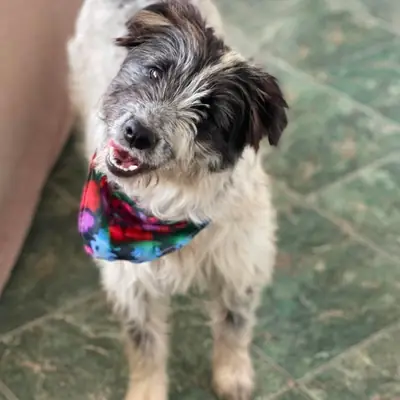
With a shoulder height of 35 to 63 cm and a weight of 7 to 30 kg, Australian Labradoodles vary a lot in size. In a shelter you'll usually meet sensitive dogs who first have to come to terms with losing their people. Because they're so empathetic, they react strongly to moods. Give your new companion time to build trust – their high trainability and the way they get along with children and other dogs help them find their feet in their new surroundings.
Health-wise, the breed is considered fairly robust and has a life expectancy of 12 to 15 years. From their ancestors, however, Australian Labradoodles inherit breed-typical issues affecting the joints, the eyes and blood clotting. These include hip dysplasia (HD), elbow dysplasia (ED), generalized progressive retinal atrophy (PRA), exercise-induced collapse (EIC), von Willebrand disease and degenerative myelopathy. Health-focused breeders have the parents' hips, elbows, knees and eyes checked by X-ray and clinical eye exams and use DNA tests for blood clotting and exercise tolerance (such as EIC) to lower the risk in their line – but with a shelter dog, the background is often unknown. If the dog comes from a puppy mill, these important screenings of the parents are missing. So keep your dog at a healthy weight throughout its life to take strain off the joints, and always discuss blood clotting with your vet before any upcoming surgery.