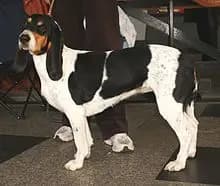
Finding reputable Bernese Hound breeders: what to look for when buying a puppy
The Bernese Hound originates from the Swiss Alps, where it was originally bred for the tireless hunting of hares and other game. Today this medium-sized dog (males reach a height at the withers of 49 to 59 cm and a weight of 14 to 20 kg) is valued for its extremely friendly, people-oriented nature and its fondness for children. At the same time, it is a highly active hunting dog and scent hound with an enormous need for exercise and a pronounced independent streak, which makes training demanding. If you are looking for a suitable Bernese Hound breeder, your choice largely determines whether you get a temperamentally sound, physically robust companion for the next 10 to 12 years.
Why choosing the breeder matters so much with the Bernese Hound
A dog whose greatest passion is running and exploring for hours on end needs a sound musculoskeletal system and healthy sense organs. Although the Bernese Hound is generally regarded as a robust breed, it has specific health weak points affecting the joints, the eyes and the long, pendulous ears. A breeder must also channel the breed's lively temperament through well-planned socialisation, so that the puppy stays responsive in everyday family life later on. Unscrupulous backyard breeders ignore these genetic and behavioural factors, which can have painful and costly consequences for you and your dog later.
Health screening: these tests make the difference
Responsible breeders select their breeding dogs strictly in order to reduce breed-typical risks in their lines in a targeted way. Before you decide to buy, always ask to see the parents' written results, and look out for the following points:
- Hip dysplasia (HD) and elbow dysplasia (ED): Because the Bernese Hound needs a lot of exercise, healthy joints are essential. X-ray screening for HD is part of the breed's recommended health standard. A health-conscious breeder will also have the parents X-rayed for ED. Good X-ray results in the parents significantly lower the risk of joint developmental problems in the puppies, but they do not replace the joint-friendly rearing that is still necessary once the puppy is with you at home.
- Eye examinations (progressive retinal atrophy, PRA): Generalised progressive retinal atrophy occurs in the breed. It is a progressive disease of the retina that can lead to blindness. Reputable breeders have their breeding dogs' eyes clinically examined regularly by veterinary specialists, so that affected animals can be excluded from breeding.
- Ear health: The breed's long, pendulous ears are prone to infections if air circulation is poor. Good breeders take this into account as early as choosing the parents, selecting dogs whose ears are as trouble-free as possible, and they show you how to check and care for them regularly.
Signs of a good Bernese Hound breeder
You can recognise a competent breeder by their transparency and the conditions in which they keep their dogs. The dogs live in close contact with the family, not isolated in a kennel. The breeder will be honest with you that the Bernese Hound is poorly suited to purely urban life and, besides physical exercise, also needs mental stimulation such as nose work. They will also question you in detail about your living circumstances, to make sure you can meet the breed's high energy level and hunting drive. A realistic purchase price for a well-socialised puppy from supervised breeding is between 1,500 and 2,500 euros.
5 specific questions to ask the breeder
Use your first visit to the breeder to ask these specific questions:
- Can you show me the official X-ray results for hip dysplasia (HD) and elbow dysplasia (ED) for both parents?
- When was the parents' last clinical eye examination, and have there ever been cases of progressive retinal atrophy (PRA) in your line?
- Are your breeding dogs prone to ear infections, and how do you get the puppies used to having their long ears checked regularly?
- Are your dogs used for hunting, or how else do you satisfy their pronounced urge to run and track in everyday life?
- How do you support joint-friendly rearing in the first weeks of life, and what feeding and exercise recommendations will you give me for the first year?
Warning signs: how to spot irresponsible breeders
Walk away from the purchase immediately if the seller cannot produce official hip scoring results, or dismisses health questions with blanket statements such as “The vet has looked at the parents, they're perfectly healthy”. A simple general clinical check-up never replaces an official HD X-ray or a specialist eye examination. Other clear warning signs are puppy prices well below 1,500 euros, puppies being handed over without a microchip, vaccination record and pedigree papers, and sellers who promote the Bernese Hound as an undemanding, easy-to-train sofa companion. Likewise, if the mother is not there, or seems fearful and unkempt, you should never buy out of pity.
On HonestDog, every breeder goes through a registration process before being approved: identity verification by ID and selfie, where applicable proof of club membership or a §11 permit, a knowledge test on breeding and animal welfare, and agreement to the HonestDog breeding standards – among other things, no breeding with traits associated with extreme breeding, and no breeding dogs under 18 months. Without a verified §11 permit, a breeder can list a maximum of two breeding bitches there, and you can report anything suspicious about a breeder profile directly via “Report content”. When you visit, ask to see the parents' original test results. You can find current litters under Bernese Hound puppies on HonestDog.