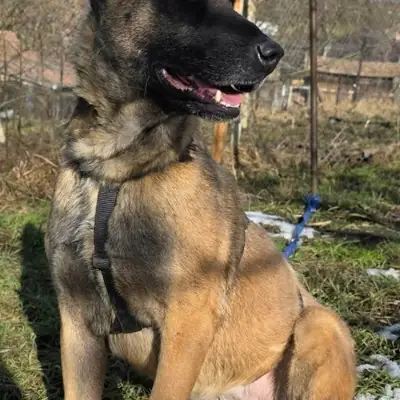
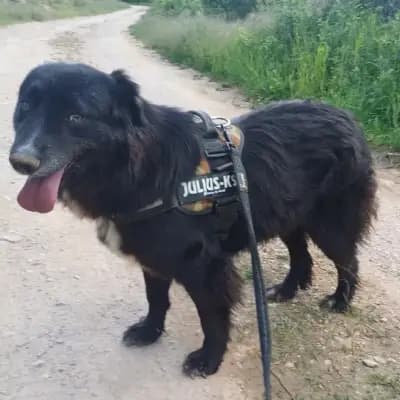
A Smooth Collie in a shelter often seems reserved at first. The noisy daily routine of the kennels takes its toll on these sensitive dogs. Don't be fooled by initial shyness: once he has come to trust you, he blossoms into a gentle, attentive family dog who usually gets on well with children (4/5) and other dogs (4/5).
Health issues you need to know about
With a rescue dog, the genetic history is often unknown, especially if the animal originally came from puppy farmers. For Collies there is a clear health pattern: drug sensitivity, joints and eyes often remain an issue for life.
Health-focused breeders in the Club für Britische Hütehunde e.V. (CfBrH) use DNA tests (including for the MDR1 defect, Collie eye anomaly [CEA], progressive retinal atrophy [rcd2-PRA], dermatomyositis, degenerative myelopathy, inflammatory pulmonary disease and the merle factor), clinical ophthalmological eye examinations and X-rays for hip dysplasia. A genetic test shows whether a parent dog is clear, a carrier or affected, so that breeders can make targeted pairings and reduce risks in their lines; reputable breeders also screen for rare conditions such as cyclic haematopoiesis (grey Collie syndrome). For a shelter dog, these parental results are usually missing.
We therefore strongly recommend the following: have your vet carry out a DNA test for the MDR1 defect (drug hypersensitivity) in your adopted Smooth Collie straight away, if the shelter has not already arranged this. This test reliably shows you whether your dog will have a life-threatening reaction to certain common medications (such as some worming treatments or anaesthetics). Also plan regular check-ups of the eyes and joints. Take care with the merle coat colour too: uncontrolled matings of two merle dogs can result in severe eye and hearing damage.