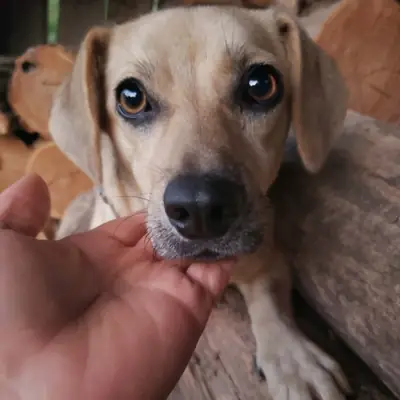
In a shelter, this sensitive dog, who is fixated on his people, often seems reserved or stressed at first, but he quickly blossoms again in a calm environment. The short, glossy coat without an undercoat needs little grooming, but it is precisely this coat that needs your attention in everyday life: be sure to protect your dog from the cold and wet in winter with a well-fitting dog coat.
A frank look at health is essential before adoption. With good breeding, the English Toy Terrier (Black and Tan) is considered a fairly robust companion, but because of the small gene pool it carries breed-typical risks affecting the knees, eyes and blood clotting. These include patellar luxation (dislocation of the kneecap), eye conditions such as cataract, primary open-angle glaucoma, progressive retinal atrophy, retinal dysplasia, and ectropion and entropion. Skull shapes such as an apple head or an open fontanelle, as well as the blood clotting disorder von Willebrand disease type I, are also known in the breed.
While health-focused breeders (for example within the Klub für Terrier e.V.) pay attention to a diverse gene pool and have the parents' knees, eyes, heart and blood clotting tested in order to reduce hereditary risks in the line, the exact origins of a rescue dog are often unknown. For a dog from a shelter, vaccinations, microchipping and an initial examination are usually covered; ask to see the existing paperwork in detail. Before any planned operations or dental treatment, arrange a blood clotting check with your vet, and in everyday life make sure exercise is gentle on the joints.