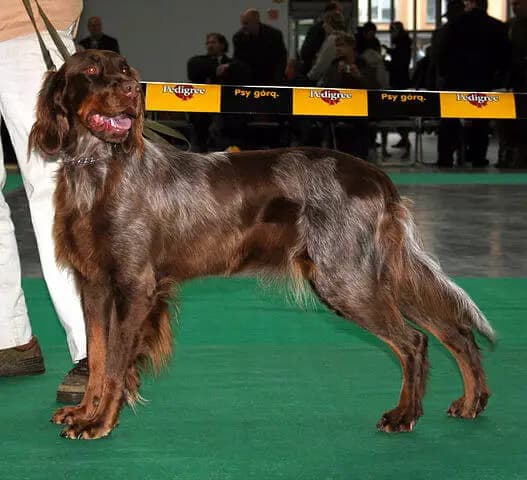
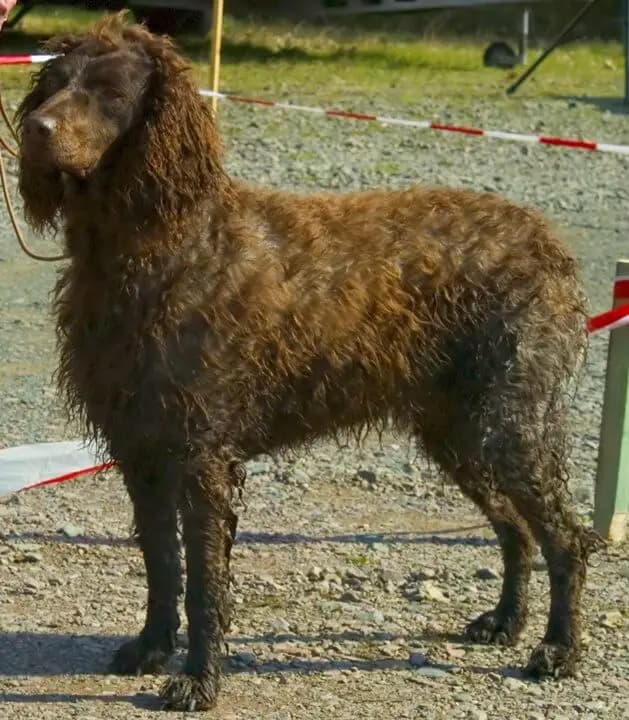
Picardy SpanielClose relative
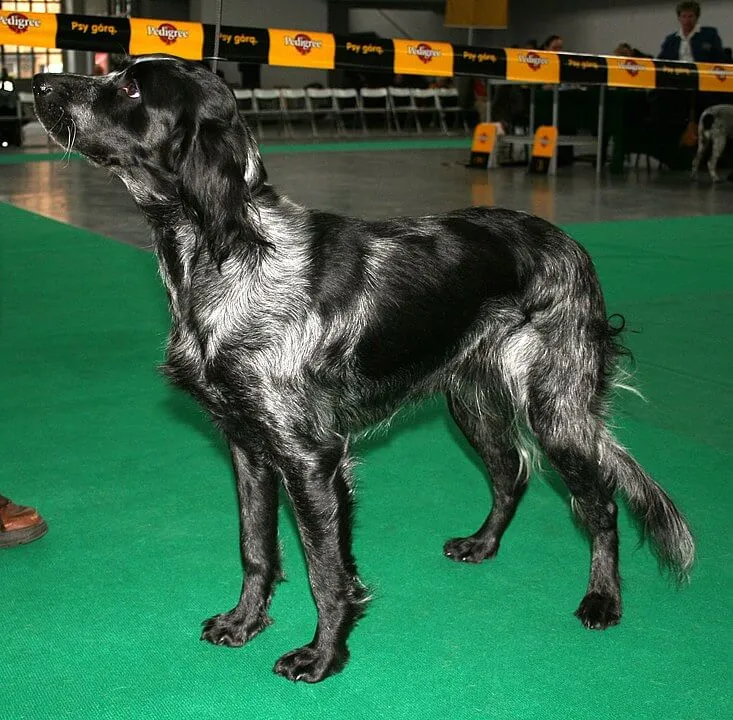
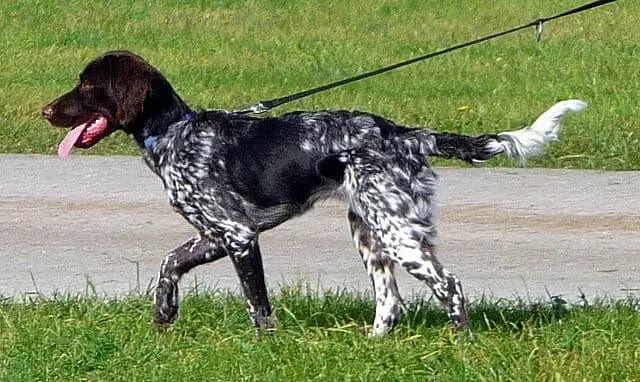
The Epagneul bleu de Picardie is a calm, enduring pointing dog and flushing dog — bred in Northern France for all-day searching in wet, open terrain, cooperative with the hunter and gentle in nature.
How the health grade is calculated
Sources for required breeding screenings. Verein für französische Vorstehhunde e.V. (VBBFL)
Self-check
Answer 6 quick questions about your everyday life and see how well the Blue Picardy Spaniel fits you — including an honest cost estimate per month, per year, and across the dog's lifetime.

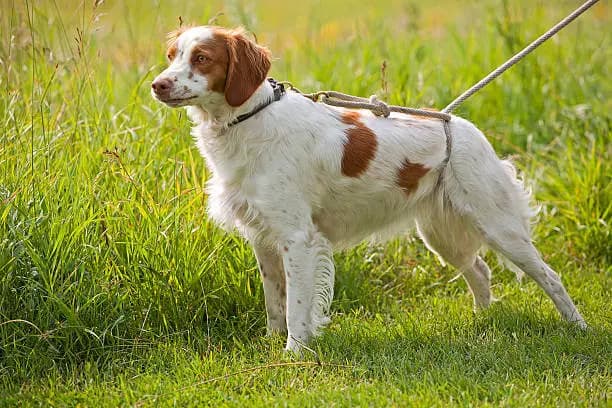

At a glance
The essentials — key facts, traits, and health priorities — before you dive deeper.
Lifespan
12–14 yrs
Shoulder height
55–60 cm
Weight
20–30 kg
Practical
Temperament
Daily life
What matters most
Especially with a Blue Picardy Spaniel, choosing the right breeder is the single most important decision you'll make. Serious breeders consistently test the parents for inherited conditions, prioritize healthy early socialization, and stay accountable long after handover. A cheap puppy without health screening tends to become the most expensive dog later on.
See HonestDog breeder standards →Colors & coat
The coat colors that occur in the Blue Picardy Spaniel — including which ones fall outside the breed standard and which carry genetic risk.
Eye colors
 Brown
Coat type
 Smooth
 Illustrative image
Medium
 Double coat
The real vibes check
An Epagneul bleu de Picardie is not a dog you can just have 'tag along' while you work — he is a quiet but tireless partner looking for a job to do. If you provide that, you get one of the calmest yet most capable family dogs in France; if you don't, you end up with a quietly frustrated dog.
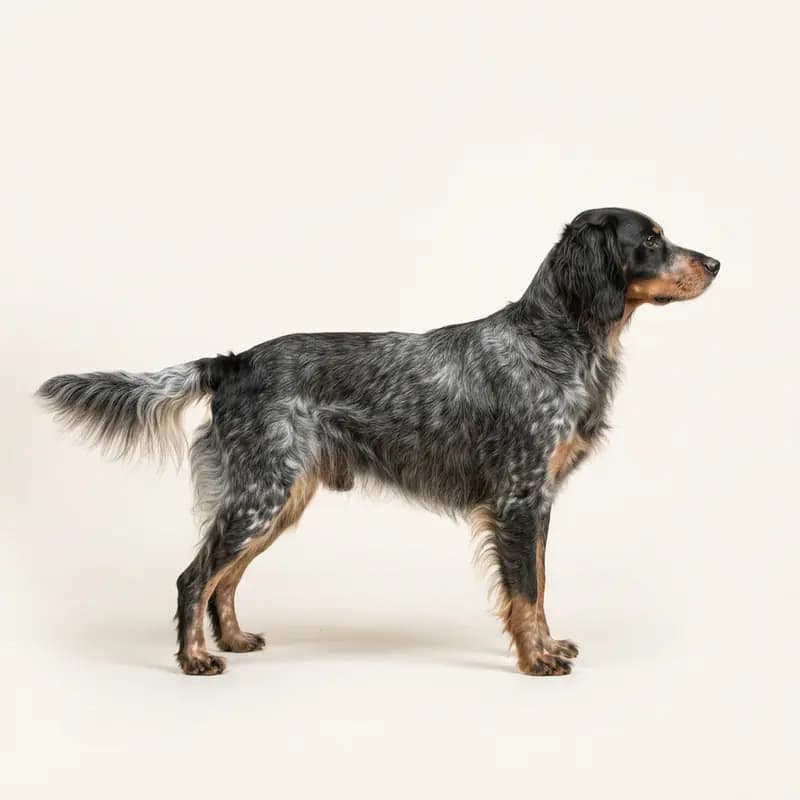
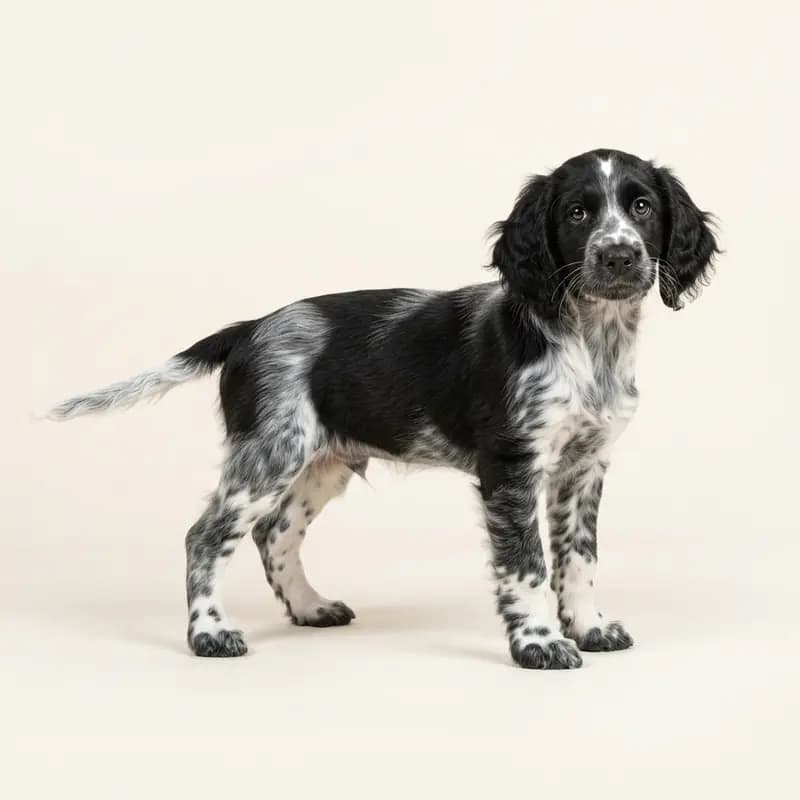
The Epagneul Bleu de Picardie is an impressive medium-sized hunting dog with a robust yet elegant appearance. His body is well proportioned and muscular, giving him the necessary agility and endurance for his work. This dog is a real eye-catcher with his shiny, wavy coat, which is a mix of black and white with shades of blue. The ears are of medium length and fall in loose folds down the sides of the head, while the eyes are lively and expressive. Its nose is always black, and its tail is usually carried at back level. The breed belongs to FCI Group 7, the pointers. Although there are no specific performance and show lines within the breed, all Epagneul Bleu de Picardie dogs are high-performance working dogs that can also be successful in beauty competitions.
The Epagneul Bleu de Picardie is a highly intelligent and versatile dog that can adapt to a variety of tasks, although its primary role remains that of a hunting dog. His sharp instincts and natural curiosity make him an efficient worker, able to make decisions independently and master complex tasks. But despite his work orientation, the Epagneul Bleu de Picardie also shows a very gentle and loving side. He is very people-oriented and loves spending time with his family. His playful and friendly nature makes him a great companion for children and other pets. Although the Epagneul Bleu de Picardie is an active breed, it does not tend to be hyperactive. He enjoys his active moments, but also needs his rest times. He can learn to stay alone provided he gets enough exercise and mental stimulation when the family is home. An Epagneul Bleu de Picardie has a natural hunting instinct and often displays strong prey-catching behavior. Although this is useful in a hunting environment, it can be challenging when living in a household environment where smaller pets are present. That's why it's important to train an Epagneul Bleu de Picardie early and consistently to control this instinct. The Epagneul Bleu de Picardie is a natural guardian and tends to be vigilant. He is not an aggressive guardian, but more of a careful observer who will alert his family if he notices anything unusual. This makes him an effective but not overly vocal guard dog. However, it is important to note that each dog is individual and that the temperament and behavior of each Epagneul Bleu de Picardie is influenced by a number of factors including genetics, socialization, training and environment.
| Watchfulness Reports unusual activity but stays controlled. | Moderate |
| Openness to Strangers Warms up quickly and is generally welcoming. | Friendly |
| Hunting or Herding Drive Powerful instinct that can override recall when triggered. | Strong |
Fun Fact!
Did you know that, despite its breed name, the Epagneul Bleu de Picardie does not originally come from Picardy, but from the northern region of France?
The Blue Picardy Spaniel is a lively and hardworking pointing dog. It is characterized by its endurance and strong hunting instinct. These dogs are intelligent and eager to learn but require consistent training and sufficient activity. Due to their friendly nature, they are well suited as family dogs but are especially suitable for active people who spend a lot of time outdoors.
Although the Epagneul Bleu de Picardie is an active hunting dog, he can also adapt well to city life provided he gets enough exercise and mental stimulation. He is not only a good hunting dog, but also a loving family dog that gets along well with children. However, since it has a strong hunting instinct, it may prey on smaller pets such as cats. It is therefore important to get him used to other animals early on and to teach him to respect them.
Loves family life and thrives in a group.
Takes boisterous and affectionate children in its stride.
Usually gets on fine with other dogs.
City-appropriate with enough exercise and stimulation.
Owning a dog is a privilege, but it's also a real responsibility. Before you bring one into your life, be honest with yourself about the commitment it takes.
The Epagneul Bleu de Picardie is an intelligent and studious dog that is well suited to various types of training. Due to his hunting origins, he is well suited to dog sports such as agility, rally obedience or tracking work. However, you should be careful not to overwhelm the dog, as he also needs rest periods. It is also important to teach the Epagneul Bleu de Picardie to tolerate frustration and control impulses, especially due to his strong hunting instincts. Early and consistent training can help prevent potential problems.
The Epagneul Bleu de Picardie requires a balanced and nutritious diet to support its active lifestyle. Since he can be prone to hip dysplasia, it is important to maintain a healthy body weight and avoid being overweight. In consultation with a veterinarian or nutritionist, a feeding plan can be created that is tailored to your dog's individual needs. In terms of care, the Epagneul Bleu de Picardie is quite easy to care for. He has a double coat with a dense undercoat and a longer top coat that should be brushed regularly to prevent matting and keep the coat clean and healthy. Since it is one of the dog breeds that shed, the coat can become thicker, especially during the spring and autumn seasons. Despite his undercoat, he copes well with the German climate.
| Care Level Minimal effort — occasional brushing and bathing. | Low-maintenance |
| Exercise Needs Needs several hours of serious exercise every day. | Very active |
| Shedding Regular shedding — dog hair on clothes is now normal. | Moderate |
| Trainability Picks up commands quickly and wants to please. | Eager to learn |
Our experts are still reviewing this information. Spotted something wrong? Email us at info@honestdog.de.
Solid, watch carefully
Health grade
In the Epagneul bleu de Picardie, orthopedic conditions such as hip dysplasia (HD) and elbow dysplasia (ED) are the primary health concerns. The Verein für französische Vorstehhunde e.V. (VBBFL) therefore strictly mandates radiographic screenings for HD and ED, as well as a dental and bite evaluation for breeding approval. Responsible breeders only use parent animals that meet the threshold of ED 0–1 and HD A to a maximum of C (the latter only under corresponding restrictions). Ask to see the official certificates for the joint evaluations and the dental and bite assessments of both parents before purchasing a puppy.
Grade is relative to other breeds — AI-assisted and editorially reviewed.
Methodology and data: HonestDog Dog Breed Health Report 2026
What matters most for this breed
Tap any item to see details.
You should keep the ears clean and dry regularly — especially after water and field work — and ensure joint-friendly rearing during the growth phase.
Responsible breeders test parent animals for hip dysplasia (HD), elbow dysplasia (ED), and examine teeth and bite to prevent severe joint diseases and malocclusions.
Note: This health overview is AI-assisted and editorially reviewed. It is for orientation only and does not replace veterinary advice.
What matters most for this breed — what's common, how much it affects the dog's life, and how to protect yourself as a buyer.
Tap a body region to see the inherited conditions linked to it.
The three most important risks
Pick a region on the map to explore other areas.
Tier 1 reflects the tests Verein für französische Vorstehhunde e.V. (VBBFL) actually mandates. Tiers 2 and 3 show how responsible breeders go beyond.
Club standard. Verein für französische Vorstehhunde e.V. (VBBFL) requires these tests for breeding approval. Ask any reputable breeder for the results.
Not health tests, but required for breeding: the club asks for these results too. They don't count toward the risks or the rating.
DNA-Identitätsnachweis
Required by Verein für französische Vorstehhunde e.V. (VBBFL)
Acceptable result: Genabgleich auf Basis der DNA-Profile der Elterntiere (nach ISAG 2006 Norm)
Dental and bite evaluation
Required by Verein für französische Vorstehhunde e.V. (VBBFL)
Acceptable result: Fehlen von nicht mehr als drei Zähnen toleriert (M3 unberücksichtigt; Canini, P4 im Oberkiefer und M1 im Unterkiefer dürfen nicht fehlen)
No entries in this tier.
No entries in this tier.
Note: This health overview is AI-assisted and editorially reviewed. It is for orientation only and does not replace veterinary advice.
A Blue Picardy Spaniel costs around ~€180 per month (€90 – €340, depending on your setup). The first year adds up to roughly ~€4,990 including purchase, equipment and puppy school; across the dog's life (13 years) it comes to about ~€30,910.
With surgery cover, running costs come to about ~€180 per month — in return, your share of a major operation drops from several thousand euros to around 20 percent.
Per month
~€180
In the first year
~€4,990
Across the dog's life
~€30,910
Estimated purchase price from a breeder: €1,500 – €2,500
Estimate at a mid-range setup (suburban, dry food, 1–2 hours of daily exercise), average German prices, as of July 2026.
HonestDog Concierge
We currently have no breeders for this breed who have passed our verification. Create your short buyer profile: we'll set up your search alert, review a possible source and email you within 28 days.
 Illustrative image
 Illustrative image
 Illustrative image
 Illustrative image
The Epagneul Bleu de Picardie has its origins in the north of France, more precisely in the Picardy region from which it takes its name. This breed was created by crossing local French Spaniels and English Setters and is closely related to the Picard Spaniel and the Pont-Audemer Spaniel. The breed was first documented in the late 1800s, but is believed to have existed for much longer. These dogs were specifically bred to hunt in the swampy, wooded areas of Picardy, where they were equally efficient on both land and water. They were originally used for bird hunting and are excellent retrievers. The breed was not officially recognized until 1938 and today remains a relatively unknown breed outside of its native region in France.
The Epagneul bleu de Picardie was bred to hunt waterfowl in marshy areas.
France
1800
In family life, owners describe the Blue Picardy Spaniel as a very affectionate, gentle, and people-oriented companion. Indoors it stands out for being remarkably calm and even-tempered; it isn't prone to frantic behavior or needless barking. Many dogs of the breed are very patient with children and attentive, at times almost protective, around them.
That close bond with its people has a clear downside, though. Many owners report that these dogs cope very poorly with longer stretches alone. An Blue Picardy Spaniel would ideally come along everywhere. If daily life keeps it at a distance or the dog spends too much time isolated, frustration or separation stress can set in quickly.
Sources:huttevirtuelle.comtackenberg.dezoomalia.comzooroyal.deforum.chassepassion.net
Owners value these dogs' strong willingness to work and cooperate in training, but they also stress how sensitive they are. The breed does not forgive harshness or loud punishment at all; owners agree that calm consistency, patience, and positive reinforcement are the only way forward. Once the bond is built, it's considered very strong, and basic obedience is seen as easy to guide.
The deep-rooted hunting instinct remains a challenge, though, especially when the dog sees or smells poultry and small game. Many dogs naturally stay fairly close in open country and keep an eye on their owner, but off-leash freedom still takes lifelong, forward-thinking long-line and recall training. If there are smaller pets in the household, intensive training is also needed from puppyhood to keep prey behavior under control.
Sources:zoomalia.comforum.chassepassion.netedogs.dechevalannonce.comtipaw.com
When it comes to exercise and grooming, owners find the Blue Picardy Spaniel a weatherproof companion with plenty of stamina, made for hours-long hikes and wet weather. Its love of water and its enthusiasm for retrieving and search games come up again and again. When it gets enough mental and physical exercise, it's completely laid-back at home.
Coat and body care do take work, though. The fine, feathered coat and long floppy ears reliably collect burrs, dirt, and moisture on outings through brush, reeds, or mud. Regular brushing after walks and thorough ear checks are therefore a fixed part of the routine to prevent matting and infections in the damp ear canal. Otherwise, the breed is seen as healthy, robust, and close to its natural type.
Sources:tackenberg.dezooroyal.deforum.chassepassion.neteinfachtierisch.detipaw.com
Paraphrased from real owner reports · translated from German
The Blue Picardy Spaniel is an active dog that needs plenty of exercise and mental stimulation. Research the temperament, grooming needs, and space requirements before deciding.
The average life expectancy of a Blue Picardy Spaniel is 12-14 years. With proper care and regular vet visits, your dog can live a long, healthy life.
Blue Picardy Spaniel grooming requirements include regular brushing, nail trimming, and dental care. HonestDog provides detailed grooming tips for every breed.
The Blue Picardy Spaniel can be a great family dog. Proper training and socialization are key. HonestDog provides family suitability information for every breed.
The Blue Picardy Spaniel comes in these colors: Roan, Blue, Black and white.
Showcase your kennel on HonestDog and reach families searching for a responsibly bred Blue Picardy Spaniel.