
Hamiltonstövare
Same FCI section
Dogs love cookies, and so do we
Cookies for analytics and ads. Privacy
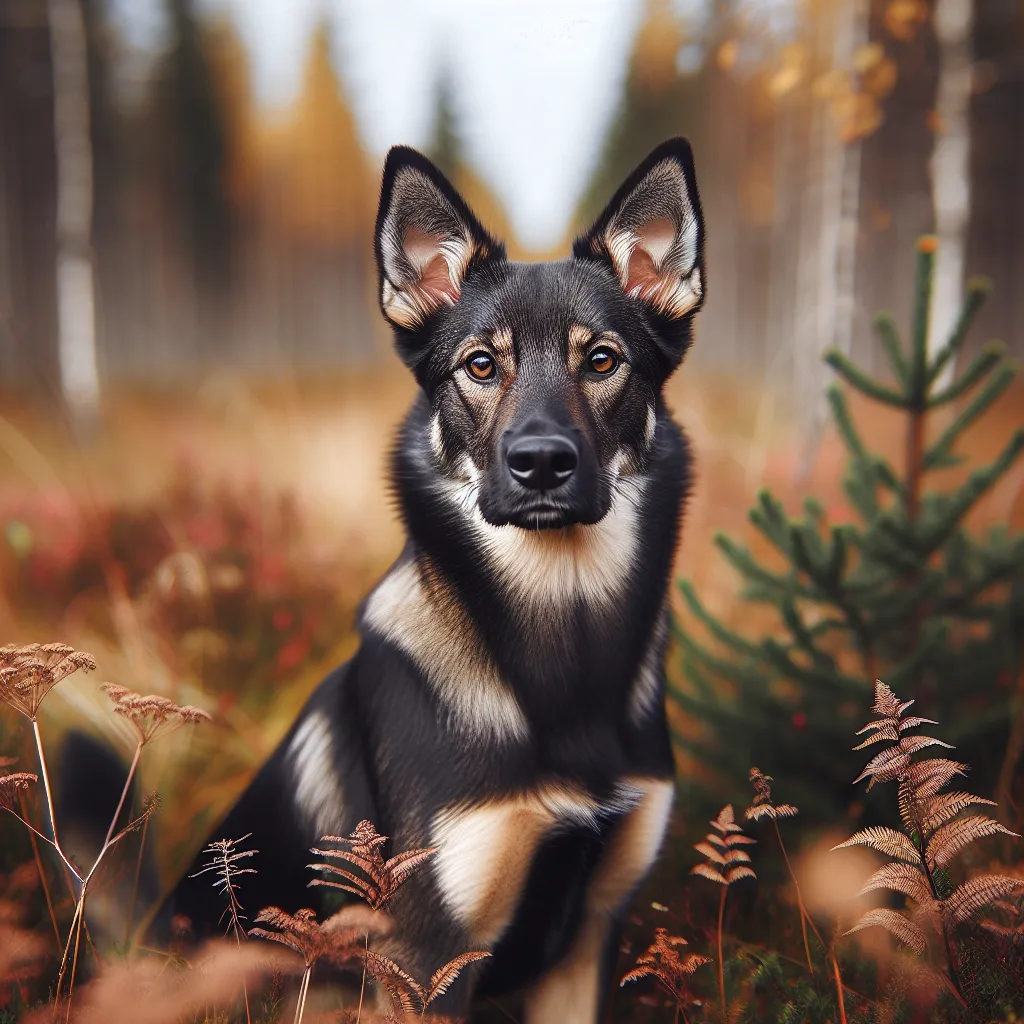 AI-generated image
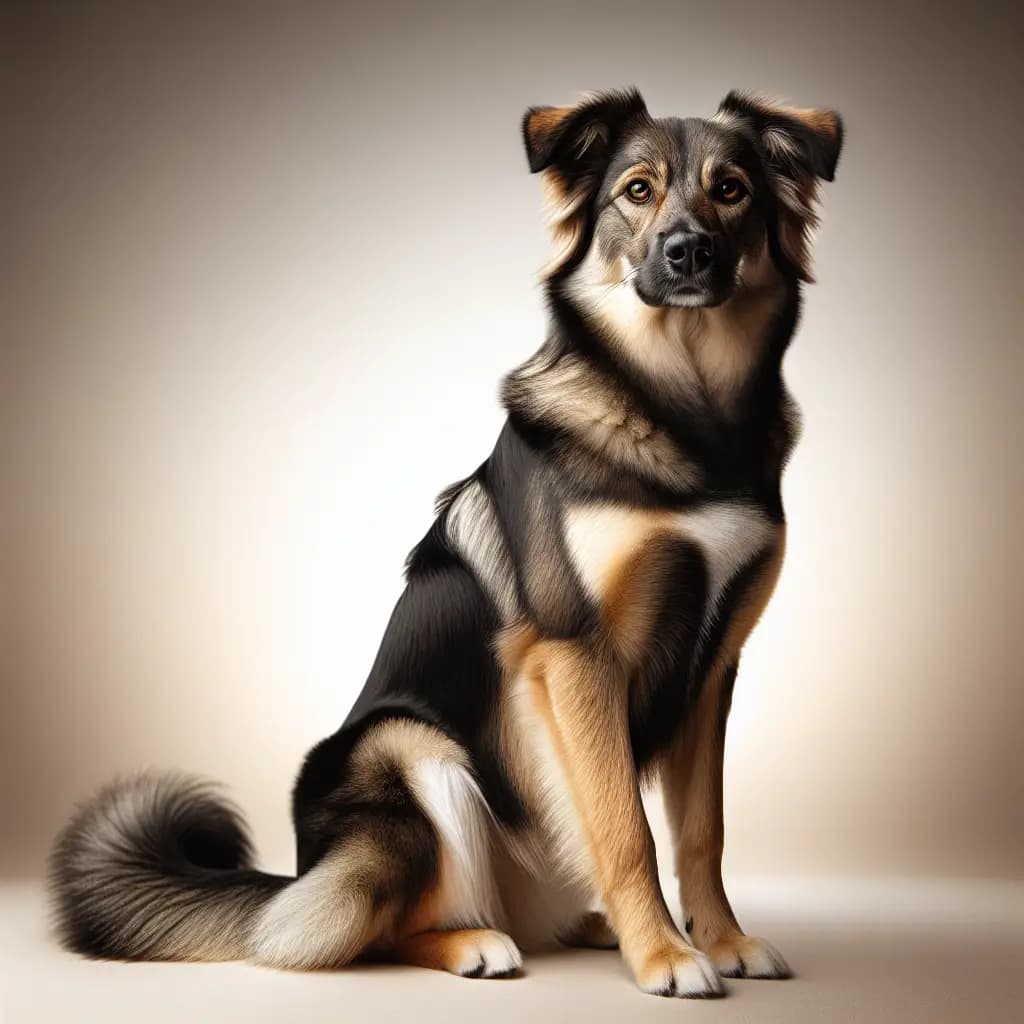
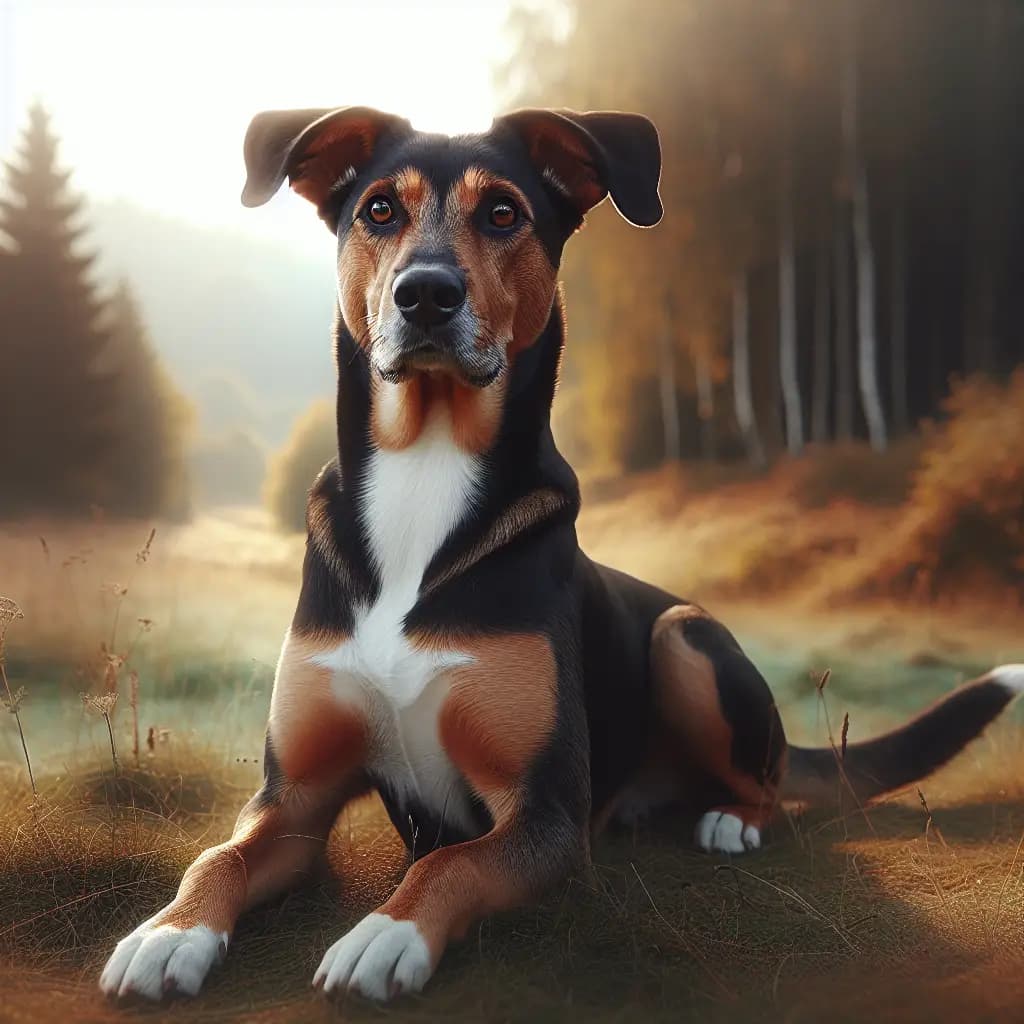
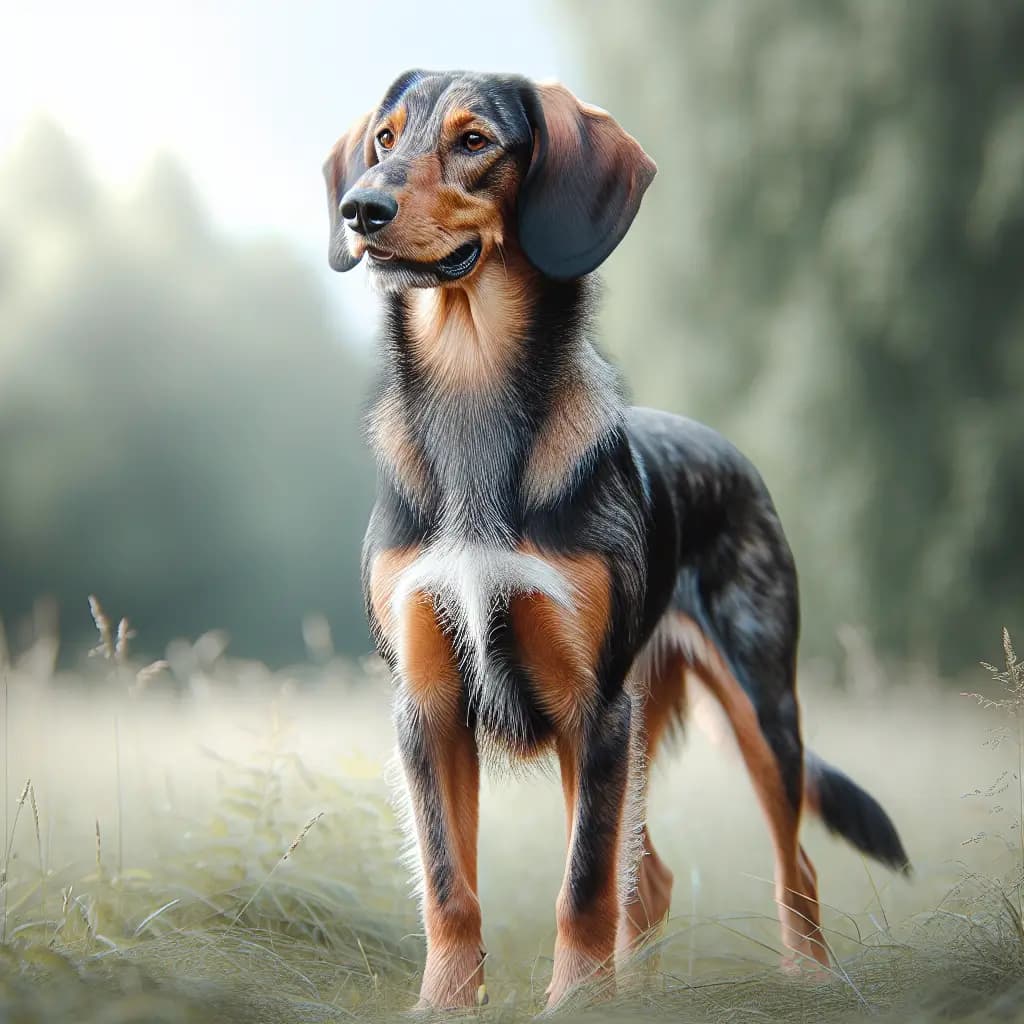
The Finnish Hound is a persistent, friendly scent hound—bred as a highly specialized tracking hunter that independently pursues hares and foxes for kilometers through harsh Nordic forests.
How the health grade is calculated
Sources for required breeding screenings. Suomen Kennelliitto (SKL) / Suomen Ajokoirajärjestö (SAJ)
Self-check
Answer 6 quick questions about your everyday life and see how well the Finnish Hound (Suomenajokoira) fits you — including an honest cost estimate per month, per year, and across the dog's lifetime.
Question 1 of 6
Count honestly — the normal day, not the best one.
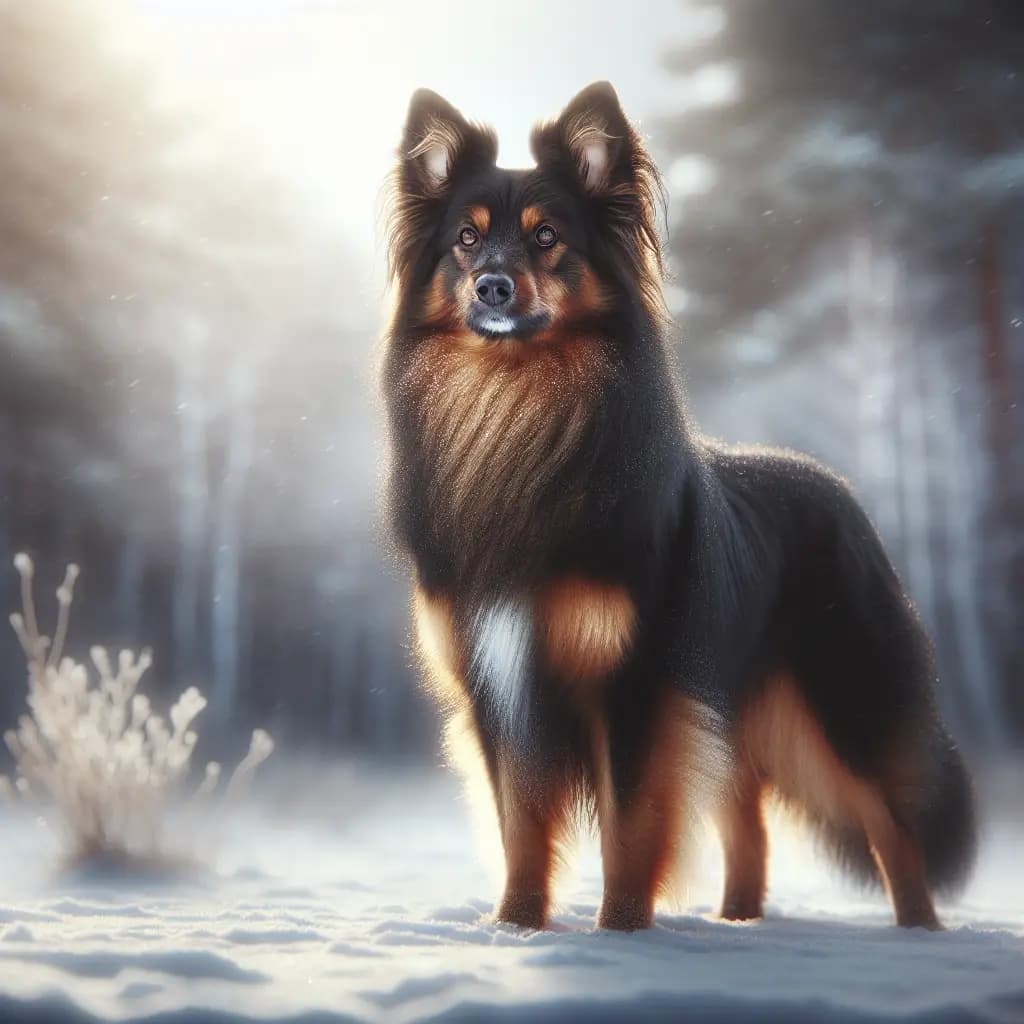 AI image
 AI image
 AI image
 AI image
At a glance
The essentials — key facts, traits, and health priorities — before you dive deeper.
Lifespan
10–13 yrs
Shoulder height
52–61 cm
Weight
20–27 kg
Practical
Temperament
Daily life
What matters most
Especially with a Finnish Hound (Suomenajokoira), choosing the right breeder is the single most important decision you'll make. Serious breeders consistently test the parents for inherited conditions, prioritize healthy early socialization, and stay accountable long after handover. A cheap puppy without health screening tends to become the most expensive dog later on.
See HonestDog breeder standards →Colors & coat
The coat colors that occur in the Finnish Hound (Suomenajokoira) — including which ones fall outside the breed standard and which carry genetic risk.
Eye colors
 Brown
Coat type
 Illustrative image
Medium
 Illustrative image
Smooth
 Double coat
The real vibes check
A Finnish Hound has two sides: indoors, he is the gentlest couch potato; outdoors, he switches into the tunnel vision of a high-performance Nordic hunter. If you accept that his nose often dictates the direction in the woods, you will gain an incredibly loyal buddy—but if you expect a dog that is always attentive to your every command, you will both end up frustrated.
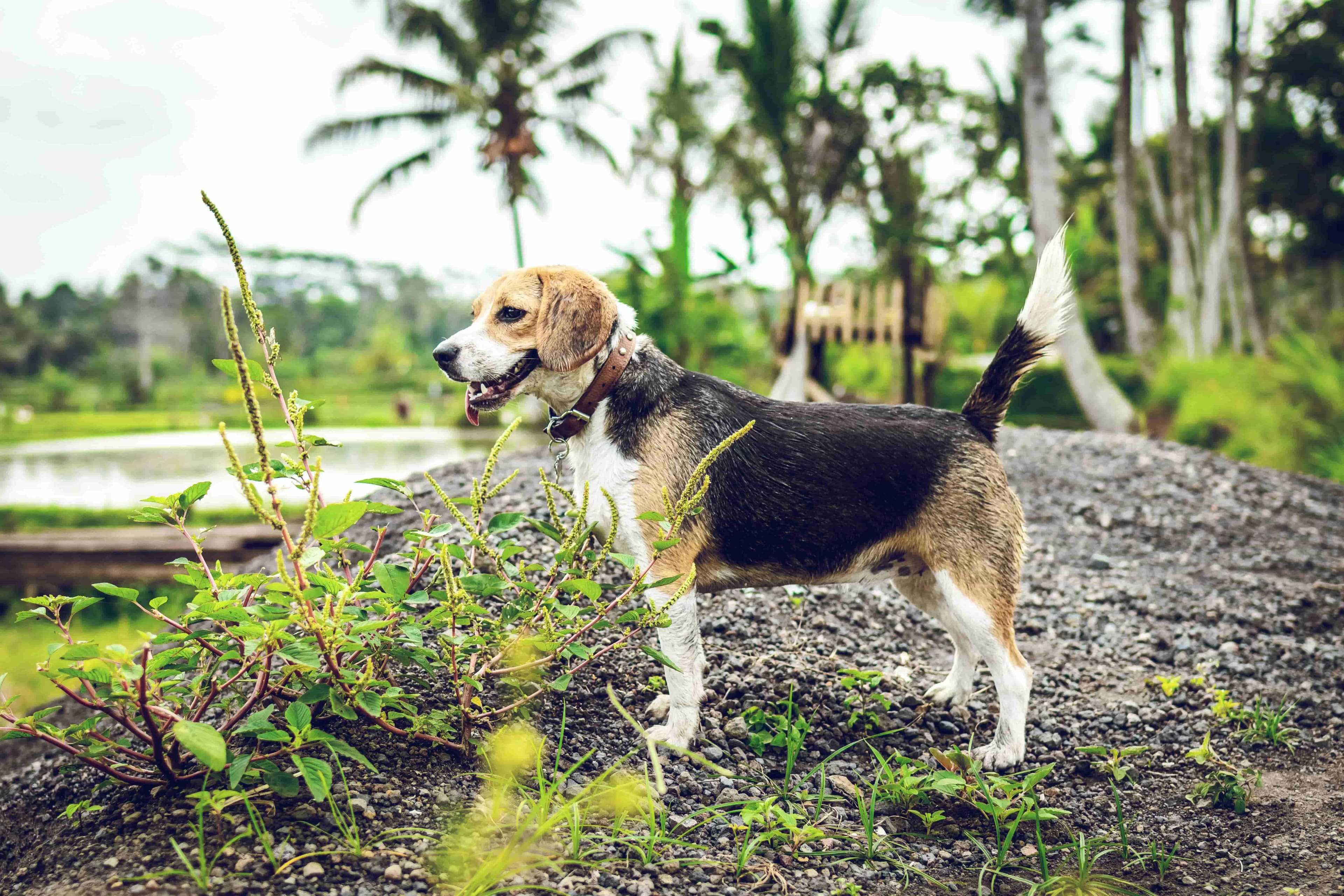
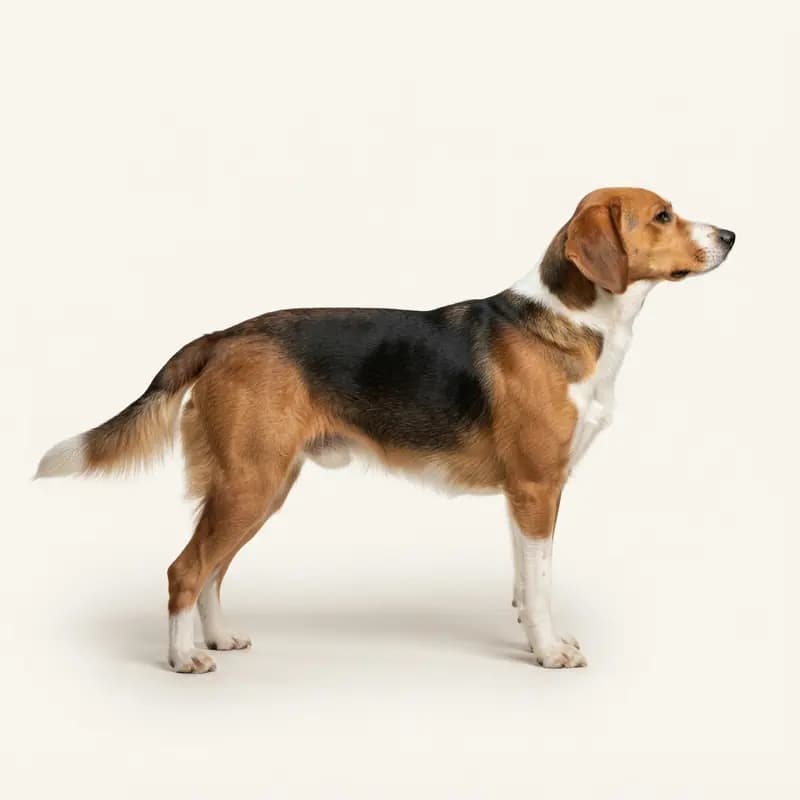
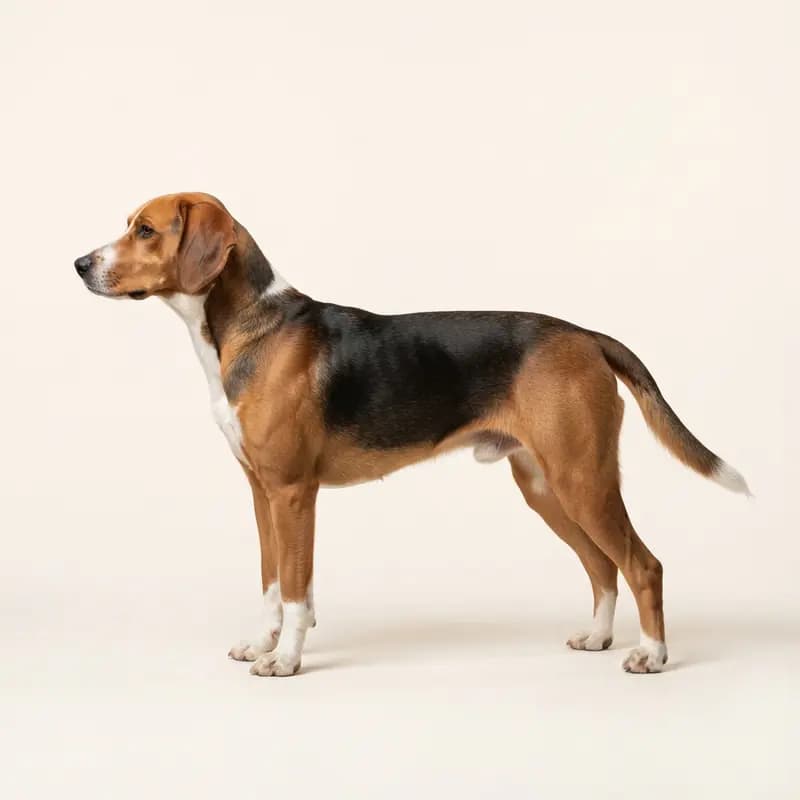
The Finnish Hound (Suomenajokoira) is a medium-sized hunting dog breed from Finland that belongs to the group of hounds. It was specifically bred for coursing game, especially hares and foxes. The Finnish Hound is characterized by its slender, athletic build, upright posture, and lively, dark eyes. Its short, dense coat is usually tricolored or bicolored and provides protection in variable weather. The breed is known for its endurance, speed, and a strong hunting instinct, combined with a friendly and balanced temperament. The Finnish Hound is an active companion that requires a lot of exercise and mental stimulation and is suitable both for hunting and as a family dog.
The Finnish Hound (Suomenajokoira) is a lively and enduring hunting dog with a friendly and balanced temperament. He is very people-oriented and shows a close bond with his family, especially valuing contact and shared activities. His natural curiosity and pronounced sense of smell make him an excellent companion for hunting, but also as an active family dog. The Suomenajokoira has a strong hunting drive and high endurance, which is why he needs a lot of exercise and mental stimulation. He learns quickly and enjoys working with his human, but is also independent and confident. Consistent but loving training is important to control his hunting drive and ensure harmonious coexistence. In dealing with children and other dogs, the Finnish Hound usually shows himself to be friendly and social. He is not a typical guard dog, but rather an attentive and curious companion. Due to his origin as a hound, he is especially suitable for active people who can provide him with sufficient exercise and engagement. When well exercised, the Suomenajokoira is a loyal, balanced, and joyful partner.
| Watchfulness Occasionally alerts but is fundamentally open. | Low |
| Openness to Strangers Warms up quickly and is generally welcoming. | Friendly |
| Hunting or Herding Drive This drive runs deep — no amount of training eliminates it. | Very strong |
Fun Fact!
Finnish Hound: The Finnish Hound is a true endurance specialist and was specifically bred for hunting in the vast forests of Finland. With its incredible nose and tireless running style, it can stay on the trail for hours – almost as enduring as a marathon runner on four paws!
The Finnish Hound (Suomenajokoira) is a persistent and lively hunting dog, specially bred for hare hunting. It is characterized by its good nose and loud barking, with which it signals the prey. These dogs are friendly, intelligent, and require a lot of exercise as well as consistent leadership. The Finnish Hound is well suited for active families and hunters who are looking for a reliable and hardworking companion.
Finnish Hounds are lively and enduring dogs that require a lot of exercise and mental stimulation. They are very friendly and affectionate towards their family but also show a strong hunting instinct that should be taken into account when keeping them. Due to their temperament, they are well suited for active people or families who spend a lot of time outdoors. When dealing with children, Finnish Hounds are usually patient and friendly, with early socialization being important to ensure harmonious coexistence. They generally get along well with other dogs, especially if they have had contact from a young age. For proper care, long walks, search games, and other activities that correspond to their natural instincts are essential.
Loves family life and thrives in a group.
Takes boisterous and affectionate children in its stride.
Actively enjoys the company of other dogs.
Can manage in the city, but only with very active owners.
Owning a dog is a privilege, but it's also a real responsibility. Before you bring one into your life, be honest with yourself about the commitment it takes.
The Finnish Hound is an intelligent and hardworking hunting dog that requires consistent and patient training. Similar to the Labrador and German Shepherd, it is important to provide the Finnish Hound with sufficient mental and physical activity to promote its natural instincts and keep it well-exercised. Training should be varied and positive, as this breed is sensitive to harsh methods. Due to its strong hunting drive, it is especially important to work early on impulse control and frustration tolerance. The Finnish Hound learns quickly but also shows a certain independence, which is why clear leadership and consistent rules are necessary. Retrieving games, search tasks, and other hunting-oriented activities are excellent for mentally challenging the dog. At the same time, care should be taken not to overwhelm the dog and to allow it rest periods. Social contacts and good socialization are also important to obtain a balanced and well-adapted companion. Overall, the Finnish Hound requires dedicated training that takes into account and promotes its natural abilities. Those willing to invest time and patience will be rewarded with a loyal, eager-to-learn, and versatile dog.
The Finnish Hound requires a balanced diet that meets its high energy needs, as it is an active and enduring hunting dog. High-quality food with a good proportion of proteins and fats supports its health and performance. Make sure to adjust the amount of food according to its activity to avoid overweight. The coat of the Finnish Hound is short to medium length with dense undercoat, which protects it well from the cold. Regular brushing, at least once a week, helps to remove loose hair and keep the coat healthy. During the shedding season in spring and autumn, they shed more heavily, so more intensive brushing is recommended then. The Finnish Hound is well adapted to the Central European climate. Its coat protects it from the cold, yet in very hot weather, sufficient shade and water should be provided to prevent overheating. Due to its hunting nature, it needs a lot of exercise and mental stimulation to stay balanced and healthy.
| Care Level Minimal effort — occasional brushing and bathing. | Low-maintenance |
| Exercise Needs Needs several hours of serious exercise every day. | Very active |
| Shedding Regular shedding — dog hair on clothes is now normal. | Moderate |
| Trainability Has its own ideas and will test limits. | Strong-willed |
Our experts are still reviewing this information. Spotted something wrong? Email us at info@honestdog.de.
Every puppy that finds a home through HonestDog should start with 30 days of free insurance cover, for a stress-free start. We're currently looking for the right insurance partner.
Solid
Health grade
In the Finnish Hound (Suomenajokoira), health risks are primarily determined by hip dysplasia (HD), elbow dysplasia (ED), and the severe neurological condition cerebellar ataxia (CA1). For breeding approval by the Suomen Kennelliitto (SKL) / Suomen Ajokoirajärjestö (SAJ), official radiographic findings for hip dysplasia (HD) and elbow dysplasia (ED) are mandatory. A health-conscious breeder additionally tests for cerebellar ataxia (CA1) and mates carriers exclusively with clear partners to reliably prevent affected offspring. Before buying, ask to see the certificates for HD and ED as well as the genetic test result for cerebellar ataxia (CA1).
Grade is relative to other breeds — AI-assisted and editorially reviewed.
Methodology and data: HonestDog Dog Breed Health Report 2026
What matters most for this breed
Tap any item to see details.
In daily life this can mean
To ensure your dog remains resilient as a runner for a long time, you should focus on joint-friendly rearing and schedule regular check-ups for his eyes and heart.
The breeder's role
Responsible breeders have hip dysplasia (HD) and elbow dysplasia (ED) evaluated via X-ray and also test for cerebellar ataxia (CA1) to prevent joint damage and severe neurological disorders.
Note: This health overview is AI-assisted and editorially reviewed. It is for orientation only and does not replace veterinary advice.
What matters most for this breed — what's common, how much it affects the dog's life, and how to protect yourself as a buyer.
Tap a body region to see the inherited conditions linked to it.
The three most important risks
Pick a region on the map to explore other areas.
Tier 1 is the core standard: the tests Suomen Kennelliitto (SKL) / Suomen Ajokoirajärjestö (SAJ) requires, plus further tests from the recommended health standard for this breed. Tiers 2 and 3 show how responsible breeders go beyond.
Core standard. Tests marked “Club standard” are required by Suomen Kennelliitto (SKL) / Suomen Ajokoirajärjestö (SAJ) for breeding approval; the others are part of the recommended health standard for this breed. Ask any reputable breeder for the results.
No entries in this tier.
Note: This health overview is AI-assisted and editorially reviewed. It is for orientation only and does not replace veterinary advice.
A Finnish Hound (Suomenajokoira) costs around ~€180 per month (€90 – €340, depending on your setup). The first year adds up to roughly ~€4,980 including purchase, equipment and puppy school; across the dog's life (11.5 years) it comes to about ~€27,610.
With surgery cover, running costs come to about ~€170 per month — in return, your share of a major operation drops from several thousand euros to around 20 percent.
Per month
~€180
In the first year
~€4,980
Across the dog's life
~€27,610
Estimated purchase price from a breeder: €1,500 – €2,500
Estimate at a mid-range setup (suburban, dry food, 1–2 hours of daily exercise), average German prices, as of July 2026.
HonestDog Concierge
We currently have no breeders for this breed who have passed our verification. Create your short buyer profile: we'll set up your search alert, review a possible source and email you within 28 days.
 Illustrative imageIllustrative imageIllustrative image
 Illustrative image
The history of the Finnish Hound, known in its home country as the Suomenajokoira, began in the second half of the 19th century. At that time, there was a growing desire in Finland for a resilient hunting dog adapted to the harsh Nordic climate. Unlike the Nordic spitz breeds used for big game, the breeding of the Finnish Hound was specifically aimed at hunting hares and foxes from the outset. To achieve this, Finnish breeders crossed local hunting dogs with various European hound breeds, including English Foxhounds, German and French Bracke, and Swiss Hounds. The result was a hound that tracks with a vocal cry and possesses an excellent sense of smell, capable of pursuing prey over long distances even in difficult winter conditions. Systematic breeding and standardization of the breed began shortly after the founding of the Finnish Kennel Club. The first official breed standard for the Finnish Hound was written as early as 1893. Throughout the 20th century, the breed type became established, and the Suomenajokoira developed into one of the most popular dog breeds in Finland. To this day, it is primarily valued as a passionate working dog for hunting, while its friendly and calm nature also makes it a pleasant companion outside of the hunting field.
Original Use
The Finnish Hound was bred for hunting hares and foxes in the forests of Finland.
Origin
Finland
Date
1800
Many owners and breed experts highlight the Finnish Hound's even temperament at home. Indoors, it's repeatedly described as very gentle, friendly, and pleasantly unobtrusive. It forms a close bond with its person but doesn't tend to cling, keeping a noticeable inner calm. It's also credited with being patient and easygoing with children and other dogs.
That calm indoors, however, depends on the dog getting thorough exercise outside. Owners stress that ordinary walks come nowhere close to enough for this breed. It was bred for hours of work over wide-open terrain and needs a great deal of exercise every day. Without that outlet, its calm nature quickly turns into frustration or unwanted substitute activities. That's why it isn't suited to being a family dog kept on the side in a comfortable, low-key routine.
Sources:petbook.deanimalia.biokokogenetics.comfinnland-forum.de
Reports on handling and training repeatedly stress that the Suomenajokoira is a highly specialized hunting dog with a strong independent streak. When tracking, it traditionally works on its own and far from its handler. It's considered willing to learn and intelligent, but on walks it often sticks to a trail so doggedly that it barely responds to signals once it catches the scent of game.
Among people who know the breed, reliable off-leash time in areas with lots of game is therefore seen as one of the biggest challenges, and it's often simply not possible. Long-line training, early impulse control, and targeted nose work such as drag trails or mantrailing are described as essential for channeling its hunting drive. The breed doesn't tolerate pressure or harshness; owners unanimously recommend calm, patient, but fully consistent handling.
Sources:petbook.degunfinder.de
Paraphrased from real owner reports · translated from German
The Finnish Hound (Suomenajokoira) is an active dog that needs plenty of exercise and mental stimulation. Research the temperament, grooming needs, and space requirements before deciding.
The average life expectancy of a Finnish Hound (Suomenajokoira) is 10-13 years. With proper care and regular vet visits, your dog can live a long, healthy life.
Finnish Hound (Suomenajokoira) grooming requirements include regular brushing, nail trimming, and dental care. HonestDog provides detailed grooming tips for every breed.
The Finnish Hound (Suomenajokoira) can be a great family dog. Proper training and socialization are key. HonestDog provides family suitability information for every breed.
The Finnish Hound (Suomenajokoira) comes in these colors: Tricolor.
Showcase your kennel on HonestDog and reach families searching for a responsibly bred Finnish Hound (Suomenajokoira).