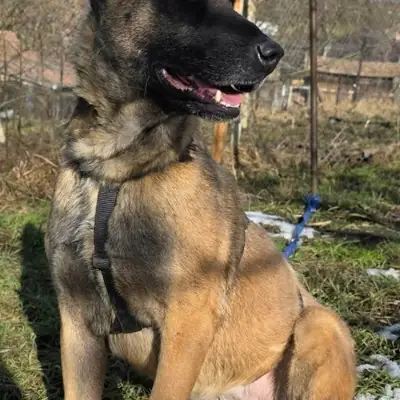
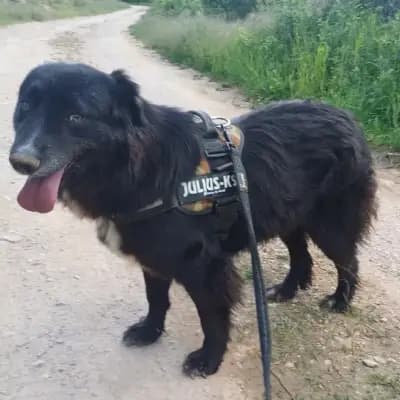
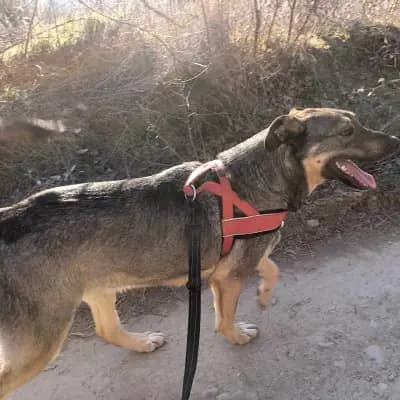
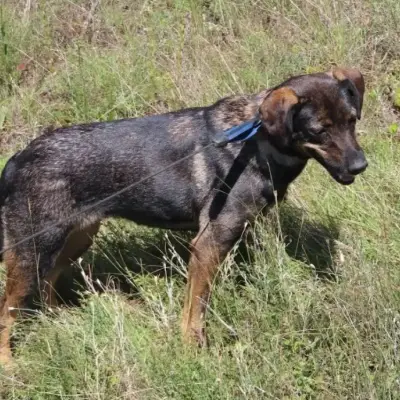
Thanks to his background as a pack hound, the Great Anglo-French Tricolor Hound is almost always highly sociable and gets on well with other dogs. A calm, confident dog already in the household makes it much easier for him to find his feet. He forms a close bond with his people. Some rescue dogs are not yet fully familiar with life in a home – you will then need to get him used to everyday noises, stairs or being left alone step by step.
Keeping health aspects in mind
The Great Anglo-French Tricolor Hound is considered a robust working dog, but does come with breed-typical risks. These include joint problems such as hip dysplasia (HD) and elbow dysplasia (ED), eyelid abnormalities (ectropion or entropion), degenerative myelopathy, and a risk of gastric torsion and inflammation of the long, hanging ears. While a health-focused breeder has hips X-rayed for HD (a baseline breed screening) and has elbows, eyes and hearts clinically examined, and checks the line for cases of degenerative myelopathy or gastric torsion in order to reduce the risks for the offspring, the genetic history of a dog in a rescue centre is often unknown. In everyday life, choose exercise that is gentle on the joints, check the hanging ears regularly and keep to strict rest periods after feeding to help prevent gastric torsion.