Loading breed
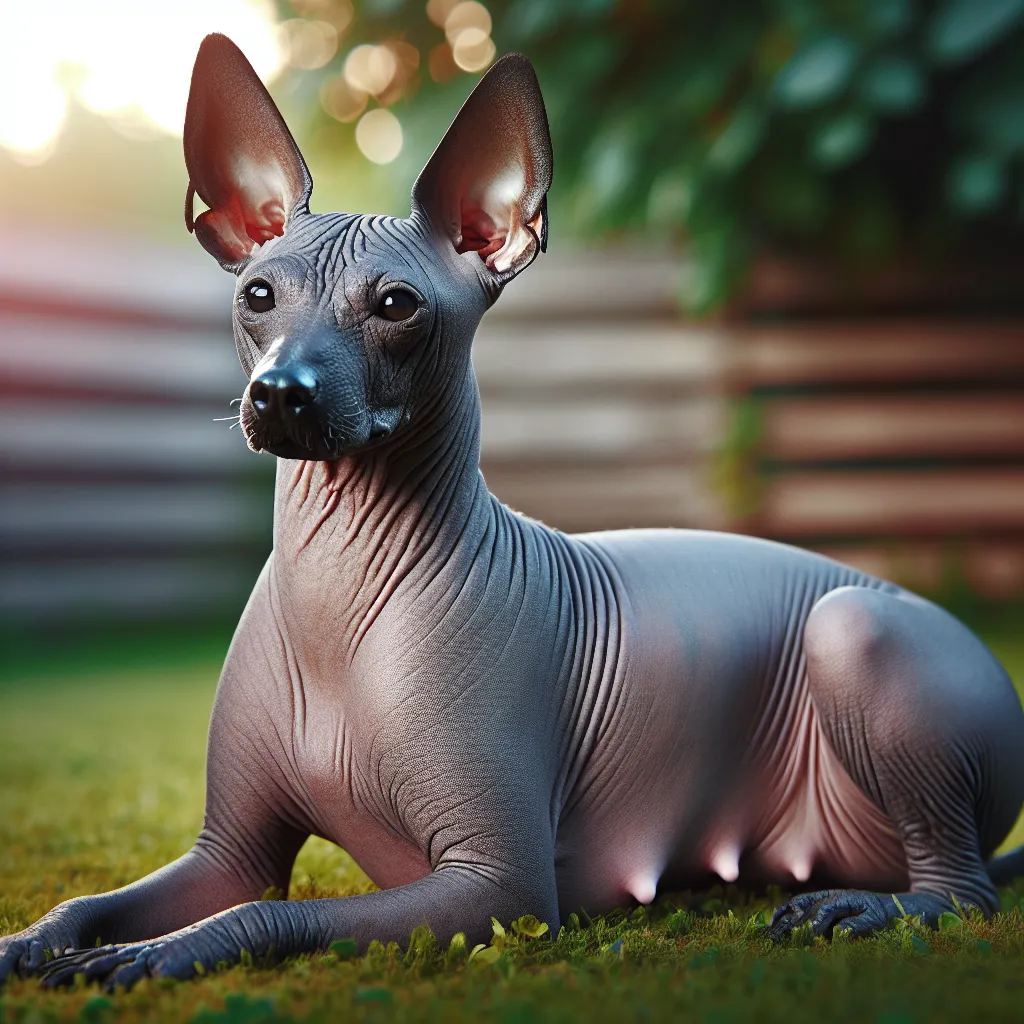 AI-generated image
Hairless Khala
Health grade B- Shoulder height36–51 cm
- Weight6–14 kg
- Life expectancy10–14 yrs
- Puppy price2,000–3,500 €
- Energy3/5
The essentials at a glance
The Haarloser Khala is an agile, primitive companion dog deeply bonded to its humans—bred as a vigilant companion and a living heat source in the Andes. It possesses the unpolished character of a primitive type that always remains reserved toward strangers.
- Health grade B: The Hairless Khala displays average health and receives a grade of B.
- You appreciate an independent primitive-type dog that evaluates situations for itself rather than blindly following every command
- You are looking for an extremely loyal companion that bonds closely with its family but is perfectly happy to ignore strangers
- You expect the absolute 'will-to-please' of an retriever—as a primitive guardian, the Khala often sees no point in endless repetitions of tricks
Self-check
Would the Hairless Khala really fit your life?
Answer 6 quick questions about your everyday life and see how well the Hairless Khala fits you — including an honest cost estimate per month, per year, and across the dog's lifetime.
Fit checkCost estimateRisk dice
Takes about 1 minute · free & anonymous
Similar Breeds
Peruvian Hairless DogSame FCI section
XoloitzcuintleSame FCI section
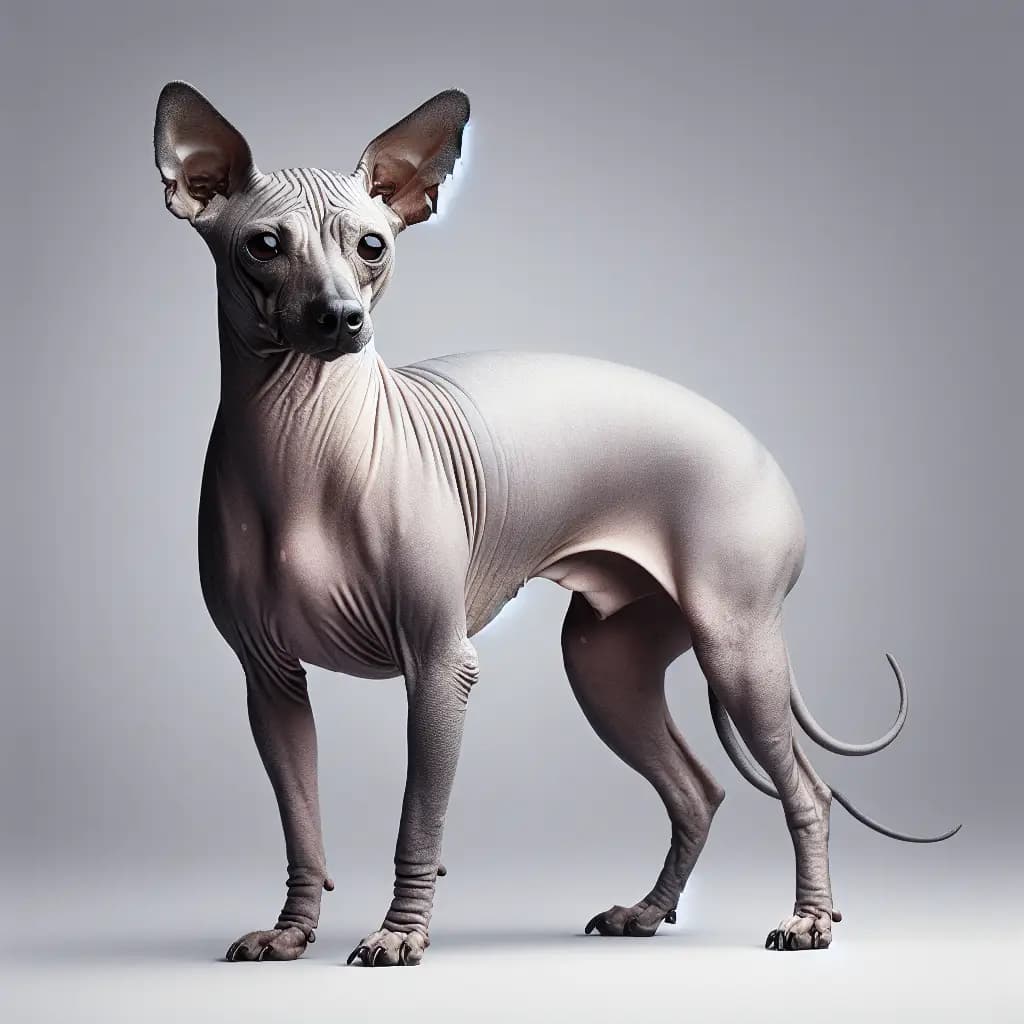

Chinese Crested DogSimilar profile
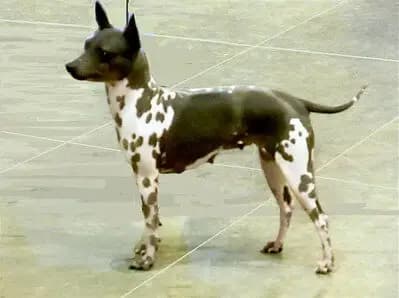
American Hairless TerrierSimilar profile
Is the Hairless Khala right for you?
At a glance
Hairless Khala overview
The essentials — key facts, traits, and health priorities — before you dive deeper.
Lifespan
10–14 yrs
Shoulder height
36–51 cm
Weight
6–14 kg
Practical
- Puppy price: 2,000 – 3,500 €
- Coat: No fur, bare skin
- Origin: Bolivia
Temperament
Energy
Trainability
Family fit
With kids
Daily life
Care effort
Shedding
Barking
City-friendly
Guard instinct
What matters most
Especially with a Hairless Khala, choosing the right breeder is the single most important decision you'll make. Serious breeders consistently test the parents for inherited conditions, prioritize healthy early socialization, and stay accountable long after handover. A cheap puppy without health screening tends to become the most expensive dog later on.
See HonestDog breeder standards →Colors & coat
What colors does the Hairless Khala come in?
The coat colors that occur in the Hairless Khala — including which ones fall outside the breed standard and which carry genetic risk.
Eye colors
 Brown
 Amber
Coat type
 Hairless
Perfect for you if:
- You are prepared to take on the special skincare required for a hairless dog, from sun protection in the summer to a coat in the winter
- You live in an environment where its vigilant barking at the unfamiliar won't immediately lead to neighborhood disputes
Less ideal if:
- You want a dog that joyfully greets every visitor at the door and lets everyone pet it
- You are looking for a robust all-weather dog for hours of hiking in ice, snow, and pouring rain
The real vibes check
A Haarloser Khala is like an exclusive club that only its closest family can join. It gives you its absolute devotion and won't leave your side in the house, but it remains aloof to the rest of the world. If you respect this vigilant primitive type, you will gain a loyal shadow on four legs—if you expect a retriever in a hairless look, you will be disappointed.
Breed Profile
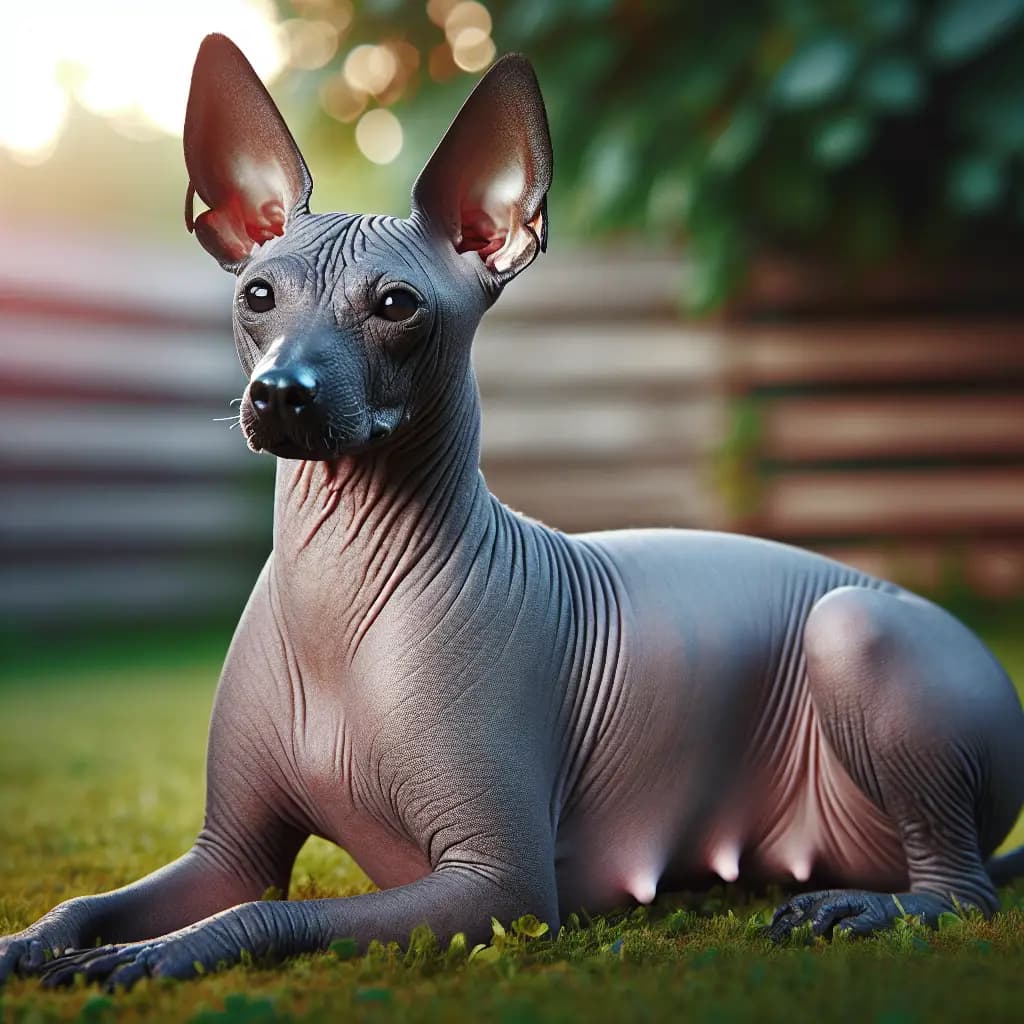
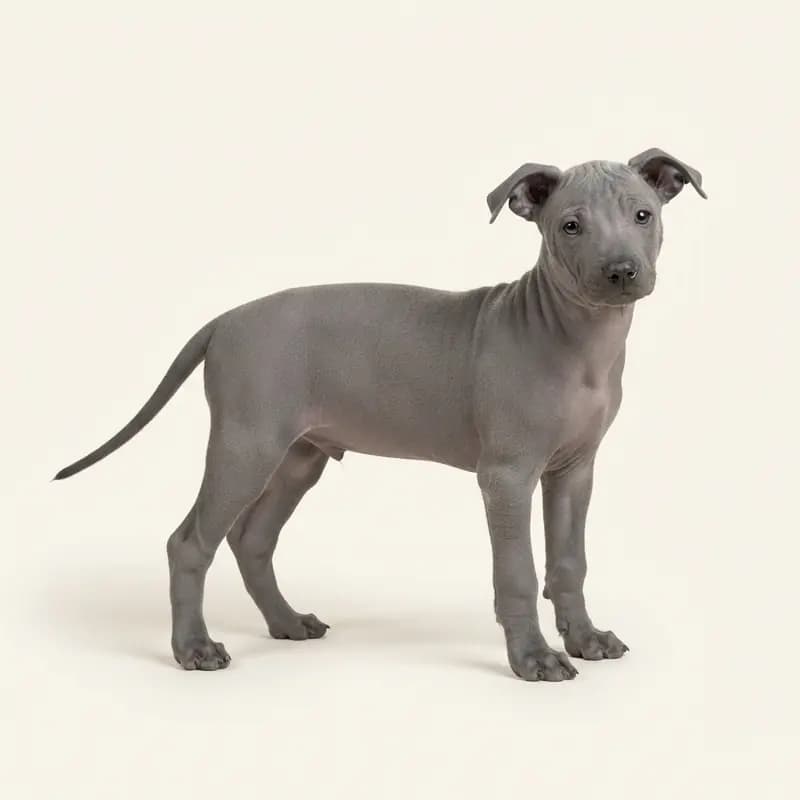
The Hairless Khala is an extraordinary dog breed that stands out due to its unique, almost hairless appearance. Originally, this breed comes from South America and was especially valued there as a companion and guard dog. The body of the Hairless Khala is slender and muscular, with smooth, almost bare skin, which makes it particularly easy to care for. Characteristic are the large, upright ears and the expressive eyes, which give the dog a watchful and intelligent expression. Similar to other breeds, there are differences within the Hairless Khala in breeding that can affect size and temperament. This breed is excellent for people who are looking for an active and loyal companion, who convinces with its extraordinary appearance and lively personality.
All measurements in detail
- Height
- 36 - 51 cm (Female), 36 - 51 cm (Male)
- Weight
- 6 - 14 kg (Female), 6 - 14 kg (Male)
- Life Expectancy
- 10 - 14 yrs
- Character
- Loyal, confident, loving
- Coat
- No fur, bare skin
- Coat Color
- All colors are allowed
- Price
- 2000 - 3500 €
Character & Temperament
The Hairless Khala is a unique and charismatic dog that impresses with its striking, almost hairless appearance. Despite its unusual look, it has a friendly and balanced temperament, making it a loving companion for the whole family. It is very people-oriented and enjoys being close to its caregivers, especially valuing shared time and attention. The Khala is intelligent and eager to learn, making it a versatile partner for various activities. It requires both physical and mental exercise to remain balanced and content. Due to its sensitive nature, it responds well to gentle but consistent training and benefits from varied exercises that engage its attention. Its need for movement is moderate, but it should be regularly encouraged to prevent boredom and resulting behavioral problems. The Hairless Khala shows a strong bond with its family and is alert without being aggressive. It is usually reserved towards strangers but can reliably act as a guard dog when needed. The lack of fur makes it particularly easy to care for, although its sensitive skin requires special attention and protection from weather conditions. Overall, the Hairless Khala is a loyal, intelligent, and adaptable dog that, with the right care and activity, is a wonderful companion for active people and families.
| Watchfulness A natural watchdog with real protective instinct. | High |
| Openness to Strangers Careful around unfamiliar people — thaws slowly. | Cautious |
| Hunting or Herding Drive Noticeable drive — needs attention around small animals. | Moderate |
Fun Fact!
Hairless Khala: The hairless Khala impresses not only with its unique, smooth skin but also with its exceptional adaptability to different climate zones – without fur, it stays pleasantly cool in summer and its warm skin provides sufficient protection in winter.
What Awaits You
The Hairless Khala is a unique, intelligent dog that is particularly easy to care for due to its lack of fur. These dogs are attentive and eager to learn but require consistent training and sufficient activity. They are well suited as family dogs if they receive enough exercise and social interaction. Due to their distinctive appearance, they are also very adaptable and robust.
Housing & Care
Hairless Khala are calm and balanced dogs that are well suited as companions for people who lead a rather relaxed life. They are very affectionate and enjoy being close to their owners but require less exercise than more active breeds. Due to their lack of fur, they are sensitive to cold and should therefore be well protected, especially in cooler seasons. When dealing with children, Hairless Khala are usually patient and friendly but are better suited for families with older children who understand how to handle a sensitive dog. They get along well with other pets if socialized early. Overall, Hairless Khala are ideal companion dogs for people who value a close bond and are willing to take into account the special needs of this breed.
- Family Friendly
Gets on well with different people and varying routines.
Family-friendly - Child Friendly
Gets on well with children — with adult supervision.
With supervision - Dog Friendly
Usually gets on fine with other dogs.
Generally tolerant - City Friendly
City-appropriate with enough exercise and stimulation.
Manageable in cities
Owning a dog is a privilege, but it's also a real responsibility. Before you bring one into your life, be honest with yourself about the commitment it takes.
Training & Education
Hairless Khala: The Hairless Khala is an intelligent and eager-to-learn dog that requires consistent but loving training. Similar to the Labrador and German Shepherd, it is important to challenge him mentally and physically to avoid boredom and unwanted behavior. Due to his sensitive skin, training should always be gentle and stress-free. The Hairless Khala shows a high motivation to cooperate and benefits from varied activities such as obedience, scent work, or light agility exercises. It is important to build frustration tolerance and promote impulse control to develop a balanced character. Early socialization and building a strong bond are essential, as the Hairless Khala is very people-oriented. Positive, reward-based training strengthens the dog's trust and motivation. Overall, this breed requires commitment and patience but rewards with a loyal, attentive, and versatile companion.
Nutrition & Care
Hairless Khala: The Hairless Khala requires special care because it has no fur to protect it from the weather. A balanced diet with high-quality, nutrient-rich food is important to support its skin health. Make sure the food contains all necessary vitamins and minerals to strengthen the immune system. Since the Hairless Khala has no undercoat or guard hairs, skin care is especially important. Regular application of suitable, skin-friendly care products protects against dryness and skin irritations. Additionally, the skin should be protected from direct sunlight to avoid sunburn. In winter, a warming dog coat is recommended because the dog has no natural insulation. The Hairless Khala is well adapted to a temperate climate but requires special protection in extreme temperatures – against heat in summer and cold in winter. Regular checks of the skin for injuries or infections are advisable, as these can be more easily overlooked without fur.
| Care Level Regular brushing and occasional professional grooming. | Moderate |
| Exercise Needs Needs 1–2 hours of real exercise daily. | Active |
| Shedding No or minimal hair loss — suitable for allergy sufferers. | No shedding |
| Trainability Has its own ideas and will test limits. | Strong-willed |
Our experts are still reviewing this information. Spotted something wrong? Email us at info@honestdog.de.
Health & hereditary diseases
Health
B
Solid
Health grade
The Hairless Khala displays average health and receives a grade of B. In addition to naked skin, the genetically caused hairlessness often leads to incomplete dentition, which must be taken into account in daily life. Furthermore, breeding animals should be screened for patellar luxation and progressive retinal atrophy (PRA) to prevent lameness and blindness in the offspring.
Grade is relative to other breeds — AI-assisted and editorially reviewed.
Methodology and data: HonestDog Dog Breed Health Report 2026
What matters most for this breed
Tap any item to see details.
In daily life this can mean
You must consistently protect their exposed skin from sun and cold in everyday life and ensure good dental care.
The breeder's role
Reputable breeders have the parents' knees, eyes, and dental status checked and pay attention to robust skin to reduce risks within the bloodline.
Note: This health overview is AI-assisted and editorially reviewed. It is for orientation only and does not replace veterinary advice.
Health risks for this breed
What matters most for this breed — what's common, how much it affects the dog's life, and how to protect yourself as a buyer.
5
Risks tracked
1
Recommended standard
3
High severity
Eyes
Most affected area
Where this breed is vulnerable
Tap a body region to see the inherited conditions linked to it.
The three most important risks
Pick a region on the map to explore other areas.
severemoderatemild
How thoroughly does the breeder test?
Tier 1 is the recommended health standard for this breed. Tiers 2 and 3 show how responsible breeders go beyond.
Recommended standard. These tests make up the recommended health standard for this breed — the baseline of any careful breeding program. Ask any reputable breeder for the results.
No entries in this tier.
Note: This health overview is AI-assisted and editorially reviewed. It is for orientation only and does not replace veterinary advice.
Costs & where to find one
How much does a Hairless Khala cost?
A Hairless Khala costs around ~€170 per month (€90 – €320, depending on your setup). The first year adds up to roughly ~€5,620 including purchase, equipment and puppy school; across the dog's life (12 years) it comes to about ~€28,110.
With surgery cover, running costs come to about ~€160 per month — in return, your share of a major operation drops from several thousand euros to around 20 percent.
Per month
~€170
In the first year
~€5,620
Across the dog's life
~€28,110
Estimated purchase price from a breeder: €2,000 – €3,500
Estimate at a mid-range setup (suburban, dry food, 1–2 hours of daily exercise), average German prices, as of July 2026.
Calculate your personal costs1-minute self-check with your own answers
Looking for a Hairless Khala?
HonestDog Concierge
No verified Hairless Khala breeders on HonestDog yet
We currently have no breeders for this breed who have passed our verification. Create your short buyer profile: we'll set up your search alert, review a possible source and email you within 28 days.
Appearance, variants & origin
 Illustrative image
 Illustrative image
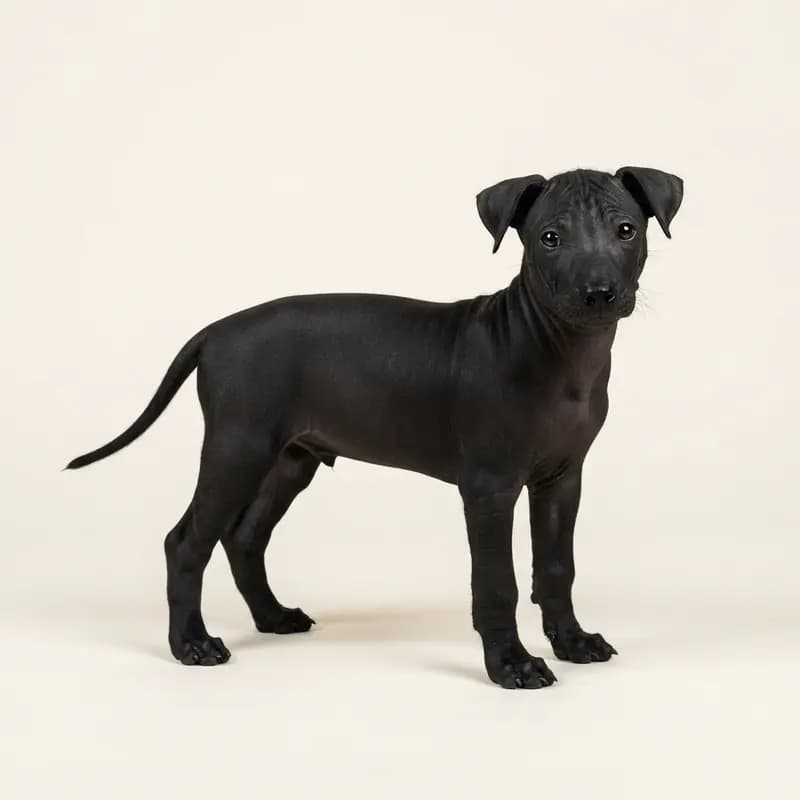 Illustrative image
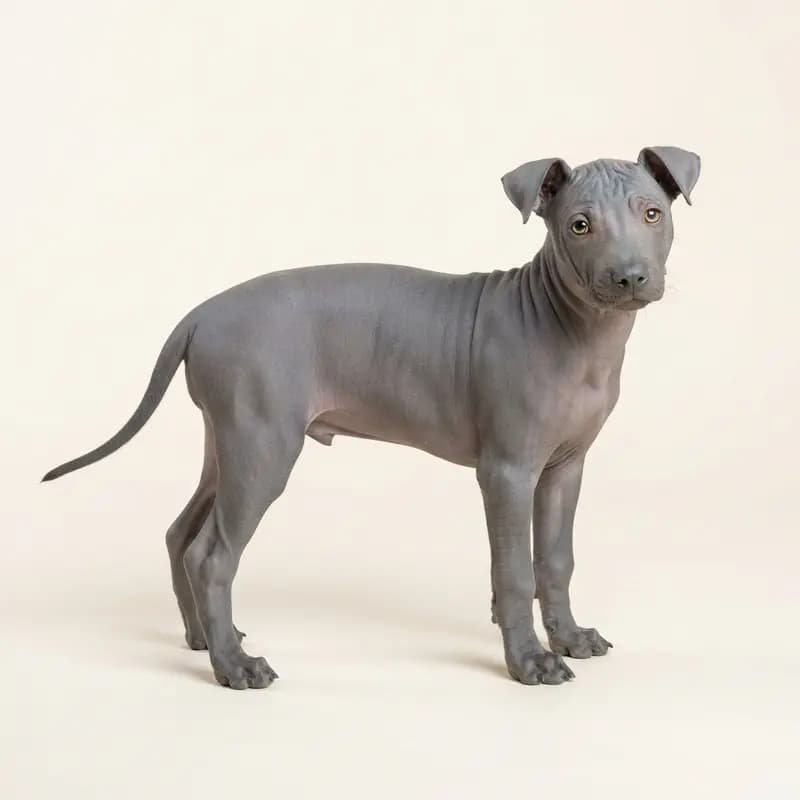 Illustrative image
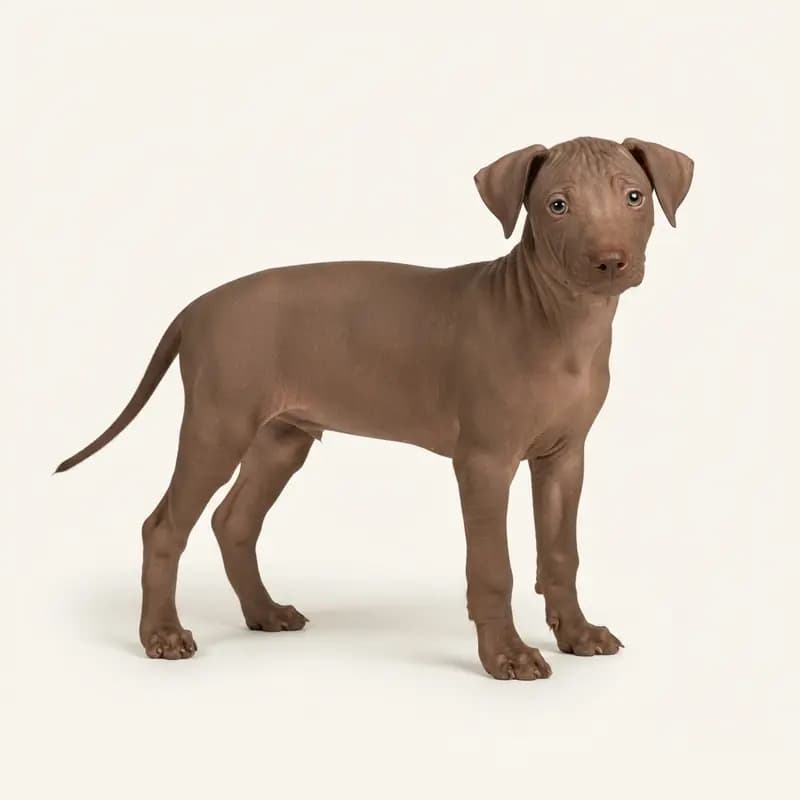 Illustrative image
History
The full history
The Haarlose Khala, also known as the Bolivian Hairless Dog, is a very primitive and rare breed with roots deep in the pre-Columbian history of South America. The name 'Khala' comes from the indigenous Quechua language and simply means 'without clothes' or 'naked'. Unlike other well-known hairless breeds, this dog does not originate from Central America, but is native to the Andean regions of Bolivia, Peru, and northwestern Argentina. There, these dogs were kept by indigenous peoples in ancient times as valued companions and living 'bed warmers' in the cool high altitudes of the Andes. They were also often attributed with mystical and healing powers for rheumatic complaints. The existence of the Haarlose Khala as an independent, standardized breed is controversial in modern cynology. The Fédération Cynologique Internationale (FCI) does not recognize the Khala as an official breed to this day, often viewing it instead as a regional variant or landrace of South American hairless dogs. Nevertheless, enthusiasts strive to preserve this primitive type, which traditionally appears in two varieties: the short-legged 'Medio' and the long-legged 'Grande'. Despite its lack of international recognition, the Haarlose Khala remains a fascinating living testament to South American cultural history and an adaptable companion.
Original Use
The Haarlose Khala was originally kept as a companion dog and is known for its hairless appearance.
Origin
Bolivia
Date
Antike
Owner experiences
Owners describe the Hairless Khala as a very affectionate, gentle, and loyal companion at home.Summarized from publicly shared owner experiences
Owners describe the Hairless Khala as a very affectionate, gentle, and loyal companion at home. Owner accounts stress again and again that the breed forms a very strong bond with its main people and can become almost clingy. Indoors these dogs seek out lots of physical contact and happily serve as living hot-water bottles. Owners also report that Khalas are strongly pack-oriented; they get along very well with other dogs, especially other hairless breeds, and often seem noticeably happier in a multi-dog household than as an only dog.
In everyday life, though, their primitive-dog nature shows clearly: they are almost always very wary and reserved with strangers. They alert to anything unusual without being aggressive for no reason. In conflict or when suddenly startled, they tend, as is typical of breeds without a protective coat, to run or freeze rather than attack. Anyone looking for an easygoing dog that greets every person with delight will be disappointed by this breed; experienced owners, however, find exactly this sensitive, finely tuned awareness fascinating.
Sources:ckcusa.com
On training, owners mainly stress that the Khala can't be compared with typical modern companion breeds.Summarized from publicly shared owner experiences
On training, owners mainly stress that the Khala can't be compared with typical modern companion breeds. It has a strong independent streak and picks up on moods with real sensitivity. Owners report that pressure, harshness, or loud commands are completely out of place with this breed, because handled too roughly these dogs withdraw, either fearful or stubborn. Training works best through trust, positive reinforcement, and calm, reliable leadership.
At the same time, owners urge people not to underestimate the breed as a fragile lapdog. Khalas are intelligent and learn rules quickly, but they also like to question them when they don't see the point. Owners consider early, gentle socialization essential to keep the breed's natural caution toward strangers and new surroundings from tipping into serious insecurity or hypervigilance. Given the right variety of things to do, such as nose work or easy puzzle games, they turn out to be cooperative partners that enjoy learning.
Sources:personality-database.com
Paraphrased from real owner reports · translated from German
FAQ & more
Is a Hairless Khala the right dog for me?
The Hairless Khala is an adaptable dog that adjusts well to various lifestyles. Research the temperament, grooming needs, and space requirements before deciding.
How long does a Hairless Khala live?
The average life expectancy of a Hairless Khala is 10-14 years. With proper care and regular vet visits, your dog can live a long, healthy life.
How much grooming does a Hairless Khala need?
Hairless Khala grooming requirements include regular brushing, nail trimming, and dental care. HonestDog provides detailed grooming tips for every breed.
Is a Hairless Khala good for families with children?
The Hairless Khala can be a great family dog. Proper training and socialization are key. HonestDog provides family suitability information for every breed.
What colors does the Hairless Khala come in?
The Hairless Khala comes in these colors: Grey, Black, Blue, Brown.
Are you a Hairless Khala breeder?
Showcase your kennel on HonestDog and reach families searching for a responsibly bred Hairless Khala.