XoloitzcuintleSame FCI section
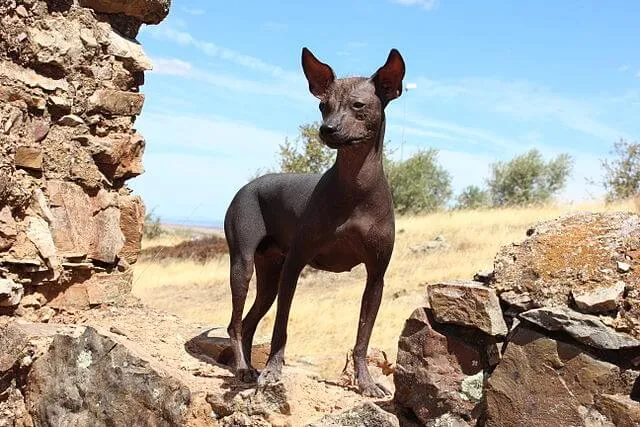
The Perro sin Pelo del Peru is a lightning-fast, highly sensitive primitive breed—a vigilant companion dog that has been closely bonded to its humans for millennia, yet maintains an almost feline distance from strangers.
How the health grade is calculated
Sources for required breeding screenings. Club für Exotische Rassehunde e.V.
Self-check
Answer 6 quick questions about your everyday life and see how well the Peruvian Hairless Dog fits you — including an honest cost estimate per month, per year, and across the dog's lifetime.


At a glance
The essentials — key facts, traits, and health priorities — before you dive deeper.
Lifespan
12–15 yrs
Shoulder height
25–65 cm
Weight
4–25 kg
Practical
Temperament
Daily life
What matters most
Especially with a Peruvian Hairless Dog, choosing the right breeder is the single most important decision you'll make. Serious breeders consistently test the parents for inherited conditions, prioritize healthy early socialization, and stay accountable long after handover. A cheap puppy without health screening tends to become the most expensive dog later on.
See HonestDog breeder standards →Colors & coat
The coat colors that occur in the Peruvian Hairless Dog — including which ones fall outside the breed standard and which carry genetic risk.
Eye colors
 Brown
 Amber
Coat type
 Illustrative image
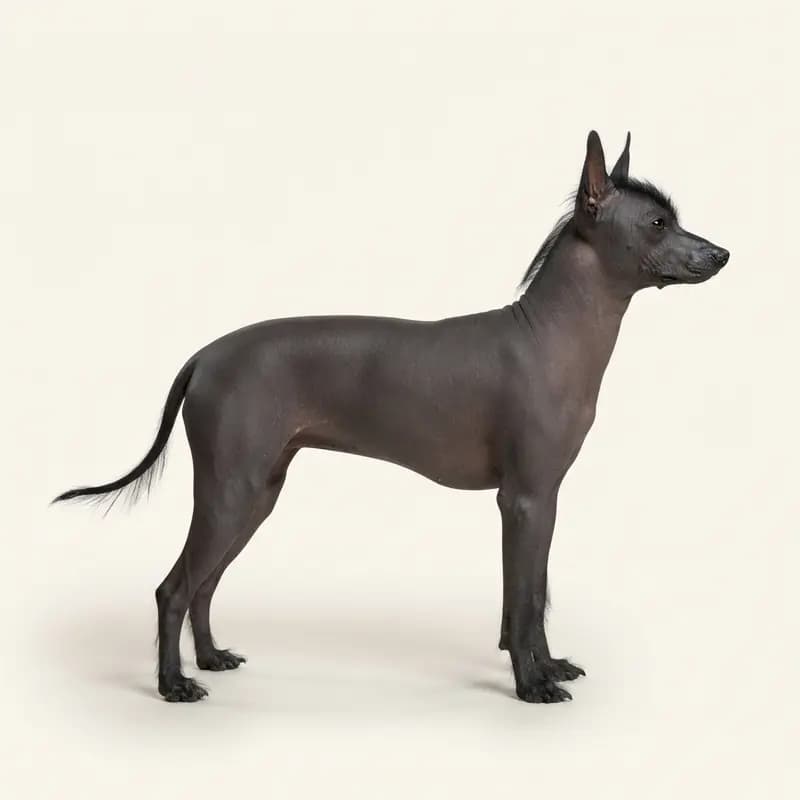
Hairless
 Short
 Smooth
The real vibes check
A Perro sin Pelo del Peru is like an exclusive club where you are on the VIP list and everyone else has to stay outside. To you, they are a tender, clingy shadow that reads your every move—but heaven forbid a stranger tries to touch them uninvited. You aren't getting an 'everybody's darling,' but a millennia-old original that distributes its affection very selectively.
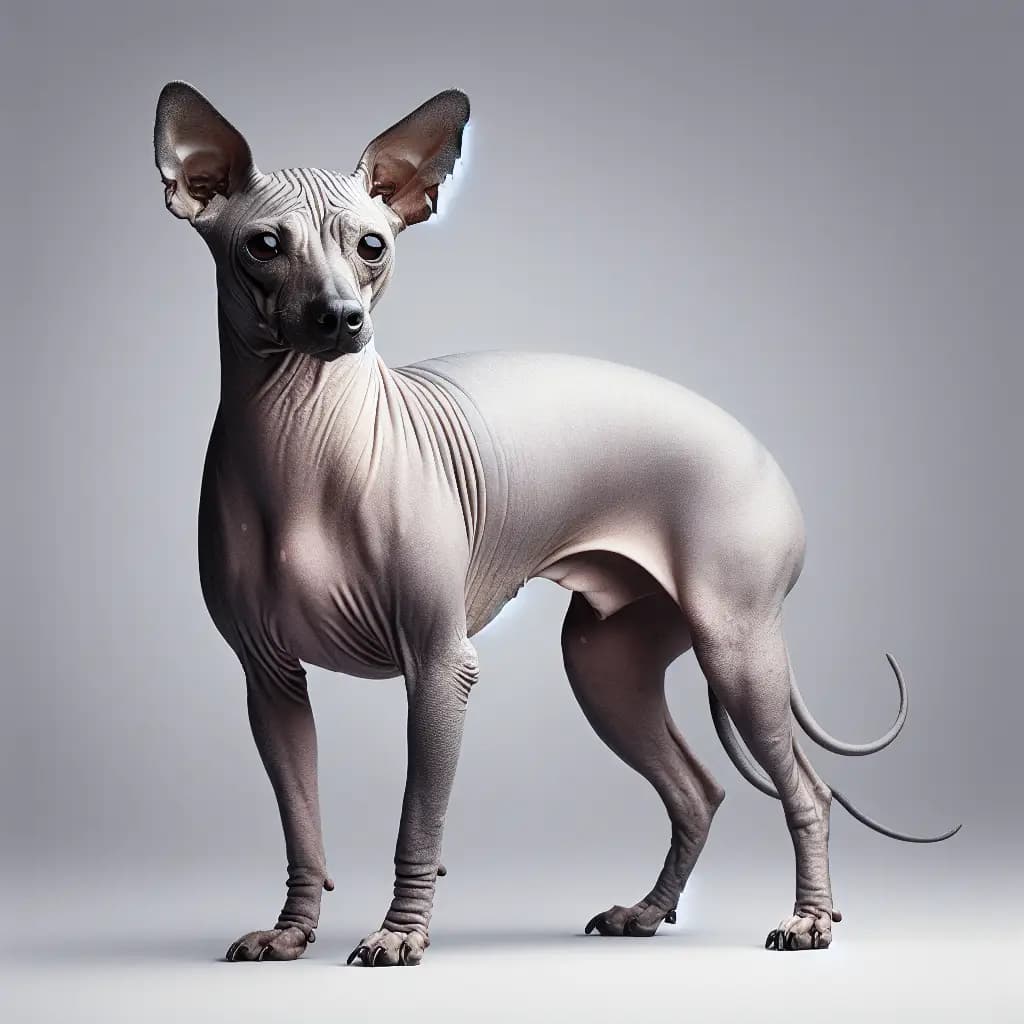
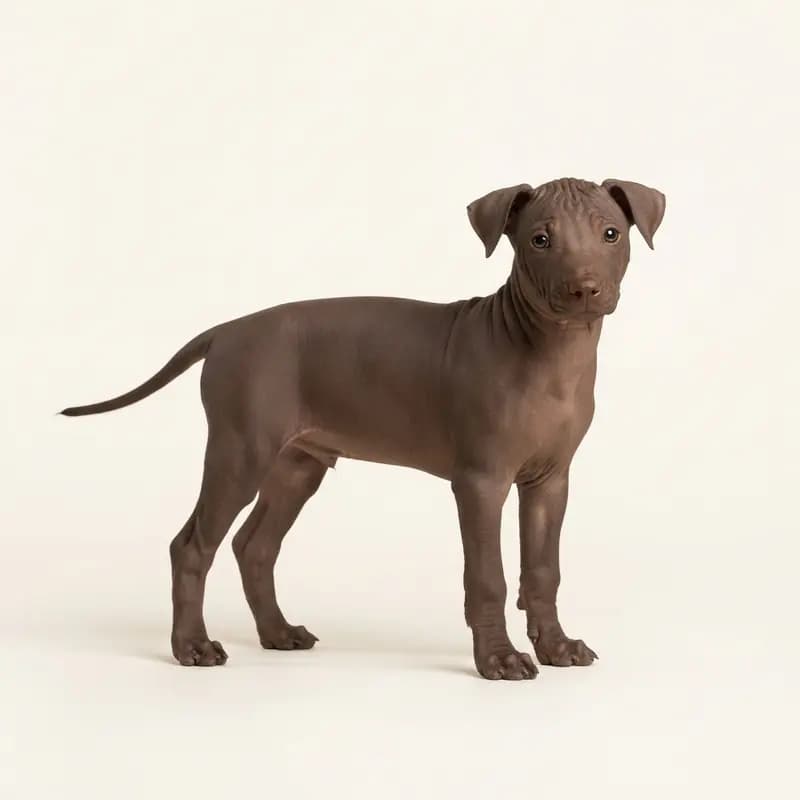
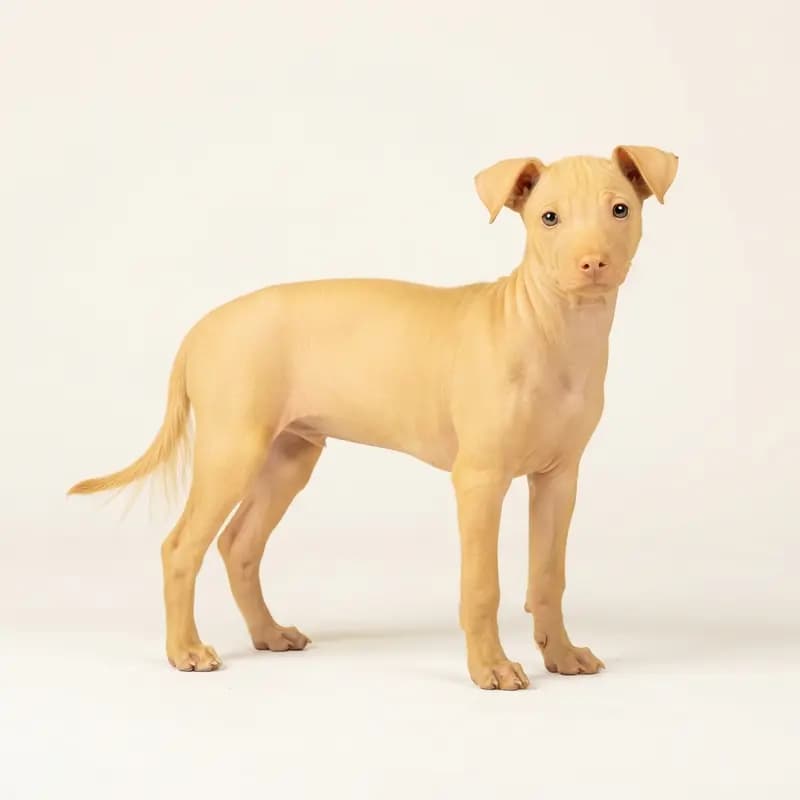
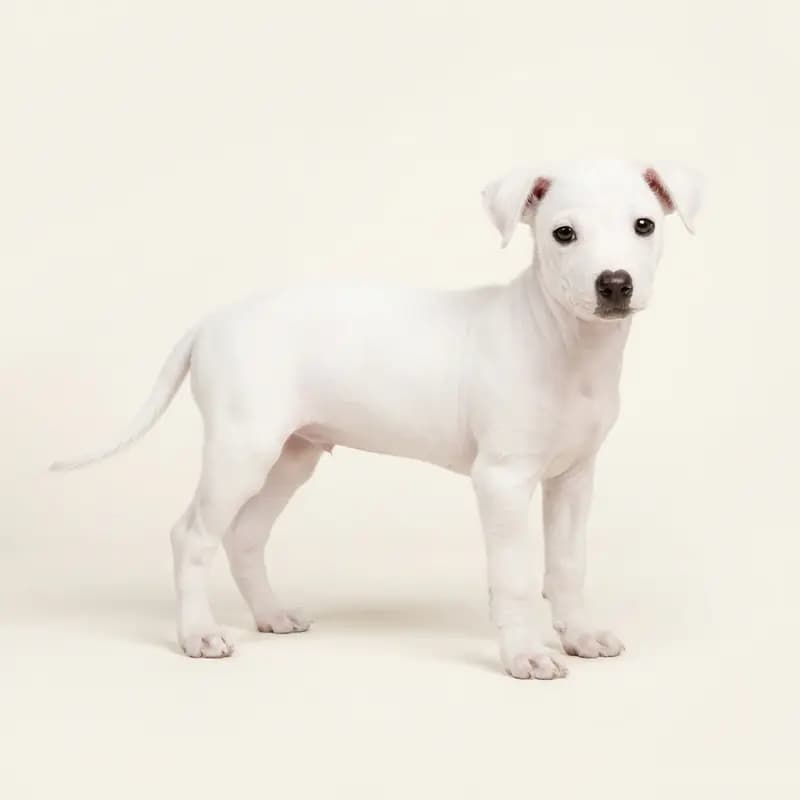
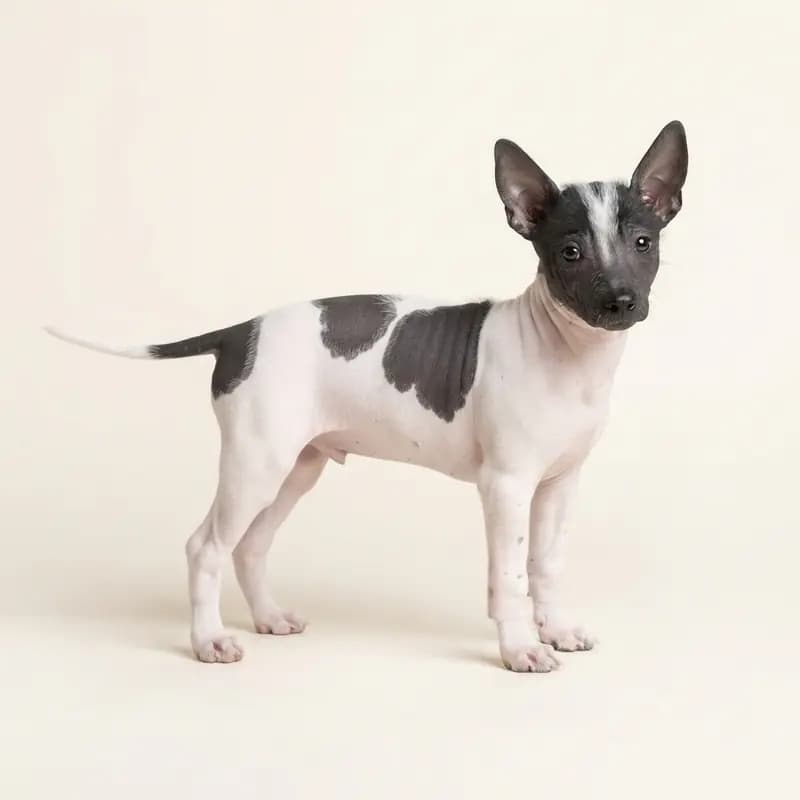
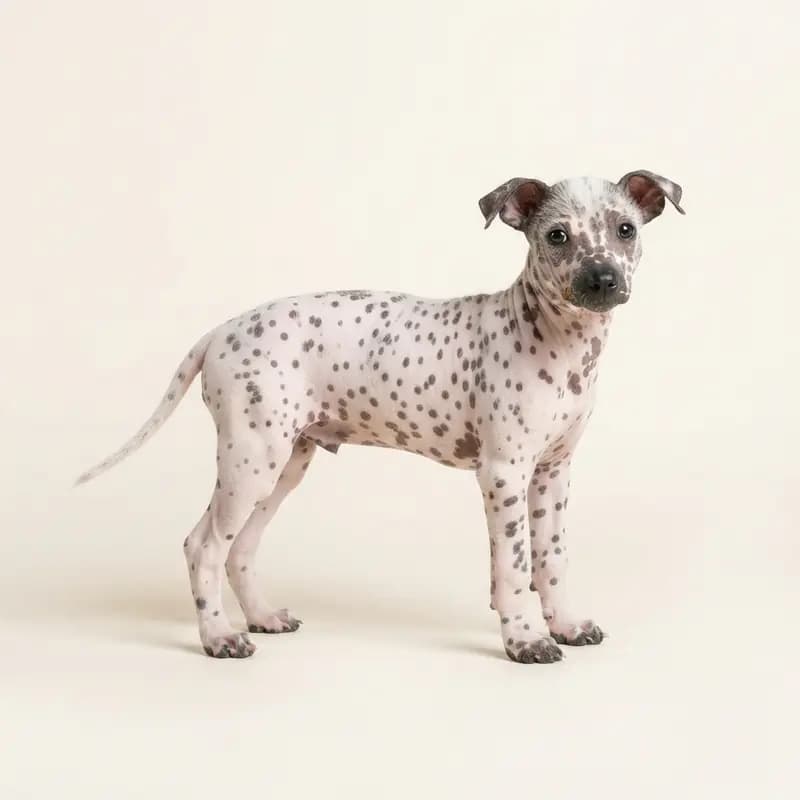
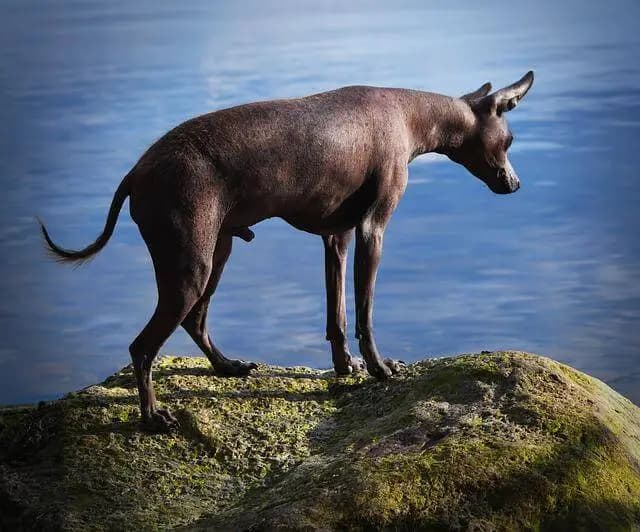
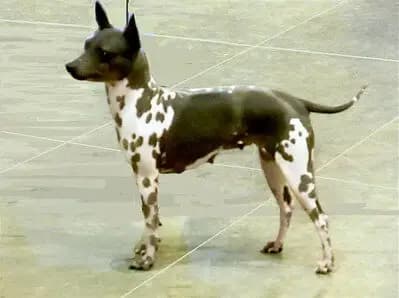
The Perro sin Pelo del Peru, also known as the Peruvian Hairless Dog, is a fascinating breed that immediately catches the eye. They are members of FCI Group 5, which includes primitive types and spitz breeds. However, what sets them apart from other dogs is their skin: they have no fur, which makes them particularly unique. Their skin is smooth and warm to the touch, with colors ranging from light gray to dark gray, sometimes with pink patches. These dogs come in three sizes: small, medium and large, highlighting their versatility as companion dogs. There is no distinction between performance and show lines in this breed.
Despite their exotic appearance, Perros sin Pelo del Peru are very people-oriented dogs that bond closely with their owners. They are considered calm and balanced, which makes them excellent companion dogs. These dogs are very affectionate and love spending time with their family. They tend to develop a particularly close bond with a specific person in their family, but are still friendly to all members of their household. Their vigilance makes them effective guard dogs. They tend to be reserved and cautious around strangers, meaning they are more likely to alert rather than attack. However, their calm nature means they are not prone to barking or standing out in the house. Instead, they tend to be calm and relaxed as long as their needs are met. Their temperament varies from calm to active, but they tend to be on the calmer side. They adapt well to different lifestyles and are content with quiet evenings on the sofa or walks in the park. Despite their calm nature, they still enjoy playtime and mental stimulation to stay happy and balanced. Although they tend to be independent dogs, they have difficulty staying alone and can develop separation anxiety if left alone for long periods of time. It is therefore important that they are not left alone for long periods of time and that they learn to spend time alone from the start. Perros sin Pelo del Peru do not show strong hunting or prey catching behavior. While they enjoy playing and hunting, they are not keen on chasing or catching small animals. This makes them a good choice for households with small animals, provided they are properly socialized and trained to the presence of small animals. Despite their independent nature, Perros sin Pelo del Peru are very trainable dogs that can be trained well with positive reinforcement. They are eager to please and respond well to reward-based training. Their desire to please their owners coupled with their intelligence makes them a pleasure to train. However, it is important to train them with kindness and patience as they can be sensitive to harsh treatment. Due to their tendency to bond and their attachment to their owners, Perros sin Pelo del Peru are not good candidates for homes where they will have to stay alone for long periods of time. They are better suited to people who can spend a lot of time with them and are willing to adapt to their needs. This is a breed that craves human companionship and is happiest when part of their family's daily activities. Although they are a rare breed, Perros sin Pelo del Peru are lovable and affectionate dogs that make a unique addition to any household. While they require special care because of their hairless skin, their endearing personalities and affectionate nature make them a breed worth exploring. For the right person or family, the Perro sin Pelo del Peru is a true treasure that can bring much joy and laughter into their lives.
| Watchfulness Occasionally alerts but is fundamentally open. | Low |
| Openness to Strangers Warms up quickly and is generally welcoming. | Friendly |
| Hunting or Herding Drive Mild interest in movement and small animals — easily managed. | Low |
Fun Fact!
Did you know that the Perro sin Pelo del Peru is officially recognized as Peru's cultural heritage and is even depicted on some ancient Peruvian ceramics? This makes it a true piece of living history!
The Perro sin Pelo del Peru is a unique, hairless dog breed from Peru. These dogs are attentive, affectionate, and well-suited as family companions. They require consistent training and regular exercise. Due to their lack of fur, they are particularly easy to care for but need protection from cold and sun. The Perro sin Pelo del Peru is a rare but loyal and intelligent breed.
The Perro sin Pelo del Peru is a very adaptable dog that can get along well in both the city and the country as long as it gets enough attention and activity. He is very people-oriented and loves being part of the family. Therefore, he should not be left alone for long periods of time. This breed typically gets along well with children provided interactions are respectful and supervised. They also have no problem with other pets, including cats, as long as they are properly socialized and trained to the presence of other animals.
Lives for its family — the born family companion.
Takes boisterous and affectionate children in its stride.
Actively enjoys the company of other dogs.
Small space, noise, lots of people — no problem at all.
Owning a dog is a privilege, but it's also a real responsibility. Before you bring one into your life, be honest with yourself about the commitment it takes.
The Perro sin Pelo del Peru is an intelligent and trainable animal that can be trained well with positive reinforcement. Although they are a calm breed, they still require mental stimulation and physical activity to stay happy and healthy. It is important to train frustration tolerance and impulse control from an early age as these dogs can sometimes develop separation anxiety. They can be encouraged to do a variety of activities, from casual walking to agility to nose work. It is important to keep activities variable to avoid over-busyness. Ball games can be fun, but should be used carefully to avoid encouraging ball-dependent behavior. Since the Perro sin Pelo del Peru is not a traditional working dog breed, it does not have the same intensity and endurance as, for example, a herding dog. Rather, he enjoys participating in his family's activities and is happiest when integrated into the daily routine.
Your Perro sin Pelo del Peru's diet should be balanced and nutritious to support skin and overall health. It is advisable to choose a high-quality dog food that contains all the necessary vitamins and minerals. If necessary, you may also consider specialized skin supplements to support skin health. Since these dogs have no undercoat or fur, they tolerate cold less well and definitely need warm clothing in cold months. In summer it is important to protect them from the sun to avoid sunburn. One advantage of hairless skin is that it does not shed and can therefore be suitable for allergy sufferers. Caring for the Perro sin Pelo del Peru is uncomplicated in that it does not need to be brushed. However, the skin needs care in the form of regular bathing and moisturizing lotions or oils. You should definitely use products that have been specifically developed for dogs.
| Care Level Minimal effort — occasional brushing and bathing. | Low-maintenance |
| Exercise Needs Needs several hours of serious exercise every day. | Very active |
| Shedding No or minimal hair loss — suitable for allergy sufferers. | No shedding |
| Trainability Willing to learn with clear rules and regular training. | Balanced |
Our experts are still reviewing this information. Spotted something wrong? Email us at info@honestdog.de.
Solid, watch carefully
Health grade
In the Perro sin Pelo del Peru, the focus is on breed-typical characteristics such as genetically conditioned hairlessness (naked), which is closely linked to dental malformations, as well as orthopedic risks such as patellar luxation (PL) and eye diseases such as progressive retinal atrophy. For breeding approval in the Club für Exotische Rassehunde e.V., an examination for patellar luxation (PL) with a limit value of PL 0–1 is mandatory. In addition, a health-oriented breeder documents the dental status for malformations, plans matings regarding hairlessness (naked) selectively (carriers only with clear partners), and has the parent animals tested clear of progressive retinal atrophy. Before buying a puppy, make sure to ask for the complete PL results as well as proof of the dental and eye status of both parents.
Grade is relative to other breeds — AI-assisted and editorially reviewed.
Methodology and data: HonestDog Dog Breed Health Report 2026
What matters most for this breed
Tap any item to see details.
You should protect their bare skin from sunburn in the summer and cold in the winter, ensure they maintain a healthy weight to protect their knees, and schedule regular dental and eye check-ups.
Responsible breeders test in accordance with mandatory requirements for patellar luxation (PL) up to grade 1, and additionally record dental abnormalities as well as the status regarding hairlessness (naked) and progressive retinal atrophy.
Note: This health overview is AI-assisted and editorially reviewed. It is for orientation only and does not replace veterinary advice.
What matters most for this breed — what's common, how much it affects the dog's life, and how to protect yourself as a buyer.
Tap a body region to see the inherited conditions linked to it.
The three most important risks
Pick a region on the map to explore other areas.
Tier 1 is the core standard: the tests Club für Exotische Rassehunde e.V. requires, plus further tests from the recommended health standard for this breed. Tiers 2 and 3 show how responsible breeders go beyond.
Core standard. Tests marked “Club standard” are required by Club für Exotische Rassehunde e.V. for breeding approval; the others are part of the recommended health standard for this breed. Ask any reputable breeder for the results.
No entries in this tier.
Note: This health overview is AI-assisted and editorially reviewed. It is for orientation only and does not replace veterinary advice.
A Peruvian Hairless Dog costs around ~€160 per month (€90 – €300, depending on your setup). The first year adds up to roughly ~€5,550 including purchase, equipment and puppy school; across the dog's life (13.5 years) it comes to about ~€30,150.
With surgery cover, running costs come to about ~€160 per month — in return, your share of a major operation drops from several thousand euros to around 20 percent.
Per month
~€160
In the first year
~€5,550
Across the dog's life
~€30,150
Estimated purchase price from a breeder: €2,000 – €3,500
Estimate at a mid-range setup (suburban, dry food, 1–2 hours of daily exercise), average German prices, as of July 2026.
HonestDog Concierge
We currently have no breeders for this breed who have passed our verification. Create your short buyer profile: we'll set up your search alert, review a possible source and email you within 28 days.
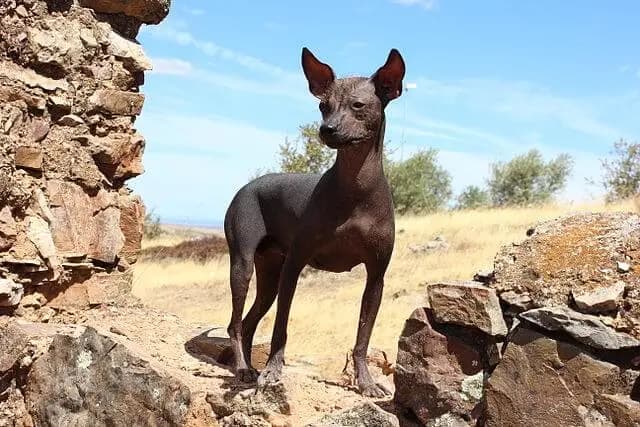 Illustrative image
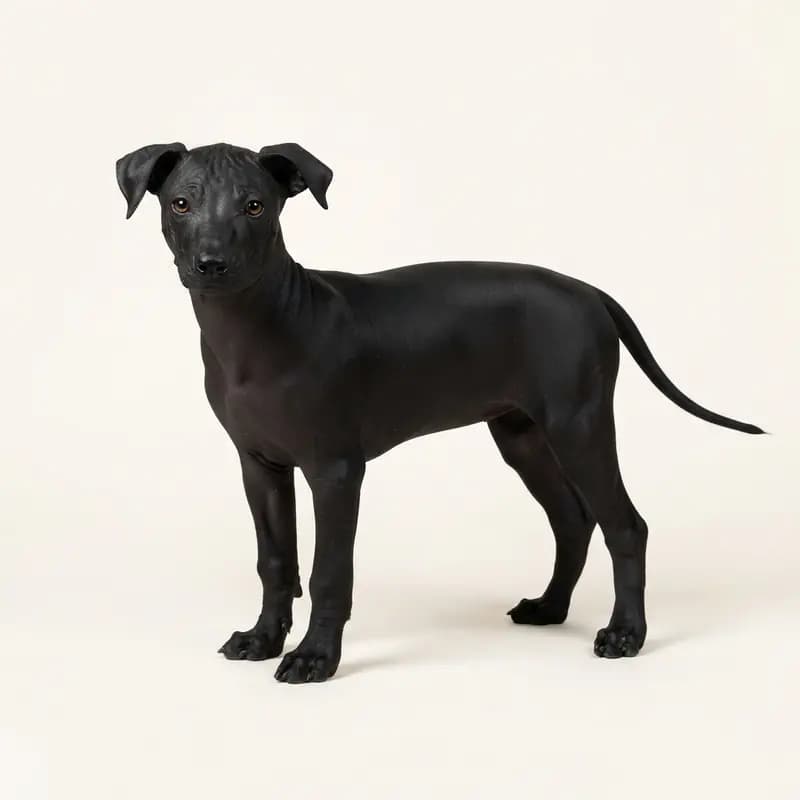 Illustrative image
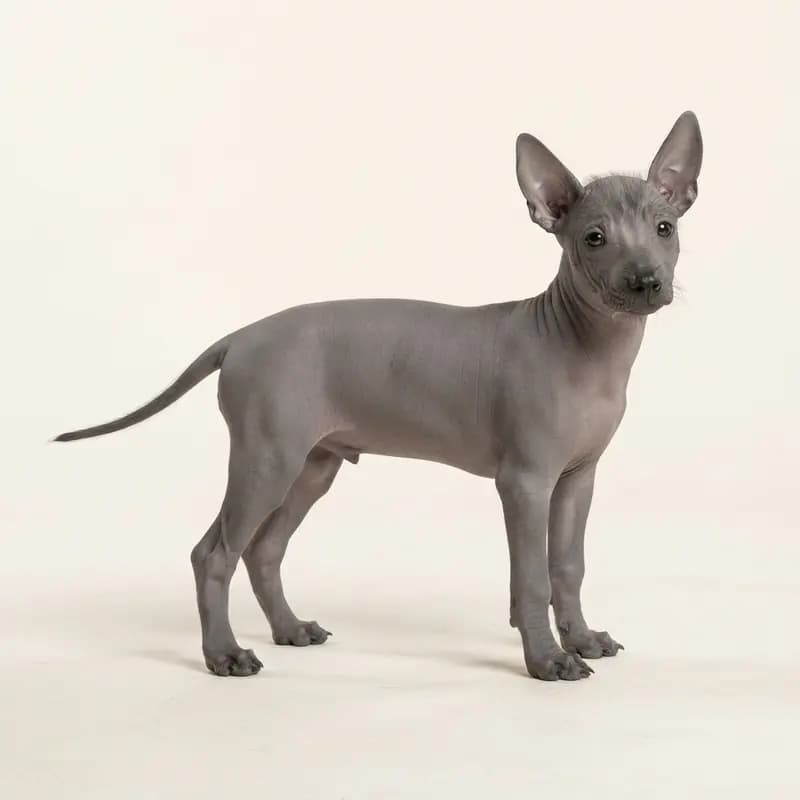 Illustrative image
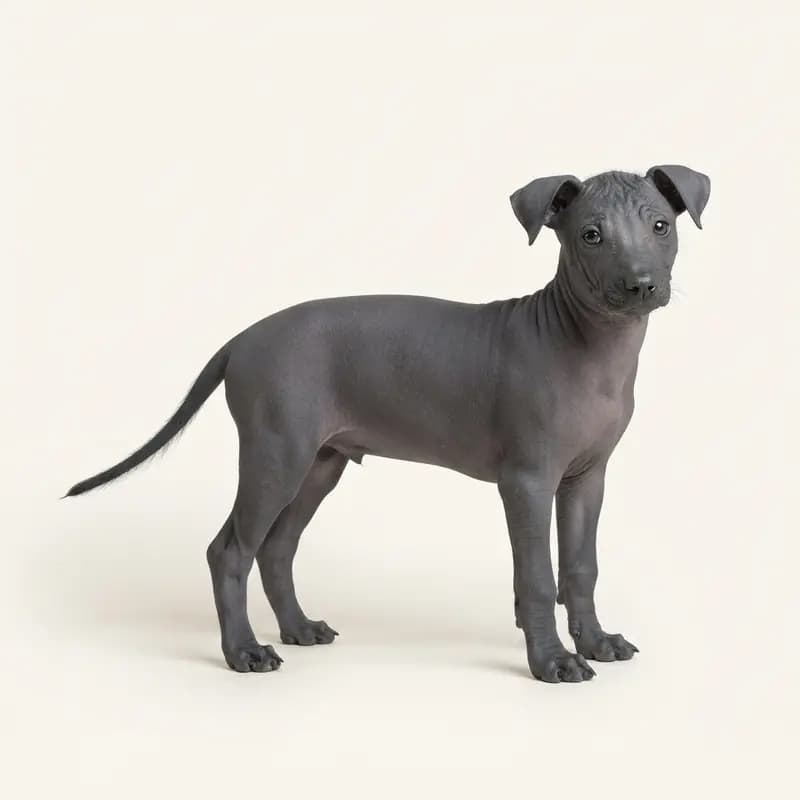 Illustrative image
The Perro sin Pelo del Peru is an ancient breed that was present in Peru before the Inca period. In fact, archaeological finds suggest that these dogs were around as early as 750 BC. The Incas valued them for their warmth and often kept them as bed warmers. Despite their long history in Peru, they were little known outside their home country and were only officially recognized as a breed by the FCI in 1985. These dogs have been revered and depicted by various Peruvian cultures throughout history, including the Moche, Chimu and Vicus cultures. They were often depicted on pottery and other works of art, attesting to their importance in these societies. They have also been found in burial sites, suggesting they were viewed as spiritual companions for the deceased.
The Perro sin Pelo del Perú was originally used as a hunting and guard dog and is known for its hairless appearance.
Peru
Antike
In everyday life, owners describe the Perro sin Pelo del Peru as a very affectionate companion that would happily stay in physical contact all the time. Many owners lovingly call it a "living hot-water bottle," because its bare skin gives off noticeable warmth and these dogs like to snuggle under blankets at home or right up against their people. Within its own household the breed is considered calm, gentle and not much of a barker, as long as it gets enough mental and physical exercise. The bond with its main person is often intense, so many owners stress that time alone has to be trained step by step from the start; otherwise separation frustration quickly becomes an issue.
At the same time, reports highlight the breed's primitive watchfulness and reserve. These dogs usually aren't unfriendly or aggressive toward strangers, but they are clearly reserved and skeptical. They reliably sound the alarm at unusual noises or unannounced visitors. Another recurring theme is the attention they draw: because of their striking, exotic look, owners are regularly approached on walks, and reactions range from genuine fascination to prejudice.
On training, owners agree that these dogs are very sensitive. The Peruvian picks up on moods, hustle and an impatient tone around it with great sensitivity. In owners' experience, pressure, raised voices or harshness don't lead to success; instead, the dog becomes insecure and shuts down or withdraws mentally altogether. With calm leadership, patience and positive reinforcement, on the other hand, these dogs learn very willingly and enjoy doing things together.
Experienced owners also point out that the Perro sin Pelo del Peru has the character of a primitive breed. It has a healthy dose of independence and questions cues when it doesn't see the point or senses that its owner lacks confidence. Owner reports describe careful, gentle socialization during puppyhood and adolescence as essential: because the breed can quickly become jumpy or wary in new or loud environments, it needs an owner who calmly gives it a sense of security.
Sources:welpen.vdh.de
On health and care, owners clear up the misconception that no fur automatically means low maintenance. The hairless skin needs attention that depends on the weather. In summer, lighter or spotted dogs in particular are prone to sunburn and dry skin, so sun protection and moisturizing, such as regular oiling or applying lotion, are part of the routine. In the cold, wet months these dogs get cold quickly and need suitable functional clothing and coats, since they lack an insulating coat.
Owners also point to anatomical traits specific to the breed. Because of the genetic link to hairlessness, many hairless dogs are missing some teeth (usually premolars), though this rarely causes them trouble eating. Minor scrapes on the unprotected skin heal quickly but happen a bit more easily during rough play in the underbrush. Those willing to adapt to these specific needs, however, find the breed on the whole surprisingly robust, lively and adaptable.
Sources:welpen.vdh.deexotischerassehunde.depetbook.dehunderassen.dereddit.com
Paraphrased from real owner reports · translated from German
The Peruvian Hairless Dog is an active dog that needs plenty of exercise and mental stimulation. Research the temperament, grooming needs, and space requirements before deciding.
The average life expectancy of a Peruvian Hairless Dog is 12-15 years. With proper care and regular vet visits, your dog can live a long, healthy life.
Peruvian Hairless Dog grooming requirements include regular brushing, nail trimming, and dental care. HonestDog provides detailed grooming tips for every breed.
The Peruvian Hairless Dog can be a great family dog. Proper training and socialization are key. HonestDog provides family suitability information for every breed.
The Peruvian Hairless Dog comes in these colors: Black, Grey, Blue, Brown, Yellow, White, Piebald, Spotted.
Showcase your kennel on HonestDog and reach families searching for a responsibly bred Peruvian Hairless Dog.