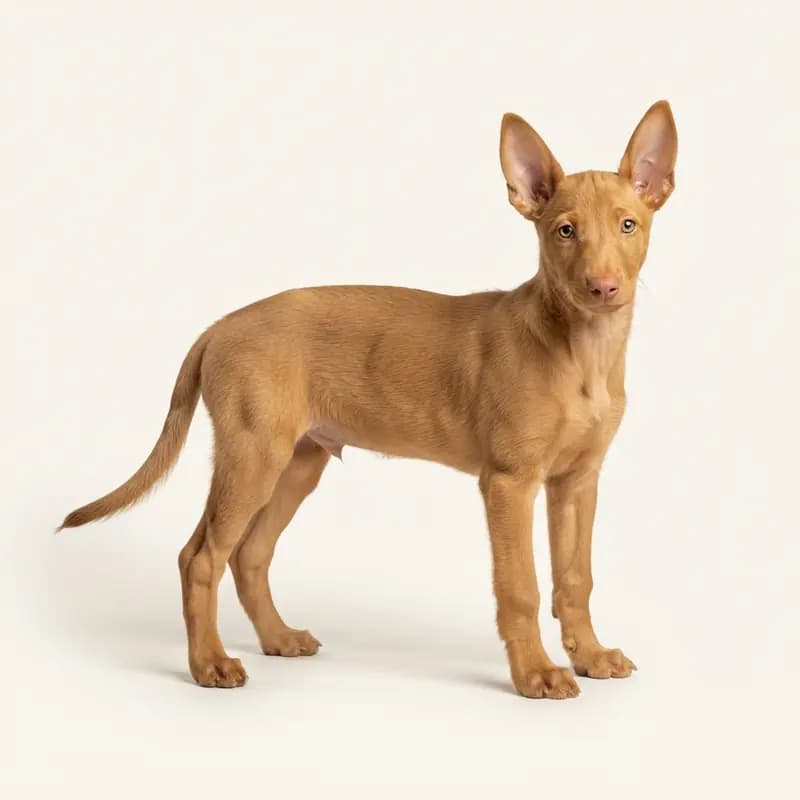
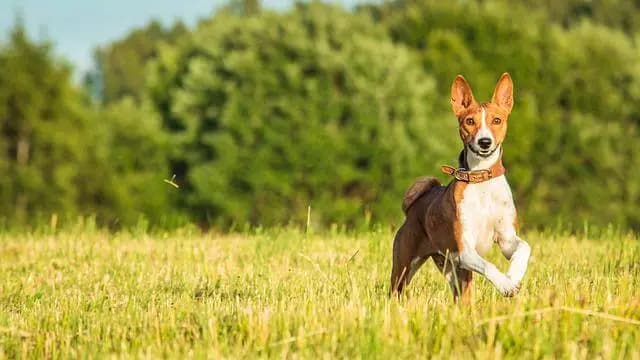
Ibizan HoundSame working temperament
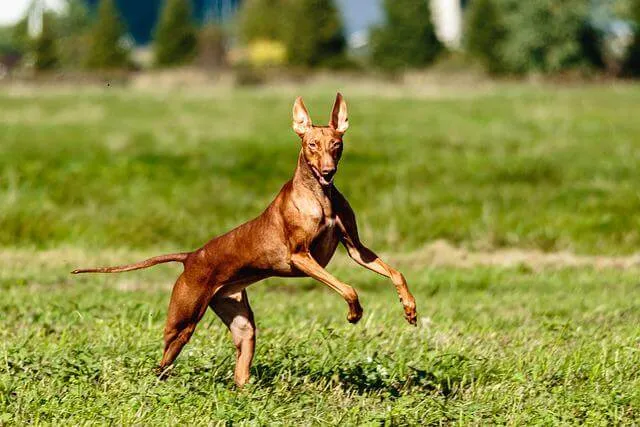
The Pharaoh Hound is an elegant, lightning-fast, and independent primitive hunter—bred in Malta to hunt rabbits in rocky terrain independently using sight, scent, and hearing. It is a fascinating mix of cat-like cleanliness indoors and highly explosive hunting drive outdoors.
Self-check
Answer 6 quick questions about your everyday life and see how well the Pharaoh Hound fits you — including an honest cost estimate per month, per year, and across the dog's lifetime.




At a glance
The essentials — key facts, traits, and health priorities — before you dive deeper.
Lifespan
11–14 yrs
Shoulder height
53–63 cm
Weight
18–25 kg
Practical
Temperament
Daily life
What matters most
Especially with a Pharaoh Hound, choosing the right breeder is the single most important decision you'll make. Serious breeders consistently test the parents for inherited conditions, prioritize healthy early socialization, and stay accountable long after handover. A cheap puppy without health screening tends to become the most expensive dog later on.
See HonestDog breeder standards →Colors & coat
The coat colors that occur in the Pharaoh Hound — including which ones fall outside the breed standard and which carry genetic risk.
Eye colors
 Amber
Coat type
 Short
 Smooth
The real vibes check
A Pharaoh Hound is like an aristocratic roommate who tenderly seeks your closeness on the sofa—until a leaf moves too quickly outside. You are not buying a dog that follows orders, but a highly specialized athlete who makes his own decisions in a flash. If you admire this wild independence, you will gain a loyal partner; if you need constant control, you will despair.
The Pharaoh Hound is a beautiful, slim and elegant dog that immediately attracts attention. It belongs to FCI Group 5, the Spitz and primitive-type dogs, and is classified in Section 6 as a primitive-type hunting dog. His ears are large and erect, and his eyes are amber, giving him a particularly expressive face. The Pharaoh Hound has an impressive physique that exudes both strength and suppleness. There is no distinction between performance and show lines in this breed, all Pharaoh Hounds are bred to the same standards. The Pharaoh Hound's tail is long and is often carried happily across its back, especially when the dog is excited. A distinctive feature of this breed is the ability to blush when highly excited or happy, turning the nose and ears pink.
The Pharaoh Hound is a fascinating creature. He is intelligent and learns quickly, but he is also very independent. This means that while he is capable of learning new things, he doesn't always feel the need to please his human. He often makes his own decisions, and that makes him an interesting but sometimes challenging companion. Despite his independence, the Pharaoh Hound is a friendly dog that generally gets along well with people and other dogs. He is not particularly alert and does not tend to be aggressive, but he can be reserved around strangers. His temperament is even; he is not hyperactive, but he needs regular exercise to be happy. If you are looking for a dog that is happy to spend a lot of time in your company but is also capable of staying alone, the Pharaoh Hound could be a good choice. He is usually quite happy being alone as long as he gets enough exercise and mental stimulation. The Pharaoh Hound has a strong hunting instinct and often displays strong prey-catching behavior. So if you have small pets, you should be careful because the Pharaoh Hound might be tempted to chase them. It's also important to keep him on a leash when he's not in a fenced area, as he can be prone to chasing wildlife. An interesting aspect of the Pharaoh Hound is his sense of humor. He is often playful and has a tendency to be silly, making him an entertaining companion. He is also very sensitive and reacts strongly to the mood of his people. It is important that you have a calm and patient approach when living with a Pharaoh Hound as they do not respond well to harsh corrections or loud voices. When it comes to living with a Pharaoh Hound, it is important to know that although he can live well in an apartment, he needs regular access to a safe, fenced area to run and play. He is not particularly affectionate, but he values the company of his people and should be considered part of the family. Finally, it is important to know that the Pharaoh Hound is a skilled jumper and often displays amazing acrobatic skills. It is therefore advisable to have a high fence around your garden to ensure that he does not escape and explore on his own.
| Watchfulness Occasionally alerts but is fundamentally open. | Low |
| Openness to Strangers Warms up quickly and is generally welcoming. | Friendly |
| Hunting or Herding Drive This drive runs deep — no amount of training eliminates it. | Very strong |
Fun Fact!
Did you know that the Pharaoh Hound is known for his unique smile? When they are particularly happy or excited, they pull back their lips and show their teeth in a charming grin!
Pharaoh Hounds are highly motivated to hunt. It's difficult to keep them well occupied. They need something to do and a lot of exercise, but they tend to hunt uncontrollably and independently.
The Pharaoh Hound can live in both the city and the country as long as it gets enough exercise. He is an active dog and loves running in a fenced garden. He gets along well with children, but as with any breed, children should be taught to treat the dog with respect. Pharaoh Hounds have a high prey instinct, so caution is advised around small pets, including cats.
Loves family life and thrives in a group.
Takes boisterous and affectionate children in its stride.
Usually gets on fine with other dogs.
City-appropriate with enough exercise and stimulation.
Owning a dog is a privilege, but it's also a real responsibility. Before you bring one into your life, be honest with yourself about the commitment it takes.
The Pharaoh Hound is intelligent but also independent, which makes training challenging at times. He responds best to positive reinforcement. Since he is a hunter by nature, you should ensure that he receives enough mental and physical stimulation without overwhelming him. Coursing or agility could be great sports for him. It's important to start recall training early and teach him how to control his impulses, especially as it relates to his hunting instincts.
Pharaoh Hounds are athletic dogs and require a balanced diet that meets their energy needs. High-quality dry or wet food that is rich in proteins and fats is ideal. Some owners also prefer a BARF diet (organic raw food). The Pharaoh Hound has short, smooth fur without an undercoat. That's great because he doesn't shed much and is quite easy to care for. An occasional brushing is enough. This breed copes well with the climate in Germany, but in cold weather the dog will certainly appreciate a warm jacket.
| Care Level Minimal effort — occasional brushing and bathing. | Low-maintenance |
| Exercise Needs Needs several hours of serious exercise every day. | Very active |
| Shedding Hair everywhere, always — no white clothing survives. | Very heavy |
| Trainability Has its own ideas and will test limits. | Strong-willed |
Our experts are still reviewing this information. Spotted something wrong? Email us at info@honestdog.de.
Robust
Health grade
The Pharaoh Hound is considered a very robust breed, yet orthopedic issues such as hip dysplasia (HD) and patellar luxation (PL), as well as eye diseases such as cataracts and progressive retinal atrophy, can occur. A responsible breeder therefore screens breeding dogs carefully for these risks and also checks for hypothyroidism. Before buying a puppy, ask to see the official X-ray results showing a maximum of HD A–B and PL 0, along with veterinary certificates confirming clear eyes and normal thyroid values for the parent animals.
Grade is relative to other breeds — AI-assisted and editorially reviewed.
Methodology and data: HonestDog Dog Breed Health Report 2026
What matters most for this breed
Tap any item to see details.
With joint-friendly exercise, a warm coat on cold days, and occasional eye and thyroid check-ups, most of these dogs remain active well into old age.
Reputable breeders have the parents' knees, hips, elbows, eyes, and thyroids tested to specifically reduce risks within the bloodline.
Note: This health overview is AI-assisted and editorially reviewed. It is for orientation only and does not replace veterinary advice.
What matters most for this breed — what's common, how much it affects the dog's life, and how to protect yourself as a buyer.
Tap a body region to see the inherited conditions linked to it.
The three most important risks
Pick a region on the map to explore other areas.
Tier 1 is the recommended health standard for this breed. Tiers 2 and 3 show how responsible breeders go beyond.
Recommended standard. These tests make up the recommended health standard for this breed — the baseline of any careful breeding program. Ask any reputable breeder for the results.
No entries in this tier.
Note: This health overview is AI-assisted and editorially reviewed. It is for orientation only and does not replace veterinary advice.
A Pharaoh Hound costs around ~€180 per month (€90 – €330, depending on your setup). The first year adds up to roughly ~€5,700 including purchase, equipment and puppy school; across the dog's life (12.5 years) it comes to about ~€30,020.
With surgery cover, running costs come to about ~€170 per month — in return, your share of a major operation drops from several thousand euros to around 20 percent.
Per month
~€180
In the first year
~€5,700
Across the dog's life
~€30,020
Estimated purchase price from a breeder: €2,000 – €3,500
Estimate at a mid-range setup (suburban, dry food, 1–2 hours of daily exercise), average German prices, as of July 2026.
HonestDog Concierge
We currently have no breeders for this breed who have passed our verification. Create your short buyer profile: we'll set up your search alert, review a possible source and email you within 28 days.
The Pharaoh Hound is one of the oldest known dog breeds and is often associated with ancient Egypt. The breed is believed to have originated in Egypt and was later brought to the Mediterranean island of Malta by the Phoenicians. In Malta, where the Pharaoh Hound is known as Kelb tal-Fenek, it was traditionally used as a rabbit hunting dog. The Pharaoh Hound is in fact the national dog of Malta and is highly valued there. The Pharaoh Hound's similarity to depictions of dogs in Egyptian artwork has led to the belief that these may be the dogs kept by the ancient Egyptians. The breed was introduced to Britain in the 1960s and quickly gained popularity. The Pharaoh Hound was recognized by the Fédération Cynologique Internationale (FCI) in 1983 and by the American Kennel Club (AKC) in 1984.
The Pharaoh Hound was used to hunt rabbits and other small game and is known for its speed and good eyesight.
Malta
Antike
Many owners describe living with a Pharaoh Hound as remarkably easy, as long as you understand what the breed needs. Indoors these dogs are usually surprisingly calm and affectionate and like to sleep on the couch or in warm spots. With their family they are considered devoted and goofy. What strikes many owners, though, is how vocal they are: unlike classic sighthounds, Pharaoh Hounds bark quite happily and loudly, whether out of excitement, in play or out of impatience. Toward strangers at home they are often politely aloof or reserved, without being aggressive.
At the same time, owner reports stress that these dogs have a lot of energy outdoors. Besides long walks, they need chances to sprint freely. According to owners, your own yard calls for special caution: Pharaoh Hounds are powerful jumpers and keen climbers. Many owners warn that ordinary fences are often cleared with ease as soon as a cat or squirrel shows up on the other side, which is why a suitably high, sturdy fence is essential.
Sources:rundum.dogwindhundverband.devdh.demit-tier.detierwelt.ch
On training and off-leash time, owners agree that the Pharaoh Hound (traditionally kept on Malta as the Kelb tal-Fenek for hunting rabbits) is a passionate, born hunter. It hunts not only by sight but also makes heavy use of its nose and hearing. For this reason, many owners report that reliable off-leash time in areas with a lot of wildlife is barely possible or takes constant, forward-looking attention. When they spot game, many of these dogs switch into a mode where cues hardly get through, so securely fenced areas or a long line are a regular part of daily life. Because of this drive, most owners consider smaller pets like rabbits or guinea pigs in the same household a serious safety risk.
In day-to-day training, the breed is credited with being quick to learn, combined with a good deal of independence. Many owners stress that the dog questions instructions and doesn't bring blind eagerness to work. In owners' experience, hard pressure or loud corrections quickly make this sensitive dog refuse altogether. What works instead is plenty of patience, humor, clear consistency and positive reinforcement, ideally combined with breed-appropriate outlets like lure coursing or nose work.
Sources:rundum.dogwindhundverband.devdh.demit-tier.detierwelt.ch
On health and grooming, owners generally consider the Pharaoh Hound a robust, primitive breed with a fairly long life expectancy. The short coat is very easy to care for and has hardly any odor, but it does shed fine hairs during coat change. A quirk owners often mention is the typical "blushing": when very happy or excited, the flesh-colored nose and the insides of the ears turn noticeably pink.
However, owners regularly point out how sensitive the breed is to weather. With no undercoat and very little body fat, Pharaoh Hounds get cold very quickly in cold, wet and windy conditions. For many owners, a well-fitting coat in fall and winter is standard equipment. Experienced owners and emergency reports also note that the breed, like other sighthound types, may be more sensitive to certain anesthetics, which vets should definitely be told about before any procedure.
Paraphrased from real owner reports · translated from German
The Pharaoh Hound is an active dog that needs plenty of exercise and mental stimulation. Research the temperament, grooming needs, and space requirements before deciding.
The average life expectancy of a Pharaoh Hound is 11-14 years. With proper care and regular vet visits, your dog can live a long, healthy life.
Pharaoh Hound grooming requirements include regular brushing, nail trimming, and dental care. HonestDog provides detailed grooming tips for every breed.
The Pharaoh Hound can be a great family dog. Proper training and socialization are key. HonestDog provides family suitability information for every breed.
The Pharaoh Hound comes in these colors: Tan.
Showcase your kennel on HonestDog and reach families searching for a responsibly bred Pharaoh Hound.