GreyhoundSame FCI section
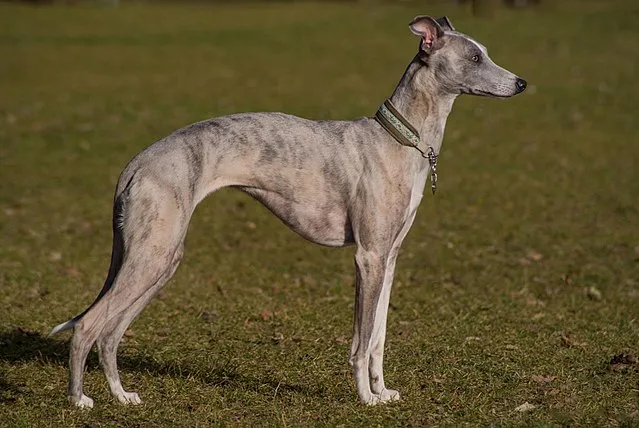
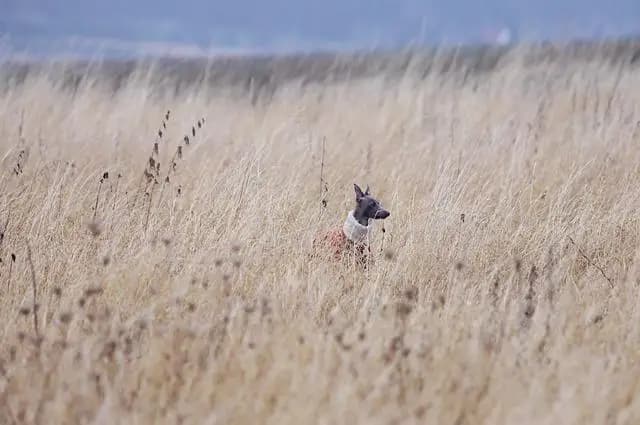
The Whippet is a gentle, extremely affectionate sight hound—bred for explosive sprints triggered by visual stimuli, yet they instantly transform into a cuddly couch potato once indoors.
How the health grade is calculated
Sources for required breeding screenings. Deutscher Windhundzucht- und Rennverband e.V. (DWZRV)
Self-check
Answer 6 quick questions about your everyday life and see how well the Whippet fits you — including an honest cost estimate per month, per year, and across the dog's lifetime.


At a glance
The essentials — key facts, traits, and health priorities — before you dive deeper.
Lifespan
12–15 yrs
Shoulder height
44–51 cm
Weight
10–15 kg
Practical
Temperament
Daily life
What matters most
Especially with a Whippet, choosing the right breeder is the single most important decision you'll make. Serious breeders consistently test the parents for inherited conditions, prioritize healthy early socialization, and stay accountable long after handover. A cheap puppy without health screening tends to become the most expensive dog later on.
See HonestDog breeder standards →Colors & coat
The coat colors that occur in the Whippet — including which ones fall outside the breed standard and which carry genetic risk.
Eye colors
 Brown
 Amber
Coat type
 Short
 Smooth
The real vibes check
A Whippet lives in two extreme gears: outside they are a fast-paced rocket focused on movement stimuli, and inside they are a heat-loving cat in a dog suit. You won't get blind obedience, but rather a sensitive companion who discharges their energy in seconds and then spends hours happily hogging your couch.
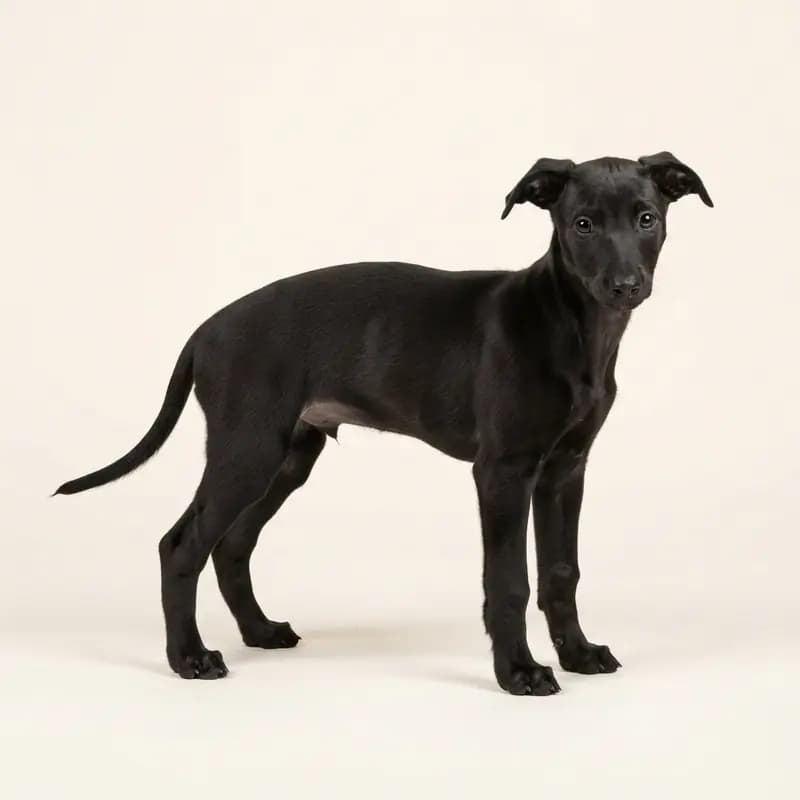
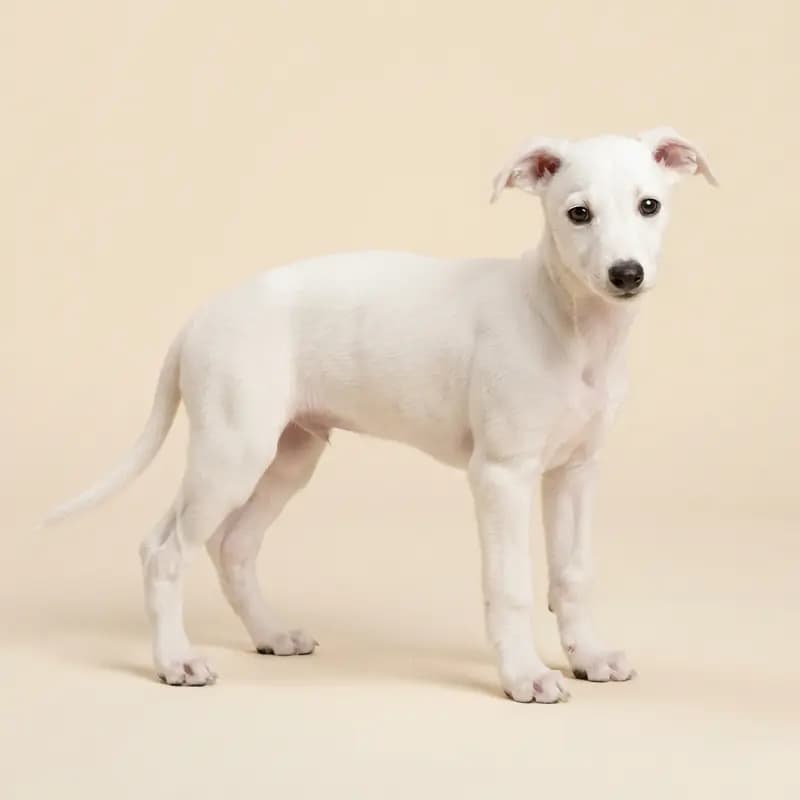
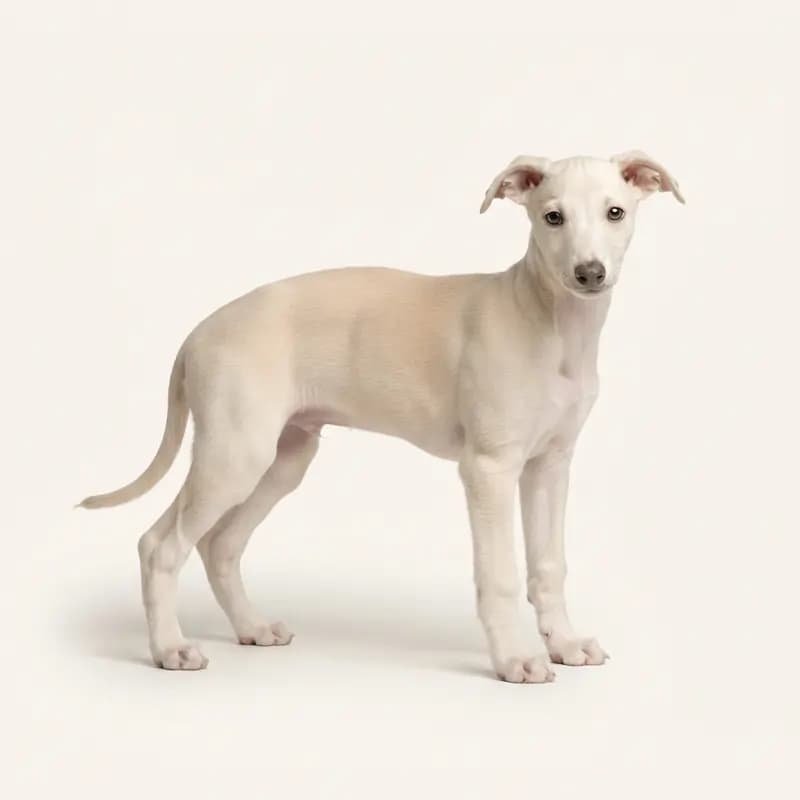
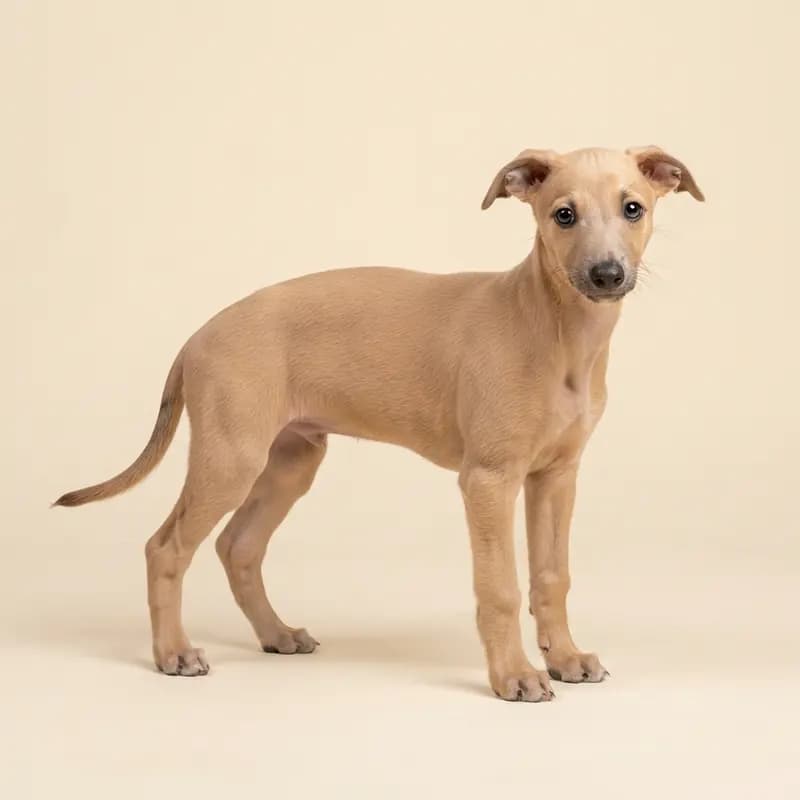
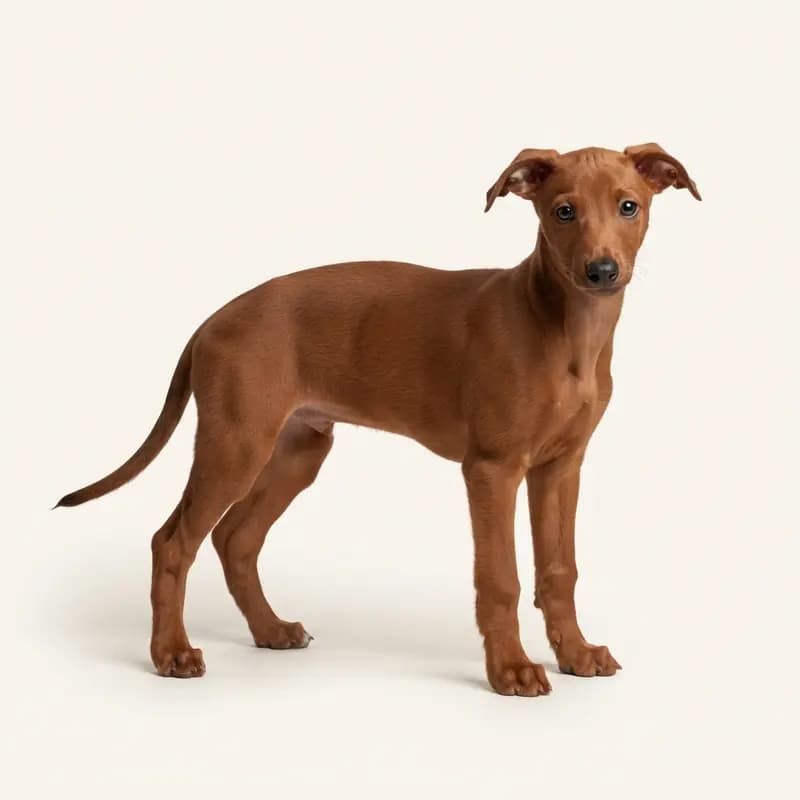
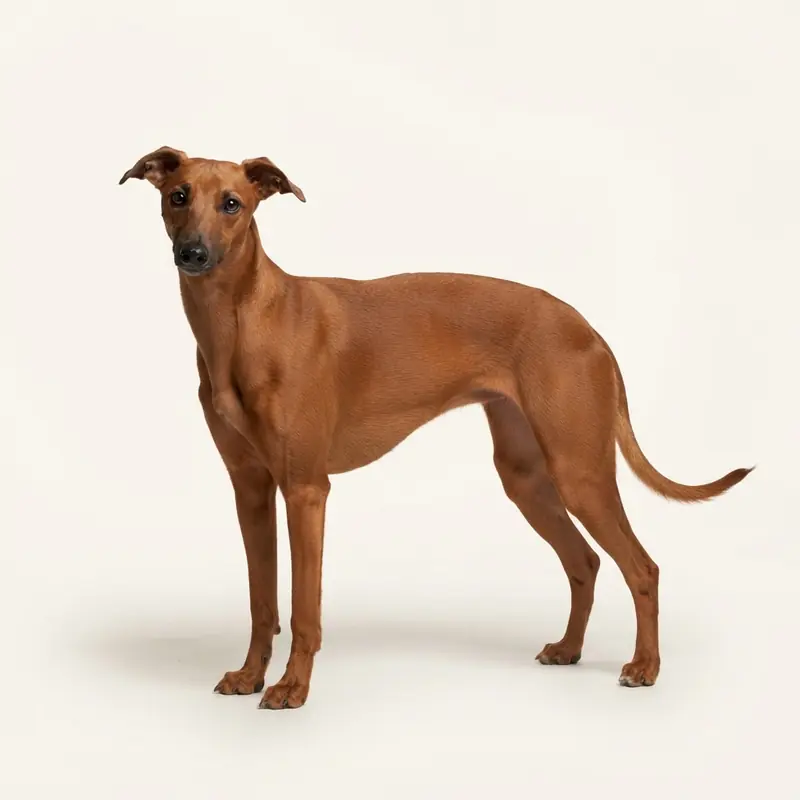
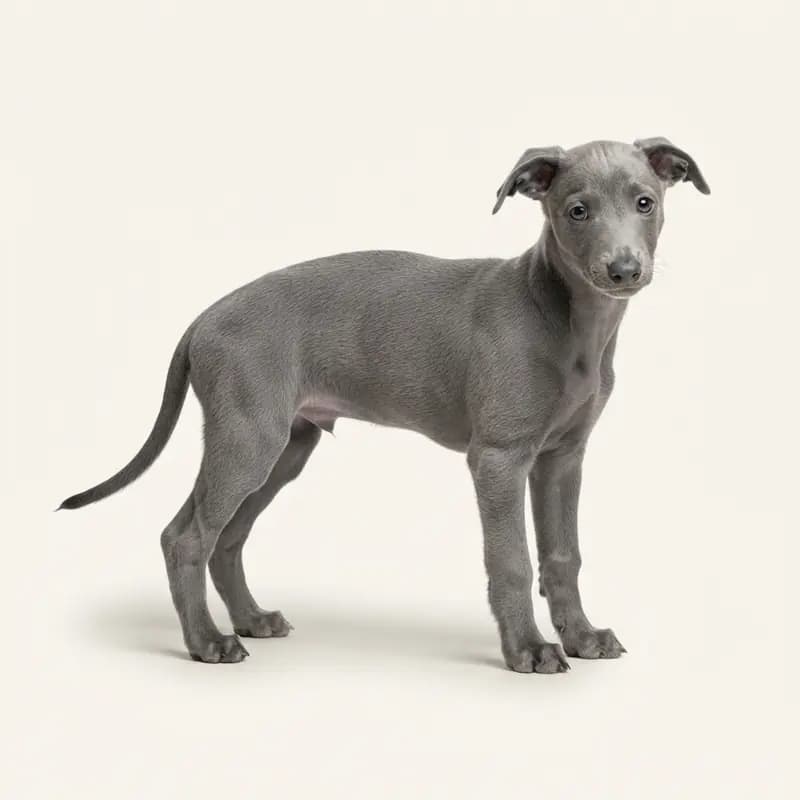
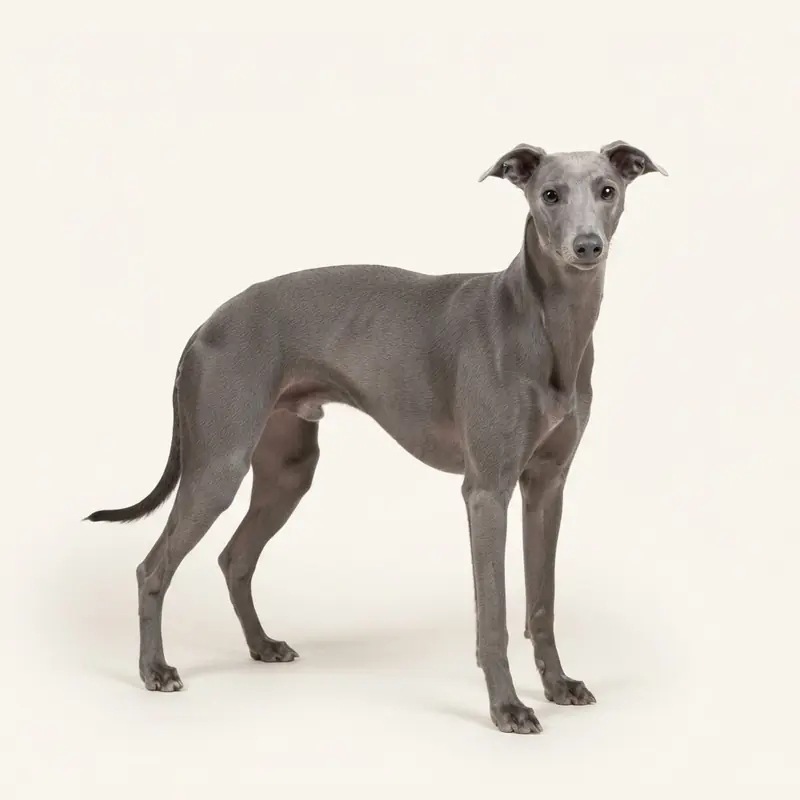
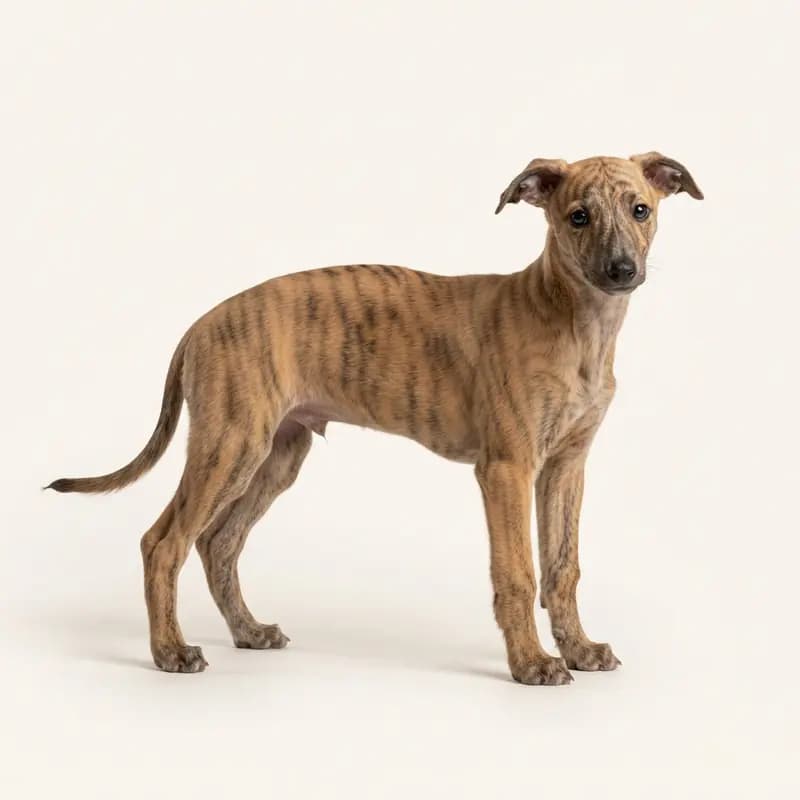
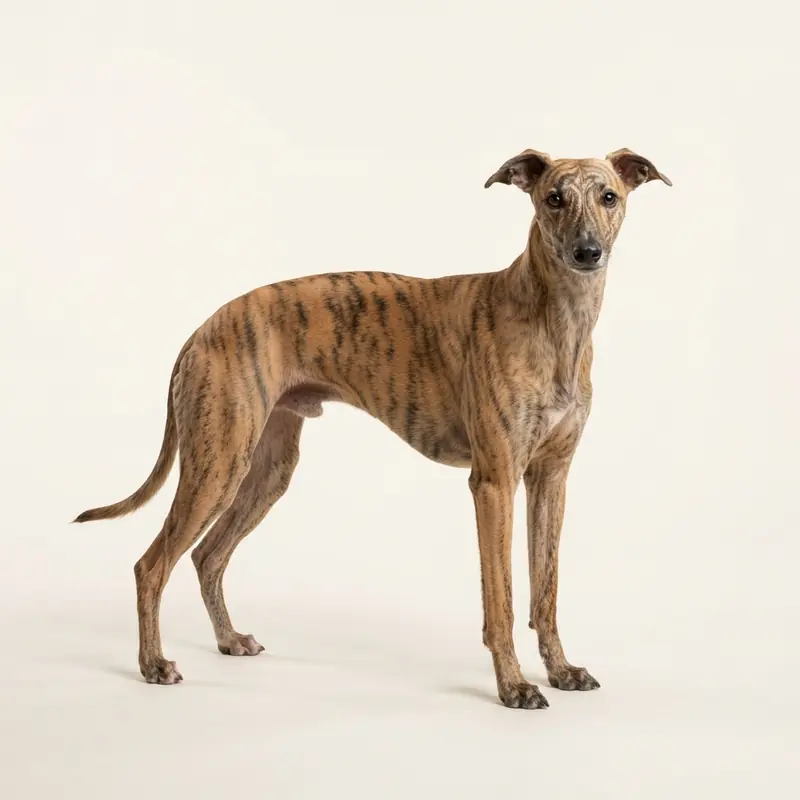
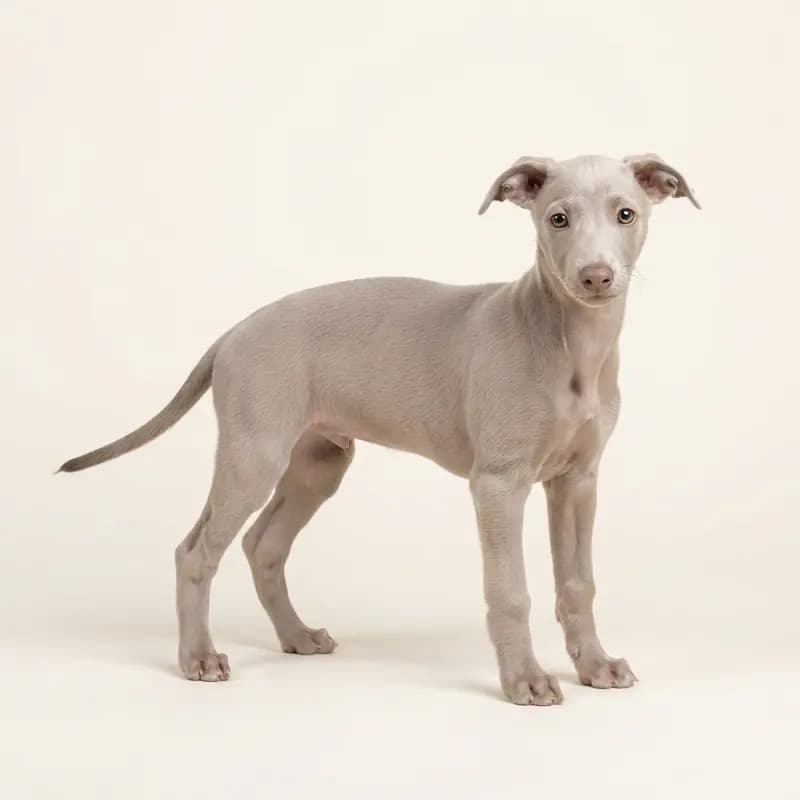
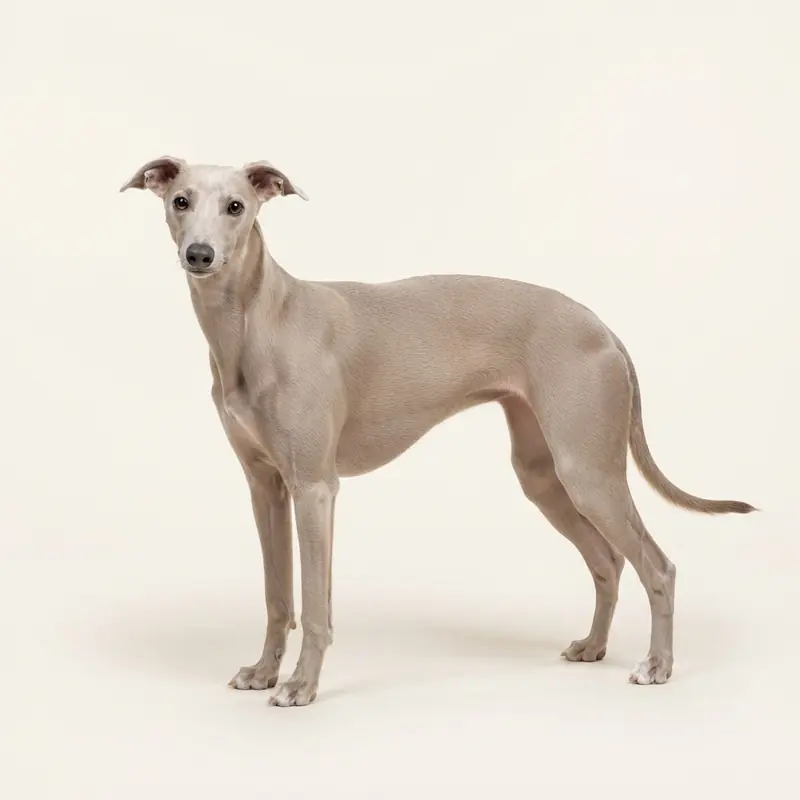
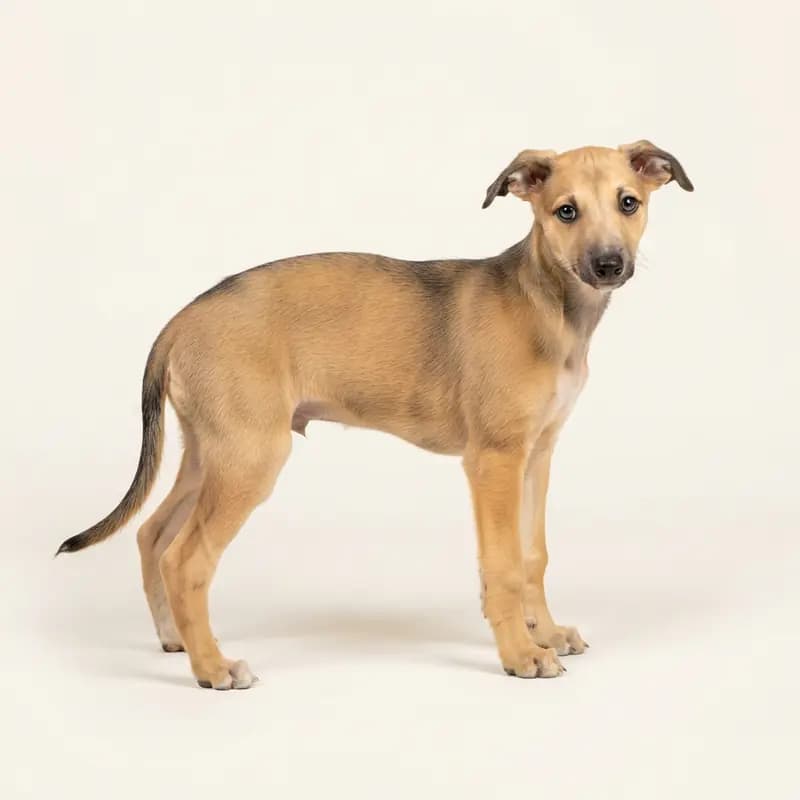
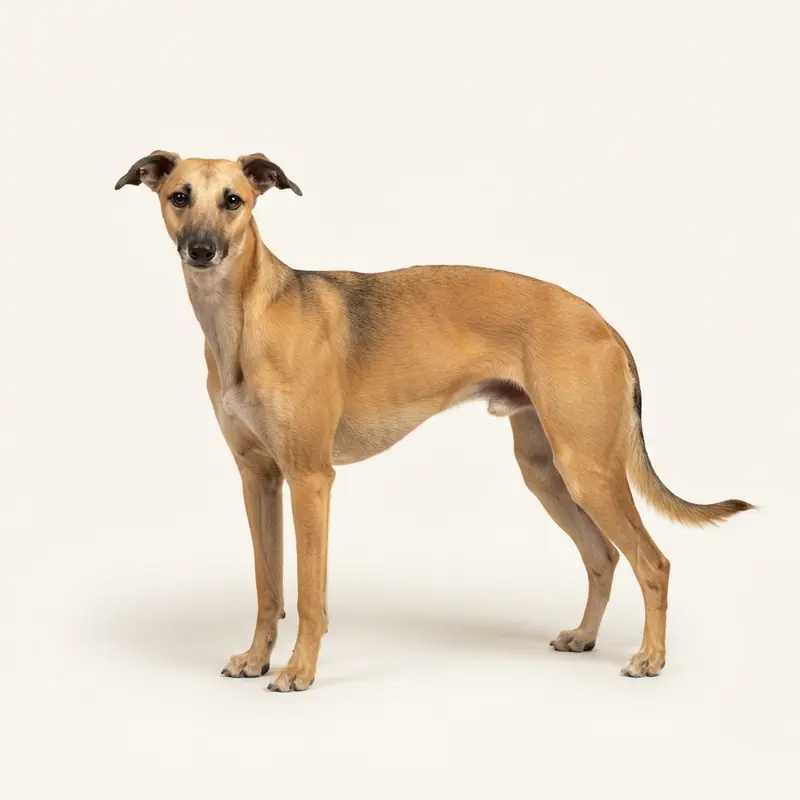
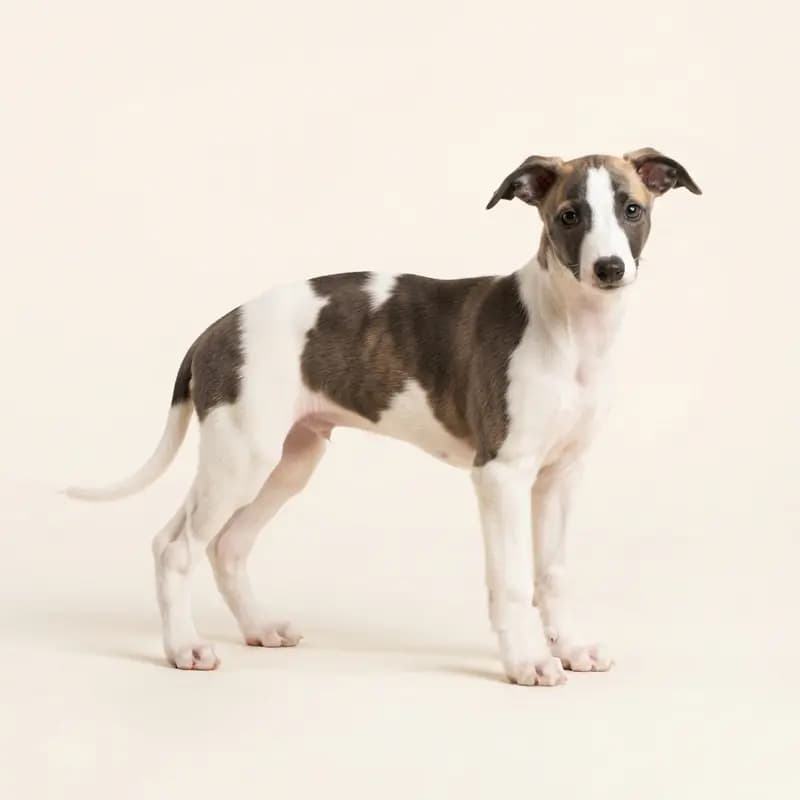
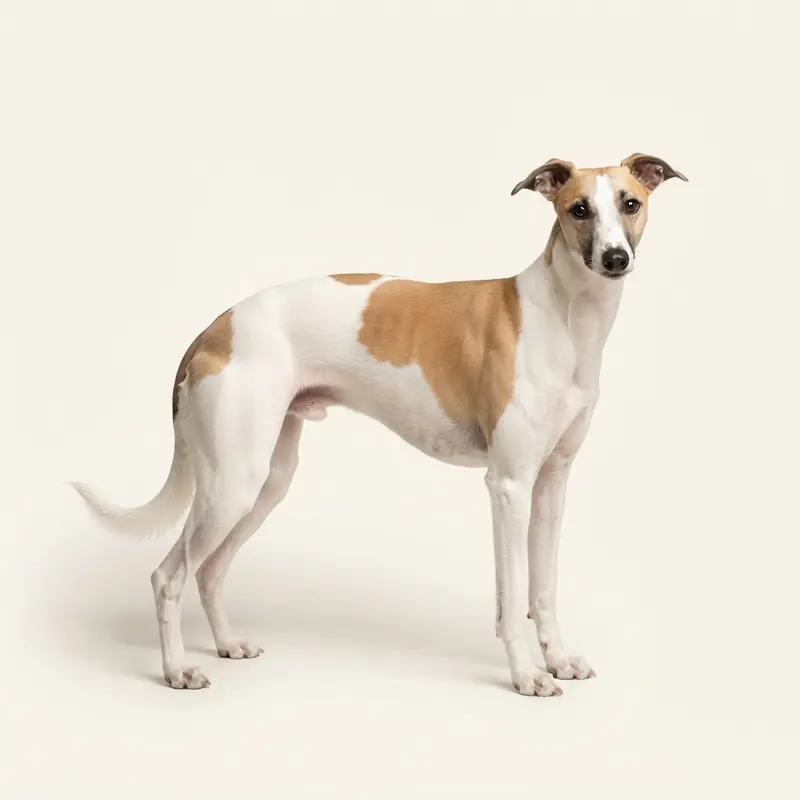
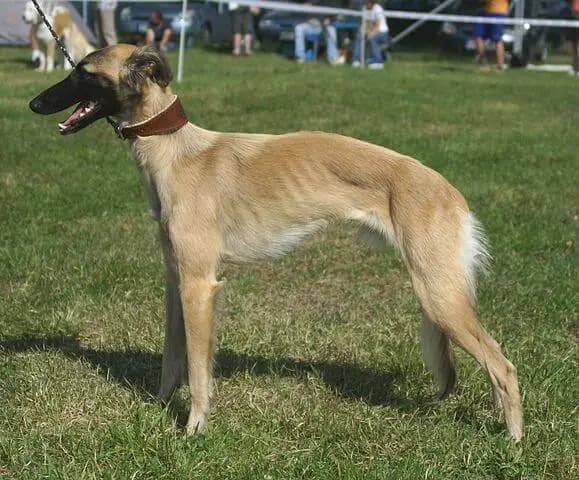
The Whippet, a member of FCI Group 10 (Sighthounds), is an elegant and graceful dog with a strong resemblance to its larger relative, the Greyhound. However, it is more compact and has a unique mix of sporty robustness and delicate elegance. Its head is long and narrow, crowned with small, alert ears, and its eyes are large and expressive. His body is athletic and muscular, with a deep chest and a defined waist. The Whippet has a short, dense coat with no undercoat that comes in a variety of colors and patterns.
The Whippet is an excellent companion dog known for being gentle, friendly and very people-oriented. He is very affectionate and values being close to his people above all else. Whippets are not known for being particularly independent or self-reliant. Rather, they tend to follow their owners and stay close to them. They love to cuddle up to their humans and enjoy any form of attention and affection. Despite their racing past, Whippets are surprisingly calm dogs around the house. They are known to enjoy stretching out on the sofa and taking naps, earning them the nickname "the lazy greyhounds." However, this does not mean that they are not active dogs. On the contrary, Whippets love to run and play and require regular exercise and mental stimulation to be healthy and happy. The Whippet's temperament is rather calm and balanced. They are not prone to hyperactivity and can live well in a calm, serene environment. Their gentle, sensitive nature means they can react with alarm to loud noises or hectic activity, so they feel most comfortable in a quiet, stable home. Whippets are very trainable and demanding and are therefore well suited to various dog sports such as agility or flyball. They also make excellent therapy dogs due to their gentle, friendly nature and ability to adapt well to different situations. As with all sighthounds, the Whippet is a sight hunter, meaning it has a strong hunting instinct. He is activated by movement and cannot resist chasing after a fleeing object. Therefore, it is important that whippets are kept in a safe environment where they do not have the opportunity to chase after a fleeing animal or object. A whippet can learn to stay alone, but he prefers to be with his people and can develop separation anxiety if left alone for long periods of time. Therefore, it is important that future owners are prepared to spend enough time with their Whippet and give him the companionship and attention he needs. The Whippet is not a particularly vigilant guard dog. Although alert and attentive, he is not prone to barking or reacting aggressively when he encounters strangers. Instead, he is usually friendly and open-minded towards people and other animals. This makes him an ideal dog for families or individuals looking for a calm, friendly and loving companion.
| Watchfulness Greets everyone as a friend — no natural guarding instinct. | Very low |
| Openness to Strangers Warms up quickly and is generally welcoming. | Friendly |
| Hunting or Herding Drive Noticeable drive — needs attention around small animals. | Moderate |
Fun Fact!
Did you know that Whippets are often referred to as “the lazy greyhounds”? Despite their impressive speed on the race track, they love to lie comfortably on the sofa and take long naps!
Whippets are considered affectionate and calm dogs at home. However, they have a great need to move outdoors, which the owner should accommodate.
Whippets are absolutely suitable as city dogs as long as they get enough exercise and mental stimulation. They are quite adaptable and can live in a smaller apartment as long as they get regular walks and playtime. They are gentle and patient, making them good companions for children, however younger children should always be supervised to ensure they do not accidentally injure the dog. Despite their hunting instincts, Whippets can usually get along well with other pets, including cats, if they are used to it from an early age. It is always a good idea to introduce new animals carefully and under supervision.
Loves family life and thrives in a group.
Takes boisterous and affectionate children in its stride.
Actively enjoys the company of other dogs.
Small space, noise, lots of people — no problem at all.
Owning a dog is a privilege, but it's also a real responsibility. Before you bring one into your life, be honest with yourself about the commitment it takes.
Whippets are very intelligent and eager to learn, which makes training easier. However, they are also sensitive, so a positive, reward-based training approach works best. They are athletic and enjoy many forms of canine activities, such as agility, flyball, and lure coursing. One aspect you should pay attention to is their propensity to hunt. Their strong hunting instinct can lead them to chase after small animals or moving objects. Therefore, good recall training is important, as is impulse control training. It is also important to build good frustration tolerance to prevent the dog from becoming too fixated on a particular trigger, such as balls. Ball games are of course a wonderful way to express their hunting instinct in a controlled manner, but it is important to do this in moderation and not to turn the dog into a “ball junkie”. Although Whippets are athletic and energetic, they also need plenty of rest and recovery time. Therefore, it is important to find a good balance between activity and relaxation and to prevent the dog from becoming "over-busy"..
When it comes to nutrition, the Whippet needs a balanced diet. You can choose a ready-made meal or prepare a balanced home-cooked meal. Make sure your whippet gets enough protein to support his energetic lifestyle and enough fats to protect him from the cold. Grooming Whippets’ coat is very easy. They have a short, smooth coat with no undercoat, meaning they shed less than breeds with an undercoat. Regular grooming with a soft brush or glove is enough to keep the coat clean and healthy. Whippets cope well with the German climate, although their short coat and lack of undercoat may require an additional layer of warmth in the colder months. A dog coat can help keep your four-legged friend warm.
| Care Level Minimal effort — occasional brushing and bathing. | Low-maintenance |
| Exercise Needs Needs several hours of serious exercise every day. | Very active |
| Shedding Regular shedding — dog hair on clothes is now normal. | Moderate |
| Trainability Has its own ideas and will test limits. | Strong-willed |
Our experts are still reviewing this information. Spotted something wrong? Email us at info@honestdog.de.
Robust
Health grade
The Whippet is considered a very healthy breed, yet genetic predispositions such as muscle hypertrophy (double muscling), cataracts, or phosphofructokinase (PFK) deficiency can still occur. The Deutscher Windhundzucht- und Rennverband e.V. (DWZRV) therefore mandates for breeding approval that breeding animals must be tested for muscle hypertrophy (double muscling) and be free of it. Responsible breeders additionally have their dogs examined for cataracts and conduct genetic tests for ectodermal dysplasia (ED-SFS) and phosphofructokinase (PFK) deficiency. Ask to see the relevant certificates and make sure that, for hereditary diseases such as ectodermal dysplasia (ED-SFS), a carrier is mated exclusively with a clear partner.
Grade is relative to other breeds — AI-assisted and editorially reviewed.
Methodology and data: HonestDog Dog Breed Health Report 2026
What matters most for this breed
Tap any item to see details.
You should protect your dog with warm clothing in wet and cold weather and schedule regular routine veterinary check-ups for their heart.
Responsible breeders provide proof of the mandatory DWZRV screening for muscular hypertrophy (double muscling) with a status of clear, and voluntarily carry out additional tests for cataract and phosphofructokinase (PFK) deficiency.
Note: This health overview is AI-assisted and editorially reviewed. It is for orientation only and does not replace veterinary advice.
What matters most for this breed — what's common, how much it affects the dog's life, and how to protect yourself as a buyer.
Tap a body region to see the inherited conditions linked to it.
The three most important risks
Pick a region on the map to explore other areas.
Tier 1 reflects the tests Deutscher Windhundzucht- und Rennverband e.V. (DWZRV) actually mandates. Tiers 2 and 3 show how responsible breeders go beyond.
Club standard. Deutscher Windhundzucht- und Rennverband e.V. (DWZRV) requires these tests for breeding approval. Ask any reputable breeder for the results.
Note: This health overview is AI-assisted and editorially reviewed. It is for orientation only and does not replace veterinary advice.
A Whippet costs around ~€160 per month (€90 – €300, depending on your setup). The first year adds up to roughly ~€4,750 including purchase, equipment and puppy school; across the dog's life (13.5 years) it comes to about ~€28,790.
With surgery cover, running costs come to about ~€160 per month — in return, your share of a major operation drops from several thousand euros to around 20 percent.
Per month
~€160
In the first year
~€4,750
Across the dog's life
~€28,790
Estimated purchase price from a breeder: €1,500 – €2,500
Estimate at a mid-range setup (suburban, dry food, 1–2 hours of daily exercise), average German prices, as of July 2026.

 Illustrative image
 Illustrative image
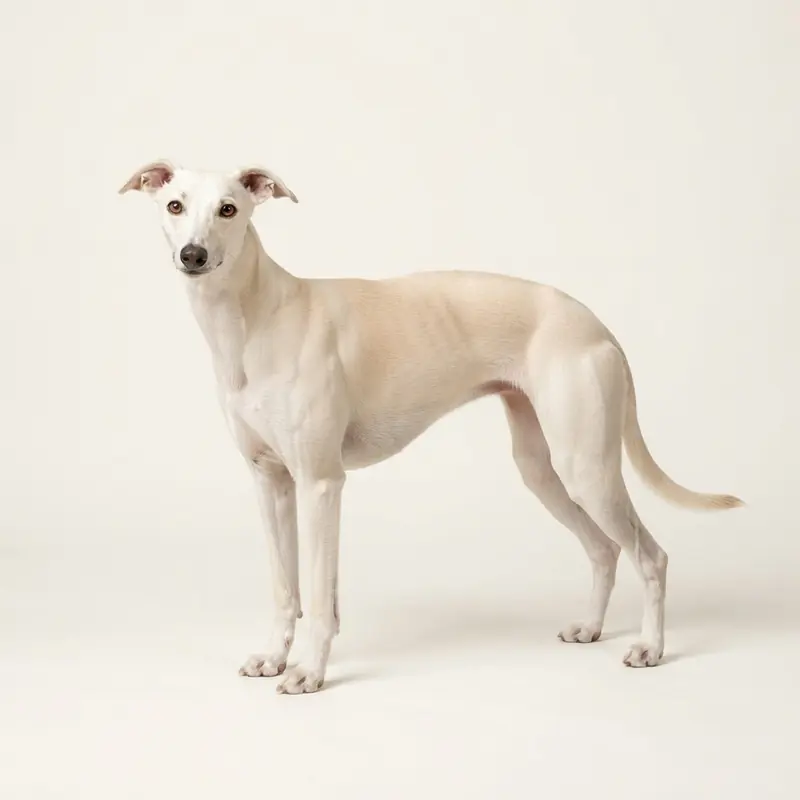 Illustrative image
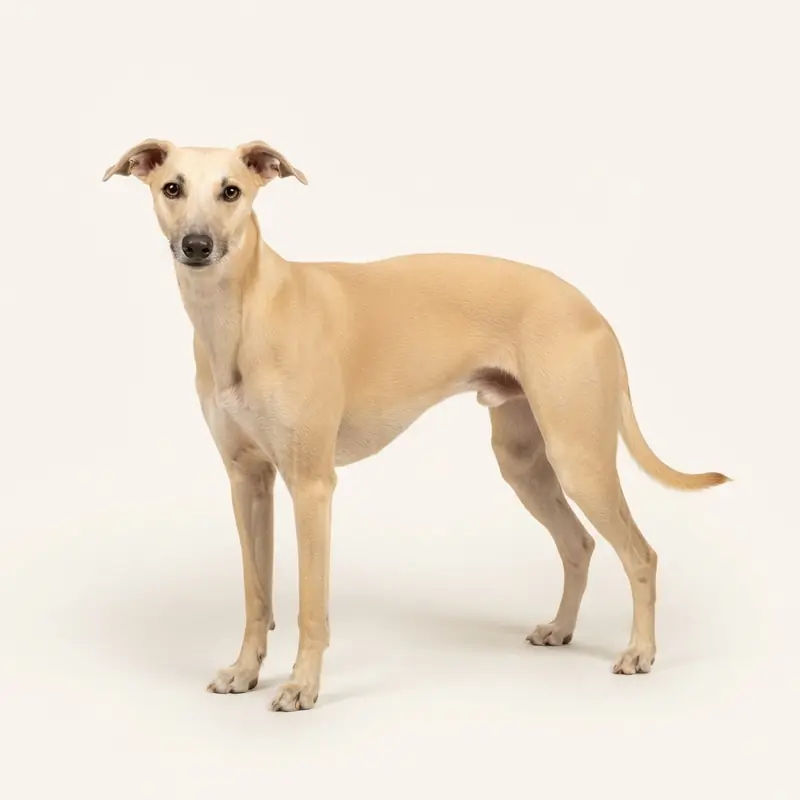 Illustrative image
The whippet has its roots in the 18th and 19th centuries in England, where it was originally bred by workers in the industrial regions of the north. This "working class" wanted a fast, agile dog for greyhound racing, which was a popular pastime, but the larger sighthounds, such as the Greyhound, were unaffordable for them. Therefore, the Whippet was bred by crossing smaller greyhounds and probably also terriers and Italian greyhounds to produce a smaller but equally fast dog. The breed quickly became popular, not only for its abilities on the racetrack, but also for its gentle, friendly nature and ability to adapt well to family life. The Whippet was recognized as a separate breed by the English Kennel Club in 1891. Today the Whippet is valued and popular both as a racing dog and as a companion dog.
The Whippet was bred for hare hunting and later dog racing, known for its speed and agility.
England
1800
Indoors, owners almost unanimously describe the Whippet as a dog with a real "on/off switch." At home it's catlike, unobtrusive and barely audible, as long as it gets to claim the softest spot in the room. For many Whippets, the well-known need to lie pressed against their people is a genuine basic need: they insist on close physical contact and love to burrow under the covers or curl up on the sofa. Owners also often praise how well they get along with other dogs, although many note that sighthounds often play in a style all their own that can sometimes overwhelm other breeds.
At the same time, experienced owners warn against underestimating the breed as just a lap dog. Puppies and young dogs in particular are described as real bundles of energy that use the furniture as a racetrack and need patience while they learn to settle. Outside, they need chances to run flat out in safe bursts so they come home relaxed and sleepy again.
Sources:hundeforum.comforum.hundund.demeintierischerfreund.comdoctor-speed.de
With training and off-leash time, new owners often run into the Whippet's two biggest challenges: its sensitivity and its sighthound instinct. Owners agree that pressure, harsh words or rough handling are completely counterproductive with this breed; the dogs then turn stubborn or withdraw fearfully. The best results come from a calm, trusting bond and positive reinforcement. Another recurring topic is being left alone, which needs to be built up in very small steps, since many Whippets are very attached to their people and otherwise easily develop separation stress.
Outdoors, the hunting drive often calls for lifelong vigilance. A fleeing hare, a deer or even just an unfamiliar cat is often enough to flip the otherwise obedient dog into hunting mode in an instant, and then it barely responds. Many owners therefore report that reliable off-leash time is only possible in open terrain with good visibility, with intensive recall training or in fenced runs.
Health-wise and in practical terms, owners generally consider the Whippet a robust, long-lived breed without the serious bone problems of some smaller sighthound breeds. Still, its particular build comes with some breed-typical quirks. Because these dogs have hardly any body fat or undercoat, they get cold very quickly in wet and cold weather. For many owners, a whole wardrobe of well-fitting coats and sweaters is therefore part of everyday life.
Another recurring point in owners' accounts is how easily they pick up minor injuries. The thin skin and short coat offer little protection during fast sprints through undergrowth or rowdy play, so tears, scratches and paw injuries are relatively common. Sighthound experts also often point out that Whippets have atypical blood values and are especially sensitive to anesthesia, which is why a vet with sighthound experience is a big advantage.
Sources:meintierischerfreund.comhundeforum.comreddit.comwhipcat.de
Paraphrased from real owner reports · translated from German
The Whippet is an active dog that needs plenty of exercise and mental stimulation. Research the temperament, grooming needs, and space requirements before deciding.
The average life expectancy of a Whippet is 12-15 years. With proper care and regular vet visits, your dog can live a long, healthy life.
Whippet grooming requirements include regular brushing, nail trimming, and dental care. HonestDog provides detailed grooming tips for every breed.
The Whippet can be a great family dog. Proper training and socialization are key. HonestDog provides family suitability information for every breed.
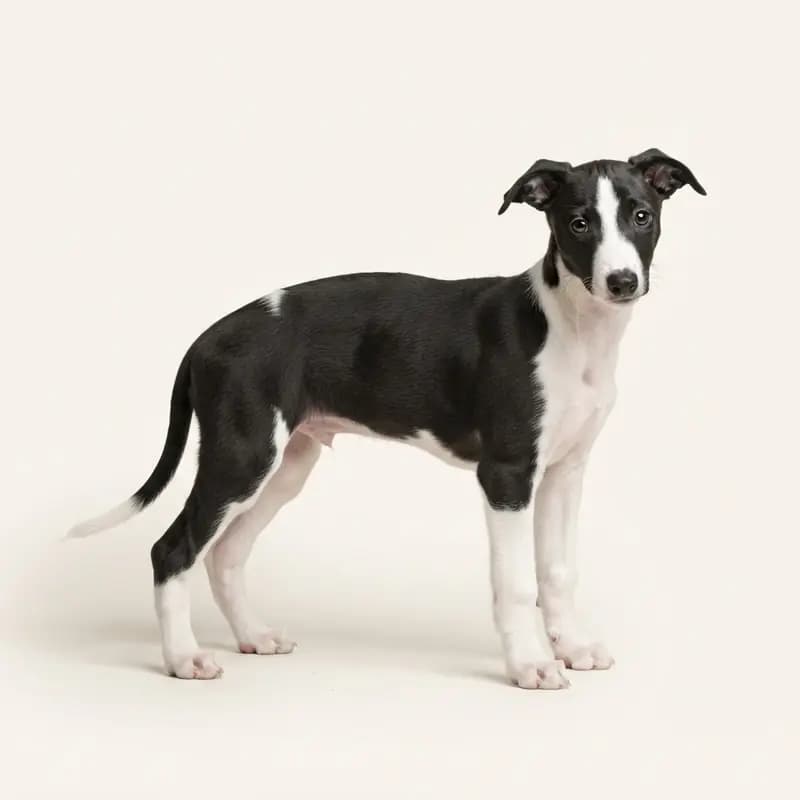
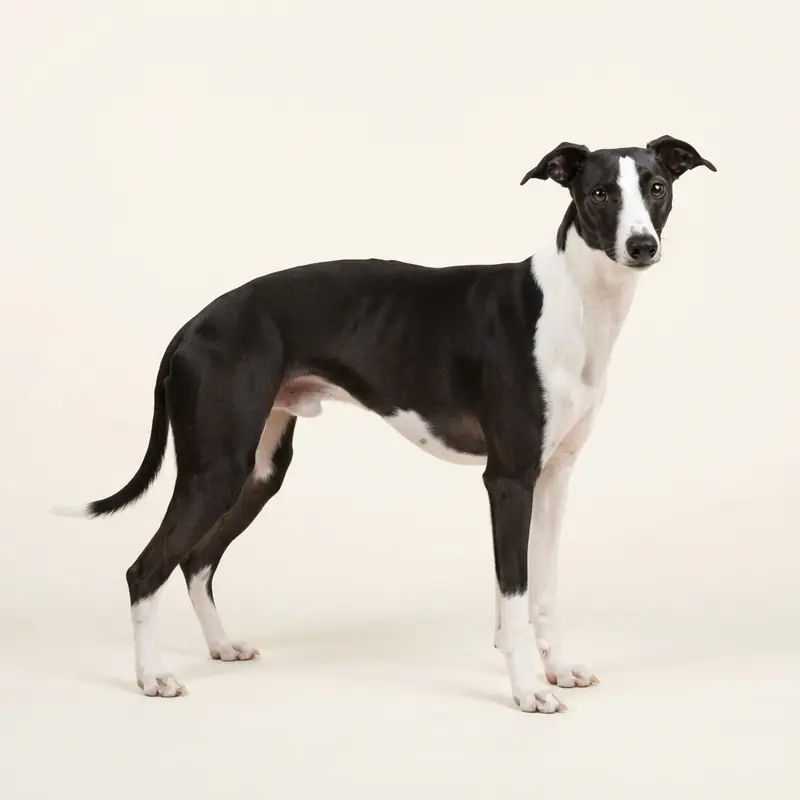
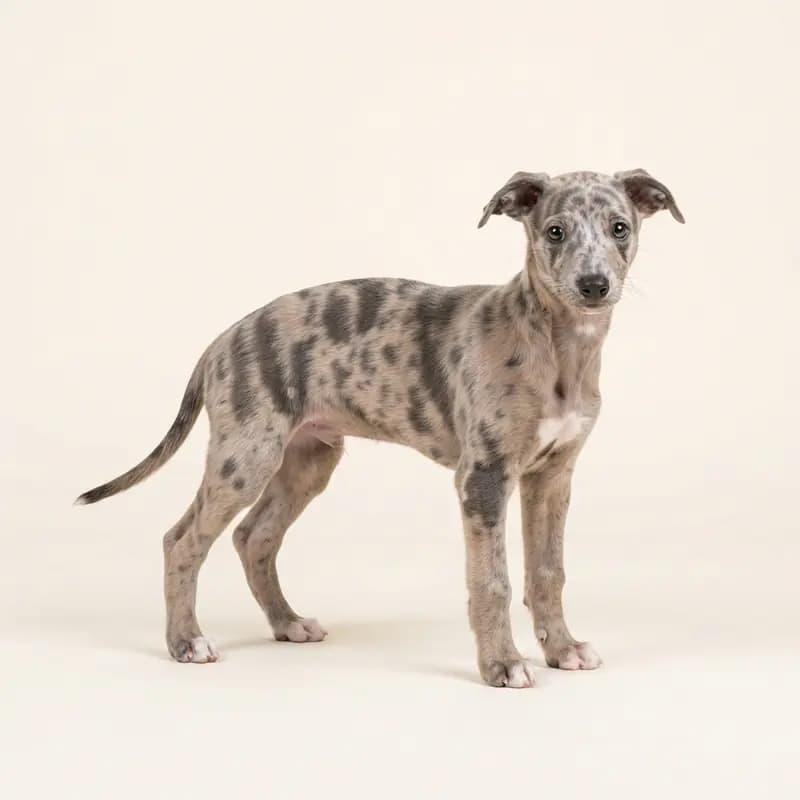
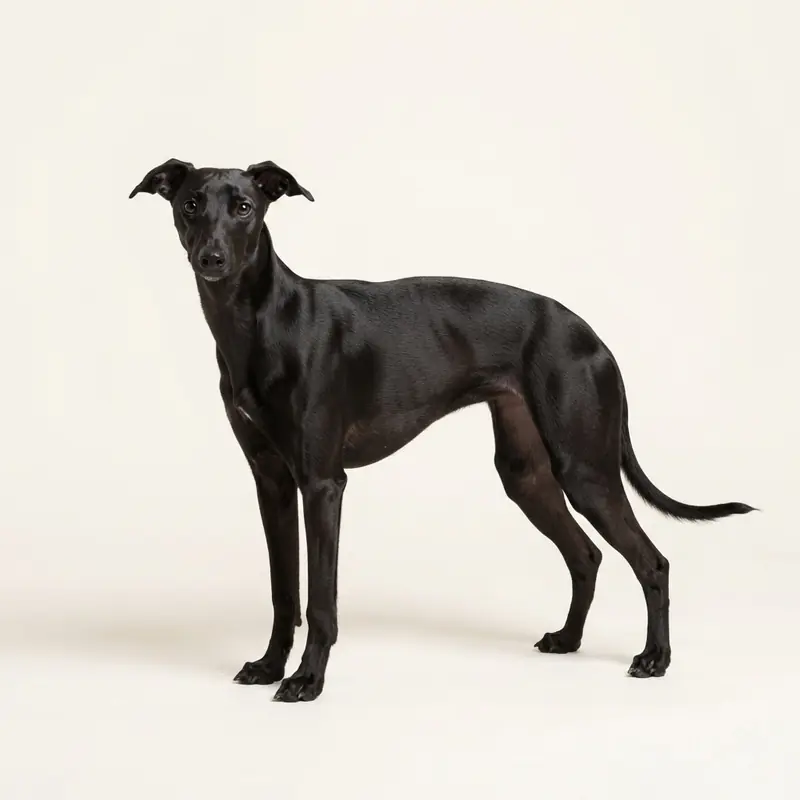
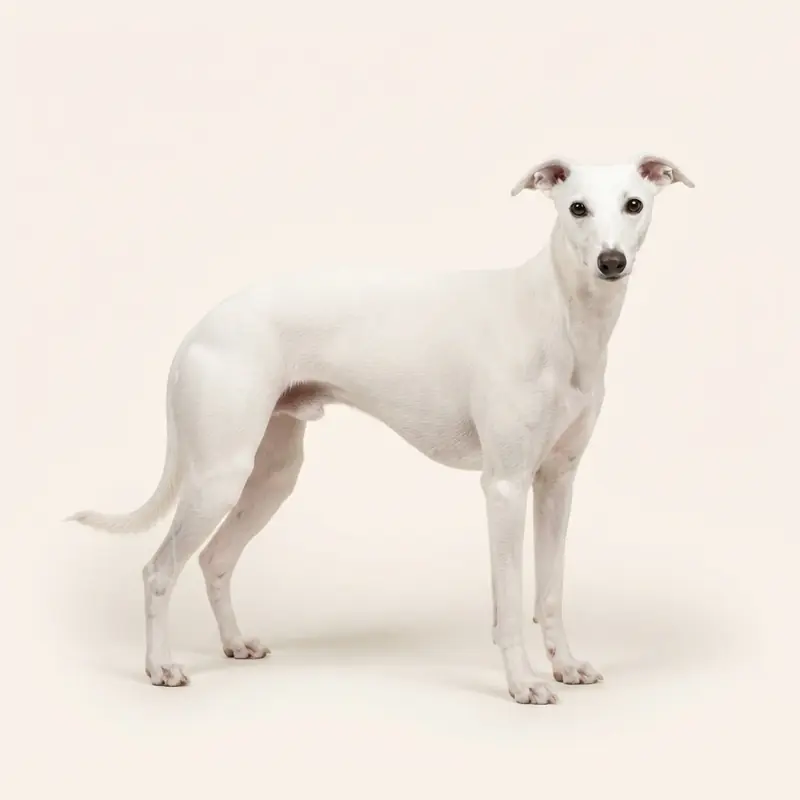
The Whippet comes in these colors: Black, White, Cream, Fawn, Red, Blue, Brindle, Isabella, Sable, Piebald, Black and white, Merle. Colors that fall outside the breed standard are marked as such on the breed page.
Do dogs need coats in winter? Discover when cold protection is medically necessary, how to find the right fit, and which breeds stay warm naturally.
Warum bellt der Hund ständig? Erfahre die häufigsten Ursachen für Bellen und wie du deinem Hund stressfrei Ruhe beibringst.
Wondering if apartment dogs can truly thrive without a garden? Discover key tips, breed facts, and routines for keeping a dog happy in a flat.
Showcase your kennel on HonestDog and reach families searching for a responsibly bred Whippet.