When asking whether do dogs need coats in winter, healthy dogs with thick undercoats rarely require extra protection during active exercise. However, winter dog coats are medically sensible for four-legged friends without insulating underfur, very small or slender breeds, puppies, and senior or arthritic dogs. The key factors are unrestricted shoulder movement, a protected belly area, and breathable, water-repellent materials.
| Factor | Guidelines for Dog Owners |
|---|---|
| High Need for Protection | Dogs without an undercoat (e.g., Sighthounds, Doberman, Boxer), seniors, puppies, dogs with osteoarthritis or spondylosis |
| Low Need for Protection | Healthy, active dogs with dense double coats or pronounced undercoats during normal exercise |
| Clear Warning Signs | Muscle shivering, hunched back, tucked tail, stiff or hesitant gait |
| Critical Weather Conditions | Combination of wetness, harsh wind, and temperatures from around 5 °C and below (varies individually) |
| Key Fit Rule | Unrestricted shoulder joints, covered kidneys and belly, no chafing under the armpits |
Winter Dog Coats: When Is Cold Protection Useful and When Is It Unnecessary?
Hardly any topic divides dog owners during the cold season quite as reliably as canine clothing. While some view it as unnecessary anthropomorphism, others reach for a lined vest at the first brisk autumn breeze. From a veterinary and canine health perspective, however, a dog coat is neither a fashion accessory nor a blanket requirement for every canine. It is a functional aid whose value depends entirely on the dog's physical build and external weather conditions.
| Criterion | With a Winter Dog Coat | Without a Dog Coat (Natural Protection) |
|---|---|---|
| Thermal Balance | Keeps the torso, kidneys, and belly dry and consistently warm when an undercoat is lacking. | A dense undercoat traps air as a natural insulating layer directly against the body. |
| Musculoskeletal System | Protects against painful muscle tension and relieves dogs suffering from joint problems. | Natural, completely unimpeded freedom of movement without any risk of friction or buckle pressure. |
| Risks of the Wrong Choice | Heat buildup from overly heavy lining, chafing spots, or flattened natural underfur. | Hypothermia, a weakened immune system, and risks of bladder or respiratory infections in sensitive dogs. |
| Typical Use Cases | Leash walks at a walking pace, waiting times in the car or training field, cold and rainy weather. | Off-leash running and sprinting, dry cold for healthy dogs with an intact winter coat. |
The root problem in judging cold tolerance often stems from a misunderstanding of canine fur. Hair length alone does not determine how well a dog handles freezing temperatures; rather, it is the structure of the coat that counts. A healthy double coat consists of water-repellent guard hairs and a dense, fine undercoat. This undercoat works like an air cushion that retains body warmth. If you slip a tight-fitting coat over a dog with an intact, dense undercoat in moderate temperatures, the fabric flattens this air cushion. The natural insulating ability is lost, and in the worst case, the dog sweats or overheats beneath synthetic materials.
The situation looks entirely different when this insulating layer is absent due to breeding or geographic origin. Many dog breeds were originally bred for work in warmer climates or selected for sleek, low-maintenance coats. For them, icy winds or sleet reach the skin almost unimpeded. As soon as short fur gets soaked, water conducts body heat away multiple times faster than dry air. In these cases, a well-fitting coat performs precisely the job that the dog's natural coat cannot manage.
What Matters for Your Dog: Coat Type, Breed, Age, and Health
Whether winter dog coats are necessary or better left in the closet cannot be determined by a single rigid reading on the thermometer. It is always an interplay of individual physical characteristics and your specific everyday routine.
Coat Structure and Breed: Why Hair Length Can Be Deceiving
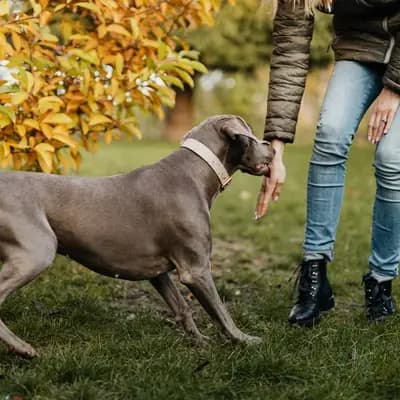
Looking at the breed provides the first vital clue. Short-haired dogs without a meaningful undercoat cool down even in single-digit positive temperatures, especially when wind and rain join in. These include large, athletic dogs such as the Doberman, the German Boxer, the Weimaraner, the Rhodesian Ridgeback, or the Dalmatian.
Sighthounds like the Whippet or the Galgo Español form a special group: they not only have extremely short, fine fur without an undercoat, but by breed design also possess virtually no insulating subcutaneous body fat. As long as they sprint off-leash, their large muscle mass generates plenty of internal heat. On a slow walk on the leash, however, they lose this warmth within just a few minutes.
Long hair does not automatically guarantee warmth either. Breeds like the Yorkshire Terrier or the Maltese have floor-length hair, but lack a warming undercoat entirely. Their coat structure resembles human hair, soaking up moisture rapidly when wet and cooling the body down fast. If you are unsure which coat and body characteristics different dog types possess, our Breed Finder provides a detailed overview of anatomical traits.
Body Size and Ground Clearance
From a physics standpoint, small dogs face a double disadvantage in winter. For one, their relatively large body surface area in relation to their small body mass causes them to radiate heat constantly. In addition, the chest and belly of breeds like the Dachshund, the Chihuahua, or the French Bulldog are only a few centimeters above frozen asphalt or deep slush. Because a dog's belly is almost always far more sparsely furred than the back, cold radiating from the ground reaches internal organs directly.
Age: Puppies and Senior Dogs
During their first months of life, a puppy's internal thermoregulation is not yet fully developed. Furthermore, puppy fur consists of soft down that keeps out very little moisture. A cold, wet winter walk can quickly overwhelm an immature immune system, which is why shorter outings and, if necessary, lightweight dry protection are advisable for autumn and winter puppies.
At the other end of the lifespan, the ability to maintain a steady body temperature declines. Senior dogs lose muscle mass due to age, their metabolism runs slower, and they typically move more deliberately outside than younger dogs. Even an older dog that spent a lifetime frolicking effortlessly through snow without gear may suddenly need thermal support in advanced age.
Health, Neutering, and Living Conditions
Cold protection is an absolute necessity for certain chronic conditions. If a dog suffers from joint wear such as osteoarthritis, hip dysplasia (HD), or spinal conditions like spondylosis, cold and dampness act as major pain amplifiers. The dog tenses its muscles to combat shivering, assumes an unnatural compensating posture, and tightens up even more along the spine. A coat that reliably keeps shoulders, back, and hips warm ensures these dogs can walk with significantly less pain in winter.
Temporary circumstances also call for adjustments: if a dog's abdomen was shaved for an ultrasound examination or surgery, all protection is missing there for weeks. Similarly, many rescue dogs from abroad—such as the Mediterranean region—exhibit high cold sensitivity during their first winters in cooler climates, as their metabolism and coats have not yet adapted to freezing spells.
Living conditions play an equally significant role. Most companion dogs today live in well-heated homes at constant temperatures above 20 degrees Celsius. Because they lack daily exposure to cold stimuli, even breeds with double coats frequently develop noticeably thinner winter coats than dogs spending extensive time outdoors. The sudden temperature plunge from a cozy living room into a frosty morning places intense demands on their circulation.
What Veterinarians and Professional Associations Say About Cold Protection and Fit
Veterinary organizations regularly emphasize that observing the individual animal is far more important than rigid rules. Recognizing whether your dog is genuinely cold comes down to clear body language cues. As the Federal Chamber of Veterinarians (BTK) explains in its winter recommendations, freezing dogs exhibit clear signs of discomfort: they start shivering, tuck their tail tightly under the belly, and walk with a stiff, hesitant, and noticeably slower stride than usual. The chamber's experts also point out that hypothermia, drafts, or lying on cold ground weaken the immune system and can foster painful urinary tract infections and respiratory illnesses.
Additionally, animal welfare organization TASSO e.V. details further symptoms of cold stress in its expert guide, such as a markedly hunched, arched back or an outright refusal to continue walking in cold, wet weather. TASSO highlights that canine apparel must never be a constricting fashion costume; it must serve strictly as functional weather protection.
Scientific literature on canine thermoregulation supports this distinction: studies demonstrate that dogs with double coats (guard hair plus undercoat) show significantly lower fur surface temperatures than short-haired dogs—clear proof that their internal body heat rarely escapes outward. At the same time, veterinary data on hypothermia proves that wet fur, low body fat percentage, and lack of muscular movement dramatically accelerate heat loss.
Materials and Fit: Avoiding Common Mistakes
Once you decide on a dog coat, its design determines whether it genuinely helps your dog or causes problems during daily walks. Veterinarians and canine physical therapists warn against the following common pitfalls:
- Restricted shoulder mobility: A dog coat must never block the forward stride of the front legs at any gait. If the chest bib is too tight or the shoulder opening is cut too narrow, your dog will shorten its strides. Over time, this causes tension in the shoulder girdle and alters the entire gait cycle.
- Unsuitable fabrics like cotton or knitwear: The BTK explicitly advises against hand-knitted woolen sweaters or plain cotton in damp winter conditions. These fabrics are not water-repellent. They soak up rain and melting snow like a sponge, grow heavy, and rest against the dog's body like an ice-cold compress. Instead, choose lightweight, breathable, and waterproof or highly water-resistant functional fabrics.
- Exposed bellies on short-legged dogs: Many standard coats drape over the back like a horse blanket, secured only with a narrow strap. For small dogs or breeds with hairless bellies, this is insufficient. A well-designed belly bib must cover the sensitive underside behind the ribcage without getting in the way when male dogs urinate.
- Harness conflicts: If your dog wears a harness, it must either fit comfortably over a slim, close-fitting coat, or the coat must feature a waterproof, resealable harness opening on the back. Wearing a harness underneath a thick coat without a pass-through compresses the lining locally, causes the coat to twist, and creates painful pressure sores.
- Loud hook-and-loop fasteners and stiff fabrics: Rustling outer materials or wide Velcro strips opened loudly right on the dog's body can alarm noise-sensitive pets. Low-noise side-release buckles or soft softshell materials substantially improve comfort and acceptance.
Costs, Sizing, and Gentle Acclimation in Everyday Life
A functional winter coat does not have to cost a fortune, but ultra-cheap fashion pieces frequently skimp on the ergonomic contours dogs need. In pet specialty retail, solid, water-repellent everyday models typically range between 25 and 60 Euro. High-end functional coats featuring taped seams, high waterproof ratings, ergonomic cuts tailored for dog sports, or specialized heat-reflective thermal linings generally range between 60 and 120 Euro, depending on dog size.
For most pet parents, following a layering approach or choosing gear based on weather conditions proves better than searching for a single all-in-one coat: an unlined, waterproof raincoat prevents chilling from dampness in wet 6 to 10 degree weather, while an insulated winter coat comes out during dry frost or snowfall. Alternatively, many manufacturers offer 2-in-1 designs with zip-out or snap-out fleece linings.
Finding the Right Size in 3 Steps
Standard apparel sizes like "S", "M", or "L" are not standardized in pet clothing and almost always lead to poor fits when bought blindly. Rely on a flexible tape measure instead, while your dog stands relaxed and squarely on all four paws:
- Measure back length: This is the primary measurement for almost all brands. Place the tape measure at the withers—the highest point of the shoulder blades where the neck transitions into the back (not at the collar)—and run it along the spine to the base of the tail.
- Determine chest circumference: Measure all the way around the deepest, widest part of the ribcage, directly behind the front legs. Add roughly two to three finger-widths of allowance when selecting a size so your dog can breathe deeply and stretch comfortably.
- Check neck circumference: Measure at the widest part of the neck just ahead of the shoulders to ensure the collar will neither choke your dog nor allow freezing wind to draft in from the front.
Gentle Acclimation Instead of Rushing
Many dogs freeze like statues the first time they wear a coat, arch their backs, or refuse to take a single step. This is rarely due to pain; it is a normal reaction to an unfamiliar tactile sensation on their back and hind legs. For this reason, never put a brand-new coat on your dog right as you are rushing out the door in freezing weather.
Start acclimation casually in the living room. Lay the coat on the floor, let your dog sniff it, and reward calm curiosity with a small treat. In the next step, lay the coat loosely over their back for just a few seconds without fastening buckles or leg straps, offer a few treats, and take it off immediately. Once your dog remains completely relaxed, fasten the belly strap for a minute. Elastic hind leg straps—which keep the coat from blowing upward in side winds—should always remain loose and should only be introduced gradually as the final step.
Frequently Asked Questions
At what temperature do dogs need coats in winter?
There is no universal temperature threshold for all dogs, as coat type, wind, humidity, and movement level all interact. As a rule of thumb, cold-sensitive, short-haired, or miniature breeds and ailing seniors often benefit from light protection in wet and windy conditions starting around 5 to 7 degrees Celsius. By the freezing point (0 degrees) at the latest, dogs without undercoats benefit from an insulated winter coat on calm walks, whereas healthy dogs with dense double coats handle double-digit sub-zero temperatures without clothing effortlessly.
How can I tell for sure if my dog is shivering cold outside?
The most obvious indicator is muscle shivering, which the body uses to generate heat via rapid contraction. However, many dogs show subtler signs earlier: they arch their backs upward, tuck their tails tightly against the belly, walk with an unusually stiff or hesitant gait, and stop repeatedly. Cold ear tips or a chilly inner thigh felt during a quick touch test also provide clear clues.
Does wearing a dog coat interfere with natural winter coat growth?
No, not when the coat is worn only as needed during cold and wet walks. The seasonal shedding cycle in autumn and spring is regulated primarily by daylight length (photoperiod) and hormones, complemented by the ambient temperature where the animal spends most hours of the day. Spending hours inside well-heated homes has a far greater effect on thinning a dog's winter coat than a one-hour walk wearing a coat.
When should you take a winter coat off your dog?
As soon as your dog moves from cold conditions into a warm environment, remove the coat right away. This applies particularly to rides in pre-heated vehicles, extended stops in stores, public transit, or upon returning home. Likewise, if a healthy dog transitions during a walk from walking on leash to fast, free romping with other dogs, remove the coat to avoid dangerous heat buildup.
Is a dog sweater or a dog coat better for winter?
That depends on the weather. A fleece or knitted dog sweater provides pleasant warmth and a snug fit, but allows wind and moisture to penetrate unhindered. Sweaters are best suited for dry, wind-still autumn days or sensitive seniors inside a chilly house. For typical winter weather with snow, sleet, or biting winds, a water- and wind-repellent dog coat is always the better choice, because only a dry dog stays warm.
Deciding on winter weather gear is ultimately never a matter of style, but of attentive observation. By monitoring your dog across various weather conditions and reading their body language, you will quickly notice when they are thriving and when damp frost is wearing them down. On HonestDog, you will discover many more independent, veterinary-informed guides and breed profiles to help you reliably evaluate your four-legged companion's health needs at every stage of life.