Loading breed
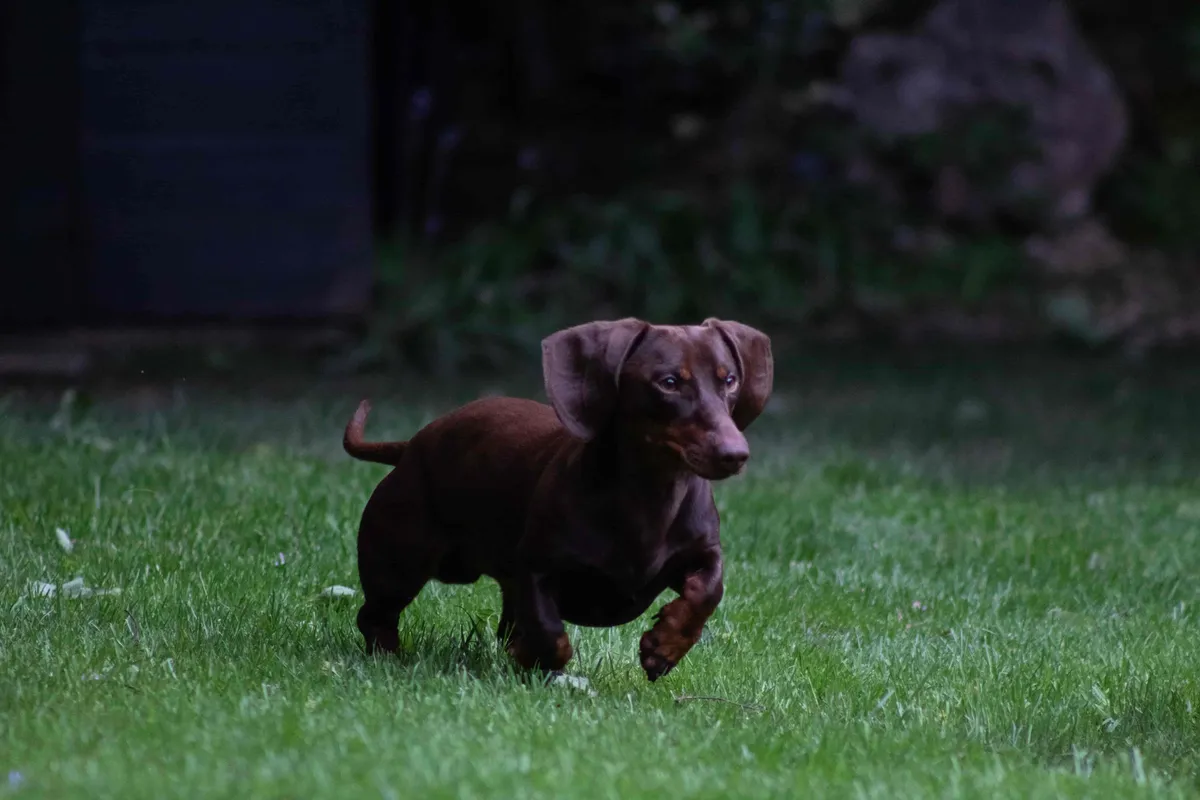
Dachshund
Health grade D- Shoulder height20–27 cm
- Weight7–9 kg
- Life expectancy12–15 yrs
- Puppy price1,100–1,800 €
- Energy3/5
The essentials at a glance
The Dachshund is small in stature, but huge in personality. Bred as a courageous Baujäger (burrow hunter) capable of taking on badgers all by itself, it brings a distinct sense of independence, cleverness, and stubbornness into your living room.
- Health grade D: The Dachshund is rated D for health, as there are significant breed-specific problems.
- You have a sense of humor and love a dog with a strong character
- You can be consistent and fair in your training
- You expect a highly obedient, easily directed dog
Self-check
Would the Dachshund really fit your life?
Answer 6 quick questions about your everyday life and see how well the Dachshund fits you — including an honest cost estimate per month, per year, and across the dog's lifetime.
Fit checkCost estimateRisk dice
Takes about 1 minute · free & anonymous
Similar Breeds
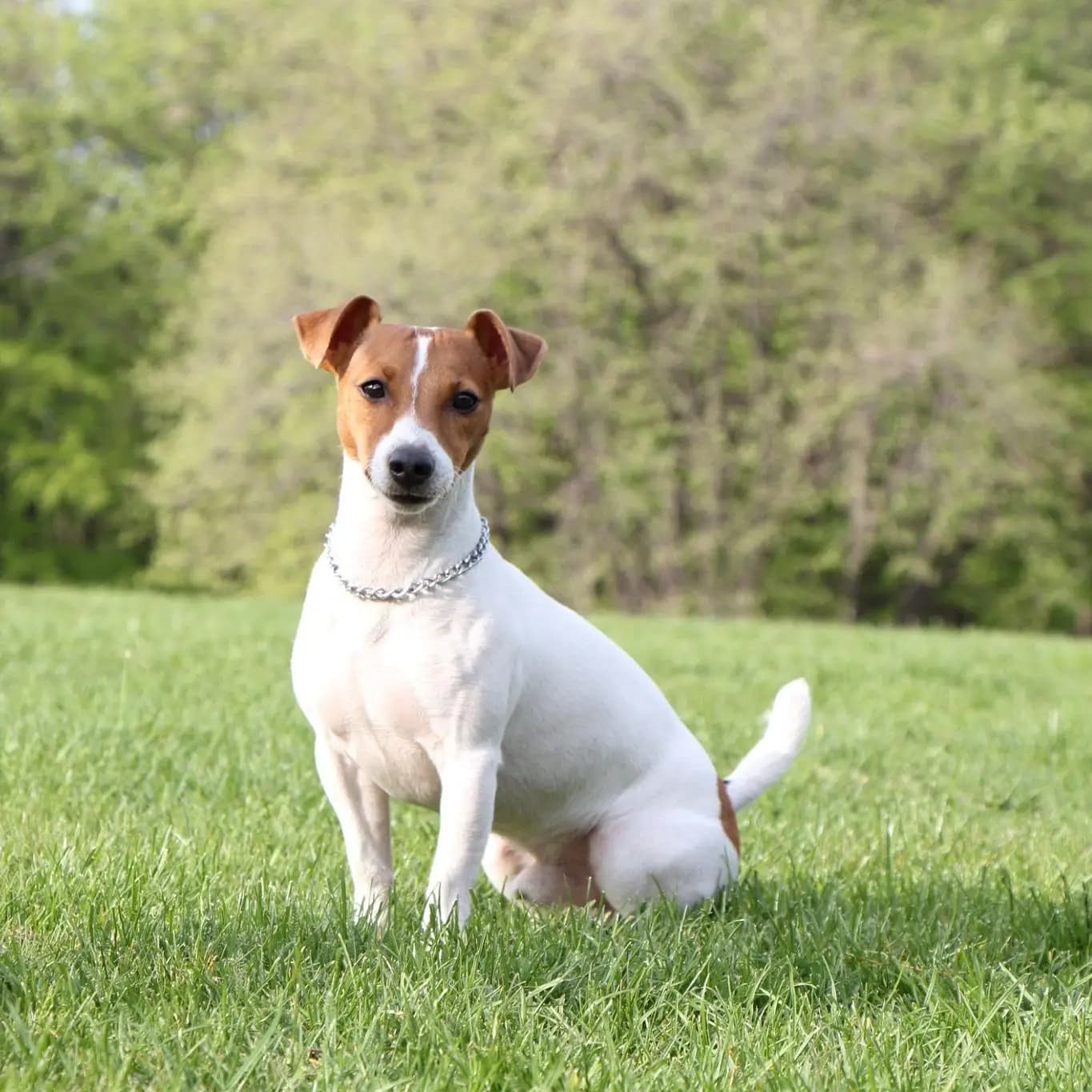
Jack Russell TerrierSame working temperament
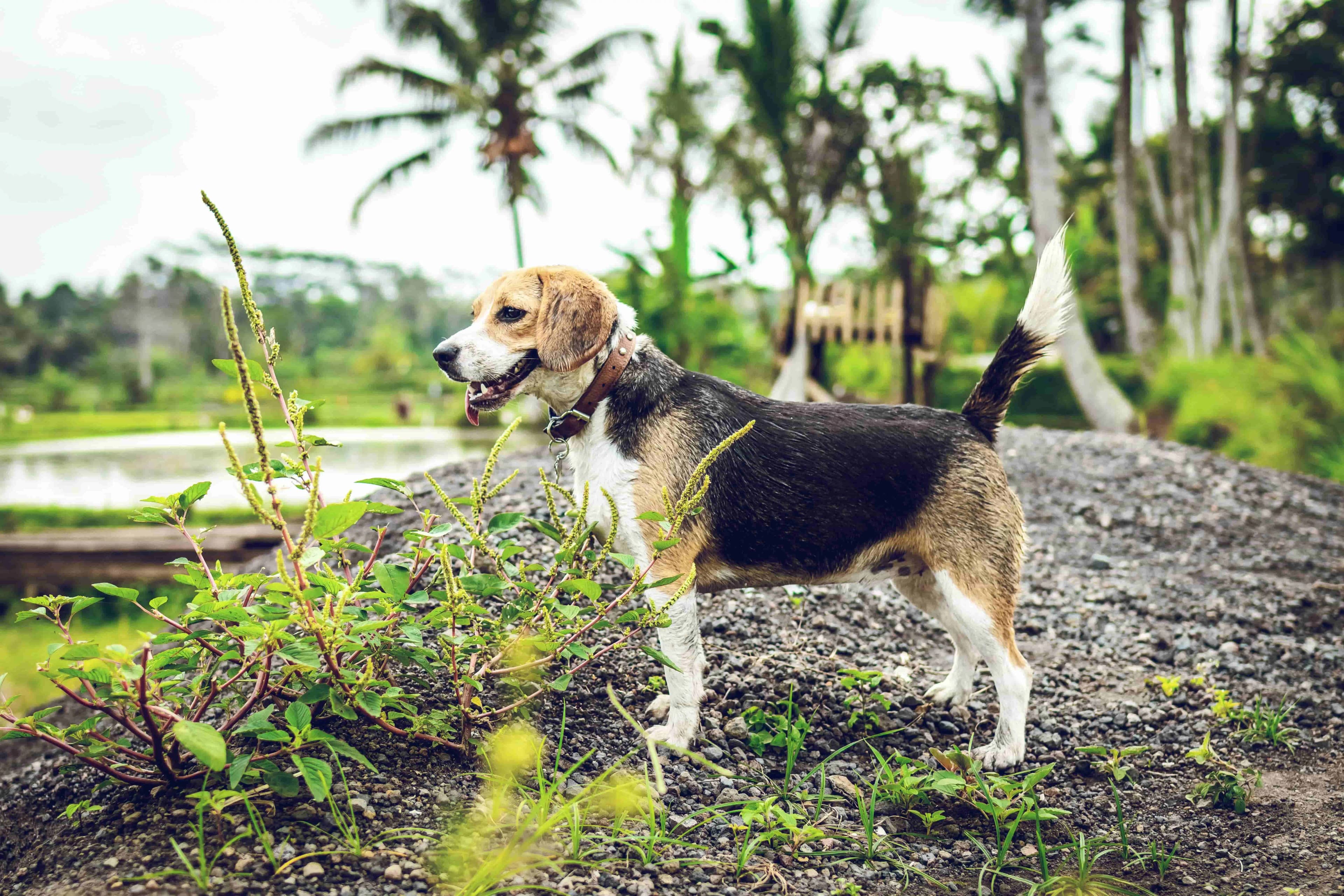
BeagleSame size & energy
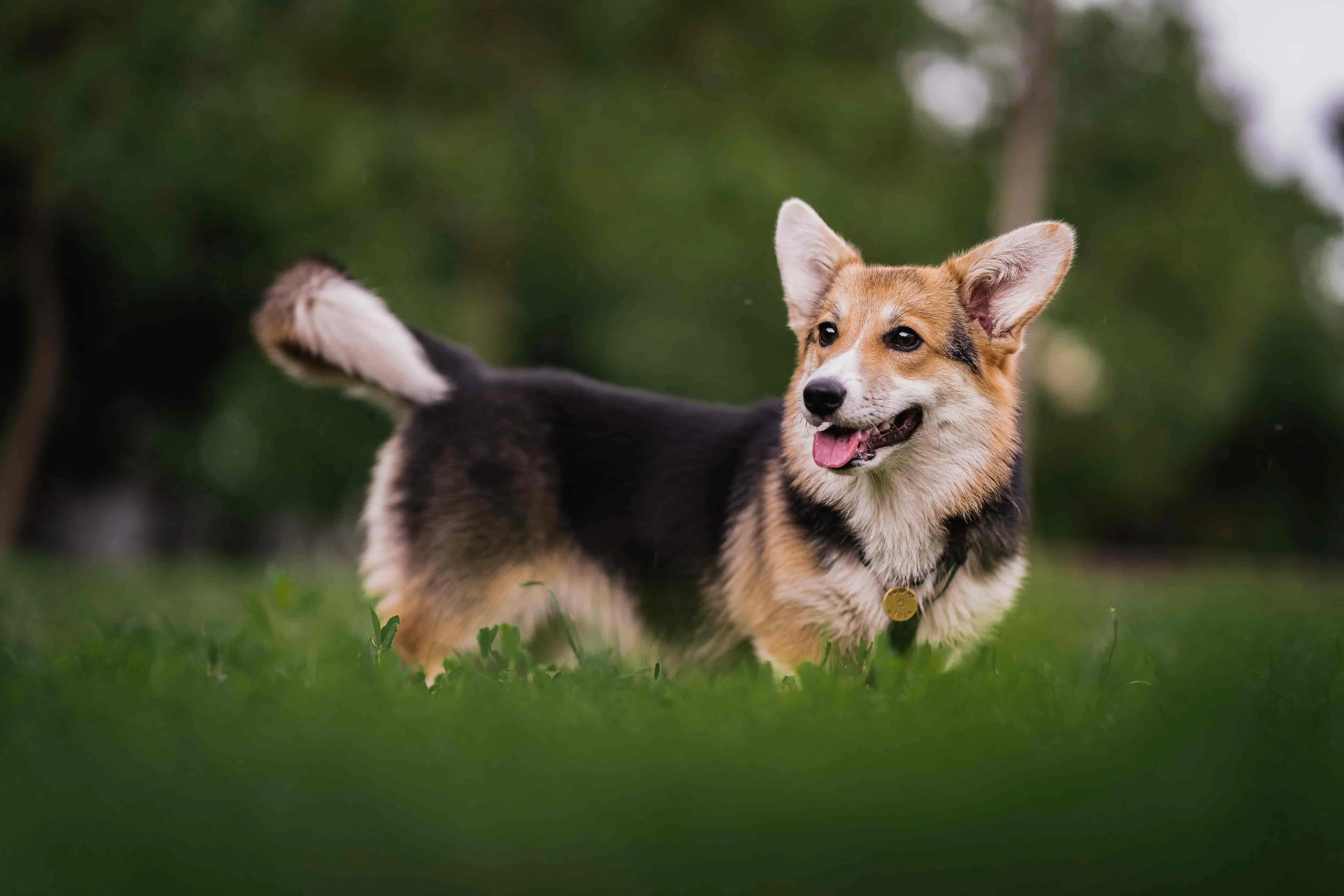
Pembroke Welsh CorgiSame size
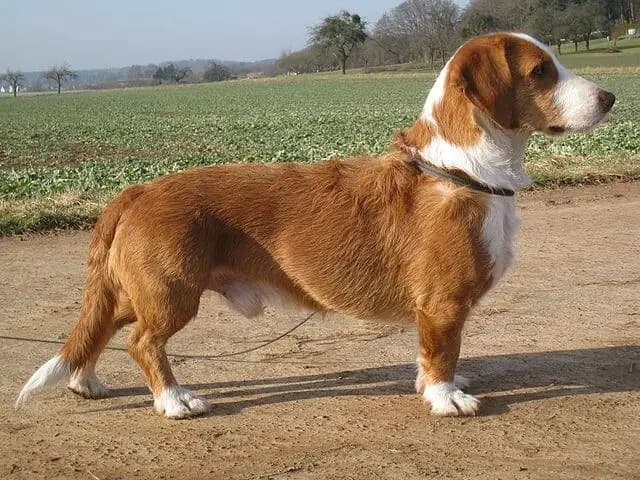
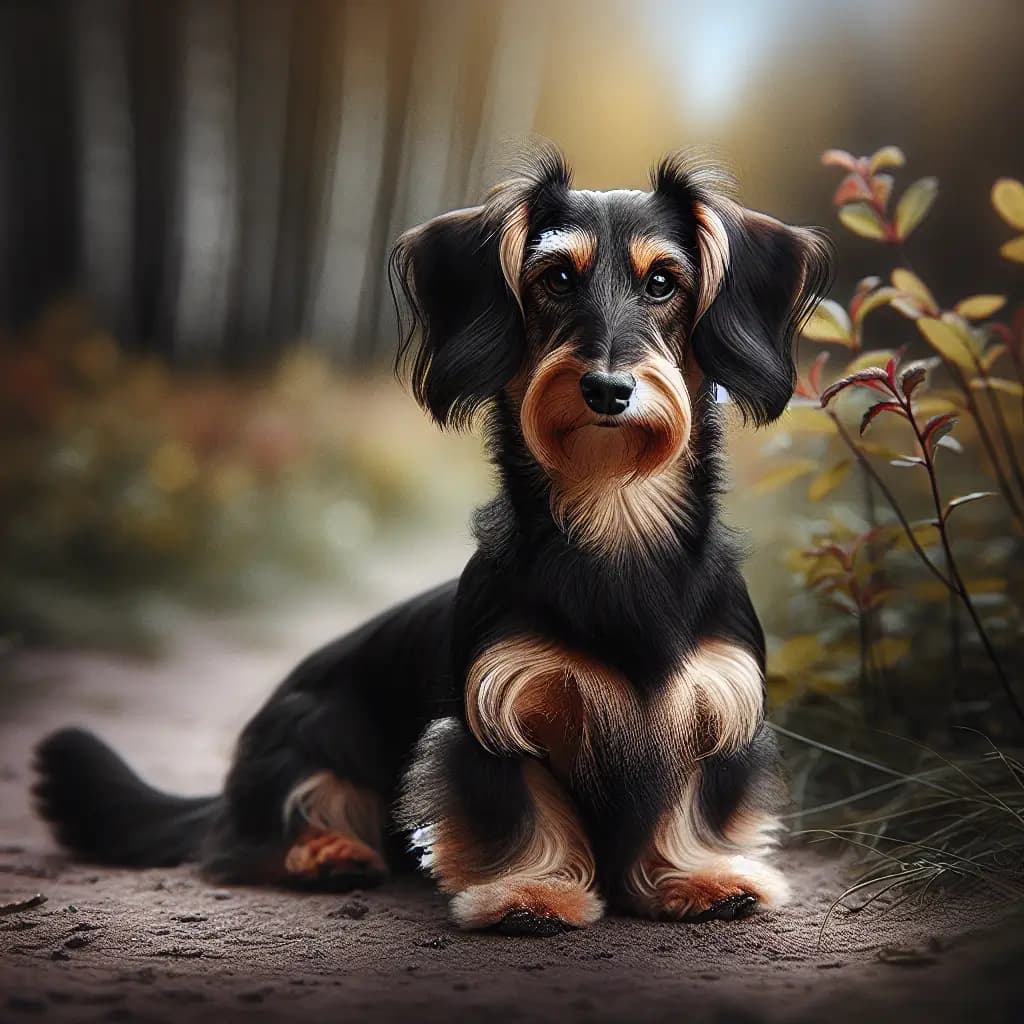
Westphalian DachsbrackeSimilar profile
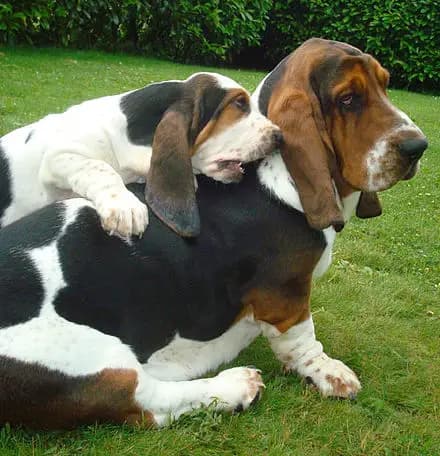
Basset HoundSimilar profile
Is the Dachshund right for you?
At a glance
Dachshund overview
The essentials — key facts, traits, and health priorities — before you dive deeper.
Lifespan
12–15 yrs
Shoulder height
20–27 cm
Weight
7–9 kg
Practical
- Puppy price: 1,100 – 1,800 €
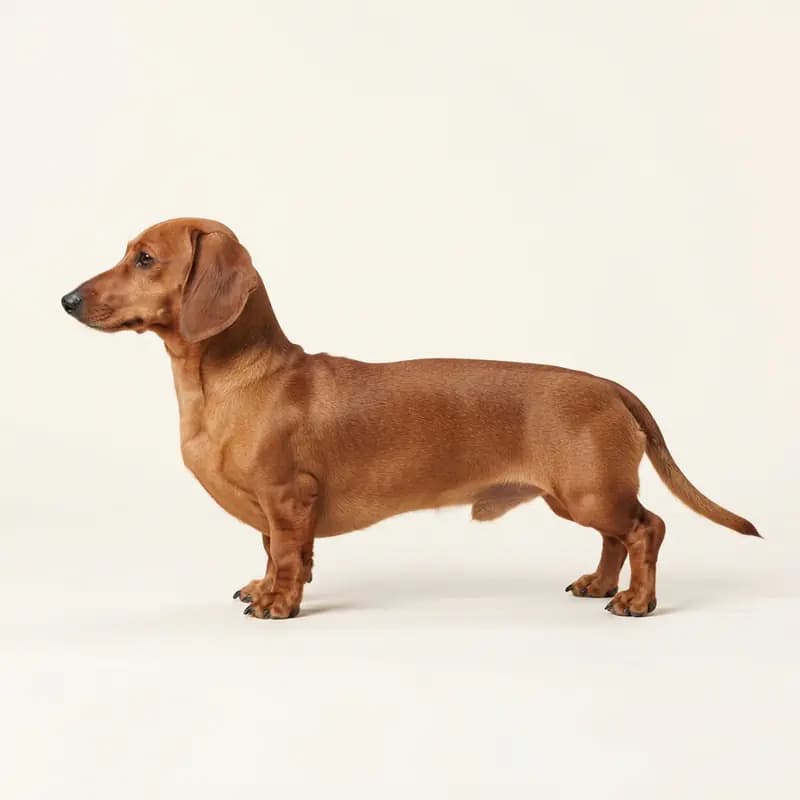
- Coat: short, dense, shiny, smooth, firm and hard
- Origin: Germany
Temperament
Energy
Trainability
Family fit
With kids
Daily life
Care effort
Shedding
Barking
City-friendly
Guard instinct
What matters most
Especially with a Dachshund, choosing the right breeder is the single most important decision you'll make. Serious breeders consistently test the parents for inherited conditions, prioritize healthy early socialization, and stay accountable long after handover. A cheap puppy without health screening tends to become the most expensive dog later on.
See HonestDog breeder standards →Colors & coat
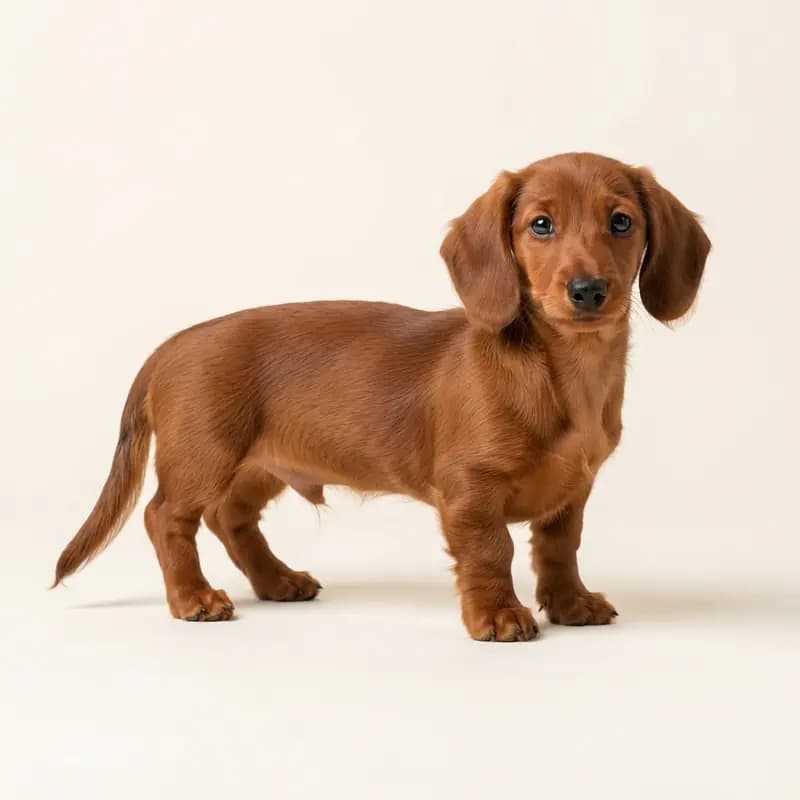
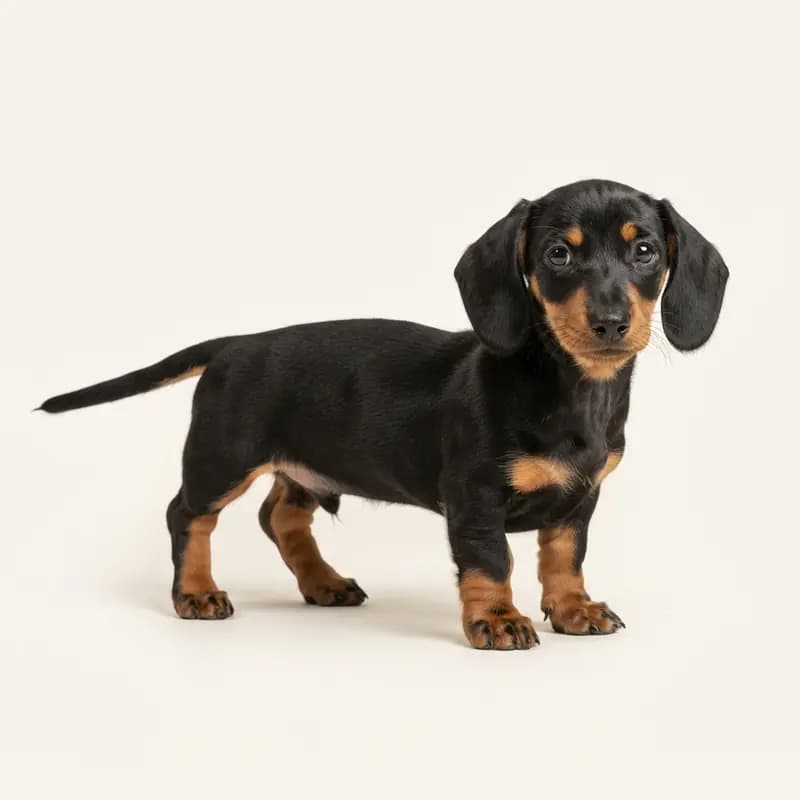
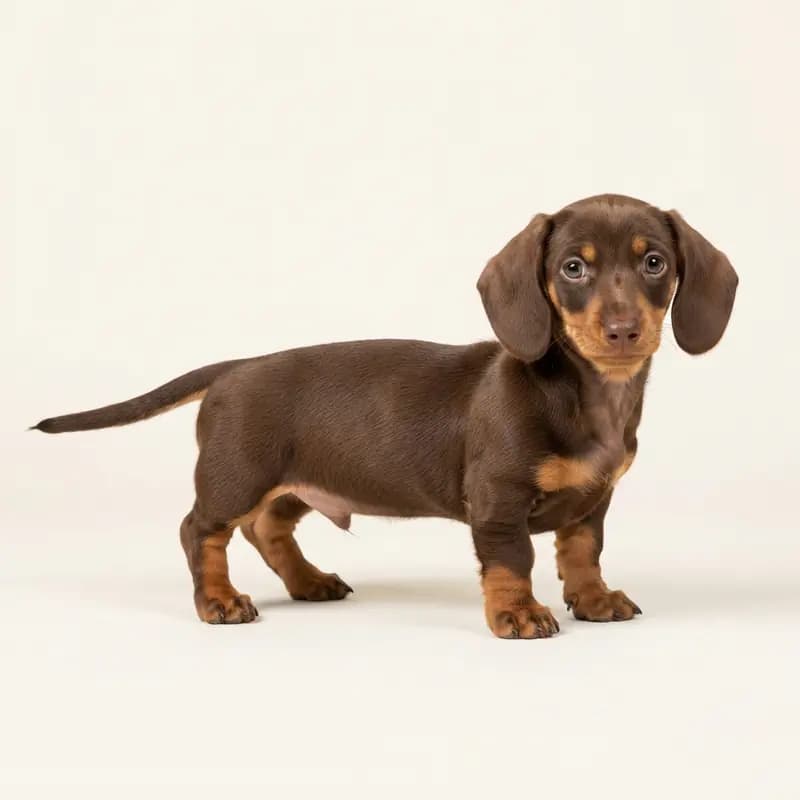
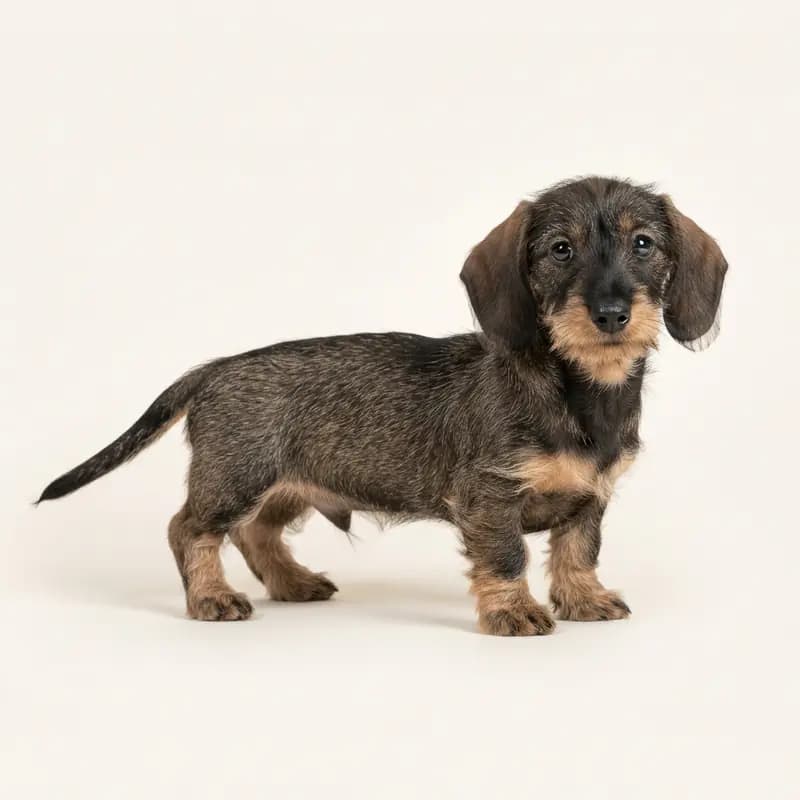
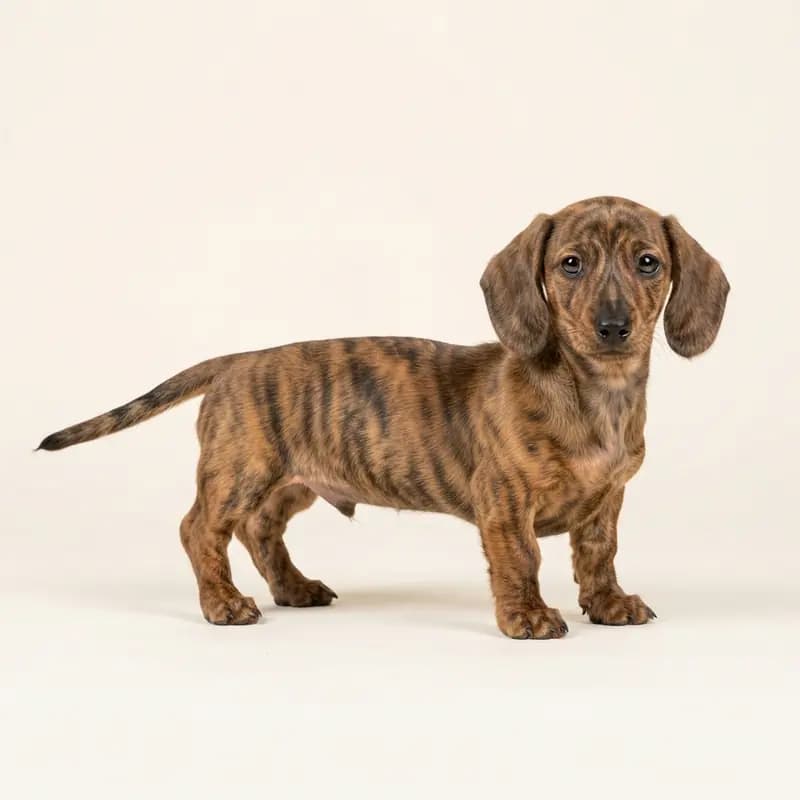
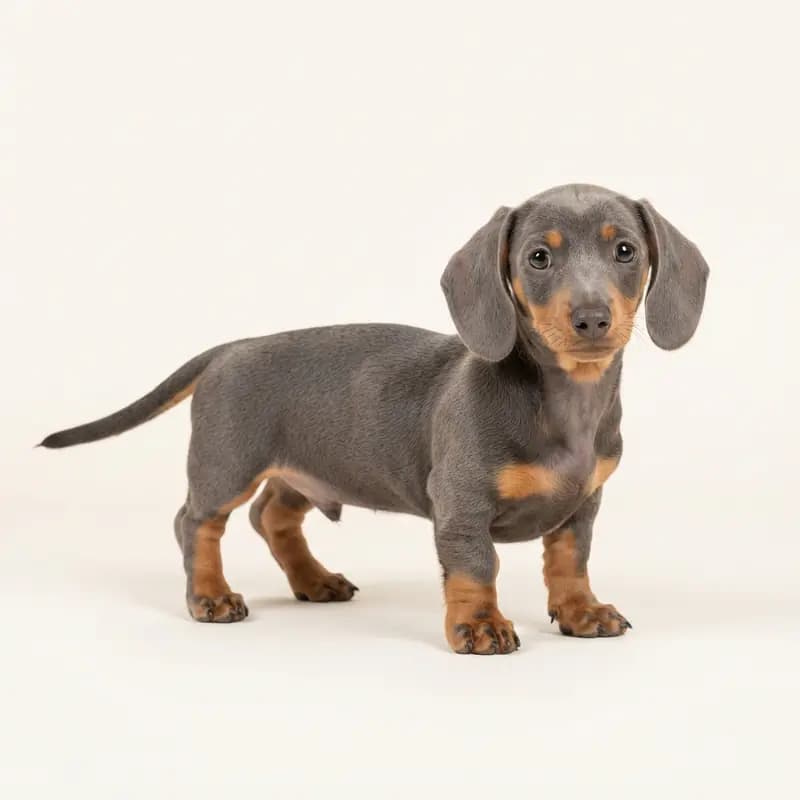
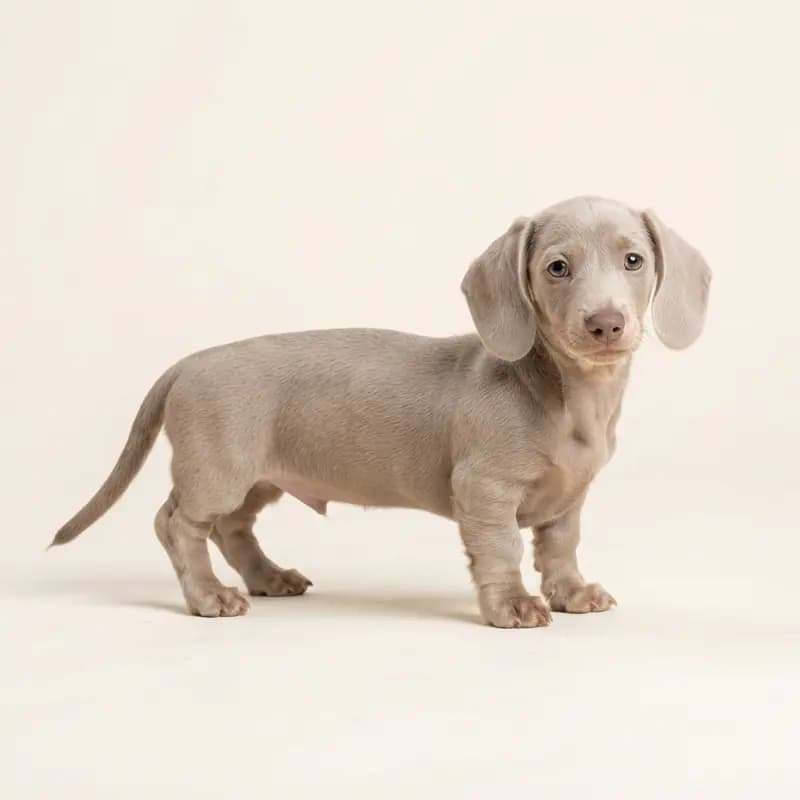
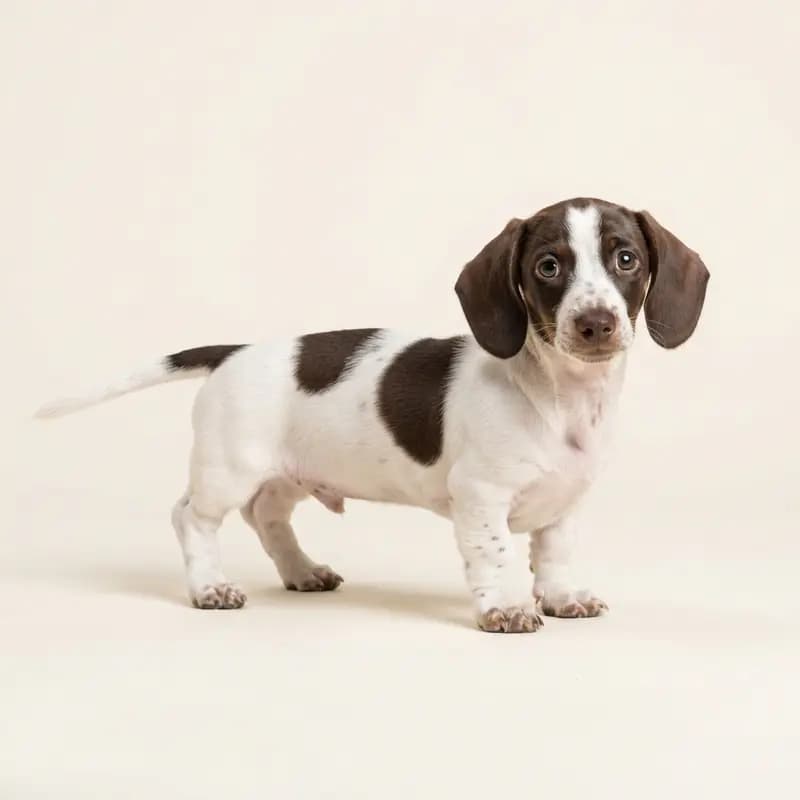
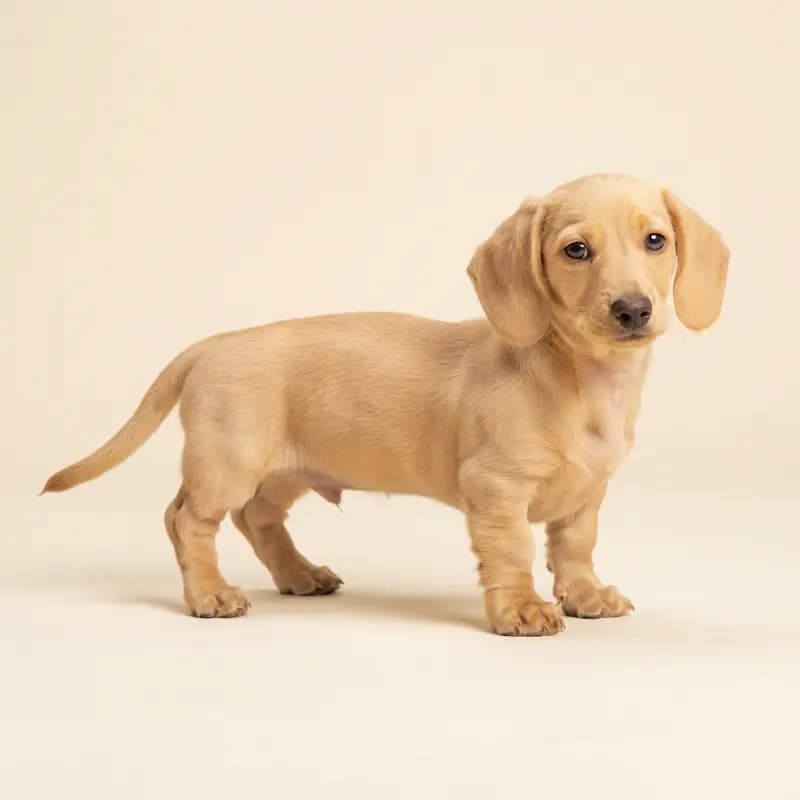
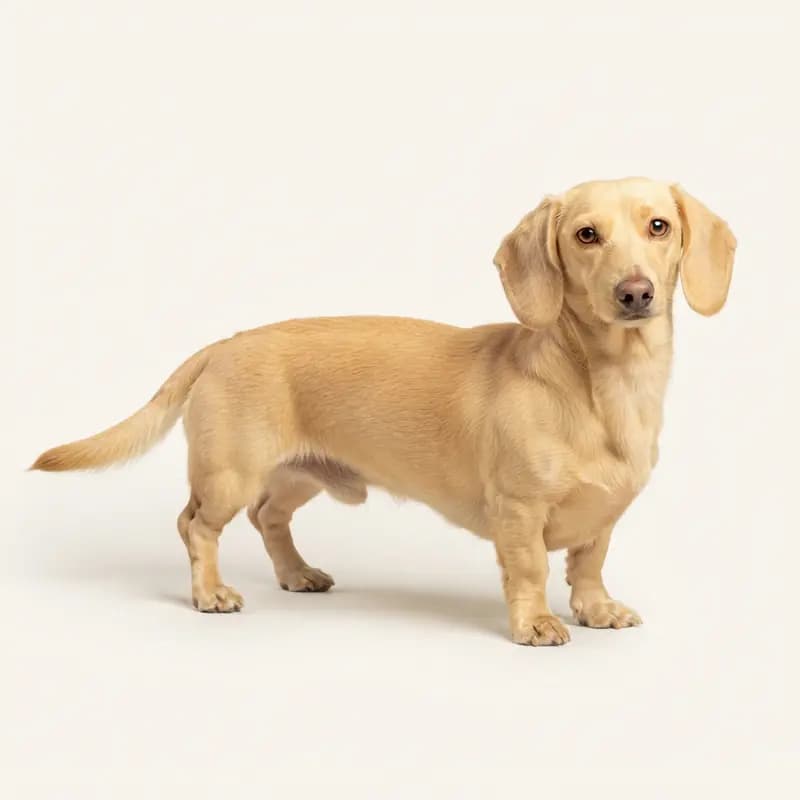
What colors does the Dachshund come in?
The coat colors that occur in the Dachshund — including which ones fall outside the breed standard and which carry genetic risk.
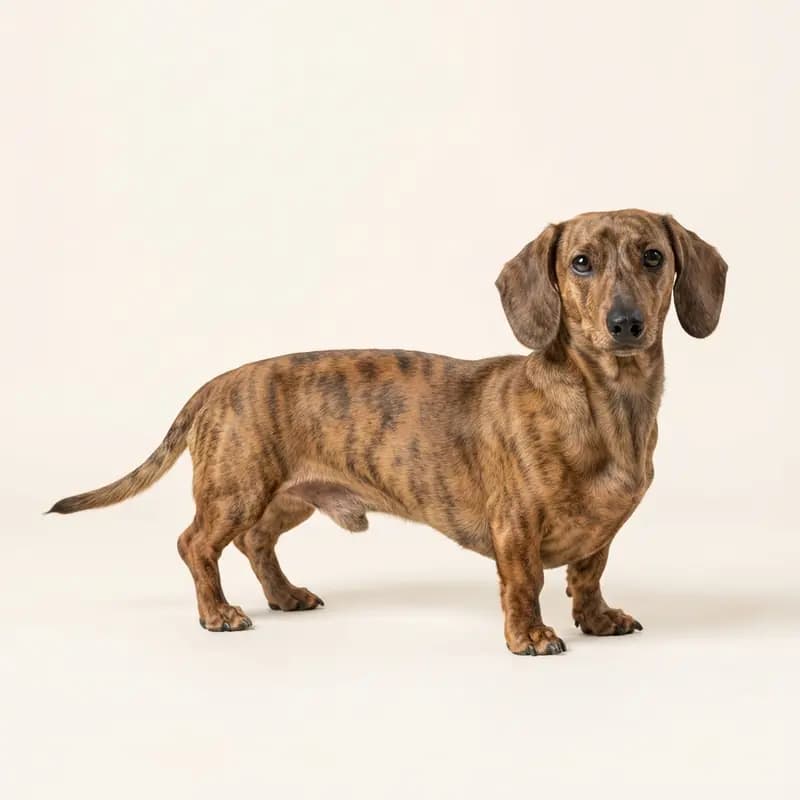
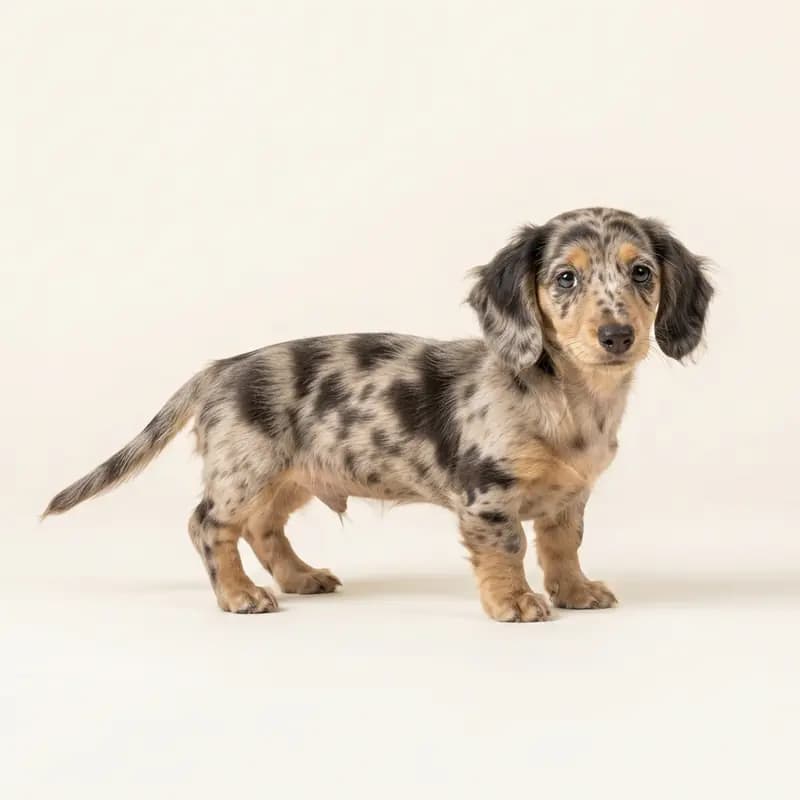
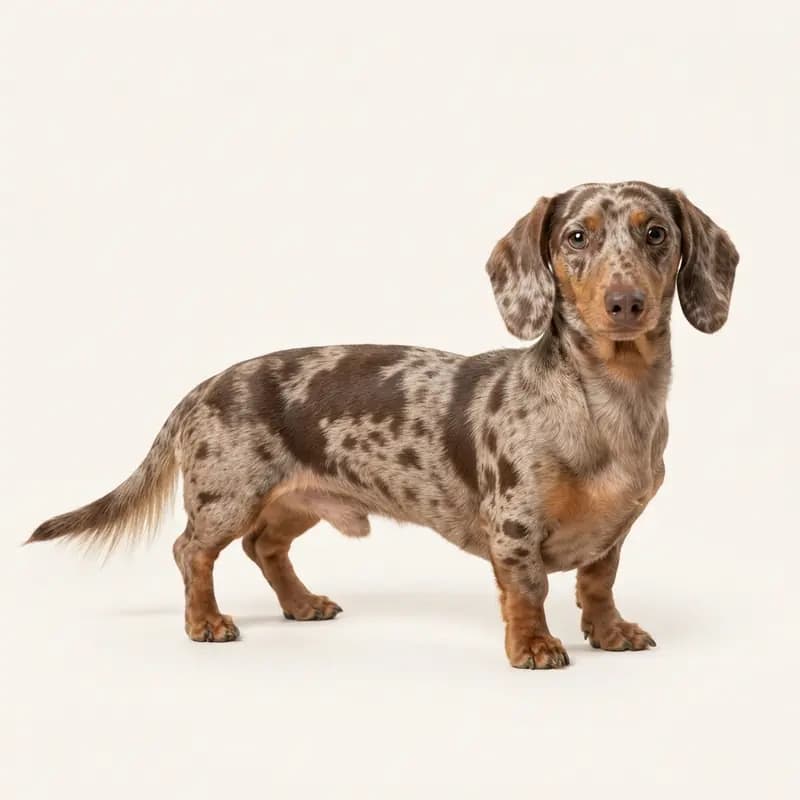
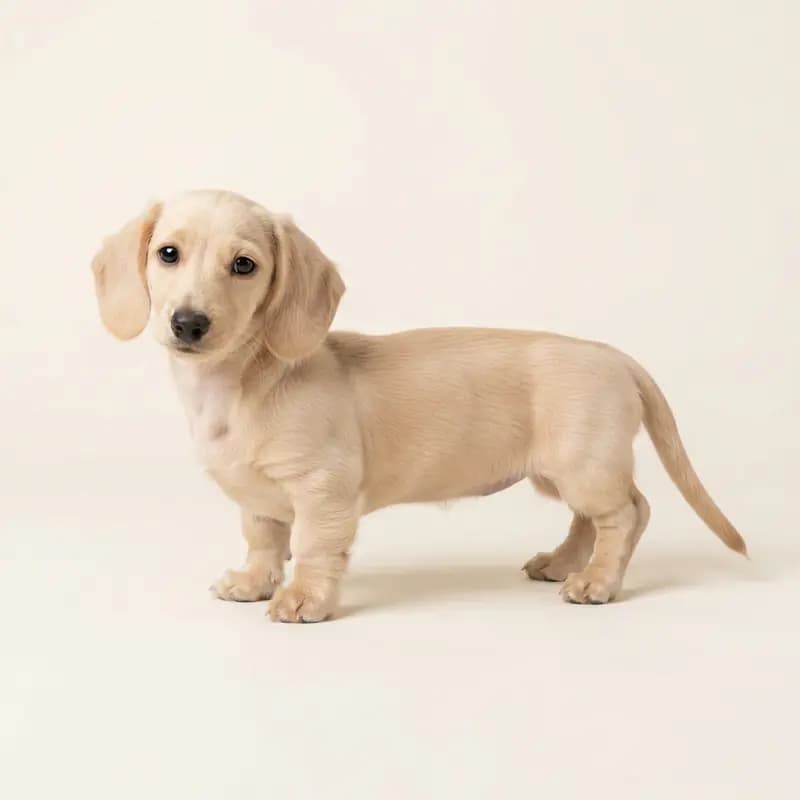
Eye colors
 Brown
Brown Blue
Blue Odd-eyed
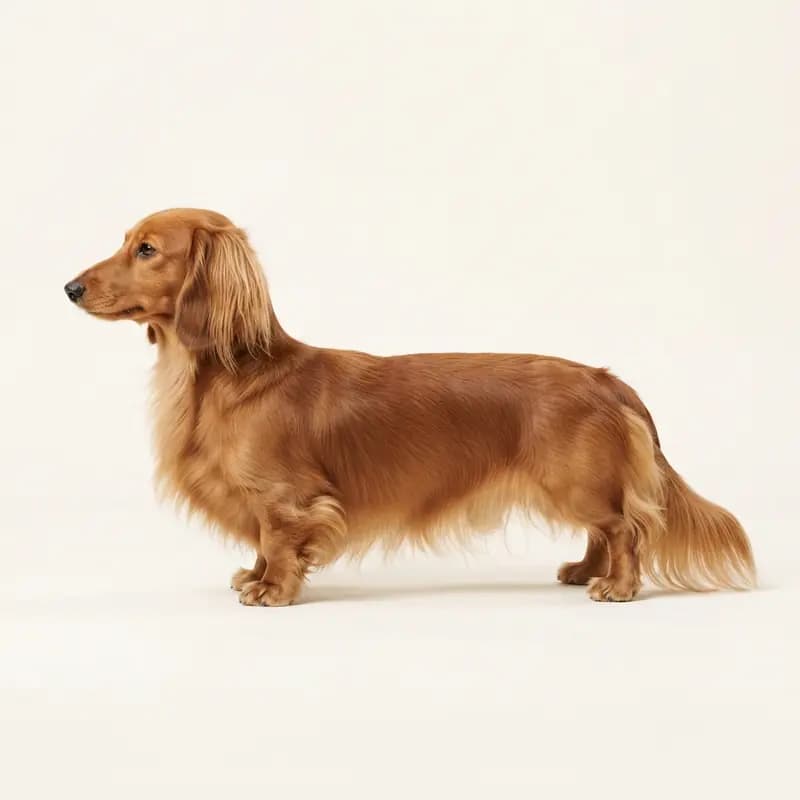
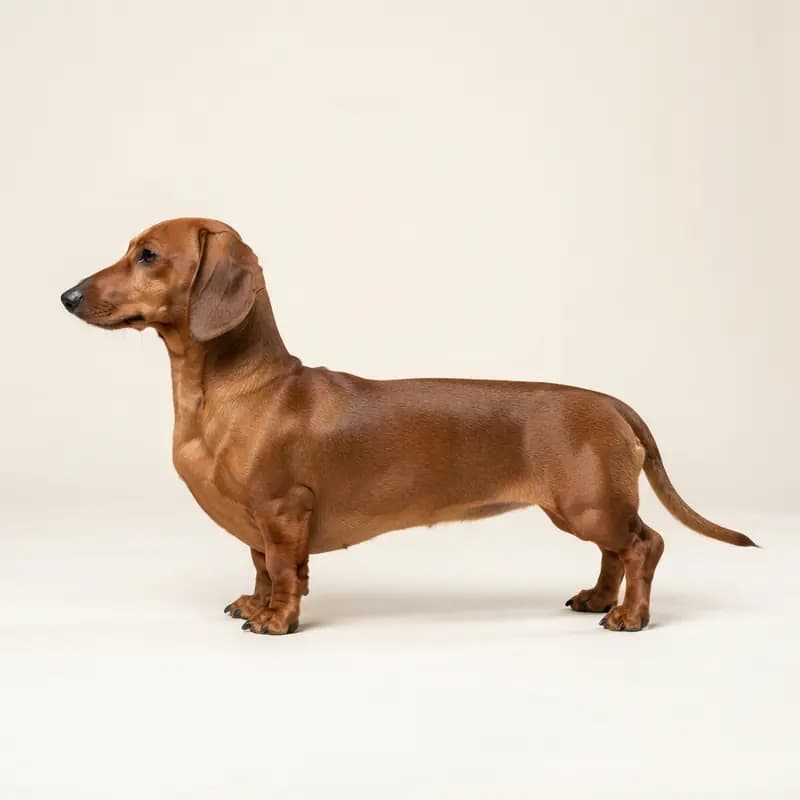
Coat type
 Illustrative image
Short
 Illustrative image
Long
 Illustrative image
Smooth
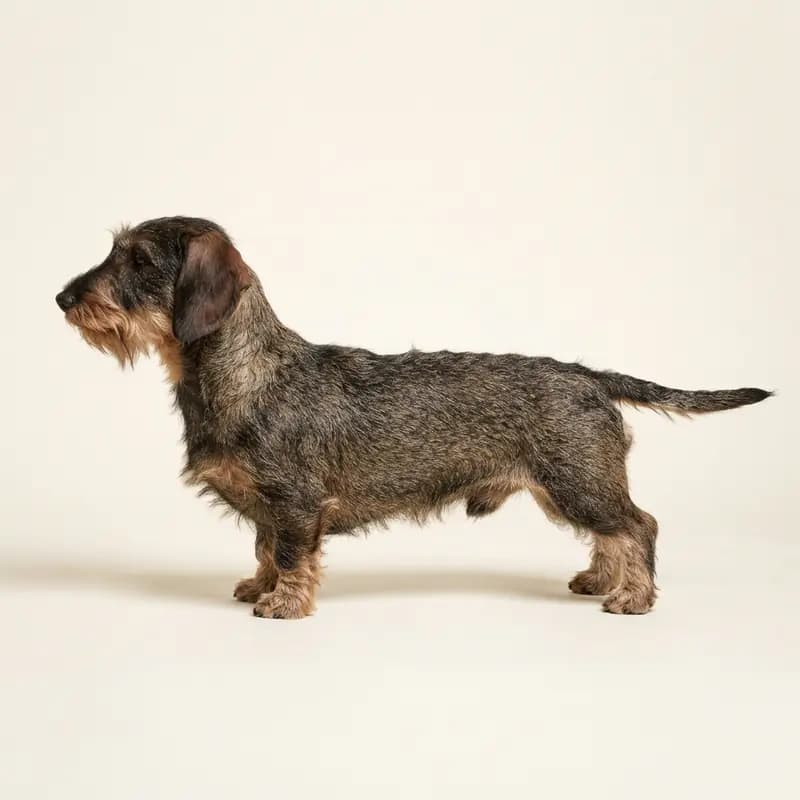 Illustrative image
Wire
 Silky
Silky
Perfect for you if:
- You enjoy active, scent-focused walks
- You can set up your home to be Dachshund-friendly (ramps instead of jumping, minimal stairs)
Less ideal if:
- You live in a high-rise apartment without an elevator
- You want a dog that can be reliably let off-leash
- You are looking for a quiet, low-maintenance companion
The real vibes check
A Dachshund will ask 'Why?' at almost every command. It doesn't realize it's small—and it will challenge you daily with its courage, cleverness, and unbridled self-confidence.
Breed Profile
Dachshunds aren't made for long-distance running, jumping, or strenuous swimming, but otherwise, these tireless dogs are up for anything. They are smart and alert, bark like a big dog and are good guard dogs. Because they were bred to hunt dangerous prey, they can be very brave and a little stubborn, but their endearing nature and unique appearance have won millions of hearts around the world. The Dachshund's famous long, low silhouette, ever-alert expression, and bold, lively personality have made him a superstar in the canine kingdom. Typical of small dog breeds, the Teckel is also a breed that likes to move. In short: a small dog that appreciates exercise, play and training. It is therefore not surprising that this loyal companion would be particularly happy about a home with a garden. Are you not a fan of dog breeds that shed a lot? Then you've come to the right place with the Teckel! The Teckel is one of the dog breeds that sheds little. Are you still unsure whether the breed is right for you? Then we have a little bonus here: Do you have children? Perfect! Because the breed is known for being child-friendly. The average life expectancy of the Dachshund is approximately 14 years.
All measurements in detail
- Height
- 20 - 27 cm (Female), 20 - 27 cm (Male)
- Weight
- 7 - 9 kg (Female), 7 - 9 kg (Male)
- Life Expectancy
- 12 - 15 yrs
- Character
- adventurous, curious, likes to sniff, like to dig
- Coat
- short, dense, shiny, smooth, firm and hard
- Coat Color
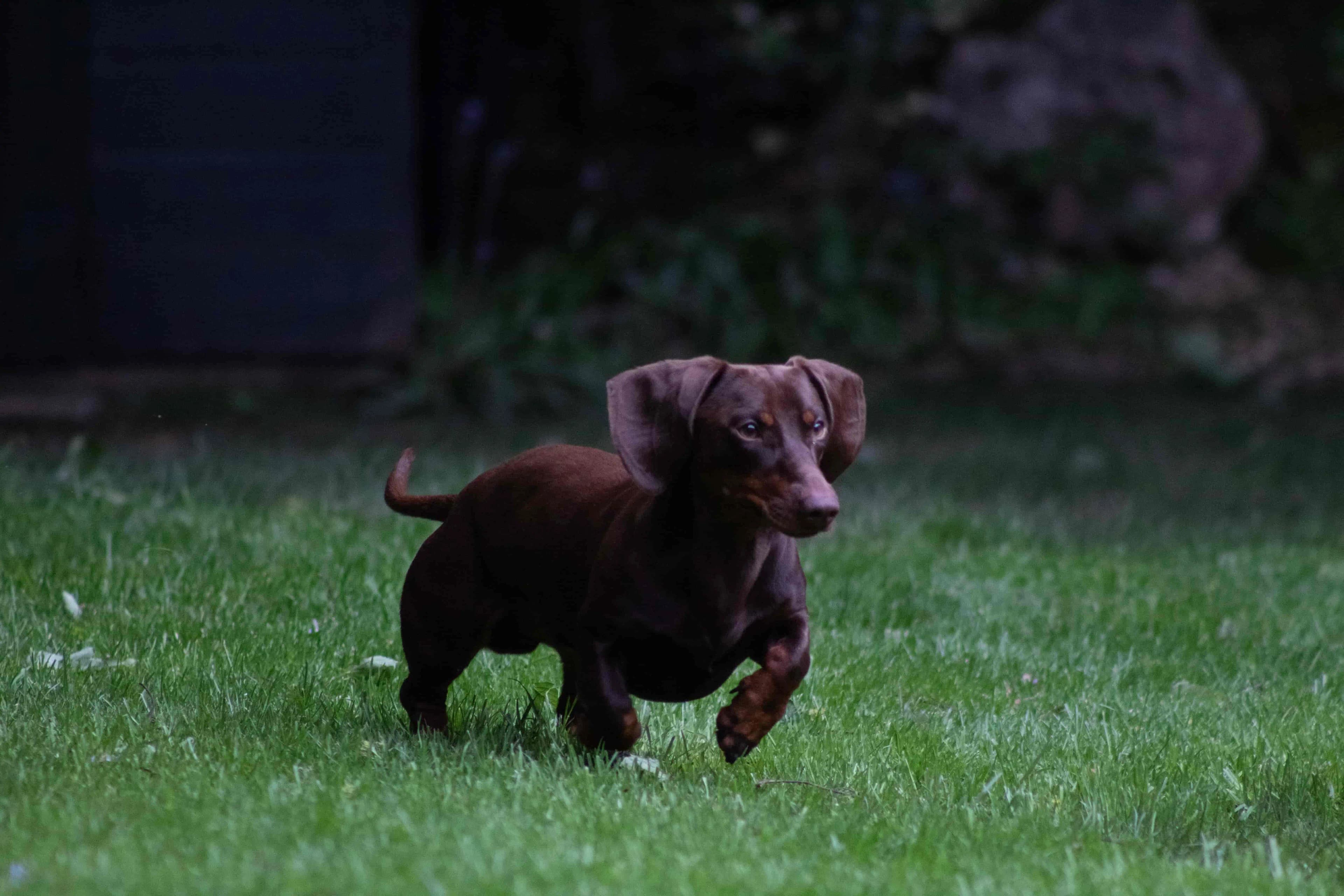
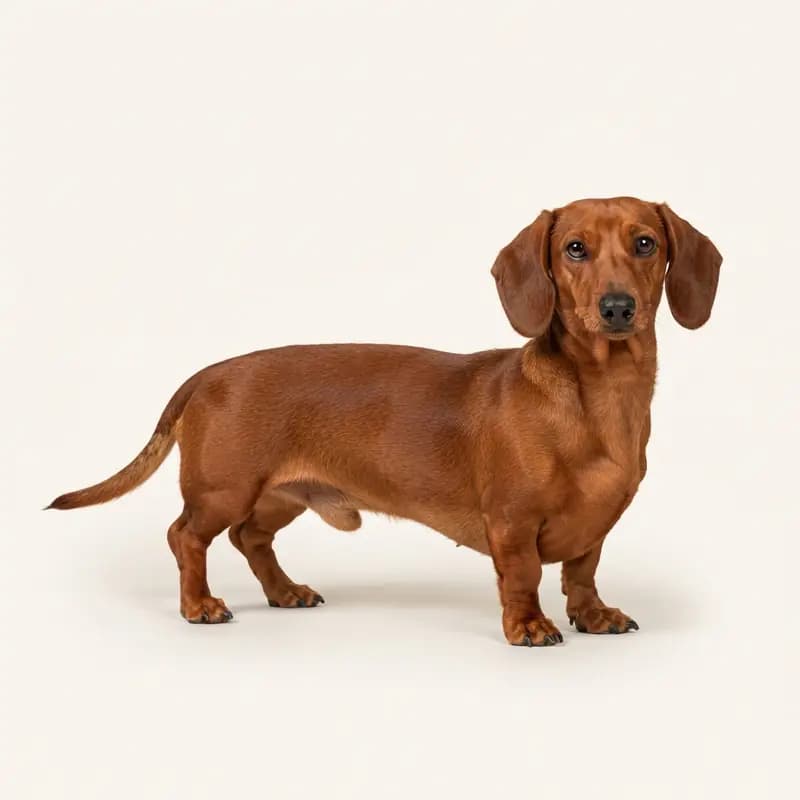
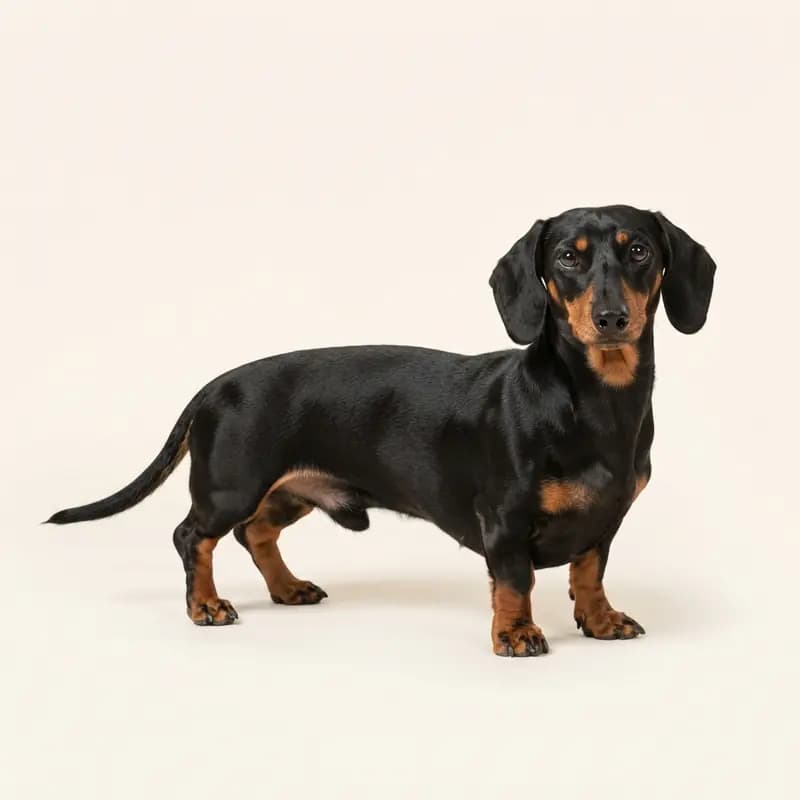
- Cream, black, red, brown, blue, chocolate, black-brown, chocolate-cream
- Price
- 1100 - 1800 €
Character & Temperament
The dachshund is a lively and courageous dog with a strong hunting instinct that comes from its original use as a burrowing and hunting dog. Despite its small stature, it shows great determination and remarkable endurance. It is very affectionate and forms a close bond with its family, often displaying an independent and sometimes stubborn personality. Dachshunds are intelligent and eager to learn but require consistent and patient training, as they can be stubborn. Due to their strong hunting drive, it is important to work on recall early and to provide sufficient mental and physical stimulation. They love to explore their surroundings and need regular exercise to stay balanced. Although they are small, dachshunds are good watchdogs and often show a certain caution or mistrust towards strangers. Their brave nature makes them reliable companions who feel comfortable both in the city and in the countryside. Overall, the dachshund is a lively, loyal, and strong-willed dog that brings much joy with the right guidance.
| Watchfulness Reports unusual activity but stays controlled. | Moderate |
| Openness to Strangers Careful around unfamiliar people — thaws slowly. | Cautious |
| Hunting or Herding Drive This drive runs deep — no amount of training eliminates it. | Very strong |
Fun Fact!
Dachshund: Dachshunds were originally bred to hunt in narrow fox burrows – their long bodies and short legs make them perfect tunnel diggers. Despite their size, they have a great deal of courage and are real characters!
What Awaits You
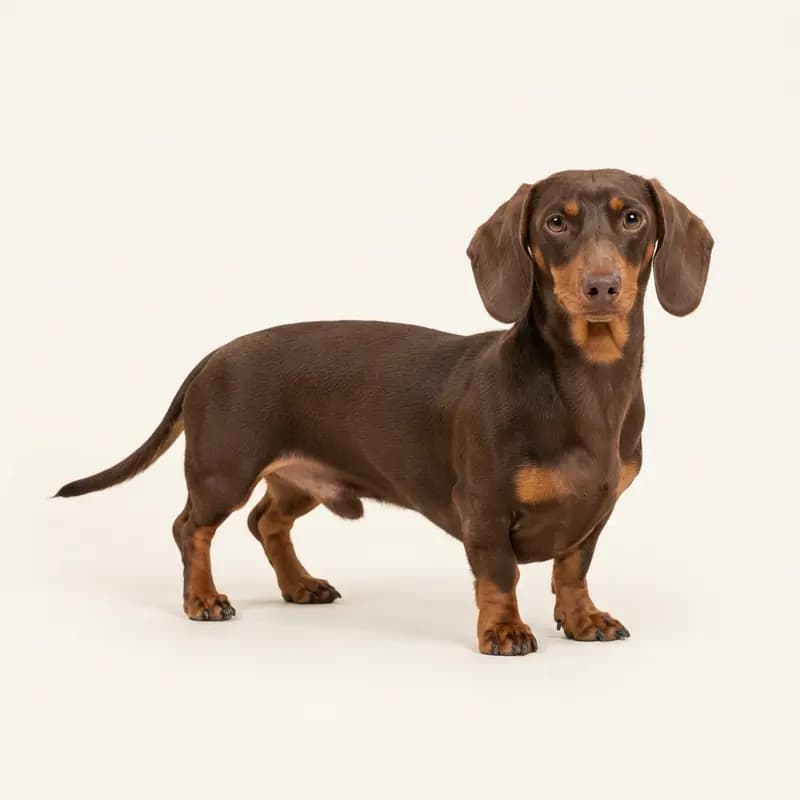
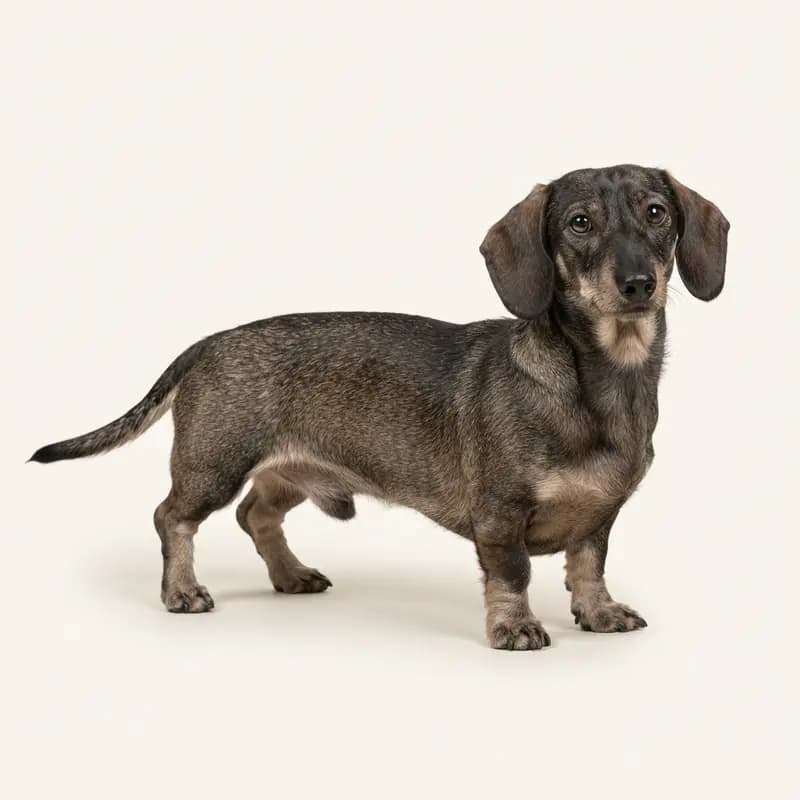
Dachshunds are passionate hunting dogs and tend to act independently. They need consistent education and sufficient employment. Dachshunds are dogs that like to bark. Dog owners should definitely pay attention to the height of the dachshund, as short legs can be linked to intervertebral disc problems. The Dachshund is available in 3 coat variants: short-haired, long-haired and wire-haired
Housing & Care
Dachshunds are lively and brave dogs with a strong hunting instinct, which is reflected in their confident and sometimes stubborn behavior. They are very affectionate and form a close bond with their owners, but also require consistent training and mental stimulation to remain balanced. Despite their small size, dachshunds are very enduring and need regular exercise, ideally in the form of walks and search games. They are usually friendly with children but should be handled carefully because of their sensitive backs. Dachshunds can get along with other dogs if socialized early, but sometimes show territorial behavior. Overall, they are charming and lively companions who need a lot of attention and loving guidance.
- Family Friendly
Loves family life and thrives in a group.
Family-oriented - Child Friendly
Gets on well with children — with adult supervision.
With supervision - Dog Friendly
Usually gets on fine with other dogs.
Generally tolerant - City Friendly
Adapts well to city living and urban environments.
Well-suited to city life
Owning a dog is a privilege, but it's also a real responsibility. Before you bring one into your life, be honest with yourself about the commitment it takes.
Training & Education
Dachshunds are headstrong and intelligent dogs that require consistent but loving training. Their stubbornness can make training challenging, so patience and creativity are needed. Dachshunds learn best through short, varied sessions with positive reinforcement, as they quickly lose interest. It is important to work early on leash training and recall, as dachshunds have a strong hunting instinct and like to roam independently. Despite their size, they need mental stimulation, for example through search games or scent work, to be well occupied. Dachshunds are less suited for classic dog sports, but very good for activities that promote their sense of smell. Frustration tolerance should also be trained, as they can quickly react stubbornly when faced with difficulties. Overall, training a dachshund requires consistency, empathy, and enjoyment in working with an independent character. Those who take this into account will have a loyal and lively companion.
Nutrition & Care
Dachshund: Dachshunds are small, lively dogs with a strong character. When it comes to nutrition, it is important to pay attention to a balanced diet that avoids overweight, as dachshunds are prone to spinal problems due to their long backs. High-quality food with a good protein and fat content supports their health. The coat of the dachshund varies depending on the variety (short-, long-, or wire-haired). Regular brushing, at least once a week, keeps the coat clean and healthy. Wire-haired dachshunds also require occasional trimming. They shed moderately during the coat change in spring and autumn. Dachshunds cope well with the Central European climate. Their coat protects them from the cold, but they should not stay outside for too long in cold temperatures. In summer, sufficient sun protection and water should be ensured, as they can be sensitive to heat.
| Care Level Regular brushing and occasional professional grooming. | Moderate |
| Exercise Needs Needs 1–2 hours of real exercise daily. | Active |
| Shedding No or minimal hair loss — suitable for allergy sufferers. | No shedding |
| Trainability Has its own ideas and will test limits. | Strong-willed |
Our experts are still reviewing this information. Spotted something wrong? Email us at info@honestdog.de.
Health & hereditary diseases
Health
D
Elevated risks
Health grade
The Dachshund is rated D for health, as there are significant breed-specific problems. The greatest risk concerns intervertebral disc disease (IVDD): about one in six to seven Dachshunds suffers a herniated disc (IVDD) in the course of its life, with the proportion being significantly higher in some varieties, and over 95% of Dachshunds carry the genetic predisposition for it (CDDY). A responsible breeder counteracts this through targeted back screening and breeding selection, and also tests for osteogenesis imperfecta (OI). Before buying, you should ask to see the corresponding results of the parent animals, including a clear result for cataracts and proof that for diseases such as progressive retinal atrophy, at most one parent is a carrier, provided the partner has tested clear.
Grade is relative to other breeds — AI-assisted and editorially reviewed.
Methodology and data: HonestDog Dog Breed Health Report 2026
What matters most for this breed
Tap any item to see details.
In daily life this can mean
You should strictly limit jumping and stair climbing, ensure your dog stays extremely slim, and plan for a higher budget from the start to cover potential back surgeries.
The breeder's role
Responsible breeders have the parents' spines examined and use DNA tests for eyes and bones to minimize the risk of breed-typical paralysis in their lines as much as possible.
Note: This health overview is AI-assisted and editorially reviewed. It is for orientation only and does not replace veterinary advice.
Health risks for this breed
What matters most for this breed — what's common, how much it affects the dog's life, and how to protect yourself as a buyer.
30
Risks tracked
3
Club standard
15
High severity
Eyes
Most affected area
Where this breed is vulnerable
Tap a body region to see the inherited conditions linked to it.
The three most important risks
Pick a region on the map to explore other areas.
severemoderatemild
How thoroughly does the breeder test?
Tier 1 reflects the tests Deutscher Teckelklub 1888 e.V. (DTK) actually mandates. Tiers 2 and 3 show how responsible breeders go beyond.
Club standard. Tests that the relevant breed club (VDH / FCI / AKC parent club) requires. Any serious breeder should be able to show you these.
Note: This health overview is AI-assisted and editorially reviewed. It is for orientation only and does not replace veterinary advice.
Costs & where to find one
How much does a Dachshund cost?
A Dachshund costs around ~€170 per month (€90 – €310, depending on your setup). The first year adds up to roughly ~€4,270 including purchase, equipment and puppy school; across the dog's life (13.5 years) it comes to about ~€29,200.
With surgery cover, running costs come to about ~€160 per month — in return, your share of a major operation drops from several thousand euros to around 20 percent.
Per month
~€170
In the first year
~€4,270
Across the dog's life
~€29,200
Purchase price per HonestDog's market analysis (asking prices in Germany, as of October 2026): €1,100 – €1,800
Median asking price: €1,500; 47 unique listings in the rolling three-month window. Data for this breed · Methodology
Estimate at a mid-range setup (suburban, dry food, 1–2 hours of daily exercise), average German prices, as of July 2026.
Calculate your personal costs1-minute self-check with your own answers
Looking for a Dachshund?
Appearance, variants & origin
 Illustrative image
 Illustrative image
 Illustrative image
 Illustrative image
History
The full history
The history of the dachshund dates back to the 15th century, when dogs were bred in Germany specifically suited for hunting badgers. Due to their short legs and long bodies, they could easily enter narrow burrows and drive the animals out of their hiding places. In the 19th century, the dachshund was further developed and bred in various sizes and coat types to meet different hunting conditions. The breed quickly became popular as a companion dog and is today known for its brave character and loyalty.
Original Use
The Dachshund, also known as Teckel or Dachshund, was bred to hunt underground, particularly badgers, and is known for its long body and short legs.
Origin
Germany
Date
1500
Owner experiences
Many owners describe the Dachshund in family life as an affectionate, cuddly and loyal shadow.Summarized from publicly shared owner experiences
Many owners describe the Dachshund in family life as an affectionate, cuddly and loyal shadow. It bonds closely with its people, often actively seeks physical contact and makes it unmistakably clear when it wants to be petted. Despite its compact size, experienced owners regularly stress that this is by no means just a lap dog. Day to day, it shows plenty of self-confidence, easily keeps up with active people on walks lasting hours and often surprises owners with its stamina.
At the same time, many reports highlight its strong alertness: it often announces visitors or unfamiliar noises immediately and loudly, since the protective instinct runs deep in the breed. It is often reserved with strangers at first. Owners also advise setting clear rules around children; well-socialized Dachshunds are considered playful companions, but they don't like being crowded by careless hands and will defend their resting spots if it comes to that.
Sources:hundeforum.comreddit.comdackelblog.chforum.wildundhund.dedogforum.de
Training dominates the reports of almost every Dachshund owner.Summarized from publicly shared owner experiences
Training dominates the reports of almost every Dachshund owner. Again and again, people bring up the proverbial Dachshund stubbornness. Owners make clear, though, that this has less to do with a lack of intelligence than with independence bred into the dog: because Dachshunds were bred to work on their own underground, they always weigh a cue against what's in it for them and have hardly any "will to please". Owners won't find blind obedience here, which is why bribery, motivation and humor are indispensable in training.
Hunting instinct is a constant challenge. Many owners report that the dog suddenly tunes them out the moment a fresh game trail reaches its keen nose. A reliable recall therefore takes months of patient long-line training. In areas with lots of wildlife or in the woods, off-leash time stays risky for some Dachshunds their whole lives, so dog forums recommend activities like tracking, mantrailing or dummy games as a much-needed outlet for their drive to work.
Sources:hundeforum.comreddit.comdogforum.deder-hundegefaehrte.deforum.wildundhund.de
On health, community reports revolve almost entirely around the back and the dreaded risk of "dachshund paralysis" (disc herniation).Summarized from publicly shared owner experiences
On health, community reports revolve almost entirely around the back and the dreaded risk of "dachshund paralysis" (disc herniation). Many owners describe the frightening moments when the dog suddenly shows pain, trembles or its hind legs give out. Owners who've been through it share detailed accounts of expensive emergency surgeries, MRI results, months of physical therapy and the slow, hard work of learning to walk again.
To head off this nightmare, experienced Dachshund fans share firm everyday rules. Many owners consistently carry their dog up and down stairs or block steps off with gates. In many Dachshund households, special dog ramps for the couch or bed are standard equipment to prevent harmful jolts to the spine when jumping down. Owners also warn emphatically against excess weight, since every extra gram puts strain on the long spine, and they focus on building muscle steadily in a way that is easy on the joints.
Sources:dogforum.degesundehundeforum.comforum.hausgarten.neterste-hilfe-beim-hund.dereddit.com
Paraphrased from real owner reports · translated from German
Community posts
FAQ & more
Is a Dackel the right dog for me?
The Dackel is an adaptable dog that adjusts well to various lifestyles. Research the temperament, grooming needs, and space requirements before deciding.
How long does a Dackel live?
The average life expectancy of a Dackel is 12-15 years. With proper care and regular vet visits, your dog can live a long, healthy life.
How much grooming does a Dackel need?
Dackel grooming requirements include regular brushing, nail trimming, and dental care. HonestDog provides detailed grooming tips for every breed.
Is a Dackel good for families with children?
The Dackel can be a great family dog. Proper training and socialization are key. HonestDog provides family suitability information for every breed.
What colors does the Dackel come in?
The Dackel comes in these colors: Red, Black and tan, Brown and tan, Wild boar, Brindle, Merle, Cream, Blue and tan, Isabella, Piebald, Yellow. Colors that fall outside the breed standard are marked as such on the breed page.
Guides & Articles about Dachshund
Dog Knowledge
Dachshund vs Beagle Dog Breed Comparison
Dachshund or beagle dog breed? Compare their unique traits, care needs, and costs to find out which of these popular hounds fits your lifestyle.
Hundebesitzer
Dackel Erziehung: Training-Tipps für Anfänger und Fortgeschrittene
Dackel Erziehung: praxiserprobte Tipps für Welpen und Fortgeschrittene – vom Stubenrein-Training bis zum sicheren Rückruf.
Are you a Dachshund breeder?
Showcase your kennel on HonestDog and reach families searching for a responsibly bred Dachshund.