Colour Dilution in Dogs: When Blue and Grey Coats Lead to Hair Loss
Blue, grey and lilac dogs look striking – but the same gene variant that lightens their colour can, in some breeds, leave the coat permanently brittle.
In short
Colour dilution is an inherited lightening of the coat: black becomes blue or grey, brown becomes silver, lilac or Isabella. Two copies of a recessive variant in the MLPH gene cause it. Animal-welfare vets treat it as an extreme-breeding risk (called Qualzucht in German law) because dilute dogs can develop colour dilution alopecia: incurable hair loss with recurring skin infections.
Bred for health or bred to the extreme?
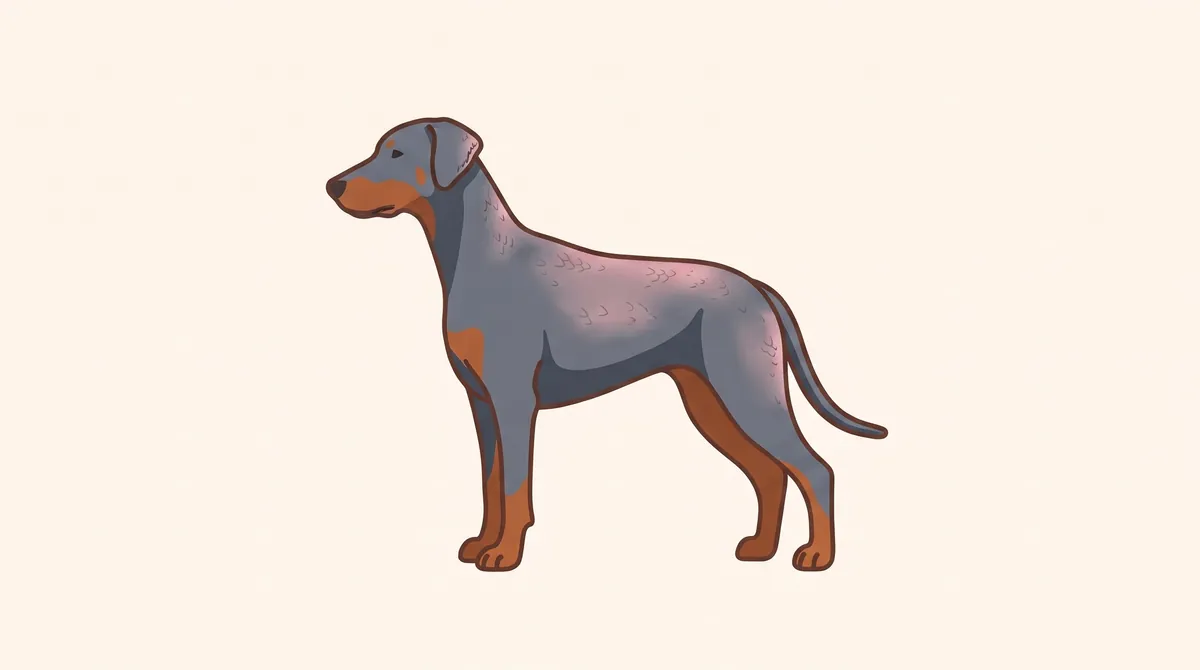
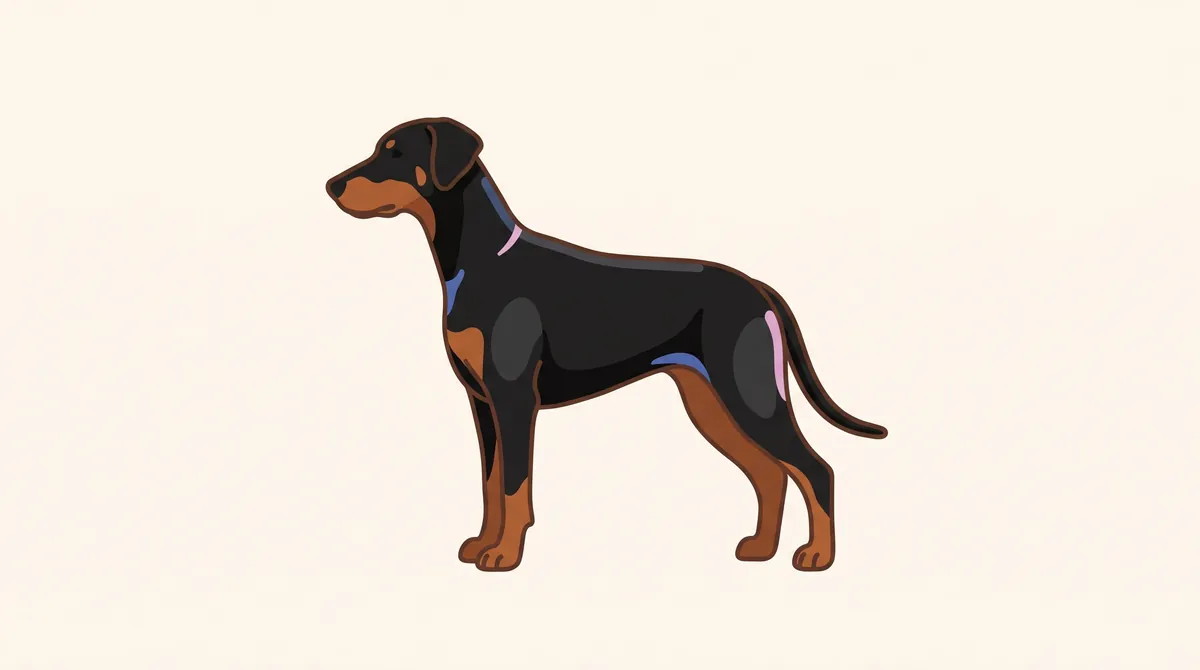
Look at the back, flanks and ears: the blue coat is thin and patchy, while the rust-coloured points on the legs and head keep their normal hair.
The illustrations are AI-generated and editorially reviewed. They do not show a real dog; they make the difference visible.
Why do some dogs turn blue – and why do they lose their coat?
Because their pigment isn't spread properly through the hair. Normally every pigment cell moves tiny colour grains along and spreads them finely through the whole hair, so the coat looks deep black or brown. Dilute dogs are missing one of the helpers for this transport. The grains clump into big lumps with lots of pale hair in between, so our eyes no longer see black but blue or grey.
Picture a hair as a thin drinking straw. In a healthy dog it is evenly filled with fine colour powder. In a dilute dog it holds thick little lumps instead. The straw bulges at those spots, cracks and eventually snaps. That is exactly what happens in colour dilution alopecia: the hairs break, the coat thins out, and bacteria can settle in the bald patches.
Importantly, not every blue dog gets the disease. In some breeds it is very common, in others it hardly ever happens – even though the colour comes about in exactly the same way. That shows how much the family line and the breeding behind a dog matter.
What to remember
- Blue, grey, silver, lilac and Isabella are dilute colours.
- A dog has to inherit the trait from both parents to be dilute.
- Only the dilute coat can fall out – red or tan markings stay normal.
- The disease can't be cured, but the skin can be cared for well.
What happens inside the hair in colour dilution?
In colour dilution, pigment granules (melanosomes) are not transported properly inside the pigment cells. Normally the proteins Rab27a, myosin Va and melanophilin form a complex that carries melanosomes along actin filaments to the edge of the cell, from where they pass evenly into the growing hair. Variants in the melanophilin gene MLPH – the D locus – disrupt this complex.
Three such variants are known: d1 (c.−22G>A), a splice-site variant linked to dilution in seven breeds in 2007 (Drögemüller et al. 2007); d2 (c.705G>C), described in 2018 in breeds including Chow Chows and Sloughis (Bauer et al. 2018); and d3 (c.667_668insC), found in 2020 in single dogs, one Chihuahua and one Italian Greyhound (Van Buren et al. 2020). Inheritance is autosomal recessive: a dog is dilute only with two d alleles, in any combination (d1/d1, d1/d3 and so on). D/d dogs look normal but pass the trait on. Researchers expect further, still unknown variants.
Because the pigment clumps, the hair shaft holds large, irregular pigment aggregates (macromelanosomes) instead of finely dispersed granules. This changes how light is scattered – black looks blue-grey, brown looks pale grey. The change is most visible in the dark pigment eumelanin; red and tan points, made of phaeomelanin, keep normal hair in CDA.
In colour dilution alopecia (CDA), the colour becomes a disease. Histology shows macromelanosomes in the hair shaft, free clumps of melanin in the follicle lumen and numerous melanophages around the follicles. The pigment clumps distend the hair cuticle, the shaft fractures, and the follicles are dysplastic. The result is progressive hair loss, mainly on the trunk, scaling and often bacterial folliculitis and furunculosis.
Puppies are born with a normal coat; the first changes usually appear in young dogs. The hair loss is irreversible. Treatment targets the consequences: medicated shampoos and coat care for dry, scaly skin, antibacterial treatment for infections, and protection from cold and strong sun. There is still no DNA test that tells dilute dogs at risk of CDA apart from those that stay healthy.
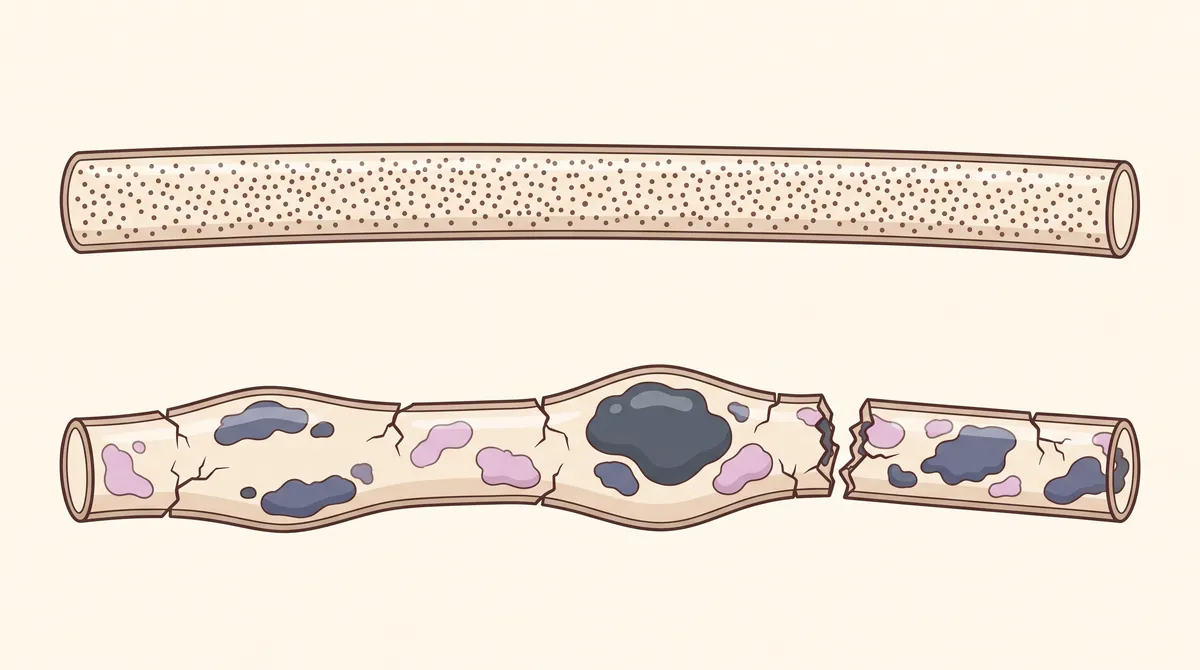 AI illustration
What the illustration shows
- 1Finely spread pigment – In a normal hair, many small melanosomes sit evenly throughout the shaft – the coat looks deep black.
- 2Intact surface – The hair cuticle is smooth and closed; the hair is elastic and doesn't break.
- 3Macromelanosomes – Without working melanophilin the pigment clumps into large lumps. Light is scattered differently – the hair looks blue-grey.
- 4Swollen, cracked shaft – The shaft bulges around the pigment clumps and the cuticle cracks. The hair turns brittle.
- 5Hair fracture – At one clump the hair snaps. Many such fractures add up to the thin coat of colour dilution alopecia.
Which breeds are affected?
Colour dilution occurs in a great many breeds, but the disease risk is not the same everywhere. In most breeds only the dilute colours are affected; in the Weimaraner every dog is dilute, yet no CDA is documented in the classic colour.
Certain colours only
- Dobermann
CDA was so common in blue Dobermanns that blue was removed from the FCI standard; in one study of 57 blue or fawn Dobermanns, 42 showed the typical hair loss.
- Weimaraner
Caution only with so-called “blue Weimaraners” from crossbreeding. The classic colour, although also dilute, is unremarkable: no CDA cases are documented in it.
- Labrador Retriever
Only the so-called “silver Labrador” is affected – a dilute colour in which, according to the German veterinary animal-welfare association (TVT), CDA is widespread.
- French Bulldog
Blue and lilac are not in the FCI standard and are bred deliberately as “rare colours”; the short-nose problem comes on top.
- German Pinscher
Blue and Isabella Pinschers carry the dilution; hair loss and hair-follicle infections have been described in them.
- Miniature Pinscher
As with the German Pinscher, the risk only concerns the dilute colours blue and Isabella, not black-and-tan or red.
- Dachshund
Blue and Isabella Dachshunds are described with CDA; the German expert opinion on extreme breeding names the Dachshund under “blue dog syndrome”.
- Italian Greyhound
Grey and Isabella are standard colours here; we know of no reliable data on CDA in this breed.
- Chihuahua
The Chihuahua standard allows every colour except merle, blue included; the QUEN database on extreme breeding lists it as predisposed to CDA.
How can you recognise healthy lines among dilute colours?
By parents and adult relatives with a dense, healthy coat, and a breeder who is open about colour genetics. Because there is no DNA test for CDA, looking at the family is your most important source of information.
In breeds where a dilute colour has been part of the standard for generations and CDA is rare, the risk is different from colours newly bred into a breed. So don't just ask about the colour – ask where it came from in the line.
We do not list breeders for the French Bulldog; for that breed, see the page on the short nose.
Checklist for the breeder visit
- Ask to see the original D-locus (MLPH) DNA test for both parents – it tells you whether puppies can be dilute or carry the trait.
- Look at the coat of the parents and, if possible, older siblings from earlier litters: back, flanks and ears should be densely covered, with no bald, scaly or inflamed patches.
- Ask directly about hair loss or recurring skin infections in the line. A reputable breeder answers openly and mentions problems too.
- Make sure neither parent has CDA itself – affected dogs must not be bred from.
- Prefer breeds and lines where the dilute colour has a long, healthy history over colours newly created outside the breed standard.
- Be wary of price premiums for “rare” or “exotic” colours. A colour is not a mark of quality.
- Check whether the colour is part of the breed standard. When a standard excludes a colour, there are often health reasons – as with the blue Dobermann.
How breeders make whole breeds healthier – tests, new genes and their limits
Why doesn't every dilute dog develop CDA?
Because dilution is necessary but not sufficient: every dog with CDA is dilute, but not every dilute dog develops CDA. Which additional genetic factors tip the balance is still unclear – the causal variant for CDA has not been identified.
The differences between breeds are striking. Every Weimaraner is dilute, and the blue Great Dane is a recognised colour variety – according to the German veterinary animal-welfare association (TVT), CDA plays no role in either. The older BMEL expert opinion still listed the Great Dane among breeds with blue dog syndrome; TVT and QUEN see it differently today. In blue Dobermanns, by contrast, CDA was so frequent that the colour was struck from the FCI standard. CDA is also widespread in the “silver Labrador”.
For you this means: the D-locus test tells you what colour a puppy can have – not whether it will stay healthy. The risk lies in the genetic background of the line, and you see that mainly in the coats of adult relatives.
What is behind “rare colours” like blue and lilac?
Often, breeding that puts colour first. For the French Bulldog, the FCI standard allows only fawn and brindle, each with or without white pied markings, and requires a black nose – “never brown or blue”. Blue and lilac Frenchies are therefore outside the standard.
How strong the demand still is shows in one research figure: a single laboratory has genotyped more than 10,000 French Bulldogs reported as dilute by their owners. The French Bulldog Club of England rejects blue, lilac, chocolate, black and tan and merle, and since 2019 no longer validates health tests for dogs in non-recognised colours.
That doesn't mean every blue puppy will fall ill, or that owners have done anything wrong. It does mean that where a colour is sold at a premium as something special, the health of the parents deserves an especially close look.
Is breeding blue or grey dogs illegal?
Not across the board. In Germany, Section 11b of the Animal Welfare Act prohibits breeding dogs where the offspring can be expected to suffer inherited pain, suffering or harm. The law names no breeds or colours – whether a case counts as extreme breeding is assessed individually, based on the animal's traits. The expert opinion on interpreting Section 11b, usually dated 1999, which authorities use for guidance, explicitly lists “blue dog syndrome” and recommends a breeding ban for animals with blue-grey dilution. That opinion is not law, and the Bavarian state office (LGL) now describes it as scientifically outdated.
A more current assessment comes from the QUEN database on extreme breeding, which supports veterinary authorities: from a veterinary point of view, it classes dogs with CDA as cases of extreme breeding under Section 11b – because of the irreversible hair loss with reduced protection from cold and the pain of secondary bacterial infections. Since 2022, dogs with inherited extreme-breeding traits may also no longer be shown in Germany at exhibitions or other events where dogs are judged (Section 10 of the Dog Welfare Ordinance). Owning such a dog is not prohibited.
In Austria, the Animal Welfare Act explicitly lists skin inflammation and impaired physiological function due to a partly or wholly missing coat as extreme-breeding symptoms. Since 2025 it has been illegal there to import, acquire, broker or pass on animals with extreme-breeding symptoms or visible extreme-breeding traits – with exceptions, for example for animal shelters, and a transitional rule for animals lawfully bred or imported before that date.
Related conditions
The medical details – symptoms, diagnosis, treatment – are on the pages for each condition.
This page explains; it does not replace a veterinary examination. Only a vet can judge whether an individual dog is affected.
Frequently asked questions
Are blue dogs unhealthy?
Not automatically. Blue and grey dogs carry an inherited colour dilution that brings a risk of colour dilution alopecia (CDA) – permanent hair loss with recurring skin infections. How high the risk is depends heavily on breed and line: CDA is common in blue Dobermanns and practically unknown in Weimaraners.
Does the Weimaraner count as extreme breeding?
Not because of its colour. Every Weimaraner is dilute, yet no CDA cases are documented in the classic breeding line – a good example that dilution alone is not a disease. Caution is only warranted with so-called “blue Weimaraners” created by crossing in other breeds. More on the breed in the Weimaraner breed profile.
What is a lilac Frenchie?
A French Bulldog with a diluted brown base colour – the coat looks pale greyish-brown to lavender. The dog needs two copies of the dilution trait plus a brown trait – in Frenchies either classic brown or the “cocoa” variant discovered in 2020. Lilac is not in the FCI standard, and in this breed the short-nose problem comes on top of the CDA risk.
Is there a DNA test for CDA?
No. Only the D locus can be tested, i.e. whether a dog is dilute or carries the trait. The genetic factors that turn a dilute dog into a sick one have not yet been identified. That is why the coats of adult relatives matter so much.
Can colour dilution alopecia be cured?
No, the hair loss is permanent. The consequences can be treated: shampoos and coat care for dry, scaly skin, antibacterial treatment for infections, and protection from cold and strong sun. Many dogs live well with it, but they need lifelong care.
Is the blue Dobermann allowed in the breed standard?
No. Blue was removed from the FCI standard because CDA was so common in blue Dobermanns. In a study of 57 blue or fawn Dobermanns, 42 showed the typical hair loss. Today the FCI standard only recognises black and brown with rust-red markings.
What is a silver Labrador?
A Labrador with a dilute coat colour in which brown is lightened to silvery grey. According to the German veterinary animal-welfare association (TVT), CDA is widespread in the “silver Labrador”. If you want a Labrador, the classic colours black, yellow and chocolate are the safer choice.
Sources
- Philipp U. et al. (2005): Polymorphisms within the canine MLPH gene are associated with dilute coat color in dogs. BMC Genetics 6:34
- Drögemüller C. et al. (2007): A noncoding melanophilin gene (MLPH) SNP at the splice donor of exon 1 represents a candidate causal mutation for coat color dilution in dogs. Journal of Heredity 98(5):468–473
- Bauer A. et al. (2018): A novel MLPH variant in dogs with coat colour dilution. Animal Genetics 49(1):94–97
- Van Buren S. L. et al. (2020): A Third MLPH Variant Causing Coat Color Dilution in Dogs. Genes 11(6):639
- Miller W. H. Jr. (1990): Colour dilution alopecia in Doberman Pinschers with blue or fawn coat colours. Veterinary Dermatology 1(3):113–122
- MSD/Merck Veterinary Manual: Hereditary Alopecia and Hypotrichosis in Animals (Moriello, 2025)
- TVT fact sheet no. 141: extreme breeding and hereditary diseases in pets – focus on dogs (German, 12/2023)
- QUEN database on extreme breeding: fact sheet no. 25 – Color Dilution Alopecia (German, 20 July 2026)
- BMEL (expert group on animal welfare and pet breeding): expert opinion on interpreting Section 11b TierSchG, usually dated 1999, section on blue dog syndrome (German)
- Section 11b German Animal Welfare Act – ban on extreme breeding (German)
- FCI standard no. 101: French Bulldog (German)
- The French Bulldog Club of England: Buying a puppy (position on non-recognised colours)
Last reviewed on September 30, 2026 by Sufyan Osamah · what that means: Editorial standards
Related topics
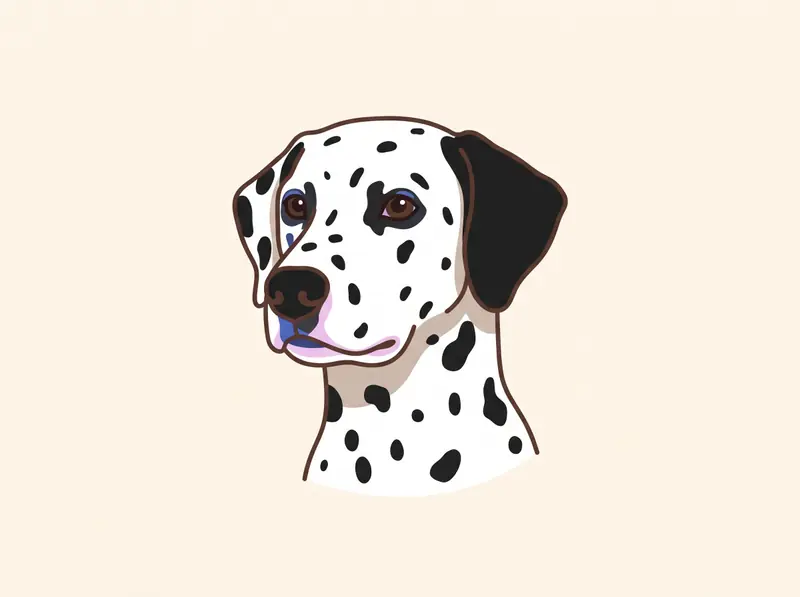
White & deafness
Not every white dog is at risk – but where pigment cells are missing from the head, they are often missing from the inner ear too, and a puppy can go deaf in its first weeks of life.
Learn more
Merle & double merle
One merle parent gives the marbled coat many people love; two merle parents can produce puppies born deaf or with malformed eyes.
Learn more
Flat face
A short muzzle looks endearing – but when the skull shrinks and the soft tissue inside it doesn't, the dog is left with too little room to breathe.
Learn moreLooking for a dog without this burden?
Many wonderful dogs are waiting in shelters – and many breeds come without extreme-breeding traits.