Brachycephaly in Dogs: What a Flat Face Does to the Body
A short muzzle looks endearing – but when the skull shrinks and the soft tissue inside it doesn't, the dog is left with too little room to breathe.
In short
Brachycephaly is a bred-in shortening of the facial skeleton. The muzzle bones shrink, but the soft palate, tongue and nasal turbinates do not, and block the airway. The result is Brachycephalic Obstructive Airway Syndrome (BOAS), plus heat intolerance, eye and skin disease. Germany's expert opinion on the Section 11b ban on extreme breeding (called Qualzucht in German law) names the extreme form.
Bred for health or bred to the extreme?
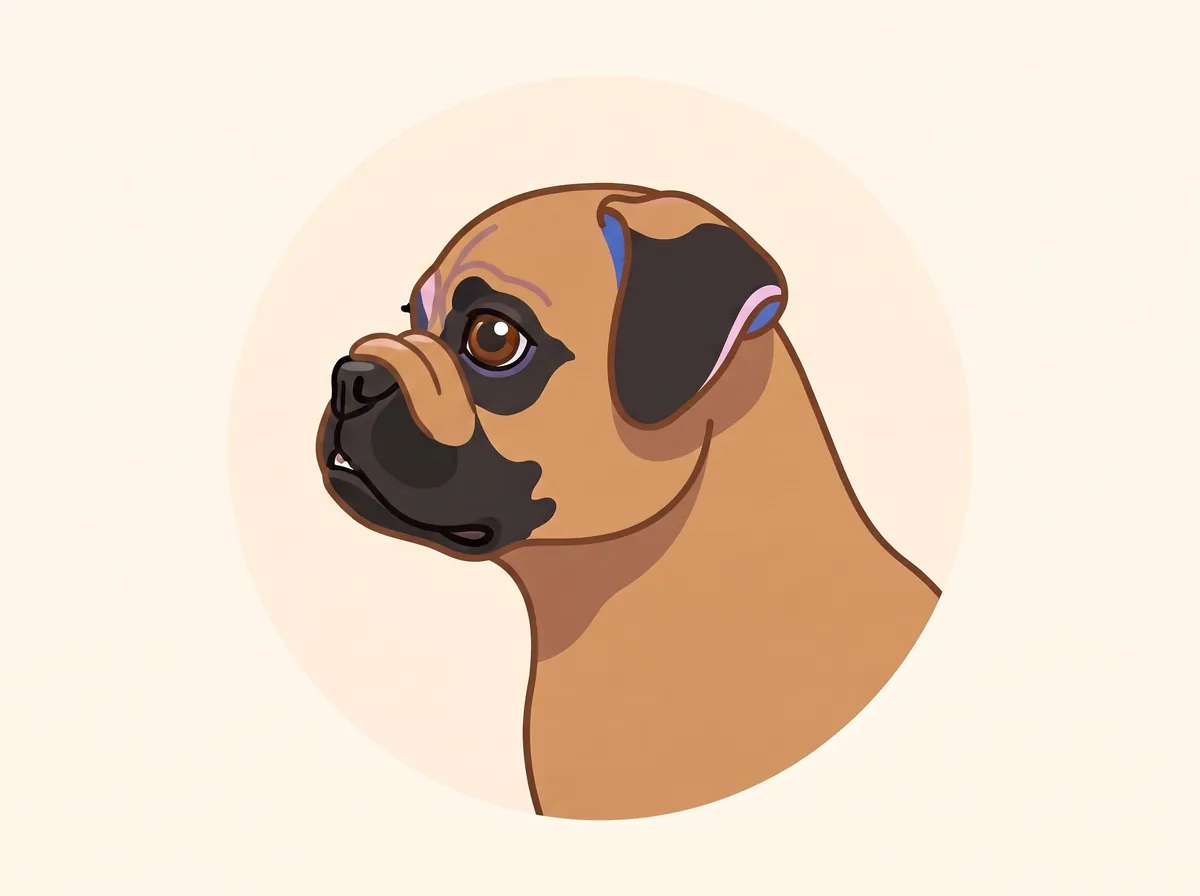
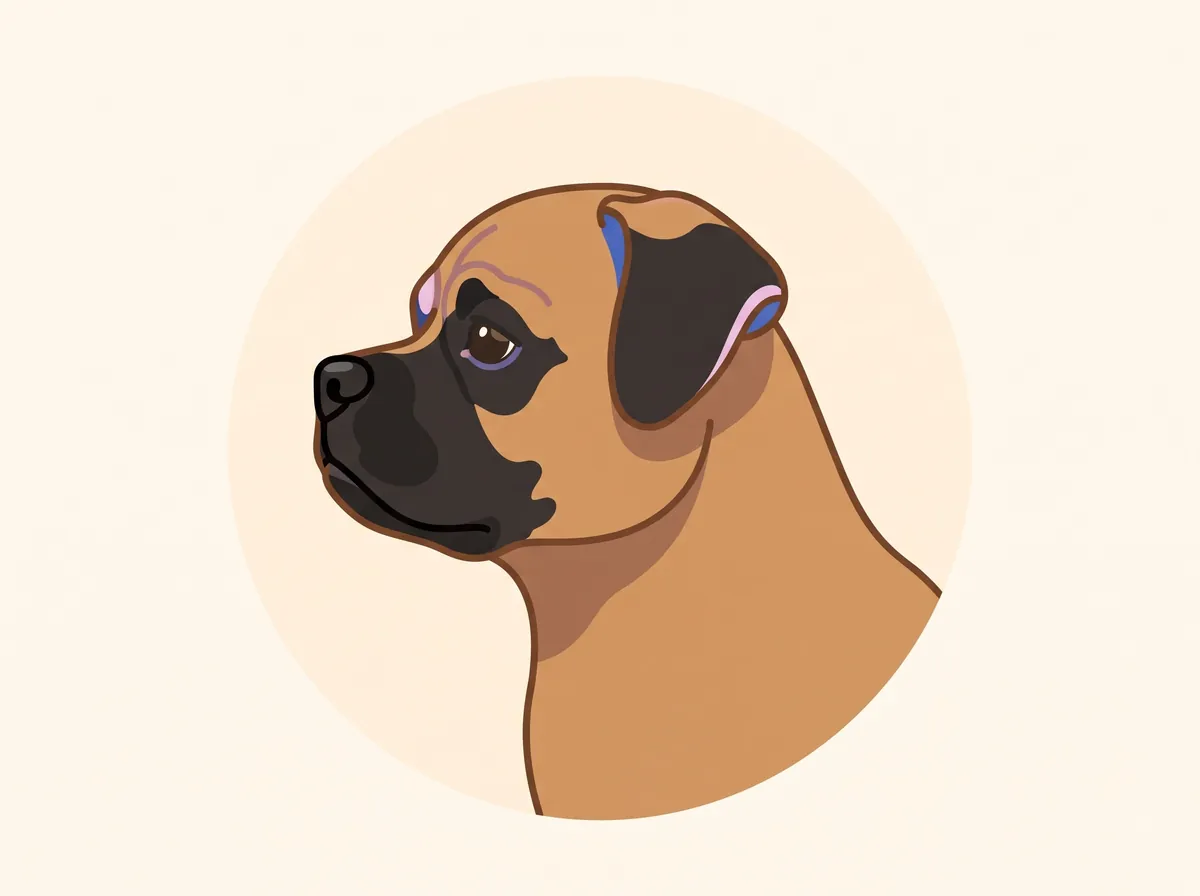
Look at the muzzle, the nostrils and the fold above the nose: on the left a visible muzzle with round, open nostrils, on the right an almost flat face with slit-like nostrils.
The illustrations are AI-generated and editorially reviewed. They do not show a real dog; they make the difference visible.
What happens in brachycephaly, in simple terms?
In brachycephaly, a dog's muzzle has been bred so short that the head no longer has room for everything that belongs inside it. The bones have shrunk, but the soft parts – palate, tongue, the curled structures inside the nose – have stayed almost as big as in a long-nosed dog.
Imagine stuffing your whole school backpack into a pencil case. You might just get the zip closed, but everything inside is squashed. That is what it is like for air inside the head of an extremely flat-faced dog: it has to squeeze past far too much tissue. That is why many of these dogs snore, puff when they play, and some even sleep sitting up so they can breathe more easily.
On top of that, dogs barely sweat; they cool down mainly by panting and through their moist nose. With a narrowed nose that works badly, so warm days can become dangerously hot for them. And because the eyes sit further forward in a flat face, they get injured more easily.
What you notice day to day
- Loud snoring and snorting, even at rest
- Tiring quickly during play or walks
- Struggling in warm weather, heavy panting
- Gagging or bringing food back up
- Sleeping sitting up or with a toy in the mouth
What does brachycephaly look like anatomically?
Brachycephaly is a shortening of the facial skeleton. The soft tissues of the upper airway – nostril wings, the lining of the nasal turbinates, soft palate, tonsils and even the tongue – do not scale down with it. The result is a relative excess of tissue that narrows the nose, pharynx and larynx: brachycephalic obstructive airway syndrome (BOAS).
The primary changes are stenotic nares, where the nostril wing narrows the opening, sometimes to a slit; an elongated, thickened soft palate that extends past the tip of the epiglottis and blocks the entrance to the larynx on inspiration; aberrant turbinates that can grow back into the nasopharynx; and relative macroglossia. Some dogs also have a hypoplastic, abnormally narrow trachea, which worsens signs but is not thought to be a major cause.
Because the dog has to breathe in against high resistance, strong negative pressure builds up. It pulls tissue into the airway: the laryngeal saccules evert, the tonsils are pulled out of their crypts, and the laryngeal cartilages can collapse; laryngeal collapse has been described in puppies under six months old. Chronic negative pressure in the chest is also thought to be a major cause of reflux, regurgitation and vomiting. During sleep, snoring and pauses in breathing (sleep apnoea) are common, and severe obstruction can cause fainting.
The consequences go beyond breathing. Shallow eye sockets make the eyeballs protrude (exophthalmos) and the lids often fail to close fully, which predisposes to corneal ulcers, exposure damage to the cornea and, in extreme cases, the eyeball slipping out of its socket. Hairs from the nasal fold rub on the cornea, and the skin inside the folds becomes inflamed. A normal number of teeth is packed into a shortened jaw, so crowding and malocclusion are common. And because the puppies' heads are too large for the birth canal, difficult births are frequent.
Genetically, brachycephaly is polygenic. A variant in BMP3 and a LINE-1 insertion in SMOC2 are linked to short faces; the SMOC2 insertion explains up to 36% of the variation in face length. BOAS itself is probably polygenic too. That is why breeding programmes test breathing function directly rather than relying on a single gene.
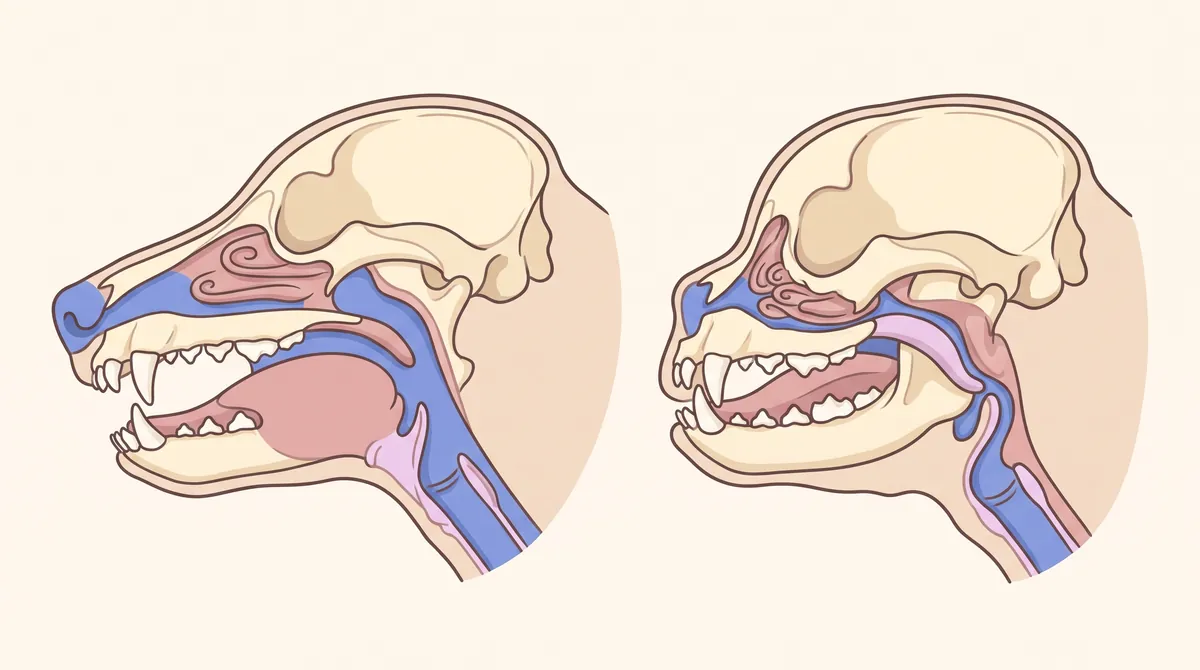 AI illustration
What the illustration shows
- 1Open airway – With a normal-length muzzle, air flows freely from the nose to the windpipe and the turbinates have room.
- 2Narrow nostril – Stenotic nares: the nostril wing narrows the entrance. Moderately to severely narrowed nostrils go with a much higher BOAS risk.
- 3Crowded turbinates – In the shortened skull the turbinates have no room. They narrow the air passage and can grow back into the nasopharynx.
- 4Overlong soft palate – The soft palate is as long as in a long-muzzled dog, reaches past the epiglottis and blocks the entrance to the larynx on inspiration.
- 5Large tongue – A relatively large, thick tongue fills the mouth and pushes the soft palate further back.
Which breeds are affected?
A short muzzle is part of the type in many breeds, but not every short-nosed breed is affected to the same degree. The ratings below draw on UK veterinary records and the Cambridge studies using the breathing test.
Typical of the breed
- Pug
In UK veterinary records, Pugs had about 54 times the odds of a BOAS diagnosis compared with other dogs.
- French Bulldog
Over 80% of litters in a UK breeder survey were born by caesarean; narrowed nostrils sharply raise the BOAS risk.
- Bulldog
Also over 80% caesarean litters; one of the extreme flat-faced breeds with a markedly shorter lifespan in VetCompass data.
- Pekingese
In the Cambridge study of 14 breeds, only 10.9% of Pekingese were free of BOAS signs (grade 0), the lowest of all.
- Japanese Chin
Only 17.4% grade 0 in the Cambridge study; alongside the Pekingese the most affected breed examined.
- King Charles Spaniel
A very flat face; moderate BOAS risk in the Cambridge study, lower than its head shape would suggest but not risk-free.
- Brussels Griffon
Moderate BOAS risk: in the Cambridge study only 25 to 50% of dogs were free of breathing signs (grade 0).
- Boston Terrier
Over 80% caesarean litters in the UK breeder survey and a moderate BOAS risk in the Cambridge study.
- Shih Tzu
Moderate BOAS risk: in the Cambridge study only 25 to 50% of Shih Tzus were free of breathing signs (grade 0).
- Frenchton
A French Bulldog × Boston Terrier cross with no FCI standard – both parents are short-skulled, so the cross does not solve the breathing problem.
- Pocket Bully
Compact bully line with no FCI standard, where a short muzzle is part of the type; we know of no published breathing-function data for these young designer lines.
- Exotic Bully
Bully line with no FCI standard, typically bred for a very short muzzle and a heavy body; we know of no published breathing-function data.
Exaggerated lines only
- Cavalier King Charles Spaniel
Only a moderately short muzzle: in the Cambridge study at least half were grade 0 and three quarters clinically unaffected; shorter faces raise the risk.
- Affenpinscher
Only a mild BOAS risk: in the Cambridge study at least half were grade 0 and three quarters clinically unaffected, yet 26% showed signs of tracheal collapse (a honking cough). Shorter faces raise the risk.
- Staffordshire Bull Terrier
A broad, short skull but only a mild BOAS risk: in the Cambridge study at least half were grade 0 and three quarters clinically unaffected. Narrow nostrils, excess weight and a shorter face raise the risk.
- Boxer
A moderately short muzzle and only a mild BOAS risk: in the Cambridge study at least half were grade 0 and three quarters clinically unaffected. Within the breed, Boxers with shorter faces had breathing problems significantly more often.
- Chihuahua
Only a mild BOAS risk: in the Cambridge study at least half were grade 0 and three quarters clinically unaffected. Within the breed, Chihuahuas with shorter faces had breathing problems significantly more often.
How can you tell whether a flat-faced dog breathes well?
By open nostrils, quiet breathing at rest and at play – and by a breathing test at the vet. Looks alone are not enough: dogs with a slightly longer nose can still have BOAS, and how well a dog breathes only shows under exertion.
The key test is the Respiratory Function Grading (RFG) scheme run by the University of Cambridge and the UK Kennel Club. A trained vet listens to the breathing at rest, has the dog move at a brisk pace for three minutes, then listens again. The result is a grade from 0 (no signs) to 3 (severely affected). The scheme is used in several countries; in Denmark, this kind of BOAS grading has been mandatory before breeding English and French Bulldogs and Pugs since July 2025.
We do not list breeders for Pugs, French Bulldogs or English Bulldogs, nor for King Charles Spaniels, Cavalier King Charles Spaniels or the bully lines Frenchton, Pocket Bully and Exotic Bully. If you already share your life with one, these points are your yardstick at the vet.
What to check with your vet and at home
- A trained vet has assessed breathing at rest and after three minutes of brisk movement (RFG): grade 0 or 1 counts as clinically unaffected. Testing starts from 12 months of age and is repeated every two years.
- The nostrils are open and round, not slit-like. Narrowed nostrils are the clearest external warning sign.
- The dog breathes without snoring, rattling or mouth-breathing, both at rest and at play.
- Surgery on the nose, palate or larynx helps the dog but does not change its genes; an operated dog should not be bred from.
- The dog is lean. Excess weight and a thick neck raise the BOAS risk.
- No deep nasal fold, no bulging eyes, and the eyelids close fully.
Is a longer nose, like the Retro Pug's, the answer?
It is the right direction, but not a guarantee. Muzzle length and BOAS are clearly linked: in two sub-studies (Packer et al. 2015) of 854 dogs combined, BOAS only occurred when the muzzle was shorter than half the length of the skull. Of dogs whose muzzle measured less than a tenth of the skull length, over 80% were affected.
Within a breed, however, muzzle length is a weak guide. In Pugs, French Bulldogs and Bulldogs, 46% of dogs in the quarter with the longest muzzles still had BOAS. The nostrils told you more: 25% of dogs with open or mildly narrowed nostrils were affected, against 70% of those with moderately or severely narrowed ones.
Breeding projects such as the Retro Pug, which brings in other breeds, or the Continental Bulldog deliberately aim for longer muzzles. The Continental Bulldog's FCI standard asks for a muzzle of about a third of the head length and treats breathing noises as a disqualifying fault. That lowers the risk, but it does not replace the breathing test. For any flat-faced dog, whatever it is called, only the breathing test shows how well it breathes.
What does brachycephaly mean for everyday life with heat and exercise?
Heat is the biggest everyday danger for flat-faced dogs. Dogs lose heat mainly by panting and through the moist lining of the nasal turbinates; when the nose is narrowed, that cooling largely fails, and panting makes the obstruction worse. These dogs overheat quickly, and heatstroke can be fatal.
In practice that means walks in the early morning and late evening, short shady rounds in summer, no hard play in the midday heat, never leaving the dog in a warm car, and keeping excitement in check. A lean dog breathes more easily, because excess weight adds to the BOAS risk. If your dog pants heavily, staggers or vomits, get it into the shade at once and call your vet.
Is breeding flat-faced dogs illegal in Germany?
Not across the board, but the authoritative expert opinion calls for a breeding ban on the extreme form. In Germany, Section 11b of the Animal Welfare Act prohibits breeding dogs where the offspring can be expected to suffer inherited pain, suffering or harm. The law does not name specific breeds; whether a case counts as extreme breeding is assessed individually, based on the animal's traits. Owning a flat-faced dog is not prohibited.
The law is interpreted with the help of an expert opinion on Section 11b written for the federal agriculture ministry, usually dated 1999. It names brachycephaly explicitly and recommends a breeding ban for animals with “extreme round-headedness, in particular a disproportionate shortening of the facial bones”, plus a functional test in breeding assessments and exclusion from breeding after a second caesarean. The opinion is an interpretation aid, not law. Since 2022, dogs with inherited extreme-breeding traits may also no longer be shown at exhibitions or other events where dogs are judged (Section 10 of the Dog Welfare Ordinance).
Neighbouring countries are more specific. In Austria, since 2025 it has been illegal to import, acquire, broker or pass on animals with extreme-breeding symptoms such as breathing difficulty or visible extreme-breeding traits, with exceptions, for example for animal shelters, and a transitional rule for animals lawfully bred or imported before that date. In the Netherlands, since 2023 short-nosed dogs may only be bred if they meet six official criteria, including open nostrils and normal breathing sounds at rest; a muzzle shorter than 0.3 of the skull length rules out breeding, as does previous BOAS surgery.
Related conditions
The medical details – symptoms, diagnosis, treatment – are on the pages for each condition.
This page explains; it does not replace a veterinary examination. Only a vet can judge whether an individual dog is affected.
Frequently asked questions
Does the Pug count as extreme breeding?
The Pug as a breed is not banned, but today's common, extremely flat-faced type shows exactly the features that Germany's expert opinion on the ban on extreme breeding describes for brachycephaly. In UK veterinary records, Pugs had 1.86 times the odds of at least one disorder compared with other dogs and about 54 times the odds of BOAS. A Pug with open nostrils and proven good breathing (RFG grade 0 or 1) is possible, but it is not the norm. More on the breed's health in the Pug breed profile.
Does the French Bulldog count as extreme breeding?
The extreme form – a very short muzzle and slit-like nostrils – meets the criteria that Germany's expert opinion sets out for brachycephaly. In French Bulldogs, moderately to severely narrowed nostrils raised the odds of BOAS 5.65-fold, and in a UK breeder survey over 80% of litters were born by caesarean. Some individual dogs breathe well; open nostrils and an RFG test show whether a dog is one of them, a photo does not. More on the breed in the French Bulldog breed profile.
Can brachycephaly be fixed with surgery?
Surgery treats the consequences, not the shape of the head. Vets can widen the nostrils, shorten the soft palate and remove everted laryngeal saccules; operating early can slow further damage. But many dogs remain restricted even after surgery, and they pass their genes on unchanged.
How can I tell if my dog has BOAS?
Typical signs are snoring, noisy breathing even at rest, tiring quickly, heat intolerance, gagging or regurgitating, and restless sleep, sometimes sitting up. Severe cases add breathing difficulty and fainting. Have your dog examined by a vet; an RFG test gives an objective grade.
Which dog breeds are brachycephalic?
Flat-faced breeds include the Pug, French and English Bulldog, Pekingese, Shih Tzu, Japanese Chin, Boston Terrier, Griffon Bruxellois, King Charles and Cavalier King Charles Spaniel, and the Boxer. How common BOAS is varies widely: in a Cambridge study of 14 breeds, only 10.9% of Pekingese were free of signs, against at least half of Cavaliers.
How long do flat-faced dogs live?
On average, not as long as comparable breeds. In a VetCompass study of English veterinary practices, English Bulldogs, French Bulldogs and Pugs died at a median age of 8.6 years, a comparison group of small terrier breeds at 12.7 years. The sample was small, but the gap was clear.
What do RFG grades 0 to 3 mean?
Grade 0: clinically unaffected, no breathing signs. Grade 1: unaffected, but mild breathing noise that does not affect exercise. Grades 2 and 3: clinically affected with moderate or severe signs. The Kennel Club advises against breeding from grade 3 dogs, and even two unaffected parents cannot guarantee BOAS-free puppies.
Sources
- Packer et al. (2015): Impact of Facial Conformation on Canine Health: Brachycephalic Obstructive Airway Syndrome. PLoS ONE
- Liu et al. (2017): Conformational risk factors of BOAS in pugs, French bulldogs, and bulldogs. PLoS ONE
- Tomlinson et al. (2026): Prevalence and conformational risk factors of BOAS across fourteen brachycephalic dog breeds. PLoS ONE
- Ekenstedt, Crosse & Risselada (2020): Canine Brachycephaly: Anatomy, Pathology, Genetics and Welfare. J Comp Pathol
- O'Neill et al. (2015): Epidemiological associations between brachycephaly and upper respiratory tract disorders in dogs attending veterinary practices in England. Canine Genet Epidemiol
- O'Neill et al. (2022): Health of Pug dogs in the UK: disorder predispositions and protections (VetCompass). Canine Med Genet
- Evans & Adams (2010): Proportion of litters of purebred dogs born by caesarean section (2004 survey). J Small Anim Pract
- Royal Kennel Club & University of Cambridge: Respiratory Function Grading Scheme
- FCI Standard No. 369: Continental Bulldog
- Germany: Section 11b Animal Welfare Act (TierSchG), ban on extreme breeding
- Germany: Section 10 Dog Welfare Ordinance (TierSchHuV), exhibition ban
- BMLEH: Expert opinion on the interpretation of Section 11b of the Animal Welfare Act (extreme breeding)
- Austria: Animal Welfare Act (Tierschutzgesetz), Sections 5 and 8 (RIS)
- NVWA (Netherlands): criteria for breeding short-nosed dogs
Last reviewed on September 30, 2026 by Sufyan Osamah · what that means: Editorial standards
Related topics
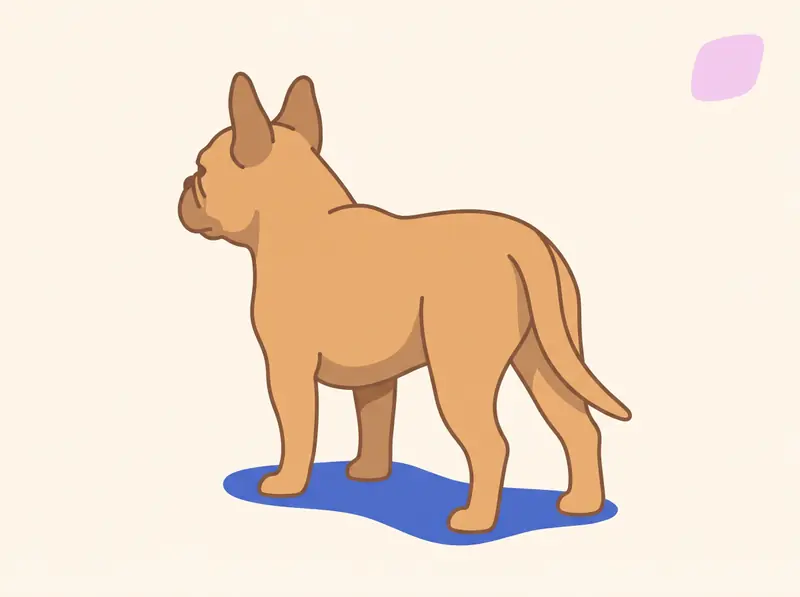
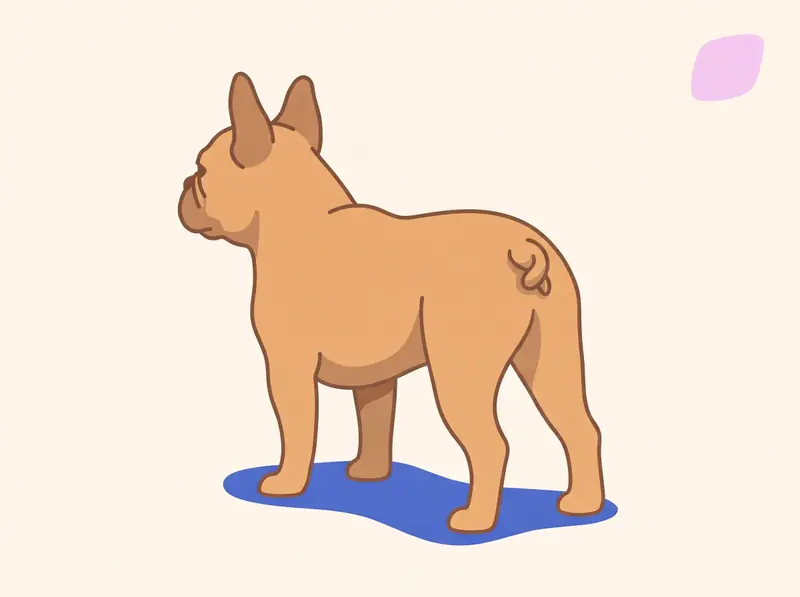
Screw tail
The short, twisted tail of bulldog breeds looks cute – but it is the visible end of a spinal malformation that often reaches into the back as well.
Learn more
Short legs
Dachshund, Corgi, Basset: the gene behind those short legs also makes the spinal discs age early – and yet not every Dachshund is the product of extreme breeding (called Qualzucht in German law).
Learn more
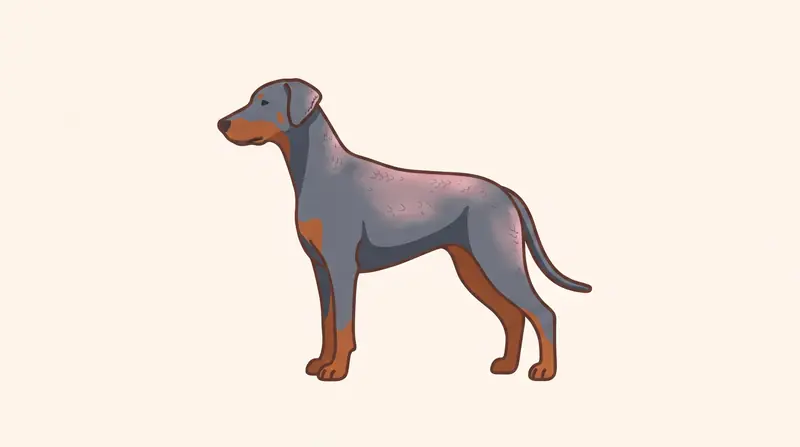
Colour dilution
Blue, grey and lilac dogs look striking – but the same gene variant that lightens their colour can, in some breeds, leave the coat permanently brittle.
Learn moreLooking for a dog without this burden?
Many wonderful dogs are waiting in shelters – and many breeds come without extreme-breeding traits.