How breeders make breeds healthier
Health tests, healthier standards, new genes from other breeds: what breed clubs, kennel clubs and courts are doing about extreme breeding – what it has achieved so far and where the limits are.
In short
Responsible breeders work along three routes: they choose parent dogs by health test results, they steer breed standards and shows towards healthy conformation, and where the gene pool has become too small they bring in new genes from other breeds on purpose. All three routes are slow, and none replaces testing the individual dog.
What healthier breeding works towards
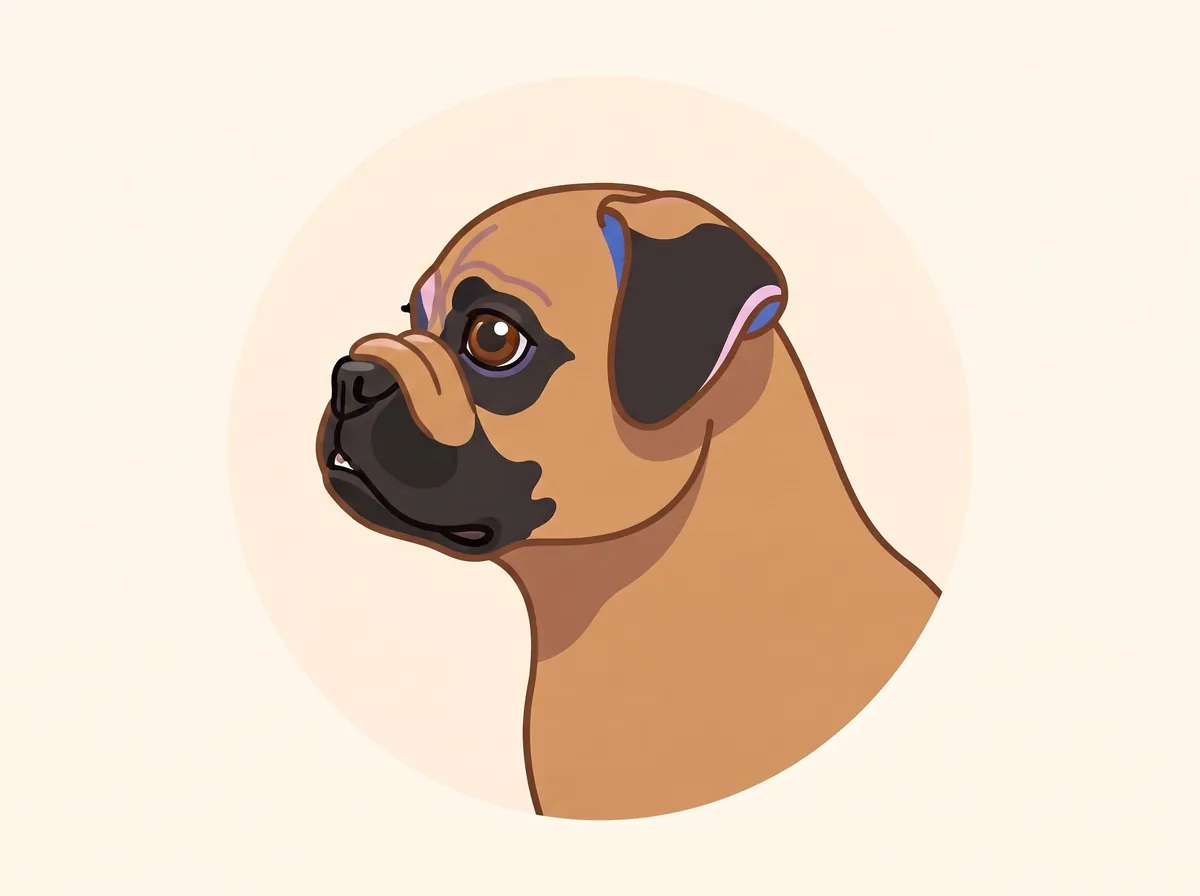
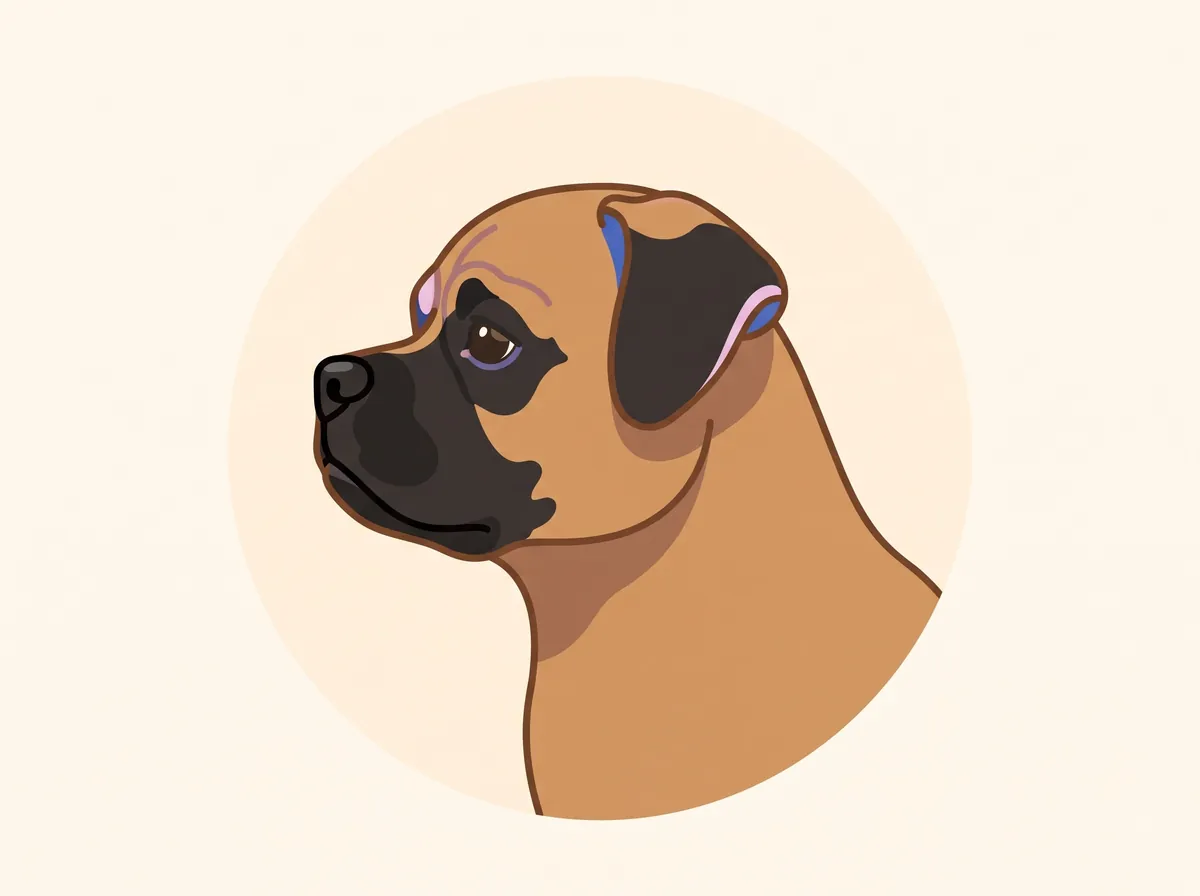
What breathing tests and outcrosses work towards: a longer muzzle and open nostrils. The illustration shows a goal – not a specific dog and not a specific breeding project.
The illustrations are AI-generated and editorially reviewed. They do not show a real dog; they make the difference visible.
Three routes to healthier dogs
Breeding can intensify extreme-breeding traits – and it can also tone them down again. There are essentially three routes, and they complement each other.
None of them works quickly. Tests only help when many breeders take part; with outcrosses it takes several generations to know whether the gain lasts. And for the individual dog, what counts in the end is always the result – not the breed and not the project it comes from.
- 1Selection within the breed: only dogs with good test results are mated, for example in breathing, hearing or heart tests.
- 2Healthier breeding goals: breed standards, judges and shows reward healthy conformation instead of exaggeration.
- 3New genes from outside: where the gene pool is too small or a problem sits in almost every dog of a breed, clubs deliberately cross in another breed.
Selection within a breed: tests that make a difference
The biggest lever is to mate only dogs whose health has been measured. This demonstrably works – but slowly, and only where the test matches the breed's main problem and many breeders use it.
Breathing: for short-nosed breeds, the Respiratory Function Grading (RFG) scheme of the University of Cambridge and the UK Kennel Club is the standard test. A trained vet listens to the breathing at rest, has the dog walk briskly for three minutes and listens again. The result is a grade from 0 (no signs) to 3 (severely affected); dogs are tested from twelve months and again about every two years. An analysis of 4,301 grades shows that the breathing grade is moderately heritable – more so in French Bulldogs (0.45) than in Pugs (0.28) and Bulldogs (0.21). The authors conclude that selective breeding can improve breathing within a breed; the data come from voluntary testing, though (Ilska et al. 2026).
According to the German kennel club VDH, its breed clubs for the Pug, French Bulldog and English Bulldog have used exercise and breathing tests for years, increasingly the treadmill fitness test of the Hanover veterinary school and the Cambridge RFG. The German Pug club (Club für den Mops) is a well-documented example: it only admits dogs to breeding with RFG grade 0 or 1, spinal X-rays graded 0 to 1, no patellar luxation, a clear DNA test for Pug encephalitis (NME), an eye examination and no doubled ancestors in the pedigree.
Hearing: deafness linked to white coats cannot be detected by DNA test, but it can be measured – with the BAER hearing test, from about five weeks of age. It also finds deafness in one ear, which owners often miss. In the UK almost 9,000 Dalmatian puppies were tested between 1992 and 2019; the share of deaf puppies fell from about 23.5% (1993 to 1995) to 13.7% (2015 to 2018). The authors attribute this to selection using the test results. To be honest about it: about one in seven tested puppies is still affected, and by 2018 only around 30% of breeders took part (Lewis et al. 2020).
Heart and nerves: for the Cavalier King Charles Spaniel, Denmark introduced a mandatory breeding scheme with heart examinations. Dogs from the scheme had a 73% lower risk of a heart murmur in 2010/11 than in 2002/03 (Birkegård et al. 2016) – the strongest published evidence that a breeding scheme lowers a disease in such a breed. An evaluation of the Swedish programme, by contrast, found no improvement over a short period. For Chiari-like malformation and syringomyelia, the UK has an MRI scheme in which two scrutineers grade the scans and repeat scans are recommended.
Merle: responsible breeders never mate two merle dogs together, because double merles have a high risk of deafness and eye malformations. Because a cryptic merle can look solid-coloured, both parents are DNA-tested, including the length of the merle allele. The UK Royal Kennel Club does not register puppies from merle-to-merle matings.
Short legs: the CDDY DNA test only helps in breeds where not every dog carries the variant, such as the Shih Tzu. In Dachshunds, strict selection against the gene would exclude almost every dog and shrink the gene pool further. There, X-raying the discs is considered the better tool: the Danish Dachshund club has X-rayed breeding dogs since 2003 and only admits dogs with fewer than five calcified discs to breeding (Bruun et al. 2020).
| Problem | Matching test | What the evidence shows |
|---|---|---|
| Breathing problems from a short nose | RFG breathing test, from 12 months | Breathing grade is moderately heritable – selection can help |
| Deafness linked to white coats | BAER hearing test, from about 5 weeks | UK Dalmatians: deafness fell from about 23.5% to 13.7% |
| Double merle | Merle DNA test of both parents incl. allele length | Never mate merle to merle |
| Disc disease in Dachshunds | Disc X-rays (24–48 months) | Danish Dachshund club: breeding only with fewer than five calcifications |
| Heart valve disease in Cavaliers | Heart examination in a breeding scheme | Denmark: 73% lower risk of a heart murmur |
New genes from outside: outcross projects
When a problem sits in almost every dog of a breed, selection within the breed can hardly remove it any more. Some clubs then deliberately cross in another breed and breed the offspring back into the breed over several generations. This is called an outcross; breeding the offspring back is a backcross.
Dalmatians: the best-known example. In Dalmatians a single recessive gene variant (SLC2A9) causes high uric acid in the urine, which favours urinary stones. In 1973 Dr Robert Schaible mated a Pointer to a Dalmatian and backcrossed the offspring to Dalmatians over five generations and seven years. The UK Kennel Club has accepted the resulting low-uric-acid (LUA) Dalmatians for registration under conditions since 2010, the American Kennel Club since 2011. It worked because a single gene with a DNA test is behind the problem. A short muzzle, by contrast, depends on many genes – that success does not simply transfer.
Continental Bulldog: the breed was developed in Switzerland from the English Bulldog and the Olde English Bulldogge. The FCI recognised it provisionally on 30 March 2022, with a duty to keep health statistics. Its standard calls for a muzzle of about one third of the head length, wide-open nostrils and silent breathing even at a fast trot; breathing noises are a disqualifying fault. We found no independent studies on breathing or caesarean rates in this breed – and a standard describes a goal, it does not replace testing the individual dog.
Retro Pugs and Pug crosses: the Retromops (Retro Pug) was developed in Germany from the 2000s. Pugs were crossed with other breeds, mostly Jack Russell or Parson Russell Terriers, and also Beagles, Miniature Pinschers, Shiba Inus and Danish-Swedish Farmdogs, to lengthen the muzzle. The Retro Pug is not an FCI-recognised breed, and the name is not protected – dogs sold under it can differ a lot.
The best study of Pug crosses so far comes from the UK (Youens et al. 2026): 150 dogs, about 50 each of Pugs, Pug x Jack Russell Terrier crosses and Pug x Beagle crosses. None of the Pugs reached breathing grade 0, and 53% had grade 2 or 3. All of the Jack Russell crosses had grade 0, and all but one of the Beagle crosses. Clearly narrowed nostrils were found in 22% of the Pugs and in none of the crosses; eye problems (owner-reported) and inflamed nasal folds were also far less common in the crosses. The authors name the limits themselves: most crosses were first generation, part of the data is owner-reported, the study was UK-only, and the breathing test has not been validated for crossbreeds. Whether the advantage lasts into later generations is open. An earlier study of seven Retro Pugs, all of which passed a breathing test, is too small to generalise from.
Finland: the Finnish Kennel Club has approved crossbreeding projects since 1997, under fixed rules. A breed club has to propose them, participation is voluntary, and over four years at most 2 to 5% of a breed's registered dogs may come from crosses. The first generation goes into a separate register outside the FCI; later generations can move to the regular register. Projects for the Cavalier and the French Bulldog were added in June 2023, and one for the Pug in 2026, crossing Pugs with Retro Pugs; offspring up to the fourth generation must pass health examinations. For the French Bulldog, according to the Finnish breed club's project page, litters so far were with the Papillon, the Danish-Swedish Farmdog and the Mittelspitz. A combination with the Jack Russell Terrier has been approved since November 2024, but no litter has been reported.
Germany: in November 2024 the VDH approved an outcross project of the French Bulldog club FBVD with the Papillon as partner breed; the VDH's scientific advisory board is involved. All dogs taking part are health-examined, including for inherited eye disease, and the offspring are recorded in a studbook appendix. The club gives "fresh genes" as its reason, including the DVL2 variant, which is largely fixed in the breed and linked to screw tails and hemivertebrae. No results have been published yet.
Norway: here the Norwegian Kennel Club (NKK) itself runs a crossbreeding project for the Cavalier, in response to a court ruling (see below). The first five litters with 26 puppies were born between June and October 2024 – Cavalier mothers with Kleinspitz or Tibetan Spaniel fathers. The parents need MRI and heart examinations, among other things; the offspring go into a separate supplementary register.
What an outcross does not guarantee
An outcross can point in the right direction, but it is not a seal of quality. A mixed-breed dog is not automatically healthy – and neither is a dog from a crossbreeding project.
The flip side: a gene variant that almost every dog in a breed carries, like DVL2 in the French Bulldog, is very hard to get rid of without dogs that do not carry it. That would take generations and many examined dogs.
The main limits
- A first-generation cross carries one copy of each gene from each parent. Risk genes that act in a single copy remain: one copy of the FGF4 retrogene on chromosome 12 already raises the risk of disc disease.
- A short muzzle depends on many genes. How much better a dog breathes depends on the partner breed, and from the second generation on the traits are reshuffled.
- Crossing two short-nosed breeds does not help: a Frenchton from a French Bulldog and a Boston Terrier does not solve the breathing problem.
- A longer nose still needs a breathing test. Within a breed, muzzle length predicts little; how open the nostrils are says much more.
- Partner breeds bring their own hereditary diseases. The projects described here therefore provide for health examinations.
- For later generations almost no project has published data. Even the Norwegian Kennel Club reads the Supreme Court ruling as saying that a crossbreeding project is not necessarily in conflict with it if it shows improved health within a reasonable time.
What courts and rules change
Pressure from outside speeds up what would otherwise take decades in breeding. The clearest example is Norway – this is Norwegian law, not German law.
In January 2022 the Oslo district court ruled that breeding English Bulldogs and Cavalier King Charles Spaniels breaches the Norwegian Animal Welfare Act. The Court of Appeal reversed this for the Bulldog in November 2022 and upheld it for the Cavalier. On 10 October 2023 the Supreme Court ruled with final effect: breeding Cavaliers as currently practised is unlawful – even though heart and MRI schemes exist for the breed. English Bulldogs may still be bred, but only from dogs with breathing grade 0 or 1 and under the breed club's breeding programme.
The Netherlands and Denmark rely on rules rather than crosses. In the Netherlands, since August 2023, short-nosed dogs may only be bred if they meet six official criteria; a muzzle shorter than 0.3 of the skull length rules out breeding. In Denmark, a BOAS breathing test has been mandatory since July 2025 before breeding English and French Bulldogs and Pugs.
Dog shows have changed too. In its Breed Watch list, the UK Kennel Club places breeds with visible conditions that may cause health or welfare concerns in Category 3. At general and group championship shows and at Crufts, the best of breed in these breeds must pass a veterinary check before competing further or having a Champion title confirmed. The French Bulldog and the Basset Hound were added on 1 January 2025; the Bulldog and the Pug were already listed. Since October 2024, judges at championship shows also complete a health-monitoring form for every breed.
In Germany, dogs with inherited extreme-breeding traits may not be exhibited since 2022 (Section 10 of the Dog Welfare Ordinance). Section 11b of the Animal Welfare Act prohibits breeding where the offspring can be expected to suffer for inherited reasons – this is assessed for each animal and its expected offspring. A crossbreeding project does not change that individual assessment.
Genetic diversity: inbreeding coefficient, popular sires, studbooks
Breeding away disease needs enough healthy dogs to choose from. Many breeds, however, have a small gene pool – partly because a few popular sires had a great many offspring over generations.
An analysis of UK pedigrees at Imperial College found that 20,000 Boxers were as genetically diverse as a population of about 70 animals, and 12,000 Rough Collies as one of about 50. Popular sires spread recessive defects quickly; the researchers recommended using popular dogs less often and mating across lines (Calboli et al. 2008).
In short-nosed breeds the situation is especially tight. One DNA study of 102 English Bulldogs suggests very little genetic variation remains: in 77% of the dogs, inbreeding was higher than expected in the offspring of two full siblings. The authors doubt that selection within the breed alone is enough. It is a single, small study (Pedersen et al. 2016).
The coefficient of inbreeding (COI) is the probability that both copies of a gene come from the same ancestor. The UK Kennel Club publishes breed averages and a calculator for planned matings. But the value depends on how far back the recorded pedigree goes, and it can understate the inbreeding that DNA studies show. A low COI on paper does not replace health tests.
Open or semi-open studbooks bring in new genes without giving up the breed. In Finland, crosses first go into a separate register; Norway keeps a supplementary register for this. With "Projekt Mops 2.0", the German Pug club in the VDH has opened its studbook to Pugs from other associations – not to other breeds – to gain genetic diversity, a longer muzzle, wide-open nostrils and a sportier build. After three generations the offspring can be entered directly into the studbook.
What you can take from this
You do not need a genetics degree to ask the right questions. What matters is what was actually measured on the individual dog and its parents.
What to look for
- Ask which health tests the breed club or vets recommend for this breed, and ask to see the original results for both parents – with the test date and examiner.
- Tests only help if they match the breed's main problem: a breathing test for short noses, a hearing test for white-patterned breeds, a merle DNA test for merle breeds, heart and MRI examinations where they exist.
- Look at both parents in person: quiet breathing at rest and after a short walk, clear eyes, legs in proportion to the back.
- Be wary of names that sound like a brand or promise "healthy", of "rare colours" and of mixes sold on their looks. A new name is not a test result.
- A longer nose, a cross or a famous label does not replace an examination. Ask what has actually been measured.
- Think about adoption too: mixed breeds and shelter dogs – or a breed without exaggerated features.
This page explains; it does not replace a veterinary examination. Only a vet can judge whether an individual dog is affected.
Frequently asked questions
Do crosses make breeds healthier?
Sometimes, but it is not proven yet. A 2026 UK study found much better breathing in Pug crosses with Jack Russell Terriers or Beagles than in Pugs. However, most dogs were first generation, the study was partly owner-reported and UK-only. How later generations do is unknown. A breathing test on the individual dog is still needed.
Is a Retro Pug healthier than a Pug?
There is no blanket answer. "Retro Pug" is neither an FCI-recognised breed nor a protected name; how long the muzzle is depends on the individual dog. One UK study of mostly first-generation Pug crosses found clearly better breathing; later generations are largely unstudied. What counts is a breathing test on the individual dog, not the name.
Are there French Bulldog x Jack Russell Terrier crosses?
Only as an approved breeding project, with no known litter so far. The Finnish Kennel Club listed the Jack Russell Terrier as a possible partner in 2023; the combination was approved in November 2024, and no litter has been reported. Germany has a VDH project using the Papillon, approved in 2024. Neither has published results yet.
What is the Continental Bulldog?
A Swiss breed developed from the English Bulldog and the Olde English Bulldogge. The FCI recognised it provisionally on 30 March 2022. Its standard calls for a longer muzzle and silent breathing and disqualifies dogs with breathing noises. We know of no independent studies on its airway function; a standard is not a test.
What did Norway decide?
On 10 October 2023 the Norwegian Supreme Court ruled that breeding Cavalier King Charles Spaniels breaches Norway's Animal Welfare Act. English Bulldogs may still be bred, but only with breathing grade 0 or 1 and under the breed club's programme. The Norwegian Kennel Club then began a crossbreeding project for the Cavalier. This is Norwegian, not German, law.
Do health tests really help?
Yes, when many breeders use them. In the UK the share of deaf Dalmatian puppies fell from about 23.5 percent (1993 to 1995) to about 13.7 percent (2015 to 2018) after hearing tests. Denmark's heart scheme cut the risk of a heart murmur in Cavaliers by 73 percent. Progress is slow and depends on participation.
What should I look for when searching for a healthy dog?
Ask to see the original results for both parents, matched to the breed, such as breathing, hearing, heart or DNA tests. Look at the parents: quiet breathing, open nostrils, legs in proportion to the back. Be sceptical of "rare colours" and new brand names. A name is no substitute for a test result. Mixed breeds and shelter dogs are a good option too.
Sources
- Youens, O'Neill, Tivers, Belshaw, Neufuss & Packer (2026), Animal Welfare: Pugs compared with Pug crosses (Jack Russell Terrier, Beagle)
- Ilska, McDonnell & Ladlow (2026), PLOS One: heritability of RFG breathing grades in Bulldogs, French Bulldogs and Pugs
- Royal Kennel Club & University of Cambridge: Respiratory Function Grading Scheme
- VDH: outcross and Projekt Mops 2.0 – VDH initiatives for brachycephalic health (16 Apr 2025, German)
- Club für den Mops: Projekt Mops 2.0 (German)
- FBVD: French Bulldog x Papillon outcross project (German)
- Lewis T, Freeman J, De Risio L (2020): Decline in prevalence of congenital sensorineural deafness in Dalmatian dogs in the United Kingdom. J Vet Intern Med 34:1524–1531
- Birkegård et al. (2016), J Vet Intern Med: Danish breeding scheme and mitral valve disease in Cavalier King Charles Spaniels
- Lundin et al.: evaluation of the Swedish breeding programme for Cavalier King Charles Spaniels
- Royal Kennel Club: CM/SM screening scheme (MRI)
- Royal Kennel Club: What is merle?
- Bruun CS et al. (2020): Breeding schemes for intervertebral disc disease in dachshunds – disc calcification score vs. FGF4 genotyping. Canine Medicine and Genetics 7
- Brown EA et al. (2017): FGF4 retrogene on CFA12 is responsible for chondrodystrophy and intervertebral disc disease in dogs. PNAS 114
- Packer et al. (2015): Impact of Facial Conformation on Canine Health: Brachycephalic Obstructive Airway Syndrome. PLoS ONE
- Bannasch et al. (2008), PLoS Genetics: SLC2A9 as the cause of hyperuricosuria in dogs
- Tufts (2011): low-uric-acid Dalmatian backcross project (abstract)
- Dalmatian Club of America Foundation: LUA Dalmatians
- Our Dogs (2010): Kennel Club decision on registering LUA Dalmatians
- FCI Standard No. 369: Continental Bulldog
- FCI: Continental Bulldog – recognised on a provisional basis
- SKG: Continental Bulldog – provisional FCI recognition (German)
- Finnish Kennel Club: cross breeding (rules)
- Finnish Kennel Club (2023): crossbreeding projects for Cavaliers and French Bulldogs
- Finnish Kennel Club (2026): crossbreeding project Pugs x Retro Pugs
- Finnish French Bulldog club: project status (Finnish)
- NKK: timeline of the court case (Norwegian)
- Norwegian Supreme Court: HR-2023-1901-A (summary, Norwegian)
- NKK: Cavalier King Charles Spaniel crossbreeding project (Norwegian)
- NKK: the first litters in the crossbreeding project (Norwegian)
- NVWA: short-nosed dogs (Netherlands)
- Denmark: Executive Order no. 607 on keeping dogs (2025)
- Royal Kennel Club (2024): the Kennel Club updates Breed Watch for 2025
- Section 11b German Animal Welfare Act (TierSchG)
- Section 10 German Dog Welfare Ordinance (TierSchHuV)
- Imperial College London (2008): inbreeding in pedigree dogs (Calboli et al., Genetics)
- Pedersen, Pooch & Liu (2016), Canine Genetics and Epidemiology: genetic diversity of the English Bulldog
- Our Dogs (2011): Mate Select – the Kennel Club's inbreeding calculator
Last reviewed on September 30, 2026 by Sufyan Osamah · what that means: Editorial standards
The traits in detail
Flat face
A short muzzle looks endearing – but when the skull shrinks and the soft tissue inside it doesn't, the dog is left with too little room to breathe.
Learn more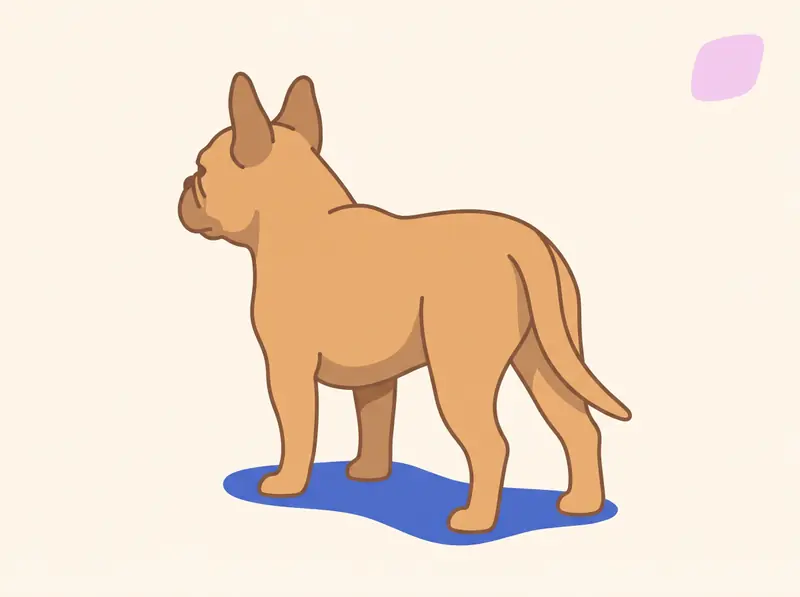
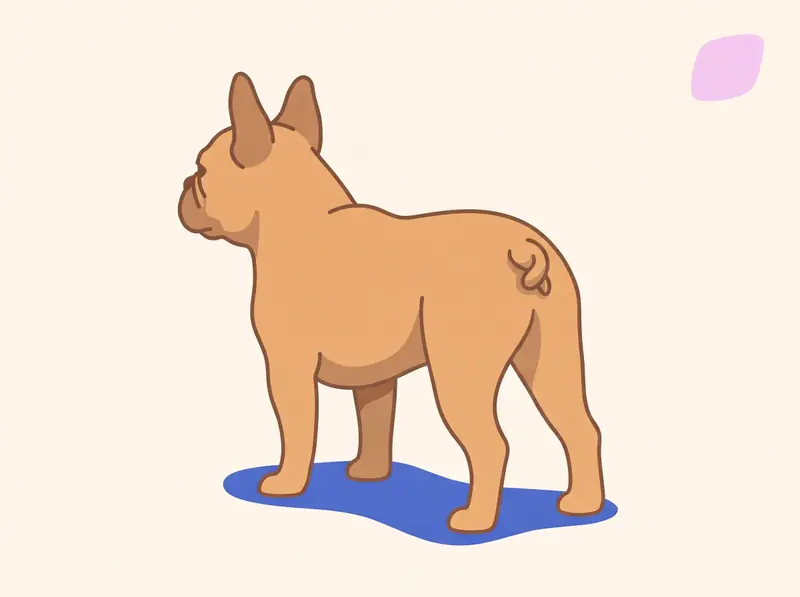
Screw tail
The short, twisted tail of bulldog breeds looks cute – but it is the visible end of a spinal malformation that often reaches into the back as well.
Learn more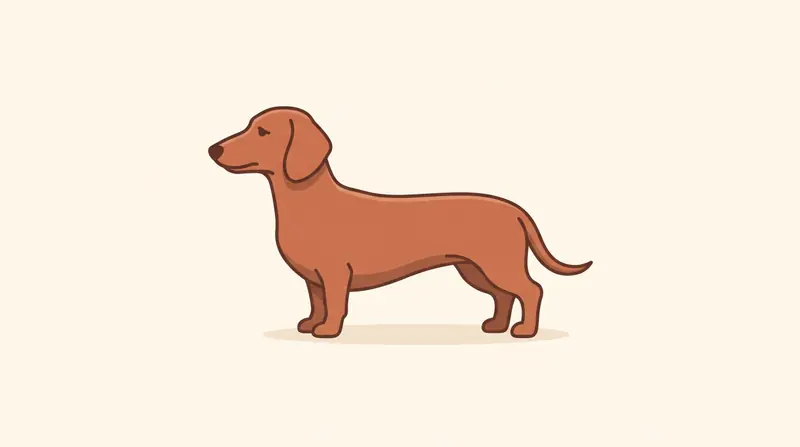
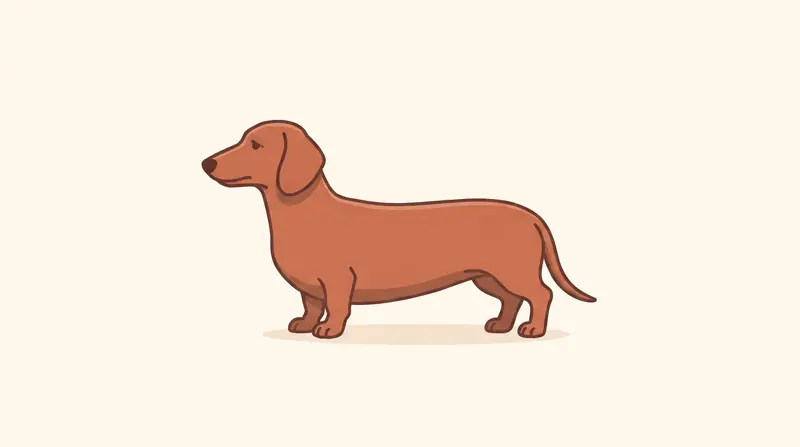
Short legs
Dachshund, Corgi, Basset: the gene behind those short legs also makes the spinal discs age early – and yet not every Dachshund is the product of extreme breeding (called Qualzucht in German law).
Learn more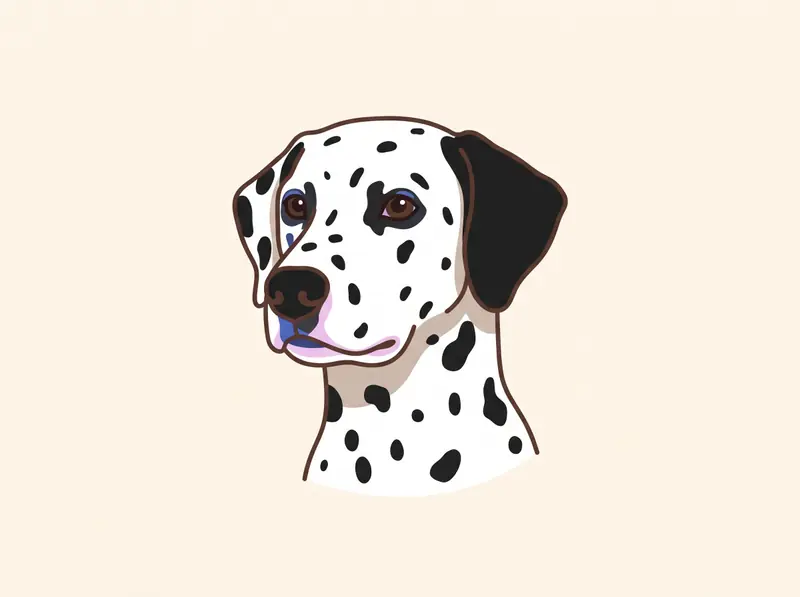
White & deafness
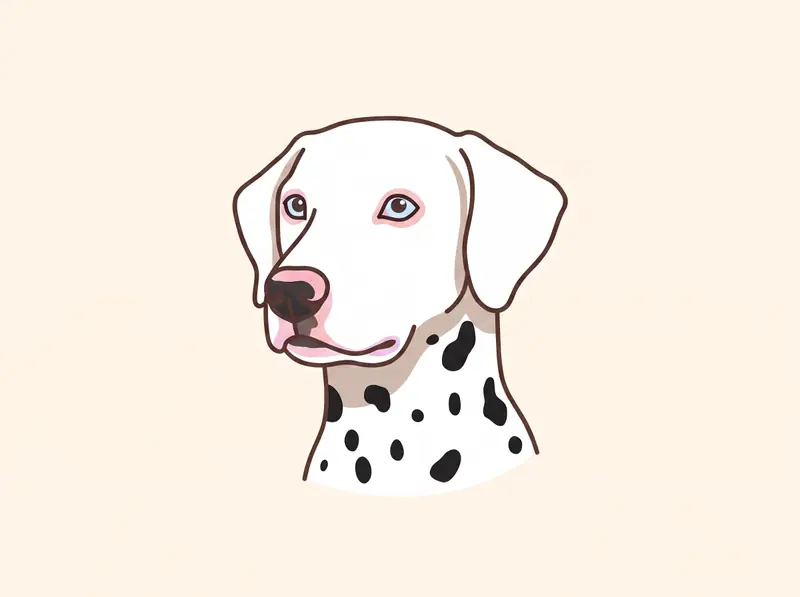
Not every white dog is at risk – but where pigment cells are missing from the head, they are often missing from the inner ear too, and a puppy can go deaf in its first weeks of life.
Learn more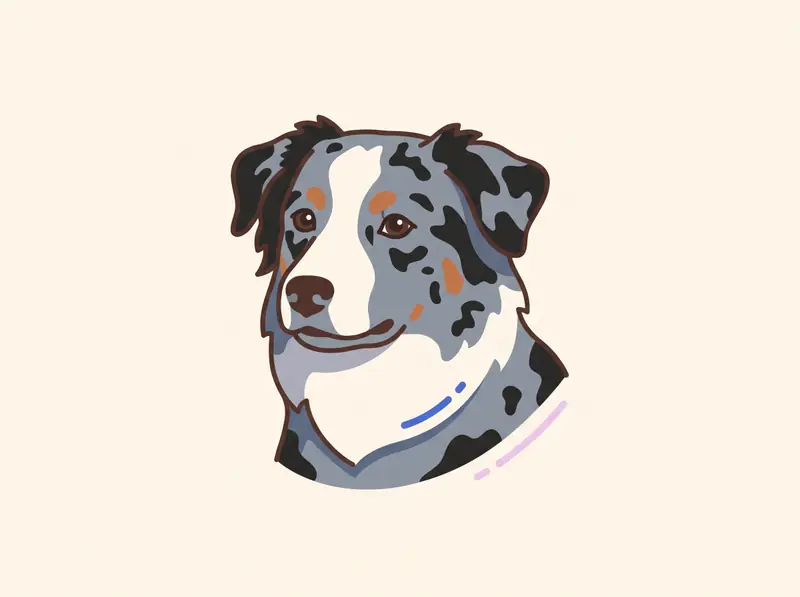
Merle & double merle
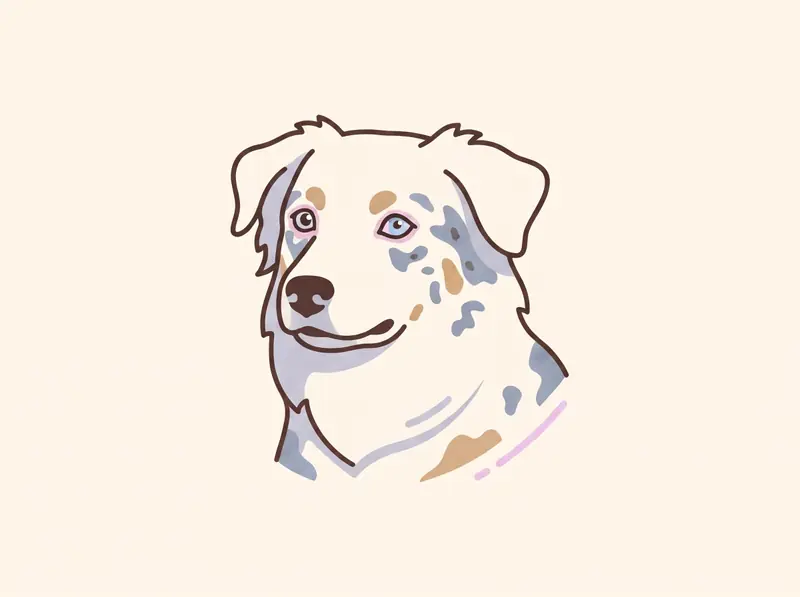
One merle parent gives the marbled coat many people love; two merle parents can produce puppies born deaf or with malformed eyes.
Learn more
Colour dilution
Blue, grey and lilac dogs look striking – but the same gene variant that lightens their colour can, in some breeds, leave the coat permanently brittle.
Learn moreLooking for a dog without this burden?
Many wonderful dogs are waiting in shelters – and many breeds come without extreme-breeding traits.