Prague RatterSame size
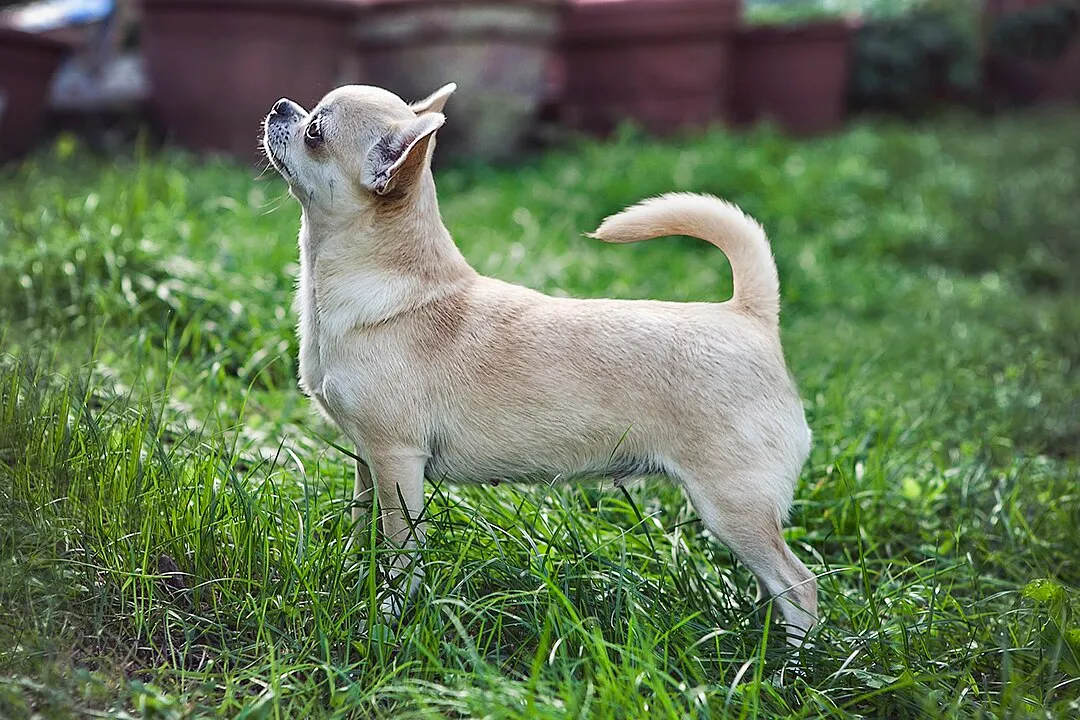
The Chihuahua is a courageous, extremely loyal companion dog—bred to accompany its human every step of the way, with the watchful self-confidence of a giant packed into this tiny body.
How the health grade is calculated
Sources for required breeding screenings. Verband Deutscher Kleinhundezüchter e.V.
Self-check
Answer 6 quick questions about your everyday life and see how well the Chihuahua fits you — including an honest cost estimate per month, per year, and across the dog's lifetime.


At a glance
The essentials — key facts, traits, and health priorities — before you dive deeper.
Lifespan
14–17 yrs
Shoulder height
18–23 cm
Weight
1–3 kg
Practical
Temperament
Daily life
What matters most
Especially with a Chihuahua, choosing the right breeder is the single most important decision you'll make. Serious breeders consistently test the parents for inherited conditions, prioritize healthy early socialization, and stay accountable long after handover. A cheap puppy without health screening tends to become the most expensive dog later on.
See HonestDog breeder standards →Colors & coat
The coat colors that occur in the Chihuahua — including which ones fall outside the breed standard and which carry genetic risk.
Eye colors
 Brown
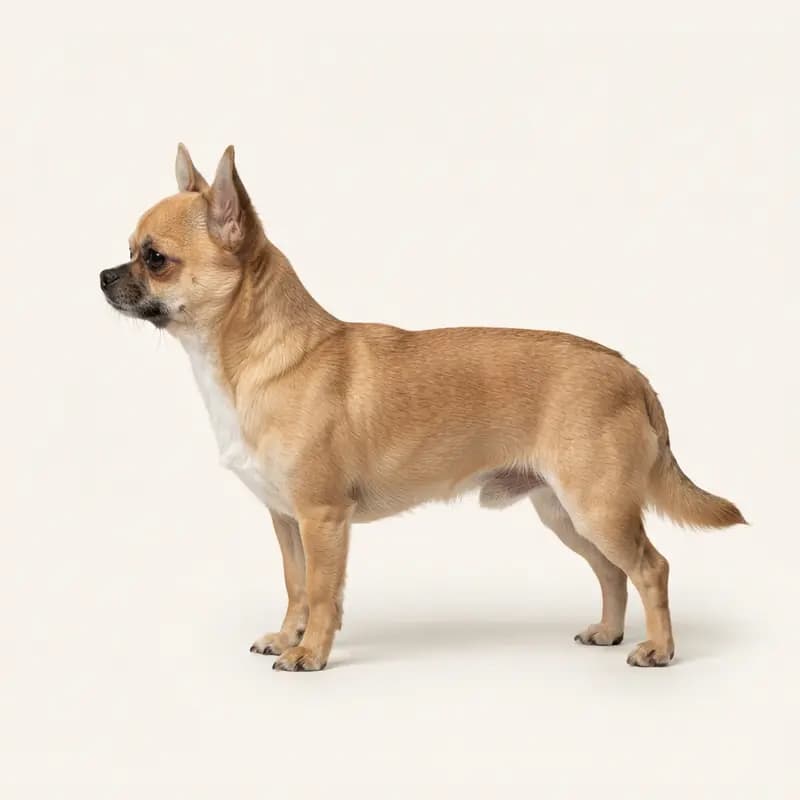
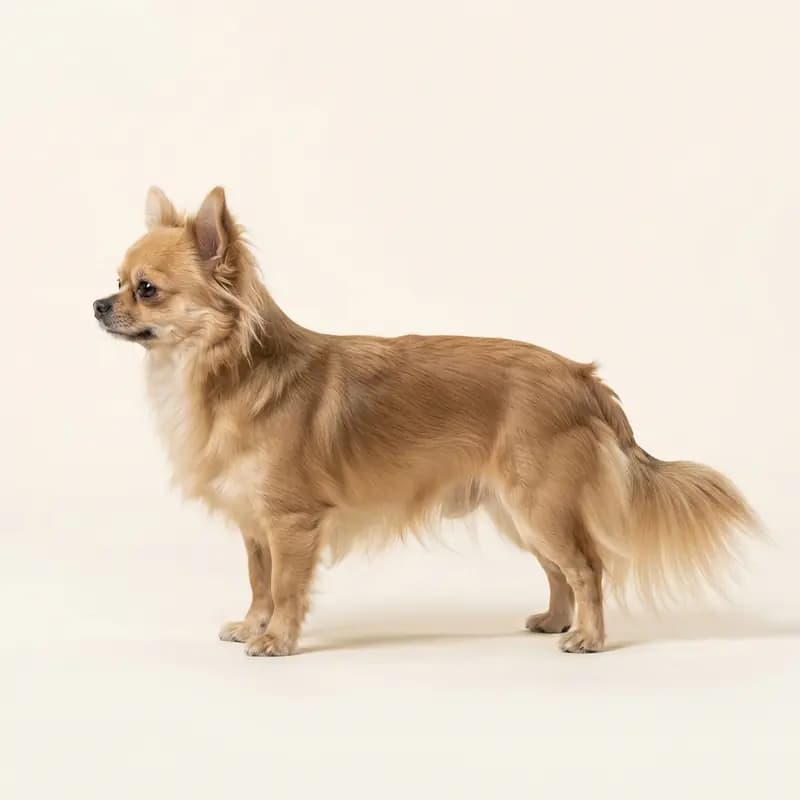
Coat type
 Illustrative image
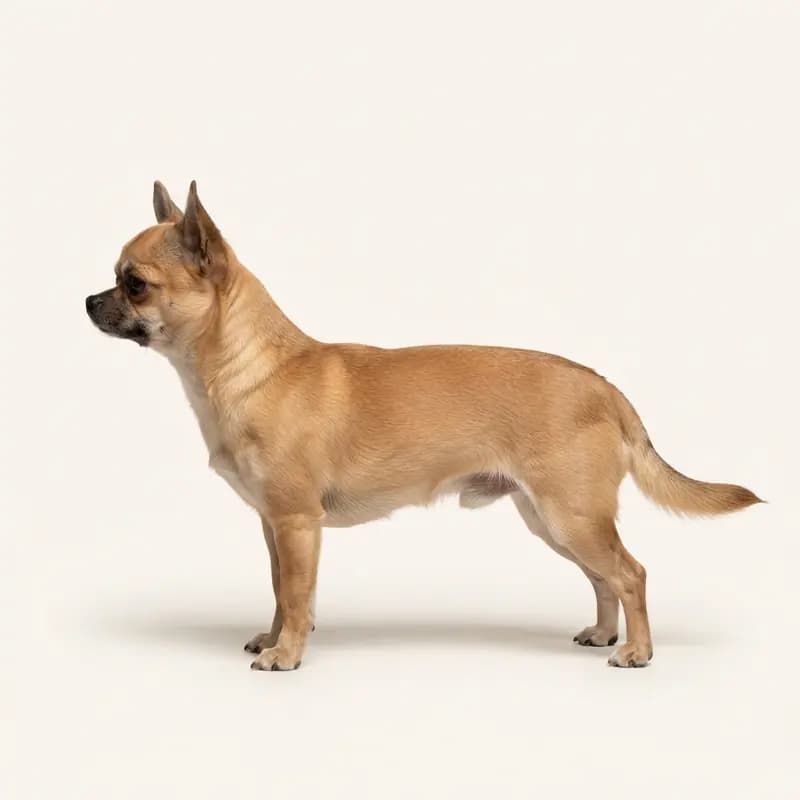
Short
 Illustrative image
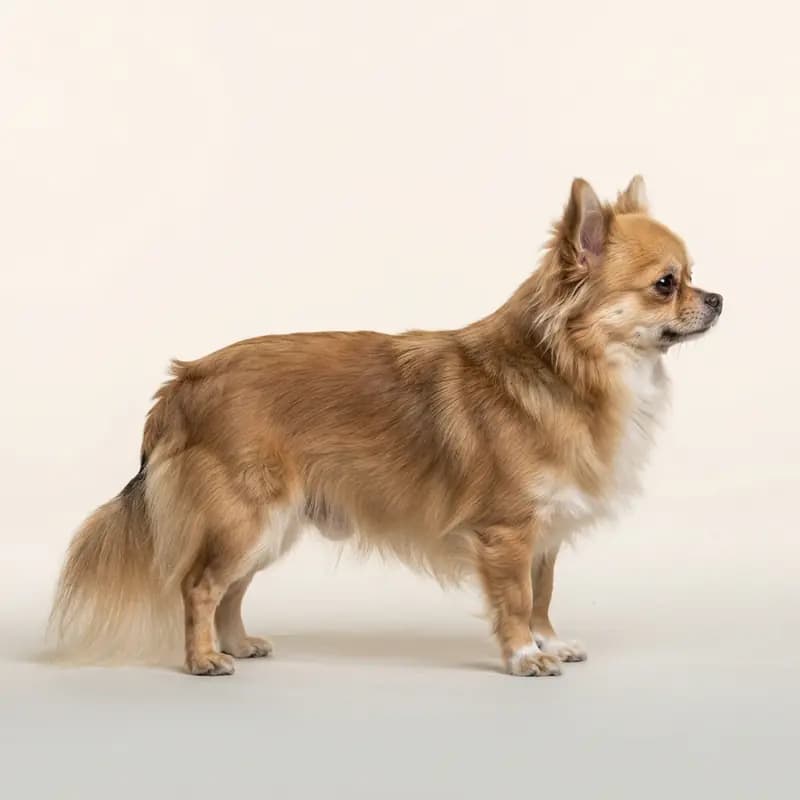
Long
 Illustrative image
Smooth
 Illustrative image
Double coat
The real vibes check
A Chihuahua doesn't know he is small—he faces the world with the heart of a lion and expects to be respected as such. If you raise him as a full-fledged dog on four paws rather than carrying him around like an accessory, you will have a fearless partner. However, if you treat him like a toy, you will inevitably end up with an insecure tyrant.
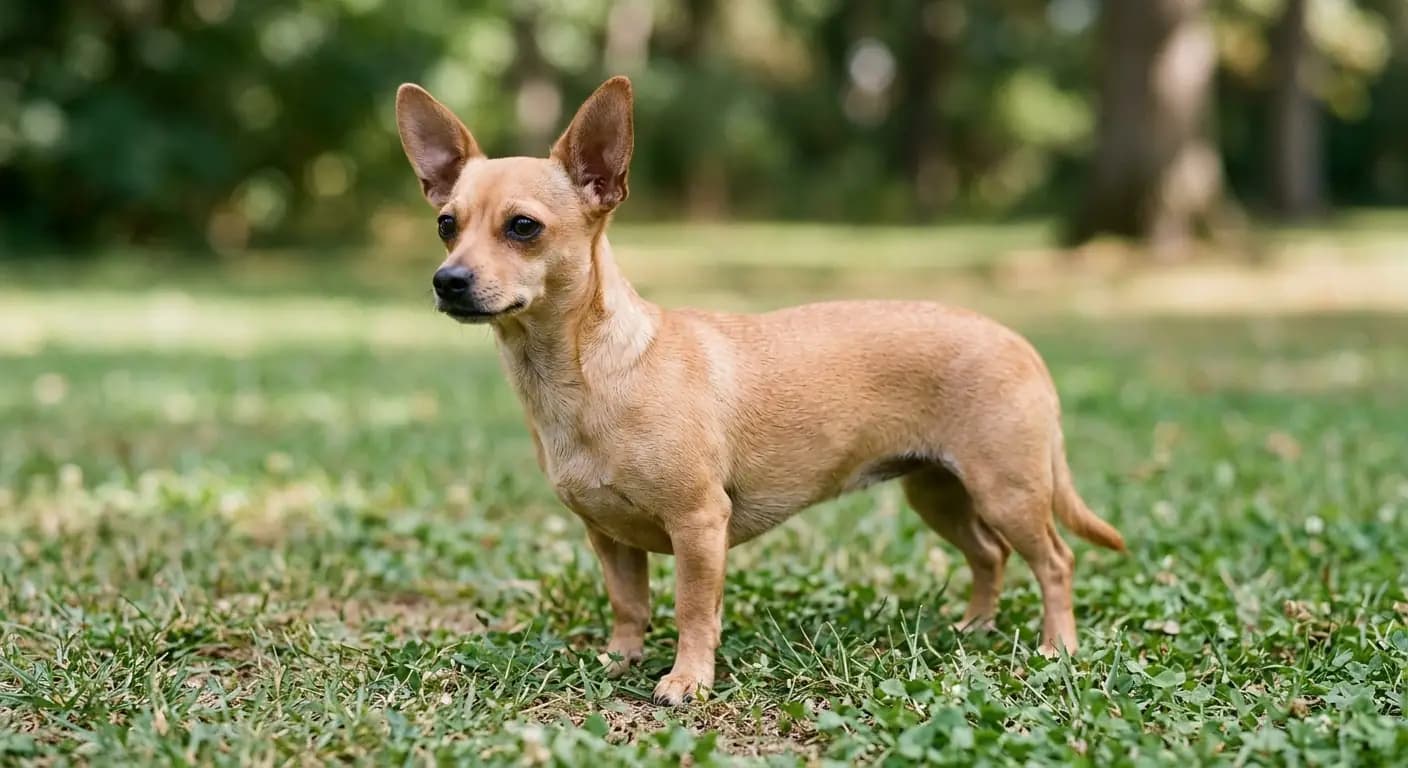
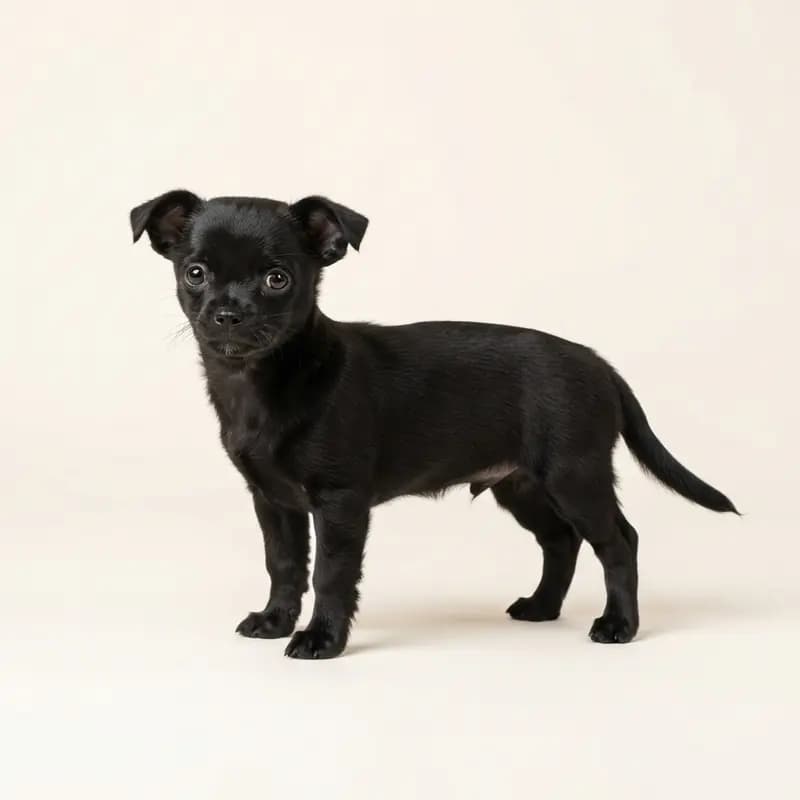
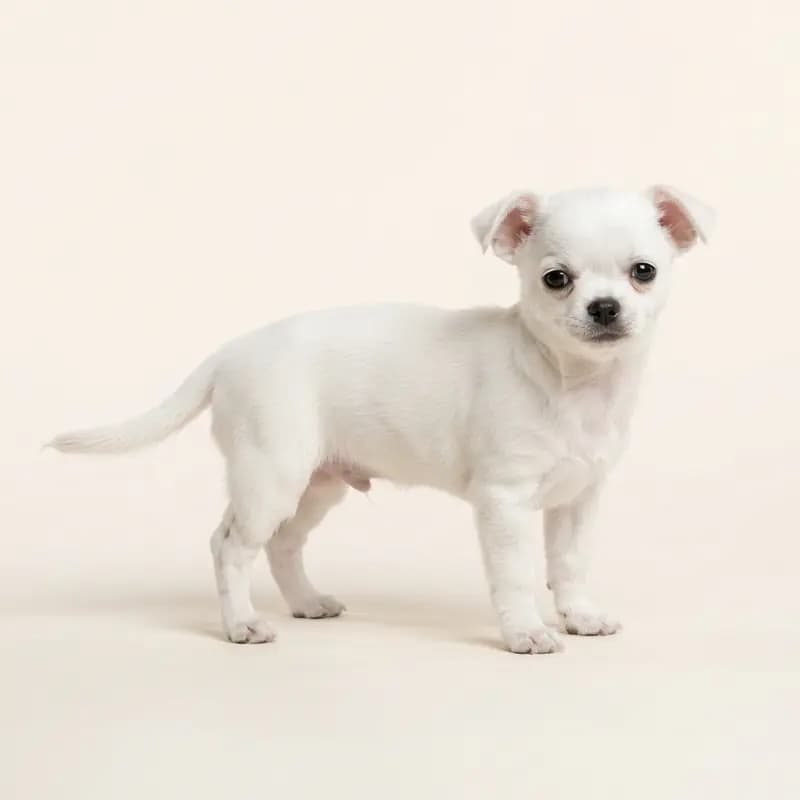
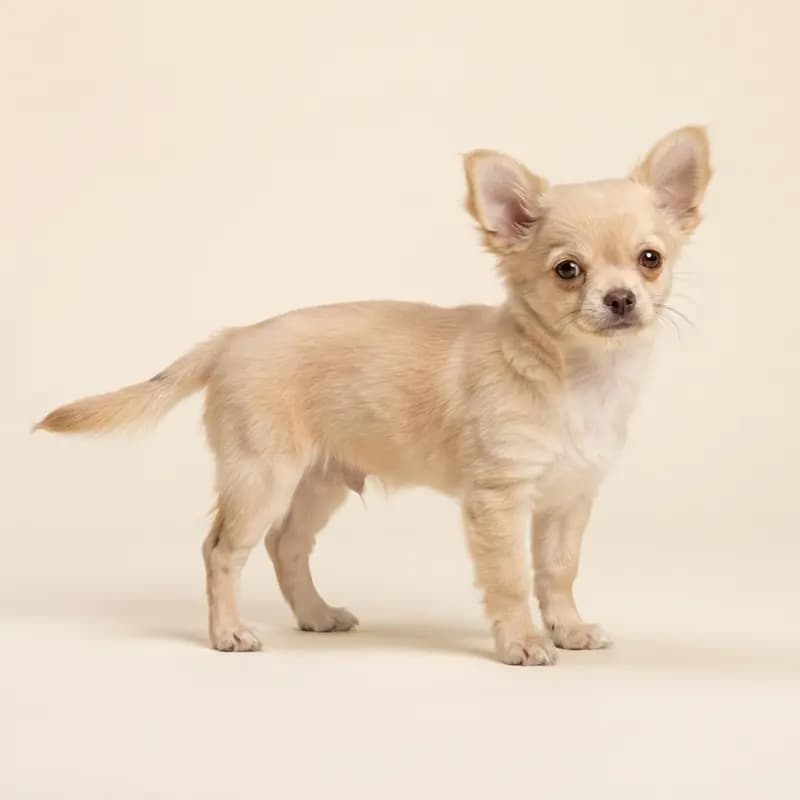
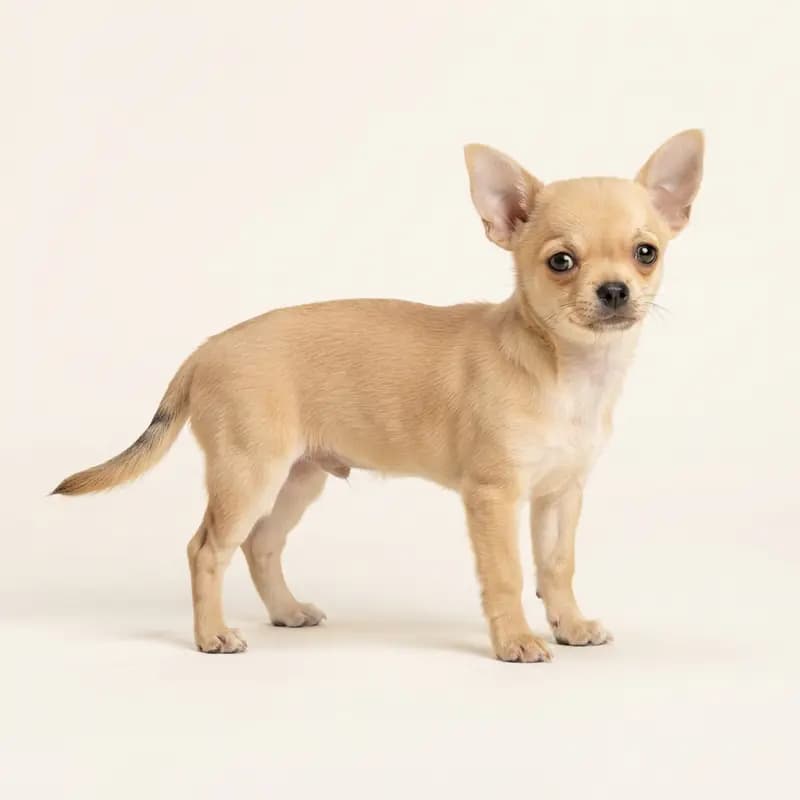
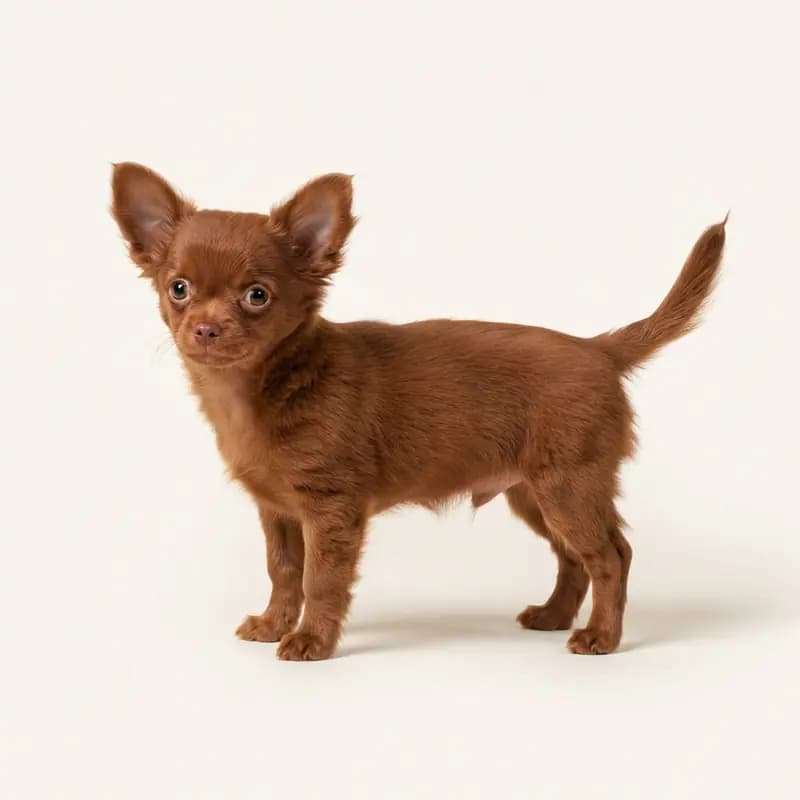
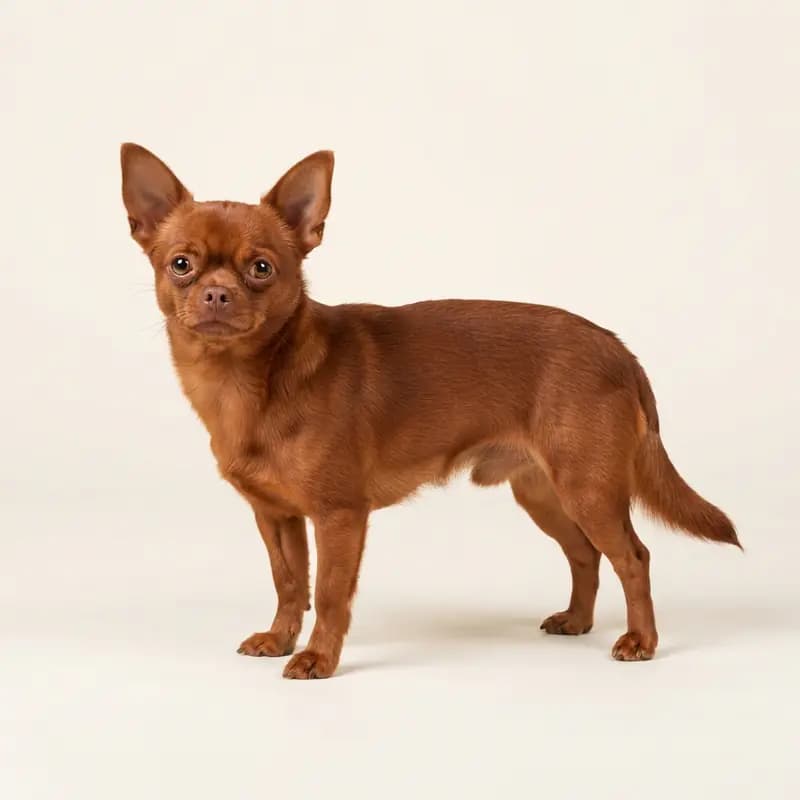
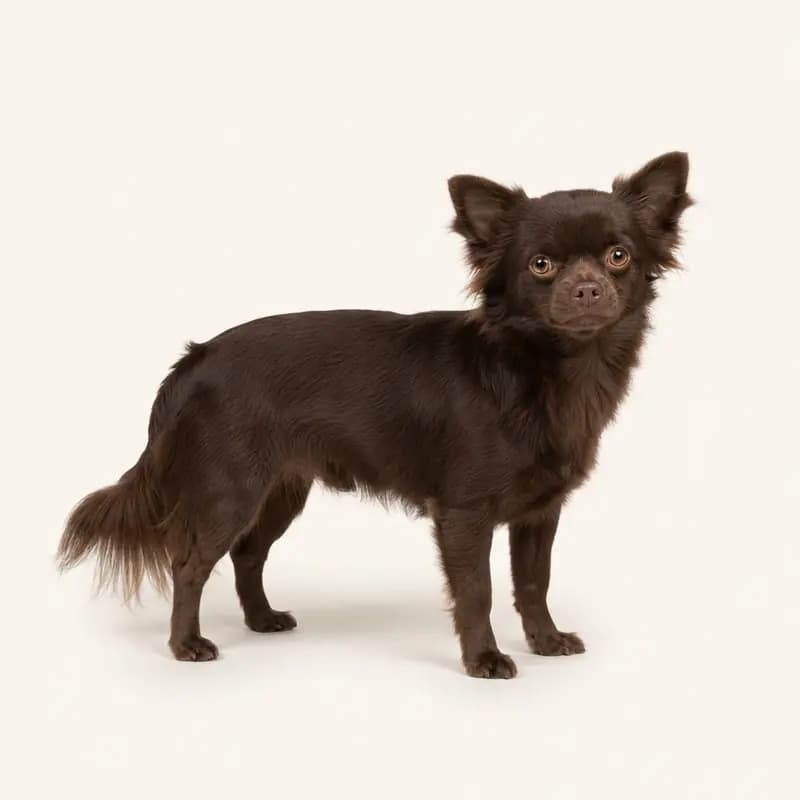
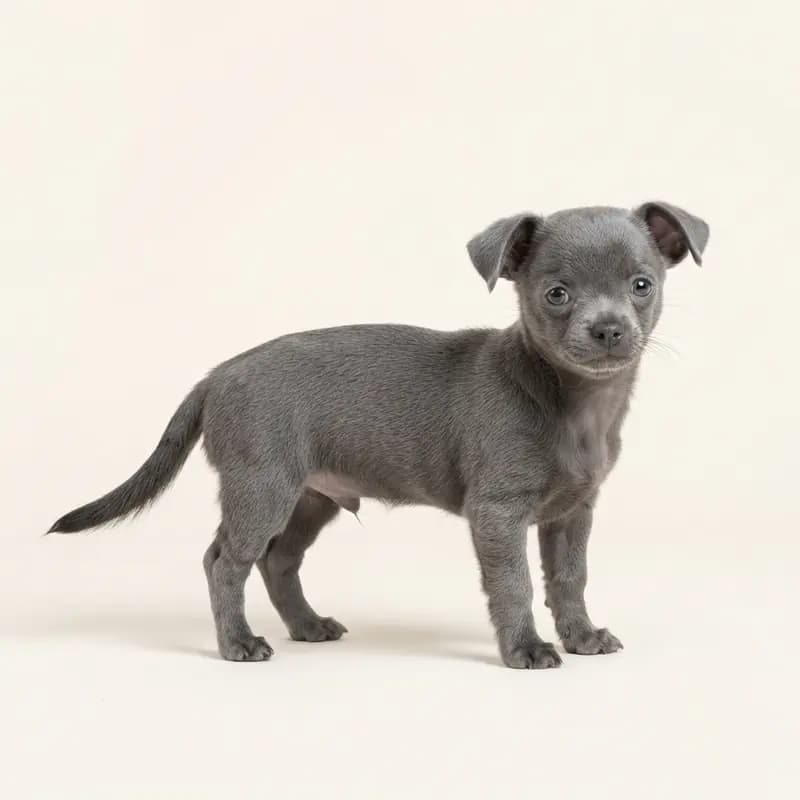
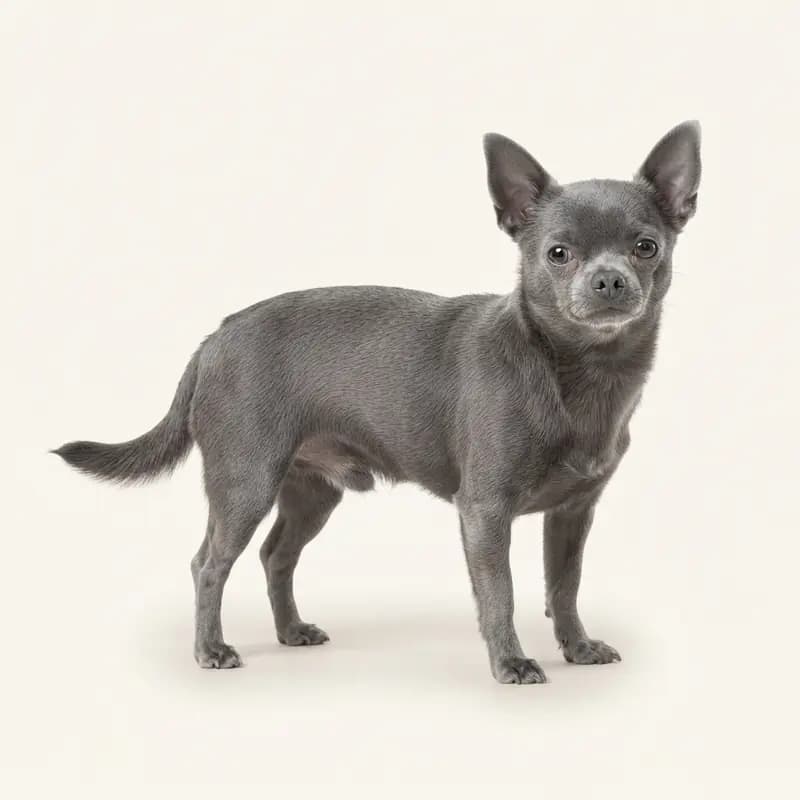
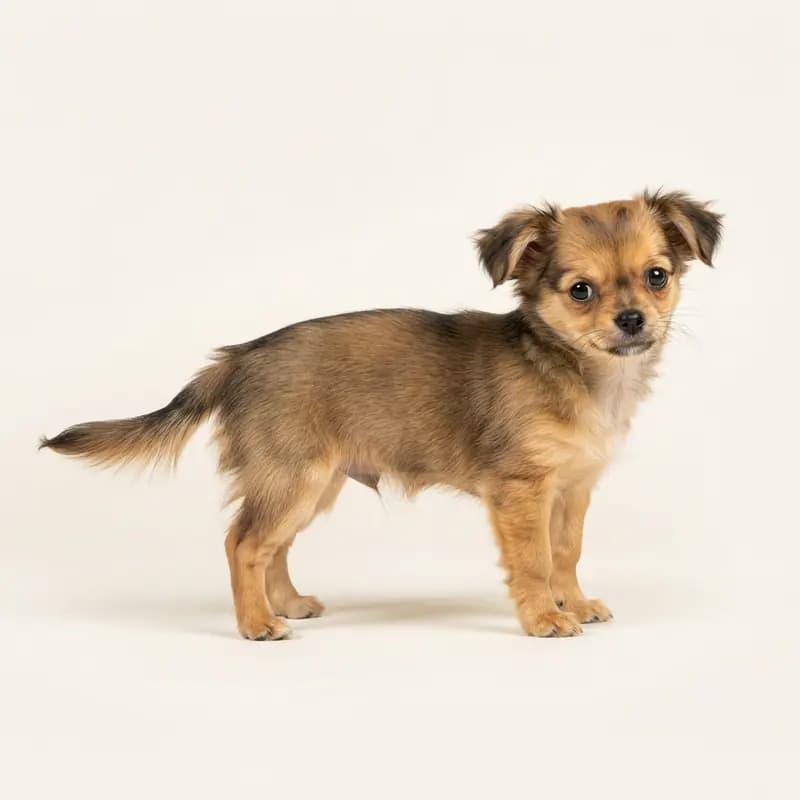
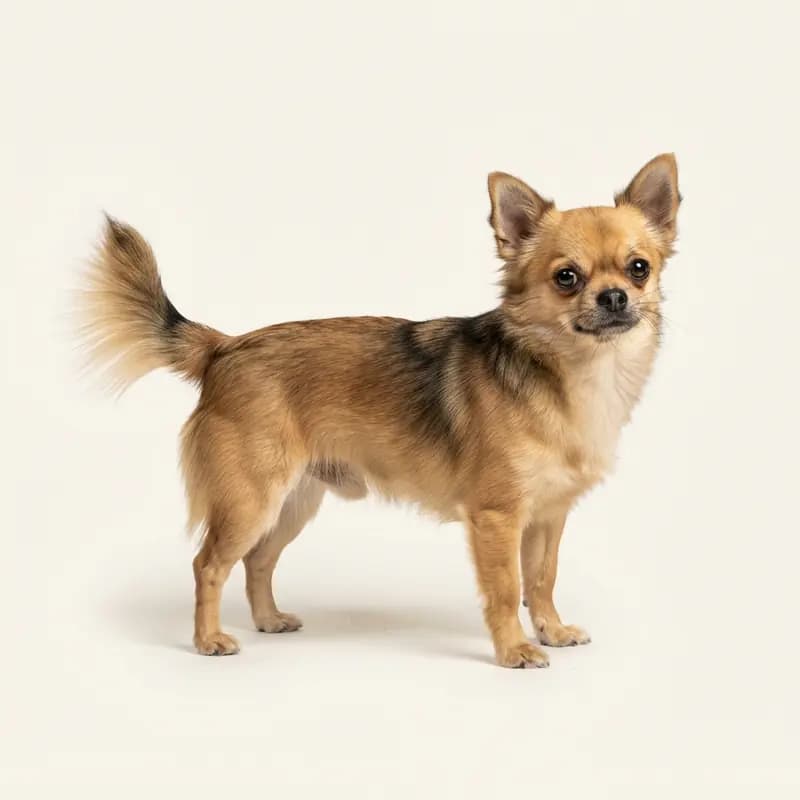
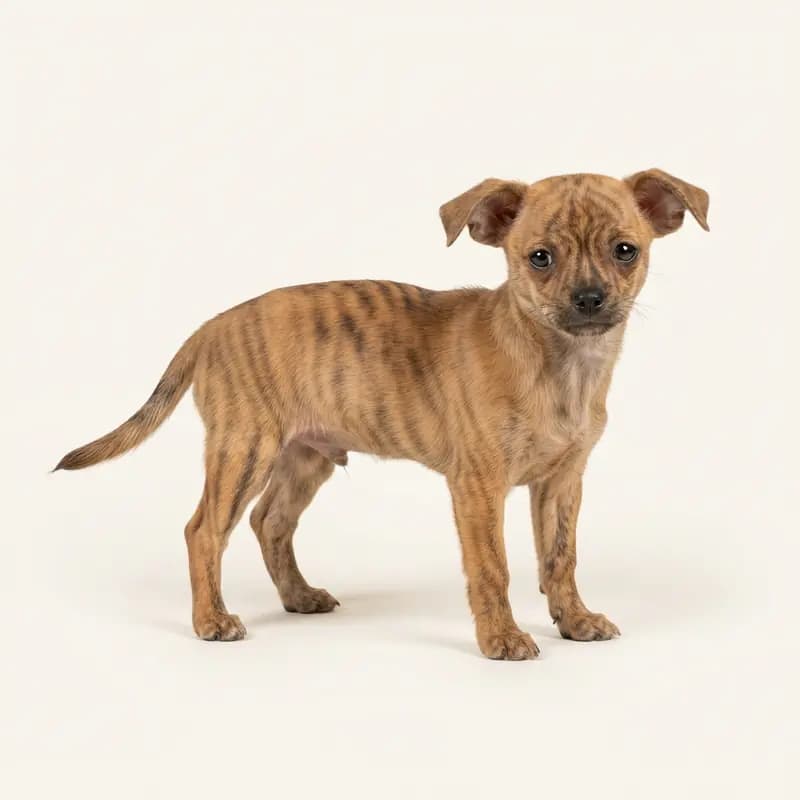
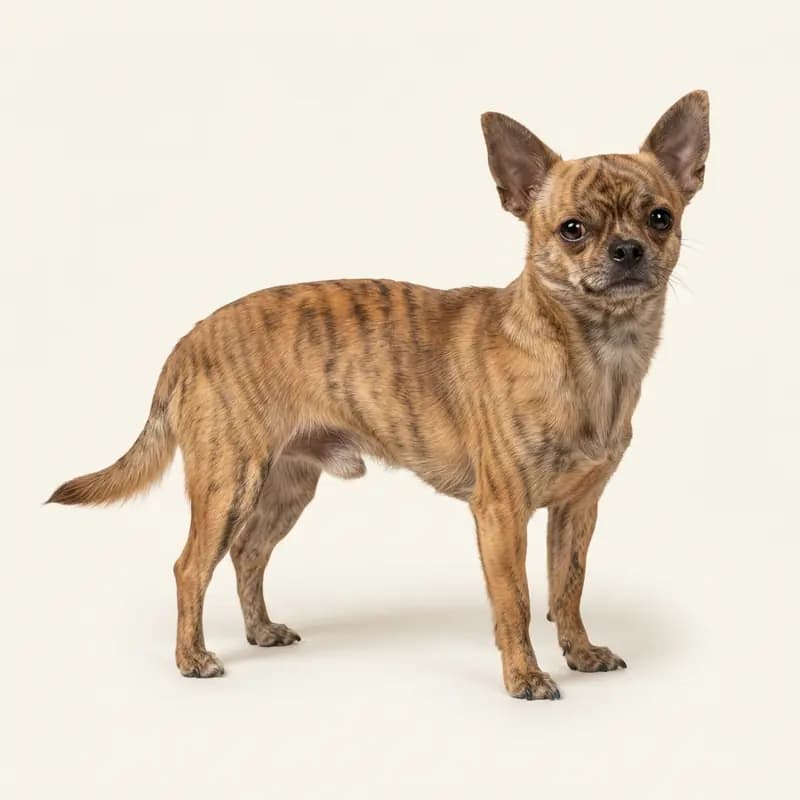
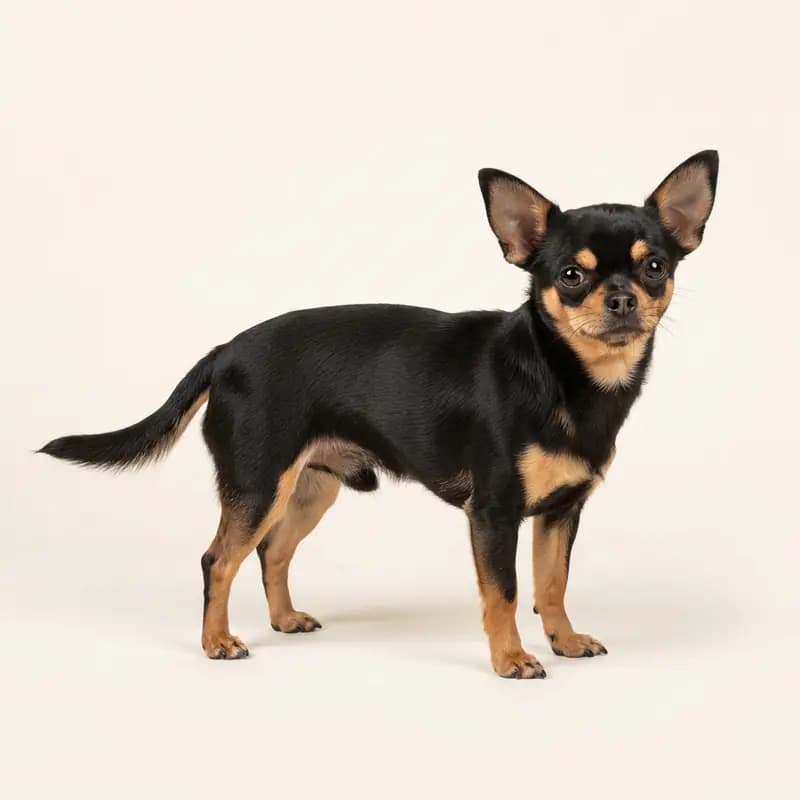
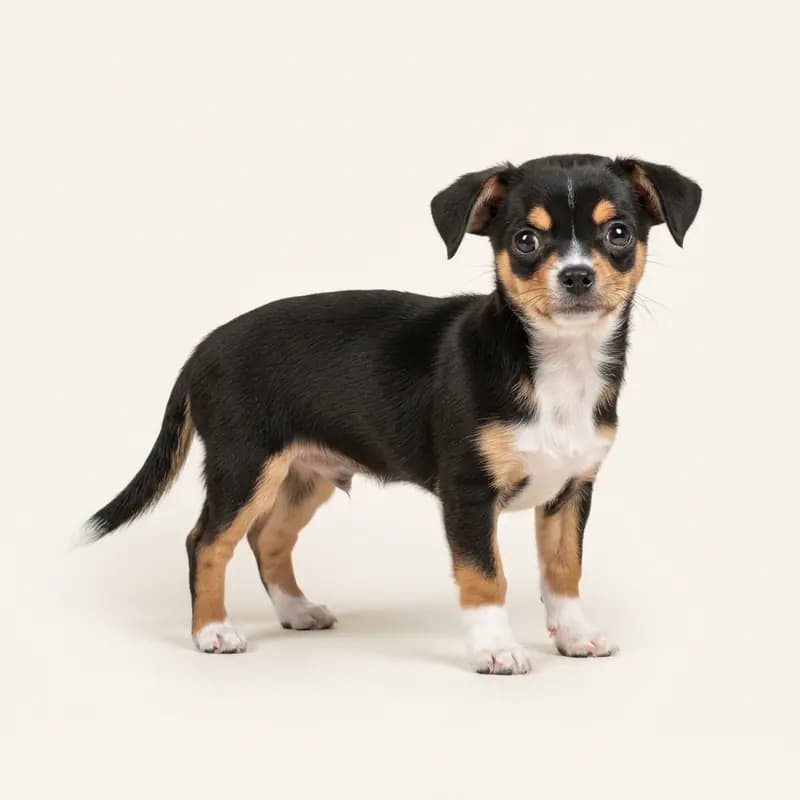
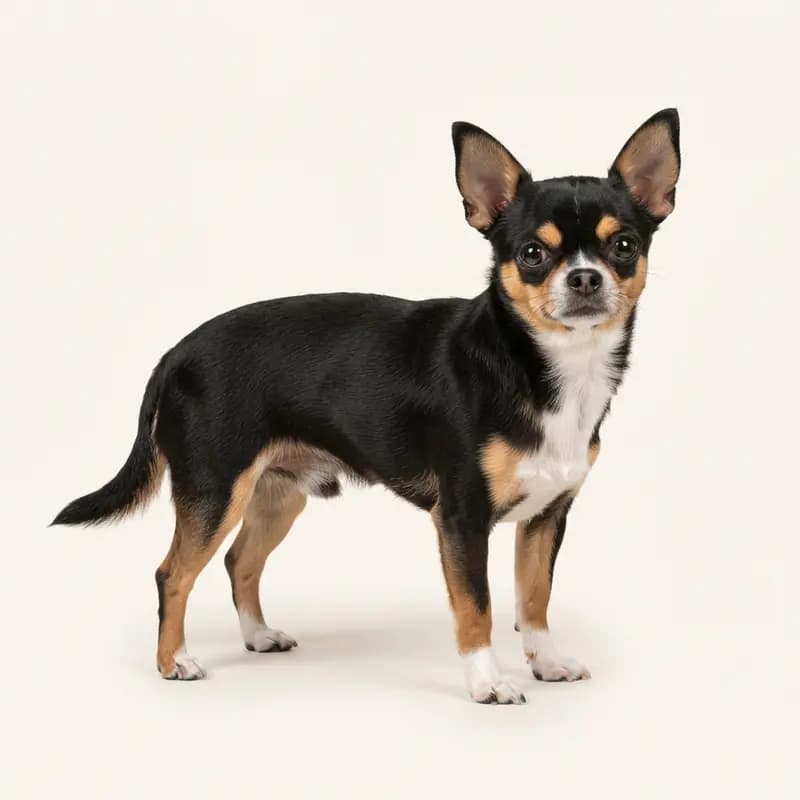
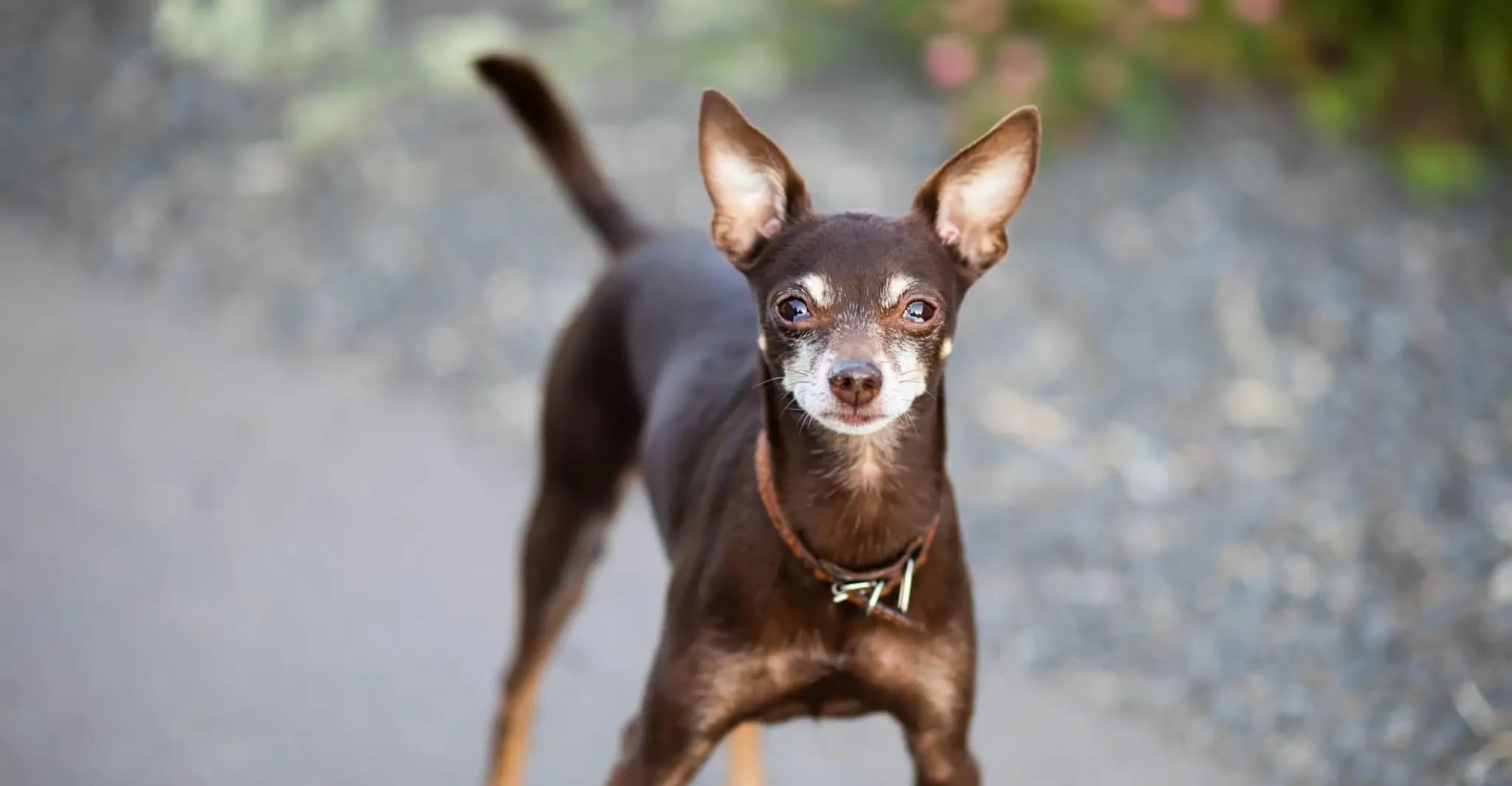
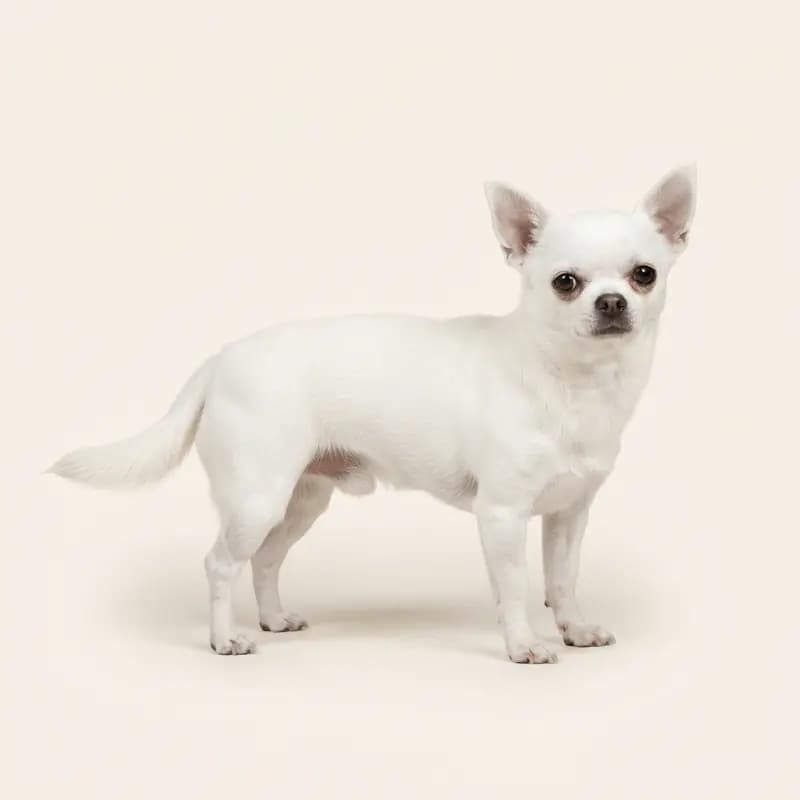
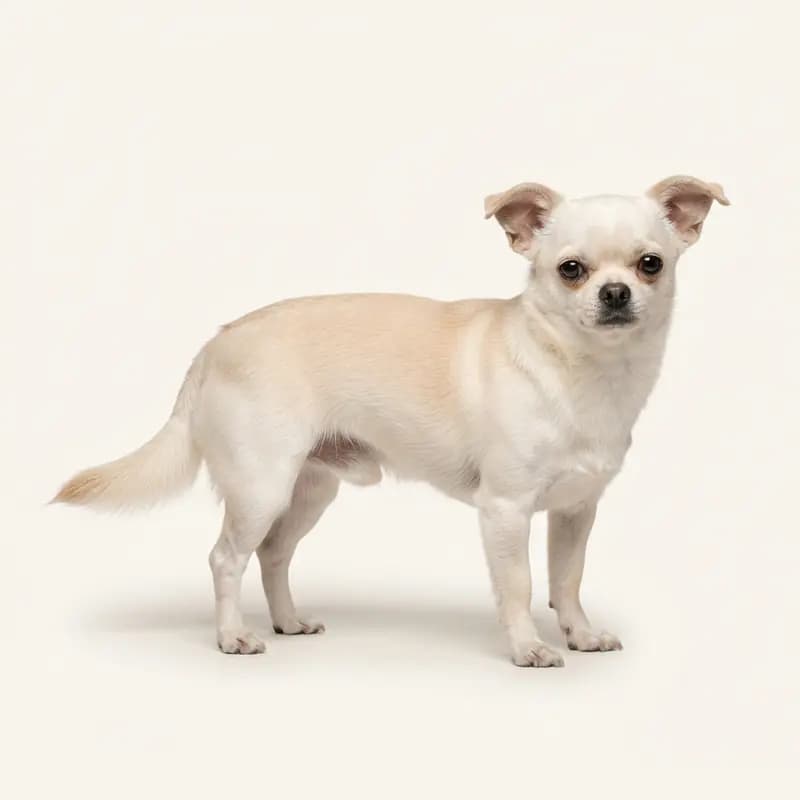
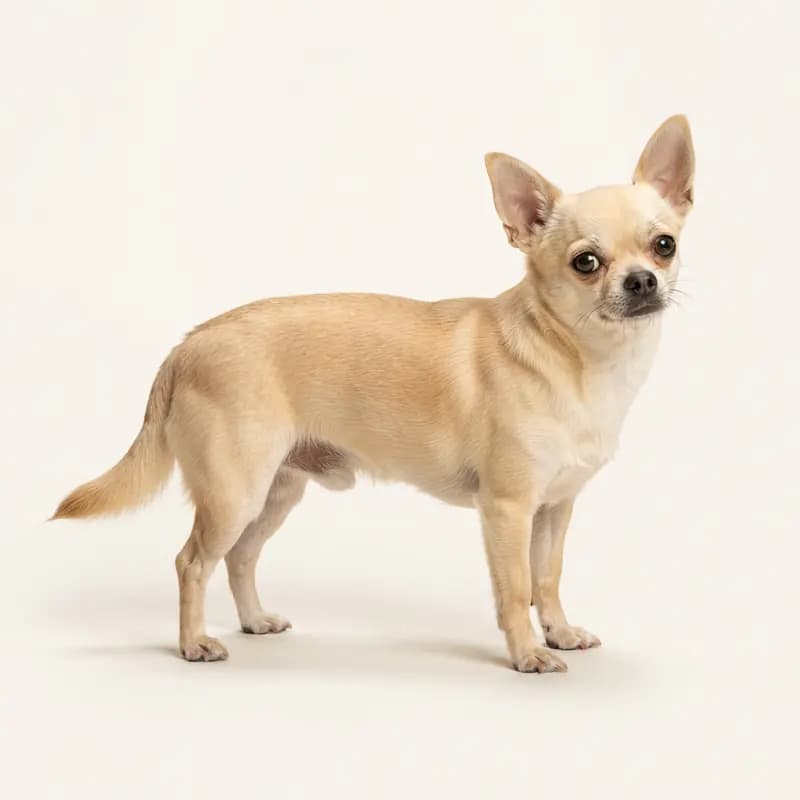
The Chihuahua, known as the smallest dog breed in the world, belongs to FCI Group 9, companion and toy dogs. Despite its small size, the Chihuahua is a dog full of personality and charm. It has a compact body shape with a rounded skull, large eyes and erect ears, giving it a lively and alert appearance. There are two types of coats for Chihuahuas: short-haired and long-haired. While the shorthair is smooth and soft, the longhair has a softer texture with an undercoat and forms fringes on the ears, neck, legs and tail. Both variants are available in a variety of colors. In addition, a distinction is made between apple head and deer head when it comes to head shape. Although the applehead is recognized in the breed standard, it is often associated with health problems. The Applehead Chihuahua features a disproportionately large, rounded head compared to its body, characterized by large, prominent eyes and a small muzzle with a short, characteristic stop, an angle of almost 90 degrees when viewed from the side in profile. Although the appearance may be appealing to some, the head shape is potentially more problematic than that of the deer head, which has a more elongated head and a narrower muzzle with large ears. The body and legs are also longer and the dogs are heavier than the apple-headed Chihuahua.
The Chihuahua may be small, but he is by no means a dog that is just for cuddling. He is brave, confident and often feels like he is much bigger than he actually is. This means that he sometimes forgets how small he is and is not afraid to stand up to larger dogs. Chihuahuas are extremely loyal and form a strong bond with their caregiver. They are often very picky and tend to become particularly attached to a single person. This makes them wonderful companions, but it is important to be careful not to over-pamper them as this can lead to behavioral problems. The Chihuahua is a lively dog that loves to play and romp around. You'll be surprised at how agile and energetic this little guy can be! His exercise needs are moderate, meaning that while he enjoys walking and playing, he doesn't have the same exercise requirements as a larger, more active breed. When it comes to temperament, Chihuahuas can vary greatly. Some are calmer while others can be quite temperamental. However, they are generally vigilant and are often referred to as small guard dogs that warn their family of intruders, no matter how small those intruders may be. Chihuahuas can enjoy being with their people and can suffer from separation anxiety if left alone for too long. It is important to teach them that it is okay to be alone for a short time by gradually getting them used to it and giving them positive experiences. Regarding hunting behavior, the Chihuahua often shows some interest in small animals, but due to its small size this is usually not a big problem. However, it is good to be careful and keep it on a leash when walking, especially in areas with a lot of game.
| Watchfulness Occasionally alerts but is fundamentally open. | Low |
| Openness to Strangers Careful around unfamiliar people — thaws slowly. | Cautious |
| Hunting or Herding Drive Barely any prey drive — small animals trigger nothing. | Very low |
Fun Fact!
The Chihuahua is named after the Mexican state of Chihuahua where it was discovered and is considered the smallest dog breed in the world!
Chihuahuas are also considered a breed with extreme breeding characteristics. For example, due to the small size, the brain may be too large and the skull bone cannot close completely. A normal birth is often not possible.
Chihuahuas make excellent city dogs. They don't need a lot of space and can also get along well in an apartment. However, caution should be exercised with small children, as Chihuahuas are prone to injuries due to their low weight and can easily feel threatened if handled too roughly. In general, they are often compatible with other pets as long as they are also respectful.
Gets on well with different people and varying routines.
Fine with calm, respectful children — not small tornadoes.
Can get on with dogs it knows — strangers are a different story.
Small space, noise, lots of people — no problem at all.
Owning a dog is a privilege, but it's also a real responsibility. Before you bring one into your life, be honest with yourself about the commitment it takes.
Even though they are small, Chihuahuas require consistent training. They are intelligent and learn quickly, but can also be stubborn. It is important to challenge them mentally, but without overwhelming them. Chihuahuas are not ball junkies, but they love mental stimulation through tricks and light agility exercises. Because they sometimes tend to feel bigger than they are, it is important to teach them how to be respectful around other dogs and people. Training impulse control and frustration tolerance can help prevent unwanted behavior.
Chihuahuas need a balanced diet tailored to their small size. High-quality food with adequate protein and fat content is important, as is regular dental cleaning and care. When it comes to care, the effort depends on the type of fur. Short-haired Chihuahuas require relatively little grooming, while long-haired Chihuahuas should be brushed regularly to avoid matting. Chihuahuas have an undercoat, especially the long-haired variety. In Germany, you should note that Chihuahuas can easily freeze in winter due to their small size and thin fur, so warming dog coats are recommended.
| Care Level Minimal effort — occasional brushing and bathing. | Low-maintenance |
| Exercise Needs Enjoys daily movement but isn't a sports dog. | Moderate |
| Shedding Hair everywhere, always — no white clothing survives. | Very heavy |
| Trainability Willing to learn with clear rules and regular training. | Balanced |
Our experts are still reviewing this information. Spotted something wrong? Email us at info@honestdog.de.
Solid, watch carefully
Health grade
In the Chihuahua, there are breed-specific risks for patellar luxation (PL) as well as serious neurological problems such as Chiari-like malformation (CM) and syringomyelia (SM) or hydrocephalus. For breeding approval, the Verband Deutscher Kleinhundezüchter e.V. mandatorily prescribes testing for patellar luxation (PL) with the limit value PL 0. A health-oriented breeder also pays attention to heart and eye diseases such as mitral valve dysplasia (MVD), patent ductus arteriosus (PDA), or progressive retinal atrophy, mating carriers of the latter only with clear partners. Before purchasing, have the seller present the official test result for patellar luxation (PL) and additional proof of normal heart and eye test results for the parent animals.
Grade is relative to other breeds — AI-assisted and editorially reviewed.
Methodology and data: HonestDog Dog Breed Health Report 2026
What matters most for this breed
Tap any item to see details.
You should ensure a healthy weight and joint-friendly exercise, and always use a well-fitting harness to relieve pressure on the sensitive trachea in daily life.
Responsible breeders only use parent animals with a PL 0 result and additionally screen for mitral valve dysplasia (MVD) as well as Chiari-like malformation (CM) and syringomyelia (SM).
Note: This health overview is AI-assisted and editorially reviewed. It is for orientation only and does not replace veterinary advice.
What matters most for this breed — what's common, how much it affects the dog's life, and how to protect yourself as a buyer.
Tap a body region to see the inherited conditions linked to it.
The three most important risks
Pick a region on the map to explore other areas.
Tier 1 reflects the tests Verband Deutscher Kleinhundezüchter e.V. actually mandates. Tiers 2 and 3 show how responsible breeders go beyond.
Club standard. Verband Deutscher Kleinhundezüchter e.V. requires these tests for breeding approval. Ask any reputable breeder for the results.
Note: This health overview is AI-assisted and editorially reviewed. It is for orientation only and does not replace veterinary advice.
A Chihuahua costs around ~€150 per month (€80 – €260, depending on your setup). The first year adds up to roughly ~€3,890 including purchase, equipment and puppy school; across the dog's life (15.5 years) it comes to about ~€29,360.
With surgery cover, running costs come to about ~€140 per month — in return, your share of a major operation drops from several thousand euros to around 20 percent.
Per month
~€150
In the first year
~€3,890
Across the dog's life
~€29,360
Purchase price per HonestDog's market analysis (asking prices in Germany, as of October 2026): €1,100 – €1,500
Median asking price: €1,300; 32 unique listings in the rolling three-month window. Data for this breed · Methodology
Estimate at a mid-range setup (suburban, dry food, 1–2 hours of daily exercise), average German prices, as of July 2026.
 Illustrative image
 Illustrative image
 Illustrative image
 Illustrative image
The Chihuahua is native to Mexico and its history dates back to the ancient Toltec and Aztec civilizations. The Chihuahua is believed to have descended from an ancient dog named Techichi, who was revered by the Toltecs. The Techichi was larger than the modern Chihuahua, but it is thought that selective breeding reduced the size over time. The Aztecs believed that the Chihuahua had mystical powers, and Chihuahuas were often buried with the deceased to protect them in the afterlife. The Chihuahua as we know it today was discovered in the Chihuahua region of Mexico and gained popularity in the 19th century. It was recognized as a separate breed by the American Kennel Club in 1904.
Bred as a companion dog, the Chihuahua is known for its small size and lively nature.
Mexico
1800
According to many owners, the Chihuahua stands out in daily life for its very close bond with its people. It often picks one main person, follows them everywhere and loves to cuddle with them. Many owners appreciate how adaptable it is and stress that, despite its delicate build, it's a real dog that can handle long walks, loves to play and, once it's used to it, takes part in family life without any trouble.
At the same time, forum posts keep pointing out that being so focused on its people has its downsides. Many Chihuahuas find it hard to be left alone, and this has to be built up gently in small steps from the start; otherwise they tend toward separation stress and controlling behavior. Owners also advise special caution around young children or other pets: because of the dog's small size and fragile bones, a careless step or a fall can quickly cause serious injuries.
On training, experienced owners all warn against the trap of spoiling a Chihuahua because it looks so cute. A recurring topic when owners swap experiences is the tendency toward leash reactivity or yapping. Many of these dogs develop a strong protective drive, defend their people or their territory and, without guidance, tend to overestimate themselves and confidently charge forward instead of backing off.
Another focus in discussions is training for meetings with other dogs. Since Chihuahuas are often wary of unfamiliar dogs, and run-ins with boisterous large dogs can end in fatal injuries, owners have to think ahead and protect their dog. Owners also report fairly often that housetraining a puppy takes more patience and closer management than with larger breeds. The community describes consistent but always force-free training as essential.
Sources:dogforum.deparents.at
On health, owners stress that Chihuahuas from good lines that are well cared for can reach a remarkably old age. Still, forum and vet reports reflect a number of typical weak spots for the breed that mean regular vet visits. At the top of the list are musculoskeletal problems, especially luxating patella (a dislocating kneecap), and a windpipe prone to tracheal collapse, which is why a harness instead of a collar is recommended almost across the board.
Many owners also report stubborn tartar and retained baby teeth in young dogs, which often have to be pulled or treated under anesthesia. With puppies and especially tiny dogs, owners repeatedly point to the risk of a rapid drop in blood sugar (hypoglycemia). Owner circles strongly warn against disreputable puppy producers and "teacup" breeding, since extreme miniaturization goes hand in hand disproportionately often with neurological problems like hydrocephalus ("water on the brain"), heart defects and frailty.
Sources:parents.atdogssupreme.dedogcare24.dedogtorance.deforum.hund.info
Paraphrased from real owner reports · translated from German
The Chihuahua is an adaptable dog that adjusts well to various lifestyles. Research the temperament, grooming needs, and space requirements before deciding.
The average life expectancy of a Chihuahua is 14-17 years. With proper care and regular vet visits, your dog can live a long, healthy life.
Chihuahua grooming requirements include regular brushing, nail trimming, and dental care. HonestDog provides detailed grooming tips for every breed.
The Chihuahua can be a great family dog. Proper training and socialization are key. HonestDog provides family suitability information for every breed.
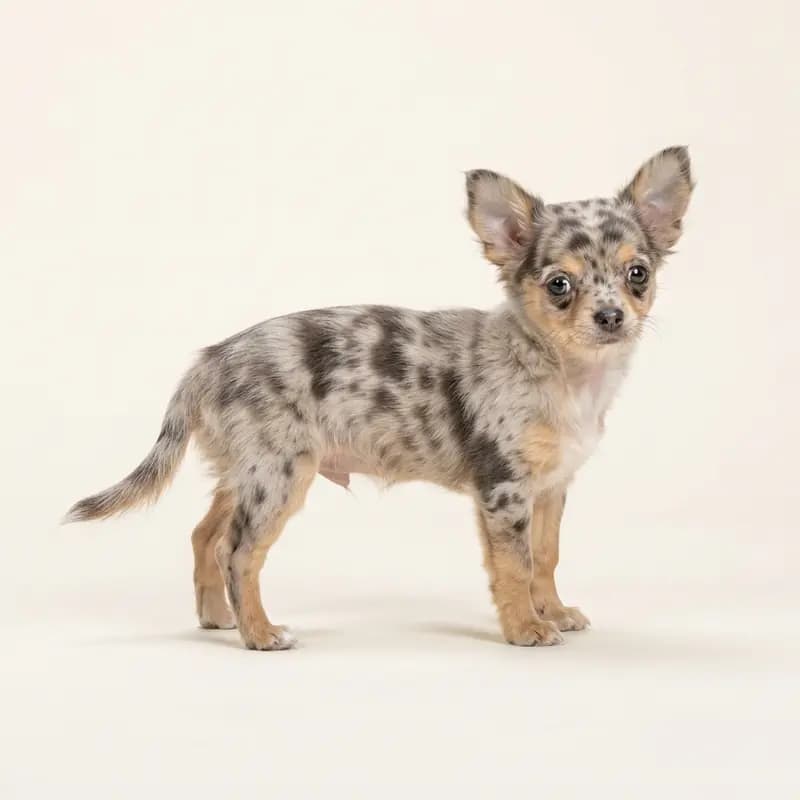
The Chihuahua comes in these colors: Black, White, Cream, Fawn, Red, Chocolate, Blue, Sable, Brindle, Black and tan, Tricolor, Merle. Colors that fall outside the breed standard are marked as such on the breed page.
Pomeranian vs. Chihuahua: Compare temperament, grooming needs, and costs to see which of these tiny dog breeds is the perfect fit for your home.
Comparing the Chihuahua and Havanese on grooming, temperament, and costs. Find out which of these popular small breeds is right for your home.
Learn effective Chihuahua training methods to stop barking, master socialization, and build a strong bond. Raise a confident, well-behaved small dog.
Showcase your kennel on HonestDog and reach families searching for a responsibly bred Chihuahua.