PekingeseSame FCI section
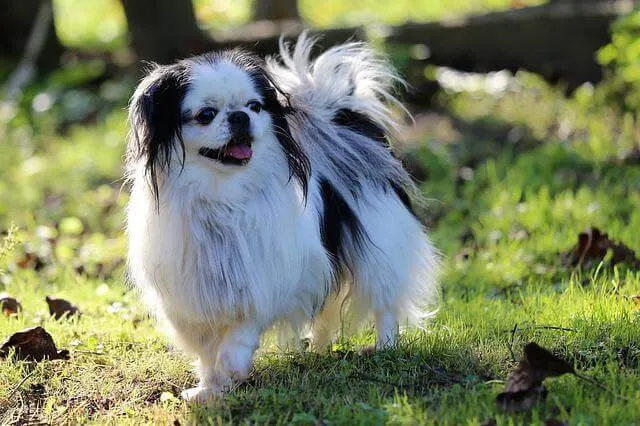
The Japanese Chin is a gentle, almost cat-like companion dog—bred for centuries solely to accompany Asian nobility and act as a quiet, charming shadow, entirely without the need for a job.
Self-check
Answer 6 quick questions about your everyday life and see how well the Japanese Chin fits you — including an honest cost estimate per month, per year, and across the dog's lifetime.




At a glance
The essentials — key facts, traits, and health priorities — before you dive deeper.
Lifespan
12–14 yrs
Shoulder height
20–27 cm
Weight
2–5 kg
Practical
Temperament
Daily life
What matters most
Especially with a Japanese Chin, choosing the right breeder is the single most important decision you'll make. Serious breeders consistently test the parents for inherited conditions, prioritize healthy early socialization, and stay accountable long after handover. A cheap puppy without health screening tends to become the most expensive dog later on.
See HonestDog breeder standards →Colors & coat
The coat colors that occur in the Japanese Chin — including which ones fall outside the breed standard and which carry genetic risk.
Eye colors
 Brown
Coat type
 Long
 Silky
The real vibes check
The Japanese Chin is essentially a small cat in a dog suit that likes to curl up on the highest chair back and quietly observe the action. You aren't getting a classic, demanding dog, but a sensitive roommate who gives you his affection quietly, but all the more exclusively.
The Japan Chin, also known as the Japanese Spaniel, is a small, elegant dog breed with a rich history. This charming dog is known for his beautiful flowing coat, erect ears and stocky build, giving him a compact yet graceful appearance. His eyes are large and dark with an expression of warmth and intelligence. As a member of FCI Group 9, Companion and Toy Dogs, the Japanese Chin is naturally an excellent companion dog. He knows how to form a deep and close bond with his people. His sweet nature and adaptability make him a perfect companion for all situations in life. In terms of lines, there is no distinction between performance and show lines in this breed. They are primarily bred as companion dogs and therefore maintain their calm and affectionate nature.
The Japanese Chin is known for its gentle and affectionate nature. Despite his small size, he is a very intelligent and alert dog that learns quickly and enjoys observing his people. Once accepted into the family, the Chin develops a strong bond with his people and wants to be there everywhere. As a companion dog, the Japanese Chin feels most comfortable in a calm and harmonious environment. He is not an overly active dog, but still enjoys his walks and playtime. He loves to explore his surroundings, but does not show a strong hunting instinct. Therefore, he is easy to handle and generally will not run away to chase prey. Although a very affectionate breed, the Japanese Chin can also stay alone well as long as it is properly trained. This is important because otherwise he may be prone to separation anxiety. Therefore, you should make sure right from the start that he feels comfortable when he has to be alone. The Japanese Chin is a very calm and relaxed dog. His gentle nature makes him a pleasant housemate who doesn't constantly demand attention. However, he can be very alert and will react quickly to unusual noises or movements. This makes him a good guard dog, although his small size means he is unable to provide actual protection.
| Watchfulness Greets everyone as a friend — no natural guarding instinct. | Very low |
| Openness to Strangers Warms up quickly and is generally welcoming. | Friendly |
| Hunting or Herding Drive Barely any prey drive — small animals trigger nothing. | Very low |
Fun Fact!
Although the Japanese Chin comes from Asia, it was much loved by the British Queen Victoria in the 19th century and thus made famous in Europe.
Japanese Chins are curious and intelligent dogs. They enjoy being with their people and generally get along well with other dogs. Sufficient exercise and patience in training are also important for this type of dog.
The Japanese Chin is an ideal city dog. It gets along well in an apartment and doesn't require a lot of space. His calm and balanced temperament make him a pleasant roommate. Nevertheless, he should get regular walks and playtime to stay fit and healthy. The Japanese Chin generally gets along well with children and other pets, but should always be treated with respect. Due to its small size, it can be easily injured, so small children should always play with the dog under supervision. The Japanese Chin can also live well with cats and other pets as long as they are friendly towards him.
Loves family life and thrives in a group.
Takes boisterous and affectionate children in its stride.
Usually gets on fine with other dogs.
Small space, noise, lots of people — no problem at all.
Owning a dog is a privilege, but it's also a real responsibility. Before you bring one into your life, be honest with yourself about the commitment it takes.
Although the Japanese Chin is an intelligent and willing learner, he can sometimes be a challenge to train. He responds best to positive reinforcement and patient, consistent leadership. It is important to make it clear to him as a puppy what he is allowed to do and what he is not allowed to do in order to avoid unwanted behavior. The Japanese Chin tends to fixate on one person and make them “his”. This can cause problems if he becomes too attached to that person and has difficulty staying alone. It is therefore important to teach him early on to stay alone sometimes and to learn to tolerate frustration. The Japanese Chin is an active and playful dog that loves to play and learn new things. He's not a ball junkie, but he can enjoy search games and small agility tasks. It's important to keep his activities varied to keep him mentally and physically busy. However, you should be careful not to overwhelm him, as he also needs his rest periods.
The Japanese Chin's diet should be balanced and varied. Small dog breeds like the Chin have a fast metabolism and require a diet rich in high-quality proteins and healthy fats. It can also be helpful to use special small breed food, as these are often tailored to the specific needs of small dogs. Caring for the Japanese Chin is relatively easy. Its silky coat has no undercoat and therefore sheds less than that of many other breeds. However, the coat should be brushed regularly to keep it clean and free of tangles. The Japanese Chin copes well with the climate in Germany, but should be protected with a dog coat in winter as it does not have an undercoat to protect it from the cold.
| Care Level Minimal effort — occasional brushing and bathing. | Low-maintenance |
| Exercise Needs Enjoys daily movement but isn't a sports dog. | Moderate |
| Shedding Hair everywhere, always — no white clothing survives. | Very heavy |
| Trainability Has its own ideas and will test limits. | Strong-willed |
Our experts are still reviewing this information. Spotted something wrong? Email us at info@honestdog.de.
Elevated risks
Health grade
The Japanese Chin is classified with a D grade, as it struggles with significant breed-specific problems such as Brachycephalic Obstructive Airway Syndrome (BOAS) and a paralyzed, constantly visible tongue. In addition, patellar luxation (PL), ectropion / entropion, cryptorchidism (undescended testicles), and the severe GM2 gangliosidosis, type I (B variant) occur more frequently in the breed. A responsible breeder actively counteracts these risks through targeted breeding selection and has their dogs thoroughly examined before using them for breeding. When buying a puppy, ask to see the official test results of the parent animals: they must show grade 0 or 1 for Brachycephalic Obstructive Airway Syndrome (BOAS) and patellar luxation (PL), be free of ectropion / entropion, and have a normal finding (both testicles descended) for cryptorchidism (undescended testicles). Furthermore, the parents should be free of cataracts and have a status of free or carrier for GM2 gangliosidosis, type I (B variant) (the latter only if the breeding partner is proven to be free).
Grade is relative to other breeds — AI-assisted and editorially reviewed.
Methodology and data: HonestDog Dog Breed Health Report 2026
What matters most for this breed
Tap any item to see details.
You should strictly limit heat and exertion, check his sensitive eyes regularly, and honestly factor in a higher veterinary budget for potential treatments.
Responsible breeders have knees, eyes, and hearts checked, test for neurological conditions, and pay attention to a moderate head shape—though the fundamental risks of this breed cannot be completely eliminated even then.
Note: This health overview is AI-assisted and editorially reviewed. It is for orientation only and does not replace veterinary advice.
What matters most for this breed — what's common, how much it affects the dog's life, and how to protect yourself as a buyer.
Tap a body region to see the inherited conditions linked to it.
The three most important risks
Pick a region on the map to explore other areas.
Tier 1 is the recommended health standard for this breed. Tiers 2 and 3 show how responsible breeders go beyond.
Recommended standard. These tests make up the recommended health standard for this breed — the baseline of any careful breeding program. Ask any reputable breeder for the results.
No entries in this tier.
Note: This health overview is AI-assisted and editorially reviewed. It is for orientation only and does not replace veterinary advice.
A Japanese Chin costs around ~€150 per month (€80 – €270, depending on your setup). The first year adds up to roughly ~€5,040 including purchase, equipment and puppy school; across the dog's life (13 years) it comes to about ~€26,730.
With surgery cover, running costs come to about ~€140 per month — in return, your share of a major operation drops from several thousand euros to around 20 percent.
Per month
~€150
In the first year
~€5,040
Across the dog's life
~€26,730
Estimated purchase price from a breeder: €1,800 – €3,000
Estimate at a mid-range setup (suburban, dry food, 1–2 hours of daily exercise), average German prices, as of July 2026.
HonestDog Concierge
We currently have no breeders for this breed who have passed our verification. Create your short buyer profile: we'll set up your search alert, review a possible source and email you within 28 days.
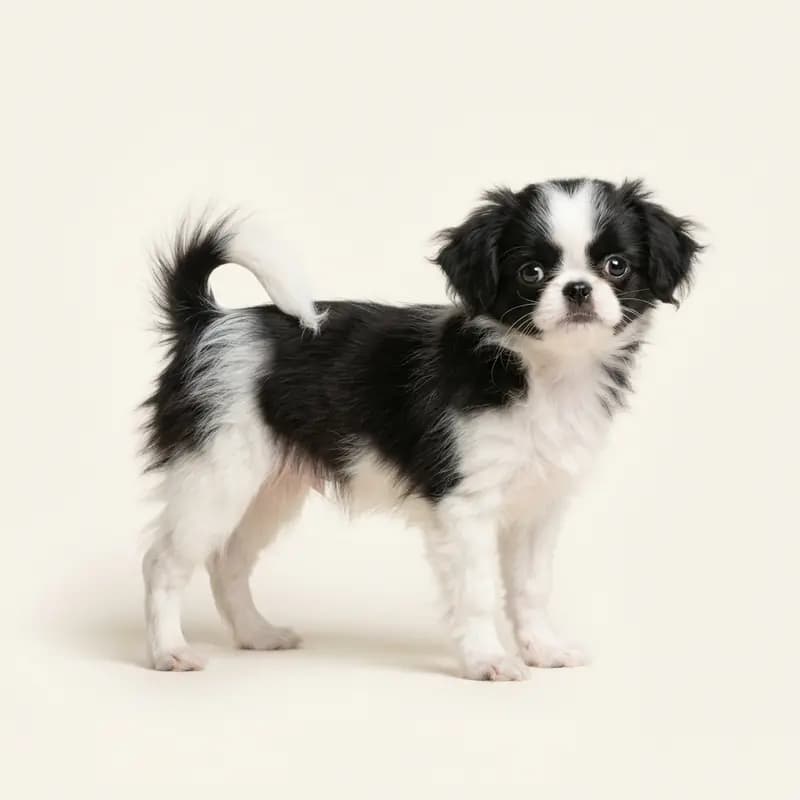 Illustrative image
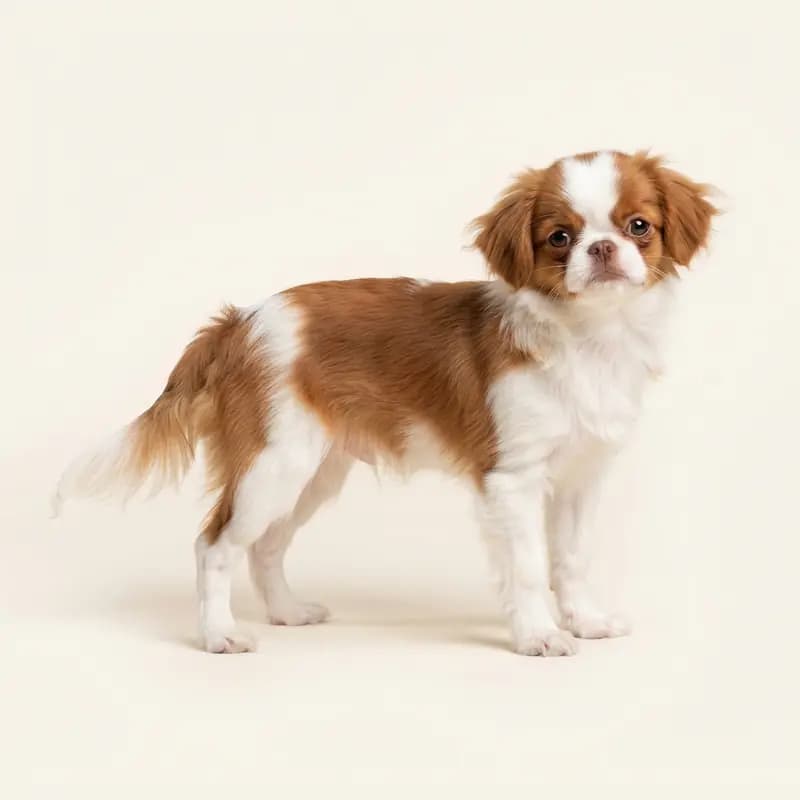 Illustrative image
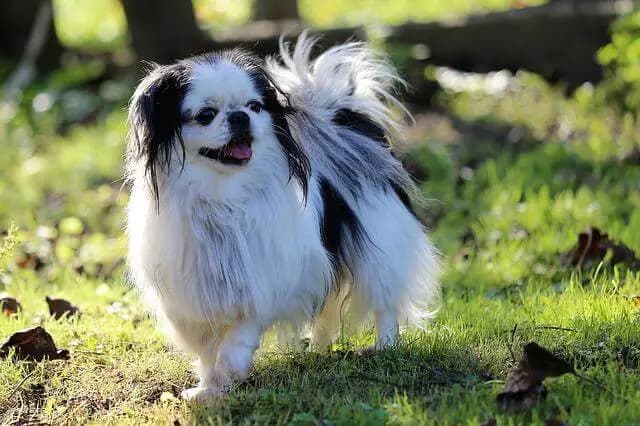
The Japanese Chin is an ancient companion breed believed to have originated in China. According to the FCI standard, it is historically documented that in 732 AD, Korean rulers presented dogs of this type to the Japanese imperial court as a tribute. In Japan, the small dog quickly became a highly prized treasure of the nobility. For centuries, the Japanese Chin was bred almost exclusively within the palaces of the imperial family and the aristocracy as a pure companion dog. The breed was considered a living symbol of wealth and high status. These small dogs were treated with the utmost care and sometimes kept in ornate cages to preserve their delicate and elegant appearance. In the 19th century, the Japanese Chin finally reached the Western world. When Commodore Matthew Perry visited Japan in 1853, he was gifted several of these dogs, which he brought back with him. The breed quickly captured the hearts of the upper classes in Europe and North America as well. Official recognition by the American Kennel Club followed in 1888. To this day, the Japanese Chin is valued worldwide as a charming and dignified companion dog that does not deny its aristocratic past.
The Japanese Chin was bred and valued as a companion dog for the nobility.
Japan
732
In everyday life, owners describe the Japanese Chin as a very sensitive, almost catlike companion. It usually moves quietly around the home, likes to climb onto high spots such as the backs of sofas, and constantly seeks close physical contact with its people. Forums repeatedly stress that, despite its alertness, it isn't a typical nonstop yapper; it briefly announces noises or visitors, but then quickly settles down again.
Experienced owners name being left alone as the biggest everyday challenge. Because it is so focused on its people, the Chin is quick to develop separation anxiety unless alone-time training is built up in the smallest steps from the start. It is therefore considered unsuitable for households where the dog would be left on its own for many hours a day. The silky coat also brings a surprise: with regular brushing it mats relatively little, but it constantly leaves fine white hairs on clothes and upholstery.
Sources:mydog365.deforum.hundund.dewirliebenhunter.detierisch-verliebt.detierchenwelt.de
In training, owners highlight how quickly the Japanese Chin picks things up and how much it wants to please its people. It learns basic commands and little tricks playfully and remarkably fast. Since the breed has practically no hunting drive, walks are usually very relaxed and largely off-leash. It is therefore considered easy to handle and forgives the small mistakes of inexperienced owners.
At the same time, owners warn against harshness: the Chin is very sensitive to raised voices or rough corrections and either turns stubborn or withdraws fearfully. Patience and positive reinforcement are a must. Housetraining is another recurring topic among owners: as with many toy breeds, the small bladder means it often takes much longer than with larger breeds before a puppy is reliably housetrained, which calls for a lot of persistence, especially in the first few months.
Sources:mydog365.dewirliebenhunter.detierisch-verliebt.deeinfachtierisch.dedogdna.de
On health, owner accounts paint a very sobering and divided picture. Many owners love how easy the breed's exercise needs are – short walks and little games are usually enough – but in practice, brachycephaly (the shortened skull) brings considerable limitations. Owners report snoring, shortness of breath and a marked sensitivity to heat. In summer, walks often have to be moved to the cool morning and evening hours, because these dogs' anatomy makes it hard for them to regulate their body temperature.
Owners also regularly discuss typical breed-specific weak spots: besides kneecap problems (patellar luxation) and misaligned teeth caused by the shortened jaw, the eyes are the main concern. Because they bulge slightly, they are prone to irritation, corneal injuries or chronic tearing. In breed forums, owners therefore strongly urge choosing only breeders who prioritize open airways, a somewhat longer muzzle and properly closing eyelids.
Sources:petbook.dehund.infomartinruetter.comzooroyal.depurina.de
Paraphrased from real owner reports · translated from German
The Japanese Chin is an adaptable dog that adjusts well to various lifestyles. Research the temperament, grooming needs, and space requirements before deciding.
The average life expectancy of a Japanese Chin is 12-14 years. With proper care and regular vet visits, your dog can live a long, healthy life.
Japanese Chin grooming requirements include regular brushing, nail trimming, and dental care. HonestDog provides detailed grooming tips for every breed.
The Japanese Chin can be a great family dog. Proper training and socialization are key. HonestDog provides family suitability information for every breed.
The Japanese Chin comes in these colors: Black and white, Red and white.
Showcase your kennel on HonestDog and reach families searching for a responsibly bred Japanese Chin.