Lhasa ApsoSame FCI section
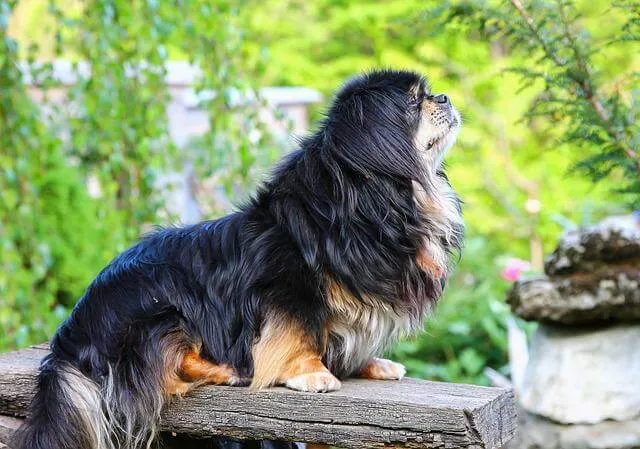
The Tibet Spaniel is an independent, cat-like temple guardian—bred to sound the alarm from the high monastery walls of Tibet without intervening itself. It is not a true spaniel, but a proud companion dog with the self-confidence of a lion.
Self-check
Answer 6 quick questions about your everyday life and see how well the Tibetan Spaniel fits you — including an honest cost estimate per month, per year, and across the dog's lifetime.


At a glance
The essentials — key facts, traits, and health priorities — before you dive deeper.
Lifespan
12–15 yrs
Shoulder height
23–27 cm
Weight
4–7 kg
Practical
Temperament
Daily life
What matters most
Especially with a Tibetan Spaniel, choosing the right breeder is the single most important decision you'll make. Serious breeders consistently test the parents for inherited conditions, prioritize healthy early socialization, and stay accountable long after handover. A cheap puppy without health screening tends to become the most expensive dog later on.
See HonestDog breeder standards →Colors & coat
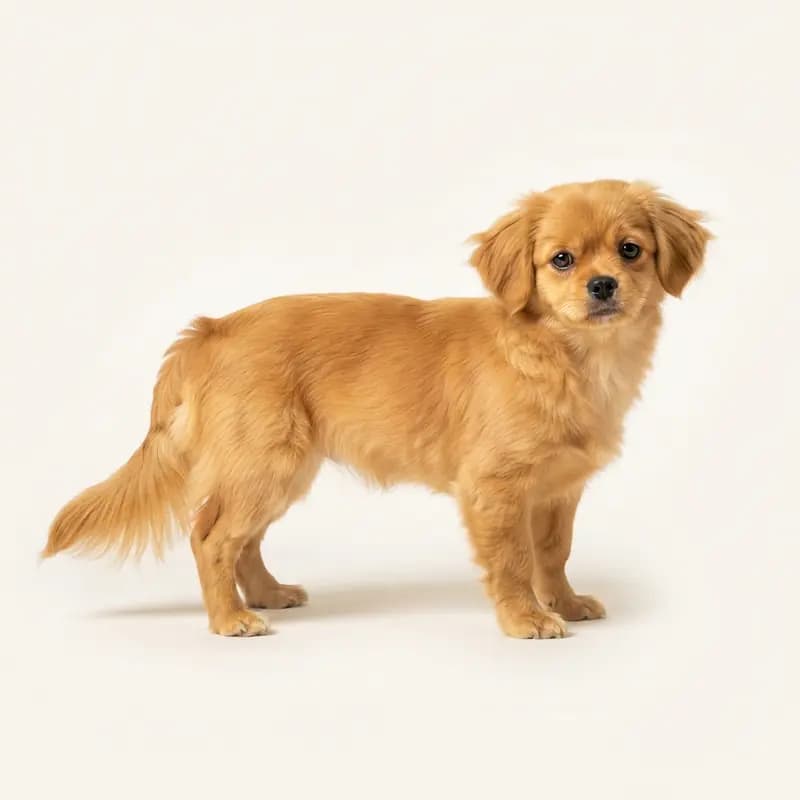
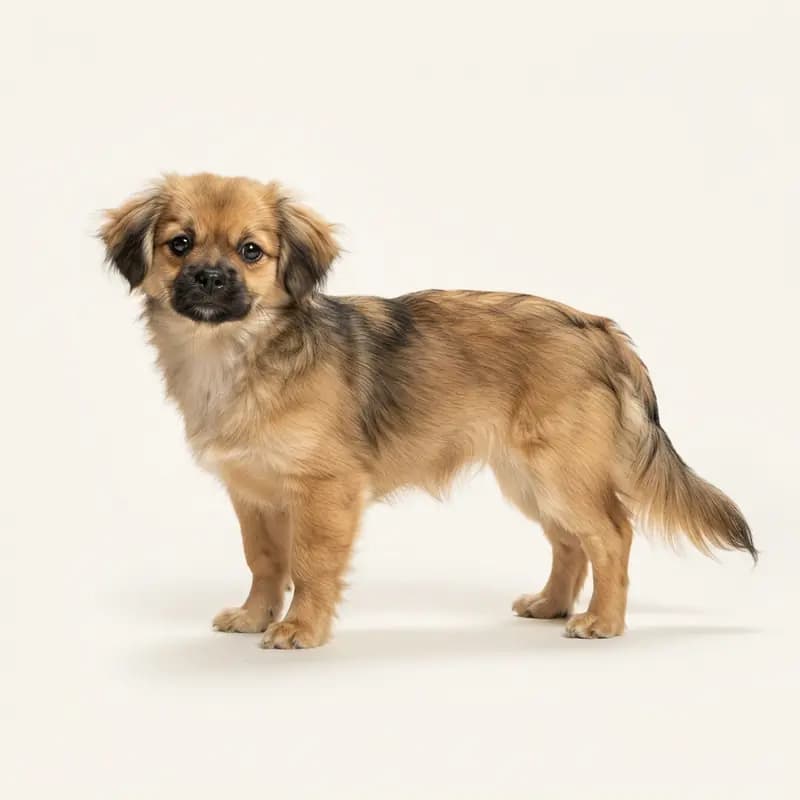
The coat colors that occur in the Tibetan Spaniel — including which ones fall outside the breed standard and which carry genetic risk.
Eye colors
 Brown
Coat type
 Illustrative image
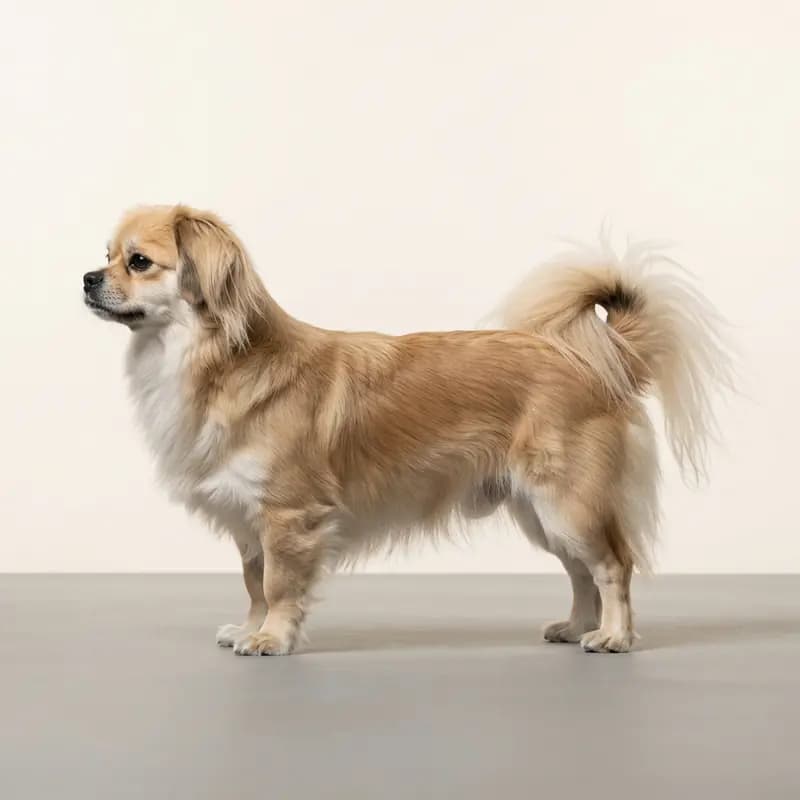
Medium
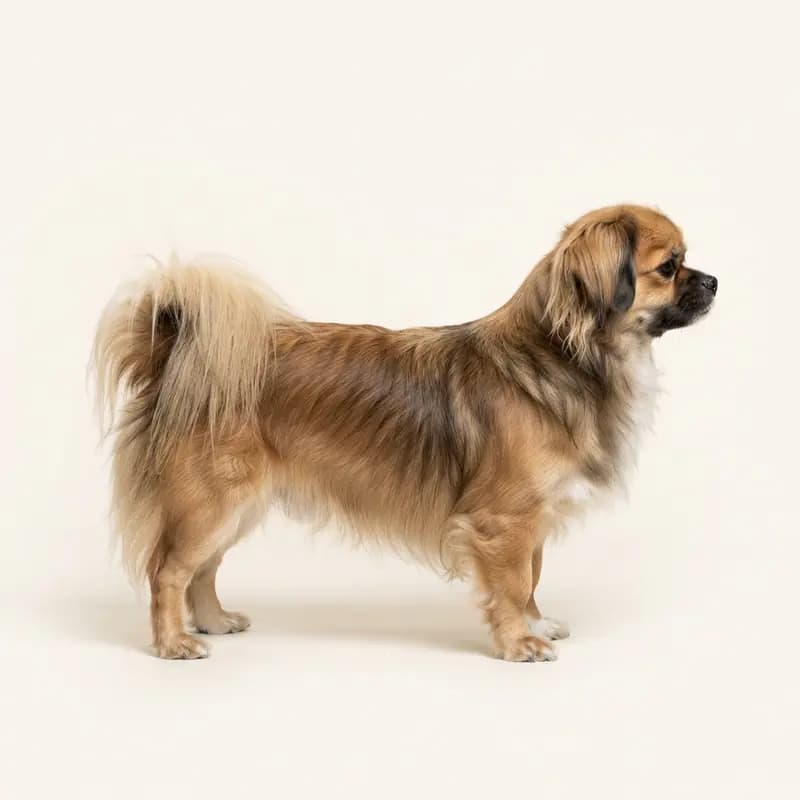
 Double coat
 Illustrative image
Silky
The real vibes check
A Tibet Spaniel often behaves more like a cat than a dog—it seeks out the highest spot in the living room, observes everything closely, and decides with complete sovereignty when it is time for affection. You won't get a submissive order-follower, but a smart, vigilant roommate on equal footing who gives you its love, rather than owing it to you.
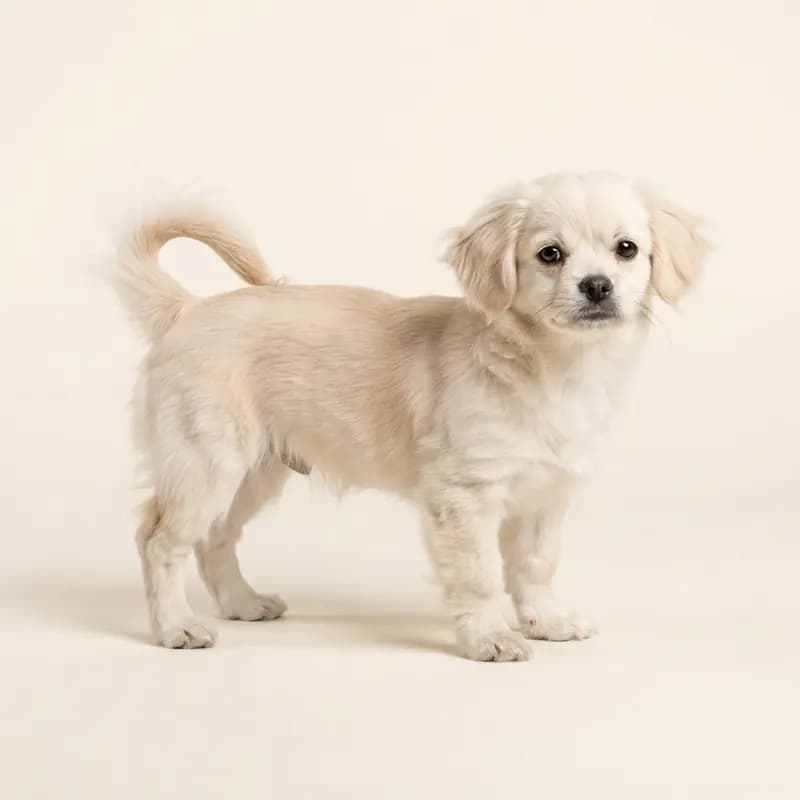
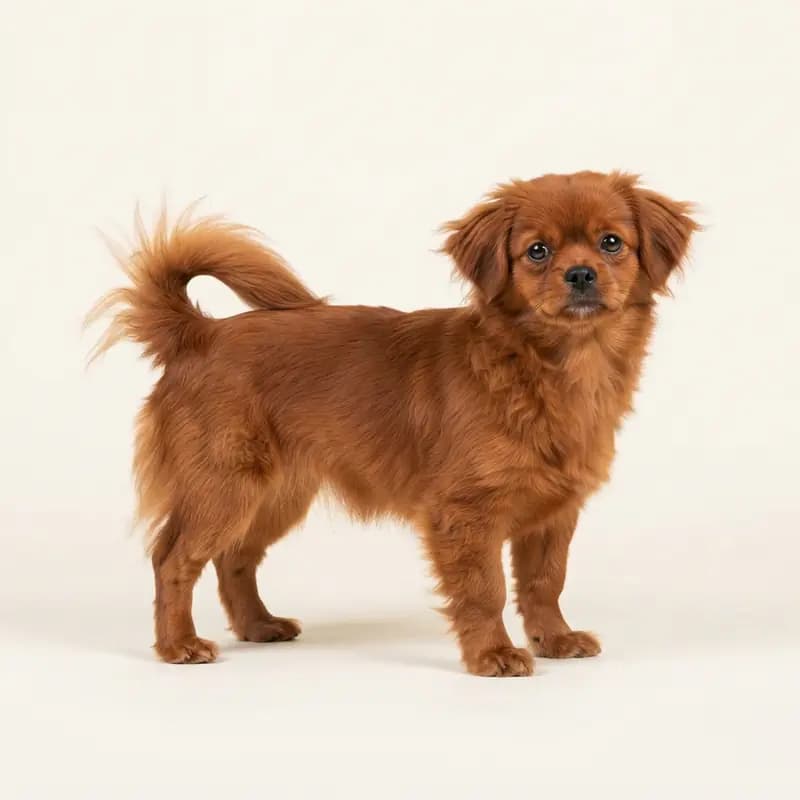
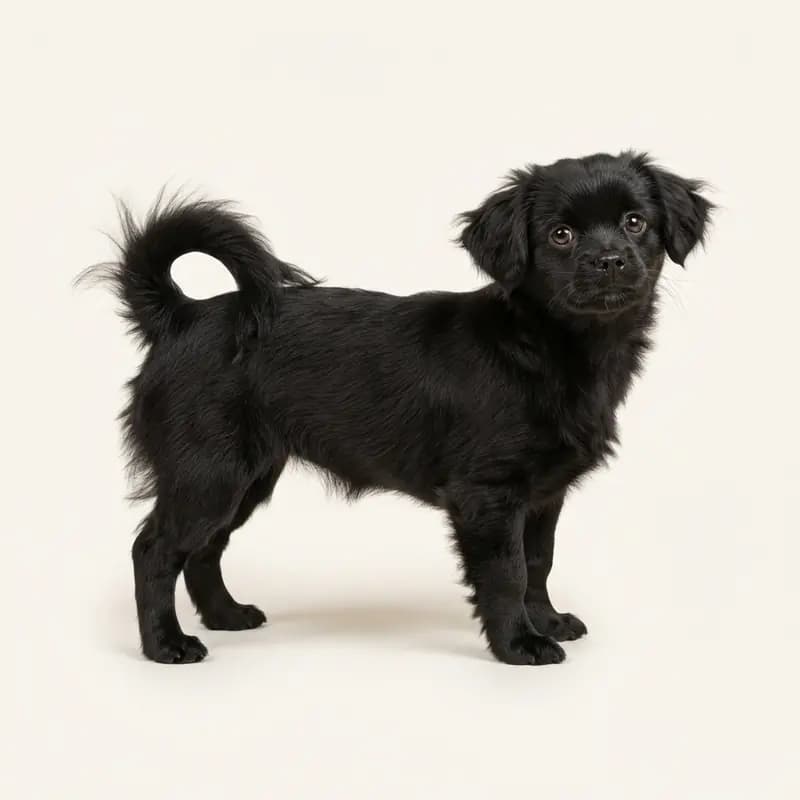
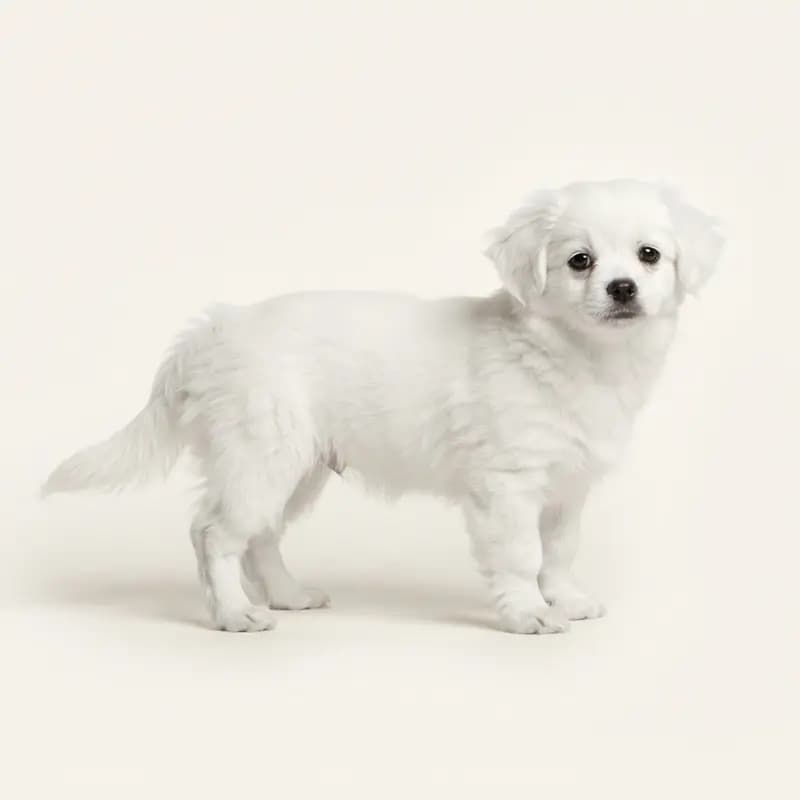
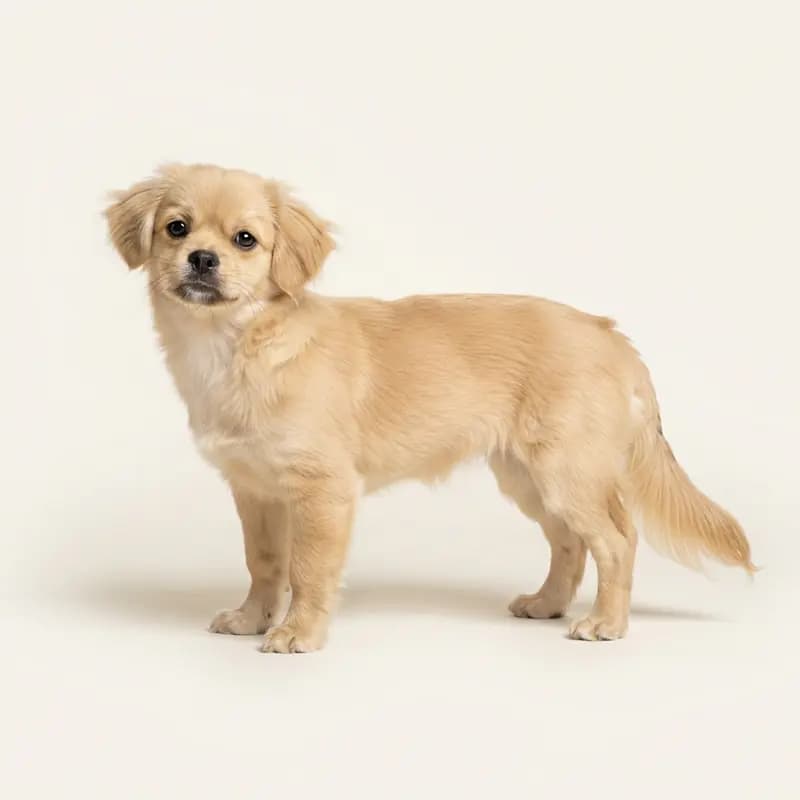
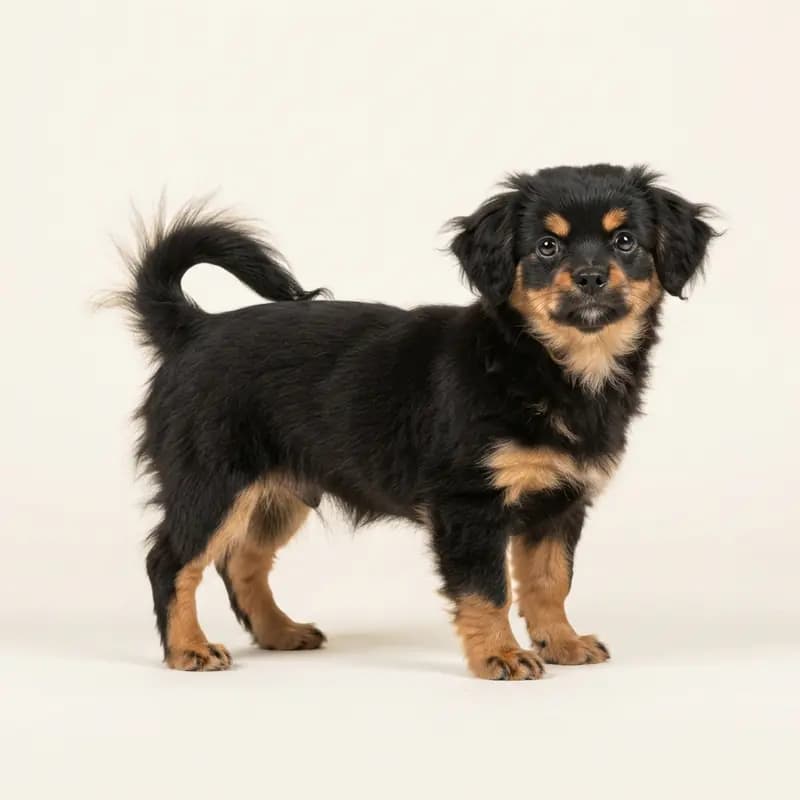
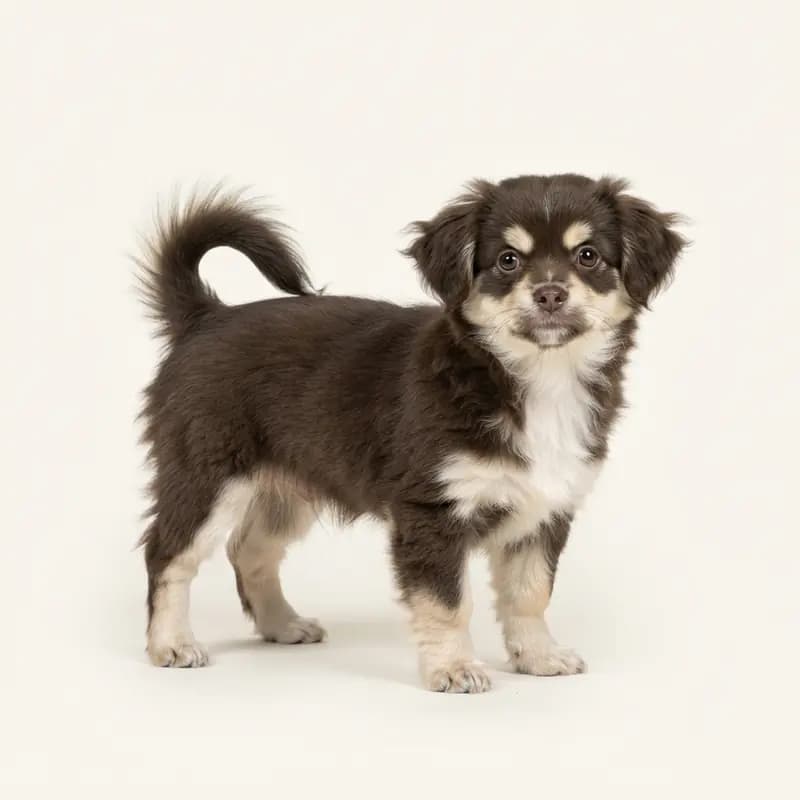
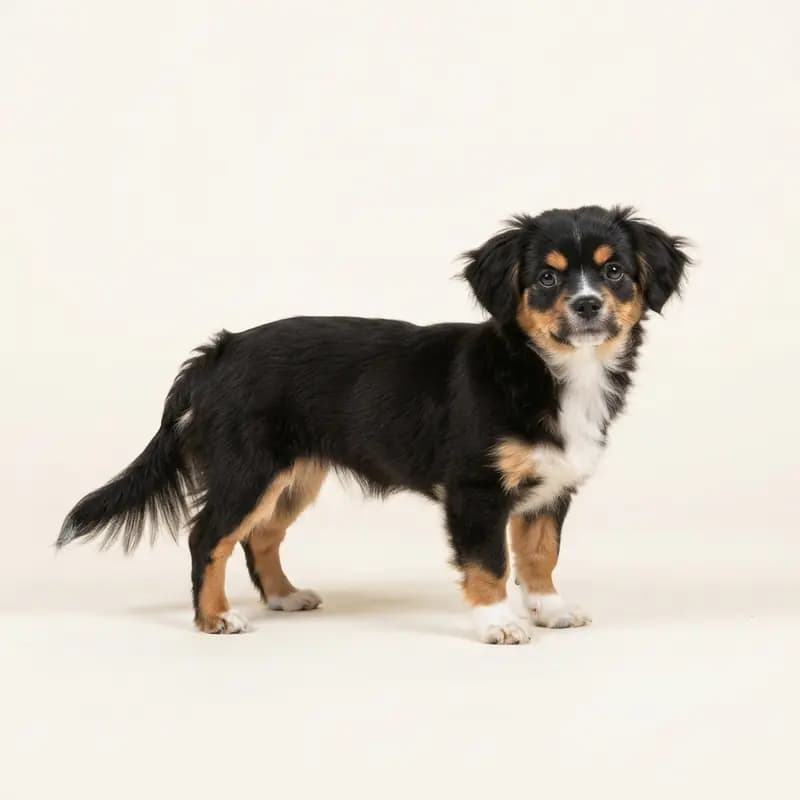
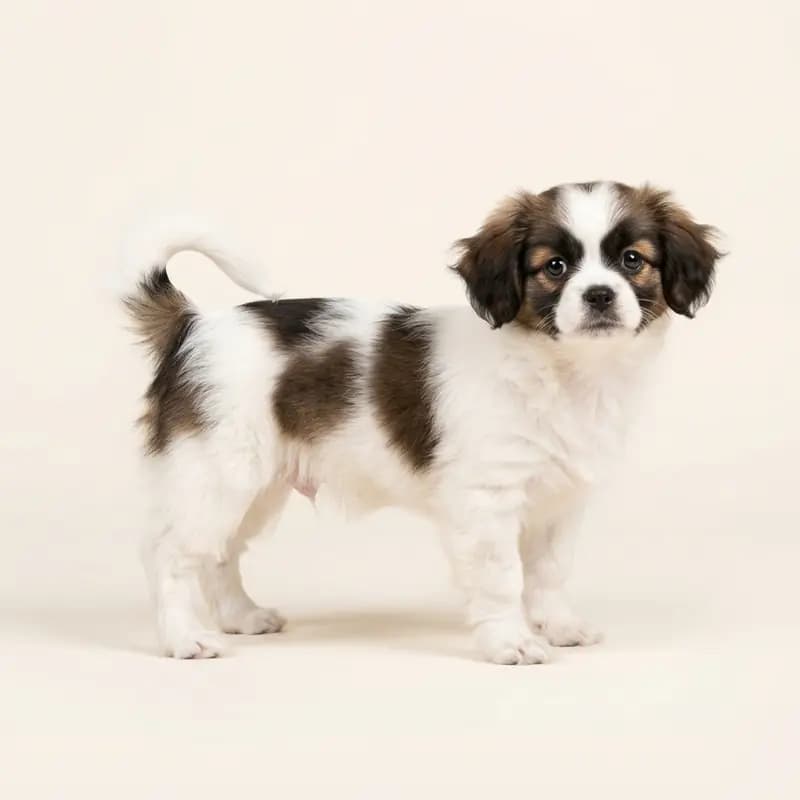
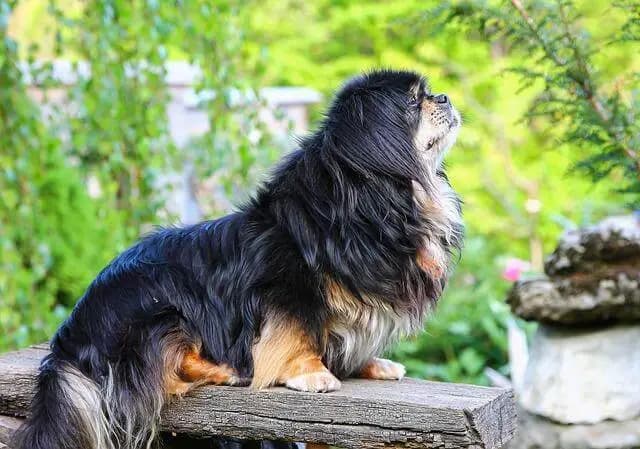
The Tibetan Spaniel, not to be confused with the Tibetan Terrier, is a small but strong dog that is characterized by its distinctive appearance. This breed has a square body shape, meaning the body size is about the same as the body length. Their dark, almond-shaped eyes radiate a charming warmth, while their small, droopy ears are covered in plenty of fur, giving them a very friendly appearance. The body of the Tibetan Spaniel is well muscled and compact, with strong bones that make it very resistant. The breed belongs to FCI Group 9, the Companion and Toy Dogs. With Tibetan Spaniels there is no distinction between performance and show lines. Every Tibetan Spaniel should do well both in the show ring and as a loyal family companion. The Tibetan Spaniel's striking mane, which wraps around its neck and adorns the front of the dog, gives it an almost leonine appearance. The mane is often darker than the rest of the fur. The Tibetan Spaniel's bushy tail is another striking feature, carried proudly across its back.
The Tibetan Spaniel has a fascinating and versatile temperament that will certainly captivate you. On the one hand, he is a relaxed and calm companion who loves to cuddle with you on the sofa and enjoy the peace and quiet. On the other hand, he is a happy and playful dog who loves to explore his surroundings and enjoys every opportunity to play. This charming little dog has a lot of personality in his little body and will surely win your heart. One of the most striking characteristics of the Tibetan Spaniel is its attachment to its people. This dog will bond closely with you and will always want to be close to you. Despite this affection, the Tibetan Spaniel also shows amazing independence. He is fully capable of making his own decisions and can be a little stubborn at times. But this only makes him more charming and adds another facet to his personality. The Tibetan Spaniel is a very people-oriented dog who loves contact with his family more than anything. He is very playful and enjoys spending time with you, whether playing, going for a walk or just relaxing. The Tibetan Spaniel is also very fond of children and usually gets along well with other pets. Although the Tibetan Spaniel has a high bond with his family, he can also learn to stay alone. However, this shouldn't take too long as he really enjoys his family's company and might get bored otherwise. The Tibetan Spaniel is generally not a great hunter. Although he is attentive and vigilant, he rarely shows a strong hunting instinct. He will be more inclined to observe the surroundings and warn you of possible intruders than to actively hunt. When it comes to alertness, the Tibetan Spaniel is an excellent watchdog. His vigilance and keen hearing make him a reliable alarm giver who will immediately alert you if something is wrong in his surroundings. Despite its small size, the Tibetan Spaniel can be very brave and will not hesitate to protect you and your home.
| Watchfulness Occasionally alerts but is fundamentally open. | Low |
| Openness to Strangers Warms up quickly and is generally welcoming. | Friendly |
| Hunting or Herding Drive Barely any prey drive — small animals trigger nothing. | Very low |
Fun Fact!
Did you know that Tibetan Spaniels, despite their name, are not actually spaniels? Their name comes from the similarity in appearance to the Spaniel breeds, but they are actually a breed all their own with a unique history and origins!
Tibetan Spaniels are alert and intelligent dogs that can be reserved with strangers. They are very active and need a lot of activity and exercise outdoors. The training should be varied.
Despite their small size, Tibetan Spaniels are robust and adaptable dogs. They can be kept well in both the city and the country as long as they get enough exercise and mental stimulation. They typically get along well with children, but as with all dogs, interaction should be supervised by an adult. They are also often cat-friendly and can live with other pets as long as they have been properly socialized.
Loves family life and thrives in a group.
Takes boisterous and affectionate children in its stride.
Usually gets on fine with other dogs.
Adapts well to city living and urban environments.
Owning a dog is a privilege, but it's also a real responsibility. Before you bring one into your life, be honest with yourself about the commitment it takes.
Tibetan Spaniels are intelligent and trainable dogs, but they also have an independent character. They respond well to positive reinforcement and reward-based training. However, due to their history as temple dogs in the Himalayas, they also have a certain degree of independence and can be a bit stubborn at times. Patience and consistency are therefore key in their upbringing. Because they are naturally alert, they can be prone to barking if not trained properly. It is therefore important to teach them from the start when barking is appropriate and when it is not. They have a natural need to run and play, so it's good to keep them occupied with regular exercise and play. However, you should make sure that they don't become "overstimulated."
Tibetan Spaniels are small dogs with moderate energy needs. They need a balanced diet tailored to their specific needs. High-quality food with a good ratio of protein, fat and carbohydrates as well as the right amount of vitamins and minerals is crucial. It is advisable to follow the feeding recommendations on the packaging or seek advice from a veterinarian to avoid becoming overweight. Their medium-length, silky fur has a thick undercoat that protects them from the extreme weather conditions in the Himalayas. This undercoat can be very useful in German winters, but can cause overheating in summer. So make sure to provide your Tibetan Spaniel with enough shade and water, especially in the warm months. Tibetan Spaniels shed moderately, especially during shedding in spring and autumn. Regular brushing, about twice a week, will help remove loose hair and keep the coat nice and healthy.
| Care Level Regular brushing and occasional professional grooming. | Moderate |
| Exercise Needs Enjoys daily movement but isn't a sports dog. | Moderate |
| Shedding Hair everywhere, always — no white clothing survives. | Very heavy |
| Trainability Bred to work closely alongside humans. | Highly trainable |
Our experts are still reviewing this information. Spotted something wrong? Email us at info@honestdog.de.
Elevated risks
Health grade
With a grade of D, the Tibetan Spaniel shows significant breed-specific problems, focusing in particular on serious conditions such as primary lens luxation (PLL), epilepsy, and neuronal ceroid lipofuscinosis (NCL), as well as moderate risks like patellar luxation (PL). A health-oriented breeder actively counteracts these risks by having their breeding stock comprehensively tested and only planning healthy matings. Before buying, you should definitely request the official test results of the parents, proving a status of 'clear' for primary lens luxation (PLL) and grade 0 or 1 for patellar luxation (PL). Since the threshold 'carrier' is also permissible for neuronal ceroid lipofuscinosis (NCL), you must ensure that the other partner is proven to be completely clear to eliminate the risk for the puppies.
Grade is relative to other breeds — AI-assisted and editorially reviewed.
Methodology and data: HonestDog Dog Breed Health Report 2026
What matters most for this breed
Tap any item to see details.
You should strictly limit heat and exertion, ensure joint-friendly exercise for the knees, and schedule regular vet check-ups for the eyes.
Responsible breeders have the parents' knees and eyes tested and pay strict attention to clear airways—though the fundamental risks associated with the head shape cannot be completely eliminated even then.
Note: This health overview is AI-assisted and editorially reviewed. It is for orientation only and does not replace veterinary advice.
What matters most for this breed — what's common, how much it affects the dog's life, and how to protect yourself as a buyer.
Tap a body region to see the inherited conditions linked to it.
The three most important risks
Pick a region on the map to explore other areas.
Tier 1 is the recommended health standard for this breed. Tiers 2 and 3 show how responsible breeders go beyond.
Recommended standard. These tests make up the recommended health standard for this breed — the baseline of any careful breeding program. Ask any reputable breeder for the results.
No entries in this tier.
Note: This health overview is AI-assisted and editorially reviewed. It is for orientation only and does not replace veterinary advice.
A Tibetan Spaniel costs around ~€170 per month (€90 – €310, depending on your setup). The first year adds up to roughly ~€4,710 including purchase, equipment and puppy school; across the dog's life (13.5 years) it comes to about ~€30,040.
With surgery cover, running costs come to about ~€160 per month — in return, your share of a major operation drops from several thousand euros to around 20 percent.
Per month
~€170
In the first year
~€4,710
Across the dog's life
~€30,040
Estimated purchase price from a breeder: €1,200 – €2,500
Estimate at a mid-range setup (suburban, dry food, 1–2 hours of daily exercise), average German prices, as of July 2026.
HonestDog Concierge
We currently have no breeders for this breed who have passed our verification. Create your short buyer profile: we'll set up your search alert, review a possible source and email you within 28 days.
 Illustrative imageIllustrative image
 Illustrative image
 Illustrative image
The homeland of the Tibetan Spaniel is, as the name suggests, Tibet. These little dogs have a very long history that goes back thousands of years. They were kept by the Buddhist monks, the lamas, in the monasteries of Tibet. It is believed that these dogs served the monks as companions, a source of warmth and an alarm. Their job was to look after the monasteries and warn the monks of approaching intruders. The breed is believed to have originated from crossing small Chinese dogs traded on the Silk Road and the native Tibetan dog breeds. The breed has been kept pure and carefully bred over the centuries to preserve its unique characteristics and pleasant temperament. The breed was only brought to Europe and North America in the 20th century. The first Tibetan Spaniel came to England in 1928 and was called "Skyid". However, it took a few more decades before the breed was officially recognized. The Kennel Club in Great Britain only recognized the Tibetan Spaniel as a separate breed in 1960. The American Kennel Club followed in 1983.
The Tibetan Spaniel was kept in Buddhist monasteries as a guard and companion dog, often called the "prayer dog" because it turned the prayer wheels.
Tibet
Antike
With the family, owners describe the Tibetan Spaniel, which fans often affectionately call the "Tibbie," as a very affectionate, almost catlike character. Many owners point out that indoors it wants to be part of everything, likes to lie on high spots such as the back of the couch or a windowsill, and keeps an eye on what's going on. In familiar surroundings it is considered cuddly, sensitive and easy to live with, which is why it fits in very well with families and older owners. With strangers it is usually reserved and aloof at first, as is typical of the breed, but it warms up quickly after a short getting-to-know-you phase.
Many owners say the biggest day-to-day challenge is how watchful it is and how readily it sounds the alarm. Because the Tibetan Spaniel was historically bred as an alert monastery watchdog, many of these dogs bark right away at unfamiliar noises in the stairwell or outside the fence. If this alert barking isn't channeled from the start, it can quickly cause problems in a rented apartment. Some of these dogs also find being alone hard because of their strong bond, so it needs to be trained gently and early.
Sources:reddit.comtibethunde-ktr.depurina.deagila.dezooroyal.de
In training, many owners agree that the breed combines high intelligence with a considerable stubborn streak. The Tibetan Spaniel usually learns new cues and tricks very quickly but regularly questions the point of them. You'll look in vain for the strong eagerness to work ("will to please") of retrievers or shepherds. It refuses blind obedience; if it senses pressure or harshness, it shuts down, withdraws or ignores its person completely.
Owners say they succeed mainly with plenty of humor, patience and positive reinforcement through food or play. A real plus in daily life and on outings is its practically nonexistent hunting drive: once basic obedience is solid, most owners can let their Tibetan Spaniel run off-leash across meadows and fields without worrying about it constantly taking off after game. Still, experienced owners warn against taking the dog lightly because of its small size; without clear rules, the self-confident "little lion dog" tends to take charge of daily life itself.
Sources:reddit.comtibethunde-ktr.dezooroyal.defressnapf.demit-tier.de
In owner reports, the breed generally comes across as surprisingly hardy, long-lived and unbothered by weather. Tibetan Spaniels quite often reach 14 to 16 years and stay playful and fit into old age. A recurring topic among owners and people who know the breed, however, is breed-specific eye disease, especially progressive retinal atrophy (PRA), along with luxating patellas (kneecap problems). That's why buyers are strongly advised to get puppies only from breeders who do complete health screening.
Most owners find the coat much easier to care for than the silky coat suggests. Its dirt-repelling texture often makes it somewhat self-cleaning, but it needs brushing two to three times a week to prevent tangles behind the ears and in the leg feathering. Owners do point to the seasonal shed as a downside: in spring and fall the breed loses a lot of undercoat, which means daily brushing for a while and noticeably more vacuuming at home.
Sources:purina.dezooroyal.demit-tier.detackenberg.dezooplus.de
Paraphrased from real owner reports · translated from German
The Tibetan Spaniel is an adaptable dog that adjusts well to various lifestyles. Research the temperament, grooming needs, and space requirements before deciding.
The average life expectancy of a Tibetan Spaniel is 12-15 years. With proper care and regular vet visits, your dog can live a long, healthy life.
Tibetan Spaniel grooming requirements include regular brushing, nail trimming, and dental care. HonestDog provides detailed grooming tips for every breed.
The Tibetan Spaniel can be a great family dog. Proper training and socialization are key. HonestDog provides family suitability information for every breed.
The Tibetan Spaniel comes in these colors: Gold, Sable, Cream, Red, Black, White, Fawn, Black and tan, Bicolor, Tricolor, Piebald.
Showcase your kennel on HonestDog and reach families searching for a responsibly bred Tibetan Spaniel.