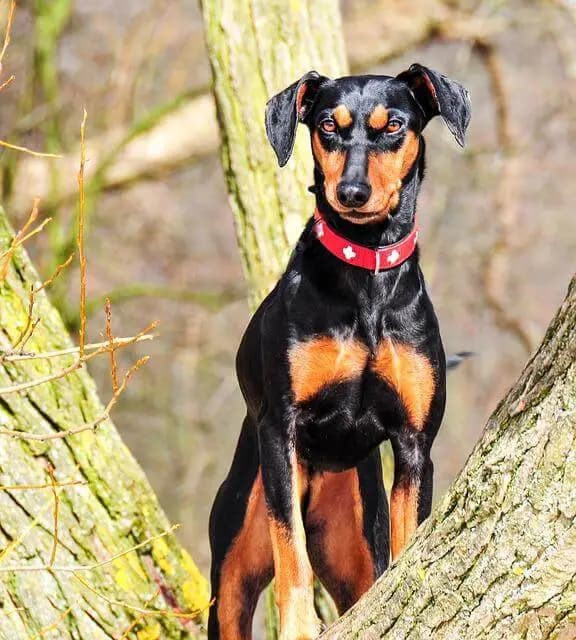
German Pinscher
Close relative

Dogs love cookies, and so do we
Cookies for analytics and ads. Privacy
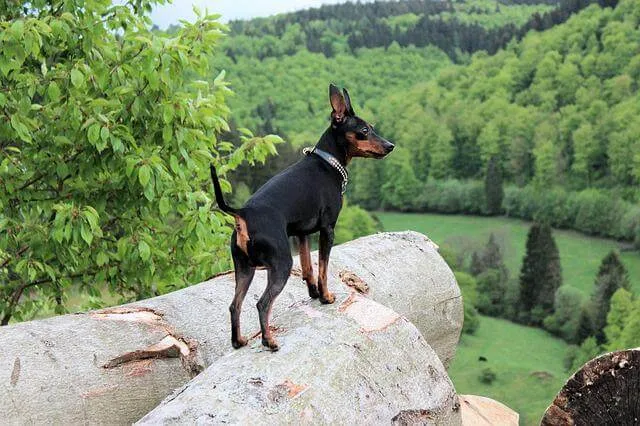
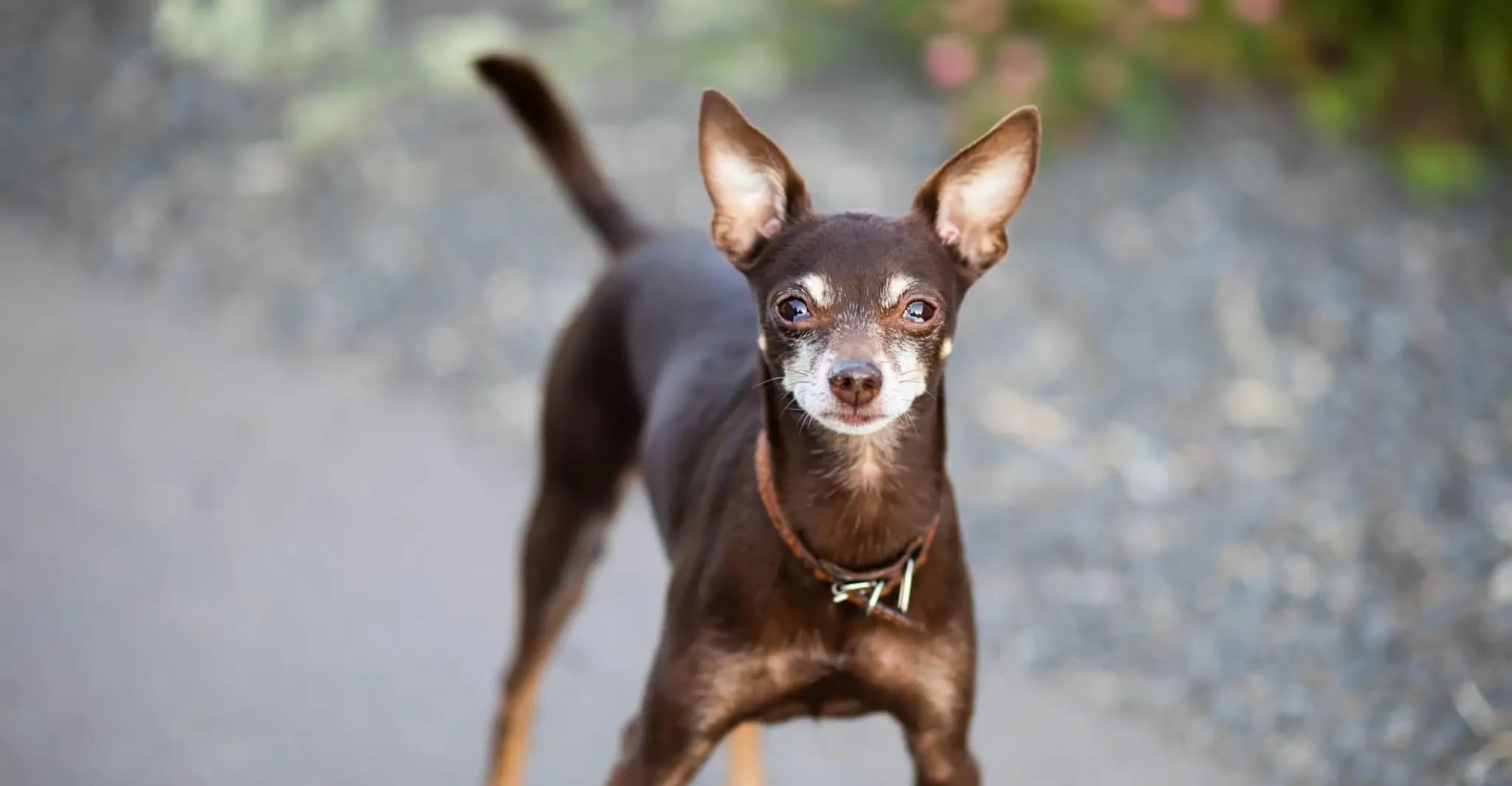
The Zwergpinscher is an energetic, lightning-fast companion—bred as an independent ratter and a vigilant farm dog in miniature format. It is not a fragile lapdog, but a robust worker that takes its job seriously.
How the health grade is calculated
Sources for required breeding screenings. Pinscher-Schnauzer-Klub 1895 e.V.
Self-check
Answer 6 quick questions about your everyday life and see how well the Miniature Pinscher fits you — including an honest cost estimate per month, per year, and across the dog's lifetime.
Question 1 of 6
Count honestly — the normal day, not the best one.
At a glance
The essentials — key facts, traits, and health priorities — before you dive deeper.
Lifespan
12–14 yrs
Shoulder height
25–30 cm
Weight
4–6 kg
Practical
Temperament
Daily life
What matters most
Especially with a Miniature Pinscher, choosing the right breeder is the single most important decision you'll make. Serious breeders consistently test the parents for inherited conditions, prioritize healthy early socialization, and stay accountable long after handover. A cheap puppy without health screening tends to become the most expensive dog later on.
See HonestDog breeder standards →Colors & coat
The coat colors that occur in the Miniature Pinscher — including which ones fall outside the breed standard and which carry genetic risk.
Eye colors
 Brown
Coat type
 Short
 Smooth
The real vibes check
A Zwergpinscher doesn't know it's small—it looks in the mirror and sees a full-grown guard dog. If you treat it like a fragile accessory, it will quickly become a nervous yapper. However, if you take it seriously like a big dog and give it fair mental and physical stimulation, you get an intrepid concentrate of courage and unwavering loyalty.
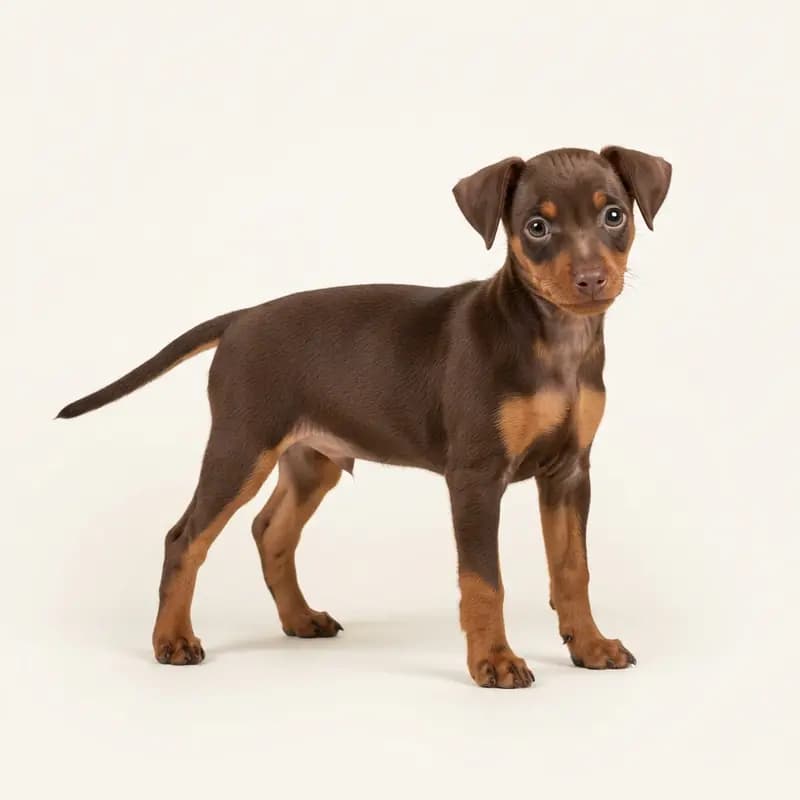
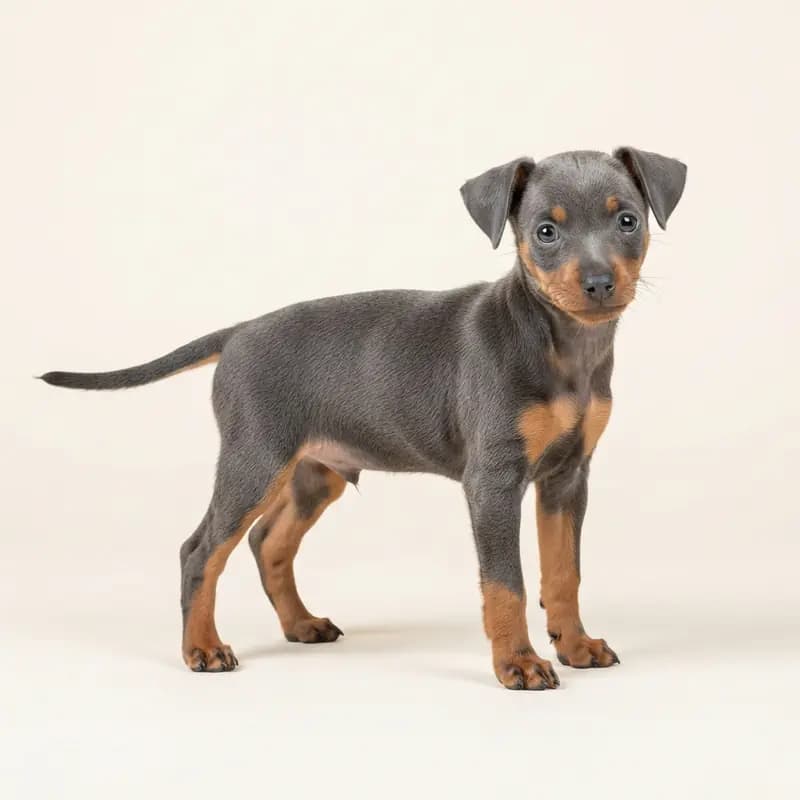
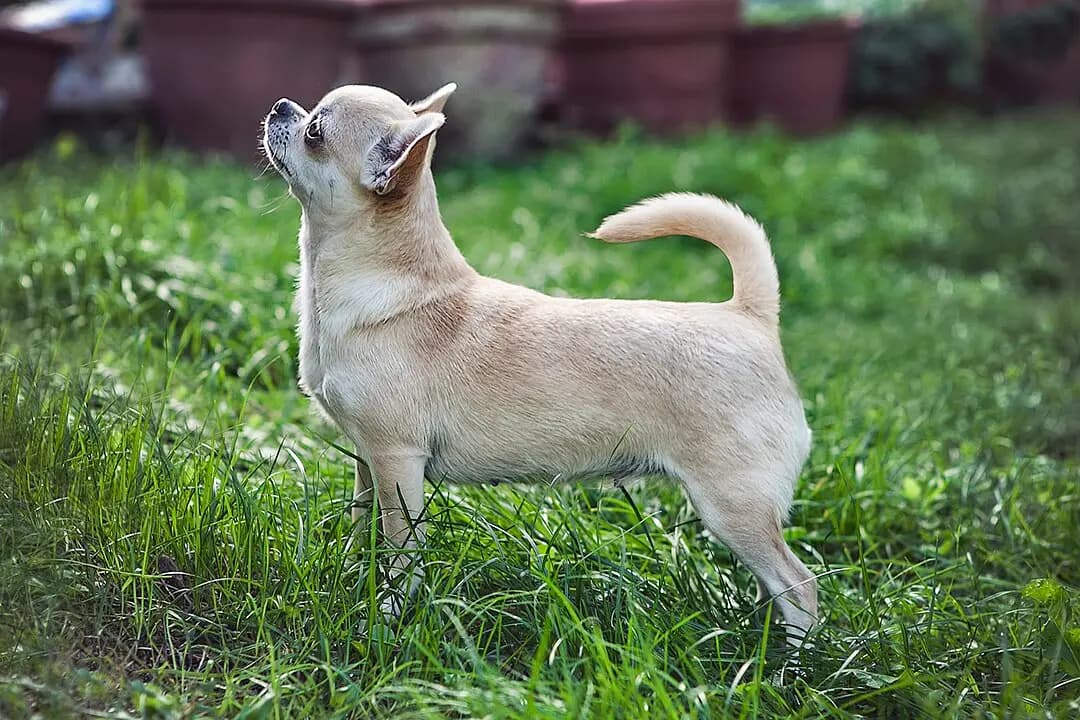
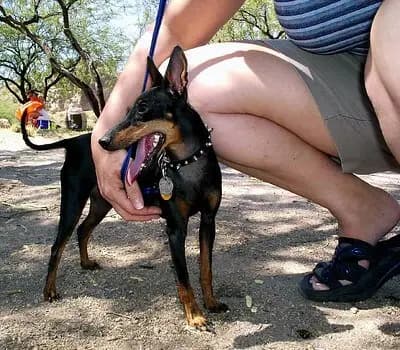
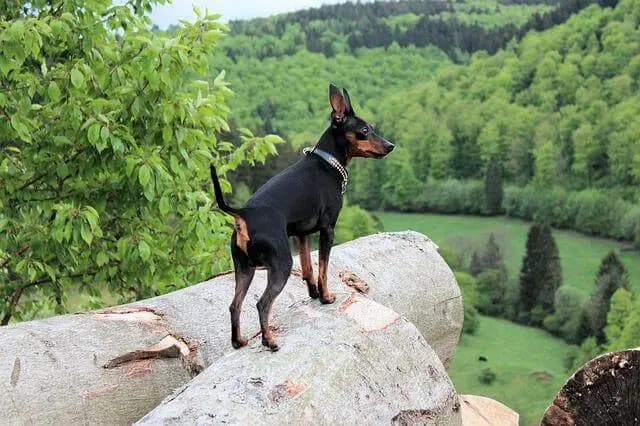
The Miniature Pinscher, also known as the Zwergpinscher, is a small but strong and elegant dog that impresses with its lively and courageous nature. It belongs to FCI Group 2 and is classified in the Pinscher and Schnauzer section. With its square body, noble head and characteristic high-carried tail, it exudes a special elegance. Its coat is short, smooth and lies close to the body, making it very easy to care for. There are two variants of coat color: black with red or brown markings (black and tan) or stag red. There are no differences between performance and show lines in this breed as it is bred primarily as a companion dog.
The Miniature Pinscher is a small dog with a big heart and an extremely lively and courageous personality. He is known for his bright and energetic temperament and his unwavering loyalty to his family. He is very people-oriented and enjoys the company of his people more than anything. Despite his small size, he is an excellent watchdog and does not shy away from protecting his family. The Miniature Pinscher is a very playful dog that loves to run around and play. His intelligence and energy make him a great companion for active people who enjoy spending a lot of time outdoors. Even if he can easily be kept in an apartment, he still needs enough exercise and mental stimulation to be happy and balanced. Long walks, playtime, and training sessions are essential for this active little dog. Despite its size and playful character, the Miniature Pinscher can also learn very well to stay alone. He is an independent little dog who enjoys exploring his surroundings and learning new things. However, it is important to get him used to being alone early and carefully to avoid separation anxiety or destructive behavior. The Miniature Pinscher often shows pronounced hunting or prey-catching behavior. This is a trait that comes from his past as a rat catcher. It is important to take this instinct into account and offer it appropriate outlets for it, for example through search or fetch games. When it comes to alertness, the Miniature Pinscher leaves many larger breeds behind. He is always alert and ready to protect his family from strangers or danger. His keen senses and courage make him an excellent watchdog, although his size means he is of course not a deterrent. However, he will not hesitate to bark and draw attention to himself if he notices something suspicious.
| Watchfulness A natural watchdog with real protective instinct. | High |
| Openness to Strangers Neither pushily friendly nor suspicious. | Neutral |
| Hunting or Herding Drive Mild interest in movement and small animals — easily managed. | Low |
Fun Fact!
Despite their small size, Miniature Pinschers were originally bred to serve as effective rat and mouse hunters in homes and stables.
The Miniature Pinscher is an intelligent and active dog that wants to be exercised and kept busy. He is considered suspicious of strangers, but is also often described as fearful.
Miniature Pinschers can be kept well in both the city and the country. They are adaptable dogs that can adapt to life in both an apartment and a house with a garden. However, despite their size, they require sufficient exercise and mental stimulation. Miniature Pinschers generally get along well with children, especially if they are used to it from an early age. However, because they are quite small and delicate, it is important to monitor dog-child interactions to ensure the dog is not accidentally injured. Although they have strong hunting habits, miniature pinschers can also live with other pets, including cats, with appropriate socialization and training.
Loves family life and thrives in a group.
Gets on well with children — with adult supervision.
Can get on with dogs it knows — strangers are a different story.
Small space, noise, lots of people — no problem at all.
Owning a dog is a privilege, but it's also a real responsibility. Before you bring one into your life, be honest with yourself about the commitment it takes.
Raising a Miniature Pinscher requires patience, consistency and a certain level of understanding of his independent nature. They are intelligent dogs that learn quickly, but also have a mind of their own. Positive reinforcement and playful training work best for them. Due to their history as rat hunters, Miniature Pinschers have a high motivation to prey, which can be channeled into games such as fetch or search games. They tend to quickly become overly enthusiastic about such activities, so it's important to maintain a balance of activity and avoid over-engagement or a fixation on certain toys. Impulse control and frustration tolerance are important skills to teach a Miniature Pinscher. They help prevent problem behavior and give you better control over the dog, especially in exciting or stressful situations.
The miniature pinscher's diet should be balanced and tailored to its size and activity level. High-quality food that is high in proteins and healthy fats and low in fillers is ideal. Due to their size, Miniature Pinschers are prone to being overweight, so it is important to carefully monitor the dog's food intake and weight. Grooming the Miniature Pinscher is quite easy as it has a short, smooth coat that fits close to the body. It does not have an undercoat, which is why it should be protected from the cold in winter. It copes well with the climate in Germany, but should be protected accordingly in the colder months. Regular brushing is enough to keep his coat clean and healthy. The Miniature Pinscher does not shed excessively, but seasonal hair loss may occur.
| Care Level Minimal effort — occasional brushing and bathing. | Low-maintenance |
| Exercise Needs Needs several hours of serious exercise every day. | Very active |
| Shedding Regular shedding — dog hair on clothes is now normal. | Moderate |
| Trainability Bred to work closely alongside humans. | Highly trainable |
Our experts are still reviewing this information. Spotted something wrong? Email us at info@honestdog.de.
Solid
Health grade
In the Miniature Pinscher, orthopedic problems such as patellar luxation (PL) and Legg-Calvé-Perthes disease (LCPD) as well as heart diseases such as mitral valve disease (MVD) are significant risks. The Pinscher-Schnauzer-Klub 1895 e.V. mandates an examination for eye anomalies with the threshold value of clear. A responsible breeder also has the knees examined for patellar luxation (PL) and, in the case of Color Dilution Alopecia / Blue Dog Syndrome or hyperuricosuria (HUU), breeds carrier animals exclusively with clear partners. Before buying a puppy, ask to see the test results for patellar luxation (PL) with the result PL 0 as well as an unremarkable examination for mitral valve disease (MVD).
Grade is relative to other breeds — AI-assisted and editorially reviewed.
Methodology and data: HonestDog Dog Breed Health Report 2026
What matters most for this breed
Tap any item to see details.
You should pay attention to a healthy weight and joint-friendly exercise, as well as schedule regular eye check-ups to detect problems early.
Responsible breeders provide proof of eye examinations in accordance with club requirements, as well as a PL 0 result for patellar luxation (PL), and check their breeding animals for myxomatous mitral valve disease (MVD).
Note: This health overview is AI-assisted and editorially reviewed. It is for orientation only and does not replace veterinary advice.
What matters most for this breed — what's common, how much it affects the dog's life, and how to protect yourself as a buyer.
Tap a body region to see the inherited conditions linked to it.
The three most important risks
Pick a region on the map to explore other areas.
Tier 1 is the core standard: the tests Pinscher-Schnauzer-Klub 1895 e.V. requires, plus further tests from the recommended health standard for this breed. Tiers 2 and 3 show how responsible breeders go beyond.
Core standard. Tests marked “Club standard” are required by Pinscher-Schnauzer-Klub 1895 e.V. for breeding approval; the others are part of the recommended health standard for this breed. Ask any reputable breeder for the results.
No entries in this tier.
Note: This health overview is AI-assisted and editorially reviewed. It is for orientation only and does not replace veterinary advice.
A Miniature Pinscher costs around ~€150 per month (€80 – €280, depending on your setup). The first year adds up to roughly ~€4,530 including purchase, equipment and puppy school; across the dog's life (13 years) it comes to about ~€26,760.
With surgery cover, running costs come to about ~€140 per month — in return, your share of a major operation drops from several thousand euros to around 20 percent.
Per month
~€150
In the first year
~€4,530
Across the dog's life
~€26,760
Estimated purchase price from a breeder: €1,200 – €2,500
Estimate at a mid-range setup (suburban, dry food, 1–2 hours of daily exercise), average German prices, as of July 2026.
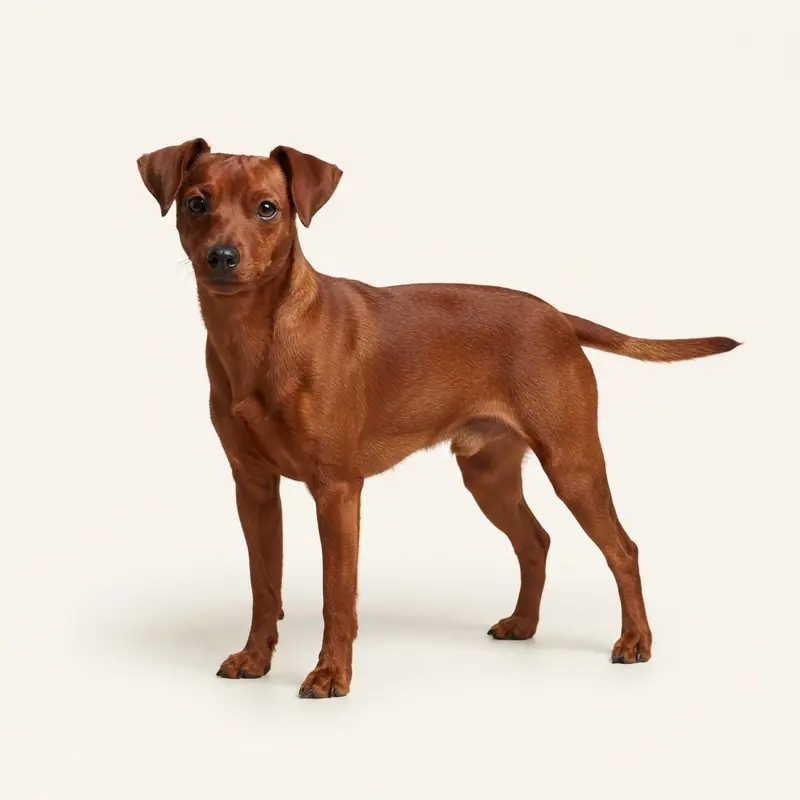 Illustrative image
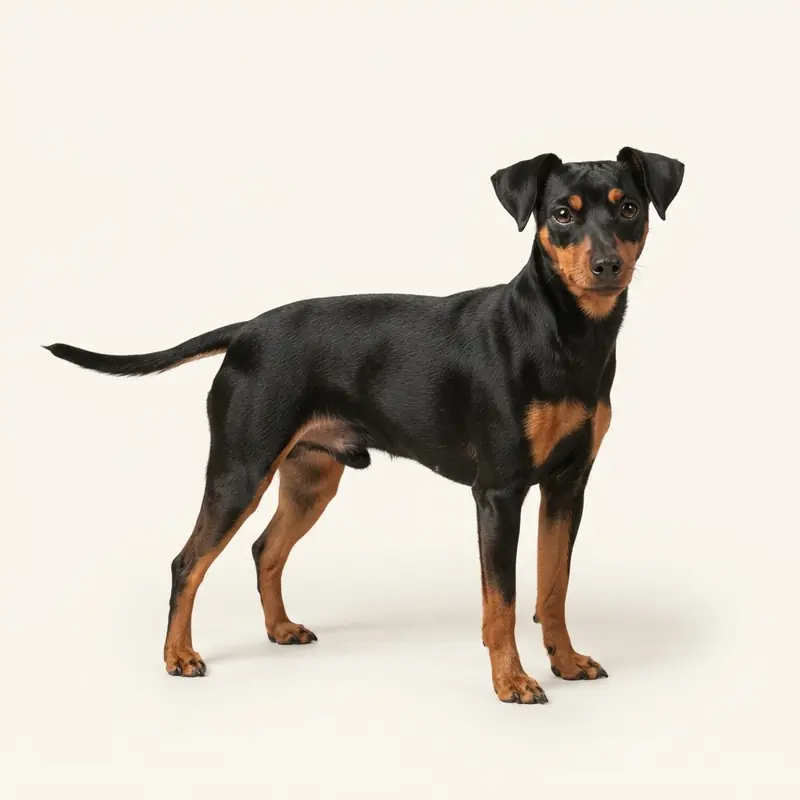 Illustrative image
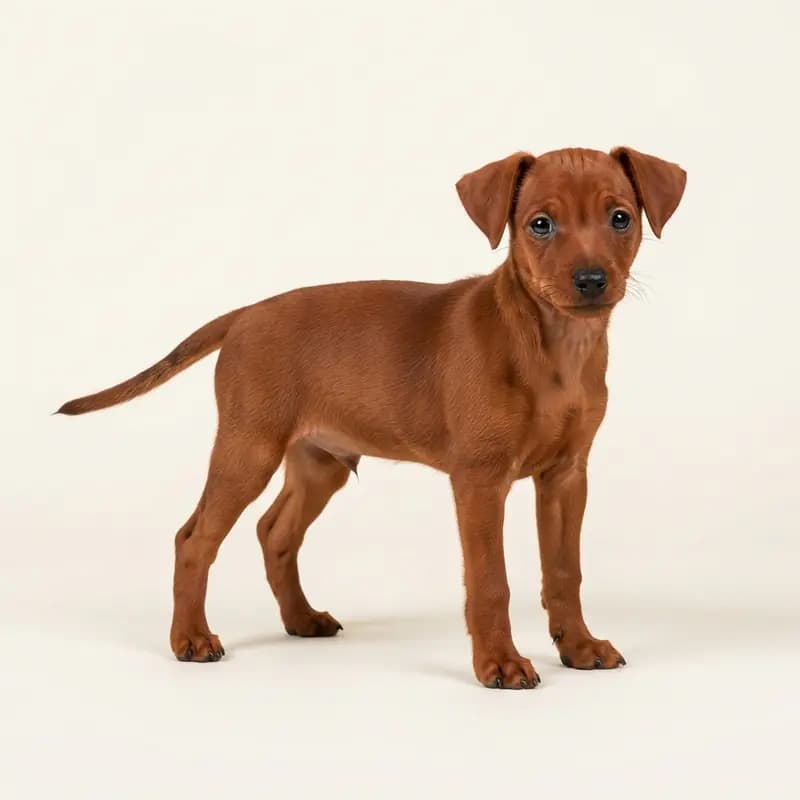 Illustrative image
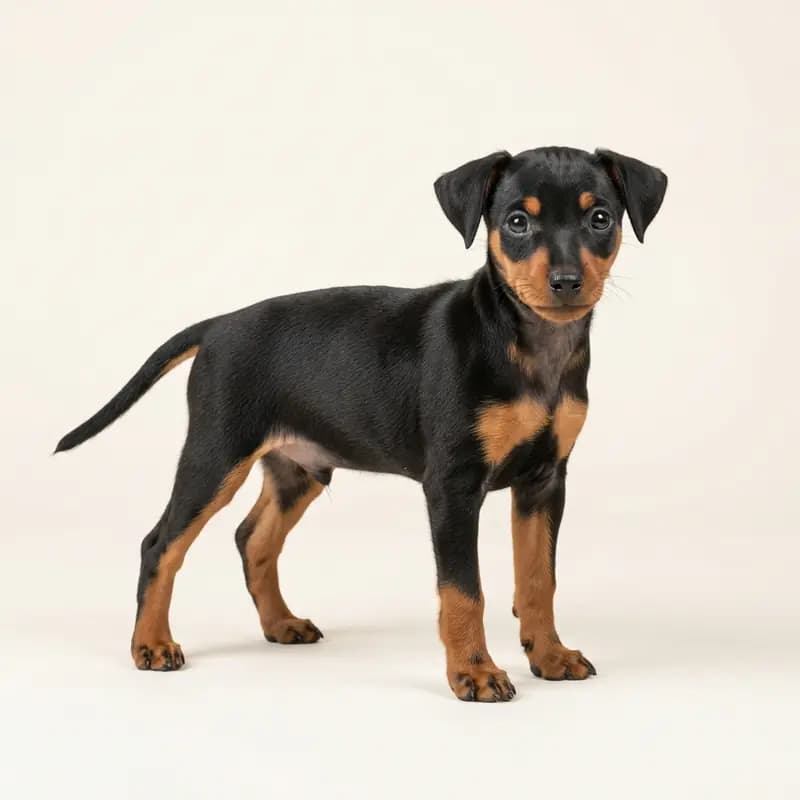 Illustrative image
The Miniature Pinscher's roots lie in Germany, where it has been used as a farm and stable dog for centuries. His job there was primarily to drive away and catch rats and mice. His courage and vigilance made him ideal for this task. The breed was depicted in artwork as early as the 17th century, but it was not until the late 19th century that targeted breeding efforts began. In 1895 the first breed standard was established and the breed was officially recognized. In the 20th century, the Miniature Pinscher also gained recognition outside of Germany and became very popular in many countries, especially in the USA. Today he is primarily valued as a companion dog who wins the hearts of his owners with his affectionate and lively nature.
The Miniature Pinscher was bred to be a guard and companion dog, known for its alertness and lively temperament.
Germany
1800
In everyday life with people, owners describe the Miniature Pinscher as an affectionate, cuddly, and loyal companion that would love to follow its people everywhere. Many owners stress that it is by no means just a little lapdog but a real bundle of energy. On walks and hikes these dogs show considerable stamina and love nothing more than running. Once they've had their exercise, though, they enjoy soft blankets and long cuddle sessions on the sofa at home.
At the same time, owners point out again and again that the breed is very alert and territorial. Unusual noises in the hallway or visitors at the apartment door are quickly announced at full volume. Some dogs also tend to guard their main person or their resources fiercely. Anyone who gets a Miniature Pinscher should be prepared for a dog that's up for almost any adventure outdoors but often avoids rain and cold, wet, dreary weather like the plague and would rather sleep the whole day somewhere warm.
Sources:tierforum.deparents.atdogforum.dereddit.comhundeforum.com
On training and exercise, many owners agree: the Miniature Pinscher is highly intelligent, picks up exercises in a flash, and works happily with positive reinforcement. At the same time, it rarely forgives inconsistency. If it finds gaps in leadership, it quickly makes its own decisions and tries to handle situations itself. Owners name a low arousal threshold, a tendency to yap, and impulse control as recurring training projects, for example when it spots mice, small prey animals, or fast-moving things like joggers.
Experienced owners especially often stress that winding down and resting on purpose have to be an important part of training. Because Miniature Pinschers easily get overexcited and slip into nervous frenzy, many advise against constantly revving them up with ball-throwing games or nonstop action. Calmer activities such as scent work, retrieving, or trick training work better, challenging the clever mind without making the dog scattered.
Sources:tierforum.deparents.atreddit.comhundeforum.comdogforum.de
When it comes to health and grooming, owner reports generally describe the Miniature Pinscher as a robust, long-lived breed. The short, shiny coat needs little care and only an occasional brushing. However, owners keep pointing out that the short, bristly hairs, which have no undercoat beneath them, stubbornly cling to upholstery and clothing. Without an undercoat, these small dogs chill quickly in winter temperatures and start shivering fast, which is why many owners consider a practical little coat essential.
Among the breed's typical health weak spots, forums mainly mention luxating patella (a kneecap that slips out of place), which in some dogs has to be treated or operated on by a vet at a young age. Tartar buildup in the small jaws is also reported now and then. Many owners therefore urge buying puppies only from reputable breeders who pay attention to sound parent dogs and solid bone, to avoid overbred, extremely tiny, or nervous dogs.
Paraphrased from real owner reports · translated from German
The Miniature Pinscher is an active dog that needs plenty of exercise and mental stimulation. Research the temperament, grooming needs, and space requirements before deciding.
The average life expectancy of a Miniature Pinscher is 12-14 years. With proper care and regular vet visits, your dog can live a long, healthy life.
Miniature Pinscher grooming requirements include regular brushing, nail trimming, and dental care. HonestDog provides detailed grooming tips for every breed.
The Miniature Pinscher can be a great family dog. Proper training and socialization are key. HonestDog provides family suitability information for every breed.
The Miniature Pinscher comes in these colors: Red, Black and tan, Brown and tan, Blue and tan. Colors that fall outside the breed standard are marked as such on the breed page.
Showcase your kennel on HonestDog and reach families searching for a responsibly bred Miniature Pinscher.