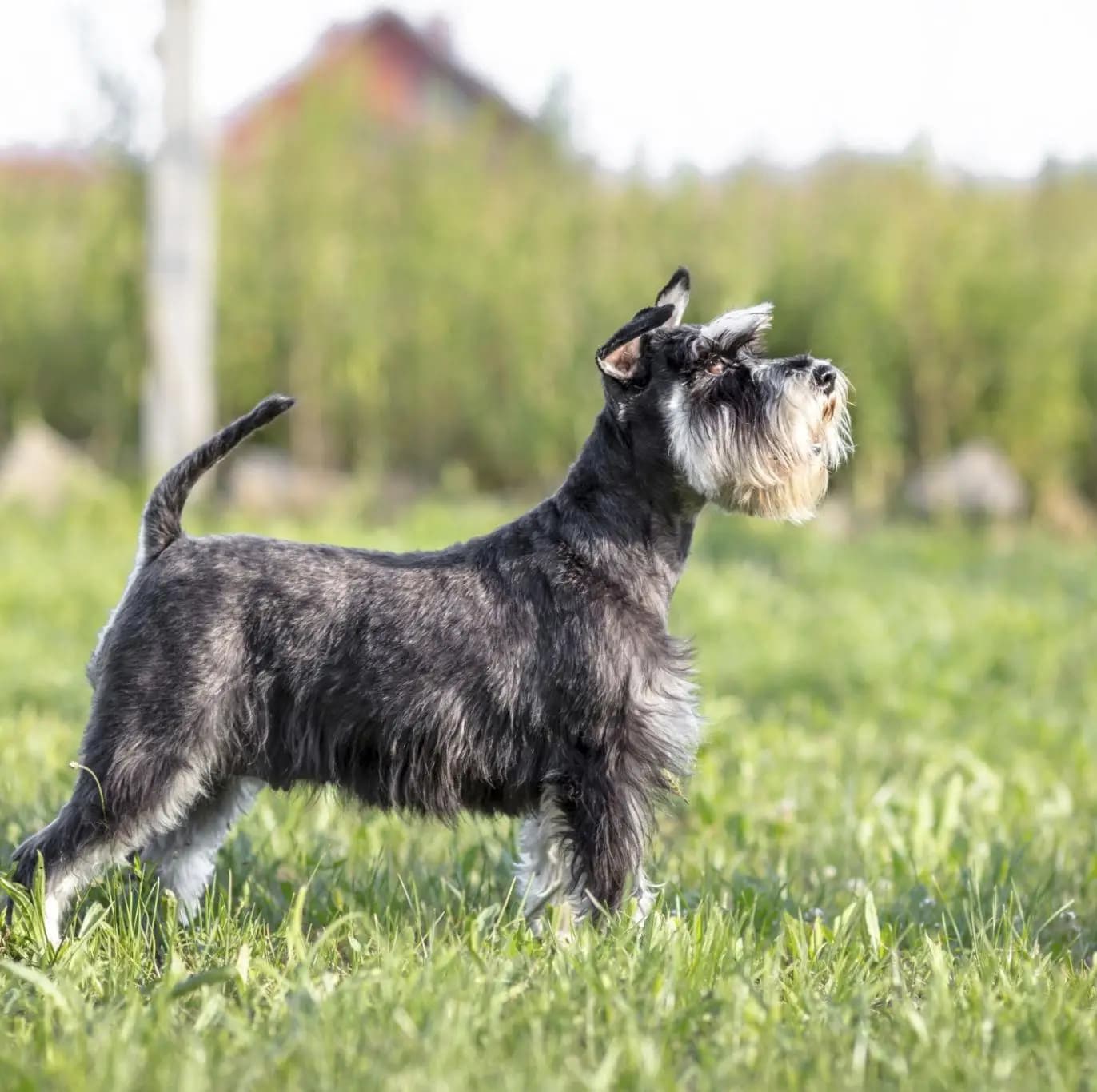
Standard SchnauzerClose relative
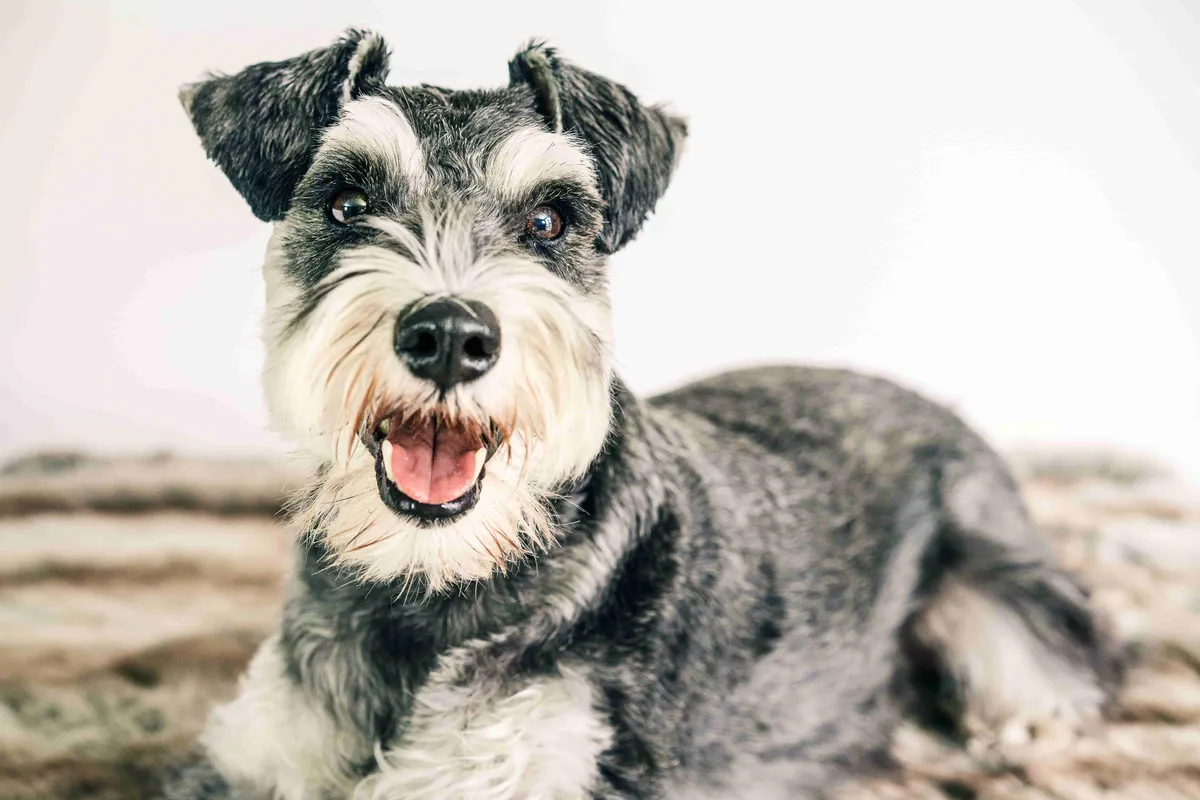
The Miniature Schnauzer is a fearless, highly intelligent companion in a compact package—bred as a robust ratter and guard dog for home and farm. He has the self-confidence of a giant, packed into eight kilos of concentrated loyalty.
How the health grade is calculated
Sources for required breeding screenings. Pinscher-Schnauzer-Klub 1895 e.V.
Self-check
Answer 6 quick questions about your everyday life and see how well the Miniature Schnauzer fits you — including an honest cost estimate per month, per year, and across the dog's lifetime.

At a glance
The essentials — key facts, traits, and health priorities — before you dive deeper.
Lifespan
12–15 yrs
Shoulder height
30–36 cm
Weight
4–8 kg
Practical
Temperament
Daily life
What matters most
Especially with a Miniature Schnauzer, choosing the right breeder is the single most important decision you'll make. Serious breeders consistently test the parents for inherited conditions, prioritize healthy early socialization, and stay accountable long after handover. A cheap puppy without health screening tends to become the most expensive dog later on.
See HonestDog breeder standards →Colors & coat
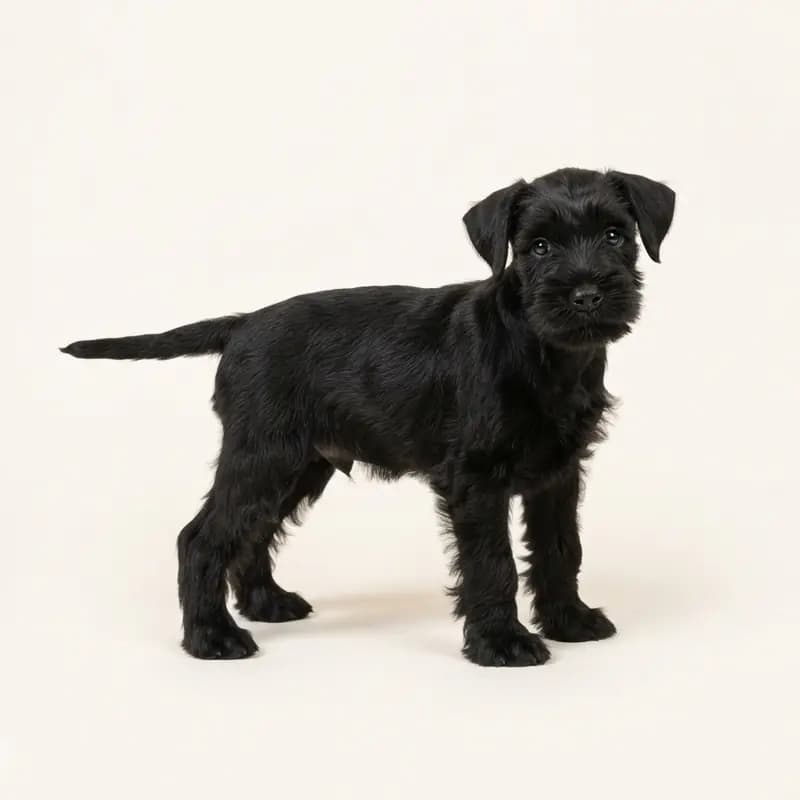
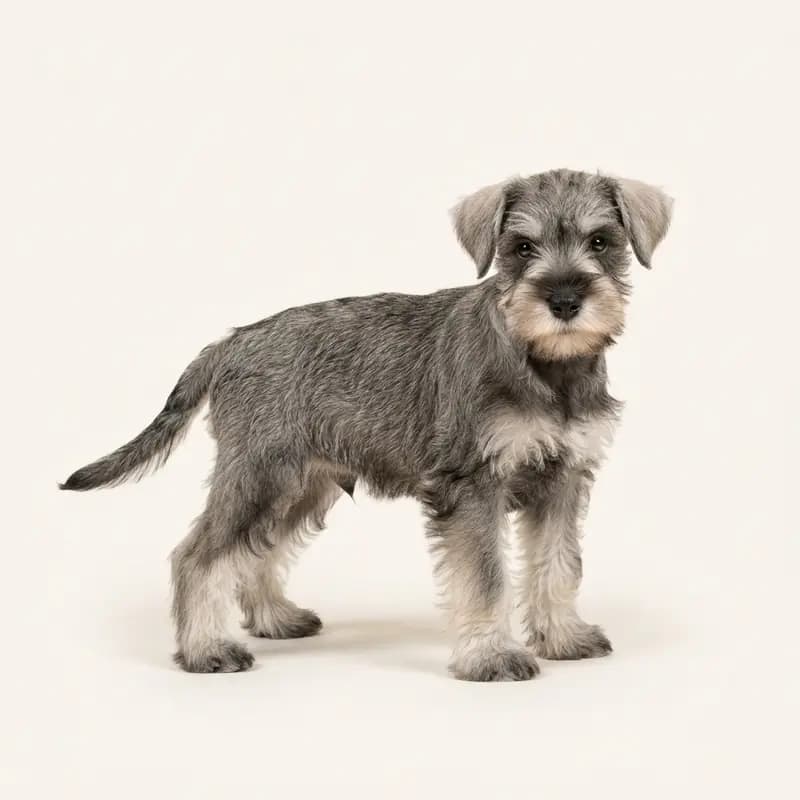
The coat colors that occur in the Miniature Schnauzer — including which ones fall outside the breed standard and which carry genetic risk.
Eye colors
 Brown
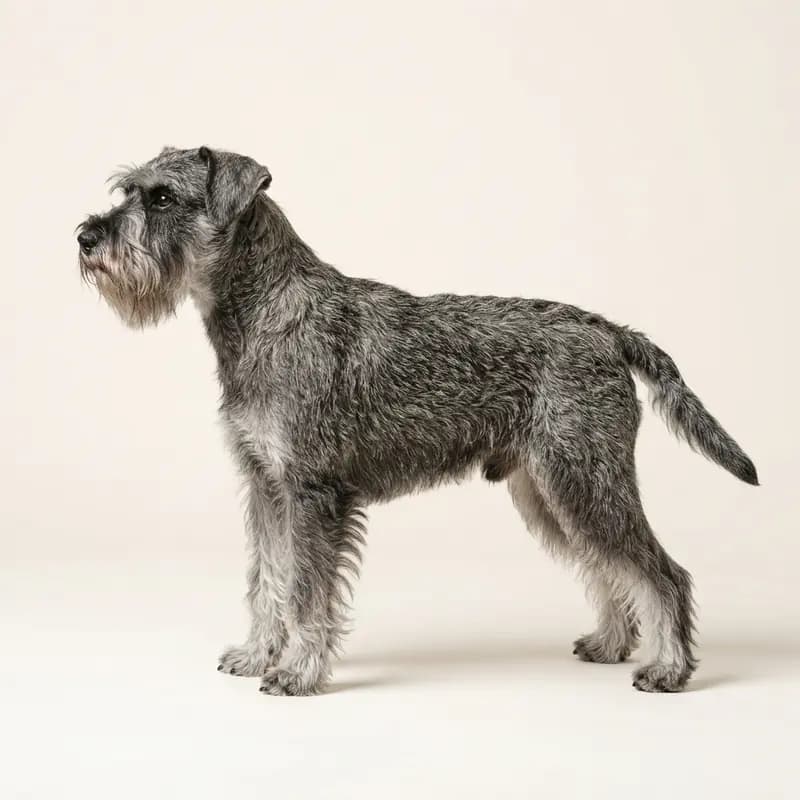
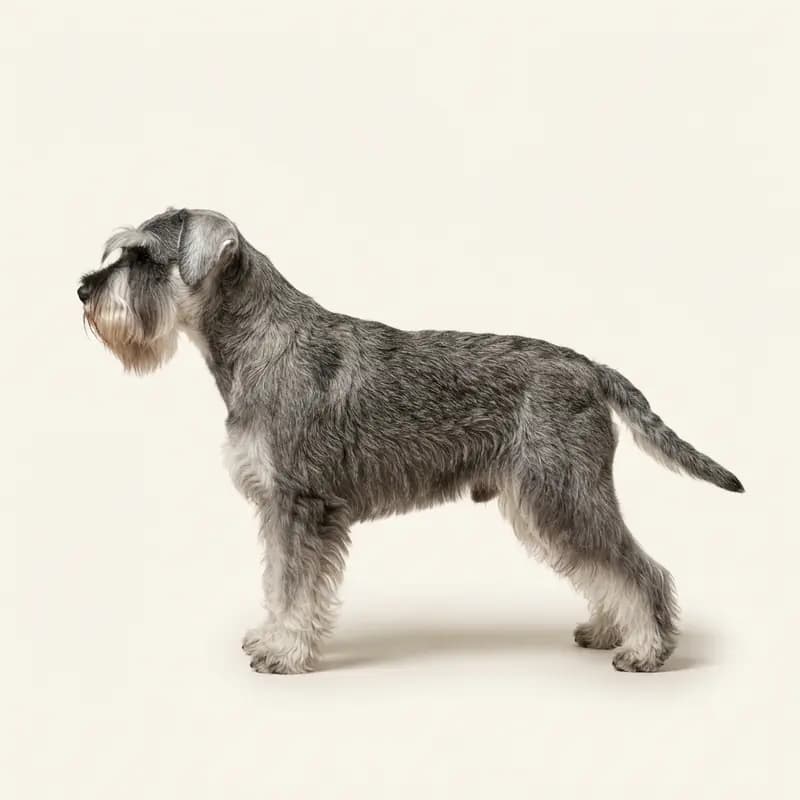
Coat type
 Illustrative image
Wire
 Double coat
 Illustrative image
Medium
The real vibes check
A Miniature Schnauzer is not a decorative sofa cushion, but the self-appointed security service of your daily life. He takes his job seriously and will report every unusual sound—but once you show him that you have things under control, he will relinquish that responsibility and become an unwavering, cuddly shadow.
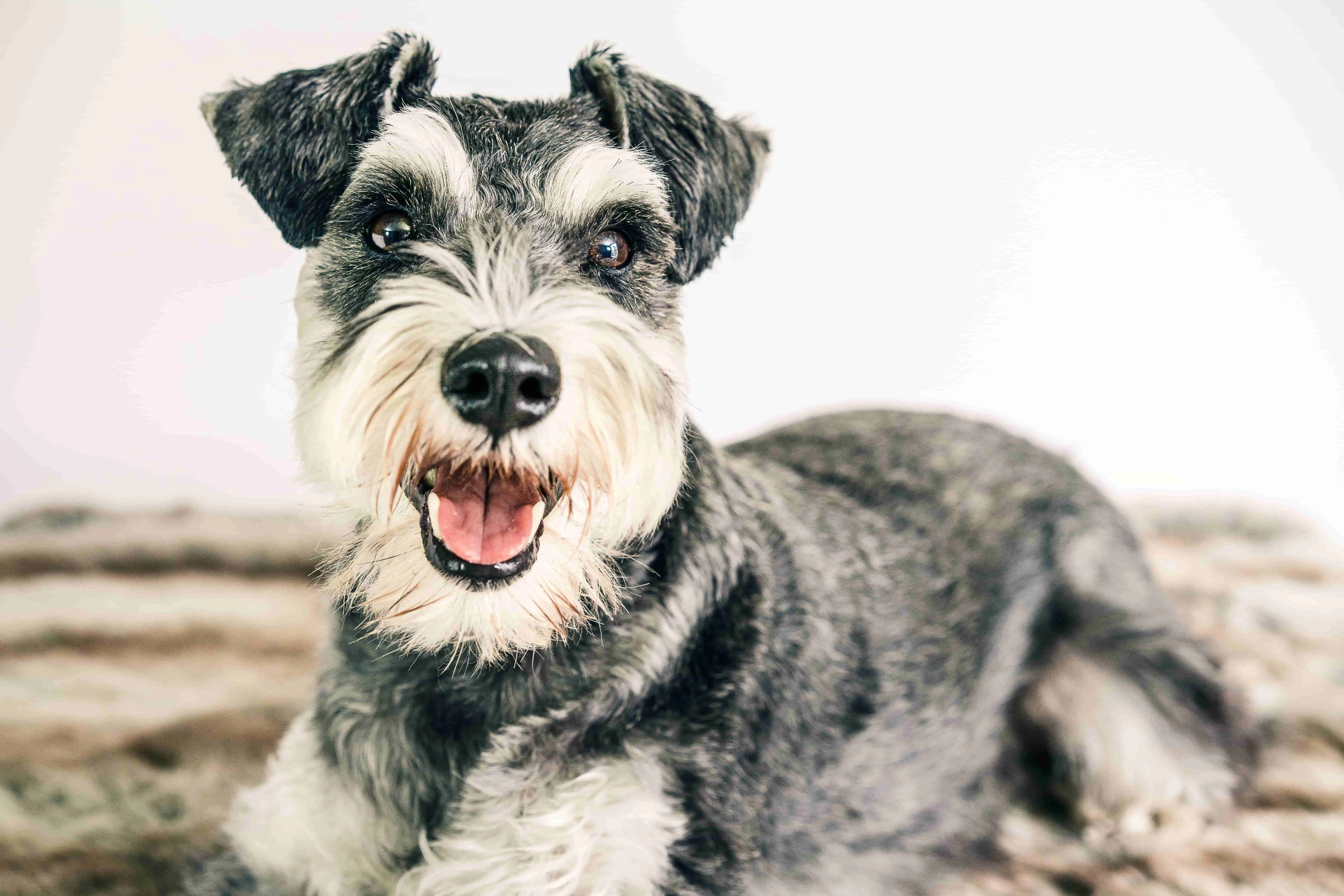
The Miniature Schnauzer, often referred to as the "Mini Schnauzer," is a small but robust dog with a pronounced beard and eyebrows that give it a distinctive appearance. He belongs to FCI Group 2, Section 1, Pinscher and Schnauzer. There is no distinction between performance and show lines in the Miniature Schnauzer. The body structure is compact and strong, which gives it a certain agility. The Miniature Schnauzer is a scaled-down version of the Standard Schnauzer, but has been specifically bred to retain its unique features and proportions.
The Miniature Schnauzer is an incredibly charming little dog that is bursting with energy and intelligence. What he lacks in size, he makes up for in his big personality. As a member of the Pinscher and Schnauzer families, the Miniature Schnauzer has a strong guarding instinct. He is very alert and lets you know when something is wrong around him - sometimes a little too enthusiastically. It is therefore important that you teach him when it is appropriate to bark and when it is not. Despite its small size, the Miniature Schnauzer has a lot of energy. He loves to play and run around and enjoys daily walks and activities that challenge him mentally and physically. So if you are someone who likes to be active and is looking for a partner for your adventures, the Miniature Schnauzer could be the right dog for you. He is also very people-oriented and loves being part of the family. The Miniature Schnauzer gets along well with children as long as they learn to treat him with respect. He is also intelligent and eager to learn, meaning that with the right guidance and patience, you can have a well-behaved and happy dog. The Miniature Schnauzer is not usually a dog that likes to be alone and it is advisable to keep him company or make sure he is occupied when you are not at home. He does not tend to exhibit strong hunting behavior, but as with any dog, this varies from individual to individual.
| Watchfulness A natural watchdog with real protective instinct. | High |
| Openness to Strangers Careful around unfamiliar people — thaws slowly. | Cautious |
| Hunting or Herding Drive Mild interest in movement and small animals — easily managed. | Low |
Fun Fact!
Did you know that the Miniature Schnauzer was originally bred in Germany to catch rats and other pests? Today, however, he is known and loved more for his charming nature and loyalty!
Miniature Schnauzers are spirited and robust dogs. They are territorial, easily excitable and very alert. Miniature Schnauzers can be adaptable dogs that are suitable for many types of dog ownership. However, they need consistent training and type-appropriate employment. They are often rather dismissive towards strangers.
The Miniature Schnauzer is well suited as a city dog, but needs regular exercise and mental stimulation. He gets along well with children as long as they have learned how to deal with dogs. Because the Miniature Schnauzer is an alert dog, he may be wary of other dogs and pets, but with proper socialization this can be controlled.
Loves family life and thrives in a group.
Takes boisterous and affectionate children in its stride.
Usually gets on fine with other dogs.
Small space, noise, lots of people — no problem at all.
Owning a dog is a privilege, but it's also a real responsibility. Before you bring one into your life, be honest with yourself about the commitment it takes.
The Miniature Schnauzer is an intelligent and energetic dog that likes to keep busy. It is suitable for various dog sports such as agility, obedience or rally obedience. It is important that the Miniature Schnauzer is mentally challenged without overwhelming him. It is also important to teach the Miniature Schnauzer how to channel his energy in a positive way. This includes learning impulse control and frustration tolerance so that he remains calm and controlled in various situations. Consistent but loving training is important to ensure that the Miniature Schnauzer becomes a balanced and well-behaved dog. Positive reinforcement and setting clear boundaries are key to success.
The Miniature Schnauzer is not particularly picky about his food, but a balanced diet is important for his health and well-being. High-quality dry or wet food designed specifically for small breeds is often a good choice. In terms of grooming, the Miniature Schnauzer has a dense, wiry coat with an undercoat. He doesn't shed much hair, but needs regular care to prevent tangles and keep his skin healthy. The climate in Germany is usually not a problem for the Miniature Schnauzer as its fur protects it from both cold and heat.
| Care Level Regular brushing and occasional professional grooming. | Moderate |
| Exercise Needs Needs several hours of serious exercise every day. | Very active |
| Shedding No or minimal hair loss — suitable for allergy sufferers. | No shedding |
| Trainability Bred to work closely alongside humans. | Highly trainable |
Our experts are still reviewing this information. Spotted something wrong? Email us at info@honestdog.de.
Elevated risks
Health grade
In the Miniature Schnauzer, significant breed-specific risks exist for severe eye diseases such as Progressive Retinal Atrophy B HIVEP 3, Primary Lens Luxation (PLL), and cataracts, as well as for Spondylocostal dysostosis, autosomal recessive (SCDO) and Mycobacterium avium complex (MAC). The Pinscher-Schnauzer-Klub 1895 e.V. therefore makes DNA testing for Progressive Retinal Atrophy B HIVEP 3, SCDO, Charcot-Marie-Tooth disease (ITPR3), and Persistent Müllerian Duct Syndrome (PMDS) as well as an ophthalmological eye examination mandatory; carriers may only be mated with clear partners. Responsible breeders additionally test for MAC, Primary Lens Luxation (PLL), and have the knees examined for Patellar Luxation (PL). Before purchasing a puppy, insist on seeing complete ophthalmological reports showing clear status, the PL 0 finding, and the genetic certificates for both parents without gaps.
Grade is relative to other breeds — AI-assisted and editorially reviewed.
Methodology and data: HonestDog Dog Breed Health Report 2026
What matters most for this breed
Tap any item to see details.
With joint-friendly rearing, a healthy weight, and regular veterinary eye check-ups, most of these dogs remain active and fit for a long time.
Responsible breeders test for Progressive Retinal Atrophy B HIVEP 3, SCDO, and CMT, utilize the ophthalmological eye examination, and additionally test voluntarily for MAC as well as patellar luxation (PL).
Note: This health overview is AI-assisted and editorially reviewed. It is for orientation only and does not replace veterinary advice.
What matters most for this breed — what's common, how much it affects the dog's life, and how to protect yourself as a buyer.
Tap a body region to see the inherited conditions linked to it.
The three most important risks
Pick a region on the map to explore other areas.
Tier 1 is the core standard: the tests Pinscher-Schnauzer-Klub 1895 e.V. requires, plus further tests from the recommended health standard for this breed. Tiers 2 and 3 show how responsible breeders go beyond.
Core standard. Tests marked “Club standard” are required by Pinscher-Schnauzer-Klub 1895 e.V. for breeding approval; the others are part of the recommended health standard for this breed. Ask any reputable breeder for the results.
No entries in this tier.
Note: This health overview is AI-assisted and editorially reviewed. It is for orientation only and does not replace veterinary advice.
A Miniature Schnauzer costs around ~€160 per month (€90 – €300, depending on your setup). The first year adds up to roughly ~€4,450 including purchase, equipment and puppy school; across the dog's life (13.5 years) it comes to about ~€28,710.
With surgery cover, running costs come to about ~€160 per month — in return, your share of a major operation drops from several thousand euros to around 20 percent.
Per month
~€160
In the first year
~€4,450
Across the dog's life
~€28,710
Purchase price per HonestDog's market analysis (asking prices in Germany, as of October 2026): €1,550 – €1,800
Small sample: 10 unique listings in the rolling three-month window. Data for this breed · Methodology
Estimate at a mid-range setup (suburban, dry food, 1–2 hours of daily exercise), average German prices, as of July 2026.
 Illustrative imageIllustrative image
 Illustrative image
 Illustrative image
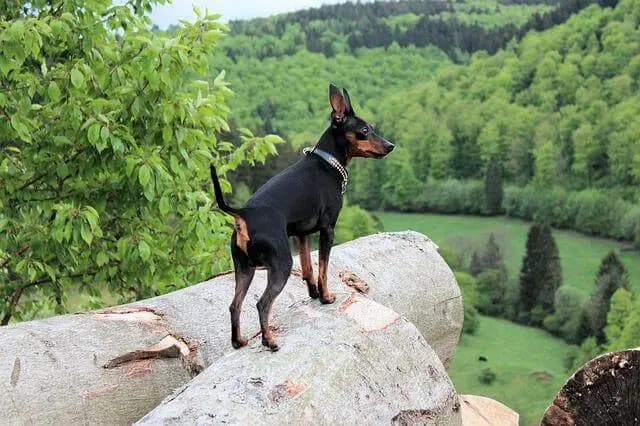
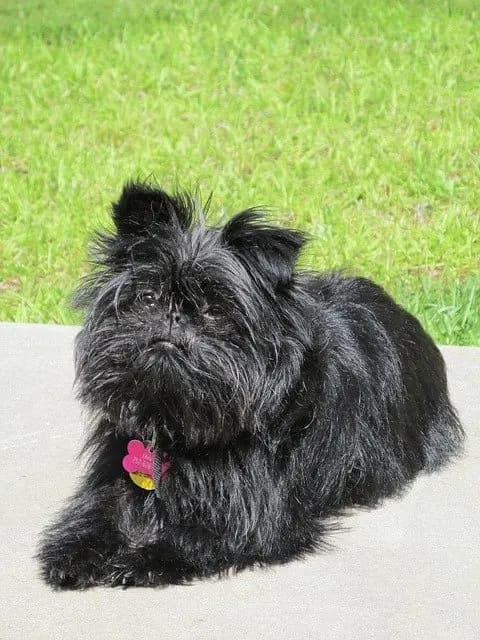
The roots of the Miniature Schnauzer go back to the 19th century in Germany. Originally, Standard Schnauzers were used as working dogs on farms. However, over time, breeders decided to breed a smaller version that would be more suitable as a domestic dog. Crossing the Standard Schnauzer with smaller breeds such as the Affenpinscher and possibly the Poodle eventually created the Miniature Schnauzer. The breed quickly became popular, both as a companion dog and as a guard dog. The Miniature Schnauzer was first recognized as a separate breed at the beginning of the 20th century and has since spread worldwide.
The Miniature Schnauzer was bred as a guard and companion dog, known for its alertness and lively temperament.
Germany
1880
Many owners describe the Miniature Schnauzer as a surprisingly sturdy and agile companion that often thinks of itself as a "big dog in a small package." In families it is usually very affectionate and playful and likes to be close to its people. At the same time, experienced owners stress that the Miniature Schnauzer should never be mistaken for a mere lap or cuddle dog. It expects its boundaries to be respected and needs set rest periods so its lively nature doesn't tip over into frenzy in a hectic household.
A frequently mentioned challenge is its strong urge to guard and sound the alarm. Owners regularly report that Miniature Schnauzers announce noises in the stairwell or unfamiliar visitors loudly and right away, and can be suspicious or standoffish with strangers at first. To keep this from turning into constant yapping, Schnauzer owners stress how important it is to manage doorbell situations early and to lead consistently at home.
Owner reports on training consistently describe the Miniature Schnauzer as very quick to learn, clever, and eager to work. Many owners point out, however, that this intelligence comes with a noticeable stubborn streak: commands do get questioned when the dog can't see the point or the motivation. The breed often answers strictness or harshness by stubbornly withdrawing, while a fair, good-humored, reward-based approach usually leads to a high willingness to cooperate.
According to community experience, behavior when meeting other dogs outdoors also needs clear rules. Some Miniature Schnauzers tend to assert themselves with confidence that can tip into pushiness, or to voice their frustration loudly during fast-paced play. As for hunting motivation, many owners report an interest in mice, birds, or smaller game, but compared with many terriers they usually rate this drive as more manageable and easy to steer with recall training.
Coat and body care is one of the most heavily discussed topics in owner forums. Many owners value the big advantage that Miniature Schnauzers shed hardly any hair at home when groomed correctly. Newcomers often underestimate the actual work, though: the wiry topcoat should ideally be hand-stripped properly every few months to preserve its color, weather protection, and healthy skin. If the coat is only clipped instead, it often loses its harsh texture and structure.
Many owners also describe a daily routine for the face: the signature beard mats easily, collects dirt and bits of food, and needs regular combing and cleaning. On the health side, owners frequently swap notes on a tendency toward sensitive digestion, pancreas problems, and tartar buildup, which is why fat-conscious feeding and getting the dog used to tooth care early are often recommended.
Sources:reddit.comfressnapf.atriesenschnauzer-zwergschnauzer.devon-der-wilden-meute.weebly.com
Paraphrased from real owner reports · translated from German
The Miniature Schnauzer is an active dog that needs plenty of exercise and mental stimulation. Research the temperament, grooming needs, and space requirements before deciding.
The average life expectancy of a Miniature Schnauzer is 12-15 years. With proper care and regular vet visits, your dog can live a long, healthy life.
Miniature Schnauzer grooming requirements include regular brushing, nail trimming, and dental care. HonestDog provides detailed grooming tips for every breed.
The Miniature Schnauzer can be a great family dog. Proper training and socialization are key. HonestDog provides family suitability information for every breed.
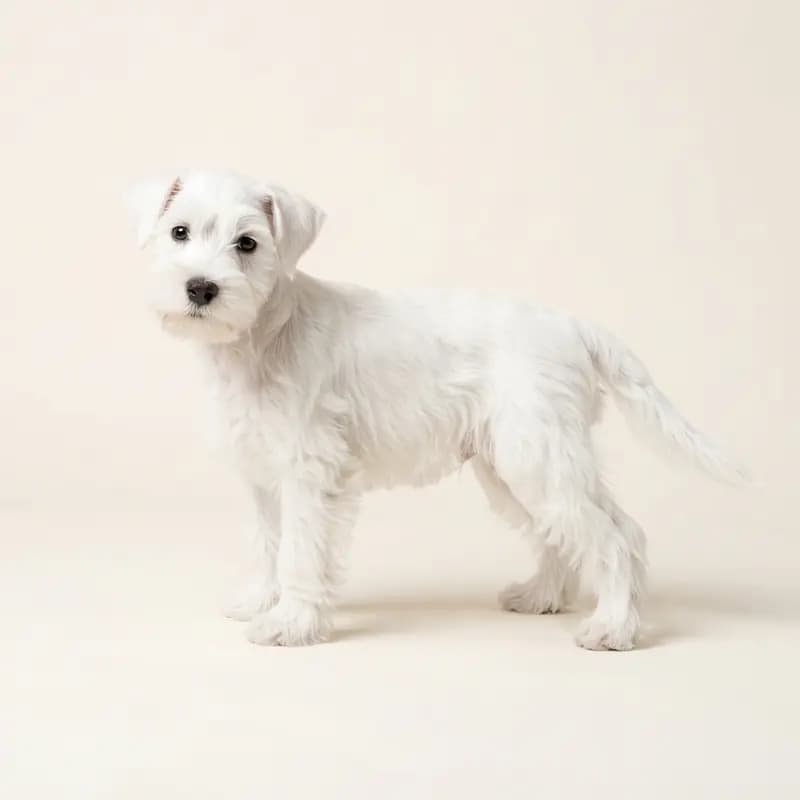
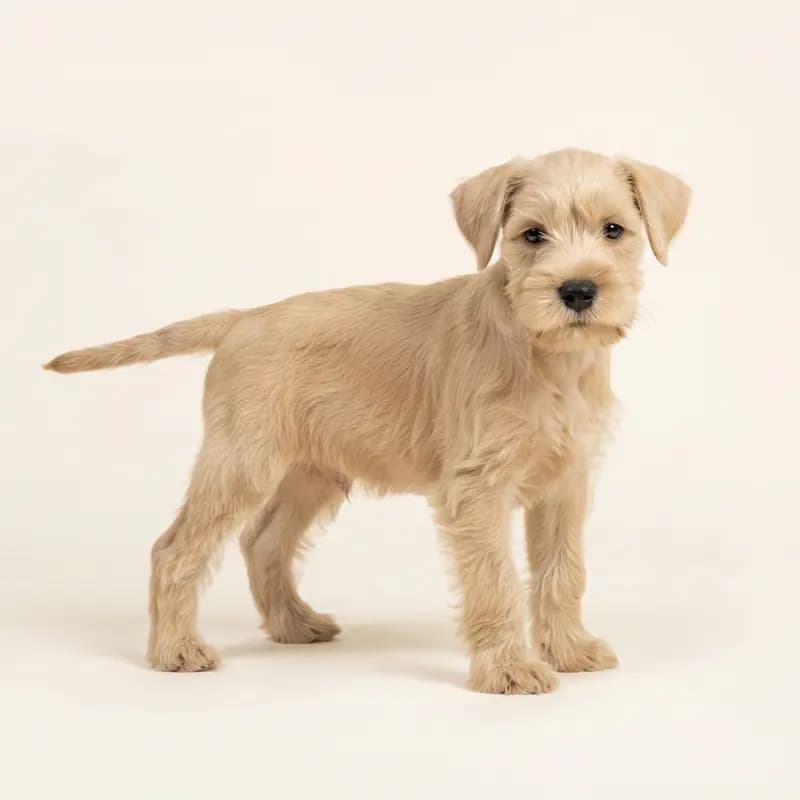
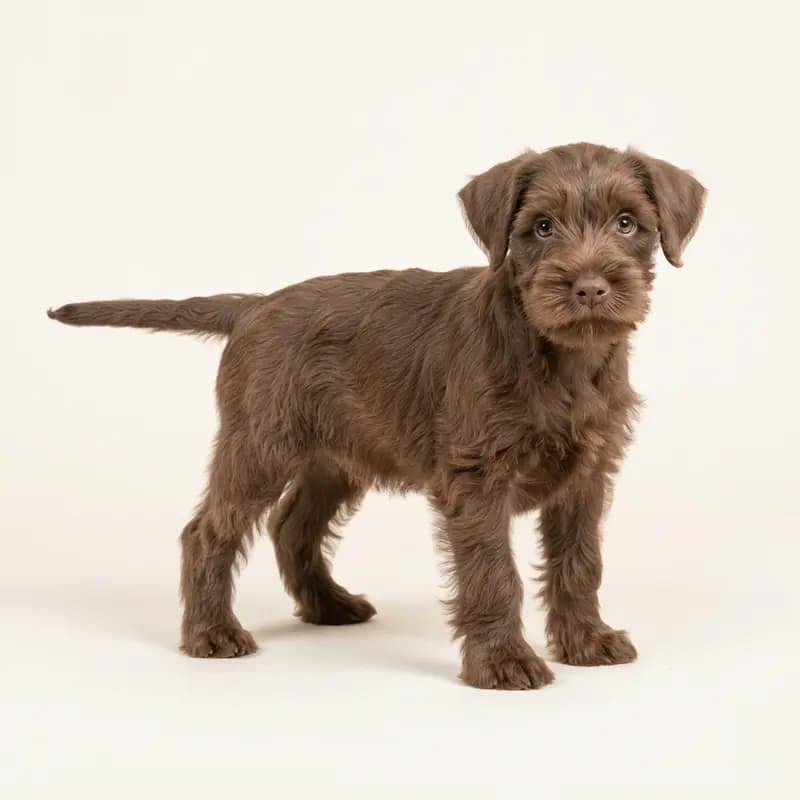
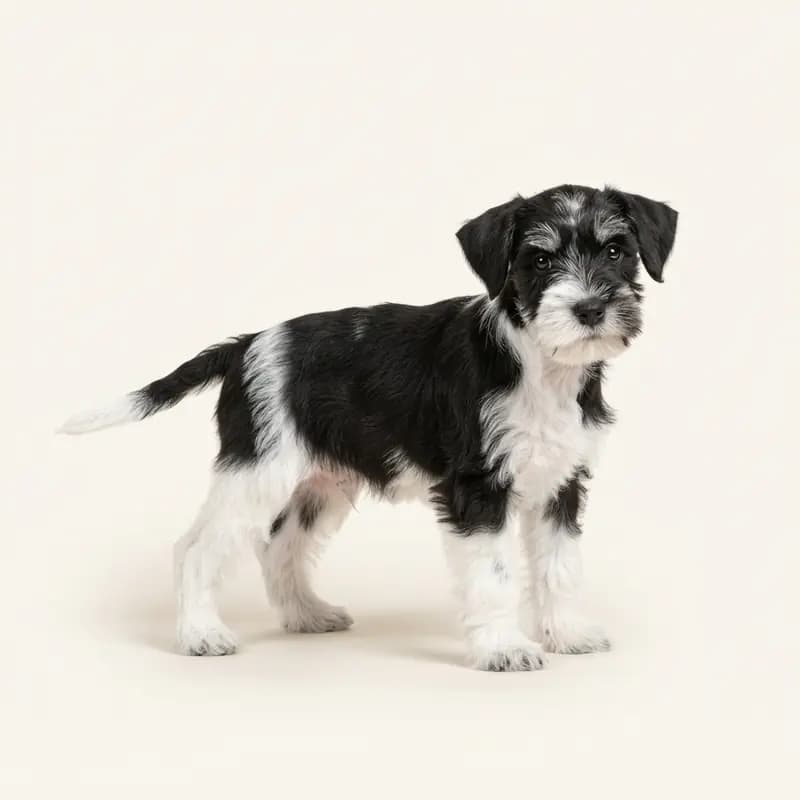
The Miniature Schnauzer comes in these colors: Black, Salt and pepper, White, Fawn, Brown, Black and white. Colors that fall outside the breed standard are marked as such on the breed page.
Showcase your kennel on HonestDog and reach families searching for a responsibly bred Miniature Schnauzer.