Rhodesian RidgebackSame FCI section
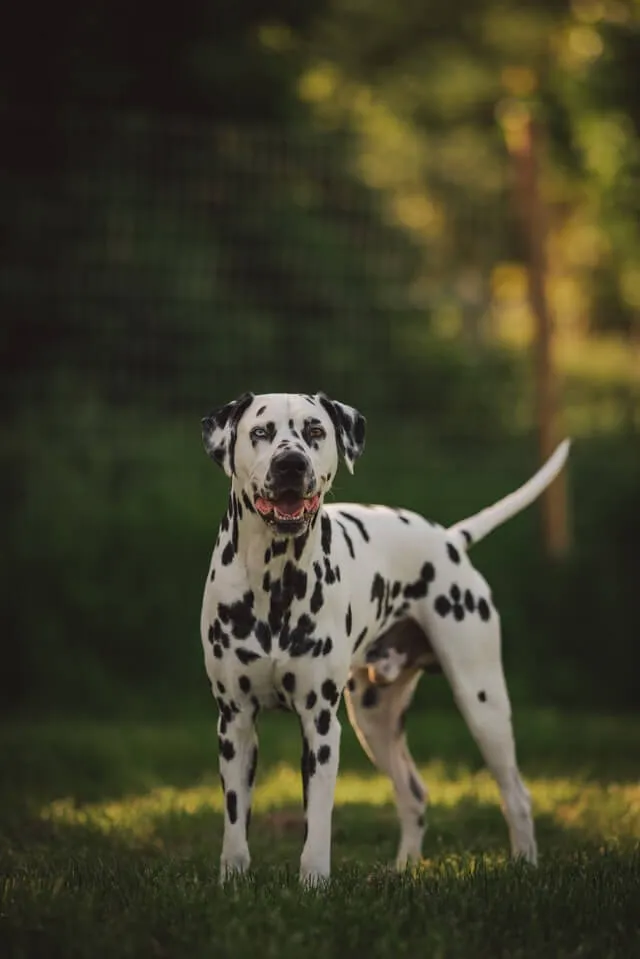
The Dalmatian is an elegant, extremely athletic dog—bred as a tireless carriage dog that would trot alongside horse-drawn carriages for hours while acting as a guard. His striking spots often hide the fact that beneath the coat lies a true running machine with a keen guarding instinct.
How the health grade is calculated
Sources for required breeding screenings. Deutscher Dalmatiner-Club von 1920 e.V.
Self-check
Answer 6 quick questions about your everyday life and see how well the Dalmatian fits you — including an honest cost estimate per month, per year, and across the dog's lifetime.




At a glance
The essentials — key facts, traits, and health priorities — before you dive deeper.
Lifespan
10–13 yrs
Shoulder height
54–62 cm
Weight
24–32 kg
Practical
Temperament
Daily life
What matters most
Especially with a Dalmatian, choosing the right breeder is the single most important decision you'll make. Serious breeders consistently test the parents for inherited conditions, prioritize healthy early socialization, and stay accountable long after handover. A cheap puppy without health screening tends to become the most expensive dog later on.
See HonestDog breeder standards →Colors & coat
The coat colors that occur in the Dalmatian — including which ones fall outside the breed standard and which carry genetic risk.
Tricolor
Yellow
Orange
Blue
Eye colors
 Brown
 Amber
 Blue
 Odd-eyed
Coat type
 Short
 Smooth
The real vibes check
A Dalmatian is not an animated plush toy from a Disney movie, but a high-performance athlete in a spotted suit. If he is allowed to run until he is truly exhausted, he is the most relaxed shadow you can imagine at home. If you deny him this exercise, the elegant companion quickly turns into a nervous control freak.
Dalmatians are unmistakable due to their elegant stature and striking white fur, which is dotted with countless black or liver-colored spots. They belong to the non-sporting breeds and are extremely versatile dogs, classified by the Fédération Cynologique Internationale (FCI) in Group 6, scent hounds and related breeds. While in some breeds there is a separation between show and performance lines, this is not the case with Dalmatians. They are quite uniform in their appearance and nature. The well-developed muscles typical of the breed and the lively but balanced movement make the Dalmatian a striking and distinctive dog.
A word often used to describe Dalmatians is "energetic." These dogs are naturally active and need plenty of exercise to stay healthy and balanced. Their original purpose as carriage dogs has left them with strong endurance and a strong need for physical activity. That's why Dalmatians are excellent partners for active people who like jogging, hiking or cycling. Dalmatians are very people-oriented and enjoy the company of their family. They are friendly and playful, sometimes into adulthood, and often have a special affinity for children. While they form strong bonds with their humans, Dalmatians can also learn to stay alone without problems if they are trained to do so from an early age. Their alertness makes them good watchdogs, alerting to unusual noises or activities. However, they are not aggressive protection dogs and should not be viewed as such. In general, Dalmatians are friendly towards strangers as long as they are properly socialized. A Dalmatian has an independent side and can be stubborn at times. This can make parenting challenging, especially for first-time homeowners. A sensitive but consistent approach is the key to raising the respectful and obedient Dalmatian. Despite their hunting history, Dalmatians generally do not have strong hunting behaviors, although they can be curious and adventurous. However, every dog is an individual and there may be exceptions.
| Watchfulness Reports unusual activity but stays controlled. | Moderate |
| Openness to Strangers Warms up quickly and is generally welcoming. | Friendly |
| Hunting or Herding Drive Mild interest in movement and small animals — easily managed. | Low |
Fun Fact!
Dalmatians have a strong affinity for horses, having originally been bred as carriage dogs.
Dalmatians are considered active and energetic dogs with a hunting motivation. Since deafness is common in this type of dog, puppies should be examined for it before being sold.
Dalmatians are active dogs that require lots of exercise and mental stimulation. They are therefore not particularly suitable as city dogs unless they have sufficient opportunities for exercise and activity. They get along well with children and are often patient and playful companions. However, their temperament can be a little too energetic for very young children. Dalmatians can get along well with other pets, including cats, as long as they are properly socialized.
Lives for its family — the born family companion.
Extraordinarily patient and loving — a true family dog.
Actively enjoys the company of other dogs.
Adapts well to city living and urban environments.
Owning a dog is a privilege, but it's also a real responsibility. Before you bring one into your life, be honest with yourself about the commitment it takes.
Raising a Dalmatian requires patience, consistency and positive reinforcement. They are intelligent dogs, but can have an independent side. Their natural desire to run and explore makes them great companions for active people and they can do well in various dog sports such as agility or flyball. For horse people, they are also ideal as a riding companion dog. However, because of their high energy level, they can become “ball junkies” if you are not careful. Therefore, it is important to offer a variety of activities and control ball play. Because of their tendency to be independent, it is particularly important to teach them frustration tolerance and impulse control. Remember that a well-behaved Dalmatian is a happy Dalmatian - and that makes living with him so much more pleasant!
Your Dalmatian's diet should be balanced and high quality, with an appropriate proportion of proteins. Due to their tendency to form urinary stones, it is particularly important to ensure a low purine content in the feed. There are special diets for Dalmatians, and your veterinarian can help you determine the best diet for your individual dog. In terms of care, the Dalmatian is quite easy to care for. Its short, hard coat sheds all year round, especially during the shedding periods in spring and autumn. Regular brushing can help keep hair in check at home. Dalmatians have no undercoat and cope well with the climate in Germany, although they may need a coat in the cold winter months.
| Care Level Minimal effort — occasional brushing and bathing. | Low-maintenance |
| Exercise Needs Needs several hours of serious exercise every day. | Very active |
| Shedding Hair everywhere, always — no white clothing survives. | Very heavy |
| Trainability Bred to work closely alongside humans. | Highly trainable |
Our experts are still reviewing this information. Spotted something wrong? Email us at info@honestdog.de.
Solid, watch carefully
Health grade
In the Dalmatian, congenital deafness, hip dysplasia (HD), and genetic predispositions to hyperuricosuria (HUU) and urolithiasis (urinary stones) are central health risks. The Deutsche Dalmatiner-Club von 1920 e.V. therefore strictly mandates that breeding dogs must have bilateral hearing and hips graded within HD A–C. A responsible breeder also conducts genetic testing for hyperuricosuria (HUU) or Acute Respiratory Distress Syndrome (Dalmatian), where carriers may only be mated with clear partners. Before purchasing a puppy, insist on seeing the complete, official audiometric hearing tests and HD results of both parents.
Grade is relative to other breeds — AI-assisted and editorially reviewed.
Methodology and data: HonestDog Dog Breed Health Report 2026
What matters most for this breed
Tap any item to see details.
With a specially adapted, low-purine diet, you can actively manage the risk of urinary stones, while raising the puppy in a joint-friendly manner helps protect the hips.
Responsible breeders mandatorily test parent animals for deafness and hip dysplasia (HD) and use genetic tests for hyperuricosuria (HUU) to specifically reduce risks.
Note: This health overview is AI-assisted and editorially reviewed. It is for orientation only and does not replace veterinary advice.
What matters most for this breed — what's common, how much it affects the dog's life, and how to protect yourself as a buyer.
Tap a body region to see the inherited conditions linked to it.
The three most important risks
Pick a region on the map to explore other areas.
Tier 1 is the core standard: the tests Deutscher Dalmatiner-Club von 1920 e.V. requires, plus further tests from the recommended health standard for this breed. Tiers 2 and 3 show how responsible breeders go beyond.
Core standard. Tests marked “Club standard” are required by Deutscher Dalmatiner-Club von 1920 e.V. for breeding approval; the others are part of the recommended health standard for this breed. Ask any reputable breeder for the results.
Not health tests, but required for breeding: the club asks for these results too. They don't count toward the risks or the rating.
Wesensbeurteilung
Required by Deutscher Dalmatiner-Club von 1920 e.V.
Acceptable result: Zuchtzulassung bestanden
Dental and bite evaluation
Required by Deutscher Dalmatiner-Club von 1920 e.V.
Acceptable result: Nachweis über den Zahnstatus vorhanden
Note: This health overview is AI-assisted and editorially reviewed. It is for orientation only and does not replace veterinary advice.
A Dalmatian costs around ~€180 per month (€100 – €350, depending on your setup). The first year adds up to roughly ~€5,200 including purchase, equipment and puppy school; across the dog's life (11.5 years) it comes to about ~€28,480.
With surgery cover, running costs come to about ~€190 per month — in return, your share of a major operation drops from several thousand euros to around 20 percent.
Per month
~€180
In the first year
~€5,200
Across the dog's life
~€28,480
Estimated purchase price from a breeder: €1,500 – €2,800
Estimate at a mid-range setup (suburban, dry food, 1–2 hours of daily exercise), average German prices, as of July 2026.

 Illustrative image
 Illustrative image
Although the exact origins of Dalmatians are unclear, their history certainly dates back to ancient times. Depictions of spotted dogs can be found on frescoes and sculptures of ancient Egypt. The name "Dalmatian," however, refers to the Dalmatia region of Croatia, where the breed was widespread in the Middle Ages. In the 14th century, the first Dalmatians were mentioned in British church and court records, serving as guards, carriage dogs and companion dogs. The breed was further refined and standardized in Britain, and the Dalmatians as we know them today were first presented at dog shows in the 19th century. Dalmatians were recognized by the Kennel Club in England in 1890 and by the American Kennel Club in the USA in 1905. The film “101 Dalmatians” made the breed famous.
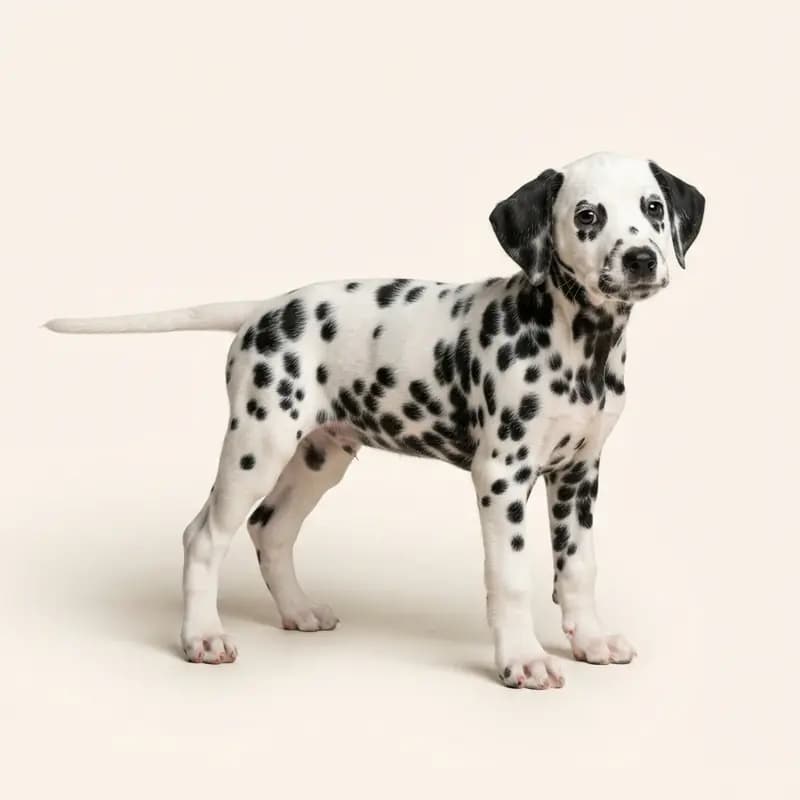
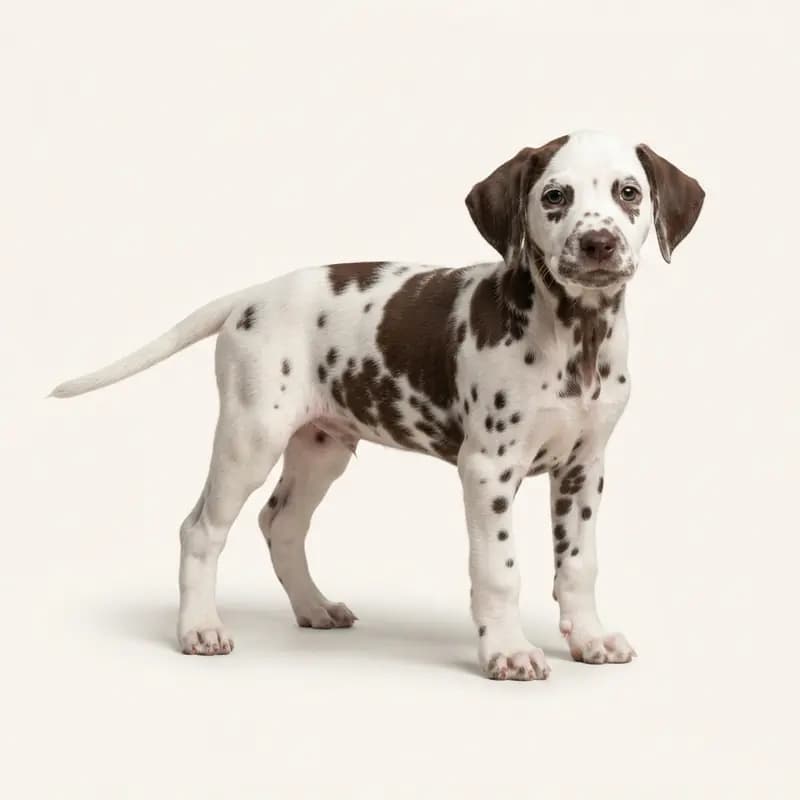
Originally used as a carriage service dog, the Dalmatian is known for its distinctive white coat with black spots.
Croatia
1600
At home and in family life, many owners describe the Dalmatian as a clingy "Velcro dog" that wants to be right next to its people, likes to be part of everything and actively demands petting. With thoughtful introductions it usually gets along very well with children and is playful and cuddly. Experienced owners stress, however, that the breed only really settles down calmly indoors once it has had enough chance to run and burn off energy outside.
The coat is a central topic in owner reports. Almost all owners warn, tongue in cheek, about the short, bristly hairs that shed all year and stick like tiny barbs in clothing, car seats and upholstery. The coat is easy to care for and sheds dirt, but the vacuum cleaner becomes a constant companion. Many owners also note that Dalmatians are alert in the yard or house and reliably announce anything unfamiliar without being aggressive for no reason.
Sources:tierforum.deaniswiss.comhundeforum.comforum.hundund.dedogforum.de
In training, many owners find the Dalmatian a fascinating but challenging character. They keep pointing out how sensitive the breed is to strictness or harshness: too rough a tone or impatient pressure usually makes the dog shut down inside, offer appeasement signals or dig in its heels. Owners succeed almost exclusively through patience, humor and positive reinforcement.
At the same time, Dalmatians need clear boundaries, because they like to make their own decisions and don't come with blind obedience. Forum opinions on hunting drive vary, but it is never described as negligible: some dogs calmly ignore animal tracks, while many react strongly to fleeing deer, hares or cats. Consistent recall training and mental work, such as search games, tricks or tracking, are essential for safe off-leash time.
Sources:forum.hundund.detierforum.dedogforum.deeinfachtierisch.de
Health takes up a lot of space in the Dalmatian community, above all the breed's typical purine metabolism defect. Owners talk a lot about low-purine feeding, because the impaired breakdown of uric acid can lead to painful urate stones in the bladder and urinary tract. Many owners therefore check their dog's urine pH regularly, avoid purine-rich ingredients like organ meat or skin and make very sure their dog drinks plenty throughout the day.
Another recurring point is congenital sensory deafness, which is closely linked to the white piebald pattern. Experienced owners all advise taking a puppy from a breeder only if it has had an audiometric hearing test (AEP). Owners of deaf or unilaterally hearing Dalmatians report, however, that with early hand-signal training these dogs can live full, safe lives without problems. Sensitive skin and allergies are also reported occasionally, which is why a carefully tailored diet matters for the dog's well-being.
Sources:tiergesundheit.netdalmatiner-katmarku.jimdofree.compeqaboo.comhundefutter-tests.netreddit.com
Paraphrased from real owner reports · translated from German
The Dalmatian is an active dog that needs plenty of exercise and mental stimulation. Research the temperament, grooming needs, and space requirements before deciding.
The average life expectancy of a Dalmatian is 10-13 years. With proper care and regular vet visits, your dog can live a long, healthy life.
Dalmatian grooming requirements include regular brushing, nail trimming, and dental care. HonestDog provides detailed grooming tips for every breed.
The Dalmatian can be a great family dog. Proper training and socialization are key. HonestDog provides family suitability information for every breed.
The Dalmatian comes in these colors: Black and white, Brown and white, Tricolor, Yellow, Orange, Blue. Colors that fall outside the breed standard are marked as such on the breed page.
Showcase your kennel on HonestDog and reach families searching for a responsibly bred Dalmatian.