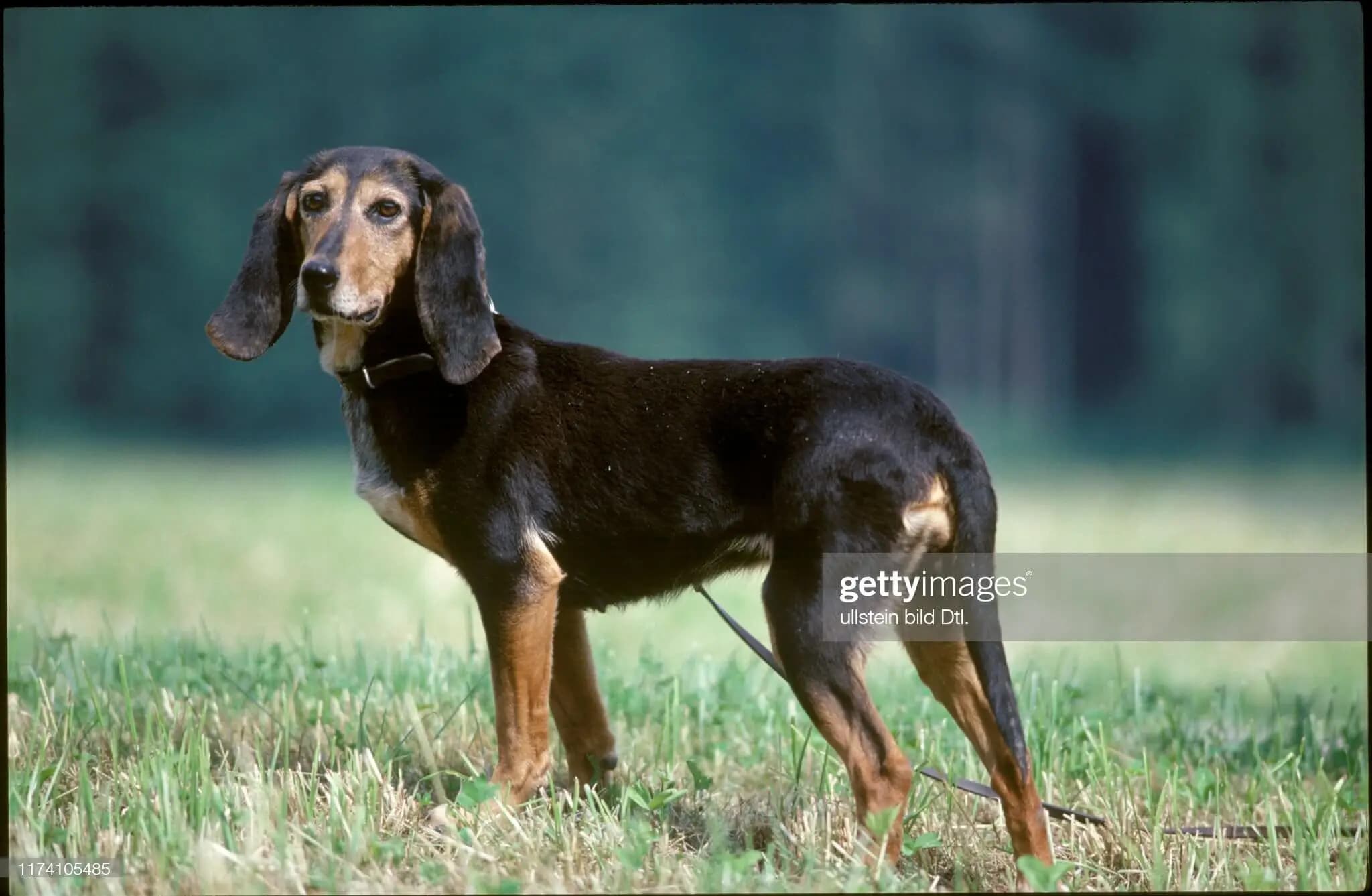
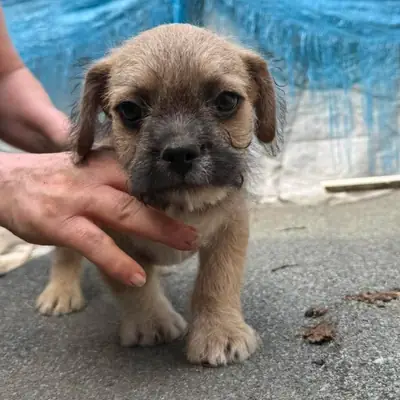
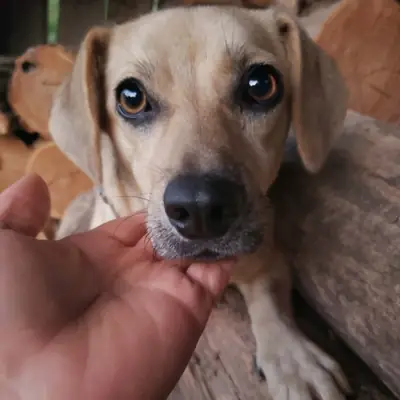
If you take on an adult Small Jura Hound from a rescue, he brings his own history with him. Thanks to his origins as a pack and hunting dog, he is usually very sociable with other dogs. When it comes to training, however, you need staying power and loving consistency. Be prepared for the fact that letting him off the lead in areas with plenty of game may not be possible at first, or ever.
Keeping an eye on breed-typical health issues
Because of his distinctive build, with a long back and pronounced drop ears, the Small Jura Hound comes with specific health risks. These include intervertebral disc disease, hip dysplasia, eye conditions such as cataracts and generalised progressive retinal atrophy (PRA), and a predisposition to ear infections (otitis externa). There is also a risk in the breed of the hereditary metabolic disease neuronal ceroid lipofuscinosis type 7 (NCL7).
Health-focused breeders have the parent animals’ hips, elbows, spine and eyes examined, either clinically or by X-ray, in order to deliberately reduce the risk in their lines. For NCL7, for example, the Verein für Französische und Schweizer Laufhunde e.V. (CCFS) requires testing; a corresponding DNA test shows whether a parent animal is clear, a carrier or affected, so that reputable breeders only pair carriers with clear partners. With a dog from a shelter, you usually do not know the genetic line or the health screening of the parent animals. In everyday life, therefore, be strict about keeping him lean and about joint-friendly exercise to relieve the strain on his long back, and check his long ears regularly.