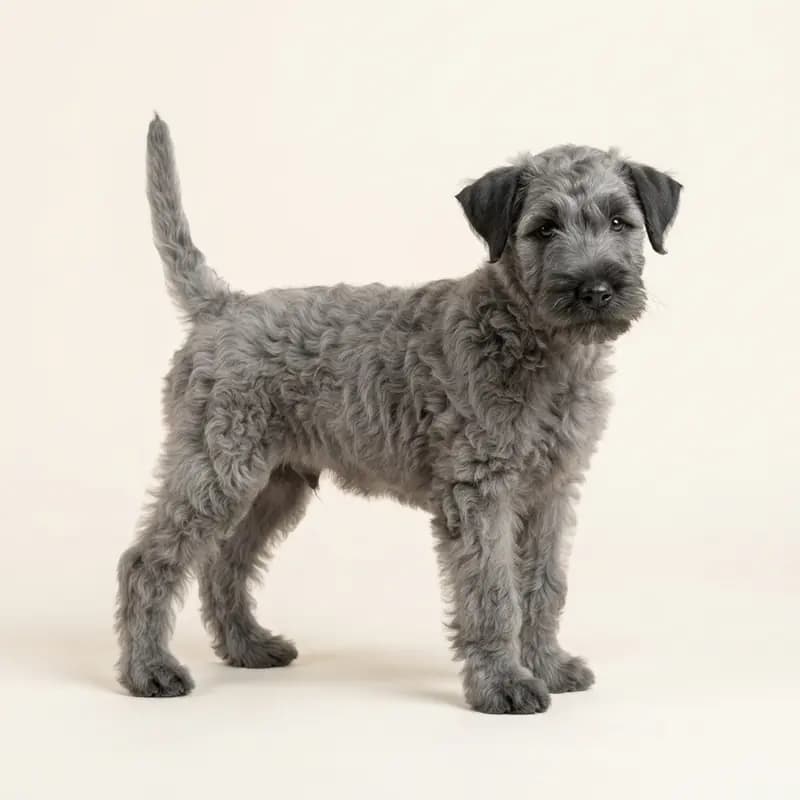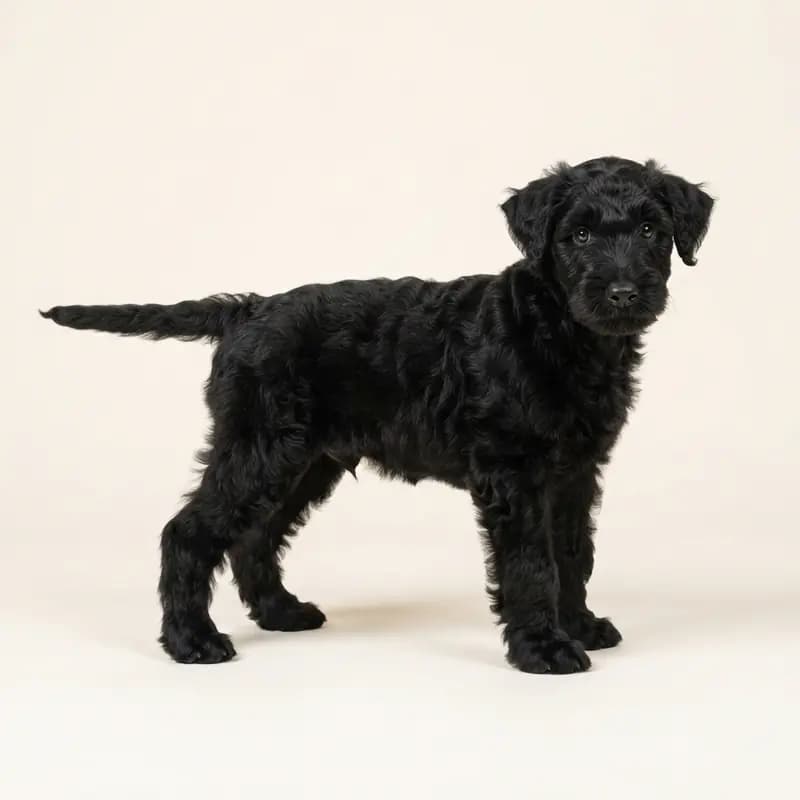
Irish Soft Coated Wheaten TerrierSame FCI section

The Kerry Blue Terrier is an intelligent, spirited character—bred as a long-legged terrier and versatile farm dog, expected to handle everything from ratting to guarding the homestead with iron determination.
Self-check
Answer 6 quick questions about your everyday life and see how well the Kerry Blue Terrier fits you — including an honest cost estimate per month, per year, and across the dog's lifetime.


At a glance
The essentials — key facts, traits, and health priorities — before you dive deeper.
Lifespan
12–15 yrs
Shoulder height
44–49 cm
Weight
13–18 kg
Practical
Temperament
Daily life
What matters most
Especially with a Kerry Blue Terrier, choosing the right breeder is the single most important decision you'll make. Serious breeders consistently test the parents for inherited conditions, prioritize healthy early socialization, and stay accountable long after handover. A cheap puppy without health screening tends to become the most expensive dog later on.
See HonestDog breeder standards →Colors & coat
The coat colors that occur in the Kerry Blue Terrier — including which ones fall outside the breed standard and which carry genetic risk.
Eye colors
 Brown
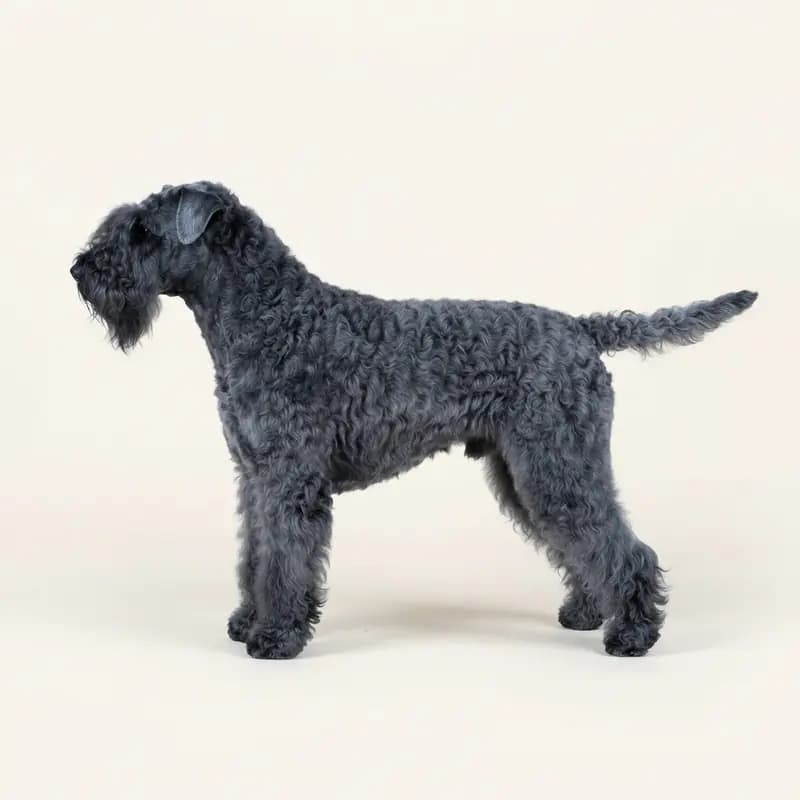
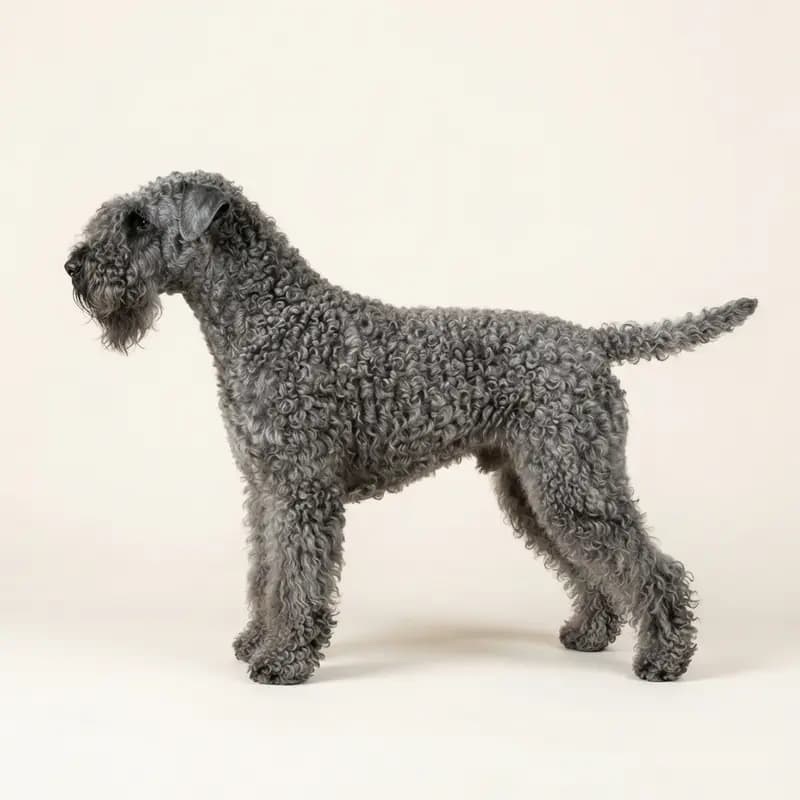
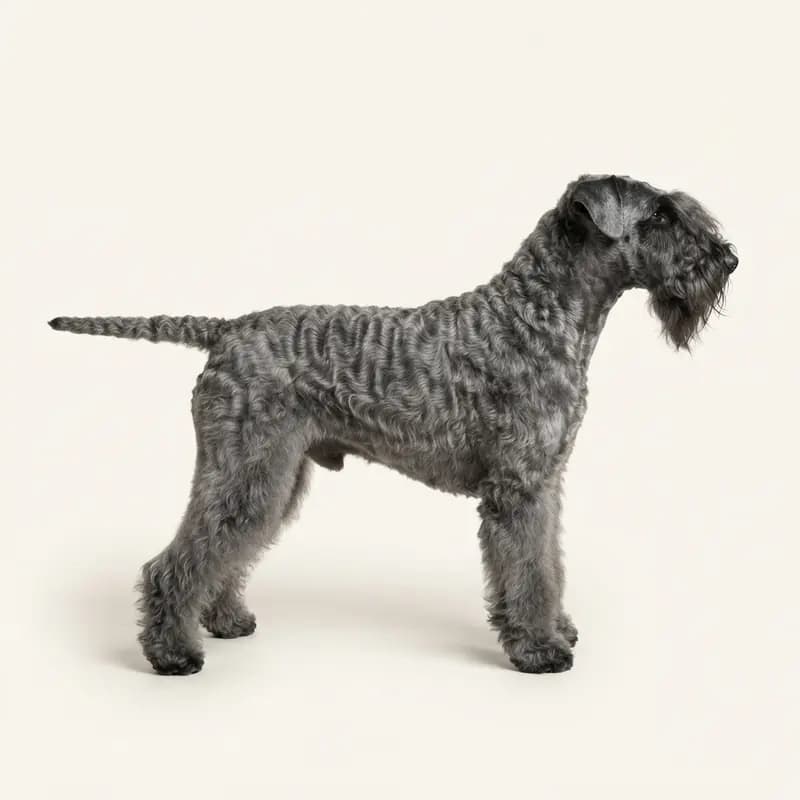
Coat type
 Illustrative image
Medium
 Illustrative image
Curly
 Illustrative image
Silky
The real vibes check
A Kerry Blue Terrier is not a dog that simply walks passively by your side—he is an Irish leprechaun in a blue coat who recognizes your every weakness and charmingly exploits it. You won't get a submissive follower, but a true partner on equal footing who will go through fire with you unconditionally, as long as he understands the purpose behind it.
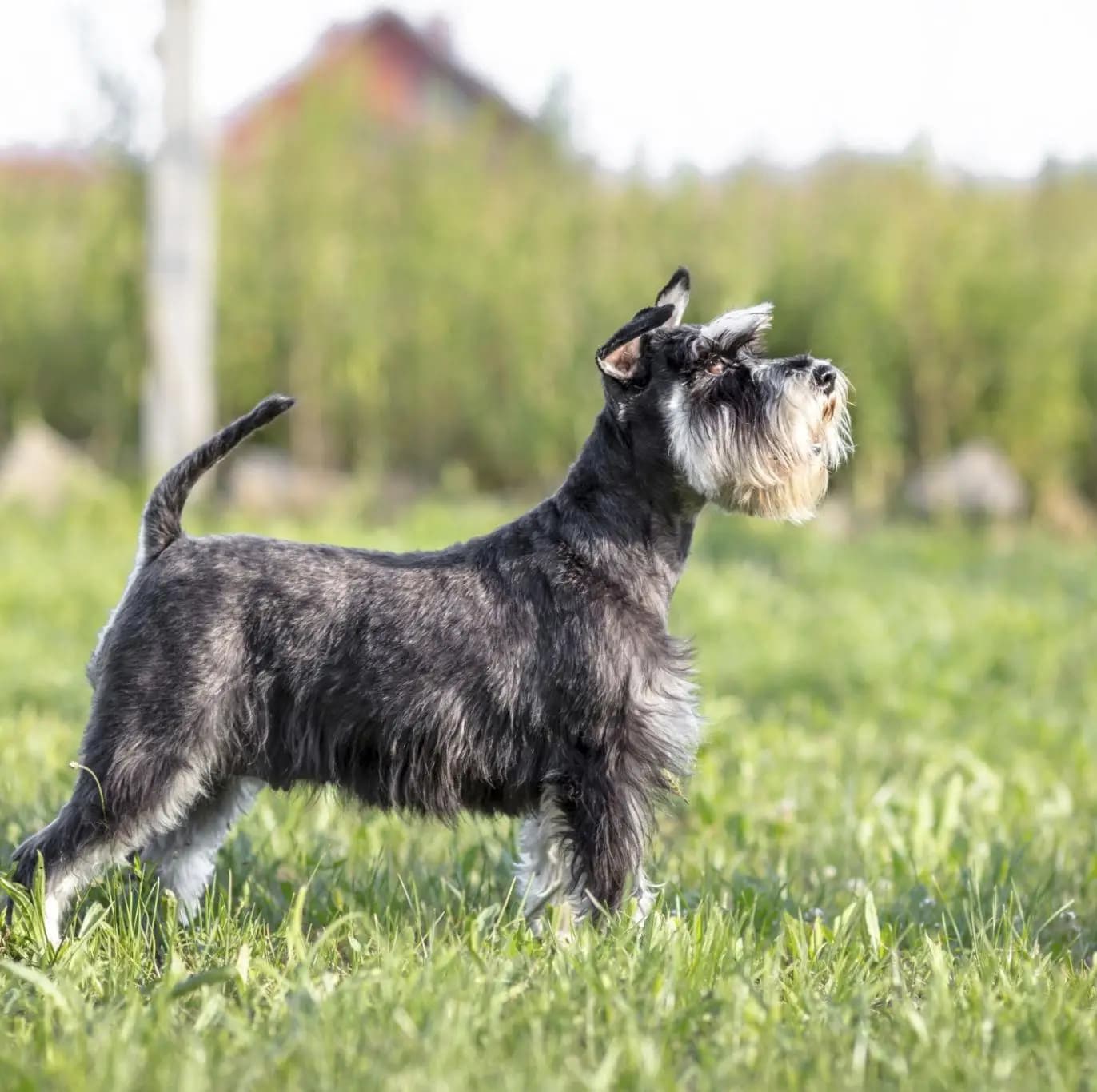
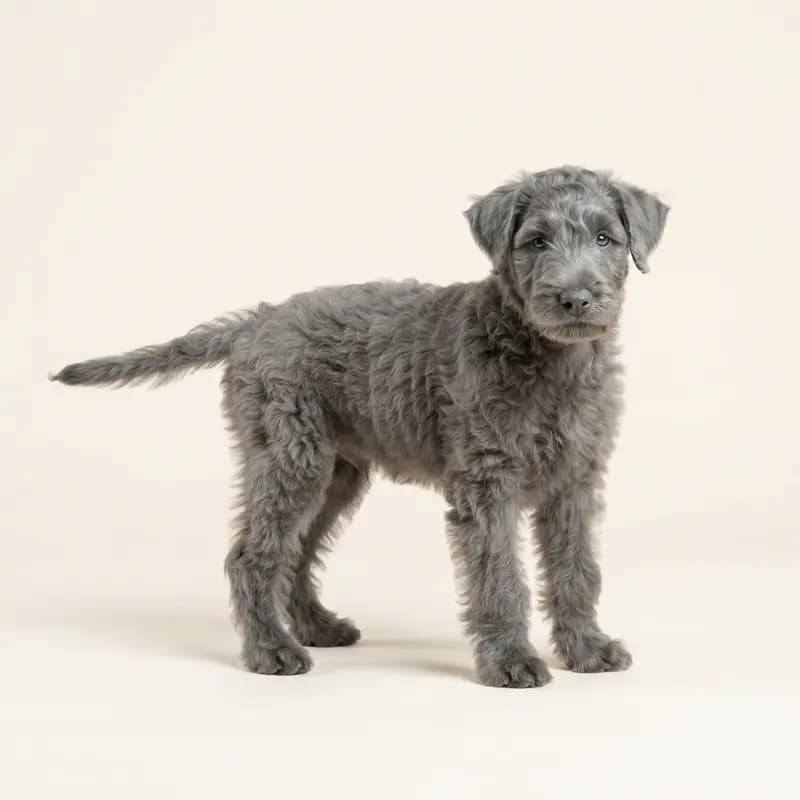
The Kerry Blue Terrier, often referred to simply as Kerry, is a medium-sized dog with an expressive head and a slim, muscular build. His eyes are small and dark, his ears are medium-sized and v-shaped, and his nose is always black. This strong and well-built dog is particularly notable for its soft, wavy and dense coat, which can range in color from a deep dark blue to a light silver gray. Coat care for the Kerry Blue Terrier is quite demanding because its dense, curly coat requires regular care to avoid knots and matting. A professional trim is necessary every few months to keep the coat in shape and preserve the characteristic look. However, the breed is hypoallergenic and hardly sheds any hair, which makes it interesting for allergy sufferers. The Kerry Blue Terrier is a dog in FCI Group 3, the terrier group. The breed is not differentiated in performance and show lines, but there are slight differences in appearance between American and European bred Kerry Blues, with the American dogs often being slightly heavier and larger.
The Kerry Blue Terrier is an energetic, happy and bright dog with a certain independence. His character is characterized by a mixture of intelligence, playfulness and tenacity. His history as a working dog has made him an extremely capable and adaptable dog who enjoys both physical and mental challenges. In the house he is a pleasant family dog, but he likes to be the center of attention and enjoys the attention of his people. His people-oriented nature makes him a loyal and affectionate companion who seeks and values close contact with his family. He generally gets along well with children and can also get along well with other pets if properly socialized. However, his tolerance towards other dogs, especially of the same gender, is often limited and he can sometimes be territorial. Kerry Blues are generally alert and curious and are therefore often referred to as good watchdogs. However, they are not overly loud dogs and their alert behavior is limited to paying attention and alerting their people rather than aggressive behavior. In terms of temperament, the Kerry Blue Terrier is active but not hyperactive. He needs enough exercise and mental stimulation to be happy and balanced. Regular walks, games and training sessions are a must for this breed. However, despite their energy, Kerry Blues are capable of remaining quiet indoors as long as they get enough exercise. The Kerry Blue Terrier has a strong hunting instinct, which comes from its history as a working dog. He can have a tendency to prey on small animals such as birds or squirrels, so it is important that he is well controlled in unfenced areas. However, he can learn to control these urges if properly trained and socialized. One of the things you should keep in mind is that the Kerry Blue Terrier is quite a character in its own right. He is intelligent and capable of learning, but he can also be stubborn and have a mind of his own. A balanced approach to training based on positive reinforcement usually works best with this breed. The ability to stay alone can vary from dog to dog, but in general Kerry Blues should not be left alone for long periods of time. They enjoy the company of their humans and can suffer from separation anxiety if they are left alone too often or for too long.
| Watchfulness Reports unusual activity but stays controlled. | Moderate |
| Openness to Strangers Warms up quickly and is generally welcoming. | Friendly |
| Hunting or Herding Drive Noticeable drive — needs attention around small animals. | Moderate |
Fun Fact!
Did you know that the Kerry Blue Terrier is also known as the "Irish Blue" and only reaches its unique blue coat color at around 18 months of age?
The Kerry Blue Terrier is considered an independent, alert dog. He is motivated to hunt. He needs active owners with experience and the appropriate education and employment.
The Kerry Blue Terrier is an active and intelligent dog that requires plenty of exercise and mental stimulation. Therefore, he is best cared for in a home where he has enough opportunities to play and run around. He can also be kept in the city as long as he gets regular exercise and enough activity. In relation to other pets and children, the Kerry Blue Terrier shows different behavior. Some Kerry Blues get along well with other dogs and pets, while others tend to exhibit dominant or aggressive behavior. It is therefore important that the dog is well socialized from a young age. Dealing with small children is usually not a problem, although an adult should always be present to monitor interactions.
Loves family life and thrives in a group.
Takes boisterous and affectionate children in its stride.
Usually gets on fine with other dogs.
Adapts well to city living and urban environments.
Owning a dog is a privilege, but it's also a real responsibility. Before you bring one into your life, be honest with yourself about the commitment it takes.
Raising the Kerry Blue Terrier can be challenging as he has an independent and sometimes stubborn personality. However, he is very trainable and intelligent, and with the right approach and a lot of patience he can learn many different commands and tricks. When it comes to training, it is important to remember that the Kerry Blue Terrier is an active and energetic dog that needs a lot of exercise and mental stimulation. Therefore, it can be useful to train him in various dog sports such as agility or obedience. This not only helps meet his energy needs, but also strengthens the bond between you and your dog. Despite his activity, the Kerry Blue Terrier is not prone to being a a "ball junkie." Nevertheless, it is important that he finds a healthy balance between play and rest. Too much play and stimulation can lead to stress and unwanted behavior, so it is important that the dog also learns to respect rest periods.
The Kerry Blue Terrier's diet should be balanced and varied. You should get high-quality dog food that contains all the necessary nutrients. The energy content of the food should be adapted to the dog's activity level. Caring for the Kerry Blue Terrier is a little more complex than many other breeds. Its fur is soft and wavy and tends to become matted if not treated regularly is brushed moderately. It is recommended to brush the dog about once a week to avoid mats and keep the coat clean and healthy. The Kerry Blue Terrier sheds little and has no undercoat. Therefore, it usually copes well with the climate in Germany, but it should be protected accordingly in extremely cold weather.
| Care Level Regular brushing and occasional professional grooming. | Moderate |
| Exercise Needs Needs several hours of serious exercise every day. | Very active |
| Shedding No or minimal hair loss — suitable for allergy sufferers. | No shedding |
| Trainability Willing to learn with clear rules and regular training. | Balanced |
Our experts are still reviewing this information. Spotted something wrong? Email us at info@honestdog.de.
Solid
Health grade
The Kerry Blue Terrier shows an average health burden, which is why it receives a grade B. Particular attention is paid to the severe congenital heart defect patent ductus arteriosus (PDA), which is difficult to control through breeding due to its polygenic inheritance. In addition, buyers should make sure that the parent animals have been tested for diseases such as Factor XI deficiency and degenerative myelopathy to rule out these risks.
Grade is relative to other breeds — AI-assisted and editorially reviewed.
Methodology and data: HonestDog Dog Breed Health Report 2026
What matters most for this breed
Tap any item to see details.
Inform your vet early about potential blood clotting disorders before any surgeries and ensure joint-friendly exercise so that your terrier stays fit for a long time.
Reputable breeders have the hips and eyes of the parent animals checked and use specific tests to minimize the risks of neurological conditions and blood clotting disorders in the lineage.
Note: This health overview is AI-assisted and editorially reviewed. It is for orientation only and does not replace veterinary advice.
What matters most for this breed — what's common, how much it affects the dog's life, and how to protect yourself as a buyer.
Tap a body region to see the inherited conditions linked to it.
The three most important risks
Pick a region on the map to explore other areas.
Tier 1 is the recommended health standard for this breed. Tiers 2 and 3 show how responsible breeders go beyond.
Recommended standard. These tests make up the recommended health standard for this breed — the baseline of any careful breeding program. Ask any reputable breeder for the results.
Note: This health overview is AI-assisted and editorially reviewed. It is for orientation only and does not replace veterinary advice.
A Kerry Blue Terrier costs around ~€170 per month (€90 – €320, depending on your setup). The first year adds up to roughly ~€5,300 including purchase, equipment and puppy school; across the dog's life (13.5 years) it comes to about ~€31,170.
With surgery cover, running costs come to about ~€170 per month — in return, your share of a major operation drops from several thousand euros to around 20 percent.
Per month
~€170
In the first year
~€5,300
Across the dog's life
~€31,170
Estimated purchase price from a breeder: €1,800 – €3,000
Estimate at a mid-range setup (suburban, dry food, 1–2 hours of daily exercise), average German prices, as of July 2026.
HonestDog Concierge
We currently have no breeders for this breed who have passed our verification. Create your short buyer profile: we'll set up your search alert, review a possible source and email you within 28 days.
 Illustrative imageIllustrative imageIllustrative image
 Illustrative image
The Kerry Blue Terrier, as the name suggests, comes from County Kerry in Ireland. It is an ancient breed that originated in the 18th century and was used as an all-round farm dog in Ireland for centuries. The Kerry Blue Terrier is believed to have originated from a mix of different breeds, including the Irish Wolfhound, the Irish Terrier and the Dandie Dinmont Terrier. As an all-rounder, the Kerry Blue had to be versatile and robust. It was used for hunting smaller animals such as foxes and otters, for rat control, as a guard dog and even for herding sheep and cattle. His courage, intelligence and strong work ethic made him an indispensable companion for Irish farmers. The breed was not officially recognized by the Irish Kennel Club until 1922 and received its first breeding regulations in 1924. After that, the popularity of Kerry increased Blue Terriers are growing rapidly, both in Ireland and internationally. Today the Kerry Blue Terrier is a recognized breed by the Fédération Cynologique Internationale (FCI) and many other major breed associations worldwide.
The Kerry Blue Terrier was used for hunting small animals and as a working dog on farms.
Ireland
1700
Within the family, owners consistently describe the Kerry Blue Terrier as an affectionate, charming and very loyal partner. With enough exercise and activity, it is surprisingly well balanced indoors and enjoys close physical contact and cuddles. It is often said to be remarkably patient and playful with children. At the same time, owners stress that the breed always keeps an eye on its surroundings: it watches over its territory and family attentively and usually announces visitors reliably.
A recurring everyday challenge, however, is how it behaves with other dogs. Many owners describe Kerry Blues – especially adult males – as not very tolerant or even dominant toward unfamiliar dogs. Leash walks therefore often call for forward-thinking management and consistent intervention so that encounters don't turn into squabbles or contests of strength. The Kerry is very rarely an easygoing tag-along that happily greets every dog at the dog park.
Sources:fressnapf.deamba-versicherungen.deedogs.depaw-champ.competbook.de
On training and activity, experienced owners highlight the breed's high intelligence and how quickly it picks things up. The Kerry Blue is quite willing to cooperate and can get really excited about dog sports such as agility or tracking and dummy work. If exercises are repeated too often or the dog doesn't see the point, though, the typical terrier indifference kicks in: it turns stubborn, questions instructions and stops cooperating. With this proud breed, pressure or excessive harshness almost always backfires, which is why owners recommend plenty of patience, humor and positive reinforcement.
Outdoors, many owners report a noticeable hunting drive that flares up quickly, especially around small animals, cats or deer. For many owners, off-leash time in areas with a lot of wildlife is therefore only possible with a very reliable recall or on a long line. During adolescence in particular, the Kerry tends to tune out completely and test boundaries hard, which is why owners consider early, consistent leadership essential.
A big topic in daily life with the breed is grooming, which owner reports say newcomers regularly underestimate. Because it has no undercoat, the Kerry Blue Terrier practically doesn't shed and leaves hardly any hair on the furniture, but the dense, wavy, silky coat mats quickly. Owners stress that combing several times a week, plus regular bathing and trimming every six to ten weeks, is essential. The breed's typical beard in particular catches dirt and moisture while eating and needs cleaning every day.
Owners also report that grooming has to be practiced early and with a lot of patience, since a Kerry needs to learn from puppyhood to stand still on the grooming table. Beyond the coat, the hair in the ear canals should be checked regularly and kept clear to prevent infections. Health-wise, the Kerry Blue is considered a sturdy, long-lived breed overall; owners mainly point to skin health, the ears and the screenings recommended for the breed (for example for hip dysplasia or eye changes).
Sources:amba-versicherungen.demit-tier.dekerry-blue-kft.dekerryterrier.dekerry-blue-terrier-vom-lockwitztal.de
Paraphrased from real owner reports · translated from German
The Kerry Blue Terrier is an active dog that needs plenty of exercise and mental stimulation. Research the temperament, grooming needs, and space requirements before deciding.
The average life expectancy of a Kerry Blue Terrier is 12-15 years. With proper care and regular vet visits, your dog can live a long, healthy life.
Kerry Blue Terrier grooming requirements include regular brushing, nail trimming, and dental care. HonestDog provides detailed grooming tips for every breed.
The Kerry Blue Terrier can be a great family dog. Proper training and socialization are key. HonestDog provides family suitability information for every breed.
The Kerry Blue Terrier comes in these colors: Blue, Grey, Black. Colors that fall outside the breed standard are marked as such on the breed page.
Showcase your kennel on HonestDog and reach families searching for a responsibly bred Kerry Blue Terrier.