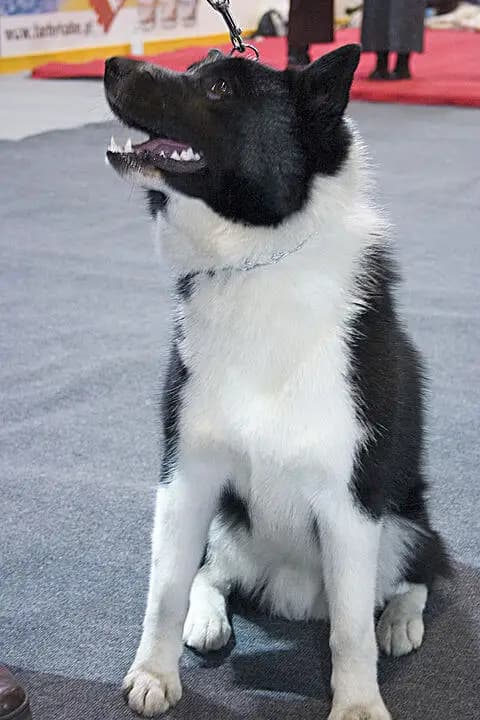
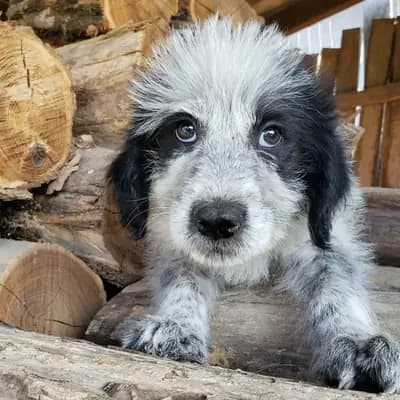
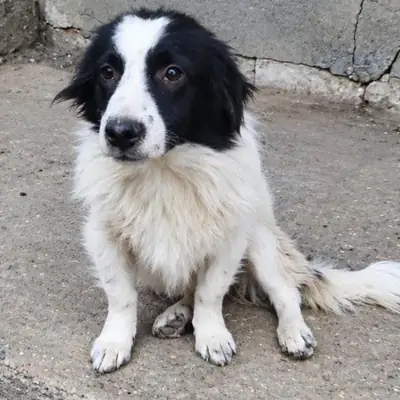
If you decide to adopt a Russian-European Laika, you can expect a fascinating personality. At home, he is usually very people-oriented, child-friendly and family-oriented (4 out of 5 each). Because of his sensitive nature, he reacts strongly to the loss of his previous people. Give him time to build trust – with this independent character, pressure will get you nowhere. His compatibility with other dogs is middling (3 out of 5), so encounters with other dogs need to be carefully supervised at first.
With a dog of often unknown origin, health is an important consideration. The Russian-European Laika is considered a very robust, primitive dog with a life expectancy of 11 to 13 years, but because of its small gene pool it occasionally has joint and eye problems. A health-focused breeder (for example, one within the Laika-Club e.V.) pays strict attention to genetic diversity and carries out the recommended basic screening, such as hip dysplasia X-rays and an ophthalmological eye test, to reduce the risk for the puppies. With dogs given up from an unclear source, however, this data is often missing.
So with your rescue dog, pay particular attention to eye conditions typical of the breed. These include:
- Cataracts, lens luxation and generalised progressive retinal atrophy (PRA)
- Eyelid abnormalities such as ectropion, entropion and distichiasis
- Pectinate ligament dysplasia, as well as congenital abnormalities such as PHTVL and PHPV
After the adoption, plan regular vet check-ups for the eyes, ears and musculoskeletal system so that changes are spotted early.