
Toy Manchester TerrierClose relative
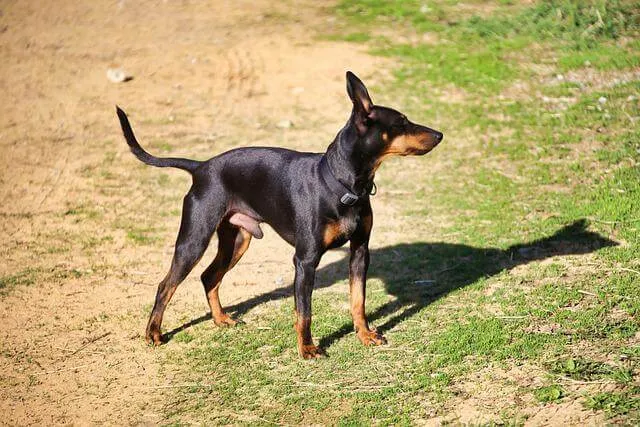
The Manchester Terrier is an elegant, spirited companion—bred as a lightning-fast earth dog and rat hunter, combining the tenacity of a terrier with the sensitivity of a sighthound.
Self-check
Answer 6 quick questions about your everyday life and see how well the Manchester Terrier fits you — including an honest cost estimate per month, per year, and across the dog's lifetime.
At a glance
The essentials — key facts, traits, and health priorities — before you dive deeper.
Lifespan
14–16 yrs
Shoulder height
35–41 cm
Weight
7–9 kg
Practical
Temperament
Daily life
What matters most
Especially with a Manchester Terrier, choosing the right breeder is the single most important decision you'll make. Serious breeders consistently test the parents for inherited conditions, prioritize healthy early socialization, and stay accountable long after handover. A cheap puppy without health screening tends to become the most expensive dog later on.
See HonestDog breeder standards →Colors & coat
The coat colors that occur in the Manchester Terrier — including which ones fall outside the breed standard and which carry genetic risk.
Eye colors
 Brown
Coat type
 Short
 Smooth
The real vibes check
Indoors, the Manchester Terrier curls up under your blanket like a heat-loving cat—but outdoors, he transforms in a split second into a coiled spring as soon as something rustles in the bushes. You aren't getting a dull brawler, but a highly sensitive athlete who would go through fire for his human, though he might occasionally tune you out when he spots prey.
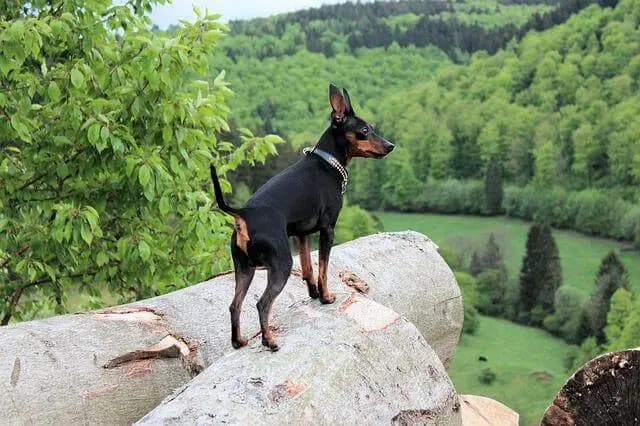
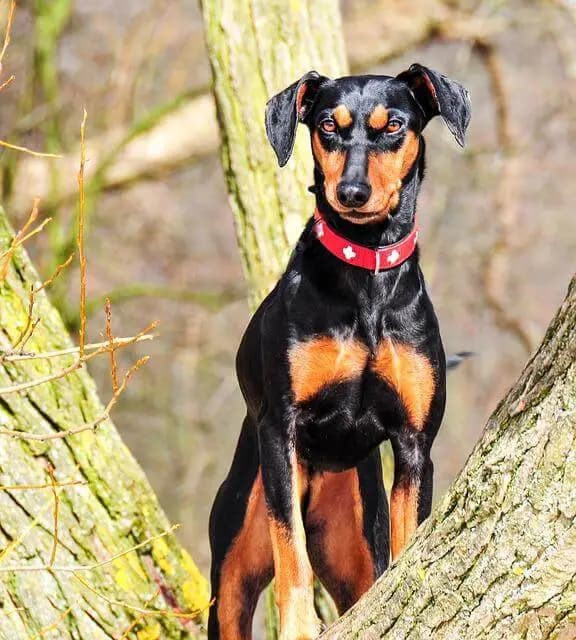
The Manchester Terrier is an elegant, well-proportioned dog with a lean and muscular build that exudes both strength and endurance. This impressive dog is classified as a highly valued terrier in FCI Group 3, Section 1. What makes the Manchester Terrier distinctive are its wedge-shaped head, its sparkling, almond-shaped eyes and the typical "button ears". They are half erect and half folded, giving the dog a particularly clever and attentive expression. Size varies between genders, with males being slightly larger and heavier than females. The coat color is consistently black with tan markings. The coat structure is short and smooth, there is no undercoat. In Germany there is generally no distinction between performance and show lines, but there may be minor differences in conformation and temperament between the different family lines. However, most breeders place emphasis on breeding dogs that can perform well in both the show ring and other activities.
The Manchester Terrier is an intelligent, lively and independent creature. He is an excellent companion who can enjoy both urban life and country life. His intelligence and active temperament make him a versatile dog, suitable for dog sports such as agility and obedience as well as a relaxed family dog. This terrier is very people-oriented and enjoys the company of his people. He enjoys being part of family activities and appreciates being involved in walks, hikes or just relaxing on the sofa. Despite his love for people, the Manchester Terrier has a certain degree of independence and can stay at home alone as long as this is not the case for too long or often. A Manchester Terrier loves to play and run, and often has a fun and happy demeanor. He is known for his playful nature, especially when dealing with children and other dogs. Despite his size, he is a robust and resilient dog who loves to play and run around. The Manchester Terrier is a vigilant dog with a strong protective instinct. He is attentive and wary of strangers, but once he realizes there is no danger, he is usually friendly and open. Although he doesn't bark excessively, he will certainly warn his human if something unusual happens. Even though the Manchester Terrier is now primarily kept as a companion dog, one should not forget its roots as a rat hunter. He still has a strong hunting instinct and can react quickly to small animals, birds and insects. That's why it's important to ensure good training and socialization right from the start so that he can learn to keep this urge under control.
| Watchfulness A natural watchdog with real protective instinct. | High |
| Openness to Strangers Warms up quickly and is generally welcoming. | Friendly |
| Hunting or Herding Drive Powerful instinct that can override recall when triggered. | Strong |
Fun Fact!
Despite its small size, the Manchester Terrier was originally a valued rat hunter and was often used in rat pits to demonstrate its skills in the 19th century.
The Manchester Terrier is an active, hunting-motivated dog that learns quickly. He has a high energy level and needs physical and mental activity that doesn't make him get too excited.
The Manchester Terrier is an adaptable dog that can live in both the city and the country. He is an active dog that needs a lot of exercise every day, but thanks to his small size he can be kept well in an apartment or a house with a small garden. Despite his sporty nature, he is rather quiet and inconspicuous around the house. This dog is very people-oriented and is well suited to families with or without children. He is friendly and patient with children as long as they are respectful and careful when dealing with him. The Manchester Terrier also gets along well with other dogs, but can be wary of small pets such as cats or rodents due to their prey drive.
Loves family life and thrives in a group.
Gets on well with children — with adult supervision.
Usually gets on fine with other dogs.
Small space, noise, lots of people — no problem at all.
Owning a dog is a privilege, but it's also a real responsibility. Before you bring one into your life, be honest with yourself about the commitment it takes.
The Manchester Terrier is an intelligent and eager-to-learn dog that responds well to positive reinforcement and patient, consistent training. He loves mental and physical challenges and is ideal for various dog sports such as agility, obedience and flyball. Because of his hunting history, it is important to start recall training early and get him used to being on a leash. Although the Manchester Terrier is an active dog, care should be taken not to overuse or overwhelm him. Sufficient rest and relaxed activities are just as important as games and sports. Training should aim for good impulse control and frustration tolerance, as the Manchester Terrier sometimes tends to be impulsive and impatient. Positive training methods and a lot of patience are the key to success here. It is also important to start socialization early and get the dog used to different environments, people and animals.
The Manchester Terrier has a slim, muscular build and requires a balanced diet to stay healthy and active. You should use high-quality dog food that is high in protein and fat to meet his energy needs. Some dogs tend to overeat, so it is important to monitor food intake and avoid excess weight. Caring for the Manchester Terrier is comparatively easy. Its short, shiny coat has no undercoat and sheds very little. Regular brushing, about once a week, will keep the coat in good condition and reduce shedding even further. A bath is only necessary if the dog is particularly dirty. Because the Manchester Terrier doesn't have an undercoat, it doesn't tolerate cold and wet very well, so it should wear a dog coat in cold weather.
| Care Level Minimal effort — occasional brushing and bathing. | Low-maintenance |
| Exercise Needs Needs several hours of serious exercise every day. | Very active |
| Shedding No or minimal hair loss — suitable for allergy sufferers. | No shedding |
| Trainability Bred to work closely alongside humans. | Highly trainable |
Our experts are still reviewing this information. Spotted something wrong? Email us at info@honestdog.de.
Solid, watch carefully
Health grade
The Manchester Terrier exhibits an above-average number of hereditary diseases, which is why buyers must look carefully when purchasing a puppy. Fortunately, major risks such as von Willebrand's disease type I (a blood clotting disorder) and glaucoma (POAG) can be effectively ruled out in advance through genetic testing. Nevertheless, eye diseases such as progressive retinal atrophy (PRA) also require consistent breeding surveillance in order to prevent later blindness.
Grade is relative to other breeds — AI-assisted and editorially reviewed.
Methodology and data: HonestDog Dog Breed Health Report 2026
What matters most for this breed
Tap any item to see details.
With joint-friendly rearing, a healthy weight, and regular eye check-ups, most dogs remain fit and active for a long time.
Reputable breeders have the parents' knees, eyes, and blood clotting tested to reduce health risks in the line.
Note: This health overview is AI-assisted and editorially reviewed. It is for orientation only and does not replace veterinary advice.
What matters most for this breed — what's common, how much it affects the dog's life, and how to protect yourself as a buyer.
Tap a body region to see the inherited conditions linked to it.
The three most important risks
Pick a region on the map to explore other areas.
Tier 1 is the recommended health standard for this breed. Tiers 2 and 3 show how responsible breeders go beyond.
Recommended standard. These tests make up the recommended health standard for this breed — the baseline of any careful breeding program. Ask any reputable breeder for the results.
No entries in this tier.
Note: This health overview is AI-assisted and editorially reviewed. It is for orientation only and does not replace veterinary advice.
A Manchester Terrier costs around ~€160 per month (€80 – €290, depending on your setup). The first year adds up to roughly ~€4,700 including purchase, equipment and puppy school; across the dog's life (15 years) it comes to about ~€30,940.
With surgery cover, running costs come to about ~€150 per month — in return, your share of a major operation drops from several thousand euros to around 20 percent.
Per month
~€160
In the first year
~€4,700
Across the dog's life
~€30,940
Estimated purchase price from a breeder: €1,500 – €2,500
Estimate at a mid-range setup (suburban, dry food, 1–2 hours of daily exercise), average German prices, as of July 2026.
The Manchester Terrier has a long and fascinating history dating back to the 19th century. This breed originally comes from England, more precisely from the city of Manchester. Here the Manchester Terrier was specifically bred as a rat hunter in order to get rid of the rat plague in urban areas. The Manchester Terrier's roots can be traced back to several breeds, including the ancient Black and Tan Terrier, which is considered one of the oldest terriers in England. These dogs were highly valued for their excellent rat hunting skills and were also very popular in dog fights, which unfortunately were still allowed during this time. The Manchester Terrier was recognized as a separate breed in the mid-19th century and was considered the finest rat hunter of its time. However, over time, the Manchester Terrier has evolved from a working dog breed to a breed primarily kept as a companion dog, without losing its hunting skills. The breed has gone through many changes, including a period in which almost made them extinct after the Second World War. But through the hard work and dedication of some breeders, the breed was saved and preserved. Today, the Manchester Terrier is highly valued in its homeland and around the world as a loving companion dog and loyal family dog.
Originally bred to fight rats and hunt rabbits, the Manchester Terrier is known for its speed and agility.
England
1800
At home with its family, owners often describe the Manchester Terrier as a surprisingly affectionate and cuddly housemate that can be remarkably calm indoors. Many stress the contrast between inside and out: indoors the dog likes to curl up for hours snuggled against its people or under a warm blanket. Many owners also appreciate its handy size and the easy-care short coat, which brings little dirt into the house.
At the same time, experienced owners point out that the breed is no mere lap dog. Many of these dogs are initially aloof, reserved, or suspicious toward strangers and visitors. They reliably, and sometimes insistently, keep watch and bark at the door or at unfamiliar sounds. Owners also often stress that unfamiliar dogs met off leash are by no means always greeted happily; the Manchester Terrier often comes across as very self-assured and doesn't put up with much from other dogs.
Sources:reddit.commit-tier.dehunde-fan.deforum.manchester-terrier-deutschland.depetbook.de
On exercise and training, owners agree that the Manchester Terrier is a lightning-fast, highly intelligent working dog that enjoys dog sports such as agility or tracking. Dog forums regularly warn, however, against the illusion that the breed is an easy beginner's dog. Its speed and reactive nature call for people who can always think a step ahead and set clear boundaries.
For many owners, the biggest everyday challenge is prey drive. Because sighthound blood was crossed in, many of these dogs react explosively to running small animals, mice, rabbits, or birds in flight. Several owners report that reliable off-leash time is only possible with intensive, early impulse-control and long-line training, and that some dogs have to stay leashed for good in areas with lots of wildlife. The terrier is also sensitive to pressure and harshness, which is why owners consistently recommend patient positive reinforcement.
Sources:mit-tier.deforum.manchester-terrier-deutschland.depetbook.dezooplus.de
Health-wise, most owners find the Manchester Terrier a very hardy, agile, and long-lived breed that not uncommonly reaches 14 to 16 years and still enjoys being active as a senior. Because the coat is very short and has hardly any insulating undercoat, many owners note that these dogs are sensitive to cold, wet, dreary weather, sometimes refuse to go outside, and often need a coat in winter.
Owner and breeder forums also point again and again to hereditary risks that need close attention before buying a puppy. The central topic in owner accounts is von Willebrand disease (type 1), a bleeding disorder that responsible breeders screen for with a genetic test. Owners also occasionally discuss hereditary eye problems such as glaucoma, as well as kidney sensitivity, which is why the community considers choosing a health-tested breeder with transparent health records essential.
Paraphrased from real owner reports · translated from German
The Manchester Terrier is an active dog that needs plenty of exercise and mental stimulation. Research the temperament, grooming needs, and space requirements before deciding.
The average life expectancy of a Manchester Terrier is 14-16 years. With proper care and regular vet visits, your dog can live a long, healthy life.
Manchester Terrier grooming requirements include regular brushing, nail trimming, and dental care. HonestDog provides detailed grooming tips for every breed.
The Manchester Terrier can be a great family dog. Proper training and socialization are key. HonestDog provides family suitability information for every breed.
The Manchester Terrier comes in these colors: Black and tan.
Showcase your kennel on HonestDog and reach families searching for a responsibly bred Manchester Terrier.