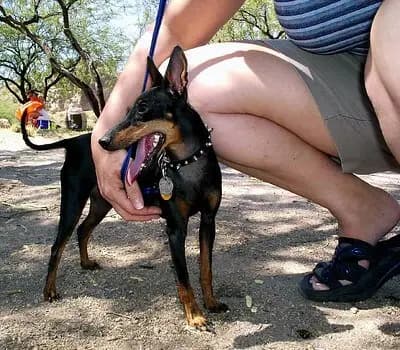
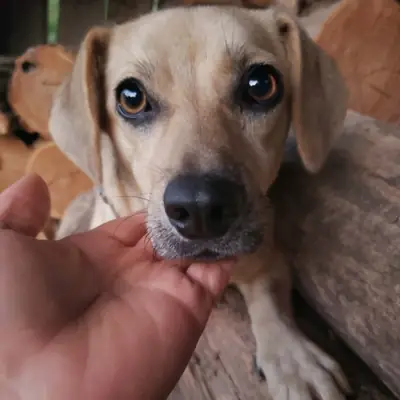
When you take in a Toy Manchester Terrier, you are welcoming a dog that is eager to learn and highly trainable, with a medium energy level. In the shelter, these sensitive dogs, who bond closely with people, often seem stressed or reserved at first because they miss their own special person. Give him time: as soon as he begins to trust you, his lively, playful personality quickly blossoms again. On average, the breed gets on well to reasonably well with other dogs and children – how your rescue dog reacts in practice depends heavily on his previous socialisation.
Looking at his health is also part of a well-prepared adoption. With good breeding, Toy Manchester Terriers are considered robust dogs overall, but the breed is prone to occasional problems with the knees, hips and blood clotting. These include von Willebrand's disease (a blood clotting disorder), joint problems such as patellar luxation and Legg-Calvé-Perthes disease, as well as eye conditions (lens luxation, progressive retinal atrophy), juvenile dilated cardiomyopathy and an underactive thyroid (hypothyroidism). While health-conscious breeders in the Klub für Terrier e.V. von 1894 carry out the prescribed testing for von Willebrand's disease and have the knees, hips and eyes of the parent dogs clinically examined in order to reduce risks in the line, the genetic background of shelter dogs is often unknown – especially if the dog originally came from a puppy farm.
In everyday life, watch his weight to protect his small joints, and always tell your vet about the breed-typical blood clotting issue before any operation or in the event of injury.