
Mountain CurSame working temperament
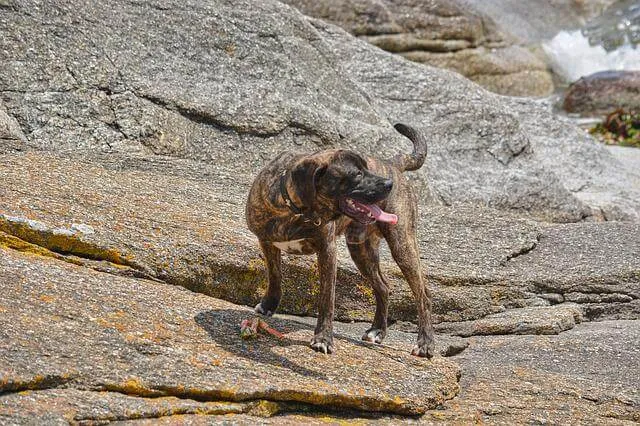
The Plott Hound is a tough, tireless athlete—an uncompromising pack hound and specialist in tracking by scent, bred in the USA for big game hunting, possessing a nose that never does things by halves.
Self-check
Answer 6 quick questions about your everyday life and see how well the Plott Hound fits you — including an honest cost estimate per month, per year, and across the dog's lifetime.

At a glance
The essentials — key facts, traits, and health priorities — before you dive deeper.
Lifespan
12–14 yrs
Shoulder height
51–63 cm
Weight
18–27 kg
Practical
Temperament
Daily life
What matters most
Especially with a Plott Hound, choosing the right breeder is the single most important decision you'll make. Serious breeders consistently test the parents for inherited conditions, prioritize healthy early socialization, and stay accountable long after handover. A cheap puppy without health screening tends to become the most expensive dog later on.
See HonestDog breeder standards →Colors & coat
The coat colors that occur in the Plott Hound — including which ones fall outside the breed standard and which carry genetic risk.
Eye colors
 Brown
 Amber
Coat type
 Short
 Smooth
The real vibes check
A Plott Hound is not a dog for a cozy Sunday cafe—he is a highly specialized forest worker in a brindle suit. As soon as he picks up a scent, his brain switches to tunnel vision and he completely tunes you out. You aren't getting an easy-to-handle everyday companion, but rather a fascinating, rugged outdoorsman who will challenge you as a true working partner.
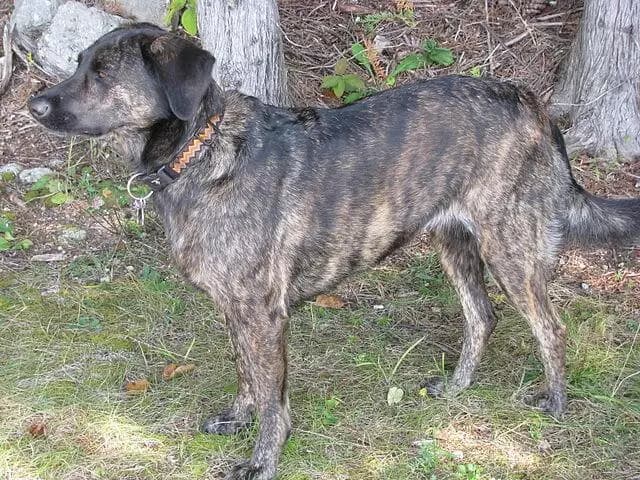
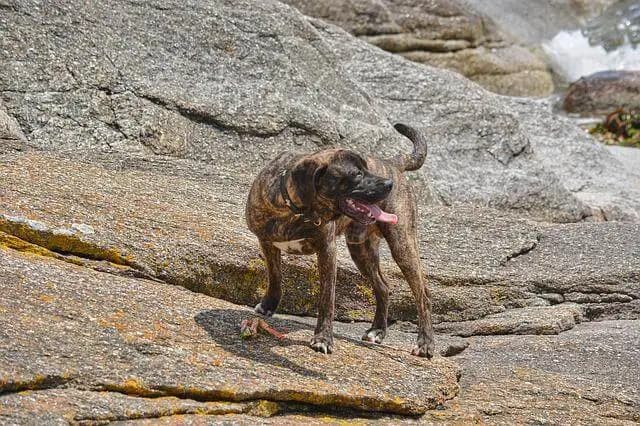
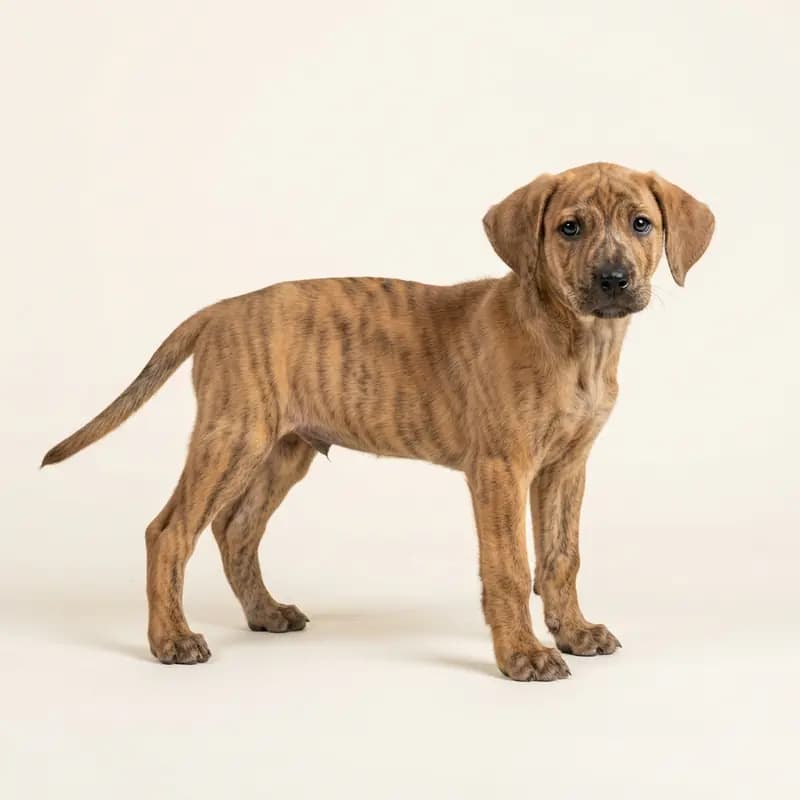
The Plott Hound is a medium-sized dog with a strong build and pronounced muscles. It is not recognized by the FCI, but is registered as a hound by organizations such as the AKC and UKC. With his noble head and pronounced eyebrows, he has an attentive and lively facial expression that reflects his intelligence. His ears are medium sized and droopy, giving his face a soft and endearing expression. The smooth, short coat without an undercoat usually displays a brindle coloring in various variations, from light silver or yellow to dark black or chocolate brown.
The characteristics of the Plott Hound are closely linked to its original use as a hunting dog. They are intelligent, eager and have a strong hunting instinct. They are considered to be exceptionally courageous and determined dogs that do not shy away from larger prey. Despite their strong hunting instinct, Plott Hounds are very friendly and loyal to humans. They are loyal companions who are closely connected to their family and would also protect them. Their intelligence makes them easy to train, but it also requires a consistent and loving hand because they can be a bit stubborn at times. As a rule, Plott Hounds are not hyperactive, but rather calm and balanced as long as they get enough physical and mental activity. This doesn't mean you have to keep them busy for hours, but regular walks and perhaps a little nose work are important for their well-being. When it comes to the ability to stay alone, Plott Hounds are quite flexible. Of course, most dogs don't like being alone for long periods of time, but if they're trained early and given enough to do when you're not there, they usually do well. Their strong hunting behavior means that they sometimes tend to track down and hunt prey. This means that you have to be particularly careful when walking them without a leash and that it is advisable to train them early so that they are easily accessible despite their hunting instinct. Plott Hounds are also quite alert and have strong protective instincts. So they will probably let you know if someone is at the door or if something moves near the house. However, they are not overly loud or aggressive dogs and with good socialization and training they should get along well with people and other dogs.
| Watchfulness A natural watchdog with real protective instinct. | High |
| Openness to Strangers Warms up quickly and is generally welcoming. | Friendly |
| Hunting or Herding Drive This drive runs deep — no amount of training eliminates it. | Very strong |
Fun Fact!
Did you know that the Plott Hound is the only coonhound that does not have its origins in foxhounds, but is descended from German hounds that were brought to the United States in the 18th century?
The Plott Hound, a dog with a curious name and a unique history, is a rough, relentless hunting dog who is a gentle gentleman at home but fearless, tenacious and bold at work. This eye-catching sniffer dog is the state dog of North Carolina.
The Plott Hound is more of an active dog and feels more comfortable in the country or in a house with a garden than in a city apartment. He needs room to romp around and plenty of exercise. Small children are not a problem for the Plott Hound as long as they treat the dog respectfully. The Plott Hound is generally friendly with other dogs, but you should be careful with cats and small animals as their hunting instincts could come through.
Loves family life and thrives in a group.
Takes boisterous and affectionate children in its stride.
Usually gets on fine with other dogs.
City-appropriate with enough exercise and stimulation.
Owning a dog is a privilege, but it's also a real responsibility. Before you bring one into your life, be honest with yourself about the commitment it takes.
The Plott Hound is intelligent and versatile. You might consider trying dog sports such as mantrailing or tracking with your dog, as these suit his nose and hunting instincts well. Make sure that you do not overwhelm the dog, because although he is active, he also needs periods of rest. It is also important to train impulse control and frustration tolerance, especially because the Plott Hound has a strong hunting instinct. Retrieving from free range should be practiced intensively, and it may be useful to offer him alternatives to hunting, such as search games. Since the Plott Hound can tend to fixate on one task such as playing ball, it is advisable to keep the game varied and not to overdo it so that he does not become a "ball junkie".
A Plott Hound's diet should be balanced and nutritious to support his active lifestyle. A mixture of high-quality dry food, fresh meat and vegetables is ideal. It is important to ensure that the dog does not become overweight as this can place additional stress on the joints. The Plott Hound has a short, smooth coat with no undercoat. This makes care relatively easy. Regular brushing, about once a week, is enough to remove dead hair and keep the coat clean and shiny. The Plott Hound sheds moderately and generally gets along well with the climate in Germany.
| Care Level Minimal effort — occasional brushing and bathing. | Low-maintenance |
| Exercise Needs Needs several hours of serious exercise every day. | Very active |
| Shedding No or minimal hair loss — suitable for allergy sufferers. | No shedding |
| Trainability Has its own ideas and will test limits. | Strong-willed |
Our experts are still reviewing this information. Spotted something wrong? Email us at info@honestdog.de.
Solid
Health grade
The Plott Hound presents as a robust working breed with a pleasingly low number of known hereditary diseases. The dangerous metabolic disorder mucopolysaccharidosis I (MPS I) can be reliably excluded in breeding through the available genetic test. Typical for large breeds, buyers must nevertheless pay attention to hip dysplasia (HD) and the risk of acute gastric dilatation-volvulus.
Grade is relative to other breeds — AI-assisted and editorially reviewed.
Methodology and data: HonestDog Dog Breed Health Report 2026
What matters most for this breed
Tap any item to see details.
You should ensure joint-friendly exercise during the growth phase, enforce strict rest periods after meals to prevent bloat, and schedule regular preventative check-ups.
Reputable breeders have the hips, elbows, eyes, and hearts of the parent animals tested and provide transparent information about the risk of bloat within their lines.
Note: This health overview is AI-assisted and editorially reviewed. It is for orientation only and does not replace veterinary advice.
What matters most for this breed — what's common, how much it affects the dog's life, and how to protect yourself as a buyer.
Tap a body region to see the inherited conditions linked to it.
The three most important risks
Pick a region on the map to explore other areas.
Tier 1 is the recommended health standard for this breed. Tiers 2 and 3 show how responsible breeders go beyond.
Recommended standard. These tests make up the recommended health standard for this breed — the baseline of any careful breeding program. Ask any reputable breeder for the results.
No entries in this tier.
Note: This health overview is AI-assisted and editorially reviewed. It is for orientation only and does not replace veterinary advice.
A Plott Hound costs around ~€180 per month (€90 – €330, depending on your setup). The first year adds up to roughly ~€4,820 including purchase, equipment and puppy school; across the dog's life (13 years) it comes to about ~€30,440.
With surgery cover, running costs come to about ~€170 per month — in return, your share of a major operation drops from several thousand euros to around 20 percent.
Per month
~€180
In the first year
~€4,820
Across the dog's life
~€30,440
Estimated purchase price from a breeder: €1,200 – €2,500
Estimate at a mid-range setup (suburban, dry food, 1–2 hours of daily exercise), average German prices, as of July 2026.
HonestDog Concierge
We currently have no breeders for this breed who have passed our verification. Create your short buyer profile: we'll set up your search alert, review a possible source and email you within 28 days.
 Illustrative image
 Illustrative image
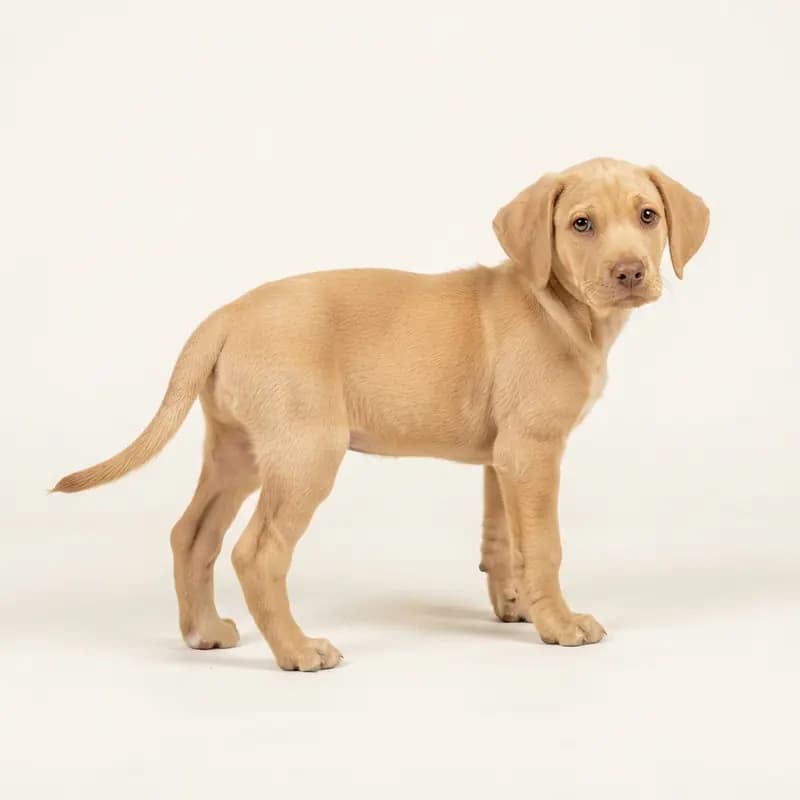 Illustrative image
The story of the Plott Hound takes us to the mid-18th century and North America. More precisely, this breed was developed by a German immigrant named Johannes Georg Plott in the USA, specifically in North Carolina, and hence bears his name. Plott originally bred the dogs to hunt wild boar, but they soon became effective at hunting other large game animals such as bears and raccoons. The Plott Hound is the only one of the American Coonhound breeds that does not have its roots in Foxhounds. Instead, its line goes back to German sweathounds that Johannes Plott brought with him to the New World. The breed was recognized as an official breed of the state of North Carolina in 2006 and was recognized by the American Kennel Club as a breed in the Hound group in 2007.
Bred to hunt large game such as bears and wild boar, the Plott Hound is known for its endurance and courage.
USA
1700
At home, many owners describe the Plott Hound as a very affectionate, gentle and loyal companion that forms a close bond with its people. When its needs are met, it is remarkably calm, cuddly and easygoing indoors. With family members it is considered friendly and patient, but it reliably and alertly announces strangers on the property with a deep, loud voice.
At the same time, owner reports stress that despite its calm nature indoors, this dog is not simply a companion for a city apartment. Without plenty of room to roam and a rural setting, many owners reach their limits. Experienced owners also stress that it can be somewhat reserved with strangers, and that early, careful exposure to visitors and the world around it is necessary so its natural protective instinct doesn't turn into insecurity or defensiveness.
In reports from training and hunting circles, the Plott Hound is consistently described as a very passionate, independent working dog. Its intelligence doesn't automatically translate into quick obedience, because the breed was selected for centuries to follow trails over long distances without direct human guidance. Owners report that rote repetition or harshness in training gets nowhere; what's needed instead is patience, complete consistency and clear leadership.
Owners talk especially often about its relentless hunting drive and legendary trailing focus. Once its nose is on the ground, the dog often tunes everything out, which is why off-leash time in areas with a lot of wildlife is impossible for most owners and the long line becomes a constant companion. Targeted outlets like intensive mantrailing, blood tracking or other tracking work are considered essential, since without challenging nose work the dog is hard to satisfy in daily life.
Sources:mit-tier.detackenberg.dereddit.competbook.deforum.wildundhund.de
From a practical point of view, owners describe the Plott Hound as a weatherproof, tough and physically very robust breed built for rough terrain, with a high tolerance for pain and a lot of stamina. The short coat is very easy to care for day to day. Specific inherited diseases play a fairly minor role in reports from owners and breed experts, which is why these dogs are often seen as hardy endurance runners.
Owners mention that very toughness as a challenge, though: because these dogs often show pain and discomfort late or barely at all, injuries or overexertion are sometimes noticed only late. Owners also point to the risks typical of larger, deep-chested dogs, especially bloat (gastric torsion), which is why rest periods after meals should be strictly observed. The drop ears need regular checks as well, since they are prone to dirt and infection after outings through the underbrush.
Sources:mit-tier.dereddit.comwamiz.de
Paraphrased from real owner reports · translated from German
The Plott Hound is an active dog that needs plenty of exercise and mental stimulation. Research the temperament, grooming needs, and space requirements before deciding.
The average life expectancy of a Plott Hound is 12-14 years. With proper care and regular vet visits, your dog can live a long, healthy life.
Plott Hound grooming requirements include regular brushing, nail trimming, and dental care. HonestDog provides detailed grooming tips for every breed.
The Plott Hound can be a great family dog. Proper training and socialization are key. HonestDog provides family suitability information for every breed.
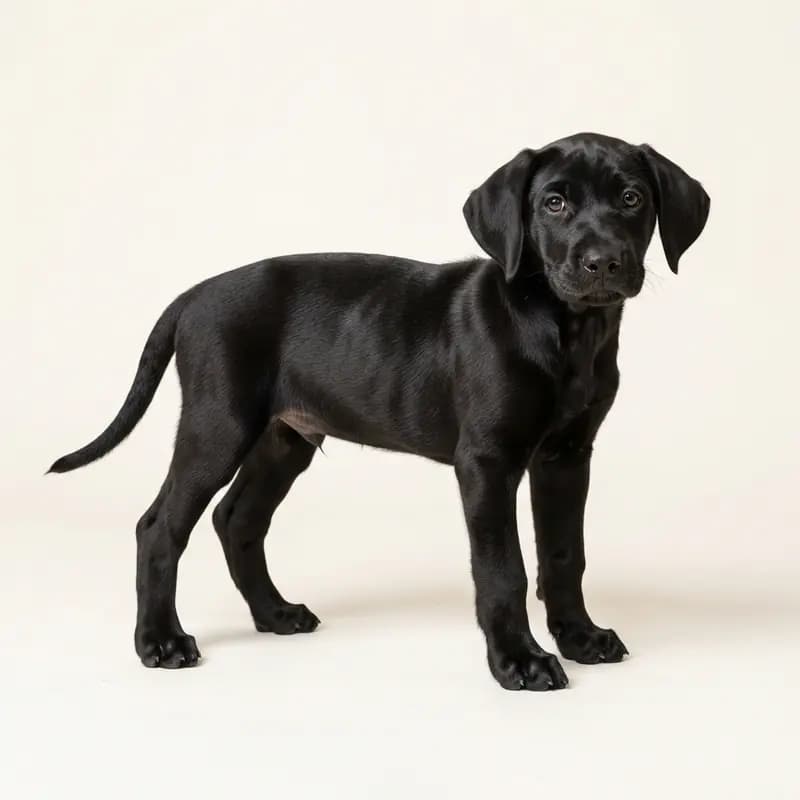
The Plott Hound comes in these colors: Brindle, Black, Fawn.
Showcase your kennel on HonestDog and reach families searching for a responsibly bred Plott Hound.