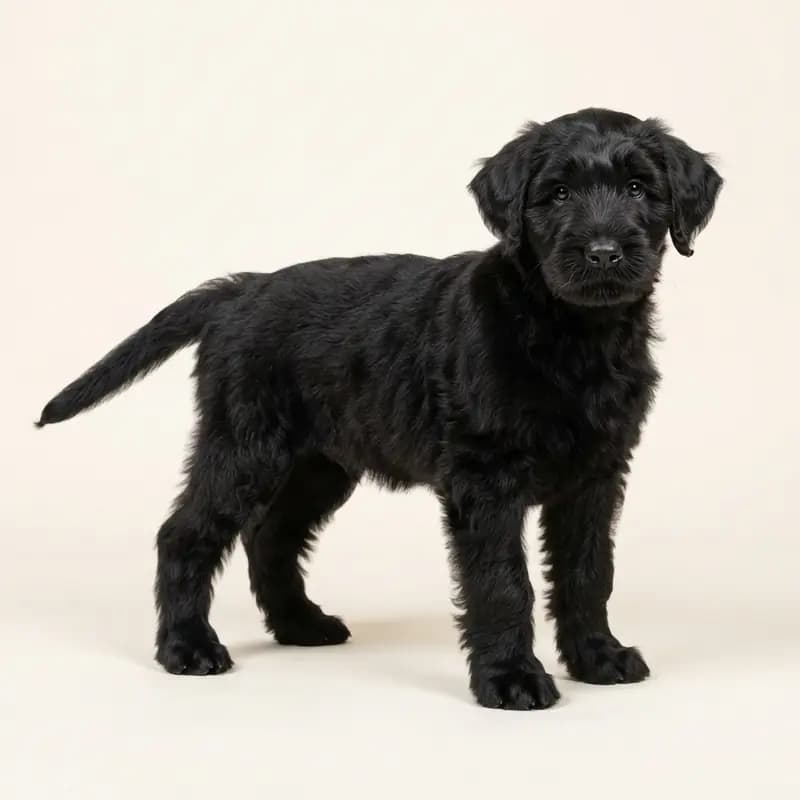
Giant SchnauzerClose relative
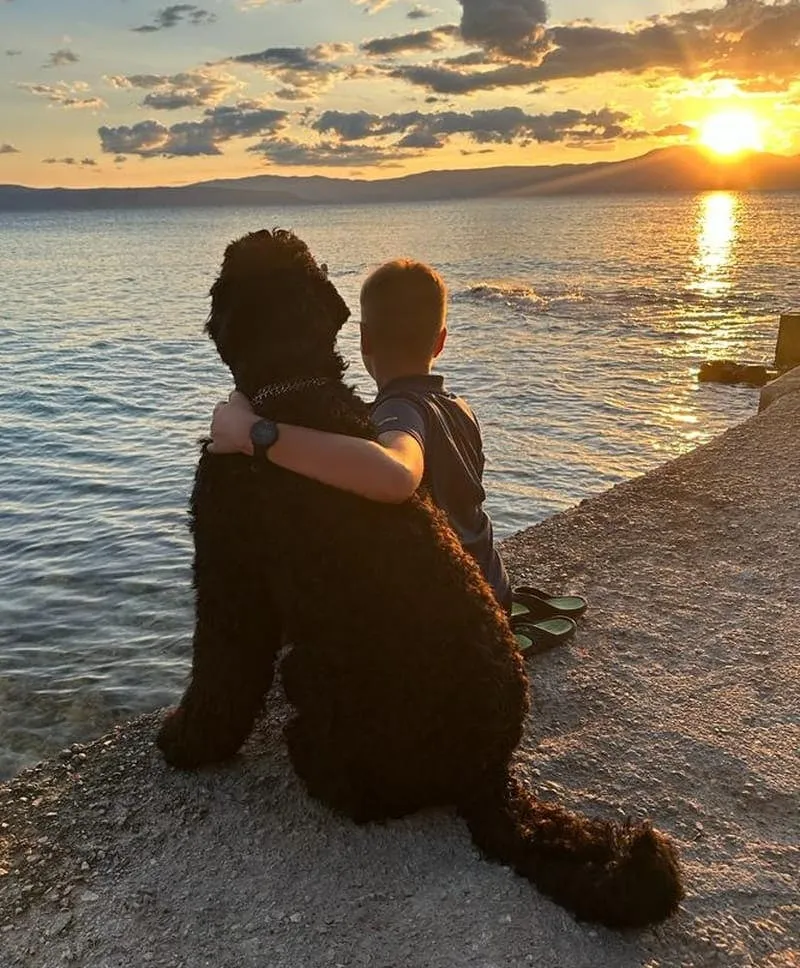
The Russian Black Terrier is a massive, extremely steady-nerved family protector—bred by the Soviet military as an uncompromising working dog and guardian that acts immediately and independently when faced with a real threat.
How the health grade is calculated
Sources for required breeding screenings. Klub für Terrier e.V.
Self-check
Answer 6 quick questions about your everyday life and see how well the Black Russian Terrier fits you — including an honest cost estimate per month, per year, and across the dog's lifetime.


At a glance
The essentials — key facts, traits, and health priorities — before you dive deeper.
Lifespan
9–12 yrs
Shoulder height
68–76 cm
Weight
45–60 kg
Practical
Temperament
Daily life
What matters most
Especially with a Black Russian Terrier, choosing the right breeder is the single most important decision you'll make. Serious breeders consistently test the parents for inherited conditions, prioritize healthy early socialization, and stay accountable long after handover. A cheap puppy without health screening tends to become the most expensive dog later on.
See HonestDog breeder standards →Colors & coat
The coat colors that occur in the Black Russian Terrier — including which ones fall outside the breed standard and which carry genetic risk.
Eye colors
 Brown
Coat type
 Double coat
 Wire
The real vibes check
A Russian Black Terrier is not a cozy, XXL-sized teddy bear—he is a highly intelligent, self-sufficient security professional in a shaggy coat. If you channel his incorruptible nature through confident leadership, you will have the most loyal bodyguard in the world. However, if you leave the decisions to him, he will soon be running your house and managing your guests, too.
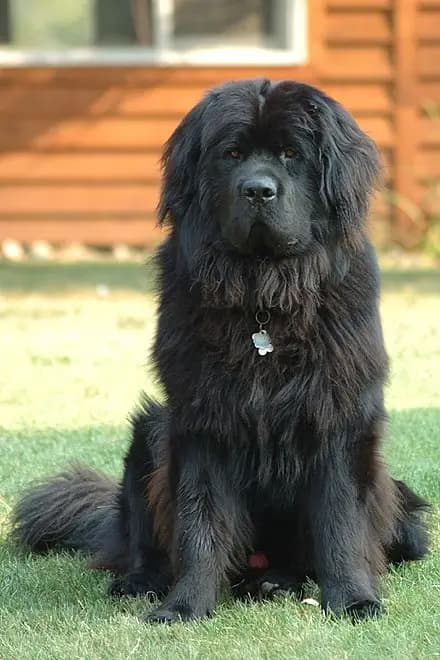
The Russian Black Terrier is an impressive presence. This large and powerful dog is classified in FCI Group 2 as Pinscher and Schnauzer, Molossoid and Swiss Mountain Dog and Russian Black Terrier. The breed standard describes him as bold and confident, with a well-defined and relatively large head, a broad chest and strong, well-developed muscles. The eyes are dark and of medium size, the ears are set high and hang close to the head. The long, bushy beard and eyebrows give the Russian Black Terrier a distinctive look. In contrast to many other breeds, there is no distinction between show and performance lines with Russian Black Terriers. Every dog of this breed should possess both the physical and mental characteristics specified in the breed standard. Although the breeding of this breed follows strict standards, the appearance can vary slightly from dog to dog, especially when it comes to the length and texture of the coat.
The Russian Black Terrier is a dog with many facets. Despite his impressive size and his origins as a working dog, he is essentially a loving family dog who loves his people more than anything. His loyalty is unmatched, and he tends to form a particularly close bond with the person who primarily looks after him. However, he is by no means a one-man dog, but can fit well into family life and build relationships with all family members. Despite its loving nature, the Russian Black Terrier is also an excellent watchdog. He is naturally suspicious of strangers and tends to vigorously defend his territory and family. His alertness, combined with his impressive size, makes him an effective deterrent to anyone who might dare approach his home. The Russian Black Terrier is also a very intelligent dog. He learns quickly and is able to perform a variety of tasks. However, despite his intelligence, he can also be stubborn, and he needs an owner who is able to direct his attention and channel his energy in positive directions. As with many large dogs, the Russian Black Terrier is a relatively calm dog. He is not hyperactive and does not require constant activity, but he still needs regular physical and mental stimulation to stay healthy and happy. Long walks, games and training sessions are ideal ways to keep his body and mind in shape. One of the biggest challenges in owning a Russian Black Terrier can be their tendency to be independent. These dogs are used to making decisions and evaluating situations on their own, which can lead to them not always listening to commands. This is something that needs to be taken into account in their training and it requires an owner who is firm and consistent, but also patient and understanding. As for staying alone, the Russian Black Terrier can learn to be alone for short periods of time. However, it is important to teach him this as a puppy and make sure he feels comfortable and safe when he is alone. However, if left alone for too long, he may become restless and exhibit unwanted behavior. Although the Russian Black Terrier was not bred as a hunting dog, it can still display some hunting instincts. However, this varies from dog to dog and can also be controlled with appropriate education and training. When it comes to alertness, the Russian Black Terrier is naturally watchful and alert. He will react quickly to changes in his environment and is always ready to protect his territory and family.
| Watchfulness Strong territorial instinct — may actively confront intruders. | Very high |
| Openness to Strangers Neither pushily friendly nor suspicious. | Neutral |
| Hunting or Herding Drive Mild interest in movement and small animals — easily managed. | Low |
Fun Fact!
Despite his impressive size and alert nature, the Russian Black Terrier has a nickname that emphasizes his gentle and loving nature - he is often called "Black Bear"!
Russian Terriers are hardy and intelligent dogs that can be very territorial and wary of strangers. Appropriate education and rearing is therefore very important.
The Russian Black Terrier is more suited to living in the country or in a house with a large garden due to its size and high exercise needs. However, he can also cope in the city as long as he gets enough exercise and activity. He is good with children and can get along with other pets as long as he has been properly socialized. However, cats and other small animals should be careful as he may have a strong hunting instinct due to his terrier origins.
Loves family life and thrives in a group.
Takes boisterous and affectionate children in its stride.
Usually gets on fine with other dogs.
City-appropriate with enough exercise and stimulation.
Owning a dog is a privilege, but it's also a real responsibility. Before you bring one into your life, be honest with yourself about the commitment it takes.
The Russian Black Terrier is an intelligent and willing to learn dog that requires consistent and loving training. It is important to socialize him from an early age and set clear rules and boundaries for him. Since he was originally bred as a working dog, he needs a lot of physical and mental activity. It is well suited for various dog sports, such as Schutzhund work, obedience or agility. The Russian Black Terrier can tend to be a "ball junkie," so playing with the ball should be used in a measured and controlled manner.
The Russian Black Terrier's diet should be balanced and high quality due to its size and active temperament. A mix of high-quality commercial dog food and fresh, home-cooked meals can be ideal. It is important that the diet contains enough protein and fat to meet his energy needs. The Russian Black Terrier has a dense, wavy to curly coat with a dense undercoat. Therefore, he requires regular grooming to keep his coat healthy and tangle-free. Brushing should be done several times a week. The Russian Black Terrier's coat can cope well with the German climate in both summer and winter. However, he sheds quite heavily, especially during the changing seasons.
| Care Level Needs regular professional grooming — time-consuming and costly. | High-maintenance |
| Exercise Needs Needs several hours of serious exercise every day. | Very active |
| Shedding No or minimal hair loss — suitable for allergy sufferers. | No shedding |
| Trainability Bred to work closely alongside humans. | Highly trainable |
Our experts are still reviewing this information. Spotted something wrong? Email us at info@honestdog.de.
Solid, watch carefully
Health grade
In the Black Russian Terrier, breed-specific risks exist for hip dysplasia (HD), hyperuricosuria (HUU), and urolithiasis (urinary stones). The Klub für Terrier e.V. mandates X-ray examinations for hip dysplasia (HD) with a threshold of HD A–B as well as genetic testing for hyperuricosuria (HUU) for breeding approval, whereby carriers may only be mated with clear partners. In addition, responsible breeders have their dogs additionally tested for urolithiasis (urinary stones) in order to identify carriers in good time. Before purchasing a puppy, insist on seeing the complete official findings of both parents for HD, HUU, and urolithiasis (urinary stones).
Grade is relative to other breeds — AI-assisted and editorially reviewed.
Methodology and data: HonestDog Dog Breed Health Report 2026
What matters most for this breed
Tap any item to see details.
In your daily routine, you should ensure a healthy weight and joint-friendly development, and have any abnormalities in movement or urination checked by a vet early on.
Responsible breeders only mate parent animals tested for hip dysplasia (HD) and hyperuricosuria (HUU), and additionally examine for urolithiasis (urinary stones).
Note: This health overview is AI-assisted and editorially reviewed. It is for orientation only and does not replace veterinary advice.
What matters most for this breed — what's common, how much it affects the dog's life, and how to protect yourself as a buyer.
Tap a body region to see the inherited conditions linked to it.
The three most important risks
Pick a region on the map to explore other areas.
Tier 1 is the core standard: the tests Klub für Terrier e.V. requires, plus further tests from the recommended health standard for this breed. Tiers 2 and 3 show how responsible breeders go beyond.
Core standard. Tests marked “Club standard” are required by Klub für Terrier e.V. for breeding approval; the others are part of the recommended health standard for this breed. Ask any reputable breeder for the results.
Not health tests, but required for breeding: the club asks for these results too. They don't count toward the risks or the rating.
DNA-Identitätsnachweis
Required by Klub für Terrier e.V.
Acceptable result: DNA-Typisierung durchgeführt (Blutprobe)
No entries in this tier.
Note: This health overview is AI-assisted and editorially reviewed. It is for orientation only and does not replace veterinary advice.
A Black Russian Terrier costs around ~€240 per month (€120 – €460, depending on your setup). The first year adds up to roughly ~€6,400 including purchase, equipment and puppy school; across the dog's life (10.5 years) it comes to about ~€33,230.
With surgery cover, running costs come to about ~€250 per month — in return, your share of a major operation drops from several thousand euros to around 20 percent.
Per month
~€240
In the first year
~€6,400
Across the dog's life
~€33,230
Estimated purchase price from a breeder: €2,000 – €3,500
Estimate at a mid-range setup (suburban, dry food, 1–2 hours of daily exercise), average German prices, as of July 2026.
The history of the Russian Black Terrier is relatively young. It was bred by the Red Army in the then Soviet Union in the 1940s and 1950s to create a versatile, hardy and reliable working dog that would be able to serve in a wide variety of climatic conditions. Breeders combined the genes of more than a dozen breeds, including the Rottweiler, Giant Schnauzer, Airedale Terrier and Newfoundland, to achieve the final standard of the Russian Black Terrier. Originally, the Russian Black Terrier was primarily a military dog used for a variety of tasks, from search and rescue to tracking. Over time, however, his outstanding qualities as a companion dog were recognized and he began to find a home in civilian households. The breed was recognized by the Russian Cynological Association in 1981 and officially recognized by the Fédération Cynologique Internationale (FCI) in 2004.
The Russian Black Terrier was bred as a service dog for military purposes, particularly for guard and protection duties.
Russia
1940
Owners describe the Black Russian Terrier as a very loyal, calm and affectionate companion in everyday family life. Adult dogs are usually quiet and relaxed indoors and often seek close physical contact with their people. With children in their own household they are generally patient and gentle, provided they have grown up with family life from puppyhood.
At the same time, many owners stress that the breed's protective drive and territorial behavior should never be underestimated. These dogs take their guarding role very seriously; strangers or unexpected visitors are often eyed with obvious skepticism and watchful distance. Owners therefore emphasize that you have to actively manage visits and keep giving the dog clear direction, so it doesn't decide on its own who gets to enter the property or the home.
Sources:dogforum.deastrafidelis.eudiscover-lagomaggiore.comhunde-fan.dehundeforum.com
Owners describe training a Black Russian Terrier as a real challenge, because these dogs aren't known for blind obedience and often size up situations for themselves. Experienced owners repeatedly stress that harshness or pressure has no place here, since the breed reacts sensitively to unfairness. In their view, the only thing that works is calm, unshakable consistency paired with positive reinforcement.
Adolescence and puberty are a recurring challenge in owner reports. When young dogs already weigh in at their full heavy size, sometimes over 50 kilograms, and start testing their limits and other dogs, leash walking takes a lot of physical stability and mental leadership. Many owners report, however, that with patience and consistent socialization these dogs grow into reliable, cooperative partners once this stage is over.
Sources:discover-lagomaggiore.comhundeforum.competbook.demit-tier.de
A major topic in breed forums and owner groups is how much grooming the breed needs, which people often underestimate. The dense, wavy double coat mats quickly without regular care, so owners report brushing it out thoroughly at least two to three times a week. The coat also has to be clipped or trimmed every few months. The full beard is another constant: it needs cleaning and drying regularly after the dog eats and drinks, or you'll inevitably get matting and damp patches around the house.
On health, owners describe these dogs as weatherproof and sturdy but point to the risks typical of large, heavy breeds. Screening for hip and elbow dysplasia (HD/ED) comes up again and again, as does the risk of bloat, which is why owners strictly keep rest periods after meals. Ear infections also occur when the dense hair in the ear canal limits airflow.
Sources:discover-lagomaggiore.comtackenberg.deastrafidelis.eu
Paraphrased from real owner reports · translated from German
The Black Russian Terrier is an active dog that needs plenty of exercise and mental stimulation. Research the temperament, grooming needs, and space requirements before deciding.
The average life expectancy of a Black Russian Terrier is 9-12 years. With proper care and regular vet visits, your dog can live a long, healthy life.
Black Russian Terrier grooming requirements include regular brushing, nail trimming, and dental care. HonestDog provides detailed grooming tips for every breed.
The Black Russian Terrier can be a great family dog. Proper training and socialization are key. HonestDog provides family suitability information for every breed.
The Black Russian Terrier comes in these colors: Black.
Showcase your kennel on HonestDog and reach families searching for a responsibly bred Black Russian Terrier.