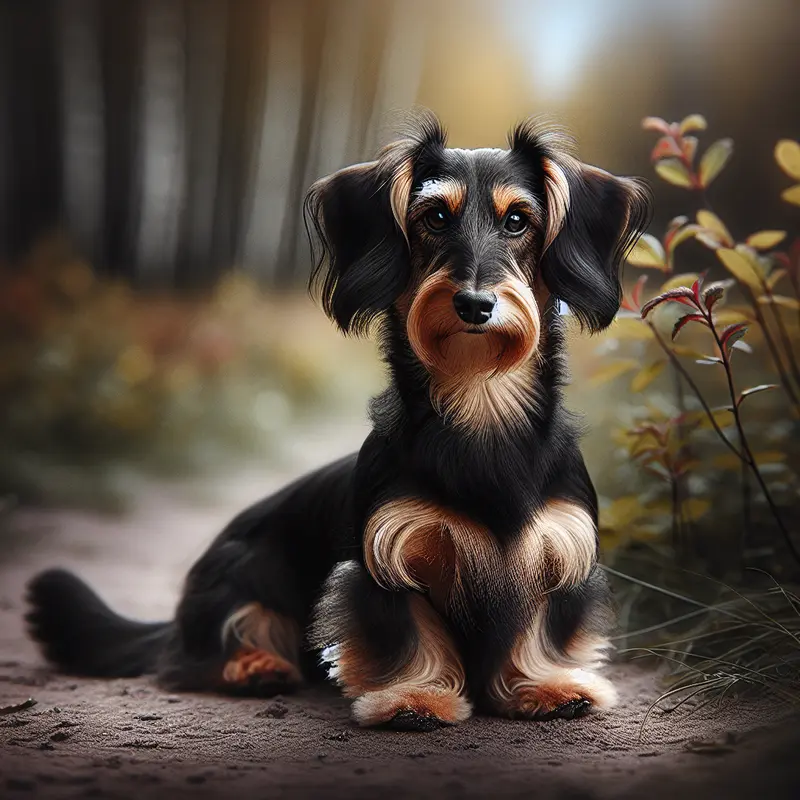
A compact build, short legs, and a look that can metaphorically move mountains: the miniature dachshund is a prominent presence in the dog world. However, anyone who is fooled by its external features, shoulder height of 7 to 8 inches (18 to 21 cm), and low weight of 9 to 13 pounds (4 to 6 kg) greatly underestimates this breed. Inside that small body beats the spirit of a large, self-confident dog.
The decision to get a dog should always be based primarily on inner traits. The miniature dachshund temperament brings specific characteristics with it that are deeply rooted in its original purpose as a hunting dog. This article sheds light on the facets of the Teckel, shows what everyday life with one looks like, and helps you make an honest assessment of whether this breed fits your personal living situation.
Big Ego on Short Legs: The Core Personality of the Miniature Dachshund
To understand the miniature dachshund temperament, it helps to look at the breed's history. Dachshunds were bred for burrow hunting. Underground, in the dark fox or badger den, the dog had to make decisions entirely on its own. The hunter couldn't help down there. This breeding selection for independence and courage shapes the animals' behavior to this day.
In everyday modern life, this heritage manifests as remarkable self-assurance. A miniature dachshund doesn't tend to immediately check in with its human when facing uncertainty; it makes its own decisions when in doubt. Colloquially often called stubbornness, from a behavioral biology perspective this is pure independence. At the same time, the miniature dachshund shows a very soft, affectionate side in the home environment. It bonds intensely with its humans, seeks physical closeness, and appreciates cozy hours on the couch. This duality of an intrepid daredevil outdoors and a cuddly companion indoors makes up the special appeal of the breed.
Who Is This Breed Suited For?
Simply labeling a dog as a "beginner dog" or "family dog" often falls short. The miniature dachshund temperament requires an environment that understands and respects its needs.
Families with Children
Due to its compact size, the miniature dachshund is often considered an ideal companion for children. While the breed's family-friendliness is high, compatibility with small children requires parental management. A miniature dachshund is not a patient stuffed animal. It has a clear personal boundary and will let you know when the hustle and bustle becomes too much. With older children who respect the dog's body language and know the dog shouldn't be disturbed while sleeping, an intimate friendship often develops. Furthermore, the animal's long back must be protected; careless lifting by toddlers poses a risk of injury.
Singles and Seniors
For individuals or older people, the miniature dachshund can make an outstanding companion. Since these dogs naturally love to bond with a primary caregiver, they thrive in quieter households. However, the life expectancy of 12 to 16 years should be taken into account when getting one. Even though the physical leash-pulling strength is manageable with this weight class, the mind of the miniature dachshund still demands daily attention and engagement.
Dog Beginners
Trainability for this breed is rated as moderate. This doesn't mean miniature dachshunds can't learn—they are exceptionally intelligent. However, they question the point of commands. For first-time dog owners, this presents a challenge. Anyone willing to thoroughly study canine body language, maintain a positive yet very consistent approach, and avoid being wrapped around the paw by that famous dachshund look can also be happy with a miniature dachshund as a beginner. Humor and patience are indispensable companions along the way.
Cohabitation: Living Situation and Animal Roommates
A major advantage of the miniature dachshund is its adaptability to its living space. Its urban suitability is high, and it gets along well in an apartment as long as its outdoor exercise needs are met. A garden is a nice bonus, but not a must.
An important topic regarding the living situation is anatomy. Miniature dachshunds are prone to disc problems, known as dachshund paralysis, due to their breed. To protect the long back, regular stair-climbing should be avoided. In apartment buildings without an elevator, the dog must be carried up and down the stairs. Detailed information on health prevention is provided by veterinary institutions such as the Federal Chamber of Veterinary Surgeons in their guides for chondrodystrophic breeds (dogs with short legs and long backs).
Living with other dogs or pets depends heavily on socialization during puppyhood. In general, compatibility with other dogs is good, though the miniature dachshund tends to overestimate its own size. Encounters with significantly larger dogs should be calmly moderated, as the Teckel often shows no respect for physical superiority. Small pets or cats in the same household can present a management task due to the anchored prey drive, but are entirely possible with gradual introductions during puppyhood.
Activity and Exercise: More Than Just Going for Walks
Anyone who thinks a miniature dachshund is content with ten minutes around the block three times a day will quickly be faced with behavioral issues. The energy level is moderate to high. These dogs have stamina and will happily accompany their humans on multi-hour hikes through forests and fields.
However, physical exercise alone is rarely enough to balance the miniature dachshund temperament. As a hunting dog, it has an exceptional nose that wants to be put to work. Mental stimulation is the key to a relaxed dog in the house. The following activities are particularly suitable:
- Nosework: Whether tracking (mantrailing) or target object search (TOS) in the living room—working out scent trails provides species-appropriate stimulation for the miniature dachshund.
- Retrieving: Even though it's more of a retriever domain, many dachshunds thoroughly enjoy recovering dummies from the underbrush.
- Agility and Balance Training: Small balancing exercises on logs during walks promote body awareness and teamwork with humans. (Jumps should be avoided due to the back).
Challenges in the Miniature Dachshund Temperament
Every dog breed comes with specific challenges. Harmonious cohabitation succeeds when you view these traits not as faults in the dog, but as part of its genetics.
The Pronounced Prey Drive
Nearly all miniature dachshund experiences shared by owners involve anecdotes about the prey drive. As soon as a scent is picked up, the dog often switches into a working mode. The ears seem to go on deaf ears. Early, well-founded recall training and long-line training are essential in the first years of life. There are lines bred strictly for hunting and others bred as companion dogs. Guidance on the various breeding lines is offered by the Deutscher Teckelklub 1888 e.V., which oversees the breed in Germany.
Barking and Vigilance
Miniature dachshunds are extremely attentive and typically sound off loudly at unfamiliar noises or strangers. These watchdog qualities were once desired on farms. In a modern city apartment, however, reactive barking tendencies can lead to conflicts with neighbors. The goal is to teach the dog right from the start that while it may alert you to occurrences, it should then hand the situation over to the human.
Separation Anxiety
Due to their strong attachment to their humans, many miniature dachshunds do not like being left alone. If staying alone is not trained gently and in tiny steps starting from puppyhood, frustration and separation anxiety can develop, often expressed through persistent barking or destroying objects.
Training: Steering the Miniature Dachshund Temperament in the Right Direction
Training a miniature dachshund often resembles a diplomatic negotiation. Harshness, loud scolding, or coercion do not achieve results with this breed. The dog usually responds with complete refusal or withdrawal. The key lies in positive reinforcement and teaching the dog that cooperating with humans is worthwhile.
Consistency is the highest law. If the miniature dachshund is not allowed on the couch, it must never be allowed on it—not even on Sundays or when it looks especially cute. This dog notices inconsistency immediately and uses it skillfully to its advantage. Clear, calm rules give it security.
A well-socialized, lovingly yet firmly trained miniature dachshund is a confident companion. To get a comprehensive picture of the physical traits and grooming needs of these dogs, we recommend checking out the detailed miniature dachshund breed profile.
Frequently Asked Questions (FAQ)
Are miniature dachshunds yappy barkers?
Miniature dachshunds are naturally alert and have a deep, loud voice for their size. They tend to announce noises and strangers through barking. Whether this turns into uncontrolled "yapping," however, depends largely on training. Anyone who channels the barking early on gets an attentive yet calm dog.
Can miniature dachshunds stay home alone well?
Because they are very people-oriented, being alone is often harder for them than for many other breeds. It is not a behavior they master naturally. Staying alone must be trained in small steps and with plenty of patience, ideally starting during puppyhood. Well-trained miniature dachshunds can relax at home alone for a few hours after proper habituation.
Does the miniature dachshund need dog clothing in the winter?
Due to its short legs, the miniature dachshund's belly is very close to the wet, cold ground. Furthermore—depending on the coat variety (smooth, wirehaired, longhaired)—they sometimes possess little undercoat. In freezing temperatures, heavy rain, or snow during the winter, a well-fitting dog coat that warms the belly area and long back is very advisable for health reasons.
How strong is the prey drive really?
The prey drive is deeply anchored in the breed's DNA. The intensity varies from individual to individual, but should never be underestimated. Visual stimuli (a running rabbit) or scent trails can quickly throw the dog into hunting mode. Safe off-leash running in wooded areas is often only possible after intensive anti-hunting training and with an excellent recall.
Your Path to the Miniature Dachshund
The miniature dachshund is far more than just a fashionable companion dog in a small format. It is a true personality: intrepid, clever, sometimes stubborn, but boundlessly loyal to its family. It demands people who appreciate its willingness to work, respect its sense of independence, and approach it with humor and clear leadership. Anyone ready to embark on this adventure on short legs will gain a loyal companion who enriches everyday life with plenty of charm and vibrancy.
If, after careful consideration, you have concluded that this strong-willed dog fits your life, the next step is finding a responsible breeder. Reputable breeders don't just focus on appearance; they place the highest value on health and a sound temperament in the parent dogs. The VDH (Verband für das Deutsche Hundewesen) provides general guidelines for dog breeding in Germany. Take your time to inform yourself and discover trustworthy listings from verified breeders directly with us. Start your search and find your new companion under find miniature dachshund puppies on HonestDog.