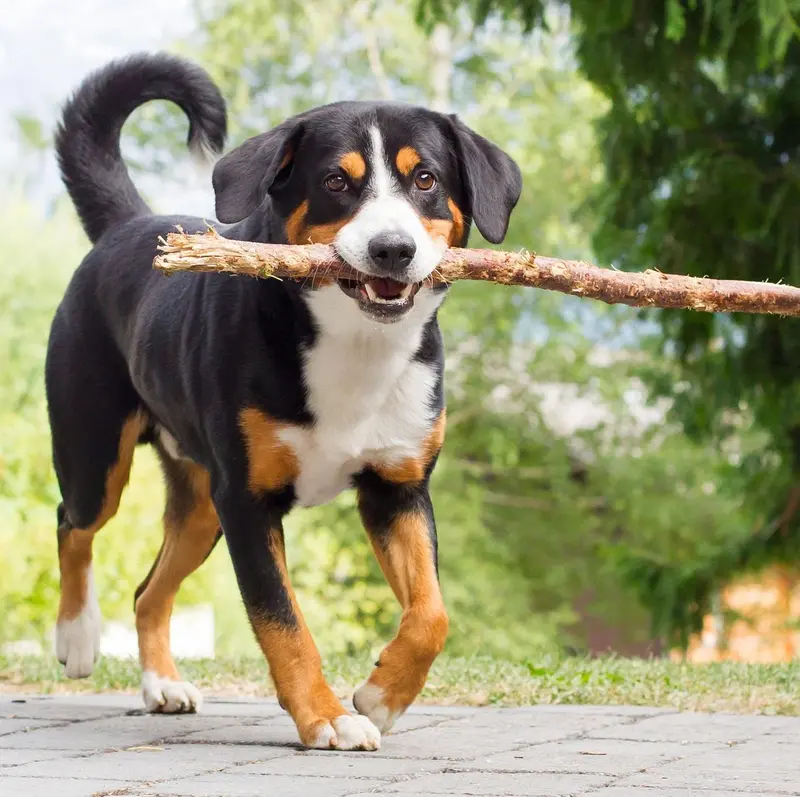
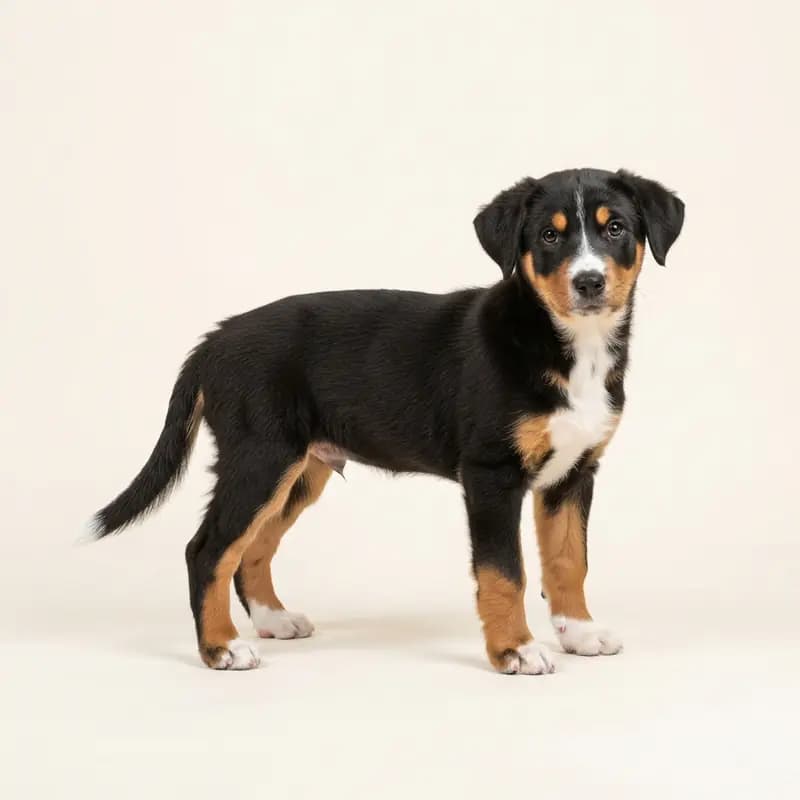
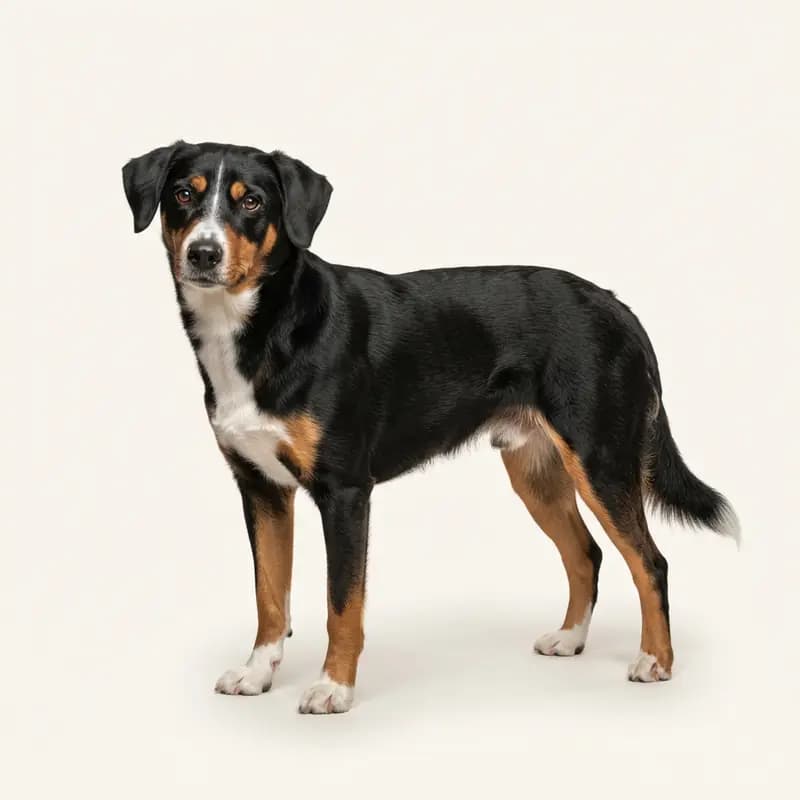
Appenzeller Sennenhund training is essential for turning this traditional Swiss farm dog into a balanced, reliable everyday companion. Bred for a life full of activity and purposeful work, this breed stands out with an immense drive to work, quick comprehension, and a strong herding instinct. Choosing this breed means bringing home a dog that won't be satisfied with just three short leash walks a day. Structured and consistent guidance is the key to channeling this agile powerhouse into an affectionate, well-mannered family member.
To better understand your dog's behaviors and genetics, it's worth taking a closer look at our Appenzeller Sennenhund breed profile. Knowing their original working purpose provides the foundation for fair, effective training.
The Appenzeller Sennenhund as a Student: Trainability Based on Breed Character
With high trainability and a distinct "will to please," the Appenzeller brings outstanding qualities to the training pitch. They learn exceptionally fast. However, this is a double-edged sword: they pick up desired behaviors just as quickly as unwanted habits if you aren't consistent.
Intelligence Meets High Energy
This breed has a very high energy level. In training, this means that endlessly repeating basic drills quickly leads to boredom. An Appenzeller Sennenhund will question routines once they stop making sense. Experienced owners keep sessions short, precise, and varied. A dog that actively thinks along is far more focused than one that merely executes rote commands.
Sensitivity with Lightning-Fast Reflexes
As a drover and herding dog, the Appenzeller was bred to respond to subtle environmental cues. They notice every movement and the slightest shift in your body language. In training, this calls for calm, confident leadership. Harsh corrections or shouting quickly cause insecurity and break trust in this sensitive breed. Positive reinforcement and crystal-clear boundaries are the way to go.
Appenzeller Sennenhund Puppy Training: Laying the Groundwork
The first few months are decisive for your dog's future development. Thorough puppy training during the first 16 weeks focuses on understanding household rules and building environmental confidence before drilling formal obedience exercises.
Socialization and Habituation
The Appenzeller Sennenhund naturally brings a breed-typical alertness and a healthy skepticism toward strangers. To prevent this wariness from turning into fear or reactivity, comprehensive socialization is vital. Expose your puppy gradually and positively to various people, other dogs, sounds, and environments. The goal isn't for everyone to pet them, but for your pup to remain neutral around novel stimuli and keep their focus on you. Helpful guidance can often be found in VDH puppy training resources focused on healthy development.
House-Training and Bite Inhibition
Like all puppies, house-training requires small, consistent steps: take them outside immediately after sleeping, eating, and playing. A special focus during puppyhood must be bite inhibition. Herding dogs often try to control movement by nipping at heels or pant legs—a trait useful when driving cattle, but problematic at home. If your puppy starts nipping, immediately and calmly end the game. Offer an appropriate chew toy instead as an outlet for their biting urges.
Teaching an Off-Switch
Because the Appenzeller rarely stops on their own and is always ready for the next task, they must actively learn how to relax. A designated retreat, such as a cozy crate or a quiet dog bed where they remain undisturbed, is crucial. Exercises for impulse control and frustration tolerance should be woven into daily life early on.
Building Essential Commands Reliably
Solid basic obedience gives your dog freedom and gives you peace of mind. When teaching commands to an Appenzeller Sennenhund, make sure your communication is completely unambiguous.
- The Recall: Because of their quick reaction to motion triggers (joggers, cyclists, wildlife), a rock-solid recall is non-negotiable. Build it up in low-distraction environments first and reward every return with high-value treats. A long line provides safety until the cue is 100% reliable.
- Sit and Down: Staying stationary can be challenging for an agile Appenzeller, especially with distractions around. Focus not just on the position itself, but on building duration and distance (the "Stay").
- An Interrupter Cue: A crisp "Leave it" or "No" helps stop unwanted behavior in its tracks, whether it's barking at the fence line or fixating on a cat. Your dog must learn that this cue is absolute.
- Place Training: Sending your dog to their mat ("Go to your place") is a powerful management tool when guests arrive. It relieves your Appenzeller of the perceived responsibility to guard the front door or herd visitors.
Navigating Breed-Specific Training Challenges
Successful Appenzeller Sennenhund training works with their genetic instincts rather than fighting them. Trying to suppress their nature will only cause frustration for both of you. The key is redirecting those drives into acceptable channels.
Managing the Herding Drive
In everyday life, the herding instinct often shows up as trying to keep the family tightly grouped on walks, or circling and barking at children, bikes, and cars. Proactive handling is essential here. If you spot a trigger (like an approaching jogger), call your dog close before their herding drive kicks in. Reward calm behavior and check-ins with you. This teaches your dog: "My handler has this handled, so I don't need to take over."
Managing Alert Barking and Guarding Instincts
Appenzellers are vigilant watchdogs that readily announce any changes on their territory. It's neither realistic nor fair to expect them to stop alerting entirely. Instead, aim for your dog to give a brief alert bark, hand the situation over to you, and settle down. When they bark, check what caught their attention, calmly acknowledge them ("Thank you, I've got it"), and send them to their place. Additional breed-specific advice is often provided by the Schweizerische Sennenhund-Verein für Deutschland (SSV).
Aloofness Toward Strangers
While fiercely loyal and affectionate with their own family, the Appenzeller generally doesn't care for strangers. Don't force your dog into interactions that make them uncomfortable. They don't need to greet every guest enthusiastically—they simply need to tolerate their presence politely. Clear boundaries give your dog the confidence that they don't have to manage or correct visitors themselves.
Advanced Training and Meaningful Enrichment
Physical exercise alone isn't enough for the clever mind of an Appenzeller Sennenhund. They require mental challenges. If this breed gets bored, they'll find their own "jobs"—which rarely align with your household rules, ranging from nuisance barking to destructive chewing.
Dog Sports for the Appenzeller
Thanks to their agility and close handler bond, Appenzellers excel in numerous dog sports. Agility provides a great physical workout and strengthens teamwork. Treibball is an ideal alternative to livestock herding: your dog learns to push large fitness balls into a goal on cue. This sport demands distance control and impulse control while satisfying their working instincts in a fun, safe way.
Nosework and Trick Training
Scent games, mantrailing, and tracking provide immense mental stimulation. Just ten minutes of focused scent work tires an Appenzeller out more effectively than an hour of walking. Learning tricks is another engaging activity that keeps their brain sharp and deepens your bond.
Common Mistakes in Appenzeller Training
Because these dogs learn so rapidly, training mistakes can quickly take root. Some of the most common pitfalls include:
- Inconsistent Boundaries: An Appenzeller will regularly test whether rules still apply today. Inconsistency is spotted and exploited instantly. Clear, unchanging house rules are a must.
- Overstimulating the Puppy: Owners of energetic breeds often try to tire their puppies out with excessive activity. This often creates chronically overtired dogs that never learn to settle. In the first year, less is usually more.
- Harsh Training Methods: Force, intimidation, or excessive pressure destroy your relationship. Training should always be rooted in force-free dog training and positive reinforcement.
- Ignoring Guarding Instincts: Trying to forbid all guarding behavior outright will fail. The behavior must be managed and guided, not completely suppressed.
- Lack of Mental Stimulation: Walking around the block on a retractable leash isn't enough for this working dog. A lack of mental enrichment is the primary cause of behavioral issues in this breed.
Frequently Asked Questions
Is the Appenzeller Sennenhund suitable for first-time owners?
Generally, this is a demanding breed. They are only suitable for dedicated beginners who are ready to dive deep into herding dog behavior, work with an experienced trainer from day one, and commit sufficient time to both physical and mental enrichment.
How do I stop an Appenzeller Sennenhund from barking constantly?
As a natural watchdog, the Appenzeller will always have an urge to alert. You can't train this out entirely. Training should focus on taking over the guarding responsibility from your dog. One or two alert barks are fine; after that, you take charge. Solid place training and a clear interrupter cue make a massive difference.
How much exercise does an Appenzeller Sennenhund need daily?
An adult, healthy Appenzeller typically needs around two to three hours of active exercise per day. However, the quality of the walk matters more than pure duration. Scent games, impulse control exercises, and short training breaks on walks leave your dog far more satisfied than miles of monotonous walking.
Can you train out the herding drive?
No, the herding instinct is hardwired genetically and cannot be trained away. However, you can manage and redirect it. Your dog must learn that people, vehicles, and other animals are strictly off-limits for herding. Providing suitable outlets like Treibball allows them to satisfy this urge safely.
Building a Strong Team Through Consistency and Understanding
Appenzeller Sennenhund training requires time, patience, and clear leadership. When you accept their natural traits—such as herding drive, vigilance, and boundless energy—instead of viewing them as flaws, you can tailor your training perfectly. If you can give your Appenzeller a meaningful job while teaching them how to rest, you'll gain an exceptionally loyal, resilient, and cooperative partner for life.
Finding the right dog and training approach often brings up questions. Explore HonestDog.de for more in-depth guides, responsible breeders, and detailed breed profiles to help you on your journey toward a harmonious life with your dog.