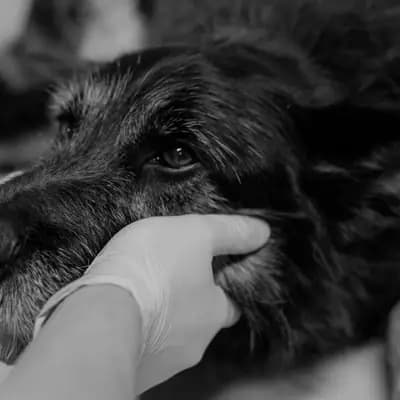
When looking into dog insurance, the most essential cover is dog liability insurance: it is legally mandatory in many German federal states and protects you against potentially ruinous third-party compensation claims. Whether you also need surgery-only cover or comprehensive pet health insurance depends on your financial reserves, your pet's age, and breed-specific health risks.
| Insurance Type | Status & Recommendation |
|---|---|
| Dog liability insurance | An absolute must for every owner (mandatory across 7 federal states, elsewhere often required depending on breed or size). |
| Dog surgery insurance | A sensible compromise: targets high four-figure veterinary clinic bills for surgical procedures. |
| Comprehensive dog health insurance | A worry-free solution for predictable monthly costs, also covering outpatient treatments, medication, and diagnostics. |
| Personal emergency fund | An alternative to health insurance, provided you have several thousand euros immediately accessible for emergencies. |
| Ideal time to take out a policy | As early as possible in puppyhood or adolescence, before initial veterinary diagnoses result in coverage exclusions. |
Liability, Surgery Cover, or Full Insurance: What Are Your Options?
When you start exploring how to protect your dog, you'll encounter three completely distinct concepts. While pet owner liability insurance covers damage your four-legged companion causes to third parties, other animals, or property, surgery and health insurance policies protect your own wallet from veterinary bills.
Dog Liability Insurance: Why It Is Non-Negotiable
Under the German Civil Code (§ 833 BGB), dog owners face strict liability (Gefährdungshaftung). This means you are personally liable with your entire private assets without limit for any damage or injury your dog causes—completely regardless of whether you acted negligently or are personally at fault. If your dog dashes into traffic and causes a road accident with severe personal injuries, compensation claims can run into millions of euros. Standard private personal liability policies don't step in here; they only cover tame small pets and cats.
In seven federal states—Berlin, Bremen, Hamburg, Lower Saxony, Saxony-Anhalt, Schleswig-Holstein, and Thuringia—dog liability insurance is mandatory by law for all dogs. North Rhine-Westphalia requires proof of insurance under the 20/40 rule for all dogs that weigh at least 20 kilograms or reach a shoulder height of at least 40 centimeters once fully grown. Most other federal states mandate insurance for listed or classified dangerous dogs, leaving Mecklenburg-Western Pomerania as the only state without a blanket statutory requirement. Even so, securing coverage from day one is strongly advised for every dog.
Surgery Insurance vs. Full Health Cover Compared
When it comes to veterinary care, the choice is yours. Many owners weigh up surgical-only cover against comprehensive health insurance. This comparison outlines the key differences between the two models:
| Criterion | Dog Surgery Insurance | Comprehensive Dog Health Insurance |
|---|---|---|
| Covered treatments | Surgical procedures performed under general anesthesia (or sedation), including initial pre-op examination, inpatient clinic stay, and postoperative care for a specified period. | All benefits of surgery insurance plus outpatient medical care, medication, laboratory diagnostics, X-rays/MRI, and often an annual preventative care budget. |
| Monthly premiums | Significantly cheaper; focused on protecting against catastrophic financial risks. | Two to three times more expensive than surgery-only cover, and more prone to premium increases as your dog ages. |
| Advantages | Excellent value for money; reliably shields you from unexpected four-figure veterinary spikes. | High predictability for everyday pet health costs; expensive long-term therapies for chronic conditions are covered. |
| Disadvantages | No reimbursement for expensive non-surgical medical treatments (e.g. lifelong heart or allergy medications without an operation). | High ongoing fixed costs across your dog's life; for healthy dogs, total premiums paid over the years often exceed the benefits received. |
For many dog owners, combining high-quality surgery insurance with a dedicated savings account for everyday vet visits (such as vaccinations, minor stomach bugs, or ear infections) provides the most sensible financial middle ground. On the other hand, if you want complete peace of mind at every vet appointment without checking your bank balance, a comprehensive policy without a tight annual cap is the better fit.
Key Factors That Matter for Your Dog
Whether and to what extent you should insure your dog isn't a one-size-fits-all decision. An insurer's underwriting calculation—and your own personal cost-benefit equation—hinges heavily on your pet's individual traits and your lifestyle.
- Age when taking out the policy: Timing is the single most important factor. Insuring a puppy at just a few months old means cheaper baseline premiums and, crucially, a spotless medical history. Once a dog reaches five or six years old, many providers charge higher premiums, enforce percentage-based deductibles, or decline new applications altogether (frequently from age seven or eight).
- Size, weight, and breed: Larger and heavier dogs rack up higher veterinary bills than small breeds—not least because dosages for anesthesia and medications are calculated by body weight. In addition, breed-specific health liabilities directly shape policy premiums. Brachycephalic (flat-faced) breeds like the French Bulldog or the Pug suffer disproportionately from respiratory issues, eye problems, and intervertebral disc disease, making their health cover substantially pricier. Large, energetic dogs like the Labrador Retriever or the German Shepherd carry elevated risks for joint disorders (such as hip or elbow dysplasia), cruciate ligament tears, or life-threatening gastric dilatation-volvulus (GDV). If you haven't brought your dog home yet, our Breed Finder helps you realistically assess the specific health predispositions of different breeds beforehand.
- Sex and neuter status: Unspayed females face a notable risk of uterine infections (pyometra) or mammary tumors in their middle-to-senior years—both conditions that almost invariably require immediate, costly surgery. Elective neutering without a medical necessity isn't typically reimbursed, or only receives a minor flat-rate subsidy; however, whenever surgery is medically essential, solid surgery or full health policies step in.
- Pre-existing conditions and background: Insurers cover future, unforeseen risks—not buildings that are already ablaze. If your dog was diagnosed with an allergy, chronic ear infections, or a ruptured cruciate ligament in their left hind leg prior to signing the contract, those exact conditions (and often the other knee as a secondary risk) will be excluded. For rescue dogs, it's best to secure insurance immediately upon adoption.
- Living conditions and routine: Do you rent your home, take your dog to the office, use doggy daycare, or participate in active canine sports like agility? If so, your liability policy must explicitly cover damage to rented property, care by third parties (friends, pet sitters), and competition participation. Daily injury risks also increase noticeably for very athletic or working hunting dogs.
What Consumer Watchdogs and Veterinary Authorities Say
Independent institutions examine the pet insurance market far more critically than insurer marketing campaigns suggest. Reviewing watchdog recommendations and statutory billing structures will keep you from making costly missteps.
A Clear Distinction Between Liability and Health Cover
In its independent guidance on pet liability insurance, the German consumer advice center (Verbraucherzentrale) highlights that this protection is indispensable for dog and horse owners, as personal liability insurance excludes them while owners remain exposed to unlimited liability. Consumer advocates recommend a minimum coverage sum of 5 million euros, whereas Stiftung Warentest advises a baseline limit of at least 10 million euros for personal injury, property damage, and financial losses.
Their assessment of pet health policies is noticeably more cautious. In consumer advice guides on pet insurance, watchdogs note that comprehensive policies in particular are often very expensive, and high out-of-pocket costs can still linger due to policy exclusions, age restrictions, and deductibles. As a cost-effective alternative focused purely on expensive surgical bills, experts frequently highlight surgery-only insurance—or advise setting aside a disciplined monthly sum into a separate instant-access savings account.
Stiftung Warentest (Finanztest issue 05/2025) evaluated 121 dog surgery policies and concluded that only around one in four tariffs earned a "Good" or "Very Good" rating with an unconditional recommendation. The primary issues found in weaker policies were restrictive annual payout caps, long waiting periods, exclusions of common surgeries, and the lack of a waiver preventing the insurer from canceling the contract after a claim.
The Role of the German Veterinary Fee Schedule (GOT)
The surge in pet insurance relevance over recent years is directly linked to the legal regulations governing veterinary fees. In Germany, veterinarians are legally bound to bill according to the Gebührenordnung für Tierärztinnen und Tierärzte (GOT), as detailed by the Federal Chamber of Veterinarians (Bundestierärztekammer). Following a major overhaul of the GOT in November 2022, standard fees for diagnostics, clinical treatments, and surgical interventions rose significantly.
Depending on case complexity, time involved, and local circumstances, veterinarians bill their services between the standard 1x and 3x rate. If an emergency occurs at night, over the weekend, or on a public holiday, emergency duty rules require billing up to the 4x rate alongside a mandatory 50 Euro (net) emergency surcharge. A reliable health or surgery policy must therefore cover up to the 4x GOT rate so you aren't left paying the bulk of the invoice out of pocket after a weekend clinic visit.
Costs, Common Pitfalls, and Practical Policy Details
Before signing on the dotted line, take a realistic look at actual veterinary costs alongside the small print in the policy terms. Knowing the typical traps is the best way to pick a plan that delivers when an emergency strikes.
What Do Insurance Policies and Treatments Actually Cost?
Monthly premiums fluctuate widely based on breed, age, and scope of cover. Independent market comparisons point to the following realistic price ranges:
- Dog liability insurance: Reliable plans with a coverage sum of at least 10 million euros cost between 40 and 140 euros per year (roughly 3.50 to 12 euros a month), depending on breed and selected deductible.
- Dog surgery insurance: Solid plans for young dogs start at approximately 15 to 30 euros a month (around 160 to 360 euros a year), though they can reach up to 45 euros a month (over 500 euros a year) for large breeds or older pets with top-tier protection.
- Comprehensive dog health insurance: Broad coverage without tight annual payout limits usually runs between 40 and 80 euros a month for young dogs. For predisposed breeds or older animals, premiums quickly rise to 90 to over 120 euros per month.
Set these figures against real-world veterinary invoices during an emergency. A complex fracture following an accident or a cruciate ligament repair using modern surgical techniques (like TPLO), including pre-op imaging and post-op care, commonly lands between 1,600 and 3,500 euros. Life-saving emergency surgery for gastric dilatation-volvulus (GDV) or an intestinal obstruction caused by a swallowed toy easily totals 2,500 to 4,500 euros once intensive clinical care is factored in. Chronic conditions such as Cushing's disease or severe allergies also mount up quickly, frequently exceeding 150 euros a month in regular blood panels, ultrasound scans, and ongoing prescriptions.
The 6 Most Common Mistakes When Taking Out Coverage
When pet owners find that their insurer refuses to settle a claim, it almost always boils down to policy clauses that went unnoticed at signup. Watch out for these six critical pitfalls:
- Capped annual limits: Budget-friendly tariffs often restrict annual reimbursement to 1,500 or 2,500 euros—or stagger maximum payouts across the first two policy years. A single complex procedure at a veterinary clinic will instantly blow through that cap. Whenever possible, choose a policy with unlimited annual cover or a very generous ceiling (at least 5,000 euros for surgeries).
- Exclusion of hereditary and breed-specific conditions: Many standard policies explicitly exclude hip dysplasia (HD), elbow dysplasia (ED), patellar luxation, dental misalignments, or brachycephalic obstructive airway syndrome. Always verify in the policy conditions whether these conditions are covered.
- Narrow surgical definitions: Some older surgery policies will only pay out if the skin was cut with a scalpel and the procedure occurred under full general anesthesia. Modern minimally invasive interventions (like an endoscopy to remove a foreign object from the esophagus) or procedures under heavy sedation should be clearly recognized as covered surgeries.
- Overlooked waiting periods: While accidents generally come with immediate coverage (or a very short window of just a few days), illnesses almost always carry a waiting period of one to three months from policy inception. For specific issues like joint disorders (HD/ED or cruciate tears), many insurers enforce special waiting periods lasting six to 18 months. If symptoms appear during this window, the condition will be excluded permanently.
- Missing liability components: Make sure your liability policy covers off-leash walking, informal care by third parties (such as friends or neighbors), damage to rented homes and vacation properties, and uninsured third-party loss recovery (Forderungsausfalldeckung). The latter steps in if you or your dog are injured by another dog whose owner has neither liability insurance nor the financial means to pay.
- Cancellation rights after a claim: Standard contract law gives both you and the insurer the right to cancel the policy following an open claim. If an insurer drops you after an expensive diagnosis, you won't find a new provider willing to cover a dog with a chronic condition. Superior tariffs explicitly waive the insurer's right to cancel the policy after a claim (at least once the contract has run for two or three years).
Frequently Asked Questions
Is taking out dog insurance worth it?
For dog liability insurance, there's no debate: it is an absolute necessity for every dog owner to guard against catastrophic third-party compensation claims. For medical and surgery insurance, the answer depends entirely on your financial cushion. If you can comfortably withdraw 3,000 to 5,000 euros from a savings account for an emergency clinic bill at any time, medical insurance isn't strictly mandatory. For everyone else, having at least a solid surgery policy is highly recommended so your bank balance never has to decide between your dog's life and a pain-free recovery.
What does a general insurer offer for dogs, and how do traditional providers compare to pet specialists?
Many pet parents look first to established multi-line insurance companies where they already hold car or home policies. Traditional providers usually offer solid liability and medical coverage, along with personal local agents and potential multi-policy discounts. However, when comparing them to specialized pet health insurers or digital insurtechs, reviewing the terms is vital: check objectively whether the policy reimburses up to the 4x GOT rate, how many days of postoperative care are covered (at least 15 to 30 days is best), and whether premiums jump automatically as your dog ages.
At what age should I insure my dog?
The best time to take out liability, surgery, or health cover is the day your dog arrives home—for puppies, typically from eight weeks of age. While young puppies are sometimes covered under the mother's liability policy while still with the breeder, you need an independent policy the moment legal ownership transfers to you. For health and surgery plans, starting early locks in the best rates and prevents harmless initial vet visits (like puppy diarrhea or minor itching) from being classified as pre-existing conditions later on.
Does dog health insurance cover routine checkups, vaccinations, and dental scaling?
Surgery-only policies do not cover preventative care; they step in only when medical surgery is required, such as extracting a fractured or infected tooth. Comprehensive pet health insurance, however, usually includes an annual preventative allowance (often between 50 and 150 euros per year). This can be used for vaccinations, deworming, flea and tick treatments, microchipping, or routine ultrasonic dental cleanings. Make sure general dental care (specifically tooth extractions and root canal treatments) is included in the core policy without restrictive caps.
What should I do if the insurance company cuts or rejects a bill?
If an insurer reduces or denies payment, it is often due to ambiguous wording on the veterinary invoice, an active waiting period, or suspected pre-existing conditions. Start by requesting a written statement outlining the exact policy clause used to justify the refusal. In many cases, a concise medical explanation from your veterinarian—confirming that the current condition is completely unrelated to previous health history—clears up the confusion. If an agreement cannot be reached, you can turn free of charge to the independent insurance ombudsman (Versicherungsombudsmann e. V.).
Your Checklist for a Confident Decision
Securing the right coverage for your dog doesn't mean blindly signing up for the priciest all-inclusive package; it's about identifying the risks you can't afford to take on alone. Secure high-limit dog liability insurance without cutting corners, then take your time deciding between dedicated surgery insurance, comprehensive health cover, or a disciplined personal emergency account. If you want to research breed-specific predispositions, health traits, and lifestyle requirements in depth beforehand, HonestDog is here as your trusted platform, offering detailed breed profiles and candid guides through every stage of your dog's life.