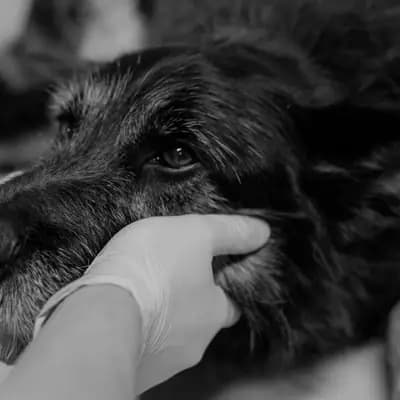
Learning how to brush dog teeth effectively involves cleaning the outer tooth surfaces daily or several times a week using a soft-bristled brush and pet-safe toothpaste. To remove soft plaque before it mineralizes into hard tartar within a few days, you can accustom your dog to this routine stress-free in about 2 to 4 weeks using gradual medical training.
| Factor | Practical Recommendation |
|---|---|
| Ideal starting time | Playfully during puppyhood (from 8 weeks); establish a fixed brushing routine after teething (from approx. 6 months) |
| Training duration | Realistically 2 to 4 weeks in daily sessions of 1 to 2 minutes |
| Brushing frequency | Ideally daily, or at least 2 to 3 times per week (approx. 2 minutes per session) |
| Essential equipment | Soft dog toothbrush or microfiber finger cot plus fluoride- and xylitol-free dog toothpaste |
| Veterinary check-up | At least once a year as part of the routine wellness examination |
This guide does not replace professional veterinary advice.
Why Thorough Dental Care for Dogs Is Essential
After every meal, an invisible biofilm of food debris, saliva components, and bacteria forms on the teeth—known as plaque. If this soft coating is left undisturbed, minerals from saliva deposit into it within 24 to 48 hours. Within a few days, it turns into rough, yellowish-brown tartar that cannot be removed at home with a toothbrush.
The real issue, however, isn't cosmetic; it is the biology underneath the gumline. Bacteria in the plaque produce metabolic byproducts that trigger painful gum inflammation (gingivitis). If left untreated, this progresses to periodontitis: the gums recede, deep periodontal pockets form, and the tooth-supporting structures along with the jawbone are permanently destroyed. As the Bundestierärztekammer explains, bacteria from these inflamed pockets can enter the bloodstream directly and cause long-term damage to internal organs such as the heart, liver, or kidneys.
Consistent dog dental care breaks this exact chain. Because your dog's tongue largely cleans the inside surfaces of the teeth through constant saliva flow and friction, you only need to focus on the outer surfaces, especially the large canines and upper premolars and molars.
Step-by-Step Guide: Medical Training for Dog Dental Care
Hardly any dog likes having a foreign object forced into their mouth without prior conditioning. Forcing or pinning them down quickly leads to defensive behavior. Successful dental care relies on medical training—a gradual, positive conditioning process where your dog learns to stay still and actively cooperate. A Swedish study reported by veterinarians from aktion tier e.V. showed that daily training not only measurably reduced gingivitis within 7 days, but also significantly lowered the dogs' stress levels day after day.
Only move on to the next step once your dog accepts the current stage in a completely relaxed manner:
- Create a positive association with the taste (Why: eliminate suspicion toward the paste): Dog toothpaste usually smells and tastes like poultry, liver sausage, or fish. Put a small dab on your washed index finger and let your dog simply lick it off. Repeat this for 2 to 3 days in a quiet spot until your dog eagerly looks forward to the tube opening.
- Touching the muzzle and lifting the flews (Why: build tolerance for hands around the face): Place one hand gently under the chin or along the side of the muzzle. Lift the lip on one side for a single second without touching the teeth. Praise calmly and immediately offer a small treat or a dab of toothpaste from your finger. Important: always work from the side, never straight from the front toward their sensitive nose.
- Gum massage with your finger (Why: get used to pressure inside the mouth): Dab some toothpaste on your fingertip, slide your finger under the closed lip from the side, and gently rub in circular motions across the outer surfaces of the molars and gums. Keep your dog's mouth closed. Don't start at the front incisors—dogs are ticklish there and will reflexively pull their head away.
- Transition to a finger cot (Why: introduce a textured cleaning surface): Slip a moistened microfiber finger cot or thin gauze pad over your index finger and add some toothpaste. Rub the outer surfaces of the canines and molars with gentle pressure, just like in the previous step. The textured fabric removes the soft biofilm far more effectively than bare skin.
- Introducing the dog toothbrush (Why: cleaning the gumline with bristles): Only introduce a soft dog toothbrush once your dog is fully comfortable with the finger cot. Let your dog lick some paste off the bristles first. Then position the brush at a 45-degree angle to the gumline on the back molars. Brush just 2 teeth per side to start, praise generously, and end the session.
- Building up to a full brushing routine (Why: systematic protection of the entire dentition): Gradually increase the number of teeth brushed over several days. Work your way forward from the rear molars past the large canines to the front incisors. Once practiced, thoroughly brushing both sides of the jaw takes no more than 1 to 2 minutes.
Timeline by Age and Training Stage
An adult dog has 42 permanent teeth. When and how intensively you approach dental care depends heavily on their life stage. Small and brachycephalic breeds such as the Chihuahua, the Yorkshire Terrier, or the Miniature Poodle often have crowded teeth in very compact jaws. Because natural self-cleaning barely works and frequent panting dries out saliva faster, they need an established routine especially early on.
| Life Stage / Training Level | Dental Care Focus | Time & Frequency |
|---|---|---|
| Puppy (8 to 16 weeks) | Playful conditioning: mouth checks, lifting lips, gentle touching of deciduous teeth | 30 seconds daily as part of general handling |
| Teething (4 to 7 months) | Daily visual check for retained teeth; pause brushing over bleeding or loose gaps, stick to gentle massages | Brief daily check; chew toys made of soft, tooth-friendly materials |
| Adolescent & training start (Weeks 1–3) | Stepwise buildup (steps 1 to 5) from licking paste to first brush contact on the molars | 1 to 2 minutes daily before a meal or in the evening |
| Adult dog (daily routine) | Mechanical brushing of all outer tooth surfaces from back to front using brush and paste | Ideally daily, at least 2 to 3 times weekly for approx. 2 minutes |
| Senior dog (from approx. 7–8 years) | Gentle brushing for sensitive gums; close monitoring for loose teeth or growths | Daily gentle care plus semi-annual or annual veterinary checks |
Common Dog Dental Care Mistakes — and What to Do Instead
When it comes to dental care for dogs, many owners search for effortless shortcuts without a toothbrush. However, many well-intentioned everyday practices do more harm than good or lull pet parents into a false sense of security.
Mistake 1: Blindly relying on dental chews, sprays, and powders
Pet supply aisles are packed with dental sticks, water additives, seaweed powders, and herbal sprays promising "teeth cleaning with zero brushing." Veterinary dentists view these claims with great skepticism. The Stiftung Tierärztliche Hochschule Hannover puts it plainly in its patient education materials: if a spray, gel, or powder could truly replace brushing twice a day, humans would have adopted it long ago—manual brushing with a toothbrush remains by far the most effective tool for dogs as well.
Chew treats also have clear limitations:
- Uneven wear: Dogs chew with their back molars. Vulnerable canines and incisors rarely touch chew items. Furthermore, mechanical abrasion usually stops above the critical gumline.
- Too soft in consistency: Many compressed dental sticks are chewed and swallowed in seconds. They often pack unnecessary calories, starches, and plant derivatives without scraping away noticeable biofilm.
- Risk of tooth fractures: The other extreme is rock-hard chews such as antler pieces, hooves, marrow bones, or extremely hard nylon bones. Because dog enamel is thinner than human enamel, these materials regularly cause painful slab fractures on the large carnassial teeth, exposing the pulp cavity.
What to do instead: Treat chews as what they are: species-appropriate enrichment and a helpful supplement for the back molars. Choose items that are chewy and pliable rather than rock-hard (thumbnail rule: pressing firmly with your thumbnail should leave a slight dent). If you want functional chews or water additives, look for the seal of the independent Veterinary Oral Health Council (VOHC). This international body awards its seal only to products with clinically proven plaque or tartar reduction.
Mistake 2: Using human toothpaste or harsh home remedies
Grabbing human toothpaste out of convenience is dangerous for your dog. Dogs cannot rinse and spit; they swallow the paste completely. Human toothpastes contain fluoride, essential oils (menthol, peppermint), and foaming detergents that severely irritate a dog's stomach and are toxic in larger quantities. It becomes life-threatening if the paste contains xylitol (birch sugar): even tiny amounts trigger a massive insulin surge in dogs, leading to severe hypoglycemia and acute liver failure. Home remedies like pure baking soda also do not belong in a dog's mouth, as they erode enamel and cause gastrointestinal upset if swallowed. Coconut oil is non-toxic, but it contains no abrasives to reliably disrupt the biofilm.
What to do instead: Exclusively use formulated dog toothpaste (preferably enzymatic to help break down residues) or simply brush with clean, lukewarm water. Mechanical abrasion from the bristles is what removes plaque, not the paste alone.
Mistake 3: Viewing dry kibble as a toothbrush replacement
It was long assumed that dry food automatically cleans teeth during eating due to its crunchy texture. However, studies on dental calculus show that diet texture alone—whether wet or dry—makes little difference. Standard kibble shatters immediately upon the tips of the teeth hitting it, long before the tooth penetrates deeply enough to rub against the gumline. Many dogs even swallow small kibble whole without chewing.
What to do instead: Choose your dog's diet based on nutritional quality and digestive tolerance, not as a standalone dental care strategy. Prescription veterinary dental diets only help because their kibble pieces are significantly larger with a specialized fiber matrix that resists crumbling until the tooth sinks in completely.
Mistake 4: Scraping tartar at home while awake or having it scaled in grooming salons
Over-the-counter metal scalers and ultrasonic toothbrushes are easily purchased online, and some grooming salons advertise "anesthesia-free teeth cleaning." Professional associations like the Deutsche Gesellschaft für Tierzahnheilkunde (DGT) and the Bundestierärztekammer strictly warn against dental scaling on awake pets. Using sharp instruments on an awake animal risks severe soft-tissue trauma if the dog makes a sudden head movement. Furthermore, flaking off visible tartar from the tooth crown is purely cosmetic: pathogenic plaque sits deep beneath the gumline in the pockets. Without subsequent professional polishing, the enamel surface remains microscopically scratched, causing fresh tartar to accumulate even faster than before.
What to do instead: Once plaque has mineralized into hard tartar, removal belongs solely in a veterinary practice. A proper dental cleaning is performed under safe inhalant anesthesia, including subgingival scaling, full-mouth dental radiographs, and polishing.
When to Seek Professional Help: Warning Signs for Vets and Trainers
Dogs are masters at masking chronic oral pain. Even with root abscesses or fractured molars, many continue eating seemingly uninterrupted. If you notice any of the following warning signs during your dog's home dental care, pause brushing and promptly schedule an appointment with a veterinarian—ideally one specializing in veterinary dentistry:
- Strong, foul breath (halitosis): A healthy dog's mouth does not smell foul. Pungent odor almost always stems from sulfur compounds produced by bacteria during oral inflammation, rarely from the stomach.
- Red or bleeding gums: A thin, bright red line right along the gum margin is the hallmark of gingivitis. If the gums bleed on light contact or leave traces on chew toys, advanced inflammation is present.
- Yellow-brown calculus and receding gums: Thick crusts of tartar, especially on the upper rear molars and canines, alongside exposed tooth roots require professional veterinary treatment.
- Altered eating and chewing habits: Chewing strictly on one side, dropping hard kibble, gulping food whole, or shying away from cold drinking water.
- Facial pain signals: Excessive drooling (sometimes blood-tinged), rubbing the muzzle with paws or against carpets, sudden head-shyness when petted, or localized swelling beneath the eye (often signaling an upper carnassial tooth root abscess).
- Retained baby teeth in young dogs: If deciduous teeth (most commonly the sharp canines) remain alongside erupting adult teeth at 6 to 7 months old, they must be extracted by a vet. Otherwise, they cause painful malocclusions and trap debris.
When to call a dog trainer: If your dog displays overt threat signals—such as freezing, lip curling, growling, or snapping—at the mere sight of the toothbrush or when your hand approaches their muzzle, stop immediately. First, have a veterinarian confirm that oral pain isn't causing this defensive reaction. If your dog is pain-free, an experienced trainer specializing in positive reinforcement medical training can help rebuild trust using cooperative care behaviors, such as a chin rest.
Frequently Asked Questions
How often should you brush your dog's teeth?
Ideally, brush your dog's teeth daily. Because soft plaque mineralizes into rock-hard tartar within 24 to 48 hours via salivary minerals, daily cleaning offers the most reliable defense. If daily brushing isn't feasible, veterinarians recommend brushing at least 2 to 3 times per week.
At what age should dog dental care begin?
Playful desensitization is best started during puppyhood from 8 weeks of age by gently lifting the lips and touching the teeth for a few seconds daily. During teething between 3 and 6 months, gums are often tender—pause brushing during this phase. Once all 42 permanent teeth have emerged around 6 to 7 months, establish your regular brushing routine.
What should you do if an adult dog completely refuses the toothbrush?
Older dogs or rescues with unknown histories can still learn to accept brushing if you start fresh with positive medical training. Skeptical dogs often tolerate a soft microfiber finger cot far better than a rigid plastic toothbrush because your finger allows for gentler, more intuitive pressure. While training is underway, VOHC-accepted chews, oral gels, or water additives can provide baseline oral support.
Do ultrasonic toothbrushes offer an advantage for dog dental care?
Specialized ultrasonic toothbrushes for pets operate silently without noticeable vibration, which noise-sensitive dogs often appreciate. However, they do not replace the mechanical removal of biofilm and—unlike professional veterinary ultrasonic scalers—cannot remove thick, hardened calculus. A soft manual toothbrush or finger cot is more than sufficient for everyday preventative care.
Why are small dogs more prone to tartar than large breeds?
Small dog breeds have relatively large teeth set into a significantly shortened jaw. This causes crowded or rotated teeth where food debris easily lodges and saliva cannot circulate freely. If you'd like to explore breed-specific health traits, HonestDog provides detailed breed profiles and a breed finder to help you discover dogs whose grooming needs and health considerations match your lifestyle.
Establishing a dependable dog dental care routine requires initial patience, but it pays off over years of vibrant health. Investing 2 minutes a day into gently brushing the outer surfaces of your dog's teeth spares them chronic oral pain, protects their vital organs, and helps avoid repeated dental procedures under general anesthesia. Explore HonestDog for more independent, veterinary-reviewed guides dedicated to supporting your companion's lifelong health with honesty and care.