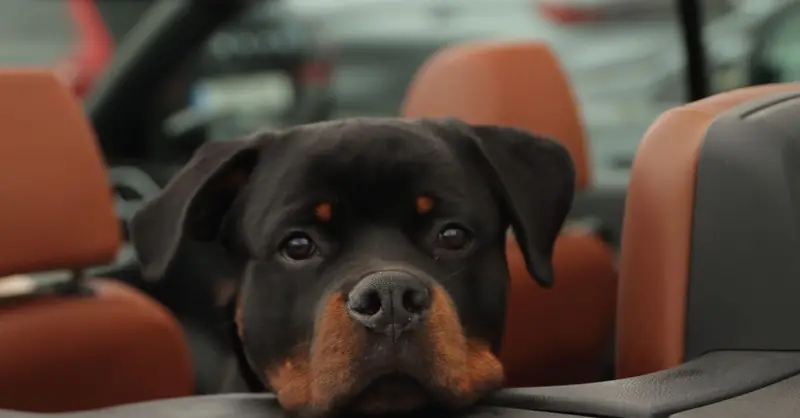
Training a puppy begins the day they move in – after eight weeks of age at the earliest – and is built on bonding, clear daily routines and positive reinforcement rather than dominance. Basics like house training and bite inhibition take hold within a few weeks, but full training lasts until the end of adolescence, roughly twelve to eighteen months.
| Factor | Practical guideline |
|---|---|
| Starting point | From day 1 in the new home (legal rehoming only after 8 weeks of age) |
| Daily training time | 2 to 5 minutes several times a day, playfully woven into everyday life |
| Rest and sleep needs | About 18 to 20 hours a day (including dozing) |
| Focus of the first weeks | Bonding, house training, bite inhibition, getting used to the environment |
| Time to maturity | Basics in 4 to 12 weeks; consolidation until 18 months of age |
How to train your puppy properly: a step-by-step guide
If you want to train your dog while they're still a puppy, you don't need a rigid training programme or loud commands at the start. Modern behavioural science and canine professional associations have long favoured bond-based learning. Old dominance theories, which claim humans must "subdue" a young dog or correct it through harshness, are now considered outdated and counterproductive. They create fear and insecurity, and that blocks learning.
Good puppy training instead answers the young dog's most pressing questions: Am I safe here? Who protects me? What's worth my while? These seven steps will lay a stable foundation in the first few weeks.
-
Establish safety, resting places and house rules
Why: Your puppy has just lost their mother and littermates. Without clear orientation and enough sleep, their stress level (cortisol) rises sharply – overtired puppies tend to be hyperactive, nip more and can't take in anything new.
How: Before the move, set up a fixed, quiet sleeping spot where the puppy is never disturbed, not even by children. Agree on binding rules as a family beforehand: Will the dog be allowed on the sofa later? Which rooms are off limits? Whatever should apply to the adult dog applies from the very first minute. If needed, limit the space (for example with a puppy gate) so your little one can settle down. -
Build a positive association with the name and encourage eye contact
Why: Your dog's name isn't a recall command, it's an attention signal. It means: "Look at me, something important is coming your way." If the name is constantly shouted in frustration ("Max, no!"), the puppy links it with something negative.
How: Say your puppy's name in a friendly voice in a quiet setting. As soon as they lift their head or look at you, mark that moment with a praise word and immediately give a small treat. In the same way, reward every voluntary glance at you on walks during the first weeks. That's how your little dog learns that paying attention to you always pays off. -
Build house training through fixed routines
Why: An eight-week-old puppy isn't yet anatomically able to reliably control their bladder and bowel muscles. When awake, they usually last only an hour to an hour and a half. Since dogs naturally don't want to soil their own nest, you can use this instinct without any pressure.
How: Carry your puppy outside to the same quiet toilet spot after every nap, meal, drink and intense play session, and about every two hours during the day. Wait patiently. When they go there, praise them calmly and slip them a treat. If an accident happens indoors, just wipe it up without comment. Scolding only unsettles the puppy – all they'd learn is to go in secret behind the sofa, because they link your presence with punishment. -
Train bite inhibition and a fair stop signal
Why: Puppies explore the world with their mouths, and their sharp milk teeth quickly leave scratches on human skin. The Tierärztliche Vereinigung für Tierschutz (TVT) (the German Veterinary Association for Animal Welfare) stresses in its leaflets that puppies must learn to control the force of their bite and accept human skin as off limits.
How: If your puppy gets too rough in play and puts their teeth on your skin, calmly say "Ouch", end the game immediately, stand up and turn away for a few seconds. For a social dog, withdrawing your attention is feedback enough. Then offer a permitted alternative such as a chew stick or a rope toy to satisfy their need to chew. At the same time, build a stop signal (for example "Leave it") in a positive way by showing your puppy they get a reward as soon as they let go of a forbidden object and turn to you. -
Measured socialisation and habituation to the environment
Why: Until about the twelfth to sixteenth week of life, the brain is in its most important socialisation phase. Anything your puppy files away as normal now, in safe company, won't frighten them later in everyday life.
How: Go for quality over quantity. Show your puppy one new stimulus every few days: an umbrella, noisy bin lorries from a safe distance, different floor surfaces, people wearing hats or a short stop at a bus stop. Important: your puppy doesn't have to walk up to everything. Often it's perfectly enough to sit down together on a bench, watch the world from a distance and reward calm behaviour. -
Introduce medical training and loose-lead walking
Why: Many dogs panic at the vet or when a harness goes on, because handling was never practised positively in puppyhood. Pulling on the lead also usually starts as early as the third month, when the puppy learns that pulling in the harness gets them to that fascinating blade of grass faster.
How: Practise so-called medical training on the rug for one minute a day: gently touch the paws, take a quick look in the ears and the muzzle (mouth), stroke along the back and feed small treats continuously throughout. For loose-lead walking, the rule from day one is: as soon as the lead tightens, you stand still like a tree. Only when your puppy turns back to you and the lead hangs loose again do you move on. -
Prepare your puppy for being left alone in small steps
Why: In nature, being abandoned by the group means certain death for a puppy. Separation stress almost always arises when owners stay away too long too soon.
How: Start at home by simply closing the bathroom door behind you and coming back out after ten seconds, completely matter-of-fact. Make no big drama, whether leaving or returning. Only build up to minutes once your puppy is dozing contentedly on their blanket after going to the toilet and eating.
When should you start training a puppy? The timeline by age and development stage
Many new dog owners search for the answer to: "Puppy training – when does it start?" The answer comes in two parts: basic imprinting on environmental stimuli begins at the breeder's from the third to fourth week of life. Your own training work starts the very second you pick up your puppy.
The legal framework in Germany is clear: under the Tierschutz-Hundeverordnung (TierSchHuV), puppies may only be separated from their mother after they're over eight weeks old. The regulation also expressly states that spiked collars or other methods that are painful for the dog must not be used in training and education. The overview below shows how your training goals adapt to the brain's biological maturation.
| Age / Phase | The dog's developmental stage | Training priorities |
|---|---|---|
| Weeks 8 to 12 (socialisation phase) |
High receptiveness, curiosity usually outweighs caution, strong urge to follow, short attention span. | Settling in, bonding, name, house training, bite inhibition, house rules, first gentle environmental stimuli. |
| Weeks 13 to 16 (ordering phase) |
The following instinct slowly fades, the first urge to explore grows, milk teeth start to wobble towards the end (teething begins). | Securing recall training (with a light long line if needed), short spells of loose-lead walking, being left alone for a few minutes, selected encounters with other dogs. |
| Months 5 to 6 (pack-order phase) |
Teething in full swing (more chewing), walking radius grows, first phases of insecurity may occur. | Impulse control (a short wait before the bowl or at the door), basic cues like "sit" and "place" under mild distraction, patience during teething. |
| From month 7 to about month 18 (adolescence / young dog) |
Hormonal changes, remodelling in the brain ("brain under construction"), cues already learned seem suddenly forgotten. | Don't demand new, difficult tricks; ask calmly and with humour for what's already learned, keep boundaries fair, use a long line for safety. |
Keep in mind that dog breeds develop at different speeds. While small companion dogs often seem almost fully grown, physically and mentally, at ten to twelve months, large working dogs and late developers take noticeably longer. A spirited Australian Shepherd makes very different demands on impulse control and encouraging calm in the first months than a laid-back companion dog. A very people-oriented Golden Retriever often arrives as a puppy with enormous enthusiasm, which you should channel calmly early on so that they don't jump up at every passer-by for joy later. If you haven't got a dog yet, our breed finder helps you choose a four-legged friend whose genetic predispositions really suit your daily life.
Common puppy training mistakes — and what helps instead
Experience from consultations shows time and again that later behaviour problems rarely come from bad intentions. Usually it's well-meant advice or human misinterpretation that makes life with a young dog harder. If you avoid these five typical stumbling blocks, you'll spare yourself and your dog a lot of frustration.
1. Too much going on and chronic lack of sleep
Worried that the puppy isn't getting enough stimulation or will miss the socialisation phase, some owners drag their little one through shopping centres, dog parks and family parties in the first week. The result is a completely overstimulated nervous system. In puppies, tiredness doesn't lead to sleep – it leads to "silliness": they race around the living room with glassy eyes (the so-called "zoomies"), bite trouser legs and bark. What helps instead: Give your puppy a few days with just the immediate family after moving in. Keep walks short (as a rule of thumb, about five minutes per month of age is often cited for walking on the lead in one stretch, while free exploring at their own pace can last longer) and actively make sure there's quiet time at home.
2. The myth of "puppy licence" and uncontrolled play groups
Many people believe adult dogs would never harm a strange puppy because it's covered by a "puppy licence". Biologically, though, that kind of leniency exists only within a dog's own family pack towards its own offspring. Out in the world, a puppy with no sense of boundaries who jumps on a strange, perhaps pain-ridden older dog can be sharply corrected or even injured. In badly run puppy classes, too, where ten youngsters are let loose on each other unchecked for an hour, sensitive dogs only learn fear and bold dogs only learn bullying. What helps instead: The Bundestierärztekammer (BTK) (the German Federal Chamber of Veterinarians) recommends a group size of at most five to six puppies per qualified trainer in its guidelines for puppy classes. Your puppy should also have about a week to settle in quietly at home after moving in before attending such a group for the first time.
3. "How cute!" – tolerating unwanted behaviour in puppyhood
When a four-kilogram Labrador Retriever jumps up at your legs to greet you at eight weeks old or scratches begging at the table, it often looks adorable. Many people let it slide. At eight months, though, the same dog weighs almost thirty kilograms and knocks over visiting children with muddy paws. For the dog, it makes no sense that a behaviour that was allowed for months and earned them attention is suddenly punished. What helps instead: For every behaviour your puppy shows, ask yourself whether you'd still find it charming once the dog is fully grown and soaked from the rain. If not, ignore the jumping up from day one and only reward your puppy with petting when all four paws are on the floor.
4. Humanising and confusing communication
Dogs are masters at reading our body language, but they don't understand long, convoluted sentences. If you talk away at your puppy ("Look, you don't need to bark yet, the postman won't do anything to you") while stroking them soothingly, you often reinforce exactly that excitement from the dog's point of view. It's just as confusing to use different words for the same behaviour ("Out", "No", "Yuck", "Stop it") or to lean threateningly head-on over the little dog when you want to clip on the lead. What helps instead: Communicate clearly and with fair body language. Crouch down slightly and turn sideways when you invite your puppy over. Agree within the household on exactly one word and one hand signal per exercise.
5. Focusing too early on sit, down and paw
Formal commands are quickly taught, because puppies will offer almost anything for food. But a ten-week-old puppy who masters "sit" and "give paw" in the living room is still far from trained. In the first weeks, these drill exercises waste valuable concentration that the dog actually needs for getting used to the environment and for frustration tolerance. What helps instead: Move sit and down training to the third or fourth month and focus fully at first on everyday rules, recall and calm.
When you should get professional help
Not every turbulent phase in the first months is an emergency. A puppy getting the "evening crazies" at dusk, leaving the odd puddle on the rug or gnawing on a chair edge while teething is all part of normal development. There are, however, clear warning signs where you shouldn't wait, but call a vet or a dog trainer certified under § 11 of the German Animal Welfare Act straight away.
- Serious resource guarding: If your puppy freezes while eating or with a chew, growls low and snaps deliberately at your hand as soon as you come near, even at just a few weeks old, that's a serious conflict issue. Never take the food away by force (that makes the problem worse). Instead, have a professional show you how to swap items with your puppy and build trust.
- Extreme panic and no recovery: If a puppy gets frightened by a loud noise, they should calm down again within a few minutes with your help and become curious. But if the dog hides trembling under the table for days, refuses food completely outdoors or reacts with panicked attempts to flee to normal everyday stimuli, they urgently need behavioural therapy support.
- Physical causes behind "training problems": If an almost house-trained puppy suddenly loses small amounts of urine every ten minutes, it's not defiance but almost always a painful bladder infection. Sudden sensitivity to touch, heavy scratching or unusual aggression when the harness goes on must also be checked by a vet first – parasites, ear infections or growing pains often weigh on mood.
- Your own overwhelm ("puppy blues"): Lack of sleep, constant vigilance and the worry of doing something wrong leave many first-time dog owners exhausted and in tears in the first weeks. A single session with a good trainer at your home takes the pressure off right away and brings structure to your daily routine.
Frequently asked questions
When should you start training a puppy?
Training begins right on the day they move into your home, so generally from the ninth week of life. In the first few days, though, "training" doesn't yet mean formal sit or down training. Instead, from the first moment your puppy gets to know the house rules, builds trust in you, gets used to their name and learns where their sleeping and toilet spots are.
What does a puppy need to learn first?
Before any commands, five basics come first: emotional security (bonding with their new people), keeping to rest periods, house training, reliable bite inhibition around human skin, and a positive response to their name and recall. Only once your puppy feels safe in their new surroundings does their brain have spare capacity for formal cues.
How long can you train a puppy each day?
A young puppy's attention span is very short. Focused mini training sessions should therefore last only one to three minutes at most and can be repeated two to three times a day. As soon as your puppy turns away, yawns, sniffs the ground intensely or starts clowning around, their head is full – ideally, end the exercise even earlier on a success.
How do you react properly when a puppy bites hard during play?
If your puppy nips hands or clothes too hard with those sharp milk teeth, let out a short, clear pain signal (like "Ouch!"), freeze your movement immediately and end the game completely for about half a minute. Avoid yanking your hands away, as that only fuels the hunting and prey drive. If your puppy is chronically overexcited, a prescribed nap usually helps.
Can you train a puppy properly without a dog school?
In principle, attending a dog school isn't a legal requirement for puppies in most regions (exceptions apply in some German states for the general owner competency certificate). If you have solid knowledge and know confident, well-socialised dogs among your friends for regular contact, training on your own can work too. For most owners, though, an expertly run puppy class is a valuable help for learning to read body language and correcting mistakes early.
Guiding a puppy through life takes, above all, patience, humour and a clear eye for the young animal's needs in the first months. If you rely on fair leadership rather than pressure, that clumsy newcomer grows step by step into a reliable partner. On HonestDog, a trustworthy platform, you'll find more well-founded guides on health, behaviour and care that accompany you and your dog through every stage of life.