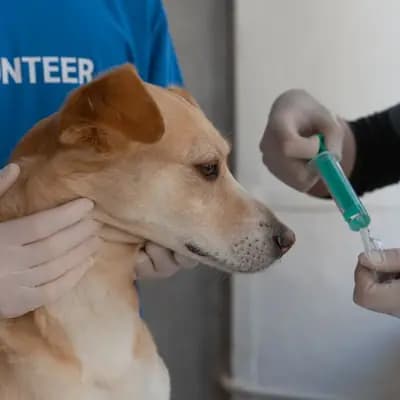
A spot on flea treatment for dogs is a topical liquid medication applied directly to the skin at the base of the neck, distributing across the body through the skin's natural sebum layer. Depending on the active ingredient, it either repels or kills ticks, fleas, and mites before or shortly after they bite. The protective effect typically lasts about 4 weeks and requires specific safety precautions if you have children or cats in your home.
| Feature | Details for Dog Spot-On Treatments |
|---|---|
| Mode of action | Spreads across the lipid layer of the skin (topical) or absorbs through the skin into the bloodstream (systemic). |
| Target parasites | Ticks, fleas, chewing lice, mites, and depending on the formula, biting midges, mosquitoes, and sandflies. |
| Typical duration | Usually around 4 weeks against ticks; some active ingredients protect for up to 8 or 12 weeks. |
| Ingredient classes | Synthetic acaricides/insecticides (e.g., pyrethroids, phenylpyrazoles) or plant-based repellents (e.g., margosa, coconut oil). |
| Key risks | Skin redness, itching; many canine formulas (especially with permethrin) are fatal to cats; avoid direct skin contact for children immediately after application. |
This guide does not replace professional veterinary advice.
How Does a Dog Spot-On Treatment Work?
When applying a spot on flea treatment for dogs, you squeeze the contents of a small plastic pipette directly onto your dog's skin. What happens next depends on the type of formulation. Most traditional topical treatments are lipid-soluble (lipophilic). They bind to the natural oils in your dog's skin and spread across the entire body surface within 1 to 2 days like an invisible protective shield.
From a veterinary standpoint, this protective barrier relies on two distinct mechanisms:
- Repellent effect (deterrence): The active substance deters parasites the moment they touch the fur or skin. This is frequently referred to as the "hot-foot effect"—the surface feels so uncomfortable to a tick or mosquito that it drops off without biting. This stops the bite from happening and significantly cuts down the transmission risk of vector-borne diseases.
- Acaricidal or insecticidal effect (elimination): These compounds act as contact poisons or circulate systemically in the blood. If a flea or tick brushes against the lipid layer or punctures the skin, it ingests or absorbs the ingredient. The compound disrupts nerve transmission in the arthropod's nervous system, causing it to die and fall off within a few hours to 2 days at most.
In addition, certain spot-on formulations do not stay solely in the lipid layer; they penetrate the skin barrier and enter the bloodstream. These systemic treatments are frequently chosen when you also need to manage internal parasites (such as heartworms) or specific mite infestations like ear mites and mange.
Why Tick and Flea Control Is More Than Just Comfort
A flea infestation is frustrating, leads to severe itching, and can trigger flea allergy dermatitis (FAD). Ticks and biting insects pose an even greater threat: they are primary vectors for dangerous infectious diseases. In Central Europe, the castor bean tick and meadow tick transmit Lyme disease, anaplasmosis, babesiosis (often called "dog malaria"), and the TBE virus. Traveling to Mediterranean regions introduces risks like ehrlichiosis and leishmaniasis, transmitted by phlebotomine sandflies.
Because pathogens such as Babesia or the TBE virus can be transmitted shortly after a bite occurs—whereas Lyme disease bacteria usually require 12 to 24 hours of attachment—veterinary bodies such as the ESCCAP (European Scientific Counsel Companion Animal Parasites) and veterinary practices recommend seamless, year-round protection using tested medications whenever your dog faces exposure risk.
Chemical vs. Plant-Based Ingredients: A Balanced Comparison
Few topics trigger as much debate among pet owners as choosing between synthetic medications and natural solutions for parasite prevention. Anyone looking for a suitable spot-on for dogs encounters a vast selection ranging from prescription or pharmacy-grade veterinary medicines to over-the-counter wellness products and biocides. To make an informed choice, it helps to examine what these compounds realistically achieve—along with their limitations and risks.
Pharmaceutical Veterinary Medicines (Synthetic)
Regulated veterinary medicines contain active substances such as synthetic pyrethroids (e.g., permethrin, deltamethrin), phenylpyrazoles (e.g., fipronil), neonicotinoids (e.g., imidacloprid), or isoxazolines (e.g., fluralaner). Before entering the market, these products must undergo a rigorous regulatory approval process. Manufacturers must prove through controlled clinical trials that the product provides reliable protection (consistently exceeding 90 to 95 percent) across the stated timeframe and remains safe for dogs when dosed correctly.
The advantages: Efficacy is thoroughly tested and documented. In regions with dense tick populations transmitting life-threatening diseases, or when traveling to high-risk areas, synthetic repellents offer the most dependable protection against infection currently available.
The drawbacks: These products are potent insecticides and acaricides designed to target arthropod nervous systems. While their active agents selectively bind to receptor sites structured differently in mammals, side effects can still occur. These include localized skin irritation, itching, or hair loss at the application site, and rarely, lethargy, salivation, or transient neurological symptoms like muscle tremors.
Plant-Based and Natural Alternatives
Concern over potential side effects leads many dog owners to consider a botanical dog spot-on. These preparations generally rely on essential oils or plant extracts such as margosa extract (neem oil), lavender oil, geraniol, lemon eucalyptus (citriodiol), or lauric acid (derived from coconut oil). They function purely as repellents: their intense scent aims to mask the host's odor, confusing the parasites' sensory receptors to discourage attachment.
The advantages: They contain no synthetic pesticides, making them an appealing choice for healthy dogs in low-risk environments, especially when combined with a thorough visual check of the coat after every walk.
The drawbacks: "Natural" does not automatically mean effective or risk-free. Independent evaluations show that many botanical preparations perform significantly worse than regulated pharmaceuticals or lose their deterrent effect within a few days. During peak parasite seasons, scent alone is rarely enough to deter questing ticks. Furthermore, highly concentrated essential oils such as geraniol, tea tree oil, or margosa can heavily irritate canine skin and trigger acute contact allergies. The strong smell applied directly to the neck can also be overwhelming for a dog's sensitive olfactory system.
Where experts stand: While holistic practitioners often recommend plant-based deterrents alongside manual tick checks in low-risk scenarios, veterinary parasitologists point out that the severe risks of conditions like babesiosis far outweigh the rare adverse reactions seen with approved medications. Discuss your dog's lifestyle and local risks with your veterinarian to find the best protective approach.
How to Apply a Dog Spot-On Correctly
A spot-on can only provide safe and dependable protection if you administer it according to instructions. Application errors happen frequently, resulting in reduced efficacy or leading the dog to ingest the liquid. Follow these steps to ensure proper coverage:
- Verify your dog's weight: Never estimate your dog's weight when purchasing a pipette. Weigh your dog beforehand and select the exact weight tier formulated for their size.
- Pick the right time: Apply the treatment in the evening after your dog's final walk of the day. This gives the liquid overnight to absorb without being disturbed by rain, rough play with other dogs, or petting from children.
- Part the coat completely: This is the most critical step. Part the fur between the shoulder blades at the base of the neck until bare skin is clearly visible. For dogs with thick undercoats—such as a Golden Retriever or an Australian Shepherd—this requires a little extra patience.
- Apply directly to the skin: Place the pipette tip directly against the skin and squeeze gently until empty. The medication must reach the skin, not coat the hair. If it stays on the fur, it cannot bind to the skin's lipid layer and will simply evaporate or rub off.
- Divide across multiple spots for large dogs: When administering larger volumes of liquid (often in dogs weighing over 20 kilograms), the solution can run down the dog's sides. Distribute the pipette evenly across 2 to 4 spots along the midline of the back—from the base of the neck down toward the base of the tail—always directly on parted skin.
Common Application Mistakes to Avoid
- Applying on a freshly bathed dog: Washing your dog with shampoo right before application strips away the skin's natural oils. Without this sebum layer, the spot-on cannot spread. Wait at least 2 to 3 days after a shampoo bath before applying the treatment.
- Swimming or rain too soon: The active compound needs roughly 24 to 48 hours to fully integrate into the sebaceous glands. Do not let your dog swim, bathe, or get soaked in heavy downpours during this initial window.
- Splitting pipettes between dogs: Buying a single large pipette for a 40-kilogram dog and dividing it between two 20-kilogram dogs is dangerous. Squeezing tiny liquid volumes by eye rarely produces accurate halves, and some brands formulate different concentrations depending on the weight tier.
Household Safety Precautions: Children, Cats, and the Environment
Once applied, topical treatments remain active across the dog's skin for weeks. Keeping everyone safe requires mindful management at home, particularly if you have children or cats sharing your space.
Spot-On Treatments and Children: Practical Rules
Young children often love hugging their family pet, burying their faces in fur, or stroking the dog's neck. While the application site is still damp, children can transfer concentrated active ingredients onto their hands and accidentally touch their eyes or mouth.
Veterinary guidelines and health authorities recommend these safety protocols:
- Pause close physical contact: Keep children from petting or cuddling the dog while the application site remains wet or oily (for at least 12 to 24 hours).
- Apply before bedtime: Treating your dog in the evening after children go to sleep ensures most of the solution has absorbed by morning.
- Keep dogs out of children's beds: A freshly treated dog must not sleep in bed with children, as the product can easily rub off onto pillows and sheets.
- Encourage handwashing: Have children wash their hands thoroughly with soap after petting the dog during the first few days post-treatment.
Fatal Danger for Cats: The Permethrin Risk
If you have cats at home, exercise extreme caution when choosing tick and flea products for your dog. Many standard canine spot-ons contain permethrin (or related pyrethroids such as flumethrin or deltamethrin). While well tolerated by dogs, permethrin is highly toxic and life-threatening to cats even in tiny amounts.
Felines lack a specific liver enzyme (glucuronosyltransferase) essential for breaking down and clearing pyrethroids from their bodies. Veterinary consumer safety agencies frequently warn that accidental grooming of treated dog fur or close cuddling in shared beds can lead to severe poisoning in cats, causing muscle tremors, seizures, respiratory distress, and death.
The rule for mixed-pet homes: Never use a dog-formulated product on a cat. If your dog and cat cuddle, groom one another, or share beds, ask your vet specifically for permethrin-free alternatives or keep the animals strictly separated until the application spot has dried completely.
Special Considerations for Herding Breeds: The MDR1 Mutation
Certain dog breeds—most notably Collies, Shetland Sheepdogs (Shelties), Australian Shepherds, Border Collies, and White Swiss Shepherds—have a high prevalence of a genetic defect known as the MDR1 mutation. In affected dogs, the blood-brain barrier is deficient, allowing certain medications to penetrate directly into central nervous tissue.
Ingredients of particular concern belong to the macrocyclic lactone group (such as ivermectin, doramectin, moxidectin, or selamectin), which appear in certain combination spot-ons. While topical formulas approved for dogs are generally safe for MDR1-affected pets when applied correctly to the skin at standard doses, accidental ingestion from licking the application area can trigger life-threatening neurological toxicity. If you own a herding breed, confirm their MDR1 status through genetic testing and always inform your veterinary clinic before administering antiparasitic treatments.
Protecting Waterways: Keep Treated Dogs Out of Natural Water
The environmental footprint of topical ectoparasiticides is a growing ecological concern. Research from veterinary institutions reveals that compounds such as fipronil and imidacloprid enter rivers, ponds, and streams when treated dogs swim or when residue washes off in rain. Because these chemicals are lethal to aquatic insects, crustaceans, and fish even in trace concentrations, they disrupt sensitive freshwater food webs and affect bird populations relying on aquatic insects.
You can lower this impact significantly: do not let your dog swim in natural ponds, streams, or slow-moving waters for at least 48 hours following an application, and ideally limit swimming during the active treatment period. If you share your home with an avid swimmer like a Labrador Retriever that dives into water daily, topical spot-ons are often not the right fit—the protection washes away quickly while placing unnecessary stress on local aquatic ecosystems.
Putting It into Practice: Choosing the Right Option for Your Dog
No single product suits every dog perfectly. Effective parasite control depends on balancing your dog's lifestyle, geographic location, household dynamic, and existing medical conditions. Use this practical framework when discussing options with your veterinary practice:
- When a synthetic spot-on with repellent action makes sense: Your dog spends considerable time hiking through tall grass or forests, you live in a high-risk area for tick-borne diseases, or you are traveling to Southern Europe. Your dog swims infrequently, and your household has no cats or toddlers who frequently touch the dog's neck.
- When chewable tablets are often the better path: You have young children, your dog swims frequently, has a thick double coat, or lives in close contact with cats. Because oral treatments work from within, no active substance coats the fur—children can cuddle the dog safely, cats face no risk from permethrin, and swimming does not wash chemicals into waterways. (Note: For dogs diagnosed with epilepsy, veterinarians typically avoid oral isoxazolines and prefer topical options).
- When gentle plant-based deterrents plus physical checks may suffice: Your dog has short, light-colored fur where crawling ticks are immediately obvious, your walks are confined to manicured urban parks with minimal tick activity, and you check your dog's entire body carefully after every outing.
Whichever route you choose, no treatment provides 100-percent prevention. Get into the routine of checking your dog over after walks through tall grass and underbrush—focusing on the head, ears, neck, armpits, and between the toes. Manually removing a questing tick before it can bite remains one of the safest ways to safeguard your dog's health.
Frequently Asked Questions
How often should I reapply a spot-on treatment to my dog?
Most classic spot-on treatments protect against ticks for about 4 weeks and against fleas for 4 to 8 weeks. Some modern veterinary formulations last up to 12 weeks. Always review the product packaging and insert, as protection windows vary depending on the active ingredient and target pest (some products require more frequent dosing for specific tick species or sandflies).
My dog scratched after the application—should I be worried?
Mild temporary itching, light head-shaking, or a slightly greasy spot in the coat can occur directly after treatment and typically resolves within a few hours. However, if your dog shows intense scratching, severe skin redness, hives, localized hair loss, lethargy, muscle tremors, or excessive drooling, they may have had an adverse reaction to the active ingredient or carrier vehicle. Wash the area thoroughly with lukewarm water and a gentle dog shampoo (or a mild dish soap to lift the oils) and contact your veterinary clinic right away.
What should I do if my dog licks the spot-on liquid?
If your dog—or another pet in your household—licks the freshly applied treatment, the bitter taste usually irritates the mouth lining immediately. This almost always leads to sudden hypersalivation, foaming at the mouth, and occasional vomiting. Depending on the substance and amount swallowed, neurological signs such as tremors or unsteady movement can occur, especially in dogs with the MDR1 defect. Offer your dog fresh water or a small amount of food to help rinse away the taste, prevent further licking, and consult your veterinarian with the product packaging on hand if you notice worrying symptoms.
Can my dog still pick up ticks after using a spot-on?
Yes. No chemical or natural preventative works with 100 percent certainty against every single parasite. Additionally, not all spot-on formulas have a repellent action. Products with purely insecticidal and acaricidal modes of action (such as fipronil) do not stop ticks from landing or biting—they are formulated to kill the tick within 24 to 48 hours of contact or attachment.
At what age can puppies receive a spot-on treatment?
Many traditional spot-ons are not licensed for very young puppies because their metabolism and skin barrier are still developing. Most regulated veterinary spot-ons are approved starting at 7 to 8 weeks of age and require a minimum body weight (often 1.5 or 2 kilograms). Consult your vet to identify a safe, appropriately dosed formula tailored to your puppy's exact age and weight.
Responsible Dog Care Starts with Clear Knowledge
Whether navigating parasite prevention, everyday wellness, or choosing a new puppy, making sound health decisions requires clear, balanced information. HonestDog provides detailed guidance to support you and your canine companion through every stage of life. If you are exploring which dog breed matches your lifestyle, family routine, and health preferences, our Breed Finder helps you discover the right breed for your home.
Sources
- docmorris.de
- bvl.bund.de
- dogssupreme.de
- tierarzt-ertl.de
- vitomalia.com
- bvl.bund.de
- researchgate.net
- msd-tiergesundheit.de