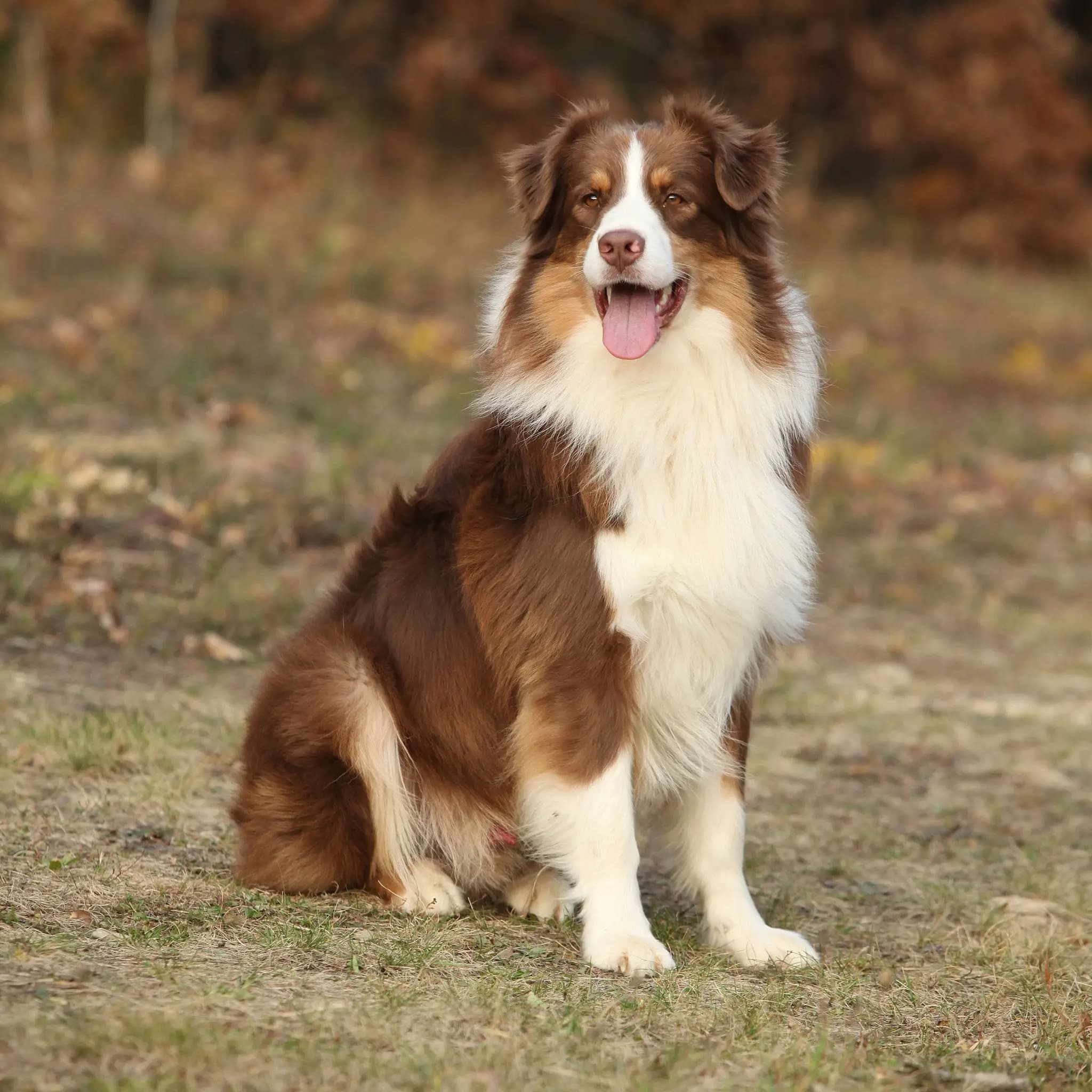
Border CollieSame working temperament
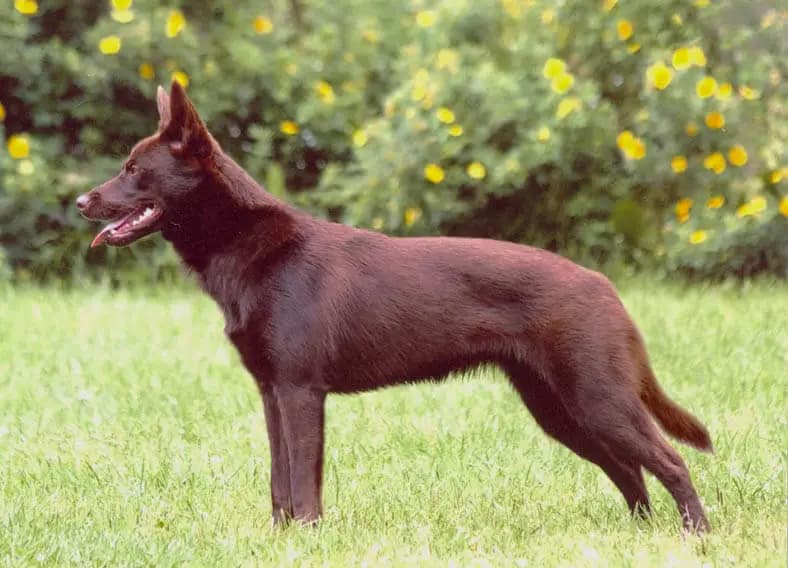
The Australian Kelpie is a lightning-fast, tireless herding dog — bred for the extremely demanding work of managing large sheep flocks in the harsh Australian outback. This working intelligence makes them a brilliant partner, but one who will quickly become frustrated without a real job to do.
Self-check
Answer 6 quick questions about your everyday life and see how well the Australian Kelpie fits you — including an honest cost estimate per month, per year, and across the dog's lifetime.

At a glance
The essentials — key facts, traits, and health priorities — before you dive deeper.
Lifespan
12–15 yrs
Shoulder height
43–51 cm
Weight
14–21 kg
Practical
Temperament
Daily life
What matters most
Especially with a Australian Kelpie, choosing the right breeder is the single most important decision you'll make. Serious breeders consistently test the parents for inherited conditions, prioritize healthy early socialization, and stay accountable long after handover. A cheap puppy without health screening tends to become the most expensive dog later on.
See HonestDog breeder standards →Colors & coat
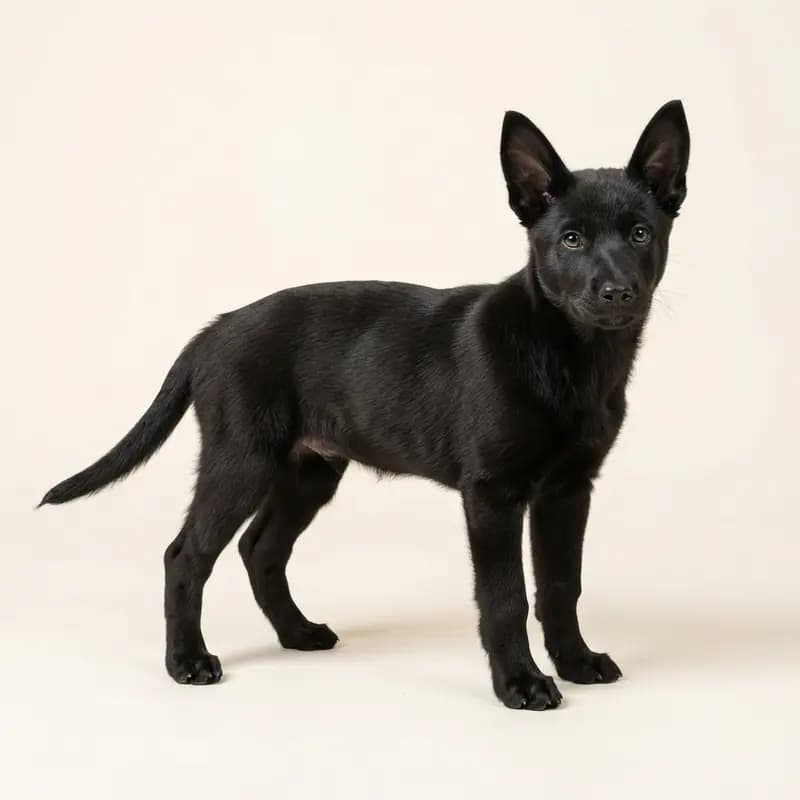
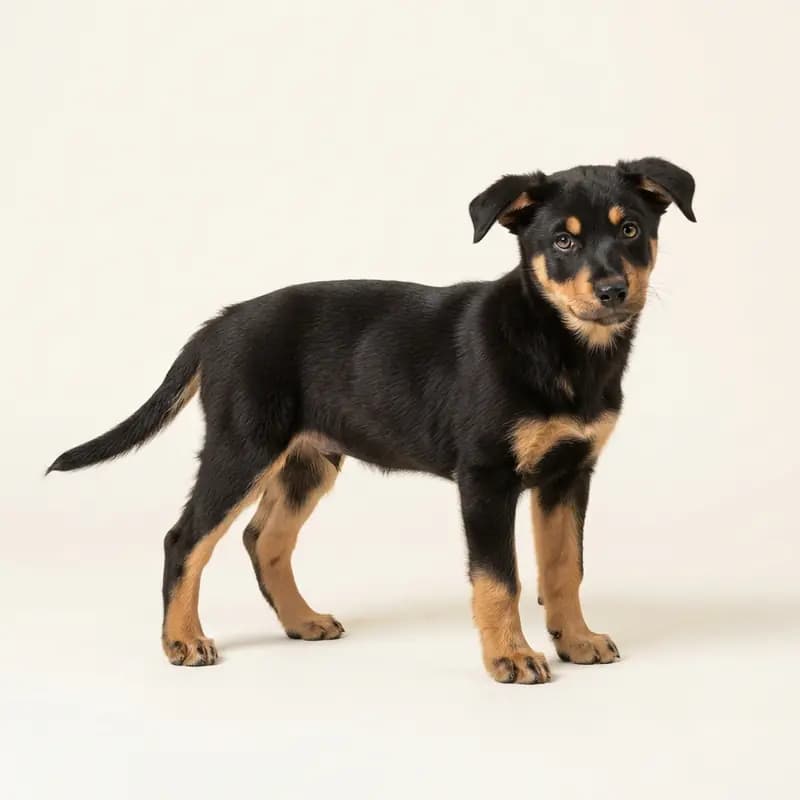
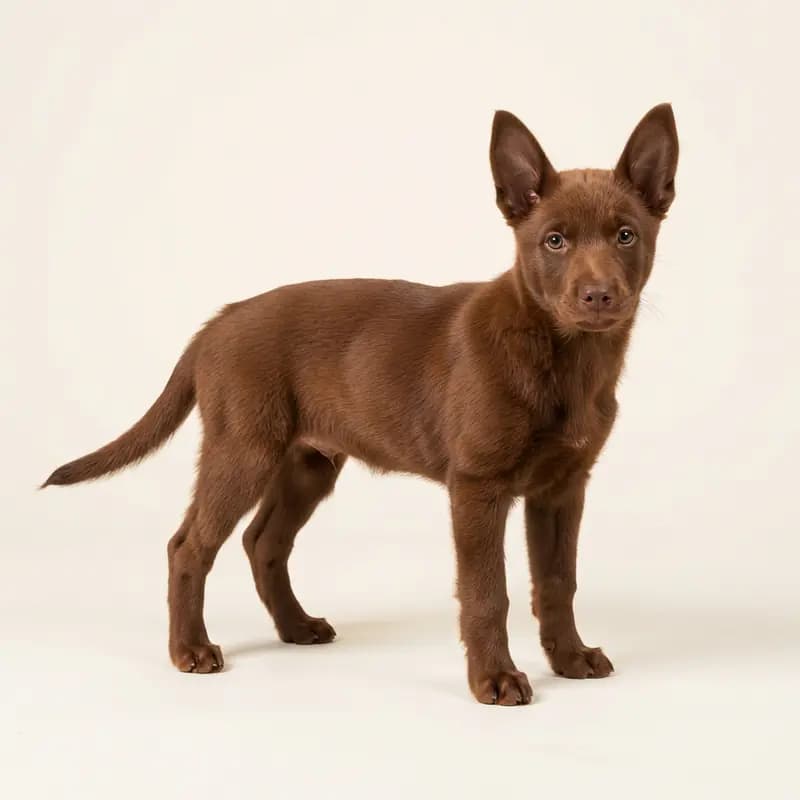
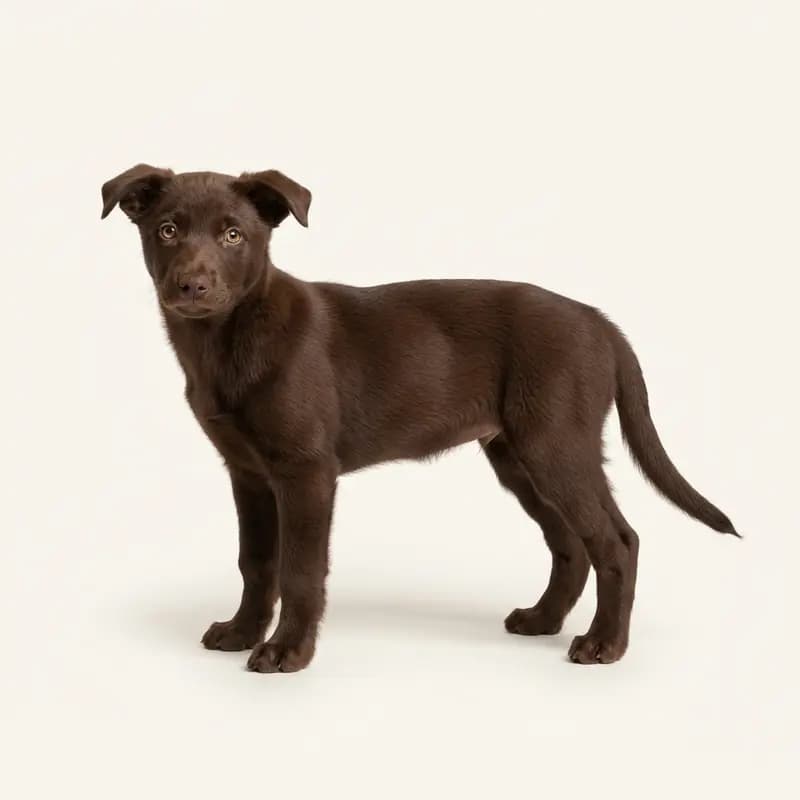
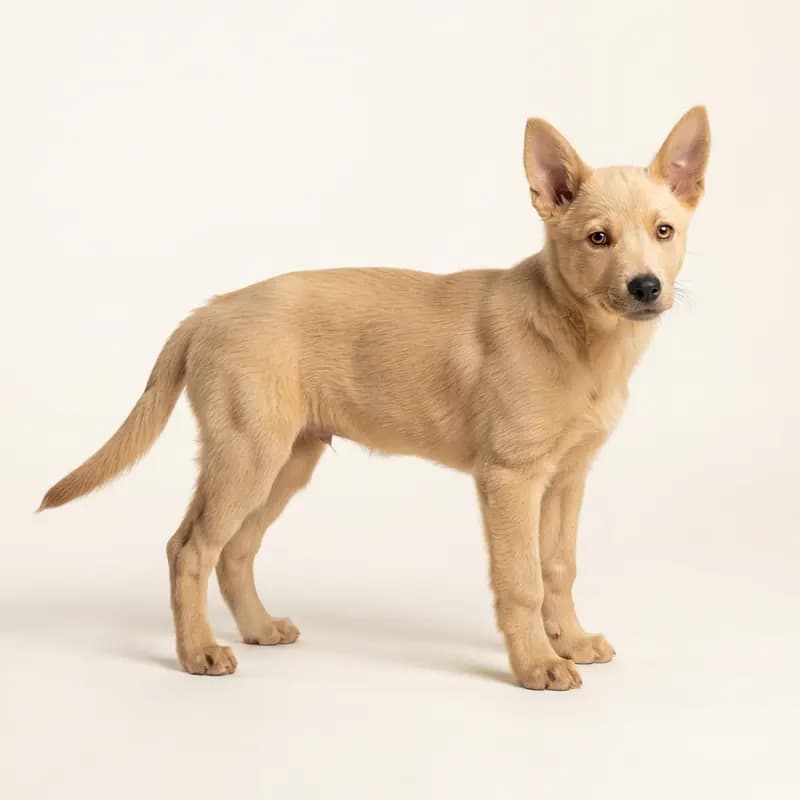
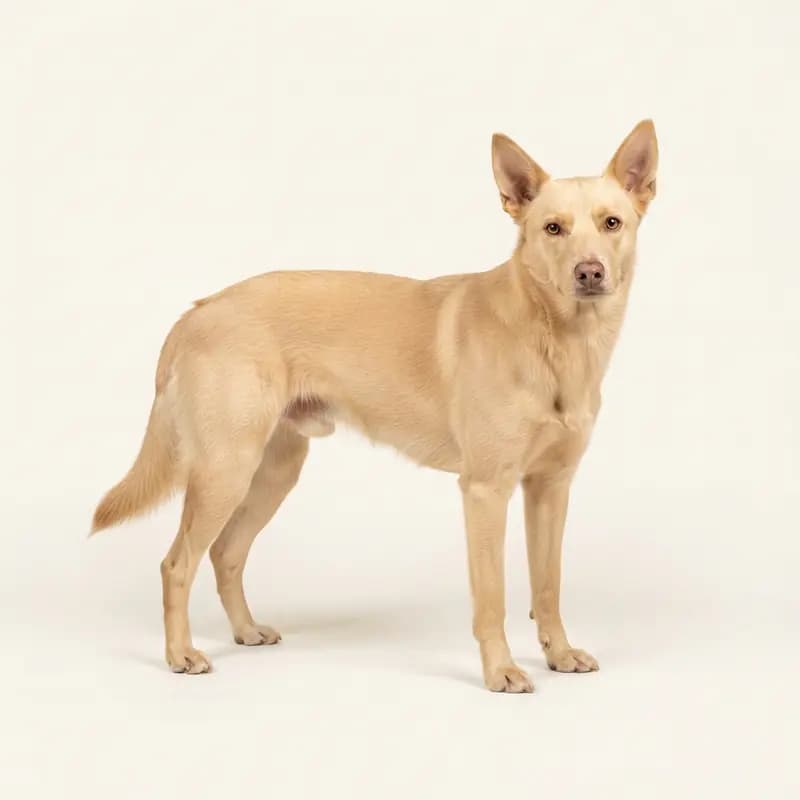
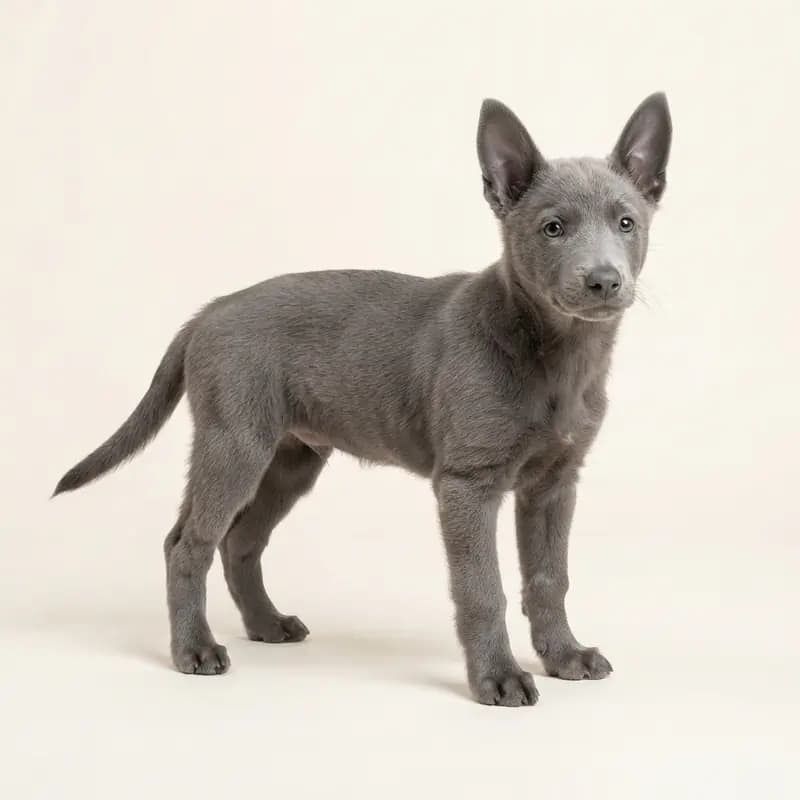
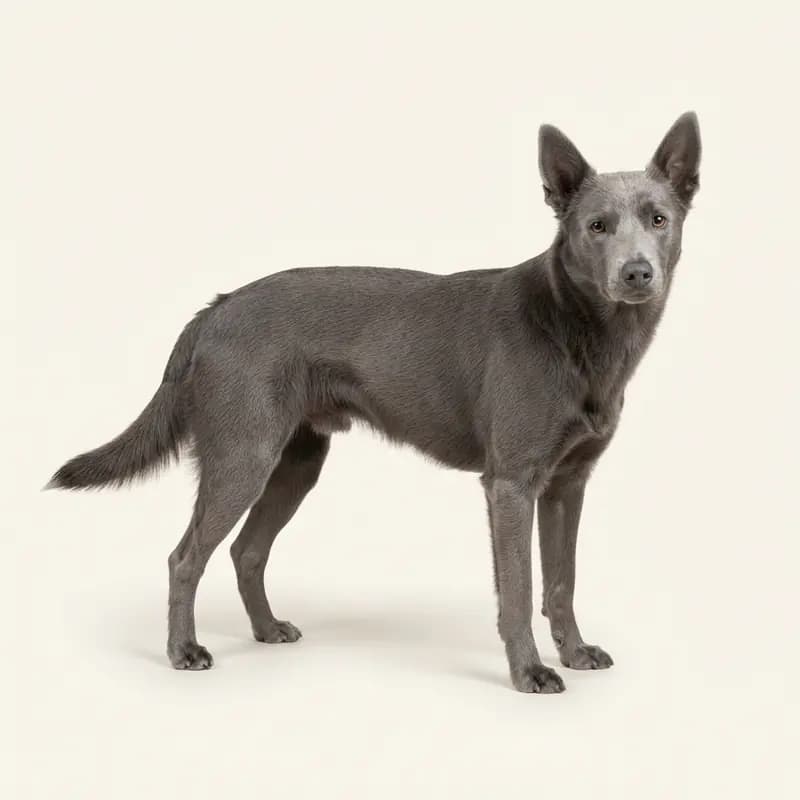
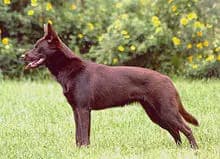
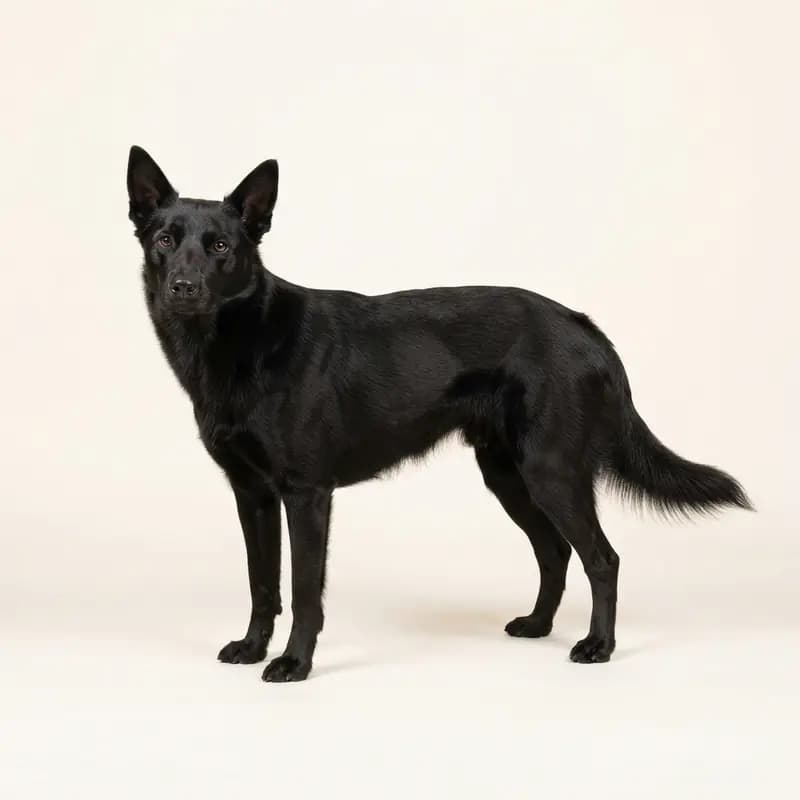
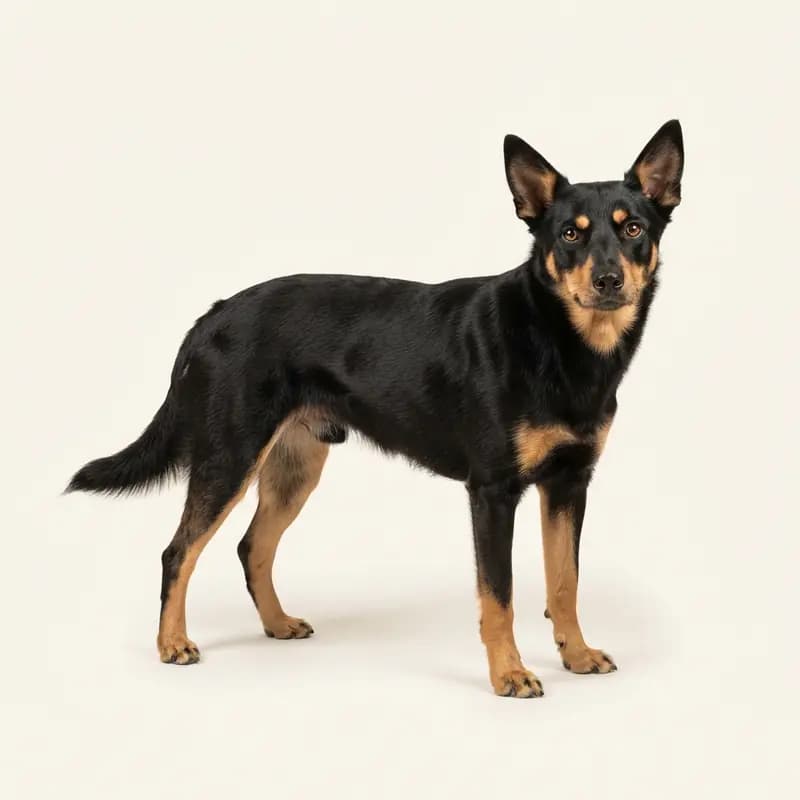
The coat colors that occur in the Australian Kelpie — including which ones fall outside the breed standard and which carry genetic risk.
Eye colors
 Brown
 Amber
Coat type
 Short
 Double coat
The real vibes check
A Kelpie is not a dog you just 'keep' — they are a highly specialized colleague waiting all day for you to press the start button. If you channel their passion in the right direction, you will get a partner who feels almost telepathically connected to you. However, if you leave them to their own devices, they will find their own job — and start herding your family or the traffic.
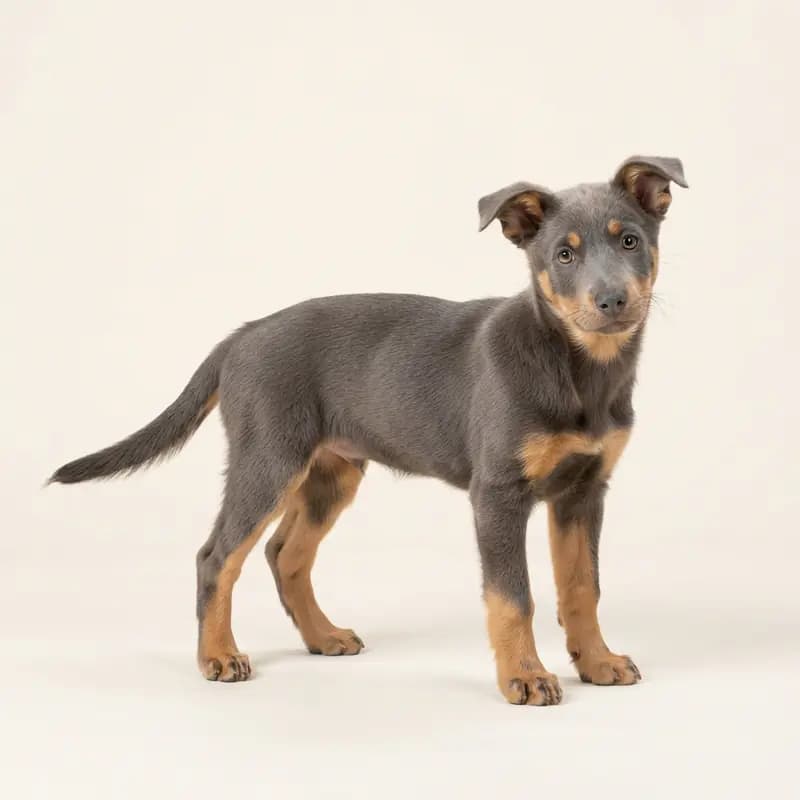
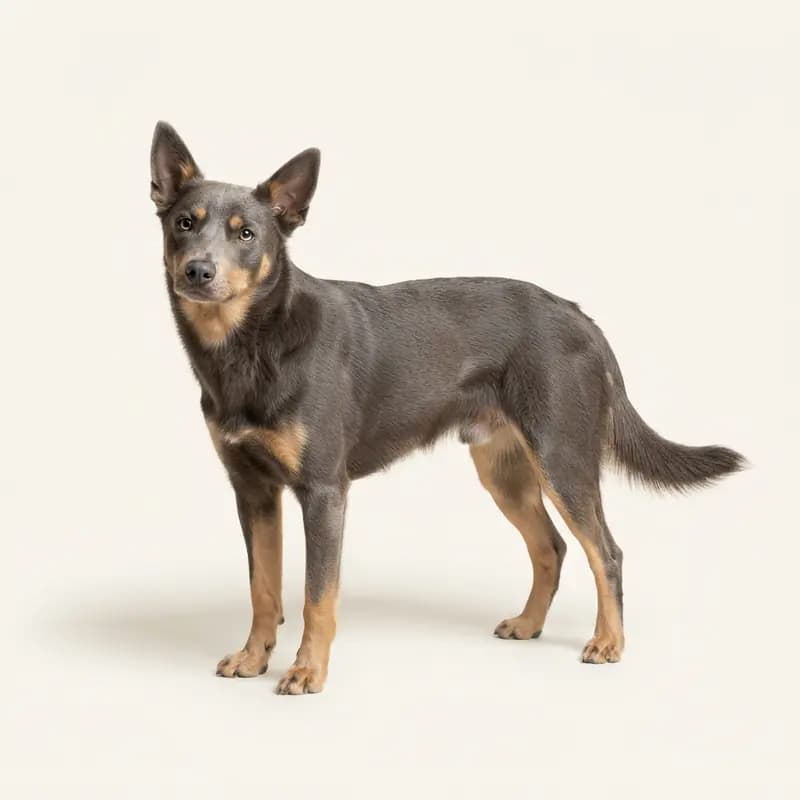
The Australian Kelpie is a medium-sized dog known for its incredible endurance and intelligence. With its athletic build, almond-shaped eyes and distinctive, pointed ears, the Kelpie exudes a certain elegance and intensity. The breed belongs to FCI Group 1, the herding dogs, and to Section 1, the sheepdogs. There are two main lines of the Australian Kelpie: the working line and the show line. While working line dogs are typically bred for their herding abilities, show lines place more emphasis on appearance. However, both lines have the characteristic traits of the breed, such as high intelligence and a strong work ethic.
The Australian Kelpie is a dog with an incredible work ethic. Its original purpose was to herd flocks of sheep, and that can still be seen in its character today. He is highly intelligent, extremely energetic and has a natural inclination to dedicate himself to tasks. This means he is happiest when he has a task, be it herding, agility, obedience or some other form of mental and physical exercise. In terms of temperament, the Australian Kelpie is more active than calm. He is not the type of dog that wants to lie on the sofa all day. He needs several hours of exercise and mental stimulation every day to be happy. The Australian Kelpie's working line tends to be even more active than the show line and often requires specific tasks to channel their energy. When it comes to relationships with people, Australian Kelpies are often loyal and affectionate to their family, but can be a bit reserved around strangers. They are very people-oriented and often develop a close bond with a specific person. Play is an important component of an Australian Kelpie's life. They love chasing balls and playing games of fetch. However, you should make sure that the dog does not become too obsessed with it and that it receives a balanced mix of activities. Australian Kelpies can learn to stay alone with training, but they should not be left without activity or companionship for long periods or they may develop destructive behavior. In terms of hunting behavior, Kelpies often have a strong herding instinct, which can also manifest as hunting behavior, especially with small animals. It is important to pay attention to this and, if necessary, counteract it through training. As guard dogs, Australian Kelpies are often very alert and attentive. They will vigorously defend their family and territory if they believe it is necessary. Overall, the Australian Kelpie is an amazing and versatile dog, but requires an experienced hand and an active lifestyle. If you're willing to give him the time, energy, and commitment he needs, you'll find him an incredibly loyal and capable companion.
| Watchfulness A natural watchdog with real protective instinct. | High |
| Openness to Strangers Neither pushily friendly nor suspicious. | Neutral |
| Hunting or Herding Drive This drive runs deep — no amount of training eliminates it. | Very strong |
Fun Fact!
The Australian Kelpie is sometimes referred to as the "Australian Sheepdog" and is known for his ability to jump over sheep's backs to control a flock - a testament to his incredible agility and herding skills!
Australian Kelpies are specialized working dogs whose use is herding large herds of livestock. If you are looking for a hard-working dog that can also act independently, the Australian Kelpie is the right choice. However, a large herd of cattle should not be missing. Kelpies are not family or beginner dogs.
The Australian Kelpie is a dog that requires a lot of exercise and mental stimulation and is therefore not necessarily suited to city life unless you are able to provide him with enough exercise and activity on a daily basis. The Kelpie generally gets along well with children, but because of his high energy he can sometimes be too boisterous for very young children. As for other pets, the Kelpie can get along with cats and other pets if properly socialized.
Loves family life and thrives in a group.
Takes boisterous and affectionate children in its stride.
Usually gets on fine with other dogs.
Can manage in the city, but only with very active owners.
Owning a dog is a privilege, but it's also a real responsibility. Before you bring one into your life, be honest with yourself about the commitment it takes.
The Australian Kelpie is intelligent and eager to learn, but also independent. It is important to start training early and continue it consistently. Because of their herding disposition, Kelpies love activities such as agility, obedience and herding sports. They tend to become ball junkies, so retrieving should be kept in moderation and balanced with other activities. It is also important to teach the Kelpie to tolerate frustration and practice impulse control as they can sometimes be too impulsive and impetuous. A balanced combination of mental and physical stimulation is crucial to avoid being overwhelmed or under-challenged. Through positive reinforcement and varied training, the Australian Kelpie becomes a happy and balanced companion.
Australian Kelpies are active dogs and require a balanced diet that provides them with enough energy for their daily activities. High-quality dog food tailored to the specific needs of the breed is recommended. In addition, fresh water should always be available. When it comes to grooming, the Australian Kelpie has a dense undercoat and a weatherproof top coat. The coat should be brushed regularly to prevent matting and remove dead hair. The Kelpie copes well with the climate in Germany, but warming dog coats could be considered in winter.
| Care Level Minimal effort — occasional brushing and bathing. | Low-maintenance |
| Exercise Needs Working-dog energy that needs burning off every single day. | High-drive |
| Shedding Hair everywhere, always — no white clothing survives. | Very heavy |
| Trainability Picks up commands quickly and wants to please. | Eager to learn |
Our experts are still reviewing this information. Spotted something wrong? Email us at info@honestdog.de.
Solid
Health grade
The Australian Kelpie carries an average genetic load: its median life expectancy in British data is 12.0 years, which is average (McMillan et al. 2024). Several hereditary conditions are documented, including Cerebellar Abiotrophy, Globoid Cell Leukodystrophy, Collie Eye Anomaly (CEA), and Progressive Rod-Cone Degeneration (PRCD); most of these can be managed through DNA testing. In addition, there are Hip Dysplasia (HD) and Elbow Dysplasia (ED). A health-conscious breeder has the joints of the parent animals X-rayed and uses DNA tests to prevent affected puppies. Before buying, have them show you findings of HD A–C and ED 0–1 as well as the DNA tests: for Cerebellar Abiotrophy, both parents must be clear; for CEA, PRCD, and Globoid Cell Leukodystrophy, a carrier must only be mated to a clear partner.
Grade is relative to other breeds — AI-assisted and editorially reviewed.
Methodology and data: HonestDog Dog Breed Health Report 2026
What matters most for this breed
Tap any item to see details.
For a long and active life, you should ensure they are raised in a way that is gentle on their joints and consult a vet early on if you notice any unusual movement patterns or digestive problems.
Responsible breeders have the parent animals x-rayed for hip dysplasia (HD) and elbow dysplasia (ED) and use DNA tests against cerebellar abiotrophy and Collie eye anomaly (CEA).
Note: This health overview is AI-assisted and editorially reviewed. It is for orientation only and does not replace veterinary advice.
What matters most for this breed — what's common, how much it affects the dog's life, and how to protect yourself as a buyer.
Tap a body region to see the inherited conditions linked to it.
The three most important risks
Pick a region on the map to explore other areas.
Tier 1 is the recommended health standard for this breed. Tiers 2 and 3 show how responsible breeders go beyond.
Recommended standard. These tests make up the recommended health standard for this breed — the baseline of any careful breeding program. Ask any reputable breeder for the results.
No entries in this tier.
Note: This health overview is AI-assisted and editorially reviewed. It is for orientation only and does not replace veterinary advice.
A Australian Kelpie costs around ~€170 per month (€90 – €320, depending on your setup). The first year adds up to roughly ~€4,610 including purchase, equipment and puppy school; across the dog's life (13.5 years) it comes to about ~€30,020.
With surgery cover, running costs come to about ~€160 per month — in return, your share of a major operation drops from several thousand euros to around 20 percent.
Per month
~€170
In the first year
~€4,610
Across the dog's life
~€30,020
Estimated purchase price from a breeder: €1,000 – €2,500
Estimate at a mid-range setup (suburban, dry food, 1–2 hours of daily exercise), average German prices, as of July 2026.
HonestDog Concierge
We currently have no breeders for this breed who have passed our verification. Create your short buyer profile: we'll set up your search alert, review a possible source and email you within 28 days.
 Illustrative image
 Illustrative image
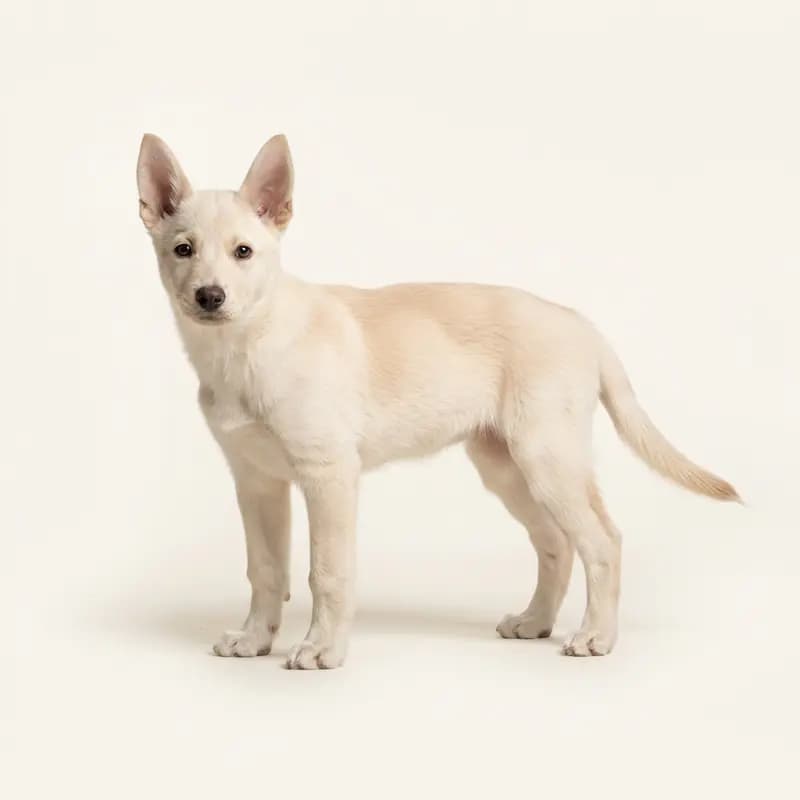
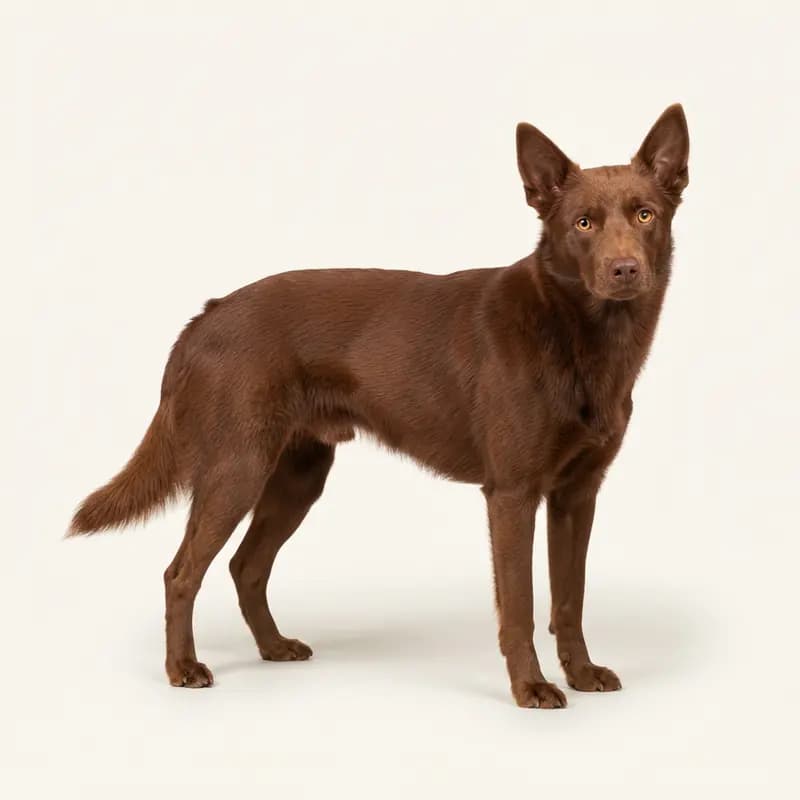 Illustrative image
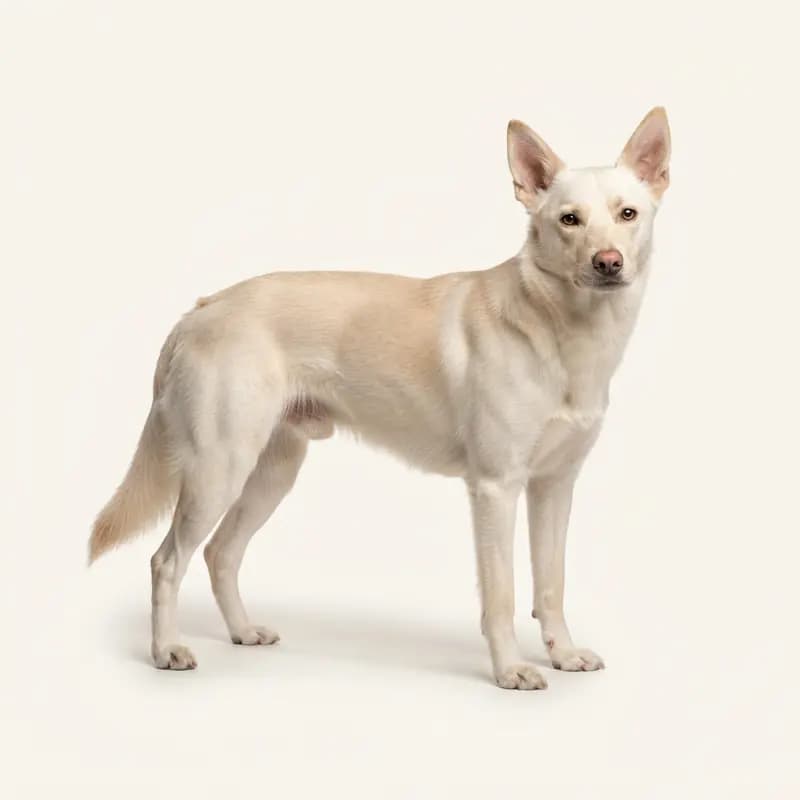
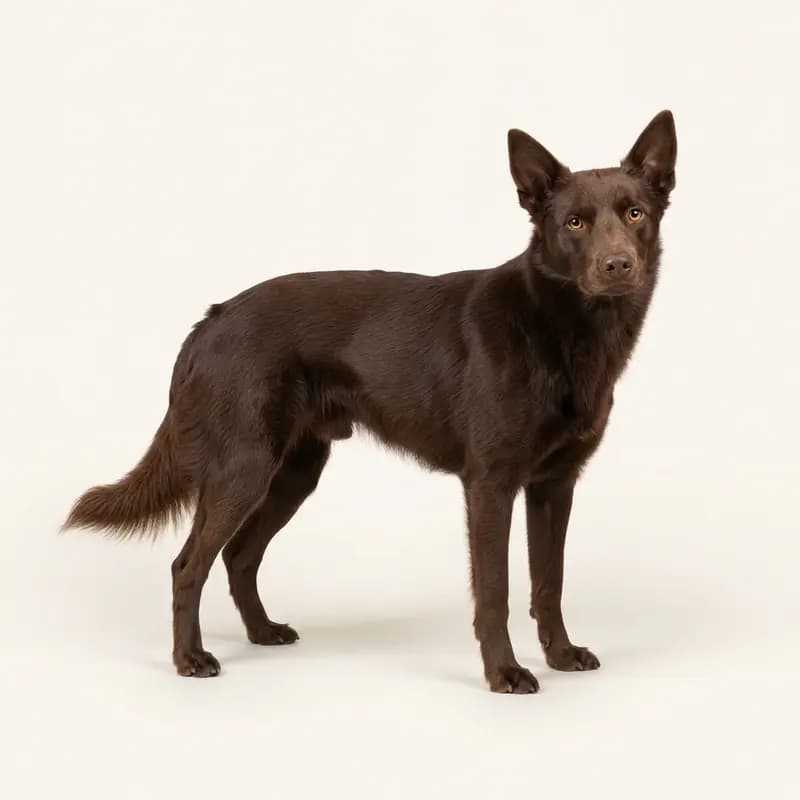 Illustrative image
The history of the Australian Kelpie began in the 1870s, as sheep farming in Australia expanded rapidly and there was a need for robust dogs capable of withstanding the extreme climatic conditions of the Outback. The breed was founded on imported Scottish working Collies, particularly dogs from the Rutherford family's bloodline. The breed's name does not stem from an alleged aptitude for water work, but rather from a legendary foundation bitch named Kelpie. This dog, who demonstrated outstanding performance in early sheepdog trials, was simply named after the mythological Scottish water spirit. Her offspring were so successful with livestock that people soon began referring to them as Kelpie puppies. The Australian Kelpie was bred exclusively as a tireless and independent herding dog for the vast, arid plains of Australia, where it managed massive flocks of sheep under extreme heat. The first breed standard was written in 1902, and shortly thereafter, the first official registrations began in the Australian studbook. To this day, the Australian Kelpie is valued worldwide for its tireless work ethic, enormous stamina, and exceptional skills as a droving and herding dog.
The Australian Kelpie was bred as a herding dog for sheep flocks on the vast plains of Australia.
Australia
1800
Many owners stress that the biggest misconception about the Australian Kelpie is that you have to wear this dog out physically all day long. Breed forums and communities agree that Kelpies have almost limitless stamina. Try to tire them out with nothing but hours of running or endless ball games, and by consistent accounts you end up raising a nervous, overexcited "junkie" that is always wound up.
For most owners, the real day-to-day job is therefore teaching the dog to switch off on purpose, starting in puppyhood. As puppies and adolescents, Kelpies tend to ignore their own limits and patrol the house restlessly if no one sets clear rest periods for them. Once settling down has been trained consistently and the dog gets mental work through scent work, obedience or dog sports, though, owners describe it at home as a pleasantly relaxed, low-key and very cuddly companion.
Sources:forum.hundund.demartinruetter.comfressnapf.chaustralian-kelpie-ishigo.de
Owners' training reports regularly point to the fine line between a strong willingness to cooperate and sensitive reactivity. Owners love the breed's very strong "will to please": a Kelpie often picks up exercises in no time and works along with eager focus. That same speed, however, demands real precision from its person, because the breed learns unwanted behavior and unclear signals just as quickly.
At the same time, experienced owners warn against harshness or loud corrections. Under pressure, a Kelpie often becomes unsure of itself or stops cooperating, which is why owners call clear leadership, predictability and positive-reinforcement training essential. They also point out again and again that without guidance the breed tends to make its own decisions. Unless you work on it early, that can show up as controlling behavior, fixating on moving triggers such as bikes or joggers, or watchfully guarding against strangers.
A recurring topic among owners is the important difference between the FCI-recognized Australian Kelpie (the show line) and the Working Kelpie, bred purely for performance. Many committed dog-sport people value the Australian Kelpie as a versatile all-rounder for agility, Hoopers or obedience that fits easily into everyday life. Working Kelpie owners, by contrast, stress that the working line brings considerably more assertiveness, toughness and independence.
Reports from sheep farmers and sport handlers underline that the classic Working Kelpie is rarely happy as just a family or leisure dog. Without real work on livestock or a suitable high-performance outlet, it quickly develops displacement behaviors, herds substitutes such as children or pets, and seriously challenges its owner's leadership. According to owners, anyone interested in the breed should therefore make a point of learning about the different lines beforehand.
Sources:fressnapf.chaustralian-kelpie-ishigo.dedogorama.appforum.hundund.deaussie.de
Paraphrased from real owner reports · translated from German
The Australian Kelpie is an active dog that needs plenty of exercise and mental stimulation. Research the temperament, grooming needs, and space requirements before deciding.
The average life expectancy of a Australian Kelpie is 12-15 years. With proper care and regular vet visits, your dog can live a long, healthy life.
Australian Kelpie grooming requirements include regular brushing, nail trimming, and dental care. HonestDog provides detailed grooming tips for every breed.
The Australian Kelpie can be a great family dog. Proper training and socialization are key. HonestDog provides family suitability information for every breed.
The Australian Kelpie comes in these colors: Black, Black and tan, Red, Chocolate, Fawn, Blue, Blue and tan, Cream. Colors that fall outside the breed standard are marked as such on the breed page.
Showcase your kennel on HonestDog and reach families searching for a responsibly bred Australian Kelpie.