Belgian Shepherd DogClose relative
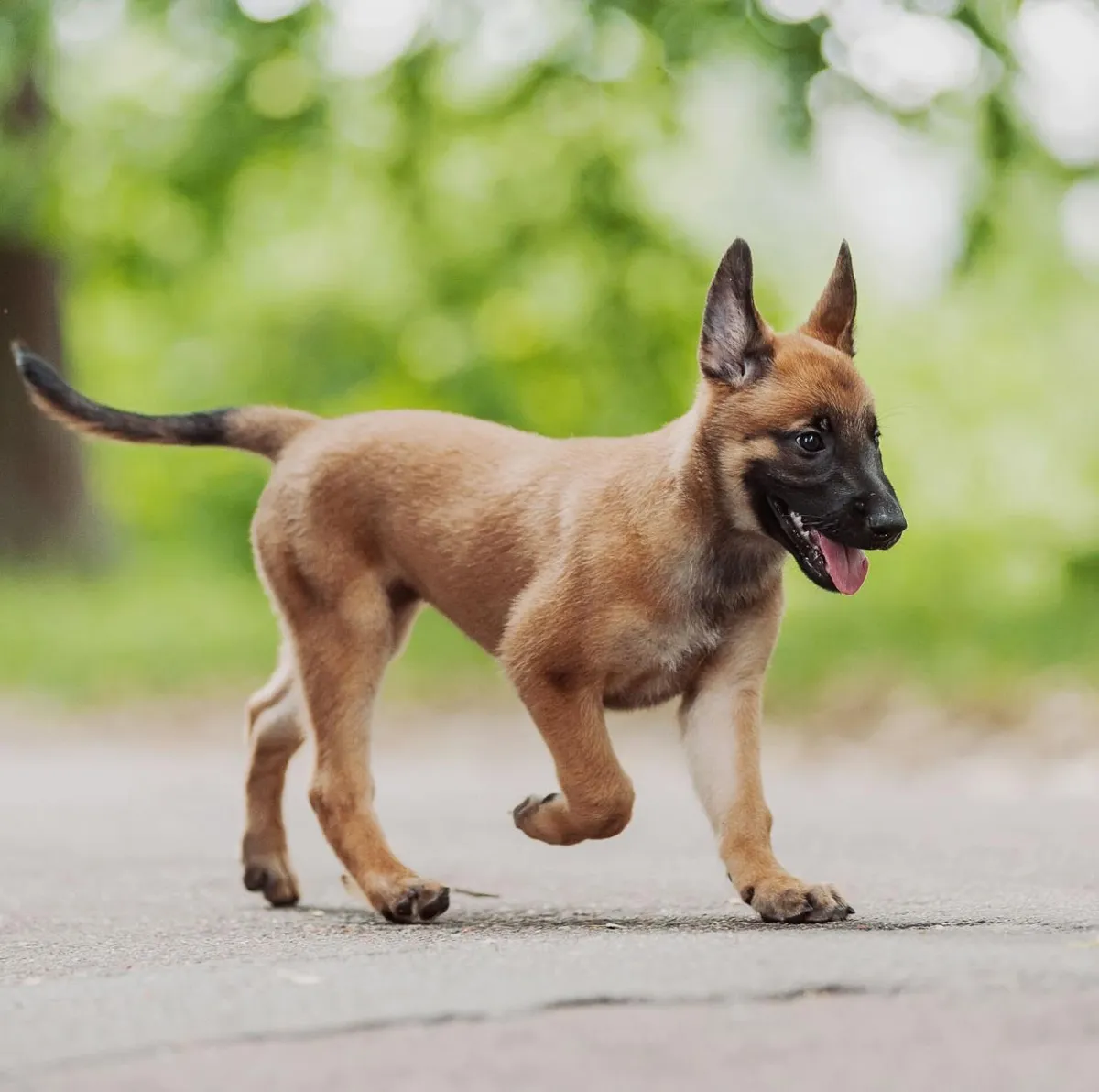
The Malinois is a highly intelligent, lightning-fast herding dog and working dog—bred for extreme willingness to perform, absolute cooperation, and split-second reactions. It is precisely this unconditional drive to work that makes them professionals in service, but a ticking time bomb if they are kept solely as a family pet without enough stimulation.
How the health grade is calculated
Sources for required breeding screenings. Deutscher Klub für Belgische Schäferhunde e.V. (DKBS)
Self-check
Answer 6 quick questions about your everyday life and see how well the Belgian Malinois fits you — including an honest cost estimate per month, per year, and across the dog's lifetime.

At a glance
The essentials — key facts, traits, and health priorities — before you dive deeper.
Lifespan
12–14 yrs
Shoulder height
56–64 cm
Weight
20–30 kg
Practical
Temperament
Daily life
What matters most
Especially with a Belgian Malinois, choosing the right breeder is the single most important decision you'll make. Serious breeders consistently test the parents for inherited conditions, prioritize healthy early socialization, and stay accountable long after handover. A cheap puppy without health screening tends to become the most expensive dog later on.
See HonestDog breeder standards →Colors & coat
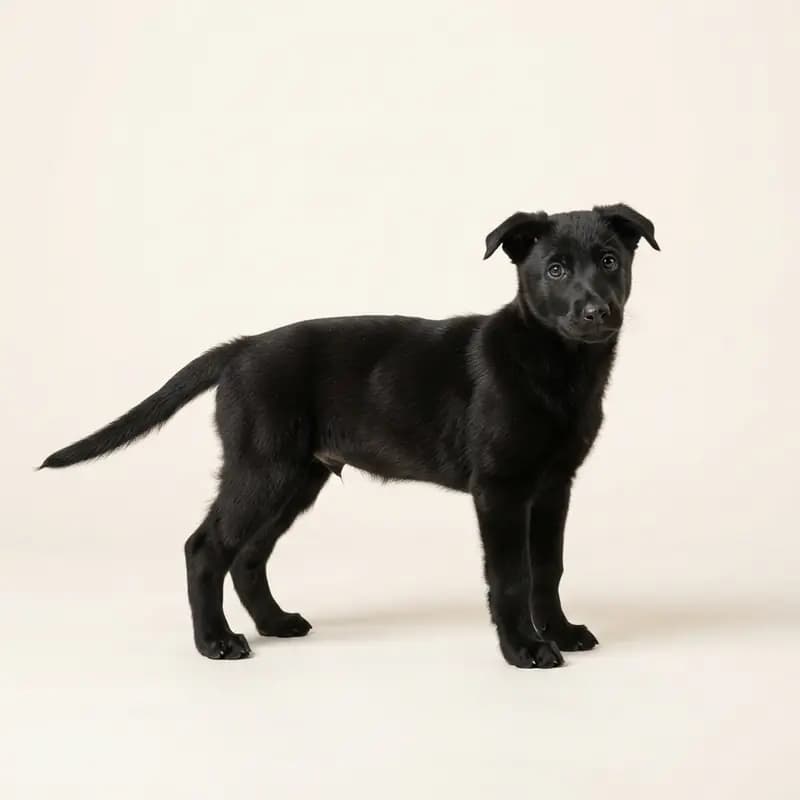
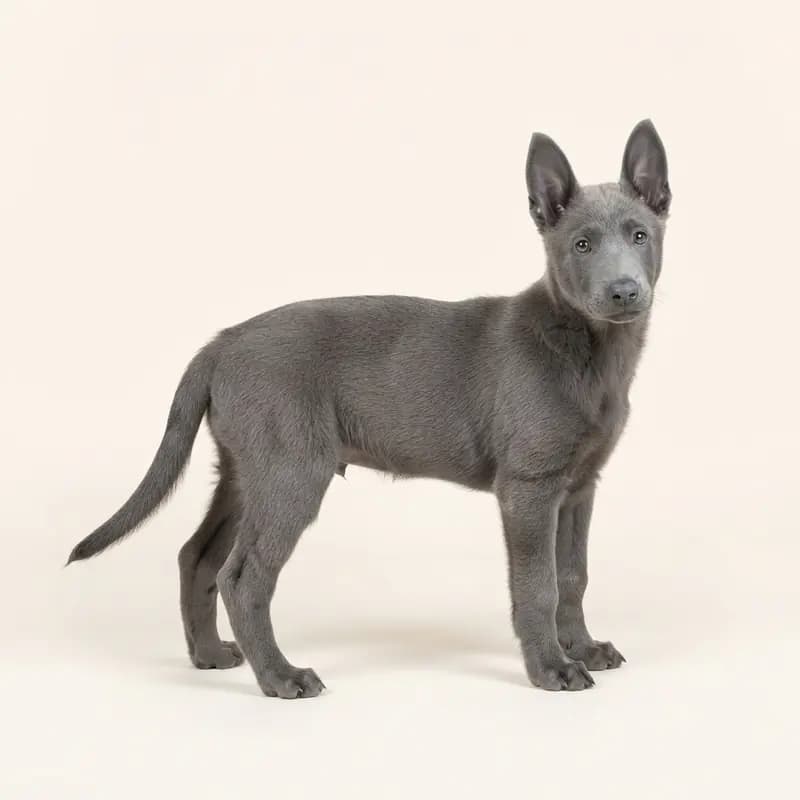
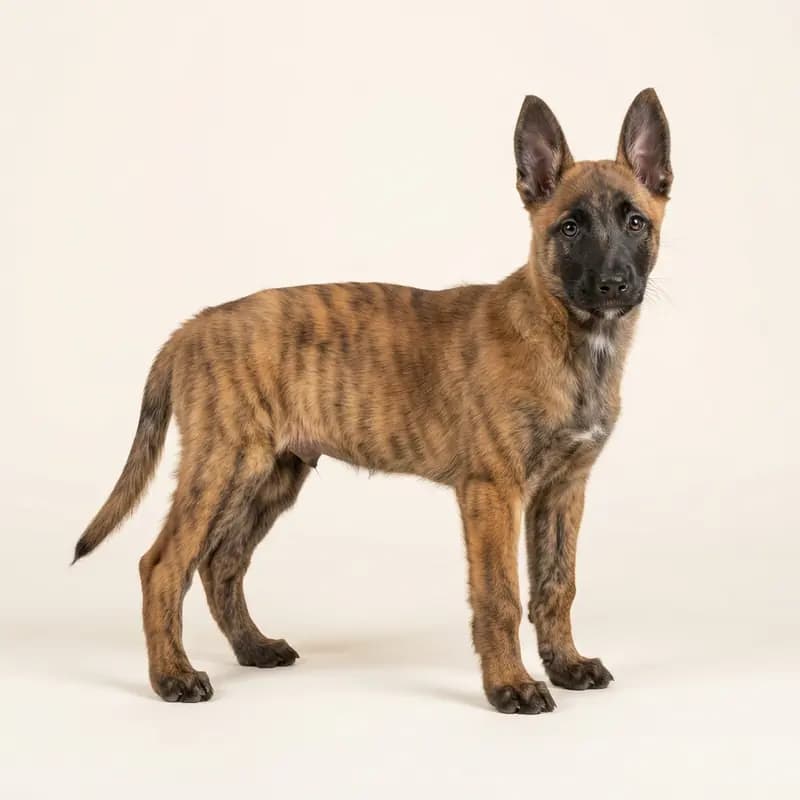
The coat colors that occur in the Belgian Malinois — including which ones fall outside the breed standard and which carry genetic risk.
Eye colors
 Brown
Coat type
 Short
 Double coat
The real vibes check
A Malinois is like a high-performance Formula 1 race car: a masterpiece in the hands of a pro on the track, but dangerously frustrated in normal city traffic. You aren't getting a relaxed couch potato, but a workaholic who will read your every wish—provided you can steer this bundle of drive confidently and flawlessly.
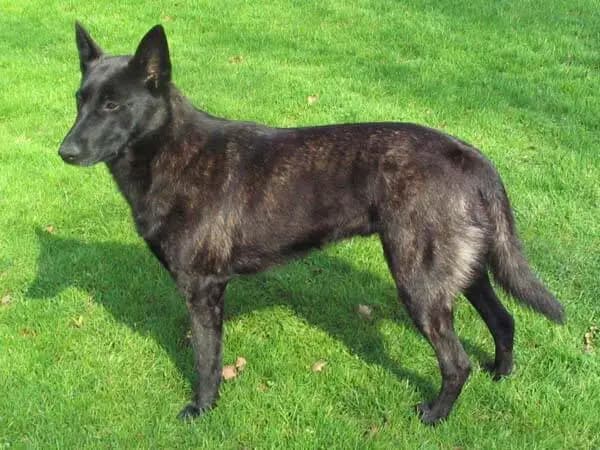
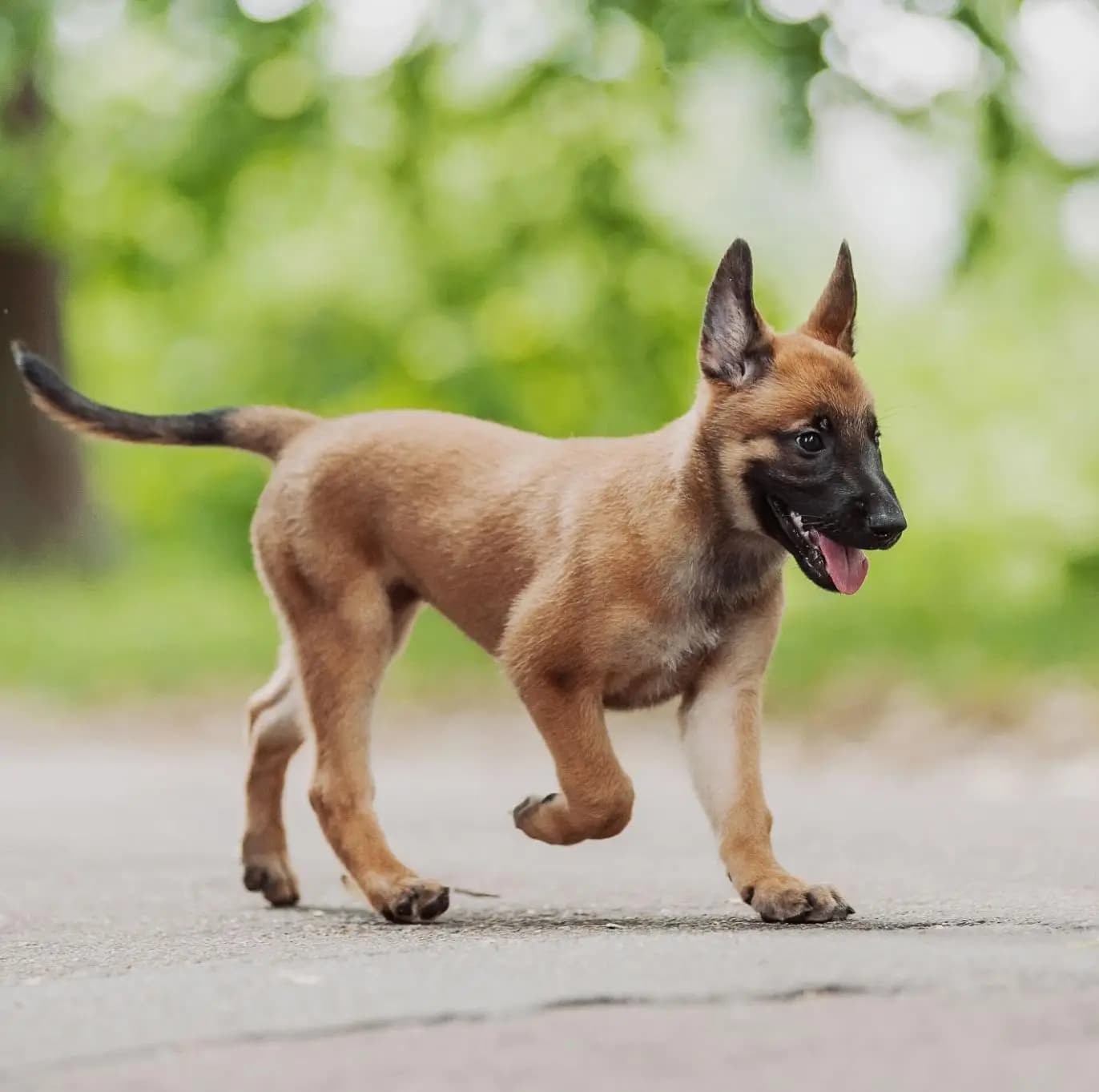
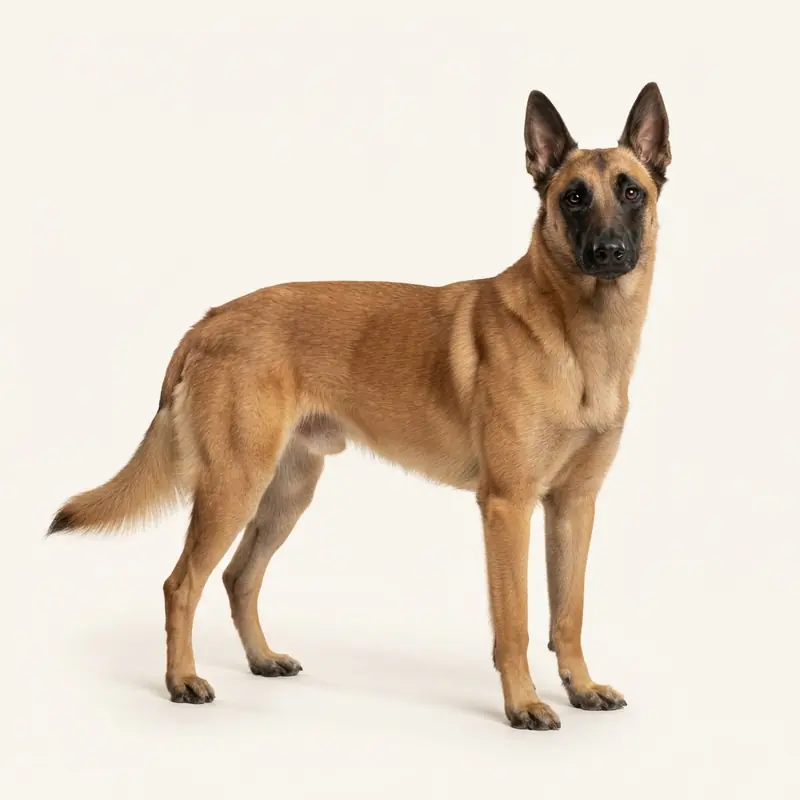
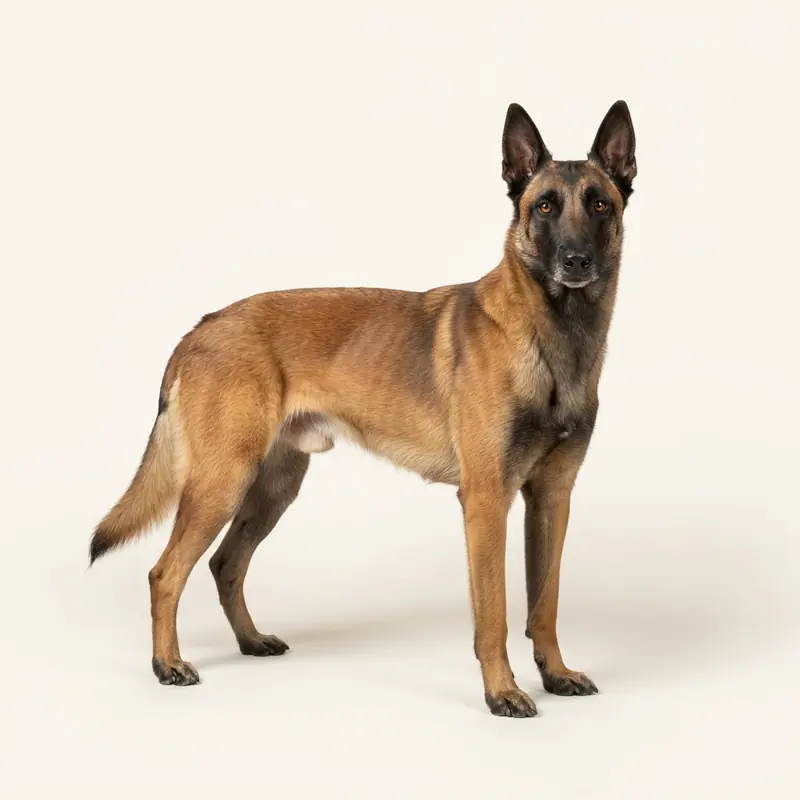
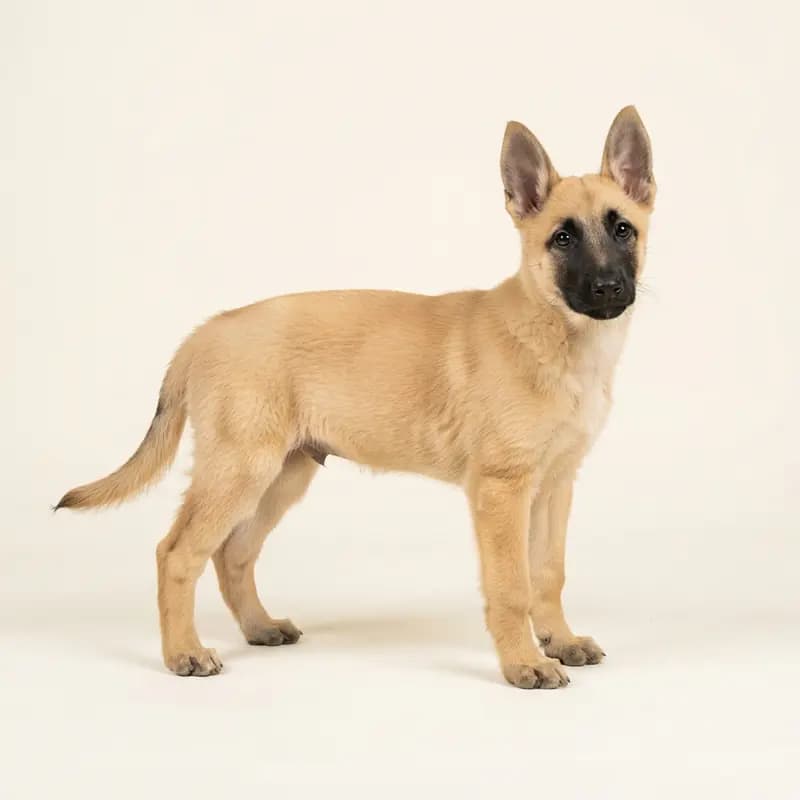
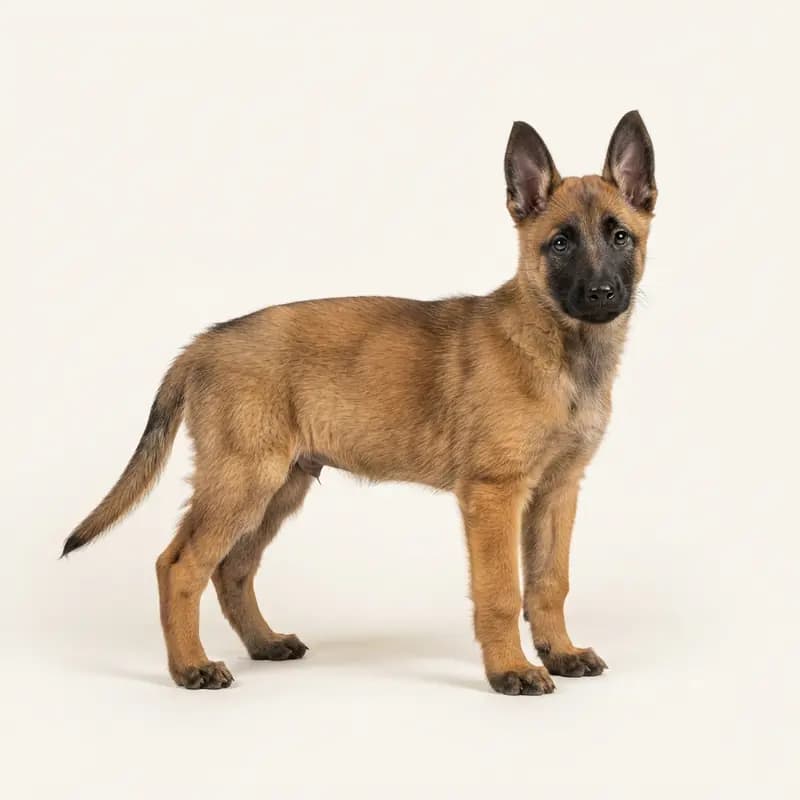
The Malinois is an athletic and elegant dog that belongs to the Belgian Shepherd breed. It is one of four varieties of the Belgian Shepherd Dog and belongs to FCI Group 1, the group of herding dogs and cattle dogs. The Malinois's body is strong and well proportioned, making it an extremely mobile and agile dog. It has erect ears that are triangular in shape and a short, bushy tail. His coat is short and dense, with a weatherproof undercoat that protects him from the elements. There is no distinction between performance and show lines in this breed; The Malinois is a working dog through and through and is often used in protection dog work, police work, and as a sniffer dog.
The Malinois is known for its intelligence, enormous energy levels and hard work. If you're looking for an active partner who's always up for adventure, the Malinois could be just the dog for you. However, you should note that this breed is not suitable for everyone as it requires a high level of activity and training. As a herding dog, the Malinois is naturally very hardworking and needs a job to do to be happy. He is extremely trainable and can learn a variety of tasks. His high work drive makes him perfect for protection dog work or other dog sporting activities. But you should know that the Malinois also has a side that makes him a wonderful family dog as long as his needs are met. The Malinois is a very people-oriented dog and forms close bonds with its family. He is often reserved around strangers, but with good socialization he can learn to accept people outside of his family. He is alert and has a natural protective instinct, making him an excellent watchdog. It is important to understand that the Malinois is an active dog that needs plenty of exercise and mental stimulation. This is not a breed that is content to lie around the house all day. The Malinois needs daily walks, games and training to keep his mind and body occupied. Because he is a herding dog, he also has some hunting instincts, but this can be controlled through training. Regarding staying alone, the Malinois can learn to stay alone for short periods of time, but he should not be left alone for long hours each day as he gets bored easily and this can lead to undesirable behavior.
| Watchfulness Strong territorial instinct — may actively confront intruders. | Very high |
| Openness to Strangers Careful around unfamiliar people — thaws slowly. | Cautious |
| Hunting or Herding Drive Powerful instinct that can override recall when triggered. | Strong |
Fun Fact!
Did you know that Malinois are often used as police and military dogs because they are so intelligent, agile and reliable? In fact, a Malinois named Cairo was even part of the Navy SEAL operation that led to Osama bin Laden's capture.
Malinois are very active and easily excitable working dogs. They are often used as service dogs. They have a high hunting motivation and tend to behave aggressively. These dogs are not beginner or family dogs.
The Malinois is not particularly suitable as a city dog because it needs a lot of exercise and activity. A house with a garden would be ideal. He's coming well gets along with children, but due to his size and energy it is important that interactions are monitored. The Malinois can also get along with other pets, including cats, if trained to do so from an early age.
Loves family life and thrives in a group.
Gets on well with children — with adult supervision.
Usually gets on fine with other dogs.
Can manage in the city, but only with very active owners.
Owning a dog is a privilege, but it's also a real responsibility. Before you bring one into your life, be honest with yourself about the commitment it takes.
The Malinois is an intelligent and energetic dog that benefits from mental and physical stimulation. Breed-specific, it is suitable for dog sports such as agility, protection dog work or obedience. He needs consistent but loving training and positive reinforcement methods are very effective. It's important to find a balance when it comes to keeping busy, as an overly busy Malinois can become a "ball junkie" or obsessive-behavioral. Learning frustration tolerance and impulse control is particularly important. The Malinois often has a strong prey drive, so it is important that he learns to control himself and offer alternative behavior. Training should be varied, and work on obedience and socialization is crucial to ensuring that the Malinois is a well-adjusted and happy dog that can participate in social life.
The Malinois is an active dog and requires a balanced diet rich in nutrients and proteins to meet its energy needs. High-quality food that is tailored to the dog's age, activity and health status is important. It is also advisable to provide fresh water regularly and to ensure that the dog does not eat too quickly to minimize the risk of gastric torsion. In terms of care, the Malinois is quite easy to care for. He has short fur with a weatherproof undercoat. He sheds moderately, but shedding may increase during the shedding phases. Regular brushing helps remove loose hair and keeps the coat healthy. The Malinois copes well with the climate in Germany because its fur protects it from both cold and wet conditions.
| Care Level Minimal effort — occasional brushing and bathing. | Low-maintenance |
| Exercise Needs Working-dog energy that needs burning off every single day. | High-drive |
| Shedding Hair everywhere, always — no white clothing survives. | Very heavy |
| Trainability Picks up commands quickly and wants to please. | Eager to learn |
Our experts are still reviewing this information. Spotted something wrong? Email us at info@honestdog.de.
Solid
Health grade
In the Malinois, the main concerns are joint and spinal issues such as hip dysplasia (HD), elbow dysplasia (ED), and lumbosacral transitional vertebra (LTV), as well as severe neurological disorders such as spongy degeneration with cerebellar ataxia subtype 1 (SDCA1) or cardiomyopathy and juvenile mortality (Belgian Malinois). Breed clubs such as the DKBS mandate X-ray examinations for breeding approval for HD (limit value HD A–B) and ED (ED 0 or borderline), while the DMC requires LÜW 0 for transitional vertebra (LTV). Responsible breeders additionally test parent animals for genetic risks such as SDCA1, SDCA2, or cerebellar ataxia (CA1). Before buying a puppy, have the breeder show you the official X-ray evaluations and DNA test results of the parent animals; carriers must only ever be mated with clear partners.
Grade is relative to other breeds — AI-assisted and editorially reviewed.
Methodology and data: HonestDog Dog Breed Health Report 2026
What matters most for this breed
Tap any item to see details.
You should focus on joint-friendly rearing and limit extreme stresses like jumping at a young age to keep their back and joints healthy in the long run.
Responsible breeders have parent animals screened for HD, ED, and lumbosacral transitional vertebrae (LTV) and use DNA tests for severe neurological defects such as SDCA1 or SDCA2 to reliably rule out affected puppies.
Note: This health overview is AI-assisted and editorially reviewed. It is for orientation only and does not replace veterinary advice.
What matters most for this breed — what's common, how much it affects the dog's life, and how to protect yourself as a buyer.
Tap a body region to see the inherited conditions linked to it.
The three most important risks
Pick a region on the map to explore other areas.
Tier 1 is the core standard: the tests Deutscher Klub für Belgische Schäferhunde e.V. (DKBS) requires, plus further tests from the recommended health standard for this breed. Tiers 2 and 3 show how responsible breeders go beyond.
Core standard. Tests marked “Club standard” are required by Deutscher Klub für Belgische Schäferhunde e.V. (DKBS) for breeding approval; the others are part of the recommended health standard for this breed. Ask any reputable breeder for the results.
Not health tests, but required for breeding: the club asks for these results too. They don't count toward the risks or the rating.
DNA-Identitätsnachweis
Required by Deutscher Klub für Belgische Schäferhunde e.V. (DKBS)
Acceptable result: Elternschaftsnachweis erbracht
Wesensbeurteilung
Required by Deutscher Klub für Belgische Schäferhunde e.V. (DKBS)
Acceptable result: Bestanden (nachgewiesen durch Leistungsüberprüfung, gesonderte Verhaltensüberprüfung oder im Rahmen einer Ausstellung)
No entries in this tier.
Note: This health overview is AI-assisted and editorially reviewed. It is for orientation only and does not replace veterinary advice.
A Belgian Malinois costs around ~€180 per month (€90 – €340, depending on your setup). The first year adds up to roughly ~€4,840 including purchase, equipment and puppy school; across the dog's life (13 years) it comes to about ~€30,760.
With surgery cover, running costs come to about ~€180 per month — in return, your share of a major operation drops from several thousand euros to around 20 percent.
Per month
~€180
In the first year
~€4,840
Across the dog's life
~€30,760
Estimated purchase price from a breeder: €1,200 – €2,500
Estimate at a mid-range setup (suburban, dry food, 1–2 hours of daily exercise), average German prices, as of July 2026.
 Illustrative image
 Illustrative image
 Illustrative image
 Illustrative image
The Malinois is a Belgian breed and belongs to the Belgian Shepherd family. It is named after the Belgian town of Malines, which is located in the Flanders region. The breed originated in the late 1800s when breeders in Belgium began producing dogs specifically suited to herding sheep and protecting livestock. The Malinois was initially used as a working dog for farmers and shepherds, but its exceptional abilities in obedience, alertness and intelligence led to it soon being discovered by the police and military. The Malinois was first recognized as a separate variety of Belgian Shepherd in 1891 and its popularity quickly spread throughout Europe and later to the United States. Today, the Malinois is known as one of the best working dogs in the world, and its skills are valued in many areas including search and rescue, sniffer dog work and protection dog training.
The Malinois is a variety of the Belgian Shepherd Dog and was used to herd flocks of sheep and as a guard and protection dog.
Belgium
1900
At home, many owners describe their Malinois as surprisingly affectionate, sensitive and almost over-the-top cuddly. These dogs often seek close physical contact with their own people and want to be with them every step of the way. At the same time, experienced owners warn against getting a Malinois on a whim as an easygoing family dog that can just tag along. The combination of strong protective drive, high alertness and suspicion of strangers often means visitors or neighbors' kids at play have to be managed strictly.
Being left alone is a recurring everyday topic: many reports describe young Malinois becoming very destructive out of boredom, frustration or separation stress, damaging furniture or walls. Many owners therefore rely consistently on indoor crates or safe retreat spots, especially in the first few years, until the dog has reliably learned to switch off without getting worked up.
Sources:hundeseite.deamba-versicherungen.dedogorama.apprund-ums-baby.dedas-schaeferhund-forum.de
In training forums, owners repeatedly stress that the Malinois learns very quickly and has a boundless drive to work, which makes training fascinating but by no means easy. According to many owners, the breed hardly forgives inconsistency: because these dogs are so fast and reactive, they learn unwanted behavior just as quickly as wanted behavior. Pressure or excessive harshness often makes these sensitive dogs distrustful or triggers displacement behaviors, while confident, clear and fair leadership is indispensable.
A classic mistake that long-time owners and trainers regularly warn about is assuming a Malinois has to be physically "worn out" nonstop. Endless ball throwing or constant action often produces nervous, overexcited dogs with chronically high stress levels. The community consensus is therefore that the most important, and often hardest, lesson in the first year is deliberate settle training and impulse control, combined with structured mental work such as tracking, dummy work or sport training.
Sources:hundeseite.deamba-versicherungen.defritz-malinois.demit-tier.dehundeforum.com
On walks and out in the world, many owners walk a fine line between their dog's eagerness to work and strong reactivity. A typical breed trait is the tendency to go "forward" in conflict situations or at sudden triggers such as joggers, cyclists or other dogs, and to make its own decisions. Several owners report that their Malinois simply find other dogs unnecessary, and that strict leash management and thinking ahead are needed for the long haul.
Rescue and rehoming reports show that it is exactly these traits, emerging from adolescence onward at around one to two years of age, that are the most common reason these dogs are given up. Once the dogs develop their full protective motivation and territoriality, first-time owners without breed experience or a network of competent trainers quickly reach their limits. Owners who are willing to lead with foresight and set boundaries for the dog's whole life, however, describe the Malinois as an exceptionally loyal companion that can be handled with great precision.
Sources:hundeseite.deamba-versicherungen.dedas-schaeferhund-forum.dehundeforum.comdogforum.de
Paraphrased from real owner reports · translated from German
The Belgian Malinois is an active dog that needs plenty of exercise and mental stimulation. Research the temperament, grooming needs, and space requirements before deciding.
The average life expectancy of a Belgian Malinois is 12-14 years. With proper care and regular vet visits, your dog can live a long, healthy life.
Belgian Malinois grooming requirements include regular brushing, nail trimming, and dental care. HonestDog provides detailed grooming tips for every breed.
The Belgian Malinois can be a great family dog. Proper training and socialization are key. HonestDog provides family suitability information for every breed.
The Belgian Malinois comes in these colors: Fawn, Sable, Black, Blue, Brindle. Colors that fall outside the breed standard are marked as such on the breed page.
Showcase your kennel on HonestDog and reach families searching for a responsibly bred Belgian Malinois.