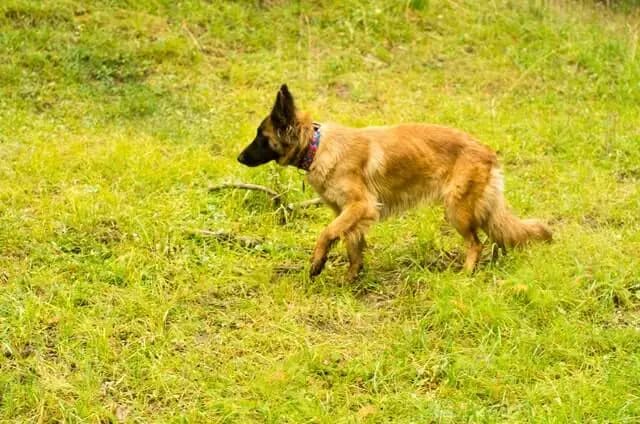
Belgian TervurenClose relative
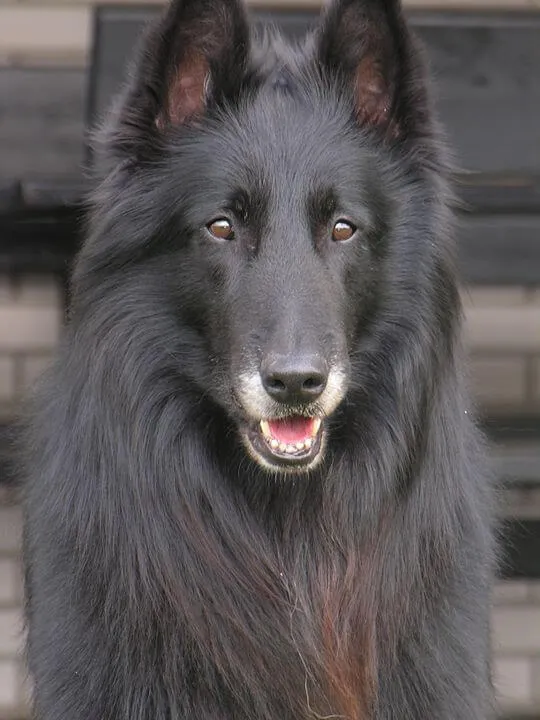
The Groenendael is an elegant, highly devoted, and lightning-fast herding dog—bred to guide flocks with immense stamina and a watchful presence. This highly sensitive hardware makes them extremely reactive, but also prone to overstimulation.
How the health grade is calculated
Sources for required breeding screenings. Deutscher Klub für Belgische Schäferhunde e.V. (DKBS)
Self-check
Answer 6 quick questions about your everyday life and see how well the Groenendael fits you — including an honest cost estimate per month, per year, and across the dog's lifetime.

At a glance
The essentials — key facts, traits, and health priorities — before you dive deeper.
Lifespan
10–12 yrs
Shoulder height
56–64 cm
Weight
20–30 kg
Practical
Temperament
Daily life
What matters most
Especially with a Groenendael, choosing the right breeder is the single most important decision you'll make. Serious breeders consistently test the parents for inherited conditions, prioritize healthy early socialization, and stay accountable long after handover. A cheap puppy without health screening tends to become the most expensive dog later on.
See HonestDog breeder standards →Colors & coat
The coat colors that occur in the Groenendael — including which ones fall outside the breed standard and which carry genetic risk.
Eye colors
 Brown
Coat type
 Long
 Double coat
The real vibes check
A Groenendael is like a highly sensitive antenna that immediately picks up and reflects every one of your moods and every movement in the environment. You aren't getting a dog that waits stoically, but a black shadow that is always asking what happens next. If you channel this energy in the right direction, you have an incomparably loyal partner—if not, they will nervously take control.
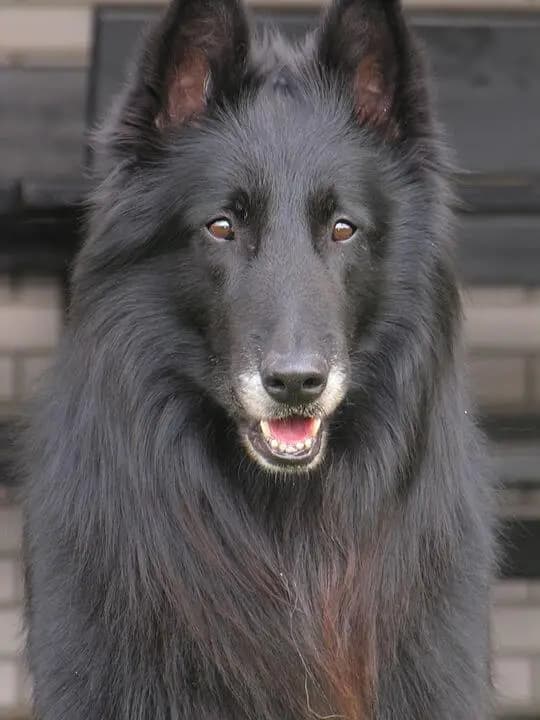
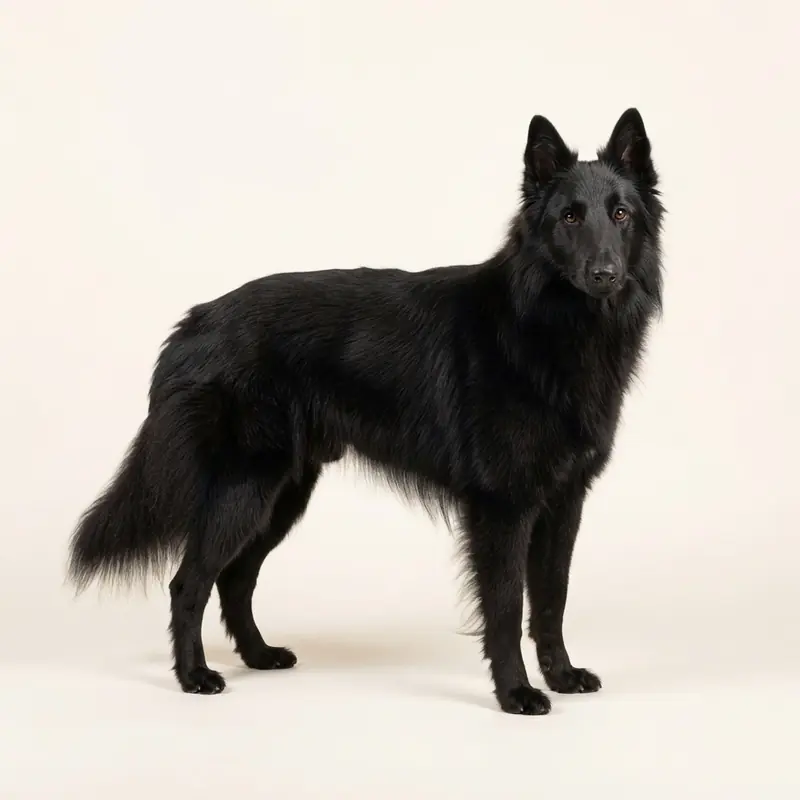
The Groenendael is a variant of the Belgian Shepherd and belongs to the FCI group of herding dogs. It is characterized by its elegant appearance and harmonious proportions. The Groenendael is known for its long, silky top coat and the characteristic mane on the neck and chest. The breed is primarily bred as a show dog, but there are also performance lines suitable for sporting activities.
The Groenendael is an extremely intelligent and alert dog. He is loyal and affectionate to his family and is often reserved towards strangers. As a herding dog, he has a strong protective instinct and is naturally alert. The Groenendael is active and requires both physical and mental activity. He loves completing tasks and is well suited to dog sports such as agility or obedience. The Groenendael is a very people-oriented breed and loves spending time with his family. He is playful and often shows a strong need for attention. The Groenendael can stay alone well if it is used to it from an early age. However, he should not be left alone for too long as he prefers the company of his family. The Groenendael can show strong hunting and prey-catching behavior, which should be channeled through consistent training and good socialization. He is naturally alert and is happy to report suspicious noises or movements. This makes him a good guard dog that defends his territory.
| Watchfulness Strong territorial instinct — may actively confront intruders. | Very high |
| Openness to Strangers Neither pushily friendly nor suspicious. | Neutral |
| Hunting or Herding Drive Powerful instinct that can override recall when triggered. | Strong |
Fun Fact!
The Groenendael is a variant of the Belgian Shepherd Dog and was named after the village of Groenendael in Belgium, where the breed was first bred.
Groenendaels are very active and easily excitable working dogs. They can be used in a variety of ways. These dogs can be prone to aggression. They are not beginner or family dogs.
The Groenendael is better suited to a rural environment due to its strong herding instincts and active nature. He needs enough space to run around and let off steam. As a city dog, he may not be able to get enough exercise and then exhibit undesirable behavior. Small children are usually not a problem as long as they treat the dog with respect and learn appropriate handling. However, it is important to always supervise interactions between children and dogs. With early socialization and gentle introduction, Groenendael dogs can get along well with cats and other pets.
Loves family life and thrives in a group.
Gets on well with children — with adult supervision.
Usually gets on fine with other dogs.
Can manage in the city, but only with very active owners.
Owning a dog is a privilege, but it's also a real responsibility. Before you bring one into your life, be honest with yourself about the commitment it takes.
The Groenendael is an intelligent and eager-to-learn dog that likes to be challenged. It is well suited to various dog sports such as agility, obedience and tracking. Consistent but loving training is important to encourage his natural abilities and avoid unwanted behavior. It is important to keep him mentally and physically busy, as an underemployed Groenendael may develop destructive behavior. Excessive ball playing should be avoided as the breed can tend to become ball-obsessed. Frustration tolerance and impulse control are important aspects that the dog should learn to ensure a pleasant coexistence. By involving him in different activities and offering him alternatives to express his hunting or prey-catching instincts, the Groenendael can be a happy and well-adjusted dog.
The Groenendael has a long, dense top coat with a soft undercoat. He needs regular brushing to prevent mats and keep his coat clean and healthy. The breed sheds heavily, especially during shedding. Regular grooming helps remove loose hair and reduce dirt in the home. In terms of nutrition, the Groenendael requires high quality dog food that meets the specific needs of the breed. The amount of food should be adjusted to the dog's age, activity level and health status. It is important to maintain a balanced diet and avoid excessive weight gain.
| Care Level Needs regular professional grooming — time-consuming and costly. | High-maintenance |
| Exercise Needs Needs several hours of serious exercise every day. | Very active |
| Shedding Regular shedding — dog hair on clothes is now normal. | Moderate |
| Trainability Picks up commands quickly and wants to please. | Eager to learn |
Our experts are still reviewing this information. Spotted something wrong? Email us at info@honestdog.de.
Solid
Health grade
In the Groenendael, hip dysplasia (HD), elbow dysplasia (ED), and hereditary cerebellar ataxia, SELENOP-associated (CACA) are among the relevant health risks. The Deutscher Klub für Belgische Schäferhunde e.V. (DKBS) mandates radiographic examinations for HD (cut-off A–B) and ED (cut-off ED 0 or borderline) as well as a genetic test for CACA for breeding, with carriers only permitted to be mated to clear partners. Forward-thinking breeders additionally have the spine examined for lumbosacral transitional vertebrae (LTV) aiming for LTV 0. Ask to see these official expert reports and test results for both parent animals in person before purchasing a puppy.
Grade is relative to other breeds — AI-assisted and editorially reviewed.
Methodology and data: HonestDog Dog Breed Health Report 2026
What matters most for this breed
Tap any item to see details.
You should focus on joint-friendly rearing and schedule regular eye exams to ensure your athletic companion stays healthy and active for a long time.
Responsible breeders mandatorily test their breeding dogs for HD, ED, and cerebellar ataxia, SELENOP-associated (CACA), and additionally screen voluntarily for lumbosacral transitional vertebrae (LTV).
Note: This health overview is AI-assisted and editorially reviewed. It is for orientation only and does not replace veterinary advice.
What matters most for this breed — what's common, how much it affects the dog's life, and how to protect yourself as a buyer.
Tap a body region to see the inherited conditions linked to it.
The three most important risks
Pick a region on the map to explore other areas.
Tier 1 is the core standard: the tests Deutscher Klub für Belgische Schäferhunde e.V. (DKBS) requires, plus further tests from the recommended health standard for this breed. Tiers 2 and 3 show how responsible breeders go beyond.
Core standard. Tests marked “Club standard” are required by Deutscher Klub für Belgische Schäferhunde e.V. (DKBS) for breeding approval; the others are part of the recommended health standard for this breed. Ask any reputable breeder for the results.
Not health tests, but required for breeding: the club asks for these results too. They don't count toward the risks or the rating.
DNA-Identitätsnachweis
Required by Deutscher Klub für Belgische Schäferhunde e.V. (DKBS)
Acceptable result: DNA-Profil / Elternschaftsnachweis erbracht
Wesensbeurteilung
Required by Deutscher Klub für Belgische Schäferhunde e.V. (DKBS)
Acceptable result: bestanden
No entries in this tier.
Note: This health overview is AI-assisted and editorially reviewed. It is for orientation only and does not replace veterinary advice.
A Groenendael costs around ~€190 per month (€100 – €360, depending on your setup). The first year adds up to roughly ~€5,120 including purchase, equipment and puppy school; across the dog's life (11 years) it comes to about ~€28,000.
With surgery cover, running costs come to about ~€190 per month — in return, your share of a major operation drops from several thousand euros to around 20 percent.
Per month
~€190
In the first year
~€5,120
Across the dog's life
~€28,000
Estimated purchase price from a breeder: €1,500 – €2,500
Estimate at a mid-range setup (suburban, dry food, 1–2 hours of daily exercise), average German prices, as of July 2026.
HonestDog Concierge
We currently have no breeders for this breed who have passed our verification. Create your short buyer profile: we'll set up your search alert, review a possible source and email you within 28 days.
 Illustrative image
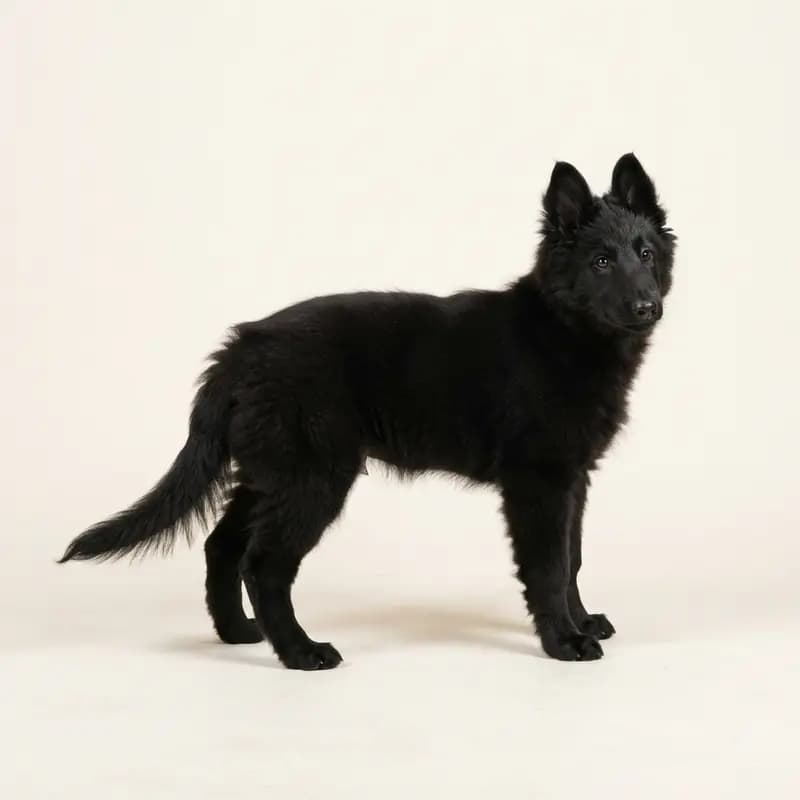 Illustrative image
The Groenendael has its origins in Belgium and was named after the village of Groenendaal. The breed was bred at the end of the 19th century by the Belgian breeder Nicolas Rose. Originally used as a herding dog, the Groenendael has also become more important as a guard dog and police dog over time. Today he enjoys great popularity as a companion dog due to his elegant appearance and versatile talent.
The Groenendael, a variety of the Belgian Shepherd Dog, was bred as a herding and guard dog, known for its black coat and versatility.
Belgium
1890
Many owners describe living with a Groenendael as an intense, close bond. Within their own circle, these dogs are considered very devoted, cuddly and sensitive to moods. At home, owners often experience the Groenendael as a pleasant "shadow" that wants to be part of everything and, given enough to do, is surprisingly calm. With children in their own household, owners mostly report great patience, playfulness and a loving protective instinct.
At the same time, experienced owners point out that this protective and guarding drive takes a fair amount of management day to day. The breed is almost always reserved or aloof with strangers; visitors are reliably announced and eyed critically at first. If socialization isn't done carefully, this reserve can turn into insecurity or excessive controlling behavior. The Groenendael is definitely not a dog you can keep on the side.
Owner accounts of training keep praising the breed's quick mind and love of work. Groenendaels learn lightning-fast and practically volunteer for tasks, which is why they love dog sports such as agility or obedience. Their "will to please" is strong; they want to please their people and actively ask for mental work.
The biggest challenge, owners say, is the high sensitivity and nervous temperament of many bloodlines. Compared with the Malinois, the Groenendael is often seen as softer, but also fairly often as more thin-skinned and more easily set off. Pressure, harshness or raised voices quickly lead to refusal, insecurity or avoidance; these dogs remember unfair treatment for a long time. That is why completely fair, calm and confident leadership is crucial, with learning to handle frustration and to settle down as the top priority from puppyhood.
Sources:hundeseite.dedogorama.appdogforum.deforum.hundund.de
On health and grooming, many owners see the Groenendael as a generally long-lived, weatherproof breed that fairly often reaches twelve to thirteen years or more. In practice, the long, jet-black coat usually turns out to be easier to care for than expected: regular brushing is enough day to day because the topcoat repels dirt, though shedding season calls for intensive grooming.
On the other side, owners and breeders mainly discuss the hereditary problems that can occur in Belgian Shepherds, especially joint disease (HD/ED) and epilepsy. Digestive sensitivity and proneness to stress in dogs with an unstable temperament also come up repeatedly. Owners therefore strongly urge prospective buyers to be meticulous when choosing a breeder, looking for healthy bloodlines and above all for steady-nerved, temperamentally sound parents.
Paraphrased from real owner reports · translated from German
The Groenendael is an active dog that needs plenty of exercise and mental stimulation. Research the temperament, grooming needs, and space requirements before deciding.
The average life expectancy of a Groenendael is 10-12 years. With proper care and regular vet visits, your dog can live a long, healthy life.
Groenendael grooming requirements include regular brushing, nail trimming, and dental care. HonestDog provides detailed grooming tips for every breed.
The Groenendael can be a great family dog. Proper training and socialization are key. HonestDog provides family suitability information for every breed.
The Groenendael comes in these colors: Black.
Showcase your kennel on HonestDog and reach families searching for a responsibly bred Groenendael.