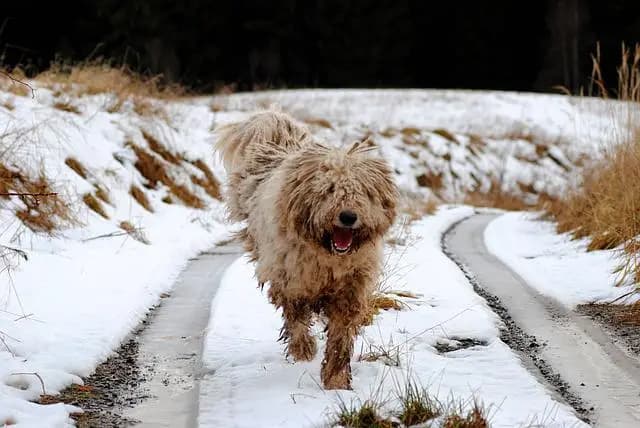
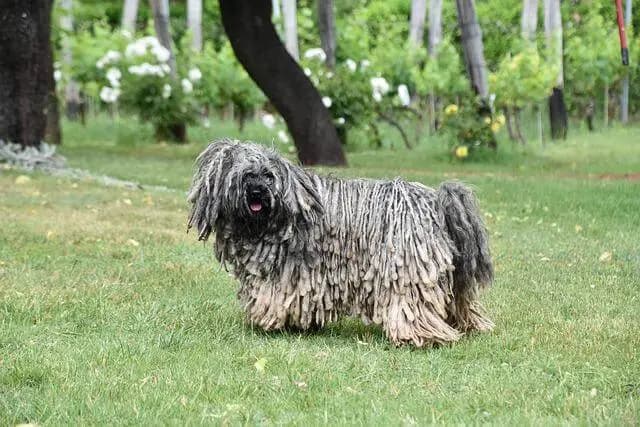
With a rating of 4 out of 5 points for friendliness towards families and children, the Bergamasco is a wonderful, sociable companion for family life. Even so, he is not a dog for everyone. His suitability for city life is a low 2 out of 5 points: a flat in the inner city will not do justice to his pronounced guarding instinct and his high energy level (4/5). He needs a house with a securely fenced garden and people who will take long, sustained walks in all weathers.
Never underestimate his independence. His trainability is only 2 out of 5 points – not because the Bergamasco is slow on the uptake, but because over centuries he was selectively bred to make independent decisions in the high mountains. Blind obedience and mindless repetition are alien to him. You need composure, patience and humour to lead this dog fairly.
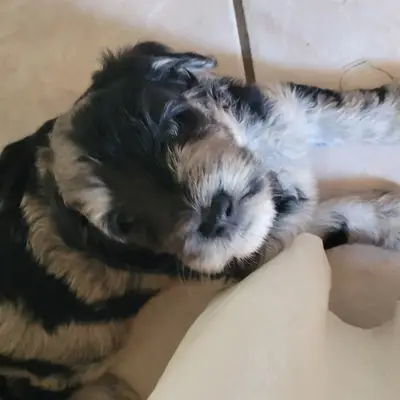
A truly distinctive feature in everyday life is the coat: the Bergamasco hardly sheds (shedding 1/5), which makes him very pleasant to have in the house. However, grooming (3/5) is highly specialised. From the end of the first year of life, when the soft puppy coat combines with the new undercoat and the coarse goat hair, you have to tear the resulting mats apart by hand into even flocks that reach right down to the skin. If this proper separation is neglected, or if the coat does not dry thoroughly after downpours, there is a risk of severe skin problems and eczema beneath a closed mat of felted coat.
Your checklist for the first conversation with the breeder
When you visit the breeding premises, take your time and check the paperwork and the dogs on site carefully. These are the points that matter with the Bergamasco Shepherd Dog:
- Inspect the joint results: Ask to see the original official X-ray evaluations for hip dysplasia (HD) and elbow dysplasia (ED) for both parent dogs.
- Check the merle status: Using the genetic results for coat colour, make sure that, where the merle colour is involved, at least one parent is proven to be free of the merle gene.
- Ask about eyes and bloodline: Ask for the parents’ current clinical eye examination results and ask specifically whether cases of eye abnormalities or degenerative myelopathy are known in the breeding line.
- Assess the dam’s coat condition: Take a close look at the flocks of the adult dogs – they must be cleanly separated down to the skin, free of caked dirt and must not smell unpleasant or musty.
- Observe the parent dogs’ temperament: A typical Bergamasco is often reserved and watchful with strangers at first, but in the presence of his breeder should appear confident, calm and never fearful or aggressive.
- Guidance on flock care: An experienced breeder will explain to you in detail, even on your first visit, how to divide the puppy coat correctly into flocks later on and how to care for them.
On HonestDog, a breeder profile only goes online once the breeder has completed registration: identity verification by ID and selfie, where applicable proof of club membership or a §11 permit, a knowledge test on breeding and animal welfare, and agreement to the HonestDog breeding standards, which among other things rule out breeding from dogs with traits that cause suffering. Health test results for the parent dogs that breeders upload are shown directly on the profile; ask to see the original results when you visit. Your next step: compare the profiles of the Bergamasco Shepherd Dog breeders on HonestDog, look at the health certificates they have uploaded and ask directly about the next litter.