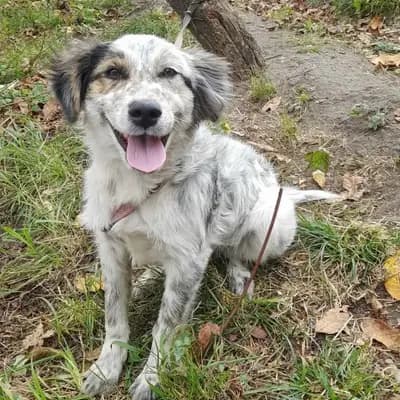
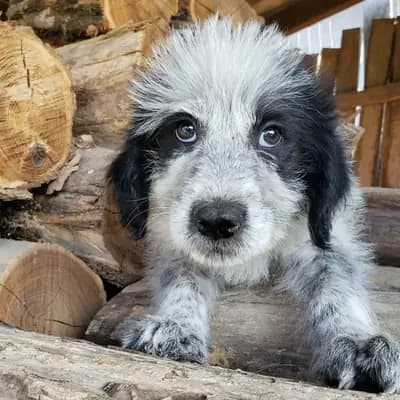
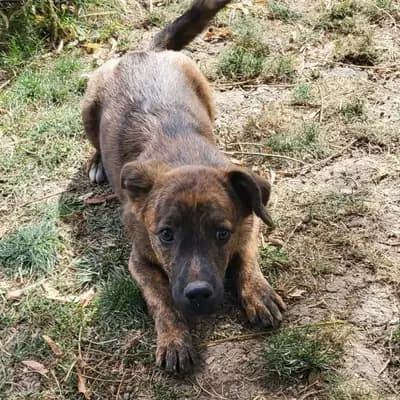
When you give a dog like this a home, you get an extremely people-oriented, family-friendly and eager-to-learn companion. At the same time, every rescue dog has some baggage to carry. Because of its close bond with its people, the Pyrenean Shepherd in a shelter often suffers badly from the loss of its family. At first it is often reserved or watchful with strangers. Give it time to build trust.
Keeping an eye on health
Pyrenean Shepherds (Smooth-faced) are generally considered robust dogs, but they do have some breed-typical issues affecting the hips, knees and eyes, as well as neurological disorders. A health-conscious breeder in the Club Berger des Pyrenees e.V. (cbp) is required to have their breeding dogs X-rayed for hip dysplasia (HD) and tail abnormalities, in order to reduce the risk for the offspring. In addition, responsible breeders use additional clinical screening for patellar luxation (PL) and cataracts, as well as the established genetic test for progressive retinal atrophy (prcd-PRA). This DNA test shows whether a parent dog is clear, a carrier or affected; if the breeder only mates carriers with clear partners, no puppy inherits the tested mutation from both parents, which significantly lowers the risk of that one condition.
With a shelter dog (or a dog of unknown origin, for example from disreputable puppy farmers), you usually do not know the health status of the parent dogs. So make sure you consistently keep your dog at a healthy weight, and plan regular eye checks as well as a check of the hips and kneecaps with your vet.