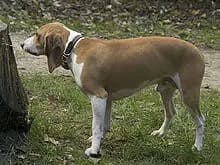
Finding reputable Small Bernese Hound breeders: what really matters when choosing
The Small Bernese Hound comes from Switzerland and was originally bred to hunt small game in rough terrain. With a height at the withers of 35 to 43 cm for males and 33 to 40 cm for females, and a weight of 13 to 18 kg (males and females), this scent hound has a compact build. It is also known for its affectionate, people-oriented and very loving nature. If your future companion is to enjoy a life expectancy of 12 to 15 years as free from trouble as possible, choosing a knowledgeable Small Bernese Hound breeder is the most important foundation.
Why the choice of breeder matters so much with the Small Bernese Hound
Small Bernese Hounds are naturally intelligent dogs with plenty of stamina that appreciate long walks just as much as quiet hours with their family. However, their particular build, with shorter legs and a proportionally longer back, brings breed-typical weak spots affecting the back, joints, eyes and ears. Carefully considered breeding selection is essential here.
A key issue in this breed is chondrodystrophy, which affects cartilage and bone growth and shapes the distinctive structure of the short-legged hound, but also increases the risk of disc and back problems. In addition, the typical long, drooping ears are prone to infection if they are not adequately ventilated. A health-focused breeder selects breeding dogs deliberately for harmonious anatomy without exaggeration, pays attention to well-ventilated ears, and only pairs dogs whose test results specifically lower the risk of joint, spinal and eye disease in the line.
Health tests and breed-typical risks at a glance
When buying a puppy, never rely on blanket statements such as “the parents have been examined by a vet”. Instead, ask to see the parents’ written results. A responsible breeder relies on specific diagnostics and is transparent about known risks in the line:
- Hip and spine X-rays: Screening for hip dysplasia (HD) is part of the recommended health standard for this breed. In addition, conscientious breeders also have the parents’ spines assessed by X-ray. These images significantly reduce the risk of painful joint malformations and back problems in the offspring.
- Clinical eye examinations: In the Small Bernese Hound, cataract as well as progressive retinal atrophy (generalised form) occur as breed-typical eye conditions. An eye examination by a specialist before the dogs are used for breeding shows whether they were free from clinical signs of these diseases at the time of examination, and so reduces the risk for the puppies.
How to recognise a good Small Bernese Hound breeder
A reputable breeder knows exactly what their breed needs. Because the Small Bernese Hound has a high energy level, needs plenty of daily exercise in green spaces and is less suited to purely urban living, the breeder will also ask in detail about your living circumstances. The puppies grow up in close contact with the family, get to know everyday noises, and are accustomed early on to having their drooping ears checked regularly and their short, smooth single coat groomed. A good breeder will also advise you in detail on how to ease the strain on your young dog’s back by keeping it at a healthy weight and giving it joint-friendly exercise in its first year.
5 specific questions to ask the Small Bernese Hound breeder
Take your time on your first visit and ask the breeder these specific questions to gauge their expertise and openness:
- “Can you show me the current X-ray results for hip dysplasia and the spinal evaluations for both parents?”
- “Are there current results of a clinical eye examination for cataract and the generalised form of progressive retinal atrophy for both the dam and the sire?”
- “How do you take the breed-typical chondrodystrophy into account when pairing dogs, in order to promote a sound back?”
- “Do your breeding dogs suffer from recurring ear infections, and how do you select for well-ventilated ears?”
- “How do you prepare the puppies for their future role as active family or hunting companions?”
Warning signs: how to spot irresponsible puppy farmers
The usual purchase price for a well-reared puppy is between 1200 and 2500 euros. Walk away from the purchase immediately if you come across any of the following warning signs: irresponsible puppy farmers offer puppies at suspiciously low prices, cannot produce official X-ray and eye results for the parents, or play down breed-typical issues such as back strain and eye diseases. You should also firmly refuse if the mother is not present, if several litters of different breeds are being offered at the same time, or if the seller is willing to hand the dog over to you without asking critical questions about your home situation and activity level.
On HonestDog, every breeder goes through a registration process before being approved: identity verification by ID and selfie, where applicable proof of club membership or a §11 permit, a knowledge test on breeding and animal welfare, and agreement to the HonestDog breeding standards – among other things, no breeding with traits associated with extreme breeding, and no breeding dogs under 18 months. Without a verified §11 permit, a breeder can list at most two breeding females there, and you can report anything unusual about a breeder profile directly via “Report content”. When you visit, ask to see the parents’ original results. You can find current litters under Small Bernese Hound puppies on HonestDog.