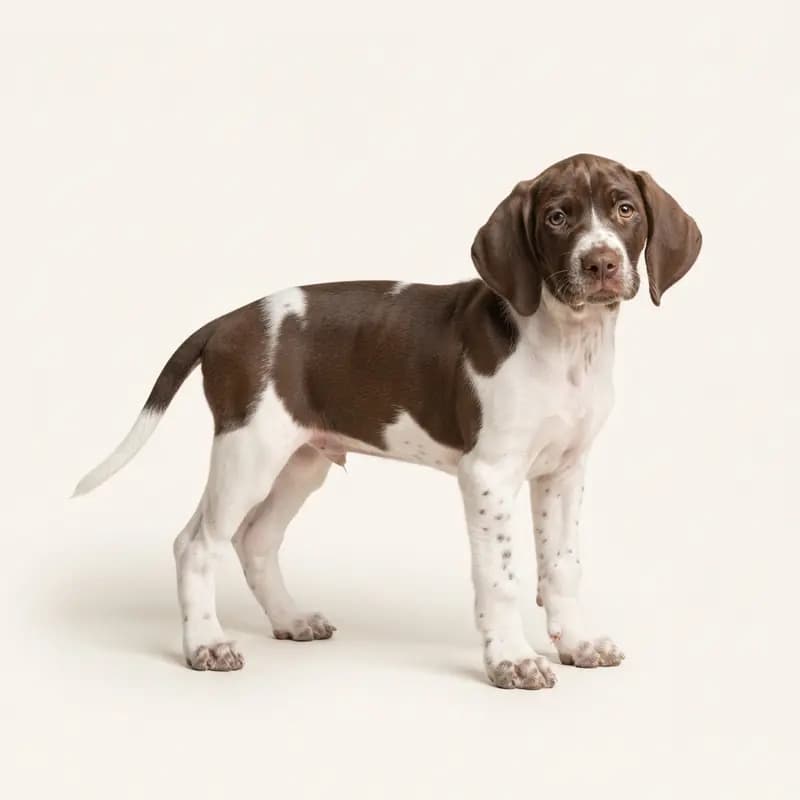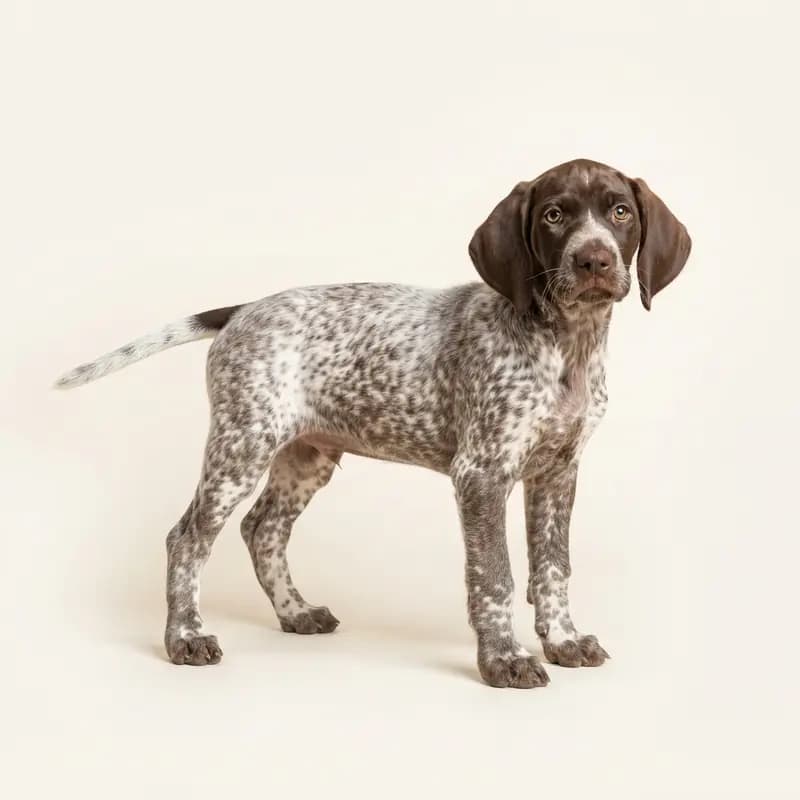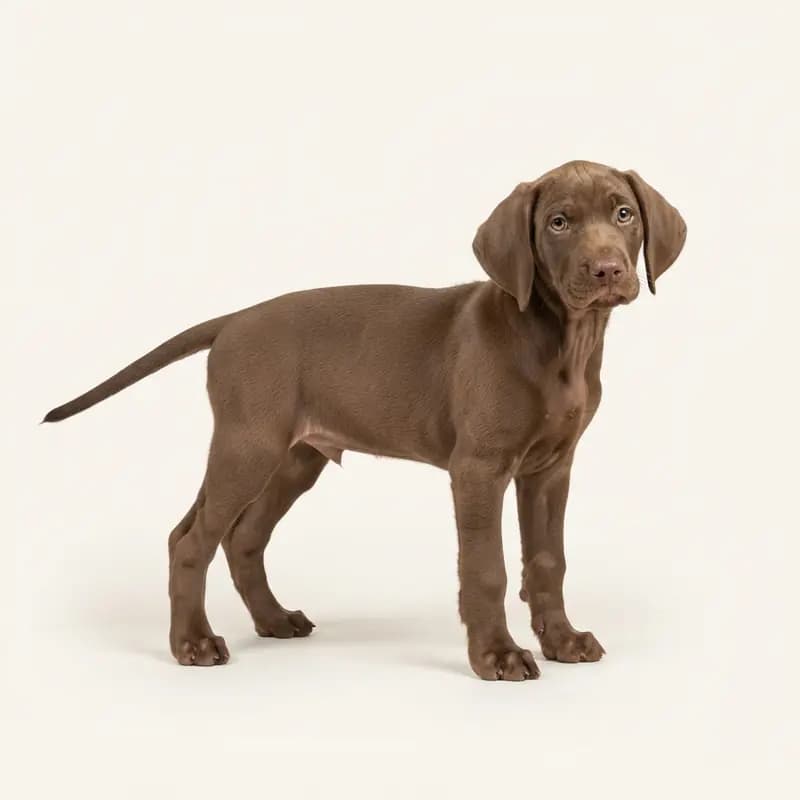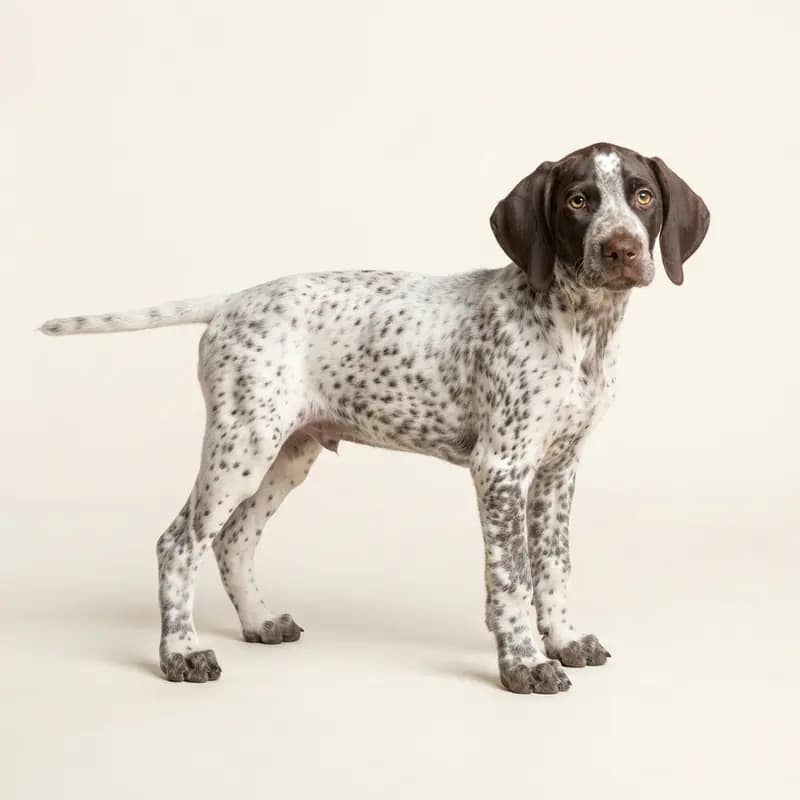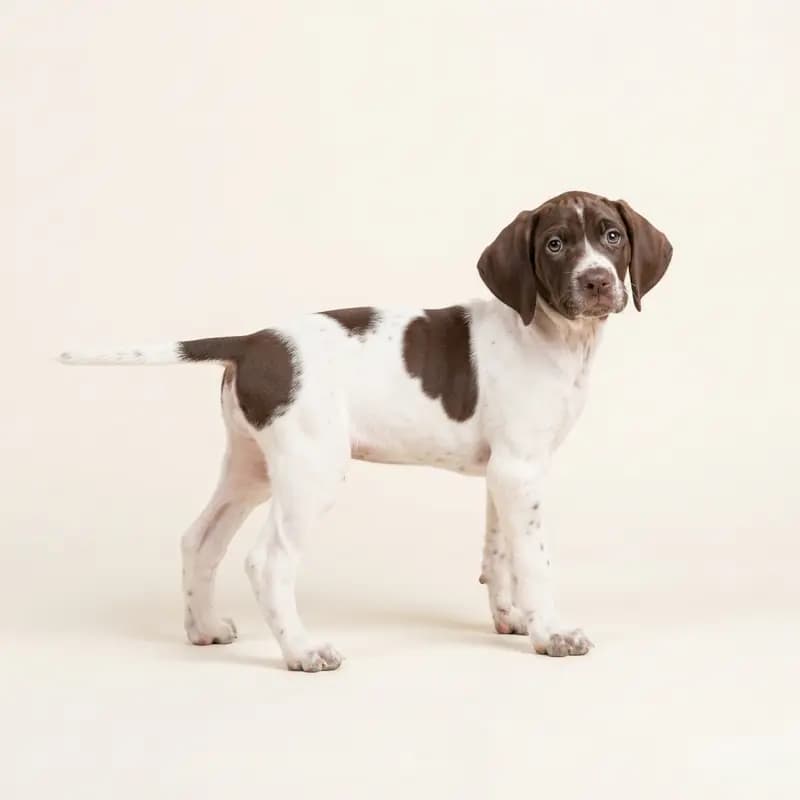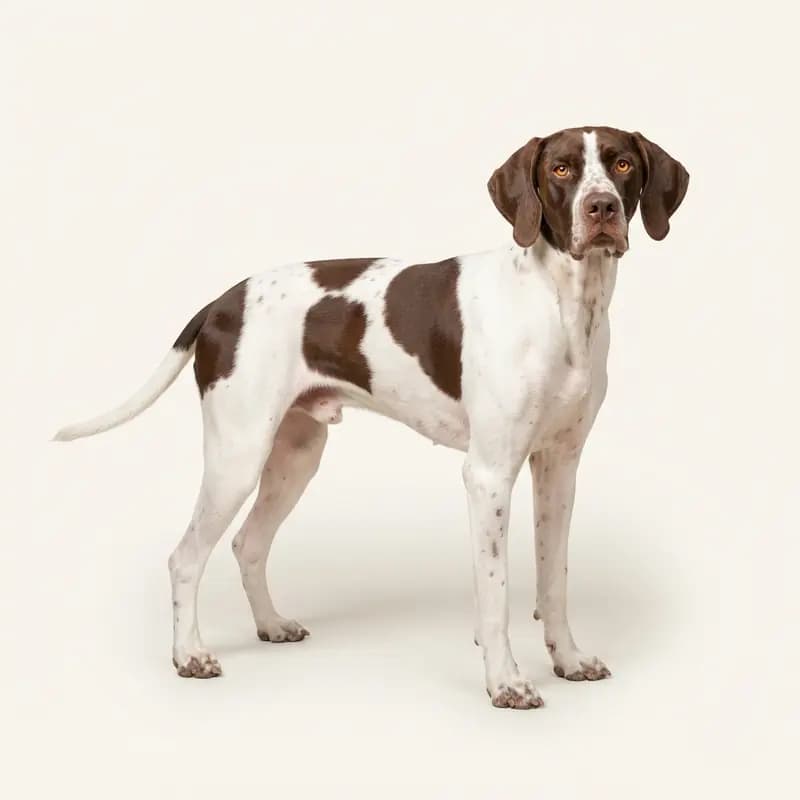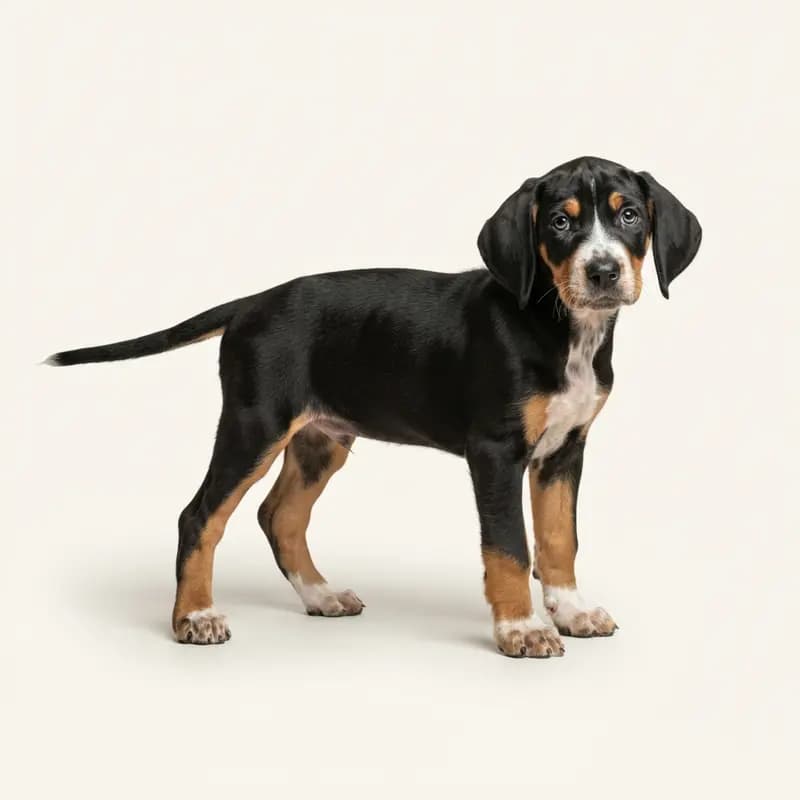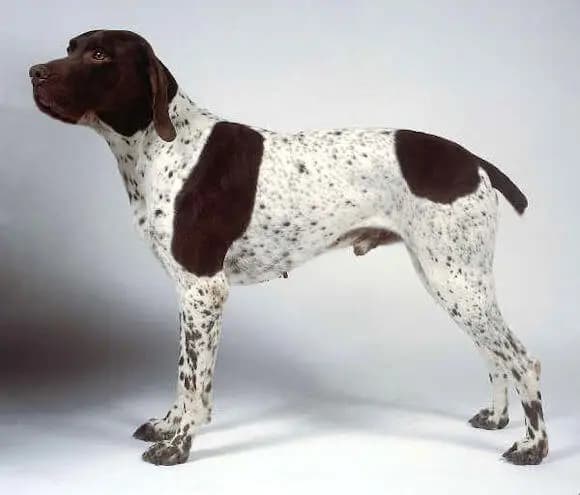
Braque Francais, Type GascogneClose relative
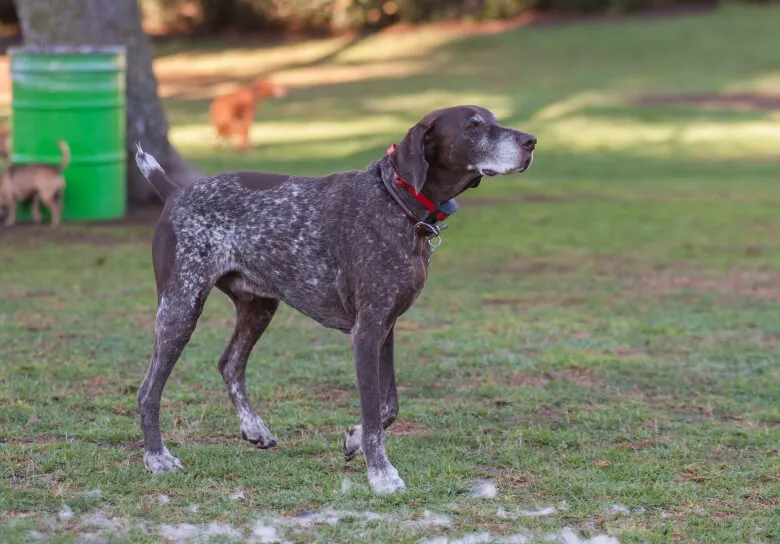
The Braque Français is a sensitive, highly cooperative pointing dog—bred to track game birds in open fields, point motionless, and work closely with its hunter, which makes it extremely eager to bond but never undemanding in everyday life.
How the health grade is calculated
Sources for required breeding screenings. Verein für französische Vorstehhunde – VBBFL e.V.
Self-check
Answer 6 quick questions about your everyday life and see how well the Braque Francais fits you — including an honest cost estimate per month, per year, and across the dog's lifetime.

At a glance
The essentials — key facts, traits, and health priorities — before you dive deeper.
Lifespan
12–15 yrs
Shoulder height
56–69 cm
Weight
24–32 kg
Practical
Temperament
Daily life
What matters most
Especially with a Braque Francais, choosing the right breeder is the single most important decision you'll make. Serious breeders consistently test the parents for inherited conditions, prioritize healthy early socialization, and stay accountable long after handover. A cheap puppy without health screening tends to become the most expensive dog later on.
See HonestDog breeder standards →Colors & coat
The coat colors that occur in the Braque Francais — including which ones fall outside the breed standard and which carry genetic risk.
Eye colors
 Brown
 Amber
Coat type
 Short
 Smooth
The real vibes check
A Braque Français is an athletic high-performance athlete outside, always searching for the next scent—and a soft cushion inside that would prefer to crawl right into your lap. You aren't getting a stubborn loner, but a highly sensitive, almost delicate partner. If you take its keen nose seriously and provide enough stimulation, it will reward you with a silent cooperation that is pure joy in everyday life.
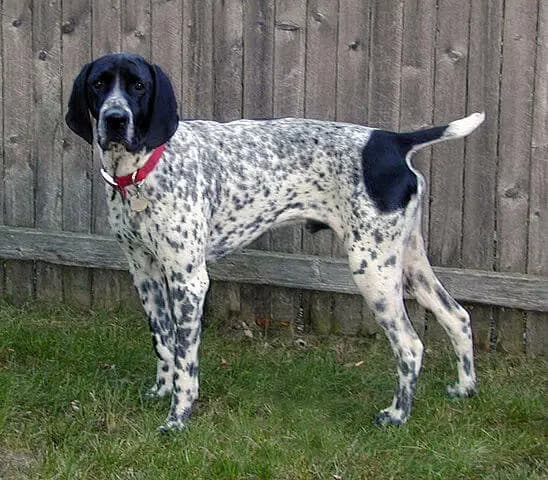
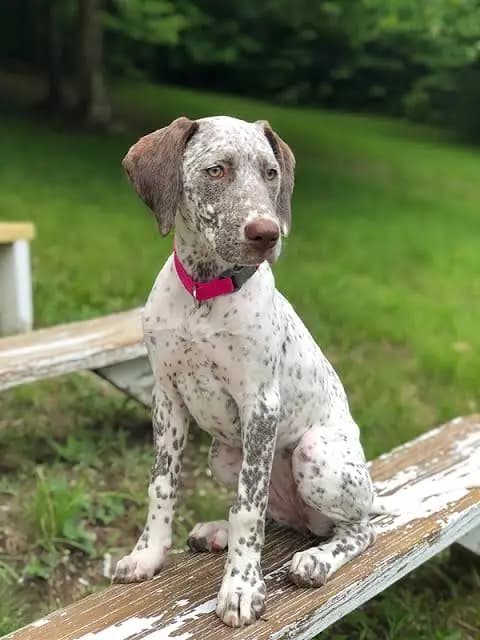
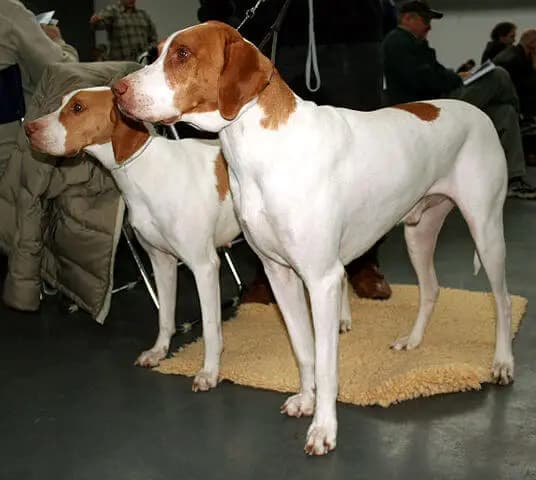
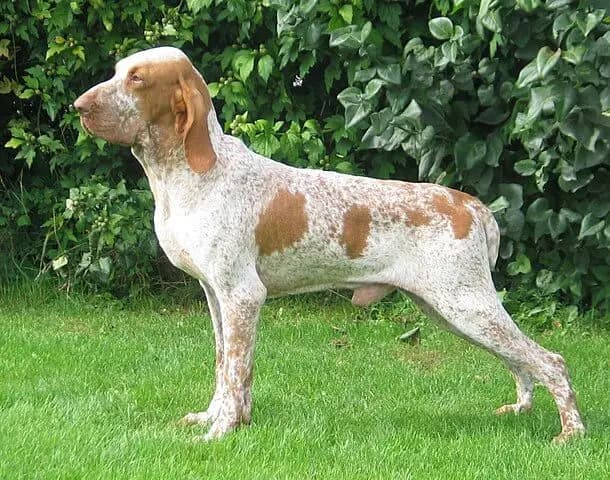
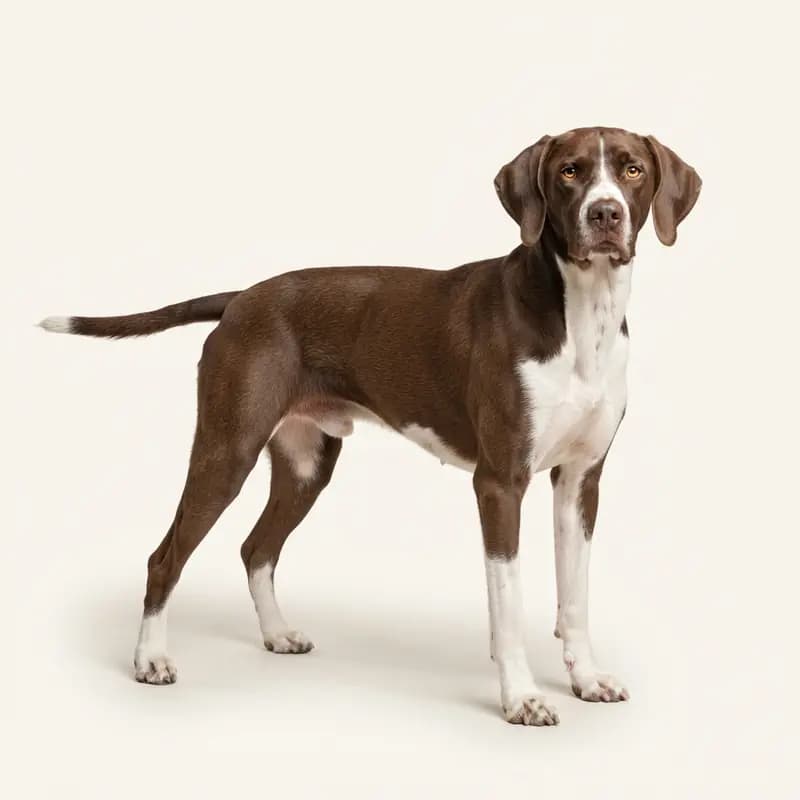
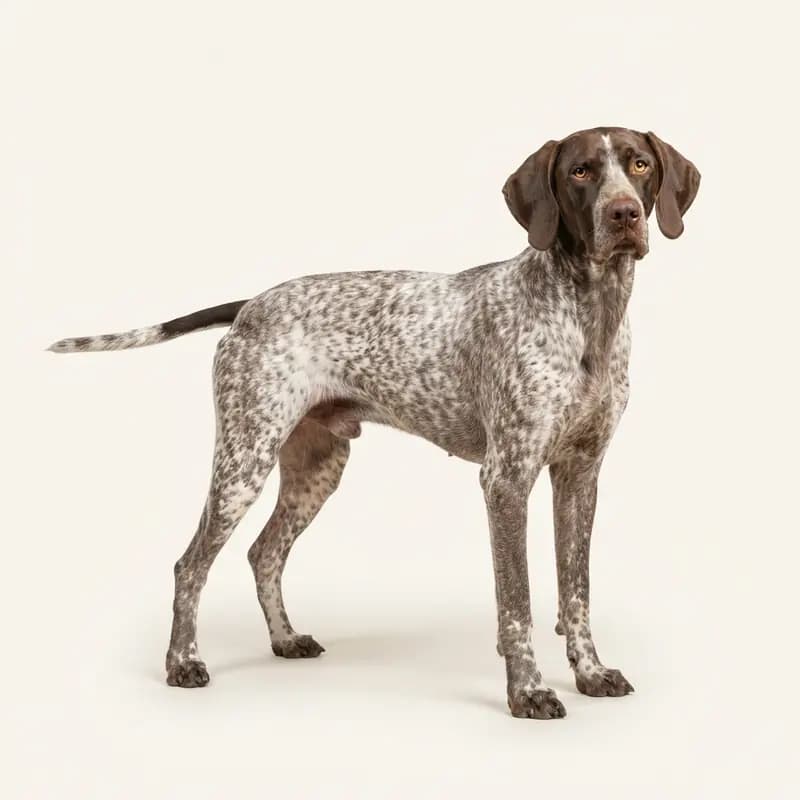
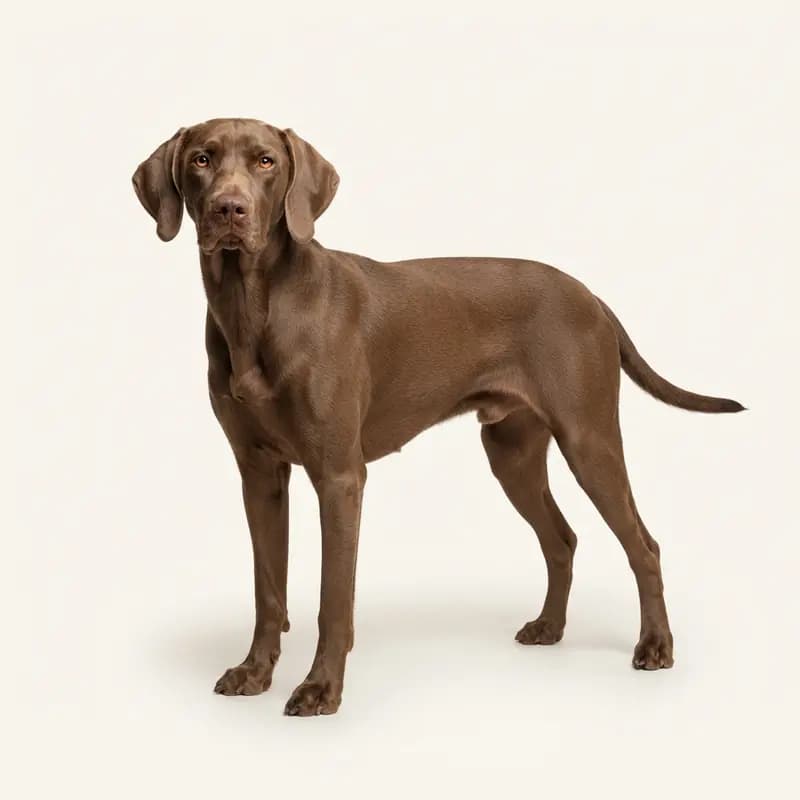
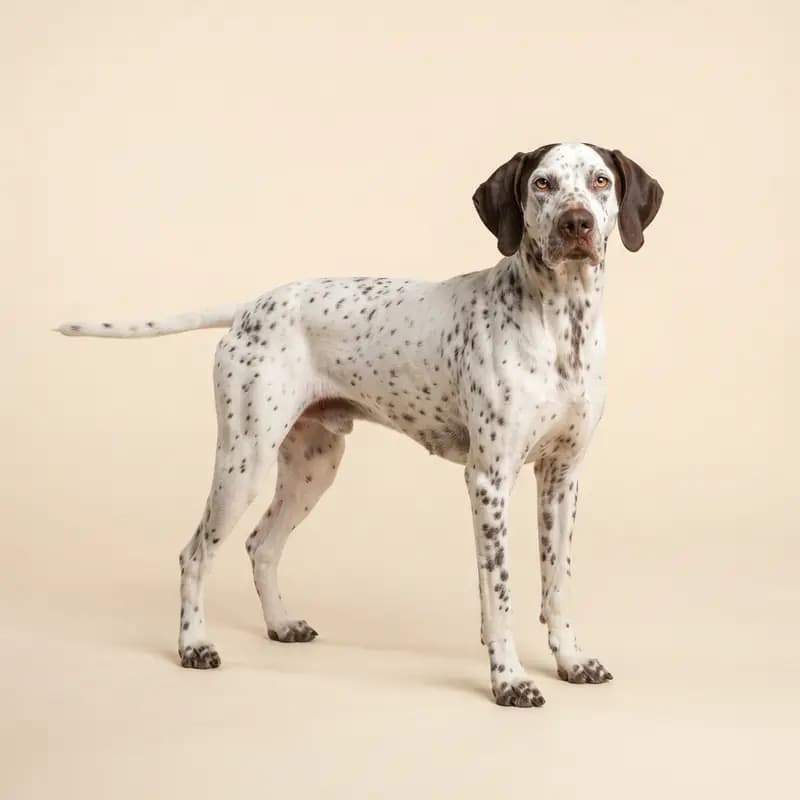
The Braque Francais is a medium to large sized hunting dog with a powerful but elegant appearance. His short, dense coat is close-fitting and offers him protection from the elements while he hunts. Its eyes are often dark and expressive, and its ears are droopy and quite long. This breed is characterized by its strong build and well-muscled legs, which indicate its working abilities. The Braque Francais is listed in FCI Group 7, Section 1.1, which means that it is a continental pointer. There are two different types of this breed, the larger "Braque Francais, Type Pyrenees" and the smaller "Braque Francais, Type Gascogne". They differ in size and appearance, but both are known for their ability to excel in both field work and water work.
One of the standout features of the Braque Francais is its incredible adaptability. These dogs are known for being excellent at work both in the field and at home. They are very people-oriented and build strong bonds with their family. They are friendly and gentle, making them excellent companion dogs for active families. The Braque Francais is a very active dog with a lot of energy. He needs plenty of daily exercise and mental stimulation to stay happy and healthy. Although he is a good guard dog and will defend his territory, he is not aggressive and will get along well with other dogs and pets as long as he is properly socialized. As with most hunting dogs, the Braque Francais has a strong prey drive and can tend to chase birds and other small animals. However, he is very intelligent and can learn to control this urge if trained properly. It is important to note that due to their working history, these dogs may tend to be independent and make their own decisions, so consistent but loving training is necessary. These dogs are very loyal and can stay alone well as long as they get enough exercise and activity. They are not a breed that lives well in an apartment or house without access to an outdoor area as they need the space to run and play. The Braque Francais is a very versatile dog and is well suited to a variety of tasks, from field work to retrieving and companion dog work. He is very intelligent and a quick learner, and his natural gentleness makes him a good candidate for therapy dog work. His high energy and playful temperament also make him a great partner for dog sports like agility or flyball.
| Watchfulness Reports unusual activity but stays controlled. | Moderate |
| Openness to Strangers Warms up quickly and is generally welcoming. | Friendly |
| Hunting or Herding Drive This drive runs deep — no amount of training eliminates it. | Very strong |
Fun Fact!
Did you know that the Braque Francais actually consists of two subspecies: the larger Gascogne type and the smaller Pyrenees type? Both share the same wonderful characteristics and temperaments, but differ in size and appearance.
The Braque Francais Pyrenean is the smaller and more popular of the two. He has a natural retrieving instinct and loves the water. He is gentle, friendly, sociable and submissive. The Braque Francais Pyrenean is a rustic breed and comes from France. In English he is the French Pointer Pyrenean type.
The Braque Francais is an active dog and therefore needs a lot of exercise and mental stimulation. They could thrive in urban environments as long as they have enough access to open spaces where they can run and play. They are generally good with children and can also get along with other pets as long as they are properly socialized.
Lives for its family — the born family companion.
Extraordinarily patient and loving — a true family dog.
Actively enjoys the company of other dogs.
City-appropriate with enough exercise and stimulation.
Owning a dog is a privilege, but it's also a real responsibility. Before you bring one into your life, be honest with yourself about the commitment it takes.
Training the Braque Francais can be a joy as they are intelligent, eager to please and trainable. They respond best to positive reinforcement techniques and can perform well in various dog sports and activities, such as agility and obedience. However, they need meaningful employment and should not be "overemployed" as this can lead to stress and restlessness. There is also the risk that they become "ball junkies," so the game with the ball should be well measured. Because of their hunting predisposition, it is particularly important to offer them alternatives and teach them impulse control so that they can participate happily in social life and are compatible with it. It's important to socialize them well from an early age and provide them with a variety of experiences and environments to ensure they become well-adjusted and confident dogs.
The Braque Francais' diet should be balanced and of high quality. They need plenty of protein for energy and activity, along with healthy fats for a shiny coat and good skin health. It is important to watch out for overfeeding as they can be prone to weight gain, which can lead to other health problems. Therefore, the amount and type of food they receive should be tailored to their age, weight and activity level. Grooming the Braque Francais is relatively easy as they have a short, dense coat that requires little grooming. They should be brushed regularly to remove dead hair and keep their skin healthy. This breed does not have an undercoat and sheds moderately, so it may need additional protection during the colder seasons in Germany.
| Care Level Minimal effort — occasional brushing and bathing. | Low-maintenance |
| Exercise Needs Needs several hours of serious exercise every day. | Very active |
| Shedding Hair everywhere, always — no white clothing survives. | Very heavy |
| Trainability Picks up commands quickly and wants to please. | Eager to learn |
Our experts are still reviewing this information. Spotted something wrong? Email us at info@honestdog.de.
Robust
Health grade
The Braque Francais is considered a very robust breed, though special attention must be paid to its musculoskeletal system: elbow dysplasia (ED) and hip dysplasia (HD) represent breed-typical risks with a high level of severity. For breeding approval, the Verein für französische Vorstehhunde – VBBFL e.V. therefore makes screening for elbow dysplasia (ED) mandatory, with a threshold of ED 0–1. In addition, a responsible breeder has the parent animals tested for hip dysplasia (HD). Before buying a puppy, ask to see the official test results of both parents: alongside the mandatory ED certificate, an HD finding in the range of HD A–C should also be available.
Grade is relative to other breeds — AI-assisted and editorially reviewed.
Methodology and data: HonestDog Dog Breed Health Report 2026
What matters most for this breed
Tap any item to see details.
With joint-friendly rearing and regular check-ups, these dogs stay fit for a long time—in winter, you should ensure they have sufficient protection against the cold due to their lack of an undercoat.
Responsible breeders comply with club requirements regarding elbow dysplasia (ED) and additionally test parent animals for hip dysplasia (HD) in order to purposefully prevent joint damage in the offspring.
Note: This health overview is AI-assisted and editorially reviewed. It is for orientation only and does not replace veterinary advice.
What matters most for this breed — what's common, how much it affects the dog's life, and how to protect yourself as a buyer.
Tap a body region to see the inherited conditions linked to it.
The three most important risks
Pick a region on the map to explore other areas.
Tier 1 is the core standard: the tests Verein für französische Vorstehhunde – VBBFL e.V. requires, plus further tests from the recommended health standard for this breed. Tiers 2 and 3 show how responsible breeders go beyond.
Core standard. Tests marked “Club standard” are required by Verein für französische Vorstehhunde – VBBFL e.V. for breeding approval; the others are part of the recommended health standard for this breed. Ask any reputable breeder for the results.
No entries in this tier.
No entries in this tier.
Note: This health overview is AI-assisted and editorially reviewed. It is for orientation only and does not replace veterinary advice.
A Braque Francais costs around ~€180 per month (€100 – €350, depending on your setup). The first year adds up to roughly ~€4,900 including purchase, equipment and puppy school; across the dog's life (13.5 years) it comes to about ~€32,610.
With surgery cover, running costs come to about ~€180 per month — in return, your share of a major operation drops from several thousand euros to around 20 percent.
Per month
~€180
In the first year
~€4,900
Across the dog's life
~€32,610
Estimated purchase price from a breeder: €1,200 – €2,500
Estimate at a mid-range setup (suburban, dry food, 1–2 hours of daily exercise), average German prices, as of July 2026.
HonestDog Concierge
We currently have no breeders for this breed who have passed our verification. Create your short buyer profile: we'll set up your search alert, review a possible source and email you within 28 days.
 Illustrative image
 Illustrative image
 Illustrative image
 Illustrative image
The Braque Francais is a very ancient breed with somewhat obscure origins. It is believed to have originated in France, descending from dogs used for bird hunting during the Middle Ages. Over the years, the breed was refined and adapted to create a versatile hunting dog capable of working in a wide variety of environments and climates. The two distinct types, Pyrenees and Gascogne, were officially recognized in 1920. The Pyrenees type is smaller and lighter, developed to work in the rugged terrain of the Pyrenees mountains, while the Gascogne type is larger and more robust, bred for work in the flatter, marshier areas of the Gascogne region. The Braque Francais was prized as an all-around hunting dog, used for both pointing and retrieving. While particularly popular in France, it was not introduced to North America until the 1970s, where it also gained recognition for its versatility and work ethic.
Pointing dog, hunting dog
France
15. Jahrhundert
At home, owners consistently describe the Braque Français as a very affectionate, gentle and cuddly companion. It forms a very close bond with its people and clearly seeks their company. Many reports highlight how friendly and patient these dogs are with children. With enough exercise, the breed is also considered calm and pleasantly unobtrusive at home.
Owners also stress that this strong focus on its handler has downsides: Braques often struggle with being alone and, without preparation or with too little to do, tend toward separation stress. They are also not dogs for homebodies; simply tagging along as a family companion without the right kind of activity quickly leads to restlessness and frustration.
Sources:sabinemiddelhaufeshundundnatur.netwildhueter-st-hubertus.detackenberg.deforum.wildundhund.dezoomalia.de
In training, breed experts and owners keep stressing how sensitive this breed is compared with many German pointing breeds. The Braque Français reacts very sensitively to a raised voice, heavy pressure or unfair corrections. Owners report that with too much harshness, these dogs quickly shut down, show avoidance behavior or lose their confidence entirely. Training works best for them through trust, patience and positive reinforcement.
At the same time, experienced handlers warn against mistaking sensitivity for weakness or handling the dog inconsistently out of pity. These dogs are highly intelligent and quickly notice when rules start to slide. Clear, calm leadership is essential, since the inborn drive to find game and the prey drive call for solid basic training as well as early anti-chase and recall training.
In reports on exercise, the Braque Français, especially the lighter Pyrénées type, is described as a tireless, fast endurance runner with a lot of energy. Owners describe an almost insatiable joy in working as soon as they head into the fields or out into nature. These dogs are very well suited to tracking, dummy and retrieving work or mantrailing, since they have a strong need to use their noses.
The main challenge owners name is managing arousal. Because of their high-spirited temperament, these dogs can easily get wound up off leash and follow game scent over very wide distances. Owners therefore advise building in settling exercises from the start and deliberately rationing activity, rather than making the dog jittery with purely physical chasing games (such as uncontrolled ball throwing).
Sources:wildhueter-st-hubertus.deforum.wildundhund.detackenberg.decurafyt.com
Paraphrased from real owner reports · translated from German
The Braque Francais is an active dog that needs plenty of exercise and mental stimulation. Research the temperament, grooming needs, and space requirements before deciding.
The average life expectancy of a Braque Francais is 12-15 years. With proper care and regular vet visits, your dog can live a long, healthy life.
Braque Francais grooming requirements include regular brushing, nail trimming, and dental care. HonestDog provides detailed grooming tips for every breed.
The Braque Francais can be a great family dog. Proper training and socialization are key. HonestDog provides family suitability information for every breed.
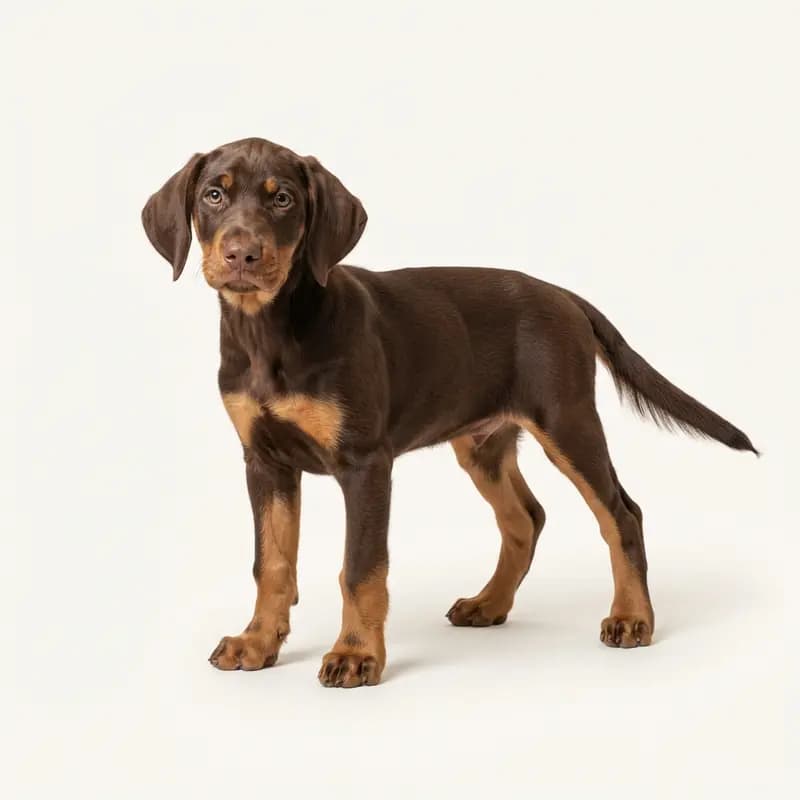
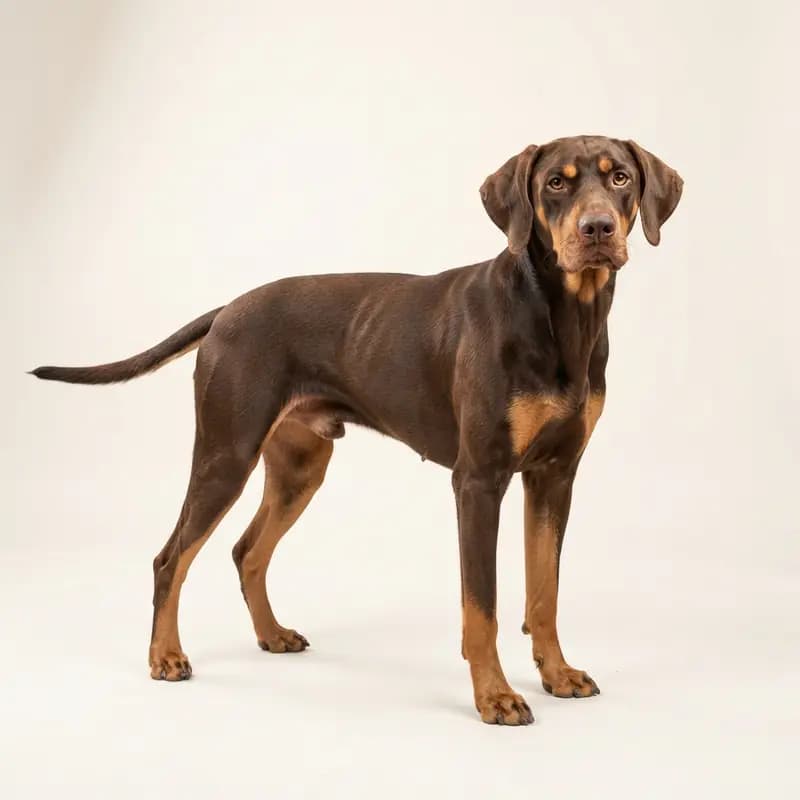
The Braque Francais comes in these colors: Brown and white, Roan, Brown, Spotted, Piebald, Brown and tan, Tricolor.
Showcase your kennel on HonestDog and reach families searching for a responsibly bred Braque Francais.